Drawing lessons from the Cuban Revolution: organization, unity, and internationalism

Spread the love

This article by republished from peoples dispatch under a Creative Commons Attribution-ShareAlike 4.0 (CC BY-SA) license.
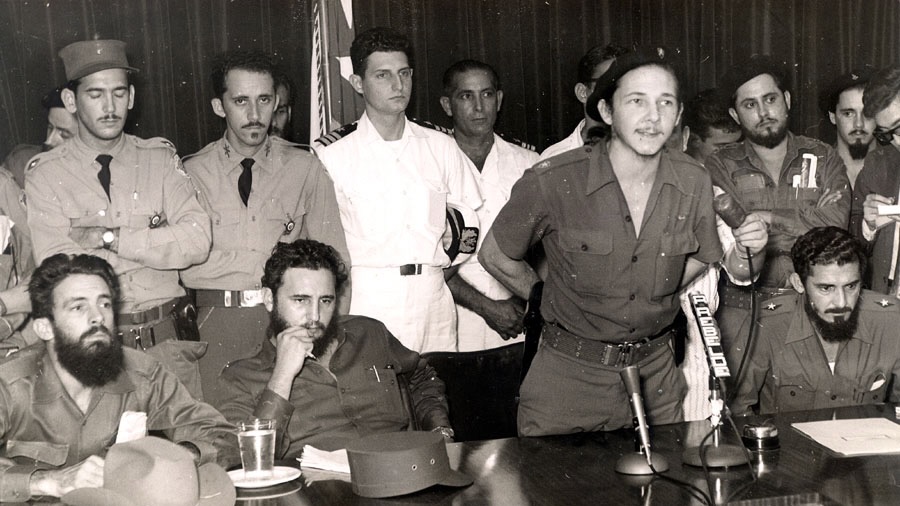
On February 16, 1959, Cuba established the Ministry of the Revolutionary Armed Forces, the executive body of their defense force, and its first Army General, Raúl Castro Ruz. Photo: Miguel Díaz-Canel/X

A recent webinar by Pan Africanism Today and the International Peoples’ Assembly looked at global struggles, from Africa to Latin America, showing how Cuba’s enduring resistance offers vital lessons in organization, unity, and internationalism for today’s movements fighting oppression and war.

The world is in an era marked by relentless wars and overlapping crises, from the devastating civil war in Sudan and violence in the Democratic Republic of Congo to the unfolding genocide in Palestine. The demand to end all wars has never carried greater urgency. And in the midst of all these visible battlegrounds persists a more enduring and insidious conflict; the hybrid war and economic blockade waged against the Cuban people and their revolution.

This was the central focus of a recent global webinar convened under the banner of Pan-African and internationalist solidarity, bringing together progressive voices to draw lessons from Cuba’s anti-imperialist struggle. The session, held on October 15, was facilitated by Mbali Gwenda from Pan Africanism Today, who situated the discussion within a broader historical and moral framework, invoking the revolutionary spirits of Thomas Sankara, martyred on the same date in 1987, and Assata Shakur who recently passed, and whose life consistently symbolized uncompromising resistance to oppression.

“We are dealing with the question of the hybrid war and blockade against the Cuban Revolution and her people,” Gwenda said. “A revolution that has been a source of inspiration for all oppressed peoples throughout the world till this day.”

The keynote address was delivered by Manolo De Los Santos, executive director of The People’s Forum and a researcher at the Tricontinental: Institute for Social Research, who framed Cuba’s defiance not as a miracle, but as the outcome of a centuries-long process of people’s struggle, organization, and consciousness.

The long arc of revolution

De Los Santos began by looking at Cuba’s revolution more than an event confined to the years 1953–1959, when Fidel Castro, Che Guevara, and others led the guerrilla war against the Batista dictatorship. Revolutions, he reminded the audience, are not events but processes, collective journeys of resistance that unfold across generations.

Cuba’s revolution, he argued, has roots reaching back to centuries of anti-colonial and anti-slavery resistance, when the island was still a colony of the Spanish Empire. Unlike many independence movements in Latin America, Cuban revolutionaries understood that genuine freedom required addressing three interlinked questions:

  1. Could Cuba truly be independent if it remained a slaveholding society?
  2. Could it be free if it continued under the exploitative system of capitalism?
  3. Could it claim sovereignty while dominated by imperial powers, first Spain and later the United States?

These questions shaped the consciousness of generations of Cuban patriots, culminating in the 1959 triumph of the socialist revolution. But as he explained, the revolution’s endurance has rested on three essential pillars: organization, unity, and internationalism.

Organization: the bedrock of resistance

Organization, De Los Santos emphasized, has been the Cuban people’s greatest weapon against imperial aggression. From the early independence wars to the 26th of July Movement led by Fidel Castro, Cubans have understood that only a disciplined, organized people can confront an empire with infinite resources.

This organizational spirit persisted after 1959, with the creation of mass democratic structures that unite workers, women, peasants, students, and youth. The Federation of Cuban Women, for example, mobilizes millions in defense of gender equality and revolutionary ideals, while student and peasant organizations remain vital spaces for political education and collective problem-solving.

Even under today’s extreme shortages such as the lack of fuel to power garbage collection, Cuban communities respond not with despair but with collective initiative, a reflection of their revolutionary organization and social consciousness.

Unity, he continued, has been the second indispensable lesson from Cuba. Every time the people were divided, the empire gained the upper hand; every time they stood together, they won. This unity has transcended class, race, and regional divisions, dismantling the legacies of slavery and racism that imperialism imposed.

The Cuban Revolution’s unity was forged not just through ideology but through practice, through collective participation in building a new society. It remains, as Manolo put it, “the most important defense the Cuban people have.”

Internationalism is the soul of the revolution

If organization is the body and unity the shield, then internationalism is the soul of the Cuban Revolution.

Quoting Fidel Castro, the New York-based researcher reminded participants that “a people who are not willing to fight for the freedom of others will never be able to fully fight for their own freedom.”

This principle drove Cuba to send tens of thousands of its sons and daughters to fight alongside liberation movements in Angola, Namibia, and South Africa, contributing directly to the defeat of apartheid. As he noted, “Cuba doesn’t need gold or minerals from Africa, it knows that its freedom is tied to the freedom of the peoples of the African continent.”

Even today, with over 24,000 Cuban doctors working abroad, many across Africa, Cuba continues this legacy of solidarity. The US, in its campaign of distortion, now accuses Cuba of “human trafficking” for this very act of humanitarianism.

Read more: Cuba’s medical brigades in Africa embody a long tradition of solidarity

The anatomy of a hybrid war

The United States’ war against Cuba has been fought through unconventional means. It is a hybrid war, a combination of economic blockade, financial strangulation, media disinformation, and covert sabotage.

For more than 65 years, the blockade has inflicted immense human and economic damage. In 2024 alone, it cost Cuba USD 7.5 billion, money that could have been used to buy food, medicine, or oil for its 11 million citizens.

The US uses its control of global financial systems to punish any country or institution that trades with Cuba. Banks in Africa or Latin America face sanctions simply for handling Cuban transactions. The blockade’s reach extends into every corner of global trade, designed to isolate Cuba and make daily life unbearable for its people.

Read More: Tens of thousands of Cubans march in support of Venezuela’s sovereignty amid US aggression

The war is also fought in the terrain of ideas. US-funded media campaigns spread false narratives about repression and poverty in Cuba while erasing the country’s achievements in health, education, and solidarity.

Socialism and survival

When asked on how Cuba has managed to survive more than six decades of blockade, Manolo’s answer was clear: because Cuba made a socialist revolution.

Socialism, he said, allowed Cuba to create a system where the needs of the people come before profit. In capitalist societies, when crises hit, the rich survive and the poor starve. In Cuba, food, healthcare, and education are distributed equitably, even in times of scarcity. This social organization transforms a siege economy into a community of resilience.

This difference, he explained, is what makes Cuba unique among nations facing US aggression. It’s also what inspires global movements seeking alternatives to neoliberalism and imperial domination.

Cuba, Sankara, and the spirit of resistance

The session also honored Thomas Sankara linking a symbolic bridge between the African and Latin American revolutionary traditions. Both embodied a commitment to self-reliance, dignity, and international solidarity.

Sankara’s vision of a self-determined Africa resonated deeply with the Cuban experience. His assassination on October 15, 1987 marked a turning point in African politics, yet his ideas continue to inspire movements across the continent, just as Cuba continues to stand as living proof that another world is possible.

Read More: Thomas Sankara’s legacy lives on in Burkina Faso 38 years after his death

A call for global solidarity

In closing, Manolo issued a clear call; the Cuban people will overcome the blockade, but they cannot and should not do it alone. Their survival depends on the solidarity of all who believe in justice, sovereignty, and equality.

Cuba’s endurance is not simply a Cuban story; it is a lesson for all peoples resisting imperial domination. As the world faces renewed militarization and economic warfare, the spirit of organization, unity, and internationalism must also be crucial as ever.

“When they stand with the Palestinians, when they stand with the Congolese, when they stand with the peoples of the African continent,” Manolo concluded, “they are breaking the blockade too.”

This article by republished from peoples dispatch under a Creative Commons Attribution-ShareAlike 4.0 (CC BY-SA) license.
Continue ReadingDrawing lessons from the Cuban Revolution: organization, unity, and internationalism

Human rights lawyers renew calls for the release of 10,000 Palestinian prisoners

Spread the love

Original article by Ana Vračar republished from peoples dispatch under a Creative Commons Attribution-ShareAlike 4.0 (CC BY-SA) license.
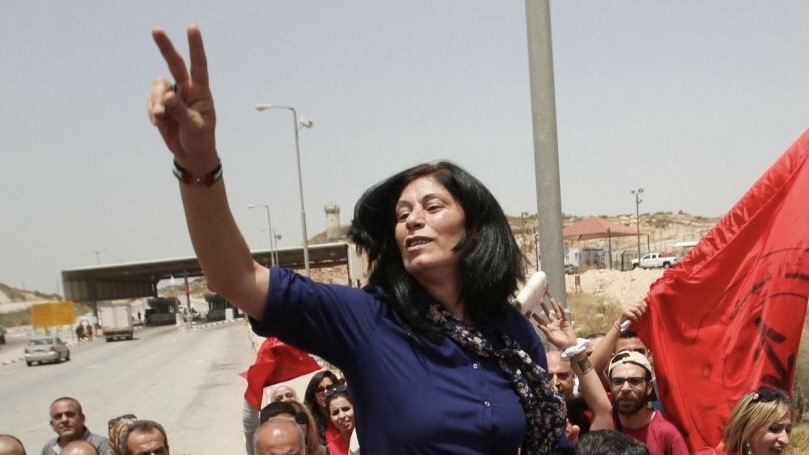
Khalida Jarrar is one of 10,000 Palestinians that has been arrested by Israel in the last year as part of a massive crackdown. Photo: Archive

Legal experts and human rights advocates renew their call for solidarity with Palestinian prisoners detained by Israel since October 2023

Since October 7, 2023, approximately 10,000 Palestinians from across the West Bank and other occupied territories have been imprisoned by Israeli Occupation Forces (IOF) in what human rights lawyers describe as an unprecedented assault on all branches of the resistance movement. Thousands more have been forcibly disappeared from the Gaza Strip, with little information available about their whereabouts.

Amid the increased use of torture and detention of the Palestinian people by Israel, international solidarity movements have intensified campaigns calling for their release.

Among those recently detained from the occupied West Bank is Khalida Jarrar, a prominent human and women’s rights activist, who has faced persecution by Israel on multiple occasions, and is now being held in Neve Tirza prison.

Watch: 11 months in Israeli prison: Shatha Odeh’s struggle for basic rights

At a briefing on Palestinian political prisoners, organized by the International Peoples’ Assembly (IPA), Tala Nasir from Addameer Association for Prisoner Support and Human Rights, along with human rights lawyer Bilal Naammeh, highlighted the IOF’s violations of basic human rights among prisoners. Nasir pointed out that many arrests in the past year have targeted specific groups of professionals who play an important role in building the material basis of the community, including engineers and health workers. However, anyone can face arrest for something as minor as posting on social media, which occupation forces often manipulate into allegations of supporting resistance groups, including Hamas.

Israel is attempting to practically ban all political participation by Palestinians, Naammeh noted, a threat reinforced through military courts and remote trials designed to instill fear in the population. Since October 2023, these practices have become even more severe than before. Naammeh described how, in court, Israeli lawyers often accuse defendants of being involved in the resistance. When defense lawyers challenge these accusations due to insufficient evidence, they can be sanctioned or temporarily barred from representing clients.

As lawyers are currently the only point of contact between prisoners and the outside world, restricting their access—whether through sanctions or lengthy delays—has profound consequences.

Conditions inside Israeli prisons have also worsened significantly. Access to prisoners is limited, even for representatives of the International Committee of the Red Cross (ICRC). Prisoners face severe shortages of food and water, which has led to weight loss of up to 30 kilograms per person, and are allowed only one hour outside their cells each day, leaving them isolated for the rest of the time, according to Nasir.

Read more: Creating life from a life sentence: Sana’ Daqqah on the Palestinian prisoners’ movement

The lack of water and hygiene has led to mass outbreaks of disease and infection, including scabies. According to Naammeh, some prisoners with scabies have been tied to their beds to prevent them from scratching. Other reports indicate that the IOF moves prisoners with scabies between sections in order to purposely exacerbate the contagion. Despite the widespread health crisis, medical care remains out of reach for most. Naammeh highlighted that even the most pressing health issues can take up to two months to receive basic medical attention, leaving prisoners in prolonged suffering.

Conditions in the camps where Palestinians from Gaza are held are even worse, the two advocates suggested, but up-to-date information is nearly impossible to obtain. The only reports come from Israeli media or the testimonies of those who have been released. Nasir recounted stories of prisoners enduring extreme torture, including rape. Witnesses described prisoners being forced to bark for food and given only thin mattresses for six hours a day, making proper rest impossible. This treatment extends even to those who are supposed to enjoy specific protection under international law, such as health workers. Nasir explained that dozens of health workers abducted from Gaza are being held under the Unlawful Combatants Law, meaning they could remain imprisoned until the end of the conflict under such conditions.

In response to Israel’s blatant disregard for human rights and international law, Addameer and the IPA renewed their call for the immediate release of all political prisoners and urged international activists to escalate solidarity efforts, including by insisting on adherence to recent International Court of Justice rulings. The organizers reminded participants that even the simplest acts of solidarity can contribute meaningfully to the broader struggle for liberation.

Original article by Ana Vračar republished from peoples dispatch under a Creative Commons Attribution-ShareAlike 4.0 (CC BY-SA) license.

Continue ReadingHuman rights lawyers renew calls for the release of 10,000 Palestinian prisoners

People’s movements across the world launch campaign of solidarity with Venezuela

Spread the love

Original article republished from people dispatch under a Creative Commons Attribution-ShareAlike 4.0 (CC BY-SA) license.

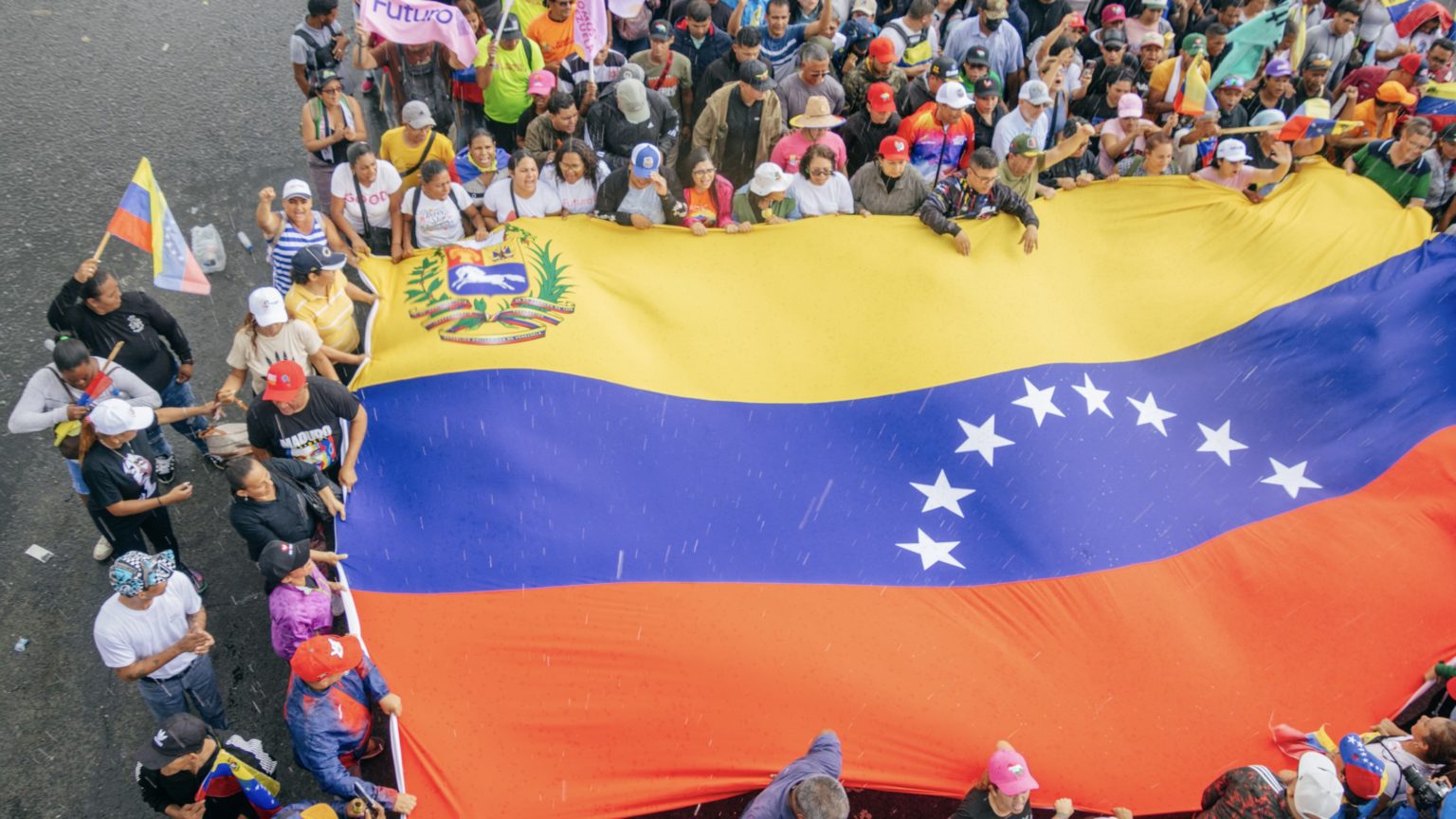
Venezuelan people marched in the rain on July 30 in defense of the electoral results. Photo: Zoe Alexandra

Social and workers’ movements across the world have launched a campaign to stand in solidarity with the Venezuelan people as they face a wave of attacks following the presidential elections.

On August 9, the ALBA Movimientos, a platform of social and political movements from across the Americas and the Caribbean, the International Peoples’ Assembly, the Simon Bolivar Institute, and the Assembly of Caribbean Peoples, launched a campaign titled: “For Democracy and Sovereignty: Hands Off Venezuela!” The campaign comes in the aftermath of Venezuela’s presidential election and a wave of seemingly coordinated attacks from right-wing political actors, mainstream media, and US and its allies.

The launch document states that, for several months, a media campaign has been created to question the legitimacy of the elections in the Caribbean country. “From the hegemonic media, with political and diplomatic strategies, it has been sought to install an idea of the illegitimacy of the recent Venezuelan electoral process,” states the communiqué.

The joint statement affirms that the campaign mentioned above against the legitimacy of the Venezuelan electoral process has been shaped from several communicational fronts: creating doubts about the technological capacity of the electoral machines, reinforcing the 930 economic sanctions against Venezuela, generating violence in the streets and illegally self-declaring González Urrutia as president of the country, among others.

The geopolitical importance of Venezuela, both for its geographic location and vast natural resources, are at the center of the current dispute, the organizations argue. “It is impossible [to understand the situation of] Venezuela without placing it in the regional and global geopolitical context: its privileged place in world oil production, its common goods placed at the service of the people, the place it occupies in the multipolar world together with the emerging countries, and of course, its leadership of a project of union and regional integration in Latin America and the Caribbean that gives continuity to the defeat of the FTAA and keeps alive the horizon of continental sovereignty far from the designs of the United States”.

In this way, the document invites progressive and revolutionary organizations to combat the media campaign imposed by the national and international opposition to Venezuela, which, according to the document, is directly aligned with the imperialist interests of the United States.

On August 9, the launch day of the campaign, the movement platforms have called on organizations across the globe to mobilize on the streets and on social media in support of Venezuela.

South African workers speak out in support of Venezuela

The National Union of Metalworkers of South Africa (NUMSA), in a press release issued on August 8, 2024, congratulated the Venezuelan people for holding free and fair elections, as well as congratulating the re-election with more than 51% of the votes of Nicolás Maduro as president of Venezuela.

NUMSA also questions the media campaign against the legitimacy of the electoral process that could lead to a coup d’état in Venezuela. According to the communiqué, “These media houses are not neutral. Their role is to advance the interests of capital and to promote US imperialism and hegemony. It is not in the interest of Western powers to endorse the elections in Venezuela…We are deeply concerned that US propaganda is being reproduced by many media houses that have sadly been trapped into reinforcing attempts at a coup by imperialism against the will of the Venezuelan people.”

In addition, the NUSMA communiqué insists on the close relationship that the Venezuelan opposition has with the geopolitical interests of the United States, including the friendship that María Corina Machado has professed with the Zionist government of Israel; “The United States does not have a commendable history in defending the dignity of most people. Today, we can take one look at the US-backed genocide against the Palestinian people to know this. It, therefore, comes as no surprise that the right-wing opposition coup leader in Venezuela is a Zionist”.

Likewise, the NUMSA communiqué recognizes the great economic and geostrategic value of Venezuela in current international relations, which is why there are imperial powers that seek to control the political future of Venezuela at any cost so that the recognition of the elections would be a way for the people to reaffirm their sovereignty and their ability to decide their future without the interference of other countries: “the US has set its sights on the enormous mineral wealth of Venezuela and seems determined to expropriate these through the imposition of a puppet regime under the leadership of Edmundo González. Against this backdrop, all progressive forces must reaffirm their unwavering commitment to the sovereignty of Venezuela. We call on our government, media, governments, and media houses worldwide to uphold the principles of peace, democracy, and national self-determination by acknowledging the outcomes of the Venezuelan election.”

Anti-imperialist and progressive movements from across the world are gearing up for the international campaign to condemn the so-called hybrid war against Venezuela and express their support to its struggle for sovereignty and democracy.

Original article republished from people dispatch under a Creative Commons Attribution-ShareAlike 4.0 (CC BY-SA) license.

Continue ReadingPeople’s movements across the world launch campaign of solidarity with Venezuela

Activists call for global shutdown on November 9 to support the Palestinians

Spread the love

https://www.morningstaronline.co.uk/article/activists-call-global-shutdown-support-palestinians

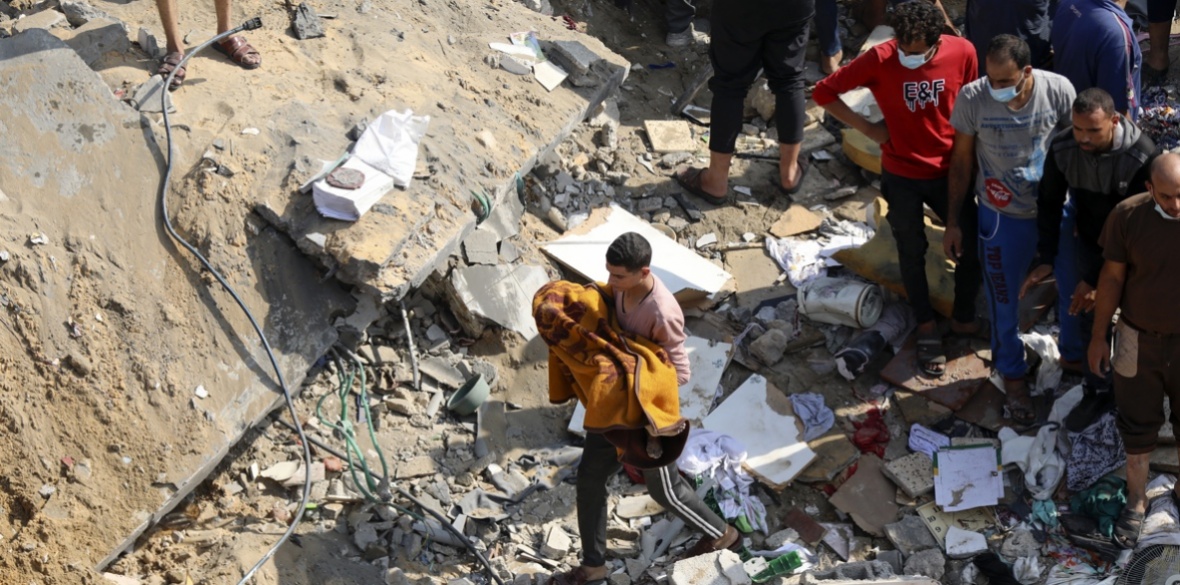
A Palestinian man carries a dead child that was found under the rubble of a destroyed building, following Israeli airstrikes in Jabaliya refugee camp, northern Gaza Strip, November 1, 2023

ACTIVISTS in the United States called on Thursday for a Global Shutdown for Palestine on November 9.

Since Israel began its brutal bombardment of Gaza, activists have been mobilising to demand an immediate ceasefire, an end to all aid to Israel and a lifting of the siege on Gaza which many experts have described as a war crime.

Activists from organisations such as the Palestinian Youth Movement, National Students for Justice in Palestine, ANSWER Coalition, The People’s Forum, and International Peoples’ Assembly have called for direct action such as “marches, walk-outs, sit-ins and strikes directed at the politicians, businesses, and workplaces that fund, invest in and collaborate with Israeli genocide and occupation.”

Palestinian poet and writer Mohammed el-Kurd said: “We must not wait for history to pass us by. Everyone, regardless identity or sector, must heed the calls coming from the Palestinian streets and take action against genocide.

Yara Shoufani, a member of the Palestinian Youth Movement, said: “We are calling for a total anti-normalisation of zionism.

“We will continue to fight until any and all material support for zionism is made unsustainable and ends.”

https://www.morningstaronline.co.uk/article/activists-call-global-shutdown-support-palestinians

Continue ReadingActivists call for global shutdown on November 9 to support the Palestinians