This work by Middle East Monitor is licensed under a Creative Commons Attribution-NonCommercial-ShareAlike 4.0 International License.
Italian Minister of Defense Guido Crosetto takes part in the “Day of Truth” event of the newspaper “La Verità”, on June 5, 2025 in Rome, Italy. [Simona Granati – Corbis/Corbis via Getty Images]
Italy has completed the withdrawal of its armed forces from Iraq, ending a 12-year deployment, Defense Minister Guido Crosetto said Tuesday, Anadolu reports.
The last personnel, who had remained to recover and transfer logistical equipment, have returned, Crosetto said in a statement. The withdrawal was completed ahead of a Sept. 30 deadline agreed with Iraqi authorities.
“From tomorrow, therefore, our military presence in Iraq will end,” Crosetto said. He said the move was part of a new phase agreed with Iraq and partner countries, in which Iraqi security forces would assume full responsibility for the country’s security.
The US-led coalition’s Operation Inherent Resolve and NATO Mission Iraq will continue operating from other countries, he said. The NATO mission will temporarily operate from the alliance’s Joint Force Command in Lago Patria, near Naples.
Crosetto said thousands of Italian troops had served in Iraq over the past 12 years, contributing to the fight against ISIS (Daesh) and training Iraqi armed forces and security forces in the Kurdish region.
Italy plans to continue working with Iraq through training, exchanges of expertise and efforts to develop Iraqi military capabilities, he added.
The Defense Ministry said the Italian withdrawal had been largely completed by March. Two Italian Carabinieri remain in Iraq as part of the separate EU Advisory Mission, EUAM Iraq, which is authorized by the Iraqi government.
This work by Middle East Monitor is licensed under a Creative Commons Attribution-NonCommercial-ShareAlike 4.0 International License.
Iraqi Prime Minister-designate Ali al-Zaidi. [Photo/AA]
Iraqi Prime Minister Ali al-Zaidi said Saturday that his country seeks balanced relations with neighbouring states and will not allow its territory to be used to threaten their security, during a phone call with French President Emmanuel Macron, Anadolu reports.
The two leaders discussed strengthening bilateral relations and cooperation, regional developments and the scheduled end of the international coalition’s mission in Iraq, according to a statement from the Iraqi prime minister’s media office.
The statement said they also discussed economic and investment cooperation in Iraq, opportunities for French companies, and joint efforts to reduce tensions and promote regional security and stability.
Al-Zaidi highlighted the importance of relations between Baghdad and Paris and invited Macron to visit Iraq, calling for joint efforts to build a “sustainable economic and investment partnership” that serves the interests of both countries.
He said his government would continue working to strengthen stability and “transform Iraq into an influential economic and political power in the region,” citing the country’s resources and strategic position connecting international trade routes.
Al-Zaidi said Iraq remained committed to building balanced relations with neighbouring countries and “not allowing Iraqi territory to be used to threaten their security.”
He also reaffirmed Iraq’s commitment to protecting its security, sovereignty and national interests while relying on dialogue to address regional and international issues.
On security issues, al-Zaidi reiterated that 30 September would be the “final date for the withdrawal of coalition forces from Iraq.”
He said ending the coalition’s mission would give Iraq greater room to focus on reconstruction and development, promote economic growth and improve the welfare of its people.
Macron, for his part, praised steps taken by the Iraqi government and reaffirmed France’s support for Iraq’s efforts to combat corruption and implement economic reforms, according to the statement.
The French president also said Paris would continue supporting Iraq in combating terrorism and strengthening the capabilities of the Iraqi armed forces.
On 27 September, 2024, Washington and Baghdad announced in a joint statement that they had agreed on a two-phase plan to end the coalition’s mission in Iraq.
The first phase was scheduled to be completed by September 2025 and included ending the coalition’s military mission, withdrawing forces and handing over bases before transitioning to a bilateral security partnership.
The second phase runs through September 2026, during which the coalition’s military mission in Syria continues from an air base in Erbil, Iraq.
The US leads the coalition, which includes countries such as France and Spain. It was formed in 2014 to fight the ISIS (Daesh) terrorist group, which at the time controlled large areas of Iraq and Syria.
On 10 December, 2017, then-Iraqi Prime Minister Haider al-Abadi declared “victory” over ISIS after three years of fighting.
The group, however, continues to operate in northern, western and eastern provinces through sporadic attacks, while the Iraqi government conducts security and military operations to eliminate its remnants.
Donald Trump sings and dances, says that it’s fun to kill everyone … unless he gets distracted or falls asleep.Orcas discuss rotting brain, front Orca says Sundown Syndrome is a dead givaway and he wishes someone would Lock Him Up
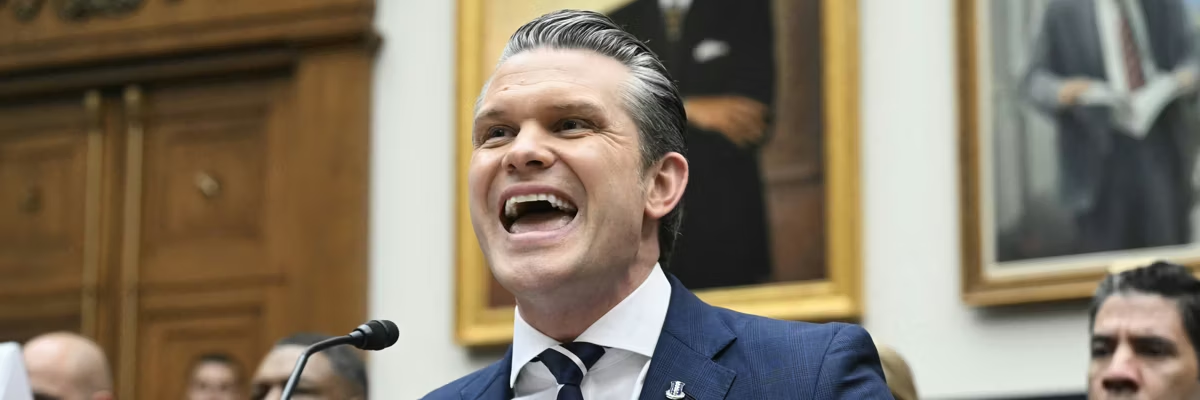
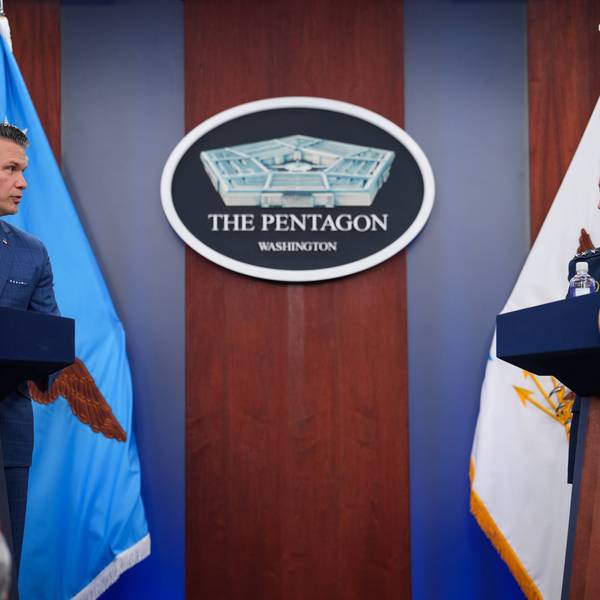
US Secretary of Defense Pete Hegseth testifies before a US House Armed Services Committee hearing on April 29, 2026. (Photo by Saul Loeb/AFP via Getty Images)
“In Iraq, it took more than three years to reach that high. In Vietnam, it took six years.”
More than 6 in 10 Americans now say President Donald Trump’s war in Iran was a “mistake,” according to a poll out Friday from the Washington Post/ABC News/Ipsos.
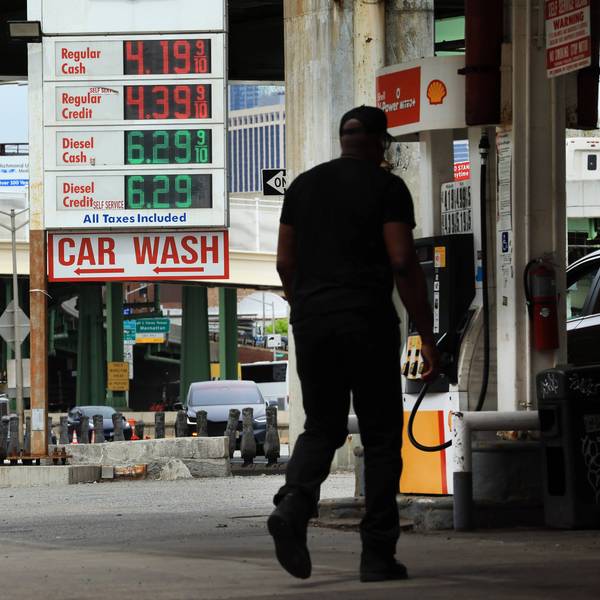
Within two months, the war—which has inflicted thousands of civilian deaths and caused gas prices to spike worldwide with little tangible gain—has reached levels of unpopularity that previous wars now seen as historic boondoggles took years to reach.
The Post has asked the “mistake” for other major wars. But CNN senior political reporter Aaron Blake explained: “In Iraq, it took more than three years to reach that high. In Vietnam, it took six years.”
Despite a massive protest movement, voters overwhelmingly supported President George W. Bush’s decision to invade Iraq, with 81% believing it was the “right thing” in April 2003 and just 16% believing it was a mistake.
But the occupation turned into a long, deadly, and costly disaster, and the administration’s pretexts for the war were revealed to be lies. Public opinion steadily eroded to the point where 64% viewed it as a mistake by January 2007.
Vietnam never had the overwhelming support of Iraq, but 60% of Americans still supported President Lyndon Johnson’s decision to begin direct US military involvement in 1965, while just 24% said it was a mistake.
While the protest movement against the war is as present in Americans’ memories today as the conflict itself, public opinion was still split until 1968 and only reached a high of 61% in May 1971, after more than 50,000 US soldiers had been killed in battle.
Trump’s war in Iran is unique in history in that it never enjoyed even a moment of consensus support. In a Reuters/Ipsos poll just days after the opening salvo of what the Trump administration dubbed “Operation Epic Fury,” just 27% said they approved of the strikes, which killed 555 Iranians, including Supreme Leader Ayatollah Ali Khamenei and several other top Iranian officials.
At this point, 43% of Americans already said they disapproved of the strikes, far eclipsing Iraq and Vietnam. But 30% still said they had not yet made up their minds.
In the coming months, they would. It was revealed that an airstrike on a school, which killed at least 155 people, including 120 children, was a double-tap attack by the United States. Iran retaliated by blocking oil shipments through the Strait of Hormuz, which sent US gas prices hurtling above $4 per gallon. And Trump took on an increasingly erratic and at times outright genocidal posture toward Iran that made any peaceful resolution appear increasingly impossible, even with the current fragile ceasefire.
61% of Americans say the Iran war is a "mistake," per new WaPo-ABC poll.
In Iraq, it took more than 3 years to reach that high.
Friday’s poll shows that while the war still maintains a core base of support—36% of Americans who say it was the right decision, nearly all of them Republicans—it is dwarfed by the 61% who say it was a mistake.
Majorities of respondents across all demographics show that they believe the war has increased the risks of “terrorism against Americans” (61%), “the US economy going into a recession” (60%), and “weakening relationships with US allies.” (56%)
Looking beneath the surface shows an even more worrying sign for Trump: The war has almost no constituency outside of his biggest fans. Self-identified Democrats (91%) overwhelmingly say the war was a mistake. But 71% of independents—many of whom were undecided at the war’s outset—now disapprove too, with just 24% in support.
Even within the GOP, there is a decisive split: 86% of those who self-identify as “MAGA Republicans” are still baying for blood. But “non-MAGA Republicans” have grown uncertain—50% still say war was the right decision, while 49% say it was a mistake.
They were particularly rattled by Trump’s threat last month that “a whole civilization will die tonight” if Iran did not negotiate a deal to his liking. The threat of genocide was too much even for the majority of Republicans, 53% of whom said they viewed it negatively.
GILLIBRAND: 3 out of 5 Americans are against this war
HEGSETH: I believe we have the support of the American people
GILLIBRAND: So you don't care that the American people don't support this war? pic.twitter.com/vjqMT2y1CD
What remains to be seen is whether even Trump’s most faithful backers will turn against the war as it drags on. If Defense Secretary Pete Hegseth’s appearance in Congress on Thursday is any guide, the country may soon find out.
On Thursday, when Sen. Kirsten Gillibrand (D-NY) pressed Hegseth about why he has “not sought the support of the American people” and added that “3 out of 5 Americans are against this war today,” he appeared in abject denial about the war’s unpopularity.
“I believe we do have the support of the American people,” he said. “I would remind you and this group that we’re two months in to an effort, and many congressional Democrats want to declare defeat two months in.”
He specifically invoked lengthy past conflicts, repeatedly emphasizing that this one had only lasted “two months,” as if to urge patience with a war Trump had previously said was intended to last only “four to five weeks.”
“Iraq took how many years? Afghanistan took how many years? And they were nebulous missions that people went along with,” he said.
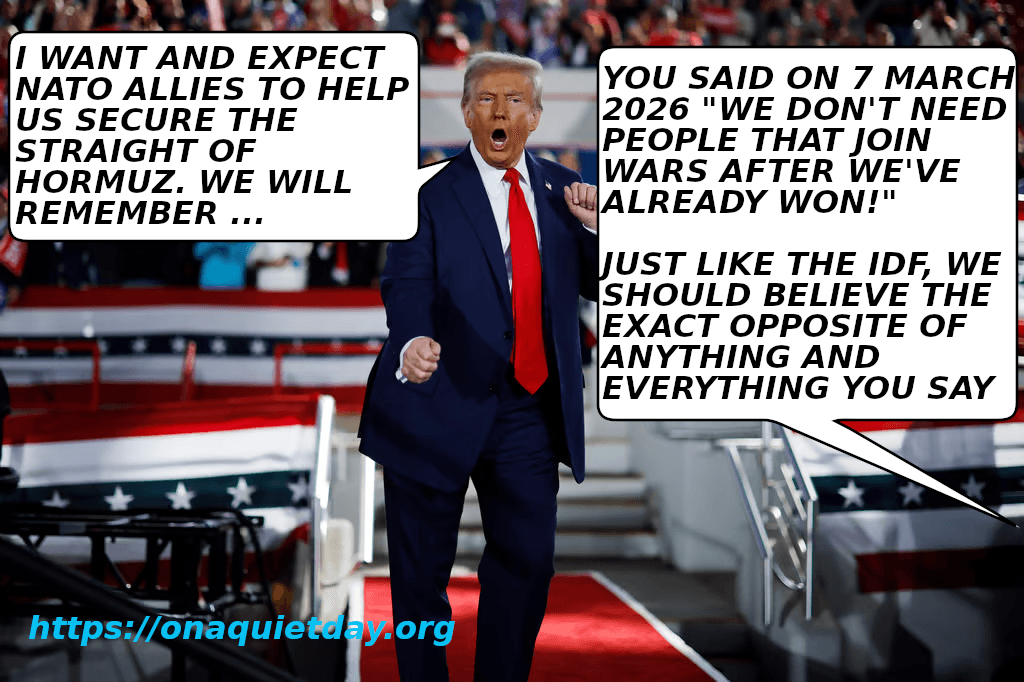
Donald Trump calls for help from NATO allies in securing the Strait of Hormuz despite saying on 7 March 2026 that they don’t need people to join wars after they’ve already won. He’s challenged with the claim that he lies as much as the IDF.
By extending the ceasefire, Trump admits Iran has a strong negotiating hand. Tasos Katopodis/Getty Images
By extending the pause in fighting, Donald Trump admits that Iran is in a strong bargaining position – so what next?
The US-Israeli war on Iran has reached an unexpected pause. An easing of tensions between Washington and Tehran now extends to Donald Trump changing his mind yet again and extending the informal ceasefire deadline. His motive is allegedly to allow the Iranian government more time to agree to a proposal that meets US requirements, but it is also an admission that Iran is in a strong bargaining position.
There are complications, though. One is that while the Iranian Revolutionary Guard Corps (IRGC) maintain control of the Strait of Hormuz, US armed forces are blockading Iranian ports to stop commercial shipping. The aim is to put such pressure on Iran’s weakened economy that the leadership in Tehran will quickly accept US terms. That’s unlikely.
While a few days ago, Iranian sources were suggesting that they might loosen their control of the Strait of Hormuz, any progress in that direction has now been halted until the US maritime blockade is lifted. Only then might Iran participate in negotiations on a settlement.
Furthermore, while Israel is also participating in the pause in bombing, it is very much a separate actor. It has plenty of influence in Washington and is led by Binyamin Netanyahu, who wants nothing less than total victory over Iran.
All this is overshadowed by the current state of the conflict. In essence, the war failed to meet US or Israeli expectations almost from the start. Most of Iran’s theocratic and political leaders were assassinated by the Israeli Defence Forces (IDF) in the first week but were rapidly replaced, and the country held together. Then, not only did the powerful IRGC survive an intensive combined air assault by US and Israeli forces, it even went on the offensive, concentrating on targets such as radar, satellite communications, aerial refuelling and intelligence gathering.
Iran may have had thousands of people killed and billions of dollars of damage done to its economy, but it has not been defeated and is not ready to cede to the US’s demands. Moreover, one of the impacts of the losses among the theocratic, political and IRGC leaderships is that there has been a radicalisation as a new generation takes shape.
This is reflected particularly in the hard-line position of the powerful IRGC leader, Major General Ahmad Vahidi, who is prepared to withdraw from negotiations, at least for now. This contrasts with two political leaders, the speaker of the Majlis (parliament), Mohammad Bagher Ghalibaf, and the foreign minister, Abbas Araghchi, who seem to favour a more nuanced approach.
Compromise may be possible within Iran, but it is unlikely that it will be enough for the United States, where most of the key people around Trump have been appointed because they toe the line. Those who appear to disagree with the president have been sacked or have left, the latest being navy secretary John Phelan after barely a year in post, although he was reportedly ousted over a dispute about shipbuilding, rather than Iran.
Meanwhile, the IRGC’s control of the Strait of Hormuz has already had a long-term impact, according to a classified Pentagon briefing to Congress reported on by the Washington Post. Even if an end to the fighting was negotiated, post-war necessities such as clearing Hormuz of Iranian-laid mines could affect oil and gas prices for six months, right up to the Congressional mid-term elections.
More immediately, IRGC units have fired on some commercial ships, forcing them to abide by Iranian controls. The US Navy has done the same to enforce its blockade, with one case from last weekend having a political significance that has been largely missed in the Western media and that goes some way to explaining Iran’s response to intense US and Israeli military pressure.
The US destroyer USS Spruance attempted to board an Iranian cargo ship, Touska, in the Arabian Sea to force it to stop. The Iranian ship’s crew refused to do so for six hours until the US destroyer ordered the crew to evacuate its engine room. This they did, and the engine was then put out of action by the Spruance firing several rounds of its main armament, a 5-inch Mk 45 gun. The Touska was then boarded and taken into US Navy custody.
There is an important historical context to this. The Spruance’s firing of its main artillery armament in anger was the first time a US Navy warship had done so in nearly 40 years. Highly relevant is that the last time also came amid a conflict with Iran.
In the final months of Iraq’s eight-year-long war against Iran, in which the US had sided with Saddam Hussein’s Iraq, a US destroyer was damaged by an Iranian mine. Days later, on 18 April 1988, the US Navy mounted ‘Operation Praying Mantis’ in the Gulf, which involved an attack on an Iranian frigate, IRIS Joshan, by a formidable US Navy task force of a guided missile cruiser, a destroyer and a frigate. The Joshan was sunk with heavy loss of life, 45 crew killed, and the US operation continued to destroy two Iranian surveillance platforms and two other naval vessels.
Thirty-eight years ago, Operation Praying Mantis was seen as a great success by the Pentagon, but it was a wake-up call for the Iranians, and especially the IRGC. In recent years, the IRGC has built a fleet of around a thousand fast attack craft suited to swarm attacks on much larger warships, has a stockpile of around two thousand mines, shore-based anti-ship missiles and drone swarms.
As a result of that instance nearly four decades ago, Iran’s military resilience improved. Today, that’s resulting in two of the world’s most powerful states, the United States and Israel, being unable to win their war.
For the US, in particular, Iran now joins Afghanistan, Iraq and Libya in a line of failed wars over the past quarter century. Whether that lesson will be learned by a Pentagon led by Pete Hegseth and Donald Trump is doubtful.
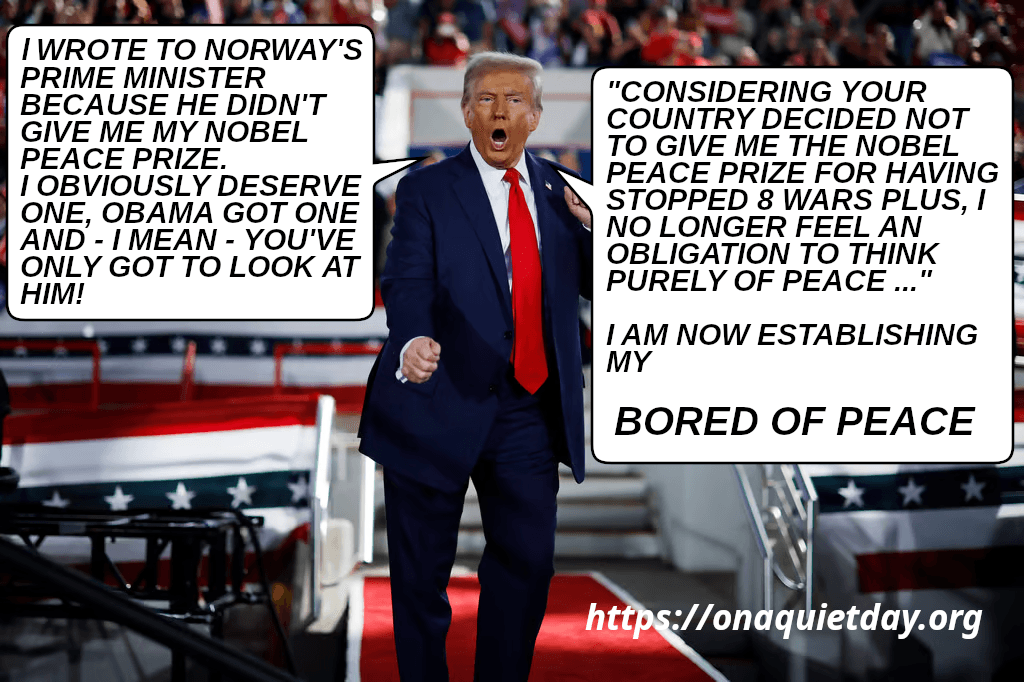
Donald Trump explains why he established his Bored of PeaceDonald Trump calls for help from NATO allies in securing the Strait of Hormuz despite saying on 7 March 2026 that they don’t need people to join wars after they’ve already won. He’s challenged with the claim that he lies as much as the IDF.Climate science denier Donald Trump confirms that he knows nothing about democracy and that more liquid gold is being secured according to his policy of global privateering.
This work by Middle East Monitor is licensed under a Creative Commons Attribution-NonCommercial-ShareAlike 4.0 International License.
U.S. President Donald Trump (R) welcomes Israeli Prime Minister Benjamin Netanyahu (L) at his Mar-a-Lago residence in Florida, United States on December 29, 2025. [Amos Ben-Gershom (GPO)/Handout – Anadolu Agency]
Written in response to last month’s military attack on the country, the letter delivers a swingeing critique of US foreign policy and historical conduct, accusing Washington of pursuing a doctrine of absolute predation.
It highlights major US wars of the 20th and 21st centuries, referring to “the genocidal horror of Vietnam,” “the annihilation of Cambodia,” and the “systematic slaughter of Koreans,” as well as the destruction of Iraq, Libya, Syria, and Afghanistan.
The open letter, titled ‘A Declaration to the Conscience of Humanity,’ is signed by over 170 signatories from countries and signatories include former UN officials, retired career diplomats, former ministers, scholars, politicians and former parliamentarians, military and security professionals, artists, lawyers as well as journalists, activists, and anti-war campaigners.
The public figures describe the current US posture as an expansionist strategy aimed at dominating global resources. The policy is driven by “the demonic creed of ‘everything for us, nothing for others’,” which seeks control of global resources ranging from “the oil of Venezuela” to “the mineral wealth of Greenland” or “the energy reserves of Canada”. US policy now “fixates on Iran” because the country possesses “over seven percent of the world’s mineral and energy wealth.”
The war on Iran is another sign of the “moral collapse” of the US-led West which finds its nadir in the genocide in Gaza and is embodied in the vulgar figure of President Trump. The letter goes on to call for a new international order centred on sovereignty and resistance to Western domination.
Beyond its criticism of US policy, the announcement also sets out several demands that the signatories say are necessary to end the current conflict. These include the immediate dismantling of all US military installations in the region and an end to war on all regional fronts.
The full text of the declaration, along with the complete list of signatories, can be read here.
This work by Middle East Monitor is licensed under a Creative Commons Attribution-NonCommercial-ShareAlike 4.0 International License.
Climate science denier Donald Trump confirms that he knows nothing about democracy and that more liquid gold is being secured according to his policy of global privateering.Keir Starmer explains that UK is actively supporting Israel’s genocidal expansion and repeats his previous quotation that he supports Zionism “without qualification”. Keir Starmer said “I said it loud and clear – and meant it – that I support Zionism without qualification.” here: https://www.jewishnews.co.uk/keir-starmer-interview-i-will-work-to-eradicate-antisemitism-from-day-one/