EIGHT firms that recently donated to the Labour Party were awarded contracts worth close to £138 million within the first year of Sir Keir Starmer’s government, researchers revealed today.
Their report, for the Autonomy Institute think tank, found that the firms’ donations, totalling £580,000, were tiny compared with the multimillion-pound public contracts they received.
Among them were accounting firm PwC UK, which had donated £236,000 since 2022 and been awarded £67m in contracts, and business consultancy Baringa Partners, which had given £30,000 since last year and signed deals worth £35m.
The trend carries on from the previous Tory government. Looking at May 2015 until last July, the report identified 29 companies which had donated £11m to the Conservative Party and then received contracts worth £2.3 billion.
These included Covid testing firm Randox Laboratories, which took £132.4m in contracts after donating £44,000, and consultancy KPMG, which secured £236m in deals after donating £170,000.
The report found that since 2000, for every £1 donated by a “giver and taker” company, they were awarded £1,294 in public contracts.
It describes the relationship between donations and government contracts as a “cause of concern for democratic governance, raising questions for transparency, accountability, and public trust” and calls for a ban on public contracts for firms that have made donations over the last decade.
Keir Starmer commits to restore honesty and integrity to politics and whores out access to all areas of Number 10 to a huge donor.Keir Starmer, Angela Rayner and Rachel Reeves wear the uniform of the rich and powerful. They have all had clothes bought for them by multi-millionaire Labour donor Lord Alli. CORRECTION: It appears that Rachel Reeves clothing was provided by Juliet Rosenfeld.
The right to social security is enshrined in several international agreements on human rights. But the UK’s system – even before the disability benefits cuts announced earlier this year – falls way below these standards.
For a new report published today, Amnesty International asked my colleague Lyle Barker and me to review the evidence about the state of the UK’s social security in relation to international human rights law.
The UK has signed and ratified a number of international agreements on human rights. One of these is the 1966 International Covenant on Economic, Social and Cultural Rights (ICESCR), which lays out the right to social security. An accompanying document defines the three key principles of this right as:
Availability A social security system established in law, administered publicly, and materially reachable by those who need it.
Adequacy Benefits must be suitable, both in amount and in duration, to realise essential socioeconomic rights.
Accessibility Everyone should be covered by the social security system, paying particular attention to disadvantaged and marginalised individuals and groups.
The conclusion of our study for Amnesty International is crystal clear: even disregarding the cuts announced in March, the UK’s social security system does not meet these standards.
Availability
Our review of the literature shows a widespread underclaiming of benefits. It has been estimated that in 2024, £22.7 billion in income-related benefits went unclaimed, a £4 billion increase from the previous year.
Gaps in official data hinder a clear understanding of why many people are missing out on the support they are entitled to. But qualitative evidence suggests this is largely due to fear, stigma, bureaucratic and digital hurdles, and eligibility cliff edges for means-tested benefits.
In recent years, the UK government has adopted a contentious and punitive stance toward benefit recipients. Media and political rhetoric have portrayed those who claim benefits as idle or undeserving scroungers.
This stigma harms the mental health and self-esteem of people experiencing poverty. It can result in shame and secrecy, and create barriers to people accessing support they are entitled to.
Our research for Amnesty International concludes that UK claimants do not get enough information and support about their rights to benefits. Combined with the stigma of claiming, the UK is falling far short of making benefits “available” in line with international standards.
Adequacy
Since the austerity policies of the 2010s, the UK’s social security system has become significantly less adequate in supporting vulnerable people and families. The basic rate of universal credit (the main benefit for working-age people on a low income) is at 40-year low in real terms amid a cost of living crisis.
Restrictive policies, such as the benefit cap (introduced in 2013 to set a maximum limit to the total benefits received by a household) and the two-child limit have curtailed access to essential benefits. Although inflation adjustments in the last two years provided some relief, many benefits still fail to keep up with rising living costs.
The two-child limit is the cruellest expression of the inadequacy of the UK’s social security system. Introduced by the Conservative government in 2017, the two-child limit restricts financial support through universal credit to two children. It is likely to be the most significant single cause of child poverty in the UK, including in families where adults work but do not earn enough to make ends meet.
When Labour returned to power, there was much speculation about whether they would reverse the two-child limit. But despite pleas from experts and people with direct experience, the government has persisted in retaining it.
Accessibility
Our study lays out the many barriers to accessibility in the UK’s system. For example, the bureaucratic hurdles in the assessment process, and the disproportionate impact of punitive sanctions on lone mothers and on minority ethnic claimants.
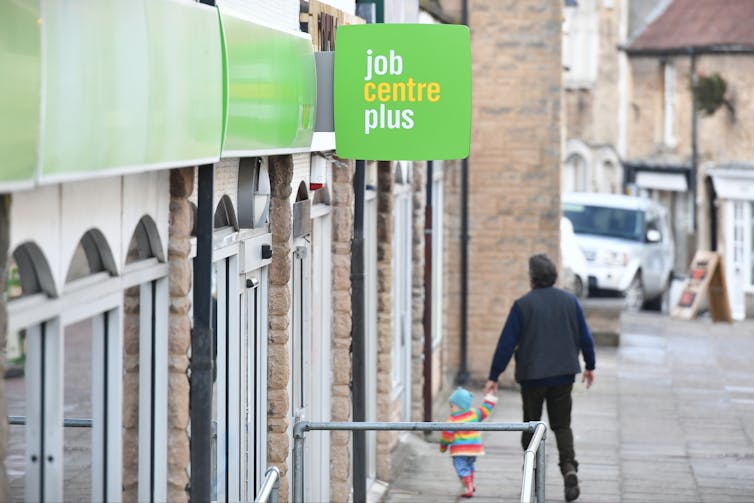
The UK operates a benefits sanction regime, which imposes penalties on claimants who fail to meet certain conditions. These include attending jobcentre appointments or accepting job offers. In general, sanctions and the fear of sanctions erode the trust between benefit claimants and the social security system.
Benefits sanctions are just one of the barriers to accessing social security. 1000words/Shutterstock
As it did in its previous review in 2016, in February the UN Committee on Economic, Social and Cultural Rights recommended that the UK review the use of benefit sanctions to ensure they are used proportionately and are subject to prompt and independent dispute resolution mechanisms.
Another accessibility concern is the shift to a digital-by-default system in the 2010s. While intended to make accessing benefits more efficient, it has become an administrative barrier.
Many people, particularly the elderly and others who are less digitally literate, struggle to navigate the benefits system. It excludes people without reliable internet access, underscoring a digital divide that prevents meaningful access to social security.
Meeting standards
Given the evidence, it is no surprise that earlier this year, the UN Committee on Economic, Social and Cultural Rights urged the UK government to assess the cumulative effects of the austerity measures introduced in the 2010s.
In particular, the committee recommended reversing the two-child limit, the benefit cap and the five-week delay for the first universal credit payment, and increasing the budget allocated to social security. These recommendations were made before the changes announced in the spring statement.
To live up to the internationally recognised right to social security, the UK should recognise in law, policy and practice that social security is a human right. And, that it is essential to the fulfilment of other human rights.
Amnesty International recommends the government set up a commission with statutory powers, to produce a strategy for “wholesale reform” of the social security system. The UK must establish a minimum support level and an essentials guarantee, to ensure beneficiaries can consistently meet their basic needs. A good way to start would be abolishing the two-child limit once and for all.
Keir Starmer says that the Labour Party under his leadership all feel a small part of Scunthorpe.Keir Starmer, Angela Rayner and Rachel Reeves wear the uniform of the rich and powerful. They have all had clothes bought for them by multi-millionaire Labour donor Lord Alli. CORRECTION: It appears that Rachel Reeves clothing was provided by Juliet Rosenfeld.
Over the past few weeks, senior figures in the Labour government, including prime minister Keir Starmer, have faced criticism for accepting thousands of pounds worth of gifts from party donors, including clothes, glasses and tickets to must-see events.
While far from the first allegations of ‘sleaze’ against politicians in recent years, it comes just months after Labour made ‘serving the country’ a key theme of their election campaign, with their manifesto accusing the Conservatives and SNP of failing to “uphold the standards expected in public life”.
Labour and Starmer have stressed that their actions were within the rules, with Starmer also deciding to pay back £6,000 worth of gifts that received as donations, a move that eight in ten Britons (79%) support. Nonetheless, the controversy has left a mark on the government.
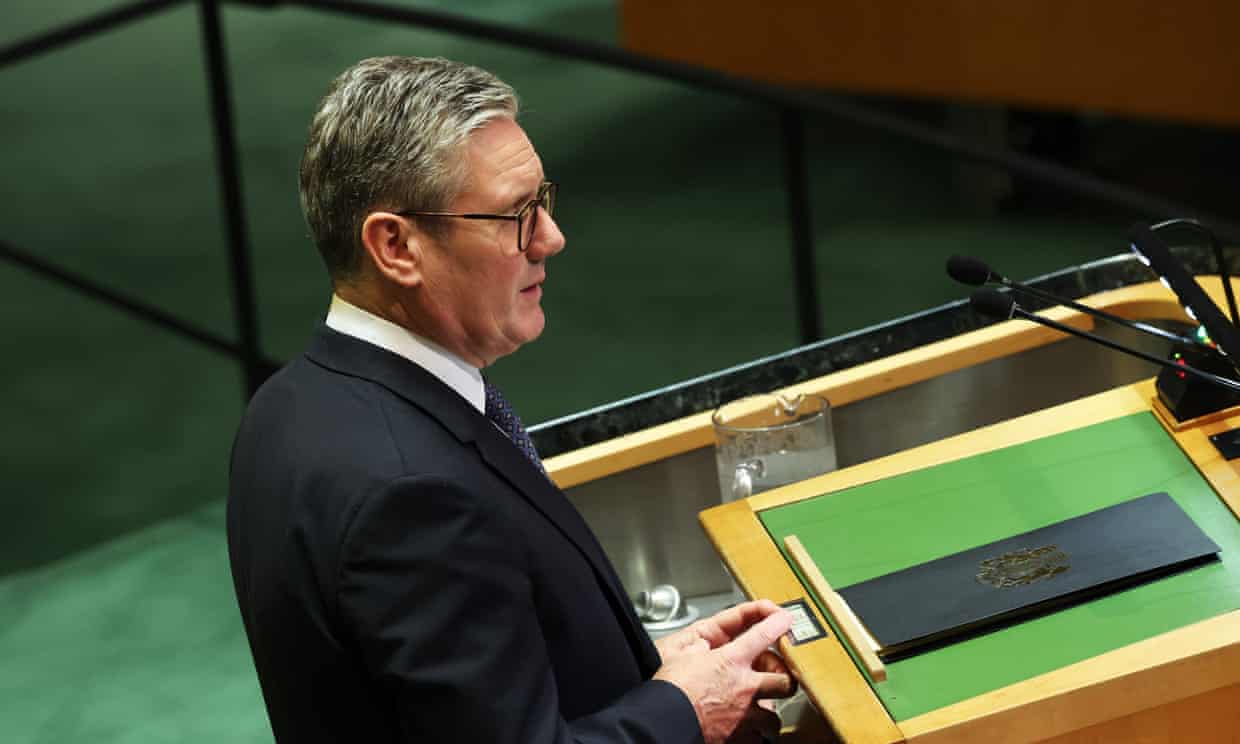
It is understood that Starmer has sought advice from the registrar of MPs’ interests and that the donations will be recategorised as donations in kind of clothing. Photograph: Michael M Santiago/Getty Images
Keir Starmer was given a further £16,000 worth of clothes by the Labour peer Waheed Alli, which was declared as money for his private office, the Guardian can reveal.
The donations, comprising £10,000 in October 2023 and £6,000 in February 2024, bring the total amount in gifted clothes to £32,000.
These latest gifts were not previously known about as they were described as being “for the private office of the leader of the opposition”.
The revelation is likely to reignite a row over the extent of donations that Starmer and some of his frontbench team acccepted while in opposition, much of it from Alli.
…
He has also been criticised for accepting tens of thousands of pounds’ worth of football and concert ticket freebies while leader of the opposition. His wife, Victoria, also received clothes as donations, as did Rachel Reeves, the chancellor, and Angela Rayner, the deputy prime minister.

 A view of, £5, £10, £20 and £50 bank notes