Madagascar’s military seizes power after parliament impeaches fleeing parliament impeaches fleeing President Rajoelina

Spread the love

Original article by Nicholas Mwangi republished from peoples dispatch under a Creative Commons Attribution-ShareAlike 4.0 (CC BY-SA) license.
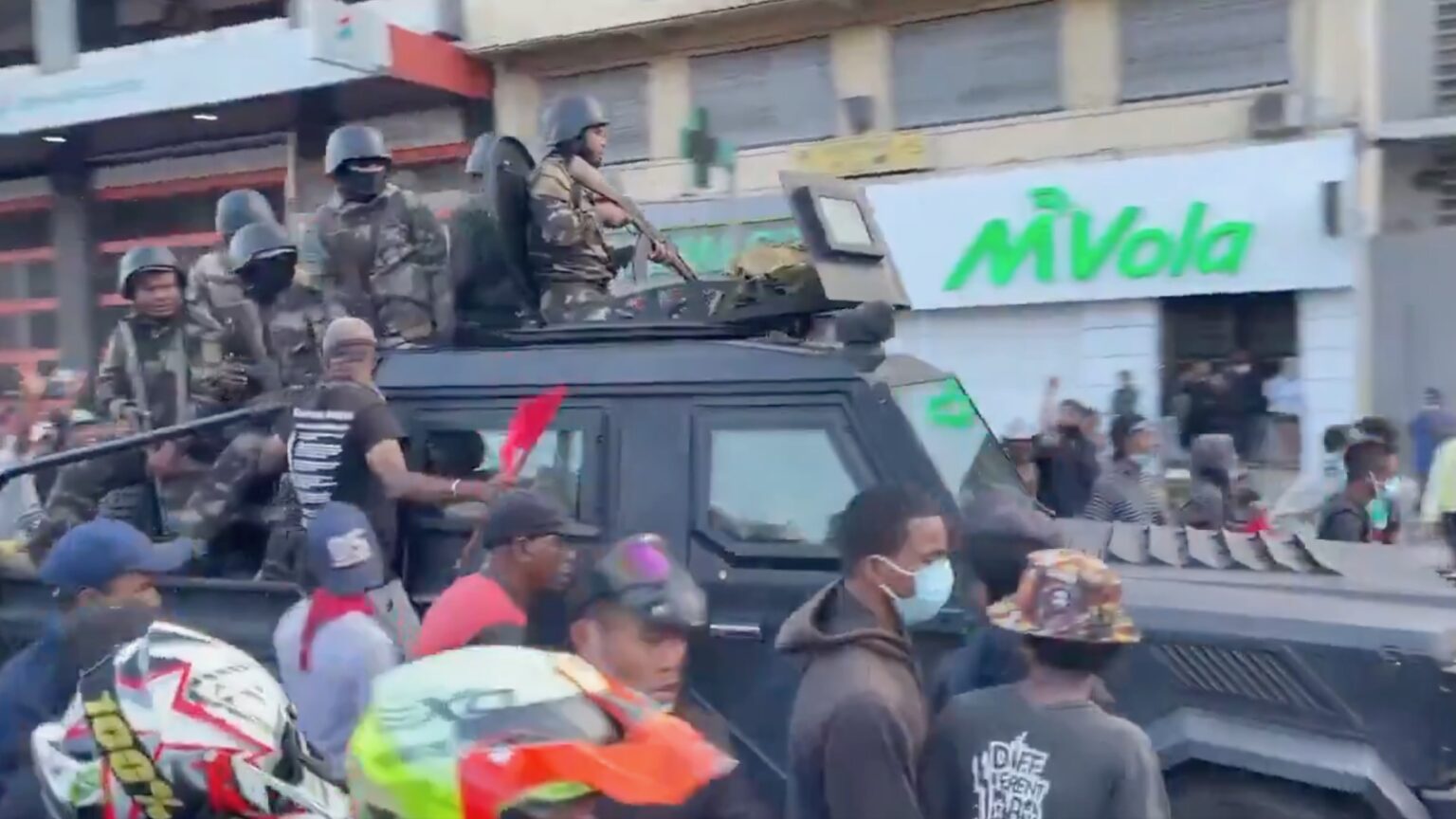
An elite army unit has announced it has taken control of the military as soldiers join anti-government protests. Photo: screenshot

According to reports, President Andry Rajoelina of Madagascar fled to France following an agreement with President Emmanuel Macron. While he insists that he remains the leader, the military has taken over and the National Assembly has impeached him.

Weeks of youth-led demonstrations against water and power shortages in Madagascar have escalated into a full-blown political crisis, with an elite military unit announcing that it now commands the armed forces in what President Andry Rajoelina has described as a coup d’état. 

On Tuesday October 14, Colonel Michael Randrianirina, acting commander of the elite CAPSAT military unit, announced on national radio that the military had taken control of state institutions and would form a transitional government. Randrianirina later told reporters that a committee led by the military would oversee the country for a transitional period of up to two years, working alongside a civilian government before organizing new elections.

This is after the National Assembly voted overwhelmingly to impeach President Andry Rajoelina (130 in favor, one blank), just hours after he attempted to dissolve parliament by decree on Monday.

The mass protests, described as the largest in the country in years, initially forced Rajoelina to dissolve his government in late September. But the move did little to quell public anger. Instead, demands intensified, with protesters calling for the president’s resignation after years of economic hardship and deteriorating public services.

Rajoelina, who was scheduled to address the nation on Monday evening, was reportedly evacuated from the capital following an arrangement brokered with French President Emmanuel Macron, according to Radio France Internationale (RFI). French authorities later stated that they were not intervening in Madagascar’s internal crisis, which has continued to escalate since September 25.

Elite military unit declares control

The escalation reached a new level this week when members of CAPSAT, an elite army unit, declared they had taken control of the armed forces. The declaration followed reports that some military soldiers had joined the protesters in the streets of Antananarivo and other cities last week. CAPSAT had a major role in the 2009 political upheaval that first brought Rajoelina to power.

Political shake-up fails to quell anger

The president had previously attempted to restore order by appointing Army General Ruphin Fortunat Zafisambo as prime minister, following the dissolution of his civilian government. However, the appointment appears to have failed to stabilize the situation.

Many had condemned the government’s heavy-handed response to the demonstrations in recent weeks. Security forces used tear gas, arbitrary arrests, and live ammunition against largely peaceful protesters, leaving at least 22 people dead and over 100 injured, according to UN human rights officials.

Deep-rooted discontent

Rajoelina’s 15-year grip on power, including his return to the presidency in 2018 and contested re-election in 2023, has done little to address Madagascar’s deep social and economic problems. The island nation remains one of the poorest in the world, with millions lacking reliable access to water, electricity, and essential services.

Popular anger, fueled by unemployment, corruption, and inequality, has been building for years and exploded into the current wave of protests, largely driven by young people.

Now as the situation rapidly unfolds, Madagascar faces deep uncertainty. If the military solidifies its hold, it could mark the second successful coup in the country’s modern history. 

With what is unfolding, whether this crisis ushers in a political transition and stability will depend on the coming days, but the anger driving Madagascar’s youth-led movement has already reshaped the nation’s political reality.

Original article by Nicholas Mwangi republished from peoples dispatch under a Creative Commons Attribution-ShareAlike 4.0 (CC BY-SA) license.

Continue ReadingMadagascar’s military seizes power after parliament impeaches fleeing parliament impeaches fleeing President Rajoelina

Climate, migration and conflict mix to create ‘deadly’ intense tropical storms like Chido

Spread the love
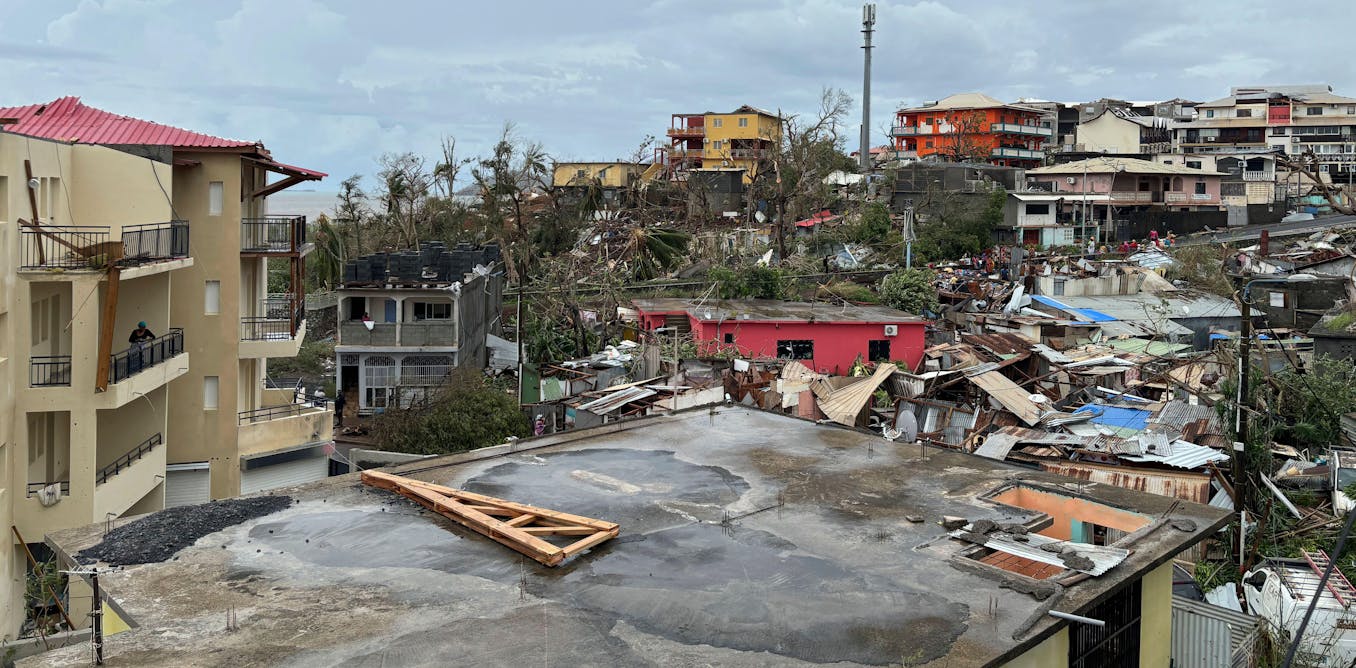
Damaged houses in Mamoudzou, in the French Indian Ocean territory of Mayotte on December 16 2024 after being battered by the islands’ worst cyclone in nearly a century. Associated Press / Alamy Stock Photo

Liz Stephens, University of Reading; Dan Green, University of Bristol, and Luis Artur, Universidade Eduardo Mondlane

Cyclone Chido was an “intense tropical cyclone”, equivalent to a category 4 hurricane in the Atlantic. It made landfall in Mayotte, a small island lying to the north-west of Madagascar on December 14, generating wind gusts approaching 155mph (250km/hr). Later on, it hit Mozambique, East Africa with the same ferocity.

This storm skirted north of Madagascar and affected the Comoros archipelago before making landfall in Mozambique. It is well within the range of what is expected for this part of the Indian Ocean. But this region has experienced an increase in the most intense tropical cyclones in recent years. This, alongside its occurrence so early in the season, can be linked to increases in ocean temperatures as a result of climate change.

News of the effects of tropical cyclone Chido in Mayotte, Mozambique and Malawi continues to emerge. Current estimates suggest 70% of Mayotte’s population have been affected, with over 50,000 homes in Mozambique partially or completely destroyed.

Ongoing conflict in Mozambique and undocumented migration to Mayotte will have played a key role in the number of deaths and the infrastructure damage.

Assessing how these cyclones characteristics are changing across southern Africa is part of the research we are involved in. Our team also studies how to build resilience to cyclones where conflict, displacement and migration magnify their effects.

A human-made disaster?

The risk that tropical cyclones pose to human life is exacerbated by socioeconomic issues. Migrants on Mayotte, many of whom made perilous journeys to escape conflict in countries such as the Democratic Republic of Congo, now make up more than half of the island’s population.

Precarious housing and the undocumented status of many residents reportedly made the disaster more deadly, as people feared evacuation would lead them to the police. On islands with poor infrastructure such as Mayotte, there is often simply nowhere safe to go. It takes many days for the power network and drinking water supply to be restored.

The situation is particularly complex in Mozambique. The ongoing conflict and terrorist violence, coupled with cyclones, including Kenneth in 2019, has caused repeated evacuations and worsening living conditions. Cabo Delgado and Nampula in the far north of Mozambique, the provinces most affected by both Chido and the conflict, rank among the poorest and most densely populated in the country due to limited education, scarce livelihood options and an influx of people displaced by violence.

https://twitter.com/BBCWorld/status/1869021561010676172?ref_src=twsrc%5Etfw%7Ctwcamp%5Etweetembed%7Ctwterm%5E1869021561010676172%7Ctwgr%5Ef225adfa1f4ada1a75ec41e3c80d2ded4e9944a3%7Ctwcon%5Es1_c10&ref_url=https%3A%2F%2Ftheconversation.com%2Fclimate-migration-and-conflict-mix-to-create-deadly-intense-tropical-storms-like-chido-246219

As of June 2024, more than half a million people remained without permanent homes in the region, many living in displacement camps. That number is likely to rise significantly after Chido.

Compounding the crisis, Chido’s landfall so early in the cyclone season meant that the usual technical and financial preparations were not yet fully ramped up, with low stock levels delaying the timely delivery of aid. Unrest following elections in November hampered preparations further, cutting the flow of resources and personnel needed for anticipatory action and early response.

Tropical cyclones in a warmer world

Warmer sea surface temperatures not only provide more fuel for stronger storms, but may also expand the regions at risk of tropical cyclones.

The Indian Ocean is warming faster than the global average, and is experiencing a staggering increase in the proportion of storms reaching the intensity of Chido.

Climate simulations predict that storms will continue getting stronger as we further warm our world, and could even lead to an unprecedented landfall as far south as the Mozambican capital, Maputo.

Scientists carry out attribution studies to determine how climate change contributed to specific events. Scientists undertaking rapid attribution studies of Chido have found that the ocean surface temperatures along the path of the storm were 1.1°C warmer than they would have been without climate change. So, temperatures this warm were made more than 50 times more likely by climate change. Another study focusing on Chido itself concluded that the cyclone’s winds were 5% faster due to global heating caused by burning fossil fuels, enough to bump it from a category 3 to a category 4 storm.

Intense winds are not the only hazard. Scientists are confident that tropical cyclones will dump more rain as a result of climate change. A trend towards slower-moving storms has been observed, causing more of that rain to accumulate in a single location, resulting in floods.

Cyclone Freddy delivered a year’s worth of rain to southern Malawi in just four days in March 2023. Storm surges, exacerbated by sea level rise, also raise the scale of flooding, as in the devastating Cyclone Idai in March 2019. An increase in the number of storms that rapidly intensify, as Chido did before landfall in Mayotte has also been linked to climate change, which makes it harder to provide early warnings.

To improve resilience to future cyclones, conflict, migration and social dynamics must be considered alongside climate change, without this, displaced and migrant communities will continue to be the most affected by the risks that climate change poses.


Imagine weekly climate newsletter

Don’t have time to read about climate change as much as you’d like?
Get a weekly roundup in your inbox instead. Every Wednesday, The Conversation’s environment editor writes Imagine, a short email that goes a little deeper into just one climate issue. Join the 40,000+ readers who’ve subscribed so far.


Liz Stephens, Professor of Climate Risks and Resilience, University of Reading; Dan Green, PhD Candidate in African Climate Science, University of Bristol, and Luis Artur, Lecturer and Researcher of Disaster Risk Reduction, Universidade Eduardo Mondlane

This article is republished from The Conversation under a Creative Commons license. Read the original article.

Continue ReadingClimate, migration and conflict mix to create ‘deadly’ intense tropical storms like Chido