This work by Middle East Monitor is licensed under a Creative Commons Attribution-NonCommercial-ShareAlike 4.0 International License.
Palestinians continue their lives amid the rubble of destroyed buildings and limited living conditions after returning to Khan Yunis, which was heavily damaged by two years of Israeli attacks, on November 10, 2025. [Abed Rahim Khatib – Anadolu Agency]
The ceasefire agreements that ended the recent conflicts in Gaza and Lebanon are at risk of collapse, according to a report by the Israeli newspaper Yedioth Ahronoth.
The report said it took nearly a year to reach the ceasefire in Lebanon and just over a month in Gaza. Now, both agreements have reached a “critical point” at the same time and could fall apart.
The Gaza ceasefire, which began on 10 October 2025, was part of a plan to resolve major issues following the return of living prisoners. Other contentious matters, including the disarming of Hamas, were scheduled to be addressed later. However, ongoing disputes and the failure to return all deceased prisoners have raised questions about Gaza’s future.
The newspaper added that some senior US officials under President Donald Trump reportedly fear that his peace plan for the region, which is meant to formally end fighting between Israel and Hamas, may fail due to difficulties in implementing key parts.
Under the first stage of the plan, 20 living prisoners were returned. Israel currently controls around 53 per cent of Gaza’s territory, including large agricultural areas, Rafah in the south, and parts of Gaza City. Meanwhile, nearly two million Palestinians have been displaced to camps made up of tents and the ruins of cities that remain under Hamas control.
This work by Middle East Monitor is licensed under a Creative Commons Attribution-NonCommercial-ShareAlike 4.0 International License.
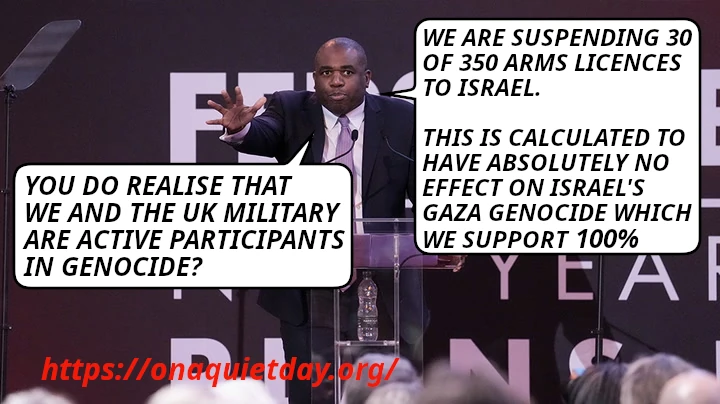
Genocide denier and Current UK Prime Minister Keir Starmer is quoted that he supports Zionism without qualification. He also confirms that UK air force support has been essential in Israel’s mass-murdering genocide. Includes URLs https://www.declassifieduk.org/keir-starmers-100-spy-flights-over-gaza-in-support-of-israel/ and https://youtu.be/O74hZCKKdpAKeir Starmer objects to criticism of the IDF. He asks how could anyone object to them starving people to death, forced marches like the Nazis did, bombing Gaza’s hospitals and universities, mass-murdering journalists, healthworkers and starving people queuing for food, killing and raping prisoners and murdering children. He calls for people to stop obstructing his genocide for Israel.Orcas discuss Genocide-supporting and complicit Zionists. Donald Trump, Keith Starmer, David Lammy, Rachel Reeves, Angela Rayner and Wes Streeting are acknowledged as evil genocide-complicit and supporting cnuts.
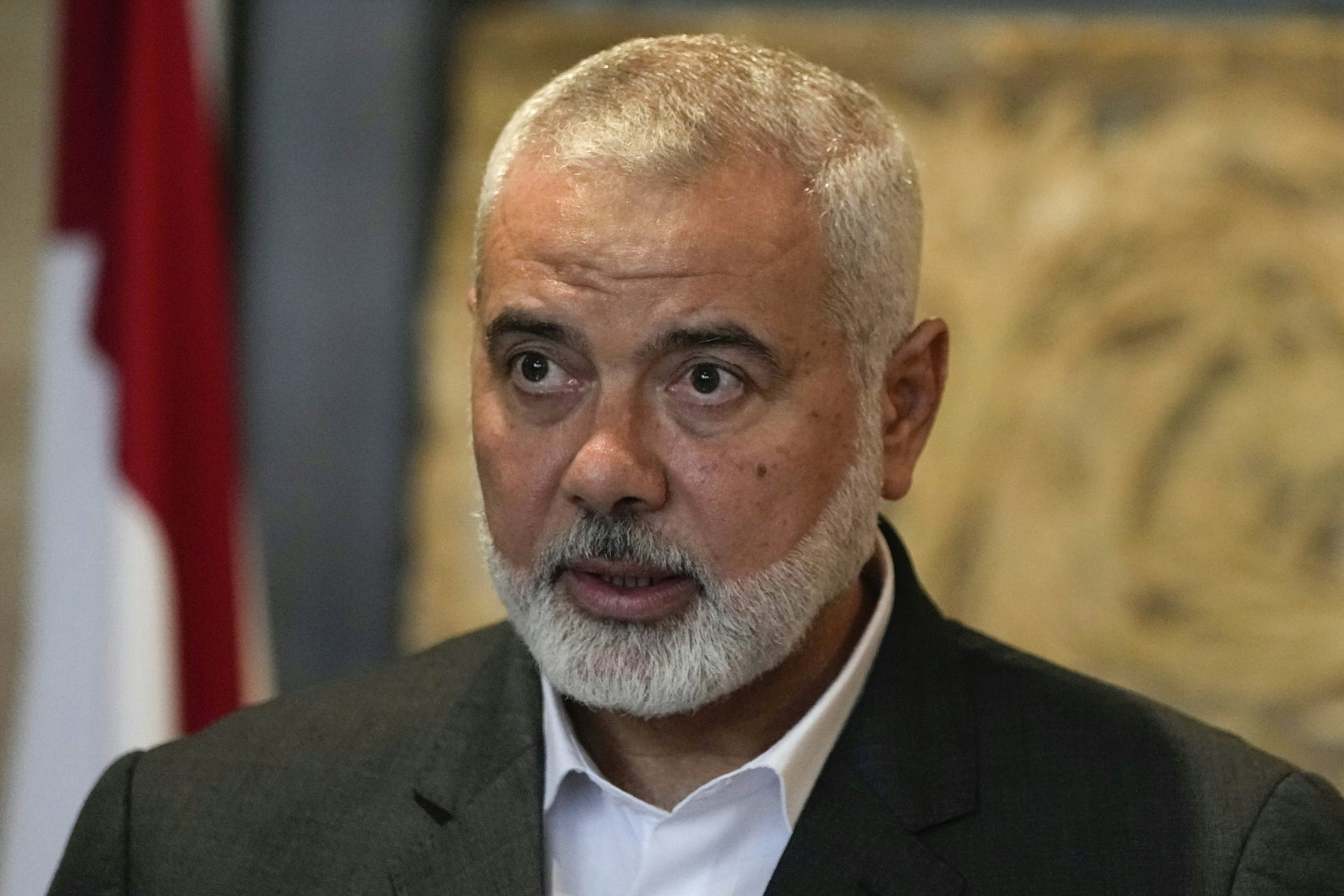
Palestinian militant group Hamas says its top political leader, Ismail Haniyeh, has been killed in his home in Tehran. It blames Israel for the attack, saying it was “a Zionist airstrike on his residence in Tehran after he participated in the inauguration of Iran’s new president”.
Palestinian group Hamas has released a statement regarding the assassination of its political leader Ismael Haniyeh in Iran.
Iran has not yet given any details on how Haniyeh was killed, but says it is under investigation.
With the war in Gaza showing no sign of abating and the whole Middle East on a knife’s edge, the killing raises questions about whether it may spark a wider regional war.
Who is Ismail Haniyeh?
Haniyeh is the most senior political leader of Hamas, based in Doha, Qatar. He was essentially the Hamas leader for the ceasefire negotiations with Israel in the Gaza War, brokered by the United States, Egypt and Qatar. These negotiations will obviously now be on hold.
While Israel has not yet claimed responsibility for his death – and this is unlikely, given it does not typically claim responsibility for covert actions – Haniyeh has long been on its list of targets.
What is surprising, though, is where and how it was done. Haniyeh was in Tehran to attend the swearing-in ceremony of Iran’s new president, Masoud Pezeshkian. Details of exactly what happened are still sketchy, but it appears Haniyeh was killed along with one of his bodyguards by an explosion in his building. We do not yet know if the explosion was from a remotely controlled bomb or a missile attack.
Iran’s Islamic Revolutionary Guard Corps (IRGC) is investigating the killing.
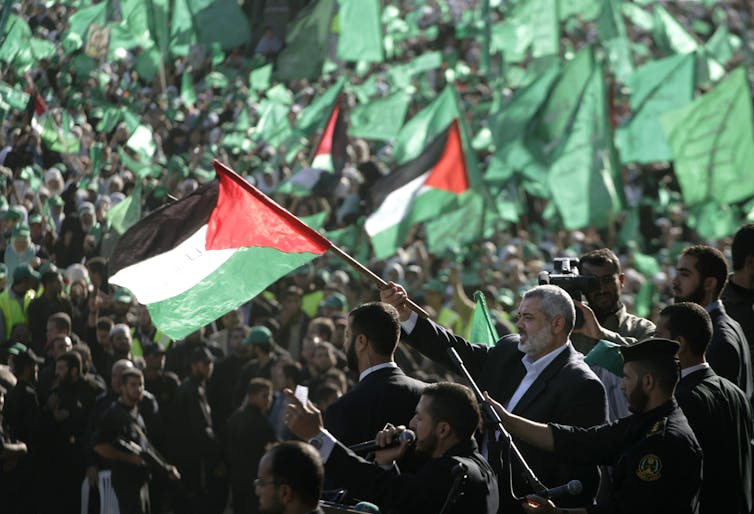
Haniyeh at a rally in 2007, when he was Palestine’s Prime Minister. EMILIO MORENATTI/AP
What does this mean for a wider regional war?
There are two important issues that will be under close scrutiny in the coming hours and days.
The first is that, assuming it was Israel that was responsible for Haniyeh’s killing, it raises the question of whether Iran will retaliate because Haniyeh was under the country’s protection when he was killed. His death is likely to cause enormous anger in Iran, and may in turn prompt retaliation against Israel on top of that from Hamas.
Tensions between Iran and Israel have been long been high. In April, Iran launched more than 300 missiles and drones at Israel in retaliation for an attack on the Iranian consulate in Damascus. The attack killed several senior IRGC leaders.
The attack on Haniyeh is indicative of a remarkable degree of intelligence and operational access that Israel seems to have in Iran at the moment. In recent years there has been a steady stream of Iranian scientists working on the nuclear program who have been killed. This includes the program’s “father”, Mohsen Fakhrizadeh, who was killed by a sophisticated remote-controlled machine gun in 2020.
However, there remain Hamas leaders on Israel’s list who, as far as can be discerned, are still alive. Gaza political leader Yahya Sinwar is apparently still directing the operations of militants there. In July, Israel carried out a strike that was believed to have killed the elusive military leader Mohammed Deif. However, Hamas has not acknowledged this, and Deif has survived several previous assassination attempts.
The second major question is whether Lebanon-based Hezbollah will launch an attack on Israel, at Iran’s behest.
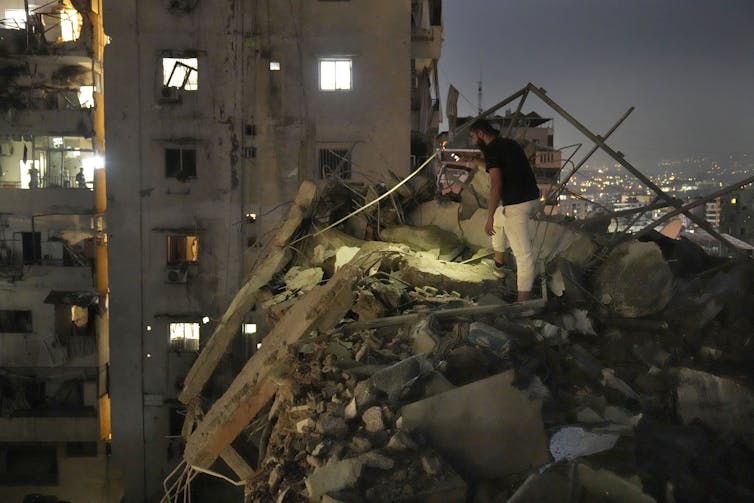
The Haniyeh killing comes within hours of an Israeli airstrike in southern Beirut, in which Israeli officials believe they have killed senior Hezbollah commander Fuad Shukr.
An Israeli airstrike on Southern Beirut, Lebanon threatens to further increase tensions in the region. Hussein Malla/AP
If Iran were to retaliate, it might be through Hezbollah from Lebanon. A major missile barrage from Hezbollah could potentially overwhelm Israel’s Iron Dome missile defence system.
Iran also has other allies on which it can call, including Shia militant groups in Syria and Iraq, as well as the Houthis in Yemen who have already launched a drone strike on Tel Aviv last week. Israel quickly retaliated.
What happens now is difficult to say until there is more information. But what is certain is that the killing of Haniyeh is likely to cause a significant escalation in the Gaza War, and possibly in the wider Middle East.
As the U.S. faces another potentially record heat wave this week, the Middle East and Europe’s Mediterranean have endured extreme temperatures that have proven deadly.
The big picture: Multiple heat-related deaths have been reported in Greece during the country’s earliest heat wave on record and Jordan’s official news agency said Sunday “14 Jordanian pilgrims died and 17 others were missing” in the searing heat while on the Islamic Hajj pilgrimage to Mecca in Saudi Arabia.
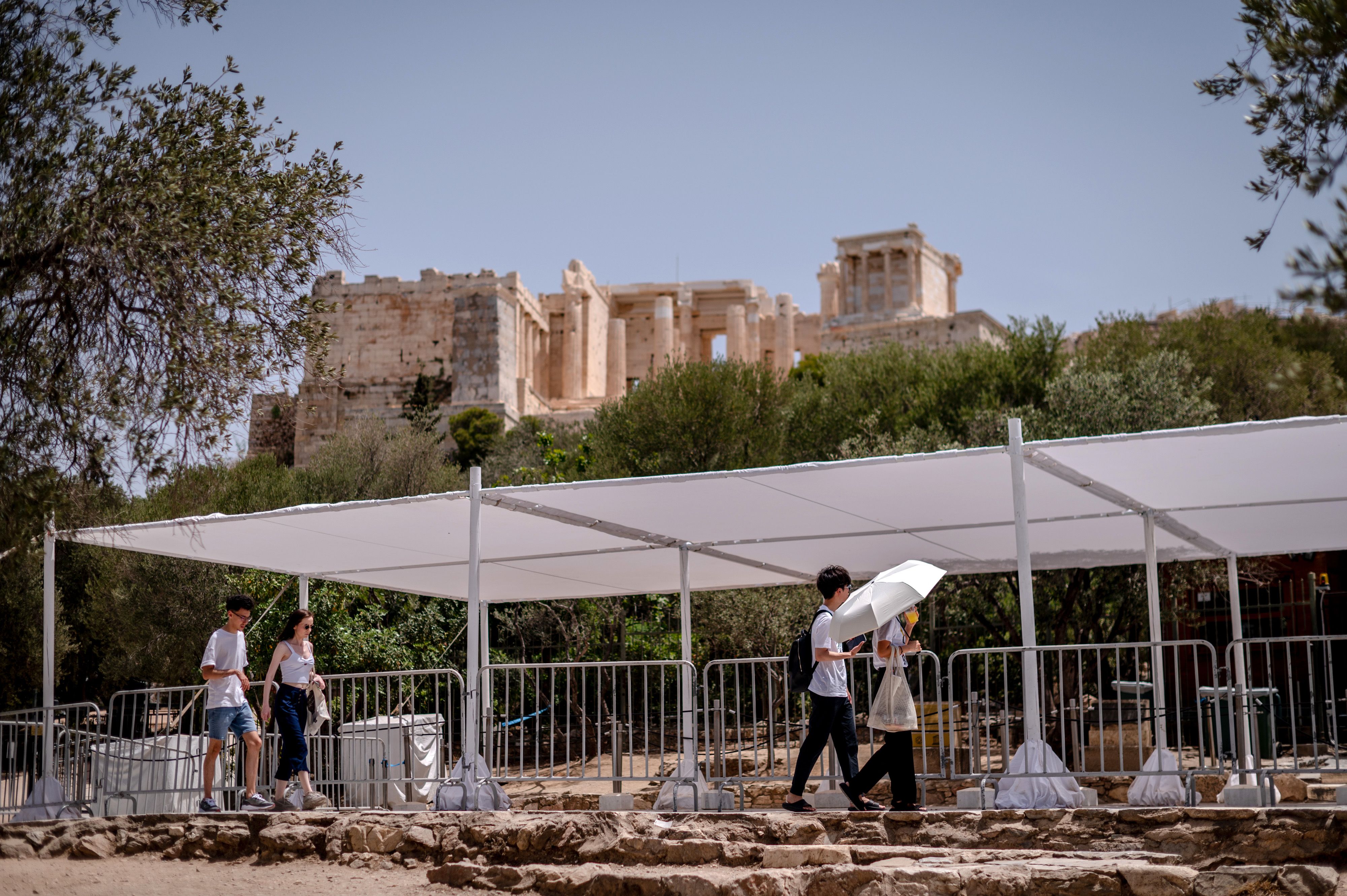
Tourists outside the Acropolis during high temperatures in Athens, Greece, on June 12, when authorities announced the closure of the ancient site for five hours due to soaring temperatures that also shut schools. Photo: Hilary Swift/Bloomberg via Getty Images
The heat waves sweeping these regions this month have been made “at least five times more likely” because of human-caused climate change, per new Climate Central analysis.
Context: Climate Central’s analysis is based on the group’s Climate Shift Index (CSI), which compares observed or forecast temperatures with simulations of the same weather conditions minus excess atmospheric greenhouse gases, per Alex Fitzpatrick.
The idea is to compare real-world conditions with what might have been the case had human-caused climate change been absent.
Saudi Arabia had a CSI of 5, meaning that human-caused climate change made a given daily average temperature five times more likely as of Monday morning. Greece, which has endured two weeks of extreme heat, had a CSI of 5 last week and 2 on Monday. Parts of Turkey had a CSI of 5.
A joint report by UN and European Union agencies found in April that Europe’s temperatures are rising about twice as fast the global average due to human-caused climate change — making it the fastest-warming continent on Earth.
The conflict in the Middle East has led British political actors to try and redefine what is ‘acceptable speech’
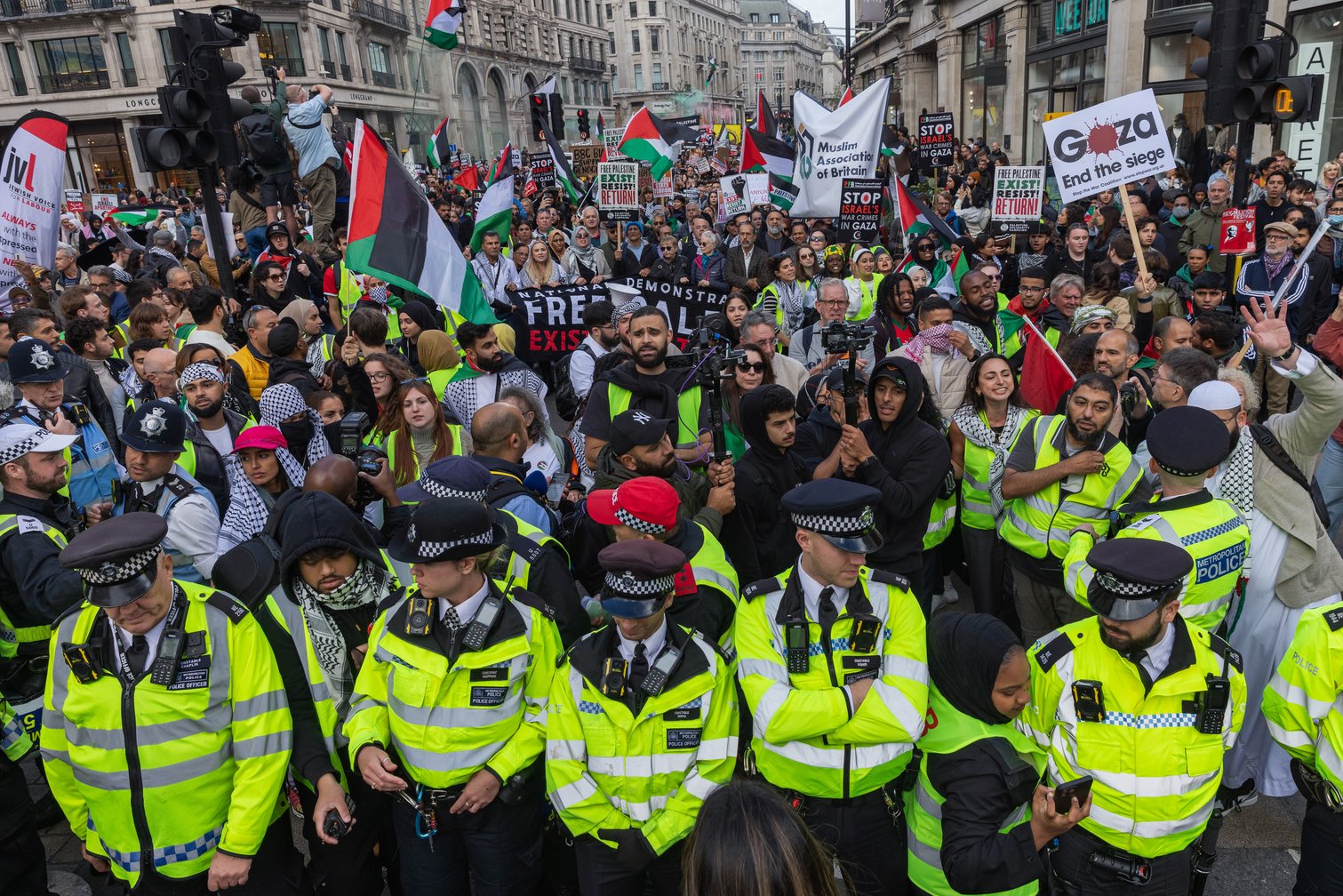
Police and protesters at the March for Palestine in London on Saturday | Mark Kerrison/In Pictures via Getty Images
As a humanitarian crisis unfolds in the Middle East, the UK government and its backers in the media have sought to marginalise and silence dissenting voices by targeting protest movements showing solidarity with the Palestinian cause.
Hundreds of people in Israel were killed, just over a week ago, in a brutal attack by Hamas. In response, Israel has moved swiftly against Hamas and the Palestinian population living in the Gaza strip. It has cut off their electricity and prevented the entry of food, water and medical supplies as it commences a devastating bombardment of homes and civilian infrastructure, leaving hundreds dead.
The reaction to these unfolding events in Britain has been one of shock and anger. Amongst the political class, a closing of the ranks has occurred, shoring up support for Israel as it strikes against the Palestinian population. And as part of this, political actors have sought to demarcate new boundaries on what is acceptable speech in the UK.
Foreign secretary James Cleverly on Tuesday urged pro-Palestinian protesters to stay at home. And home secretary Suella Braverman wrote to police chiefs asking them to take action against acts of protest that – in whose eyes it was not clear – might indicate support for Hamas.
She singled out the waving of the Palestinian flag in particular as being illegitimate “when intended to glorify acts of terrorism”, and asked that the police “consider whether chants such as: ‘From the river to the sea, Palestine will be free’ should be understood as an expression of violent desire to see Israel erased from the world” and therefore a “racially aggravated” crime.
The Telegraph has also reported that Robert Jenrick, the immigration minister, has commissioned officials in the Home Office to consider how they could revoke visas and expel foreign students who “praise Hamas”.
There are undoubtedly circumstances in which the use of particular chants or imagery could be inflammatory or even threatening. But the purpose of these statements is not to protect British communities (that much is clear from Braverman’s failure to issue a similar letter warning against attacks on Muslim or pro-Palestinian groups). The purpose is rather to intimidate would-be protestors and delegitimise criticism of Israel by aligning it with criminality.
The government’s views on acts of protest are mirrored by the official opposition: a diktat sent out by Labour Party general secretary David Evans warned members, councillors and MPs against attending pro-Palestine demonstrations. Labour has gone further still by also forbidding debate on Israel-Palestine in local party branches – a censorship not even attempted by Tony Blair during the lead-up to the Iraq war.
The results of Braverman’s provocation can already be seen. On Wednesday, Greater Manchester Police arrested four people for breaching the peace “during events… marking the Hamas-Israel conflict”, later de-arresting three of them. A video taken at the scene of the arrest and posted online shows a young man being led into a police van, a Palestine flag wrapped around his shoulders, as concerned onlookers shout at officers: “He has done nothing wrong,” and: “Freedom of speech.”
The Metropolitan Police Service itself appears to have ruled out any crackdown on people waving the Palestinian flag. But on Thursday night, the Palestinian Literature Festival was forced to cancel a book launch for Jewish American journalist Nathan Thrall’s latest book ‘A Day in the Life of Abed Salama: A Palestine Story,’ “after the Metropolitan Police Service contacted the host organisation and asked that it be cancelled ‘due to security concerns’.”
And at London’s ‘March for Palestine’ demonstration on Saturday, legal observers from Black Protest Legal Support witnessed the police make arrests of protesters who had refused to remove the ‘keffiyeh’ – a chequered black and white scarf that is symbolic of Palestinian nationalism and is traditionally worn around the head. In a statement, the Met Police confirmed four arrests for failing to remove face coverings that concealed the arrestee’s identity – at least one person has been subsequently charged, whilst others have been referred to youth offending teams.
These events (and the statements that preceded them) should be of concern not just to advocates of the Palestinian cause, but to anyone concerned about the erosion of democratic norms: here is the government using the murder of Israeli civilians abroad to attack free speech and the right to protest here in the UK.
One lawyer who spoke to openDemocracy this week linked Braverman’s crackdown on Palestinian flag-waving to the Public Order Act. That piece of legislation (which received royal assent in May 2023) was intended to break the backs of the climate movement, making it far easier for police forces to deem acts of protest illegal and criminalise those in attendance or organisers, for even minor disruption.
And last year, the Met Police used the spectre of Covid to target and criminalise those protesting against police brutality at a vigil for Sarah Everard, who was murdered by police officer Wayne Couzens.
Each crisis – climate, Covid, war – is seized upon by the state, government and media, as an opportunity to stifle dissent and curtail free speech. And it is through this framing that we can understand the response of the political and media establishment in the UK to Israel-Palestine: not simply as solidarity with the Israeli people but as an opportunity to attack our rights.
Attacks on freedom of speech relating to Palestine are not new. Palestinians in Britain have long experienced marginalisation and silencing, especially when giving voice to views on the “Palestinian experience of colonialism”.
This has been seen in particular within academia, which has become a battleground over acceptable speech on Israel-Palestine. In British schools, pupils have been sanctioned for expressing vocal support for Palestine, including with detentions and suspensions. Fear about reprisals, including referrals to the government anti-extremism programme Prevent, has been described as having a ‘chilling effect’ on engagement of students with the topic of Palestine.
This is part of a broader effort by the UK Home Office to identify protest movements and left-wing struggles as being outside of acceptable debate, with recent changes to the training on Prevent categorising “socialism” and “anti-fascism” under the heading “terrorist ideologies”. This process of delegitimisation is often backed by the media. In recent days attacks on free speech on Palestine have intensified.
On Wednesday, a report in the Times was published that “identified a dozen academics at Oxbridge and Russell Group universities who have posted statements appearing to justify the weekend’s attacks on Israel”. In one case, an academic had simply called for solidarity with the Palestinian struggle.
Much of the right-wing press has also chosen this moment to campaign for the BBC to refer to Hamas as a terrorist organisation, a term the BBC says does not meet impartiality rules – with the front page headline of Thursday’s Daily Mail eschewing proclamations on the outbreak of war and instead asking: “The King Calls Them Terrorists, Why Can’t The BBC?”. Defence secretary Grant Shapps also criticised the BBC on Radio 4 over the decision in a combative interview. The prominence this demand has been given raises questions about the priorities of the British press at such a high stakes moment.
Gaza is already partially reduced to rubble by Israeli airstrikes. More than two million people are experiencing total siege, bombardment and the removal of all basic human rights. Chemical weapons have now been confirmed as being in play and preparations are underway for a ground offensive by Israeli troops, with the 1.1 million Palestinians living in the most populated area of Gaza given 24 hours to move further south. This will almost certainly mean further atrocities.
The government and opposition both stand steadfastly behind Israel. Number 10 has said the UK will send surveillance aircraft and two Royal Navy ships to the eastern Mediterranean in plans “to support Israel”. The foreign secretary, James Cleverly, has himself travelled to Israel to “underline UK’s unwavering solidarity in the face of terror”. And both the leader of the opposition, Keir Starmer, and his shadow attorney general, Emily Thornberry, have refused to criticise Israel’s actions in Gaza or describe the “collective punishment” of civilians as a war crime.
This shocking complicity must be loudly challenged. Yet, as with the arrival of any shocking event, the political class moves quickly to turn the dial down ever further on legitimate speech.
If a ceasefire does arrive, without dissenting voices, the missing context – the dislocation of Palestinians in 1948, the occupation of the West Bank since 1967 and the 16-year blockade of Gaza – will continue not to be heard. As long as this silencing act continues, both the Palestinian and Israeli people will continue to suffer.