Deputy Prime Minister and Justice Secretary David Lammy (left) and Prime Minister Sir Keir Starmer during the Labour Party Conference at the ACC Liverpool, September 28, 2025
LABOUR is failing to uphold basic rights, the new head of the official equalities watchdog has warned.
Protesters, migrant workers and disabled people have been particularly targeted by the government, Equality and Human Rights Commission (EHRC) chairwoman Mary-Ann Stephenson has told ministers.
Dr Stephenson, who took up her role at the start of the month, urged the government to “ensure rights are protected across the nation.”
Her warning comes as PM Sir Keir Starmer is looking to persuade other European leaders to dilute the European Convention on Human Rights to make it easier to block refugees.
Dr Stephenson highlighted areas where “key human rights” are not being guaranteed.
She said: “The government has made commitments to protect everyone’s fundamental human rights.
“While there has been progress in some areas, it is failing to uphold basic rights in others — particularly by permitting heavy-handed responses to peaceful protests, failing to ensure disabled people can access healthcare on a level playing field with others, and allowing labour exploitation to go unchecked for certain workers.
“This failure to uphold key human rights is concerning for each and every one of us.
“That’s why we’ve written to ministers to urge them to review our new report and ensure rights are protected across the nation.”
The warning echoes complaints made by her predecessor, Kishwer Falkner, about “heavy-handed policing” of Gaza solidarity demonstrations which she said risked a “chilling effect” on protest rights.
Keir Starmer objects to criticism of the IDF. He asks how could anyone object to them starving people to death, forced marches like the Nazis did, bombing Gaza’s hospitals and universities, mass-murdering journalists, healthworkers and starving people queuing for food, killing and raping prisoners and murdering children. He calls for people to stop obstructing his genocide for Israel.
Farm owners have besieged parliament with tractors in order to protest new subsidy schemes and inheritance tax arrangements. The farm workers who milk cows, drive machinery and pick crops have grievances too, yet their demands have been less publicised. So, what do they want?
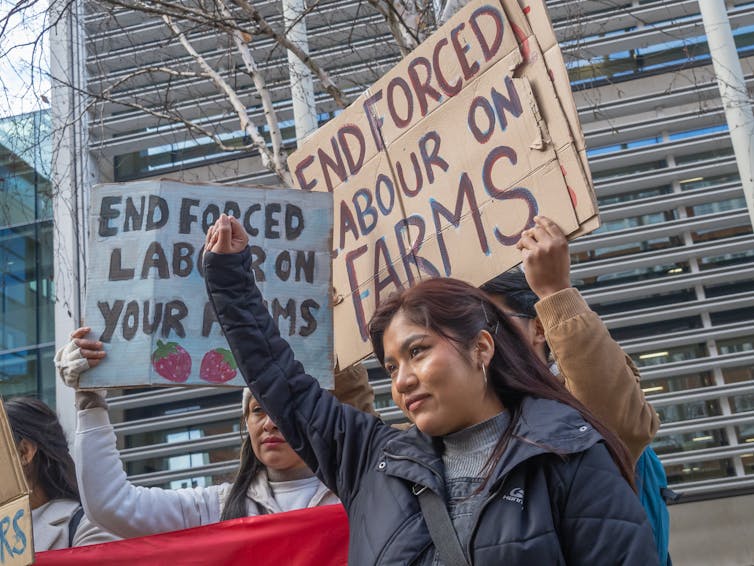
I am a farmer based in the south-west of Wales and a researcher of farming policy. I recently joined a protest by a group of Latin American farm workers known as “Justice is Not Seasonal”, outside the Home Office in London.
The group accused soft fruit supplier Haygrove, which operates farms on three continents and supplies veg box delivery schemes including Riverford and Abel and Cole, of presiding over poor living and working conditions, failing to pay workers and charging inflated flight costs for overseas workers. Haygrove has an annual turnover in excess of £50 million.
The case tribunal is due to be held soon although it has been a slow, arduous process reaching this point.
In an article for the BBC, a spokesperson for Haygrove said that Casimiro’s claims were “materially incorrect and misleading”. Haygrove’s practices are audited by third-party organisations including the Home Office, and the company takes “great care” in ensuring fair recruitment and working processes, the spokesperson said.
Conspicuously absent was the National Farmers’ Union, which predominantly represents farm owners. This highlights the divergent class interests that exist within terms like “farmer”.
More workers and more exploitation
There are 160,000 UK farm workers (as opposed to owners and managers). Of these, some of the most gruelling agricultural work is done by around 45,000 seasonal migrant workers, either in fields in all weather or in the sweltering heat of polytunnels.
The UK attracts migrant farm workers with six-month temporary visas. A United Nations special rapporteur, Tomoya Obokata, an expert in human rights law and modern slavery, has suggested that the UK is breaking international law with its seasonal work scheme by failing to investigate instances of forced labour. Claims of exploitation and bullying on UK farms are also becoming more common. Meanwhile, in an effort to appease farm managers, the UK government recently announced a five-year extension of this scheme.
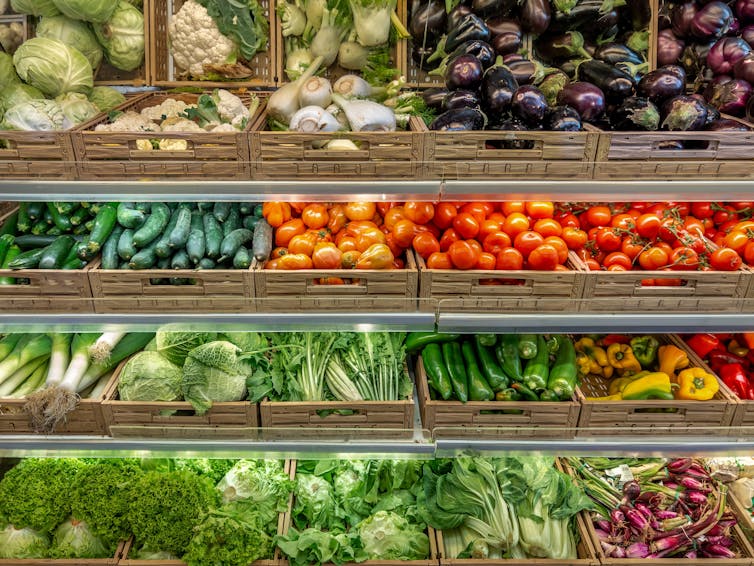
Food and farmingorganisations have urged the UK to produce more fruit and vegetables as part of a wider shift towards a less carbon-intensive food system.
To scale up domestic production will require more workers harvesting crops in poor conditions, especially migrant workers who don’t have the same legal rights as British citizens.
Seasonal migrant workers, for example, cannot bring family members to the UK and have no access to benefits, while their visas are often tied to one place of work which typically includes accommodation which leaves them particularly vulnerable to abuse. A call for increased labour, without a call for improved conditions, could mean more exploitation on British farms.
Exploitation is not limited to the allegations of a few bad apples either. It is so widespread that it threatens the resilience of the UK’s food system.
A recent report found that more than half of migrants at risk of labour abuse work in the food system. A more resilient food supply will require better working conditions, pay and housing for workers in this sector, the report concludes.
Higher prices don’t mean better welfare
It’s tempting to ask consumers to pay more for their food so that farm workers might earn more. However, higher prices are no guarantee of better conditions. Leaving aside rising inflation and stagnating wages which make it harder for consumers to buy ethically, organic farms already sell produce at a premium and some are also among those accused of mistreating workers.
This is even a problem among small-scale organic food producers, as documented by Solidarity Across Land Trades. A report by this land worker’s union found that some small farms use bogus traineeships to justify paying workers as little as £1.41 per hour. This is despite the produce usually being sold for more than conventional supermarket prices.
Greener diets depend on increased fruit and vegetable production. Framarzo/Shutterstock
The structural problems of the food system are more complicated than the price consumers pay for food. There is also the question of who gets to be heard, who is valued and who is deemed worthy of rights and dignity when food production takes place under a system of class-based exploitation. These challenges cannot be solved at the checkout alone.
The ecological crisis demands transitions away from diesel-powered machinery and chemical fertilisers and herbicides produced with fossil fuels. Farm workers are needed to carry out the transition towards more sustainable practices, but there will be no green transition unless these workers have a stake in it.
This idea of “a just transition” has gained traction in recent years, and it is just as relevant to farmers and farm workers as it is to workers in other sectors, such as oil and gas. But what might it look like?
The demands made by Justice Is Not Seasonal are a good place to start: an end to forced labour and exploitation on UK farms and full accountability for those responsible, fair wages and safe working conditions, residency rights and access to justice and remediation.
Staff on a NHS hospital ward at Ealing Hospital in London, January 18, 2023
Damning report finds migrant workers propping up Britain’s crumbling care system are trapped in awful working conditions
CAMPAIGNERS demanded reform today after a damning report laid bare shocking conditions facing migrant workers propping up Britain’s crumbling care system.
Unison surveyed more than 3,000 people who came to Britain on health and care worker visas to tackle shortages in the sector.
It found that nearly a quarter had paid fees to an employer or an intermediary upfront in return for a job — with dozens handing over more than £20,000.
Many workers, who are from countries including Nigeria, Zimbabwe and Zambia as well as India and the Philippines, were given no shifts when they arrived, or not the number promised.
Around 18 per cent said employers had deducted money from their salaries since arriving, with firms claiming the fees were for expenses such as training and administration.
Pay issues impacted three in 10 migrant care staff, with problems including unpaid travel time between care visits and no sick pay.
More than a quarter were paid below the legal minimum wage of £11.44 an hour.
In one shocking testimony, a worker reported having to sleep on the streets because their employer did not pay them for shadowing other colleagues.
And 9 per cent described the accommodation they were provided with as poor or very poor.
…
Public Services International care organiser Huma Haq said the findings reflect a broader global crisis in care: “The exploitation of migrant care workers in the UK is not an isolated incident but a symptom of a broken system globally where governments have increasingly privatised and underfunded essential care services.
“Governments must step up and take responsibility for providing quality public care services.”
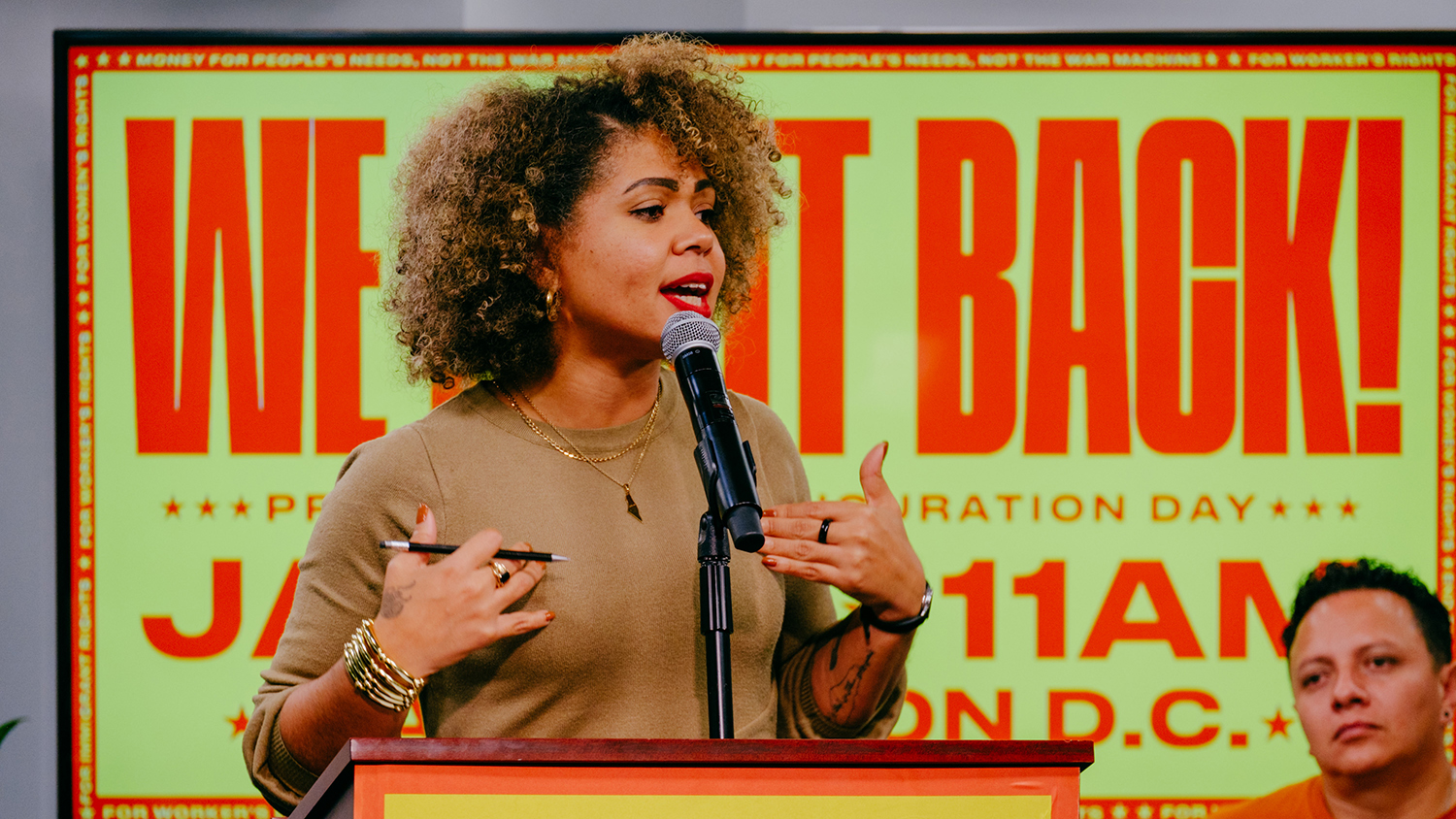
Claudia De la Cruz speaks at “What is to be done?” panel on November 8 (Photo: Wyatt Souers)
US-based movement leaders take up the task of answering the burning question: “What is to be done?”
Just two days after Donald Trump’s landslide victory against Vice President Kamala Harris, US socialists and movement leaders took up the task of answering the burning question: What is to be done following Trump’s win?
Hundreds of people gathered at the People’s Forum in New York City on November 8 for a panel discussion which featured the presidential candidate of the Party for Socialism and Liberation, Claudia De la Cruz, who ran against both Trump and Harris in a explicitly socialist campaign, Brian Becker, executive director of the anti-war organization the ANSWER Coalition, Eugene Puryear, journalist with BreakThrough News, Jorge Torres, part of the National Day Laborer Organizing Network with extensive experience organizing undocumented immigrant workers, and Miriam Osman, leader in the Palestinian Youth Movement, which has played a central role in the Palestine solidarity movement across North America.
Layan Fuleihan, Education Director of the People’s Forum, opened up the discussion. “We, the workers, the social movements, the immigrant families, the young people, the anti-war movement, the working class as a whole, we are faced with many urgent questions,” she said.
“How will we confront this continual rise of the right? Will we be driven by fear and apathy or pessimism? Will we stay home? Or will we organize our forces and chart our own path forward? Will we follow the lead of the Democratic Party and mourn their loss? Or will we assert that we reject the billionaire agenda no matter which party is executing its orders?”
Speakers put the blame for Trump’s win not on a shift to the right by working class people, but on the failures of the Democratic Party. Claudia De la Cruz spoke to what she called the “scapegoating of working class sectors” by the Democrats.
“They are saying we have to blame Black men, that we have to blame Latino men, that we have to blame immigrant communities, that we have to place judgment on those who didn’t go out and vote,” she said.
In reality, according to De la Cruz, “it is the spinelessness of the Democratic Party that has brought us here.”
“While Trump won this election, we cannot pretend that the Democrats have not allowed and conducted attacks against the working class people for decades,” De la Cruz said. “If we think about the last 16 years, the Democratic Party had power for 12 of those years, and they didn’t do anything. Not a single thing to protect or expand our rights. In fact, they sat back and watched how our rights were placed on a chopping block and said, we can’t do anything about it.”
Torres, who himself comes from a migrant background and was undocumented, spoke not only of the fear that exists within immigrant communities of Trump’s anti-migrant policy promises, but also the resolve to fight back. According to Torres, for the past few months, immigrant day laborers within the NDLON network were very scared of what would happen in the event of a Trump win. Trump has promised to deport between 15 to 20 million people in the largest mass deportation in US history, a policy which could result in family separations affecting up to 1 in 3 Latinos in the country.
But this did not paralyze these communities, who instead came together in a renewed resolve to “start organizing for real,” Torres described. Communities began to ask one another, “What does that mean when we say the people save the people?”
“We made a decision that it was about time to organize local communities in popular committees across the country,” Torres said. “We decided to organize popular assemblies across the country. In around one month we organize almost 25 assemblies across the country. And now we have almost 45+ committees led by workers, led by undocumented people, led by people that really are directly impacted.” Torres also mentioned that NDLON is working closely with the Landless Rural Workers’ Movement (MST) in Brazil, speaking to deep ties of international solidarity.
According to Torres, “most of the committees have lost their belief and hope and the Democratic Party or the Republican Party.”
“By now it is time to organize, and we just have us, and we don’t have no one else,” Torres asserted.
According to Eugene Puryear, Trump’s policy promises to round up migrant workers should be a call to action for a mass movement to defend immigrant communities. This movement can find inspiration from the history of the movement for the abolition of slavery in the United States. Puryear recalled the history of the Fugitive Slave Act, which imposed harsh punishments on those who sheltered runaway slaves. But this certainly did not stop abolitionists and anti-slavery activists from protecting slaves anyway.
“Whether or not the law said one thing, there was a higher law: that they had to fight against slavery no matter the risk,” Puryear described.
“So [abolitionists] formed things called vigilance committees, all across the country, that said that when a fugitive slave is brought before the bar into the courthouse, we will go to the courthouse and we will physically resist the imposition of returning them back. That we will physically remove them from the courthouse if we have to, and put them on the Underground Railroad and send them to Canada. And maybe we won’t succeed. Maybe we’ll be beaten. In many cases, these were serious tussles. People were pulling out guns. Maybe we’ll even be killed. But we would rather risk our lives than allow our formerly enslaved brothers and sisters to be taken back.”
There are parallels between the Fugitive Slave Act of 1850 and Trump’s promise to remove tens of millions of migrants from the country by force, Puryear argued. And the historic tasks of the mass movement, therefore, are similar to those shortly before slavery was abolished. “You can say it’s scary, and it is scary. You can say it’s odious, it is odious. But when they start bringing the trucks around to round people up, you can also say, I’m going to step outside of my door and I’m going to link arms with my neighbors. And if you’re going to throw them out, you better throw me out with them because we’re standing together no matter what,” Puryear said.
Brian Becker also echoed this same militant fighting spirit, rooted in the lessons of past movements. Becker drew attention in particular to the movement that arose after 2016 in opposition to Trump’s first election.
“There’s another side to the question of what is to be done, and that is what is to not be done,” Becker said. “Let’s learn the lesson of the first Trump administration when Trump came into office. So many people went to the airports because he said, we’re going to ban Muslims from coming into the country. Massive protests on Inauguration Day. We outnumbered Trump supporters. This was the anti-Trump resistance,” he described.
“But what happened? The Democratic Party completely co-opted that movement, completely took over that movement, because they said you have to resist Trump, the person, which meant that the best and practical way to do it, is to get rid of Trump by electing the Democrats.”
This co-optation marked the end of this mass movement, which because merely a “tail to the Democratic Party,” Becker described.
According to Becker, “the problem isn’t just Trump. The problem is the capitalist system and the ruling class parties. The Democrats and the Republicans are not an opposition to capitalism. They are the voice of capitalism.”
Becker spoke to the need to “build a political program” independent of the two establishment parties, which speaks to the needs of the masses of people.
Miriam Osman of the Palestinian Youth Movement spoke to the way that the movement in solidarity with Palestine has given people in the US renewed political clarity regarding the similarities between both major parties. “Our task is to draw more and more people into our struggle against the shared enemy, the shared enemy of the Palestinian people, the shared enemy of the working people of the world, and the shared enemy of working people in the United States,” which is the US ruling class, Osman articulated. “Our task is to build power. Our task is to unify our efforts, because this is the only thing that’s going to give us the force to transform this system.”

 Deputy Prime Minister and Justice Secretary David Lammy (left) and Prime Minister Sir Keir Starmer during the Labour Party Conference at the ACC Liverpool, September 28, 2025