NHS news review

Spread the love

Prof. Appleby of the King’s Fund think tank says that spending more on the NHS is possible. link

Tory think tank the Institute of Economic Affairs proposes abolishing the NHS and even claims that there is widespread public support for it.
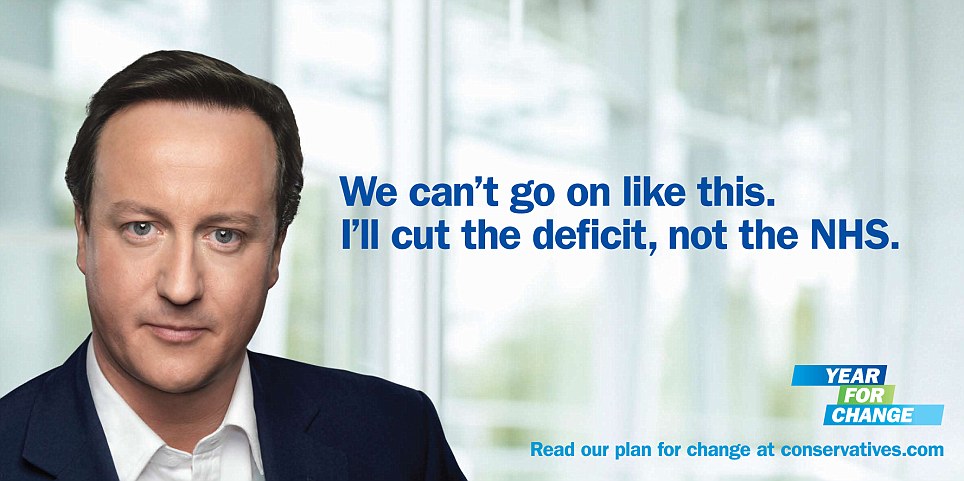
Conservative election poster 2010

A few recent news articles concerning the UK’s Conservative and Liberal-Democrat coalition government – the ConDem’s – brutal attack on the National Health Service.

BBC News – Spending more on the NHS ‘not unaffordable’


In an article in the Daily Telegraph last month, Health Secretary Andrew Lansley suggested on current trends £230bn would need to be spent on health by 2030 compared to the £103bn which is spent now.

He said that figure was one that the country “simply could not afford”.

But Prof Appleby, the chief economist at the think-tank, questioned that.

He said taking into account the expected growth in the economy a budget of £230bn would require the health budget to rise at about 4% a year above inflation – only a little more than it has got on average since 1948.

Such rises would bring total health spending, including investment in private health care, to about 12.4% of gross domestic product (GDP) – roughly in line with what high spending countries such as the Netherlands are already spending.

Prof Appleby added: “It is a question of priorities really. It could be afforded, but would just require more money to be spent on health. But we are not talking about ridiculous amounts.”

Related: Rising health spending ‘is affordable’ – newsarticle-content – Pulse King’s Fund claims NHS is affordable – Health News, Health & Families – The Independent Doubling NHS spending ‘is affordable’ – Telegraph Spending more on the NHS could be affordable » Hospital Dr

Thinktank advocates abolition of the NHS and slashing overseas aid | Politics | The Guardian

Shrinking the size of the state by abolishing the NHS and limiting overseas aid to humanitarian disasters could save more than £200bn a year and pave the way for growth-generating tax cuts, says a leading free-market thinktank.

The Institute of Economic Affairs (IEA), responsible for many of the policies implemented by Margaret Thatcher in the 1980s, said the plans to tackle Britain’s budget deficit during the current parliament are not radical enough.

Publishing a report urging a rethink of education, health and welfare, the thinktank said there was public support for plans that would see government spending reduced to less than 30% of national output. Spending peaked at about 50% of gross domestic product during the recession and the chancellor, George Osborne’s proposals would see public expenditure stabilise at 40% of national income.

“The recent comprehensive spending review was anything but comprehensive,” the report, Sharper Axes, Lower Taxes, said. “Certain departments were omitted from the review altogether. Most other areas of spending were ‘salami-sliced’. No coherent, bottom-up analysis of government functions has taken place.”

[comments are worth reading]

My warning for the NHS | Wendell Potter | Comment is free | The Guardian

Andrew Lansley’s controversial NHS bill is premised on “choice and competition” and the creation of a market in healthcare. These three stories below from the US show choice and competition at work on the ground. They also explain why 45,000 Americans die every year because they can’t afford – and in many cases can’t even obtain – health insurance.

But first, let me introduce myself – as I did in June 2009 when I testified before a congressional committee that was investigating the many abuses of the private insurance industry in the US. “My name is Wendell Potter, and for 20 years I worked as a senior executive at health insurance companies, and I saw how they confuse their customers and dump the sick – all so they can satisfy their Wall Street investors.”

I described how insurance companies, in their constant quest to meet profit expectations, routinely cancel the coverage of sick policyholders and strive to spend less and less of premium dollars on medical care so they can divert more and more of those dollars to executive salaries and dividends for investors.

A few months before my testimony I had left my job as head of communications for one of the largest US insurers, Cigna. I could no longer in good conscience continue to serve as a spokesman for a profit-obsessed industry that I had come to realise was largely responsible for the American healthcare system’s descent into dysfunctionality.

27/11/13 Having received a takedown notice from the Independent newspaper for a different posting, I have reviewed this article which links to an article at the Independent’s website in order to attempt to ensure conformance with copyright laws.

I consider this posting to comply with copyright laws since
a. Only a small portion of the original article has been quoted satisfying the fair use criteria, and / or
b. This posting satisfies the requirements of a derivative work.

Please be assured that this blog is a non-commercial blog (weblog) which does not feature advertising and has not ever produced any income.

dizzy

Continue ReadingNHS news review

NHS news review

Spread the love

Conservative election poster 2010

A few recent news articles concerning the UK’s Conservative and Liberal-Democrat coalition government – the ConDem’s – brutal attack on the National Health Service.

The gathering storm of autumn cuts / Features / Home – Morning Star

We may be entering the summer silly season for news, with the NHS barely visible in the papers and forgotten by broadcasters.

But don’t be fooled – brace yourself for an autumn of massive cuts as NHS bosses draw up plans to slash each area on an unprecedented scale.

More than half of all senior NHS managers are worried that patients’ access to care will be cut back as a result of a tightening financial situation, which 42 per cent of them described as the “worst they had ever experienced,” according to a recent survey by the NHS Confederation.

Thirty-nine per cent of NHS chairs and chief executives expected financial pressures to increase over the next three years, while 75 per cent felt cuts in spending on social services by local councils would also impact on health services.

Analysts are now warning of a new ice age in NHS funding, with budgets growing little, if at all, even after 2015.

These findings came less than a month after David Cameron, seeking to smooth the way to push through Andrew Lansley’s microscopically modified Health and Social Care Bill, went on record with five pledges on the NHS, one of which was that “we will not cut spending on the NHS – we will increase it.”

Dave Prentis: Our National Health Service in Peril

Our National Health Service celebrated its 63rd birthday last week. I think it’s been one of the great success stories of the past century – an institution dedicated to treating the sick, relieving suffering, and saving lives, regardless of ability to pay.

Apart from the fact that the NHS is there for everyone when they need it, I have reason to be grateful to this fantastic service. It saved my life when I was diagnosed with advanced stomach cancer some years ago. And I want the NHS to be there for generations to come.

To mark the anniversary, I delivered a giant birthday card to the Department of Health, along with other trade union leaders. And later we lobbied Parliament to ask them to join us in wishing the NHS Many Happy Returns. This was not just a celebration of 63 years, but an impassioned plea to our politicians to make sure that the world’s largest and best publicly funded health service is not dismantled.

For that is what I fear will happen if the Frankenstein Health and Social Care Bill is passed into law. The LibDem arm of the coalition Government has made a great deal of noise, belatedly, about the changes it has wrung from its Tory partners to sweeten what will be a bitter pill. But, those changes are just not enough to prevent our NHS being dismantled or to save it from those who want to make a profit out of the sick.

Lansley ‘increasing NHS bureaucracy’: ePolitix.com

Labour has accused the government of increasing rather than cutting NHS bureaucracy.

Speaking in the Commons this afternoon shadow health secretary John Healey said: “In spite of the spin the truth is the prime minister’s personal promise to give NHS a real rise in funding is being broken.

“It’s not just how much it’s how well the money is spent, and today Mr Speaker is one year to the day the health secretary launched plans to ‘liberate’ the NHS.”

Healey said that rather than phasing out top down hierarchy and reducing the cost of NHS related quangos, Lansley had overseen the creation of a lot more bodies.

He questioned why Lansley was setting up the National Commissioning Board which was set to employ 3,500 people.

And he asked why the government was setting up 500 public bodies in the NHS when 161 “do the job now”.

“Why is govt wasting precious NHS funding on the biggest reorganisation in its history it should be spent on patient care,” he said.

Continue ReadingNHS news review

NHS news review

Spread the love

The Guardian reports that waiting times are increasing.

Mary Salisbury says that when she needed the NHS “it wasn’t there for me”. This is likely to be how most people will experience the Con-Dems brutal attack on the NHS. They are unaware that the Conservatives and the Liberal-Democrats are destroying the NHS. One day when they really need it, it simply won’t be there for them.

The Guardian has an editorial urging Lib-Dem MPs to wake up on the NHS.

Conservative election poster 2010

A few recent news articles concerning the UK’s Conservative and Liberal-Democrat coalition government – the ConDem’s – brutal attack on the National Health Service.

NHS waiting time increases may cost lives, doctors warn | Society | The Guardian

Delays could mean illnesses reach stage where surgery or drugs cannot treat them, chair of BMA’s consultants committee says

Patients could die because of rising NHS waiting lists for tests and treatment, the leader of Britain’s hospital doctors has warned. Delays in identifying conditions such as cancer may mean that a patient’s illness reaches the stage where surgery or drugs cannot save them, Dr Mark Porter told the Guardian.

Porter, chairman of the British Medical Association’s consultants committee, said the growing delays were “inhumane” because the ensuing uncertainty added to patients’ fear and suffering.

His remarks will add to the pressure on David Cameron, who has offered several recent personal guarantees that patients will not have to endure long waits to be treated.

A Guardian analysis of official NHS data on England’s six main waiting time targets shows that five are increasingly being breached. The number of patients waiting more than six weeks for a diagnostic test such as an MRI scan has quadrupled in the last year, an extra 2,400 people a month are not being treated within 18 weeks, and 200,000 patients waited longer than four hours in A&E this year compared with the same period in 2010, the data reveals.

The growing number not being tested or treated within the required time limits was of particular concern, Porter said. “If patients are now exceeding those times, then those patients’ treatment options are being limited, and if that happens then there’s a potential for patients suffering harm.

“It may be that someone’s disease progresses beyond the point where surgery might usually give a cancer patient a potential cure, but the patient then receives palliative care only,” he said.

NHS waiting times: one women’s agonising delay | Society | The Guardian

A special needs teacher says the wait she endured for surgery on her back problem was inhumane and unspeakable

Mary Salisbury, a retired special needs teacher, was advised to have back surgery in June 2010. But the operation did not happen until March 2011, even though NHS rules say it should have been carried out within 18 weeks.

“My back trouble began in 2009. I had an MRI scan in February 2010 at St Mary’s hospital in Newport on the Isle of Wight, where I live. But I then had to wait until early June to see the consultant, as he only visits the island once a month from Southampton. He immediately recommended an operation called a laminectomy to relieve the pressure on the nerve between my fourth and fifth vertebrae, which was being crushed and causing me severe pain, a condition called a lumbar stenosis.

“The consultant said the waiting time was about 12 weeks. First, I was told the surgery should be in September or October, and then November or December. But I was never given a definite date. Every time I rang Southampton General hospital the operation receded further and further into the distance. Just before Christmas, I was told it would be 31 January, but that was cancelled. So were three subsequent operations, two of them on the day after I’d stayed in Southampton the night before and arrived as instructed at 7.30am.

“The surgery finally happened on 23 March this year – 42 weeks after I’d first seen the consultant, but a year and six weeks after I’d had the MRI scan. I’ve been sorted now, happily. But the wait I had to endure for treatment was inhumane and unspeakable. I was in a lot of pain, but I wasn’t being treated. They said priority cases were being treated. Why wasn’t I a priority? I was in serious pain and distress, couldn’t sleep properly and became depressed. I’d always been a healthy person and never needed the NHS beforehand. Yet when I needed it, it wasn’t there for me.

Health warning – Our view – Yorkshire Post

NO Government policy is enjoying a smooth passage at present, not least David Cameron’s NHS changes that face renewed scrutiny. The news that GPs could earn premium rates of up to £100 an hour to take on additional budgetary duties perpetuates the belief that health spending is being recycled rather than redirected to patients.

As even more demands are placed on taxpayers, many will be uncomfortable at the prospect of GPs earning more money than well-remunerated NHS chief executives. The rate will vary dramatically depending on the area they work in, another cause for concern.

There also remains confusion over how much of the money will go direct to the GPs, and how much will fund the costs of locum cover. These vital details need to be established quickly.

The rates are being negotiated locally and the apparent lack of guidance from Westminster will do little to allay fears that the NHS reforms have been ill-conceived.

Such lucrative hourly rates will raise concerns that shielding the NHS from cuts was a backward step, allowing significant funds to remain at the top of the organisation rather than filtering down to patients.

That the figures only came to light following an investigation by this newspaper is further indicative of the lack of clarity surrounding Mr Cameron’s reforms, even in their revised format, and why further changes are likely to be necessary.

Continue ReadingNHS news review

NHS news review – UK Uncut’s Emergency Operation

Spread the love

This NHS news review posting is concerned with campaigning group UK Uncut’s ‘Emergency Operation’ day of campaigning on Saturday. UK Uncut occupied banks drawing attention to the fact that bankers enjoy huge government funding while the NHS is being starved of funding and abolished. This is the first major campaign by UK Uncut since the mass arrests of UK Uncut activists at Fortnum & Mason on 26 March.

New statesman reports that that there were 40 UK Uncut actions. There are reports of arrests at Manchester and Edinburgh, Scotland. There are reports of undercover police officers attending the actions.

In an unusual show of support UK Uncut events were supported by Unite and the Public and Commercial Services (PCS) unions who encouraged their members to participate. PCS general secretary Mark Serwotka said at the unions annual conference on 18 May “For years our union has been at the forefront of the tax justice campaign, and we are proud to support UK Uncut that has popularised our message that the real fraudsters and the real scroungers are to be found in the boardrooms not in the jobcentres.”

http://www.unitetheunion.org/news__events/latest_news/unite_backs_uk_uncut_s_banks_a.aspx
Rachael Maskell, Unite’s national officer for the health sector, welcomes UK Uncut’s action: “The greed of a few and the failure to regulate brought our banking system and the economy to their knees but government expects the ordinary people of this country to pick up the tab.

“We must not allow the profit-first value to destroy our NHS.

“For over sixty years, this country has upheld the principles of quality, universal care where the patient’s needs comes before private greed every time. We are now at the most worrying juncture in the NHS’ history with the government is poised to let market values rip through the service. As Bevan said, the NHS will survive as long as there are people to fight for it. Now is the moment to fight.”

http://london.indymedia.org/articles/9172
UK Uncut’s Call to Action:

“The NHS will last as long as there are folk left to fight for it.”
– Nye Bevan, founder of the NHS

“Andrew Lansley. Greedy Andrew Lansley. Tosser.”
– MC NxtGen

This is an emergency. The welfare state is in peril. Under the guise of ‘efficiency’ and ‘reform’, this government is plotting to cut the NHS and sell off what’s left. Andrew Lansley has claimed the government is in a ‘listening exercise’ about the proposed NHS ‘reforms’. But despite widespread outcry from doctors, nurses and the public the government isn’t listening to anyone apart from private healthcare lobbyists.

Let’s make Lansley listen. We want to keep our healthy NHS and fix our broken banking system. Whilst the NHS is being dismantled, the banks that caused this crisis in the first place have been left untouched. Reckless gambling, obscene bonuses and a global financial crisis are symptoms of a disease that requires a drastic intervention.

The banks are due a check-up. On Saturday May 28th, join UK Uncut’s Emergency Operation and transform your local high street bank into a hospital. Tell the government to leave our NHS alone; it’s the banks that are sick.

Turn HSBC into a hospital, fill Natwest with nurses, get bandaged in Barclays and operate in RBS. As usual, it’s up to you to organise an action in your area – so talk to your friends, your local union branch and anti-cuts group and then list an action on our website. All the resources you’ll need will be on our website, including a flyer to tell the public about the NHS emergency. Get organised, get creative and let’s make Lansley listen: leave our NHS alone and make the banks pay.

See you on the high streets.

On a totally different topic: Take a look at these

Conservative election poster 2010

A few recent news articles concerning the UK’s Conservative and Liberal-Democrat coalition government – the ConDem’s – brutal attack on the National Health Service.

http://www.ukuncut.org.uk/actions/gallery

Anti-cuts groups descend on banks in NHS protest | UK news | guardian.co.uk

Protesters have been holding demonstrations outside high street banks around the UK and have succeeded in occupying a number of branches in the biggest direct action to date against proposed changes to the NHS.

The national protest, designed to draw attention to the banks’ role in creating the deficit, is being spearheaded by the anti-austerity campaigning group UK Uncut, which has been were joined by trade unionists and others.

Activists dressed in doctors’ coats and armed with fake blood had planned to enter branches and set up mock hospitals and “operating theatres”. Instead they mostly staged their protests on the streets outside when branches were closed or police kept them out.

After assembling shortly before midday in London, close to 100 protesters staged actions outside three banks in Camden and held a mock trial of the health secretary, Andrew Lansley. Other groups were able to enter a Natwest bank in Brixton and a branch of RBS in Islington and stage protests inside.

“The NHS did not cause the financial crisis – the banks did and are continuing to make billions in profits. And yet it is the NHS which is being cut,” said Candy Udwin of the Camden Keep Our NHS Public campaign, which took part in north London.

“Here in Camden there are hundreds of jobs under threat and that is why protests like this are being strongly supported.”

New Statesman – UK Uncuts hosts 40 direct actions in protest at NHS reforms

The protest group, UK Uncut, yesterday hosted 40 direct actions across the country – the most significant number the group has made since many of its members were arrested outside Fortnum and Mason on the March 26th March for the Alternative. Yesterday’s actions were subtitled the “Emergency Operation” on the group’s website and were directed against the Coalition’s wavering reforms of the NHS headed by Andrew Lansley.

One of the first actions to be held left Soho Square at 11am Saturday morning and I accompanied the group from its meeting point to the target of protest in Camden Town.

The UK Uncut members – dressed as medical workers, bankers and members of the judiciary – were trailed by several police, in riot vans and on foot, from their meeting point through the London Underground and to the intended target of a Natwest bank branch in Camden Town.

Upon arrival, unable to gain access to the bank due to a large police presence blocking the entrance doorway, the protesters acted out set pieces, chanted and handed out leaflets to passers-by on the pavement outside several bank branches in the Camden area for several hours in the central Camden area. The protest eventually culminated in a mock trial of Andrew Lansley.

BBC News – Arrests after UK Uncut protest in Manchester Santander

Activists protesting against proposed changes to the NHS were arrested after briefly occupying a bank in Manchester.

Nine people were held on suspicion of breach of the peace after campaigners entered the city centre Santander.

Campaign group UK Uncut was staging a series of protests calling for the banks, rather than cuts to public services, to pay for the deficit.

The government said “every penny” saved by NHS efficiencies would be spent on front-line services for patients.

Activists targeted banks to highlight what they described as the injustice of “making people, not the broken banking system, pay for the economic crisis”.

Police defend corporate criminals: arrests at Edinburgh Uncut action | Indymedia Scotland

Denouncing tax dodging by big companies and opposing cuts in public services, people took action at Boots, Vodaphone and BHS shops in Edinburgh on Saturday 28 May. Imaginative street theatre saw tax avoiding bosses detained by the Big Society Revenue and Customs Inspectors. But police acted to defend the tax-dodging criminals against Edinburgh Uncut’s protests, arresting, detaining and charging two women.

After several hours of peaceful protest at three city centre shops, police suddenly grabbed two women at British Home Stores on Princes Street. One woman fell to the ground. Police twisted her arms behind her back and handcuffed her, causing her pain and distress. The prisoners were taken to St Leonards and people quickly descended on the police station in solidarity, numbers later swelling as around 40-50 people arrived from the Reclaim the Night march. The women were released after around 5 hours in custody. Both were charged with Breach of the Peace and the woman who was hurt by the police was also charged with “Resisting Arrest”.

UK Indymedia – Plain clothes FIT at #ukuncut protests. Cops use ‘Breach of the Peace’ strategy

The police should only arrest for breach of the peace when they reasonable believe there is an imminent risk of violence. This seems unlikely to have been the case in Manchester. Certainly when Cardiff occupiers of Topshop were threatened with arrest to prevent a BOP they were doing nothing more violent than sitting on the shop floor. The officer in charge didnt seem comfortable with it either. When a legal observer gave protesters a quick briefing on the law of BOP she threw her hands in the air, and was later reported to have moaned that she “couldn’t do anything because of those bloody legal observers..’

As well as using dodgy reasons to try and arrest people, the police were also up to their old intelligence gathering tricks. While things were low key, and there was a general absence of obvious FIT cops and cameras, there were instances of systematic data gathering. Cardiff occupiers, for example, were photographed individually by uniformed and plain clothes cops using their Blackberry’s. One of them happily explained that the pictures were for the ‘intelligence log’.

There was no doubt this time about the identity of the plain clothes cops because strangely, they came and introduced themselves, giving both name and number. Their details are shown above. It’s not at all clear why they were being so candid. Perhaps they were being genuinely friendly and open. Or perhaps they identified themselves as police officers in order to get round the restrictive authorisations needed for covert surveillance. Anyway, we are happy to be able to put them on the blog.

Google news search


Continue ReadingNHS news review – UK Uncut’s Emergency Operation

Nick Clegg lies about the NHS

Spread the love

Image of David 'Pinoccio' Cameron and Nick Clegg. Image is originally from the UK's Mirror newspaper. Looks like Bliar doesn't he? Cameron seems to be apingning/copying Bliar's public image ~ speeches aligning himslf with Bliar ... and of course ... who Bliar aligned with ...Nick Clegg has made a deceitful and evasive speech on the NHS. Deceitful since he suggests that all will be well and hiding the fact that the Destroy the NHS bill is intended to reduce the scope of the NHS. Evasive by avoiding any mention of privatisation or the role of private providers. It’s a feel-good speech intended to reassure people that everything is OK, that there is no need to worry, that he, Cameron and Lansley can be trusted to look after the NHS. The lying, evil sods.

We know from the experience of tuition fees and V.A.T. that Nick Clegg is a shameless liar. We know that he lies to decieve people. We know that he’s a slippery shit in the tradition of UK politicians.

Some of the lies and evasions I pulled from his speech today:

“When Beveridge first proposed a nationalised health service in 1942, he didn’t prescribe exactly how it should work.


He called for a comprehensive service to ensure every citizen can get “whatever medical treatment he requires in whatever form he requires it.”

Care, free at the point of use, based on need and not ability to pay.

No government worth its salt – certainly, no government of which I am a part – will ever jeopardise that.”

That’s a lie. The current coalition government – of which Clegg is a part – is intending to do away with a comprehensive health service free at the point of use.

“The comfort of knowing that the NHS will always be there for you.

If you’re in an accident, if you get ill, if your family need treatment.

And it will always be free. No bills, no credit cards, no worries about money when you’re worrying about your health.

That’s why I have been absolutely clear: there will be no privatisation of the NHS.”

There are a few lies here.

Firstly, GP consortia will commission services. They decide which services will be available. With cuts to spending they will cut the range of services available. There will also be some expensively ill people that will likely not have a GP. This means that the NHS will not “always be there for you”.

Secondly, perhaps not an outright lie but certainly intended to mislead and give a fase impression: “it will always be free …”. No it won’t always be free. If you need a treatment that is not provided by your local GP commissioning group, you will have to pay or go without.

Thirdly, again perhaps not an oughtright lie:“there will be no privatisation of the NHS”. There will be private provision of services not offered by a reduced NHS. There will be private providers within the NHS. It will not be wholly privatised but there will be hugely increased involvement of private providers.

Clegg continues by saying “The NHS has always benefited from a mix of providers, from the private sector, charities and social enterprises, and that should continue.”

Notice what’s missing? The public sector. Is he saying that the public sector should not continue to play a role in the NHS?

Charities and social enterprises are private providers in a sense. They certainly are not public sector.

“People want choice: over their GP, where to give birth, which hospital to use.

But providing that choice isn’t the same as allowing private companies to cherry-pick NHS services.

It’s not the same as turning this treasured public service into a competition-driven, dog-eat-dog market where the NHS is flogged off to the highest bidder.”

Choice. People don’t really want choice. They want a good service that doesn’t unduly inconvenience them e.g. having to travel to a distant hospital.

Clegg is deliberately misconstruing the argument, putting up a straw-man by saying that the NHS will not be sold off to the highest bidder. It’s about providing a restricted health service where you will have to pay – or go without – services that are not provided.

[27/5/11 edit: It’s also the first stage in the process of privatisation and transition to a private insurance-based health service on the US model.]

“I’ve heard people suggest that our reforms could lead to politicians washing their hands of our health services, because of the way the Bill is phrased.

So we need to be clearer – the Secretary of State will continue to be accountable for your health services.

This is your NHS; funded by your taxes and you have a right to know there is someone at the very top, answerable to you. With a public duty to ensure a comprehensive health service, accessible to all.”

Clegg is employing the worn-out argument that they have failed to properly explain the proposed changes. The truth is that the more people understand, the more they object.

He’s defending the Health Secretary no longer being responsible for providing the health service, arguing against what Colin Leys said ‘The bill removes the secretary of state’s responsibility to provide a national health service and doesn’t assign it to anyone else. She or he would only be charged with “promoting” it.’

Clegg suggests that this is merely phrasing when it is crucial. If it is only a matter of phrasing, then we’ll have the phrasing that the Health Secretary will provide a health service.

“opening up”

Clegg is defending the Bill to abolish the NHS contrary to the instruction of his Spring Conference. He needs to be dumped asap.

Continue ReadingNick Clegg lies about the NHS