Did Germany mislead the World Court?

Spread the love

Original article by Leon Wystrychowski republished from peoples dispatch under a Creative Commons Attribution-ShareAlike 4.0 (CC BY-SA) license.
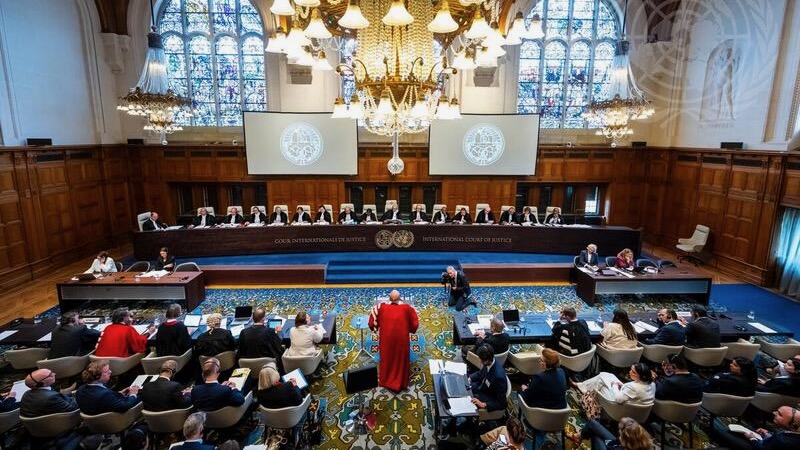
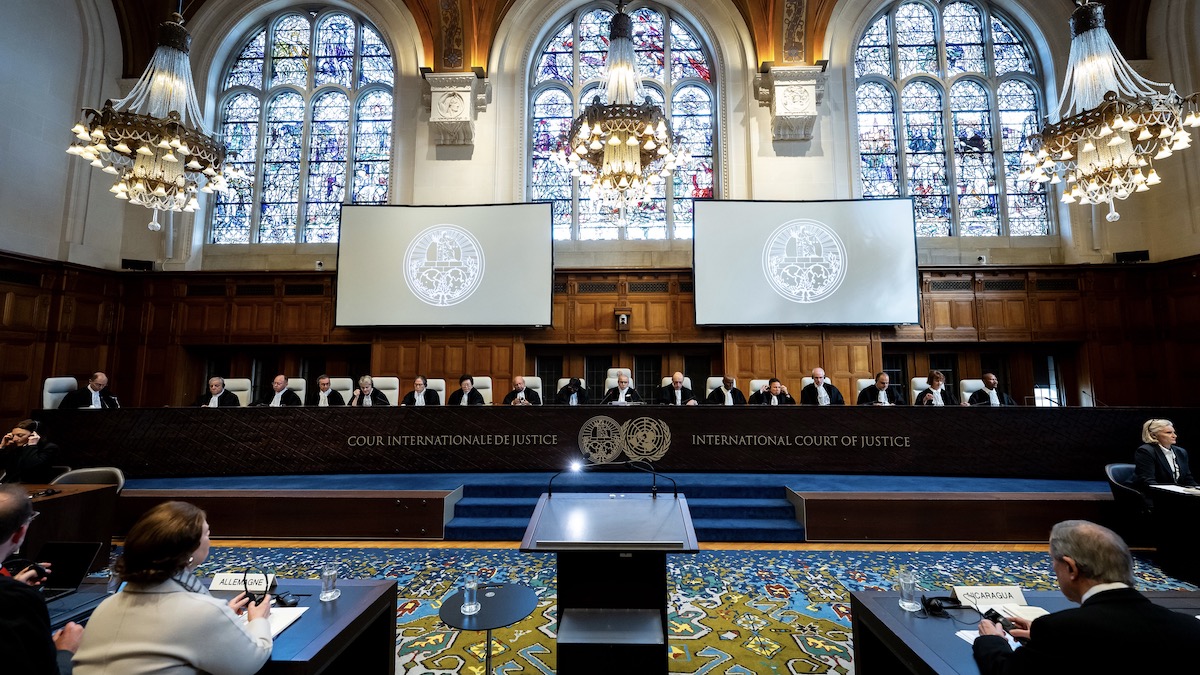
International Court of Justice holds hearing on Nicaragua vs. Germany. Photo: UN

The German Federal Republic may have made false statements at the very beginning of the trial before the UN’s highest court.

Since April 2024, Germany has been on trial before the International Court of Justice (ICJ) in The Hague. Nicaragua had filed a case against the Federal Republic, accusing it of complicity in the genocide in Gaza. As has now become known, German representatives may have made false statements in their very first testimony before the ICJ in April 2024, concerning the arms exports delivered to Israel.

“Not disclosed”

As Drop Site News (DSN) and the liberal German magazine Stern reported in a joint article, there are now serious doubts about Germany’s statements. They cite comments from the German Defense Ministry, obtained through a press law procedure before a German administrative court. According to these documents, the ministry stated that its testimony before the ICJ in April 2024 had been made “in agreement with the affected state,” meaning Israel. The ministry also admitted that “the differentiated information on Bundeswehr exports,” was “not disclosed in the proceedings before the ICJ.” The Defense Ministry argued before the court that it could not release information about transfers to specific countries “for reasons of contractually agreed confidentiality”, since doing so could seriously damage the trust between Germany and Israel.

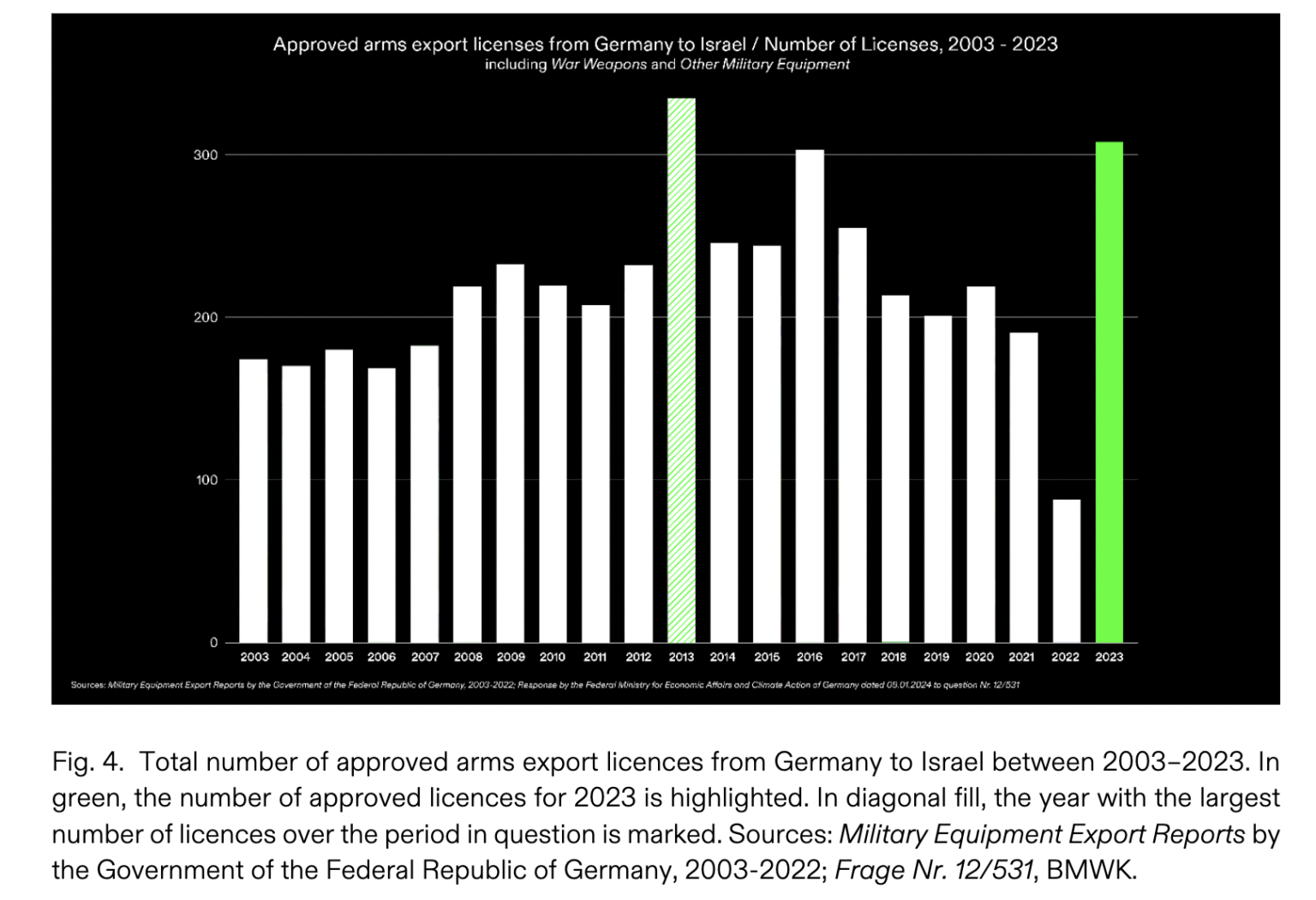
Following the “Al-Aqsa Flood” operation and the beginning of the Gaza genocide in October 2023, the value of German military exports to Israel increased tenfold overnight. The Federal Republic thus became, after the United States, the second most important supplier of weapons to the Zionist regime; at one point, a third of Israel’s weapons were said to have come from Germany. By mid-May 2025, successive German governments had approved arms deliveries worth 485 million euros. Added to this were donations from the Bundeswehr’s own stocks to the IDF.

It is these donations that DSN and Stern have raised doubts about. German representatives had claimed before the ICJ that in 2023 no weapons of war but only “medical supplies and helmets” had been delivered to Israel from Bundeswehr inventories. Lea Reisner, spokeswoman for the Left Party in the German parliament, commented to the German left-wing daily junge Welt: “For many months, the federal government has been deceiving the public about the extent of German arms deliveries to Israel – and now, apparently, also the International Court of Justice.”

Growing pressure

While the fact that Germany is standing trial in The Hague on charges of complicity in a new genocide has been largely ignored within the dominant discourse in Germany, Nicaragua’s case nonetheless appears to have exerted considerable pressure on the German government. Over the course of 2024, the number of weapons delivered by Germany to Israel fell sharply, without any official explanation. Even the state broadcaster Deutsche Welle (which reports far more critically in English than in German in order to project an image of Germany as a country with a critical media landscape, which is just not true) suggested that the decline may be linked to the ICJ case.

In August 2025, the current chancellor, Friedrich Merz, announced that Germany would no longer supply weapons to Israel “that can be used in Gaza”. It quickly became clear, however, that this referred only to new export licenses, while previously approved arms shipments were unaffected. Moreover, Israel’s navy received new warships and submarines from Germany immediately after Merz’s announcement, even though it plays a central role in the illegal blockade of the Gaza Strip.

Nevertheless, this surprising step by the German government shows that even in Berlin there was a perceived need to take measures that at least appear to resemble sanctions.

And the possible fact that the Federal Republic may have made false statements at the very beginning of the trial before the UN’s highest court can also be seen as an indication that those in power in Berlin are fully aware that their policy of so-called “German Staatsräson” violates international law. This affair, however, is unlikely to do much for Germany’s credibility before the ICJ.

Leon Wystrychowski is a former member of the Palästina Solidarität Duisburg (Palestine Solidarity Duisburg, PSDU). The Organization was banned by the German state in 2024.

Original article by Leon Wystrychowski republished from peoples dispatch under a Creative Commons Attribution-ShareAlike 4.0 (CC BY-SA) license.

Orcas discuss Genocide-supporting and complicit Zionists. Donald Trump, Keith Starmer, David Lammy, Rachel Reeves, Angela Rayner and Wes Streeting are acknowledged as evil genocide-complicit and supporting cnuts.
Keir Starmer objects to criticism of the IDF. He asks how could anyone object to them starving people to death, forced marches like the Nazis did, bombing Gaza's hospitals and universities, mass-murdering journalists, healthworkers and starving people queuing for food, killing and raping prisoners and murdering children. He calls for people to stop obstructing his genocide for Israel.
Keir Starmer objects to criticism of the IDF. He asks how could anyone object to them starving people to death, forced marches like the Nazis did, bombing Gaza’s hospitals and universities, mass-murdering journalists, healthworkers and starving people queuing for food, killing and raping prisoners and murdering children. He calls for people to stop obstructing his genocide for Israel.
Experiencing issues with this image not appearing. I suspect because it's so critical of Zionist Keir Starmer's support of and complicity in Israel's genocides.
Genocide denier and Current UK Prime Minister Keir Starmer is quoted that he supports Zionism without qualification. He also confirms that UK air force support has been essential in Israel’s mass-murdering genocide. Includes URLs https://www.declassifieduk.org/keir-starmers-100-spy-flights-over-gaza-in-support-of-israel/ and https://youtu.be/O74hZCKKdpA

Exclusive: Germany Coordinated ICJ Testimony on Arms Exports With Israel

Continue ReadingDid Germany mislead the World Court?

Twenty years after “No to the FTAA”, Latin American movements reaffirm their anti-imperialist commitment

Spread the love

Original article by Pablo Meriguet republished from peoples dispatch under a Creative Commons Attribution-ShareAlike 4.0 (CC BY-SA) license.

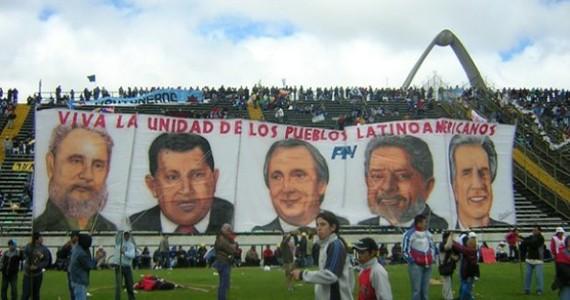
In 2005, in the city of Mar del Plata, the presidents of the brother countries of the Americas, Lula da Silva, Hugo Chávez, Evo Morales, and Néstor Kirchner stood firm against the United States. Photo: X

The meeting in Mar del Plata paid tribute to the moment when several Latin American presidents defeated the US attempt to establish a regional free trade agreement.

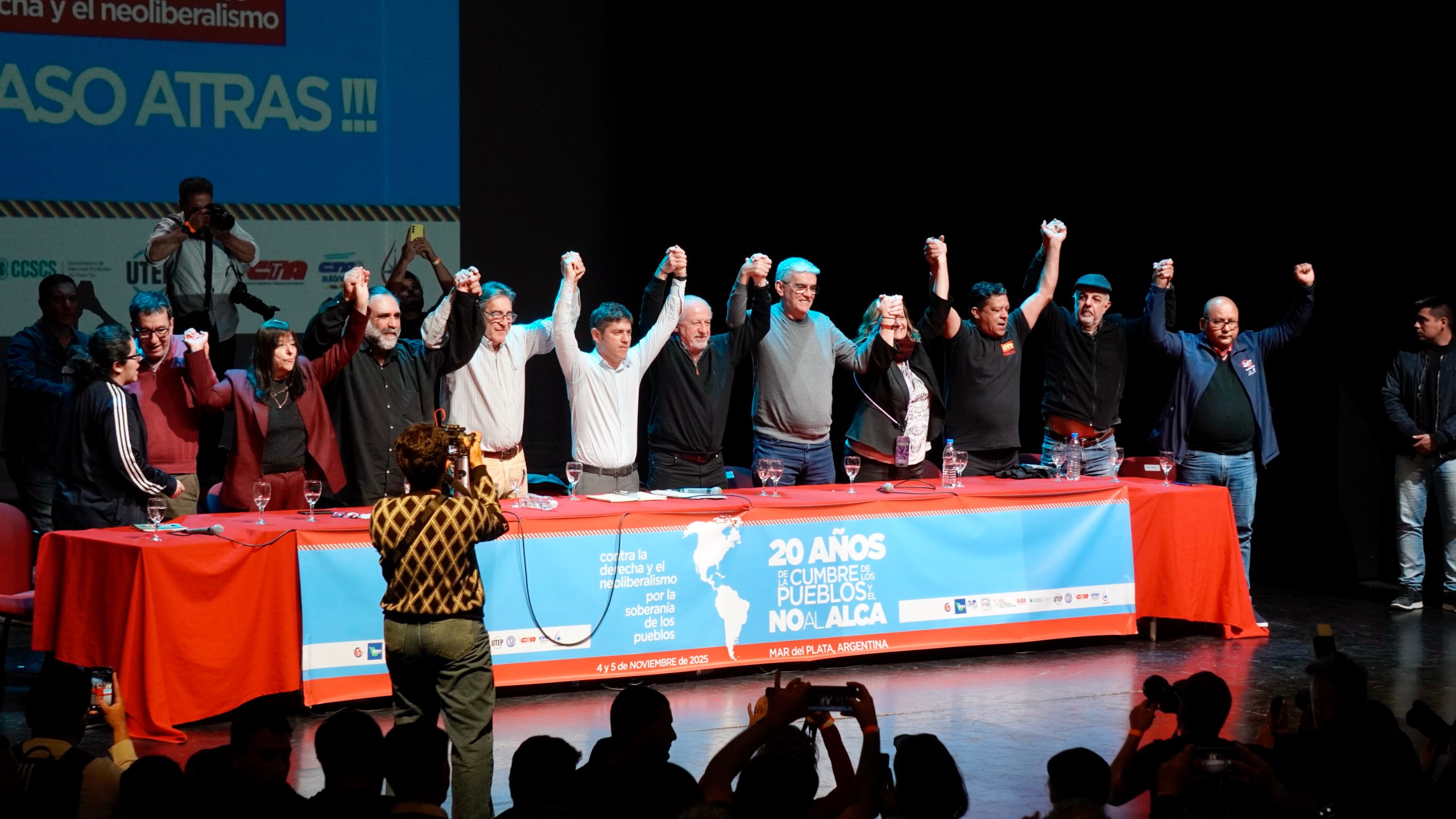
In the same place where the regional free trade project was “buried” two decades ago, 150 delegates from various social movements in Brazil, Uruguay, Bolivia, Cuba, Mexico, Portugal, Haiti, Palestine, Chile, Nicaragua, Peru, and Paraguay gathered to reaffirm the anti-imperialist spirit that led to the regional rejection of the FTAA project, they say.

“The world faces greater levels of inequality, injustice, and authoritarianism, with a growing concentration of financial and technological power that deepens poverty and limits the autonomy of countries in the Global South,” the delegates said in the event’s final declaration.

The meeting was also attended by the governor of Buenos Aires, Axel Kicillof, who stated that the rejection of the FTAA in 2005 was a “new declaration of independence” for Latin American countries. “The rejection of the FTAA was a victory for Latin American sovereignty, voiced by a group of presidents with enormous courage, represented in our country by Néstor Kirchner. Twenty years after that historic milestone, we have a responsibility to continue building unity, because there is no possibility of development for our countries outside the framework of regional integration. We cannot afford not to have a project on behalf of our people, because Argentina and the countries of Latin America are not anyone’s backyard,” Kicillof wrote in X.

Peoples Summit No al ALCA
Delegates from dozens of Latin American countries reaffirm the anti-imperialist spirit of the “No to the FTAA” summit in 2005.

For his part, the Secretary of Foreign Affairs of the Argentine Workers’ Central Union (CTA), Adolfo Aguirre, stated: “In this very place, in front of the President of the United States, George W. Bush, and before the eyes of the whole world, our peoples, workers, together with leaders such as Néstor Kirchner, Hugo Chávez, and Luiz Inácio Lula da Silva, marked a turning point. We said no to surrender, no to dependence, no to the model that wanted to turn our America into the backyard of economic power.”

Twenty years ago, the anti-imperialist slogan was born

Twenty years ago in Argentina, several political leaders from the Latin American left gathered at a People’s Summit, whose fundamental slogan was the rejection of the Free Trade Area of the Americas (FTAA), an initiative promoted, among others, by the George W. Bush administration. The FTAA sought to significantly reduce customs barriers between American countries.

According to popular and left-wing forces in Latin America and the Caribbean, the agreement would have promoted a regional market in which the United States would have had an enormous advantage over other countries and which, in the long run, would have led to the destruction of the still immature regional industry to benefit the interests of large US companies.

However, the economic and geopolitical project did not prosper due to fierce and coordinated opposition from several Latin American presidents, including Néstor Kirchner (Argentina), Hugo Chávez (Venezuela), and Luiz Inácio Lula da Silva (Brazil), among others. The political maneuver took place in Mar del Plata, during the Summit of the Americas, where Bush and his entourage suffered a severe setback. Thus, the proposal that had been in the works and planned since 1994 in Miami and was definitively defeated.

The Summit of the Americas is considered by several experts to be a turning point in the geopolitical relations of the American continent. New progressive and pro-sovereignty processes joined those of Argentina, Brazil, and Venezuela, giving rise to an attempt at regional integration that to this day is pushed by progressivism and boycotted by Washington’s neoliberal allies.

While the summit was taking place, thousands of people from left-wing and progressive movements and political parties gathered at a parallel conference with the slogan “No to the FTAA,” which was eventually attended by several political leaders. Among them, Hugo Chávez made a statement in his speech that would go down in history: “ALCA (FTAA in Spanish), al carajo! (FTAA, go to hell!)”.

A historic event

The region has undoubtedly changed its political composition. The seemingly unstoppable rise of progressive governments is now fragmented due to the emergence of new right-wing and neoliberal projects, such as those of Javier Milei in Argentina and Daniel Noboa in Ecuador, and the recent victory of the Bolivian right after more than 20 years of left-wing governments, among others.

However, in several countries, progressivism managed to regain government, as in the case of Lula da Silva himself, or managed to remain in power, as in the case of the United Socialist Party of Venezuela. Also, in other countries such as Colombia with Gustavo Petro and Mexico with Andrés Manuel López Obrador and Claudia Sheinbaum, progressive governments took office for the first time in their recent history.

In this sense, the dispute over governments in Latin America remains open, and much of the structure of that dispute can be found in what happened in Mar del Plata 20 years ago, where one regional project was buried and another was established, for almost a decade, as the model for regional integration around a position that, although it had its clear limits, always declared itself sovereign and independent.

Original article by Pablo Meriguet republished from peoples dispatch under a Creative Commons Attribution-ShareAlike 4.0 (CC BY-SA) license.

Continue ReadingTwenty years after “No to the FTAA”, Latin American movements reaffirm their anti-imperialist commitment

China condemns US airstrikes in Caribbean, backs Venezuelan sovereignty

Spread the love

Original article by Brasil de Fato republished from peoples dispatch under Creative Commons Attribution-ShareAlike 4.0 (CC BY-SA) license.

On September 13, 2023, Chinese President Xi Jinping and Maduro held historic talks in Beijing at the Great Hall of the People (Photo: Ministry of Foreign Affairs of the People’s Republic of China via Twitter)

This week, China’s Ministry of Foreign Affairs formally expressed its opposition to US military operations in the Caribbean, following an attack on October 15 that left six people dead on Venezuelan vessels. Spokesperson Lin Jian stated that Beijing “opposes the use or threat of force in international relations” and rejects external interference in Venezuela’s internal affairs.

In response to questions from reporters, Lin Jian criticized Washington’s unilateral actions, which mobilized warships and a nuclear submarine in the region under the pretext of combating drug cartels. The October 15 attack brings the total number of deaths in five recent US military actions against Venezuelan vessels to 27.

China also expressed support for the declaration by 33 Latin American countries on the establishment of a nuclear-weapon-free zone on the continent.

China supports strengthening international cooperation to combat transnational crimes and opposes unilateral law enforcement actions by the United States against vessels from other countries that exceed reasonable and necessary limits,” said the Chinese spokesman.

Venezuelan diplomatic mobilization

This week, the Venezuelan Embassy in Beijing also summoned diplomatic representatives from various countries and international media outlets to denounce what it classifies as a risk of military invasion. Ambassador Remigio Ceballos Ichaso told Brasil de Fato that Washington is conducting “a disinformation campaign aimed at justifying an intervention.”

“Accusing Venezuela of being a drug cartel is completely false, a fiction that they have been trying to impose on the international community for decades,” said Ceballos Ichaso.

The Venezuelan government has received expressions of solidarity from Nicaragua, Bolivia, Colombia, Cuba, and Mexico. Humberto Collado, commercial attaché at the Nicaraguan embassy in China, said that “what the US is doing is threatening a democratic country, its president, and its entire people, undermining the socio-political stability of the region.”

Russian and UN position

Russia criticized US military actions through statements by the Ministry of Foreign Affairs and the Russian ambassador to the United Nations, Vasily Nebenzia, stating that such operations “represent an escalation in the region, violate international law and Venezuelan sovereignty.”

The World Drug Report 2025 from the United Nations Office on Drugs and Crime (UNODC) recognizes Venezuela’s efforts to combat drug trafficking and points out that the country is not among the main international drug corridors. The UN has emphasized that any military or coercive intervention that violates the sovereignty of a member state is contrary to the United Nations Charter.

US sanctions against Venezuela began in 2006, during Hugo Chávez’s administration, intensifying after 2013 with Nicolás Maduro, totaling about a thousand restrictive measures by 2019. These measures resulted in food and medicine shortages, restrictions on access to essential resources, and impacts on the Venezuelan economy.

Internal mobilization

President Nicolás Maduro ordered national defense military exercises with the participation of Bolivarian militias and volunteers, including fishermen and rural residents. The government characterized the mobilization as defensive and voluntary, aimed at ensuring national sovereignty.

In a letter to UN Secretary-General António Guterres, Maduro reiterated Venezuela’s commitment to peace and international law. Foreign Minister Samuel Moncada stated that “the real threat to regional peace is the presence of US military and nuclear weapons in the Caribbean.”

This article was translated from an article originally published in Portuguese on Brasil de Fato.

Original article by Brasil de Fato republished from peoples dispatch under Creative Commons Attribution-ShareAlike 4.0 (CC BY-SA) license.

Donald Fuhrump says that Amerikkka doesn't bother with crimes or charges anymore, not being 100% Amerikkkan and opposing his real estate intentions is enough.
Donald Fuhrump says that Amerikkka doesn’t bother with crimes or charges anymore, not being 100% Amerikkkan and opposing his real estate intentions is enough.
Orcas discuss how Trump was re-elected and him being an obviously insane, xenophobic Fascist.

Continue ReadingChina condemns US airstrikes in Caribbean, backs Venezuelan sovereignty

12 countries commit to arms embargo on Israel to stop its attacks on Gaza

Spread the love

Original article by Pablo Meriguet republished from peoples dispatch under a Creative Commons Attribution-ShareAlike 4.0 (CC BY-SA) license.

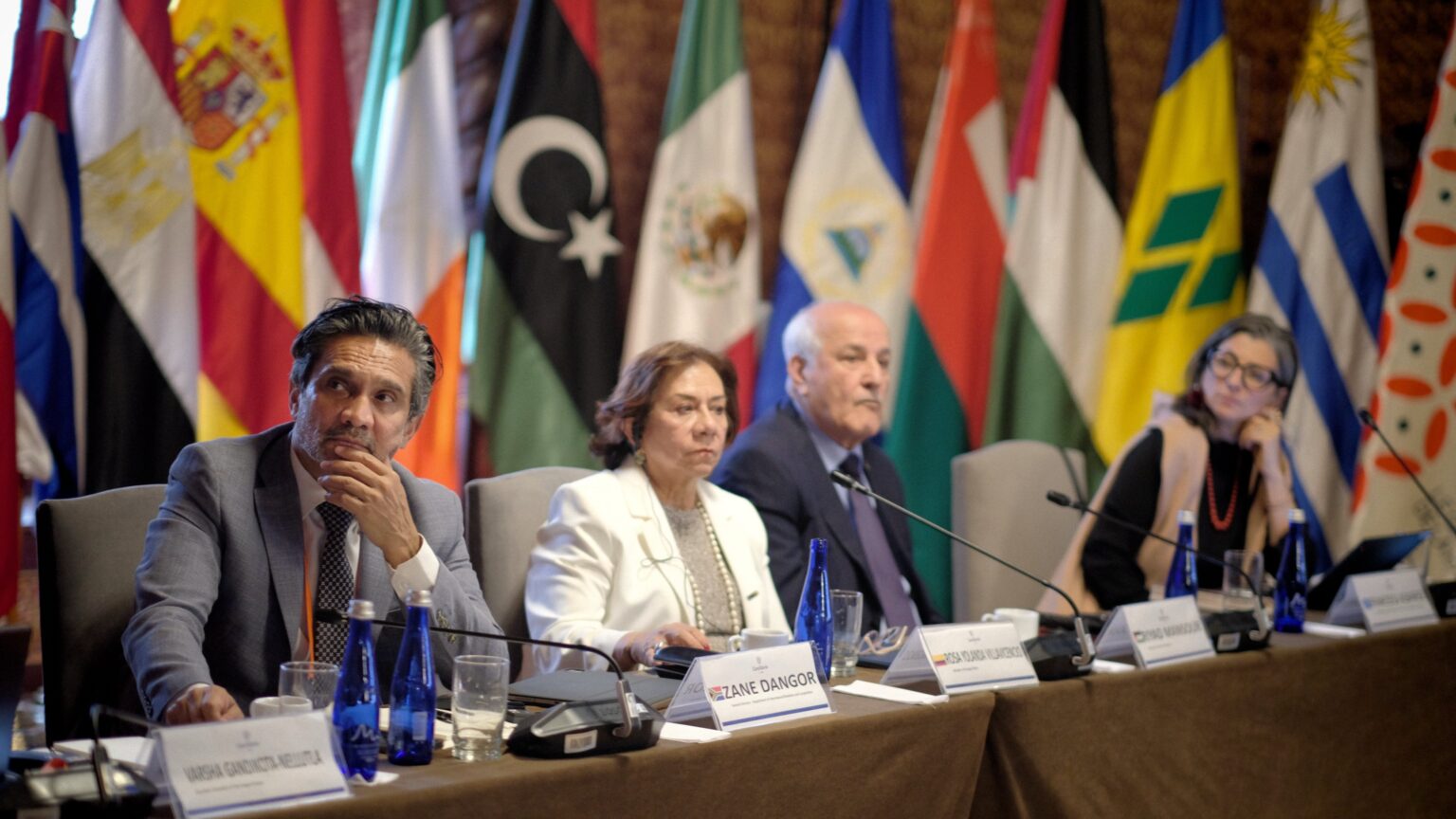
Hague Group Summit in Bogotá, Colombia. Photo: Abby Martin

In the final document, the signatory countries commit, among other things, to cease arms trade with Israel, review public contracts with that country, and seek accountability for war crimes.

Countries of the Global South have expressed their solidarity with the Palestinian people at the Emergency Ministerial Conference on Palestine organized by The Hague Group, which took place on July 15 and 16 in Bogotá, Colombia. The multilateral meeting was attended by representatives from Algeria, Bangladesh, Botswana, Brazil, Chile, China, Djibouti, Egypt, Slovenia, Spain, Honduras, Indonesia, Iraq, Ireland, Lebanon, Libya, Malaysia, Mexico, Namibia, Nicaragua, Norway, Oman, Pakistan, Palestine, Qatar, Saint Vincent and the Grenadines, South Africa, Turkey, Uruguay, and Venezuela.

Regarding the meeting, Colombia’s deputy secretary of state, Mauricio Jaramillo, said: “This conference is being convened by the Hague Group, but it is not an exclusive meeting of this group. Given the urgency of what is happening in the occupied territories, especially in Gaza, where today, for example, we have passed the threshold of 58,000 fatalities, we must commit ourselves to action.”

The conference, which was organized by the governments of Colombia and South Africa and attended by 30 countries, agreed that: “The era of impunity must end – and that international law must be enforced without fear or favor through immediate domestic policies and legislation – along with a unified call for an immediate ceasefire.”

The agreements

According to an official press release, the meeting laid out several measures to stop the genocide in Gaza:

  1. Prevent the provision or transfer of arms, munitions, military fuel, related military equipment, and dual-use items to Israel.
  2. Prevent the transit, docking, and servicing of vessels at any port … in all cases where there is a clear risk of the vessel being used to carry arms, munitions, military fuel, related military equipment, and dual-use items to Israel.
  3. Prevent the carriage of arms, munitions, military fuel, related military equipment, and dual-use items to Israel on vessels bearing our flag … and ensure full accountability, including de-flagging, for non-compliance with this prohibition.
  4. Commence an urgent review of all public contracts to prevent public institutions and funds from supporting Israel’s illegal occupation of the Palestinian Territory and entrenching its unlawful presence.
  5. Comply with obligations to ensure accountability for the most serious crimes under international law, through robust, impartial, and independent investigations and prosecutions at national or international levels, to ensure justice for all victims and the prevention of future crimes.
  6. Support universal jurisdiction mandates, as and where applicable in national legal frameworks and judiciaries, to ensure justice for victims of international crimes committed in the Occupied Palestinian Territory.

Although 30 countries attended the meeting, only 12 countries committed to immediately complying with the agreements outlined in the final declaration: Bolivia, Cuba, Colombia, Indonesia, Iraq, Libya, Malaysia, Namibia, Nicaragua, Oman, Saint Vincent and the Grenadines, and South Africa. The others expected to join them by September 20, 2025 – the date of the 80th UN General Assembly. The group will also be consulting various other states on an ongoing basis for participation in the measures against Israel.

Colombia’s President Gustavo Petro stated: “We came to Bogotá to make history — and we did … Together, we have begun the work of ending the era of impunity. These measures show that we will no longer allow international law to be treated as optional, or Palestinian life as disposable.”

“What we have achieved here is a collective affirmation that no state is above the law … The Hague Group was born to advance international law in an era of impunity. The measures adopted in Bogotá show that we are serious — and that coordinated state action is possible,” said South African Secretary of State Ronald Lamola.

The final agreement is historic as it is the first multilateral agreement that seeks to influence the Israeli government’s actions in its offensive against Gaza. In this sense, it is the first time that several countries have challenged the apparent immunity of the Israeli state in its actions in Gaza, which could have unpredictable diplomatic repercussions. It could also become the starting point for other countries to demand an end to the violence in Palestine jointly.

Original article by Pablo Meriguet republished from peoples dispatch under a Creative Commons Attribution-ShareAlike 4.0 (CC BY-SA) license.

Continue Reading12 countries commit to arms embargo on Israel to stop its attacks on Gaza

Sevim Dağdelen: the double standards of the West are on full display at the ICJ

Spread the love

Original article by Sevim Dağdelen republished from peoples dispatch under a Creative Commons Attribution-ShareAlike 4.0 (CC BY-SA) license.

Public ICJ hearing on Nicaragua’s case against Germany. Photo: ICJ

The German MP writes that the response of Germany to Nicaragua’s charges of aiding and abetting genocide in Gaza has been to downplay its role in supplying arms and question the premise that genocide is already taking place

The German government’s appearance before the International Court of Justice in the proceedings for aiding and abetting genocide and violations of international humanitarian law in Gaza is a lesson in Western double standards. On April 8 and 9, Germany sat in the dock in The Hague after Nicaragua filed a case at the highest UN judicial body.

The 43-page document accuses Germany of failing to fulfill its obligations under the Genocide Convention to prevent genocide. Essentially, Germany is accused of aiding and abetting genocide and violating international humanitarian law with its political, financial, and military support for Israel as well as by ceasing to fund the United Nations Relief and Works Agency for Palestine Refugees (UNRWA). In view of the urgency of the situation, Nicaragua requested five interim measures to prevent the facilitation of genocide. These include the demand that Germany stop supplying arms to Israel and resume payments to UNRWA to ensure sufficient humanitarian aid for the Palestinian population.

Does arming a state committing genocide make you an accomplice?

The arguments put forward by the German government in its defense were unconvincing. With a flood of PowerPoint slides, the German representation initially tried to play down the significance of Germany’s arms deliveries to Israel. It argued that the majority of the arms export licenses issued after October 7 were for so-called “other military equipment” (“sonstige Rüstungsgüter”) and only a relatively small proportion for so-called “weapons of war” (“Kriegswaffen”). This was an attempt to deceive the court and the public. For what the German defense failed to mention was the fact that this invented distinction between “other military equipment” and “weapons of war” is a specific feature of German arms export control. Contrary to what the terminology suggests, the category of “other military equipment” can also include weapons that can be used for warfare.

Germany is Israel’s second largest arms supplier after the USA. According to data from the Stockholm International Peace Research Institute (SIPRI), German weapons have accounted for 30% of Israeli arms imports in the last five years. Licenses for new arms exports also increased in 2023. In total, the German government approved the export of weapons to Israel worth EUR 326.5 million – a tenfold increase compared to the previous year. These licenses, most of which were issued after October 7, 2023, include war weapons worth 20 million euros. While the German government tried to justify the approval of 500,000 rounds of ammunition for machine guns with the difficult-to-verify claim that they had been supplied for training purposes, it could not deny the possible use of the approved 3,000 portable anti-tank weapons in war.

Instead, the German government attempted to justify this by arguing that these and the majority of other export licenses had been issued in October 2023, before the war and the humanitarian catastrophe in Gaza had come to a head. This argument ignores the fact that it must have been clear to the world public – and therefore also to the German government – just a few days after October 7 that the partially far-right Israeli government under Prime Minister Netanyahu would use the horrific attack by Hamas as an opportunity to wage a ruthless war against the Palestinian civilian population, committing numerous war crimes that go far beyond any right to self-defense.

It’s not genocide, yet

It was striking that the German government did not even attempt to dispute Nicaragua’s presentation of facts about the extensive violations of international humanitarian law by Israel. Apparently, it also realized that the terrible humanitarian catastrophe caused by Israel’s war, which has killed more than 33,000 people, including more than 13,000 children, can hardly be denied.

The German defense therefore focused on the formalistic argument that the existence of genocide had not yet been established and that Germany could therefore not be found guilty of aiding and abetting genocide. In doing so, however, the German government fails to recognize the central obligation under international law that arises from the Genocide Convention – namely to prevent genocide. This is all the more significant as the ICJ issued protection orders in the case of South Africa against Israel in order to prevent the danger of genocide, which the court considered plausible. Even Israel’s blatant disregard of these orders to protect the Palestinian civilian population has not led to the German government abandoning its unconditional support for Israel.

This shows the absurdity and hypocrisy of the actions of the German government as well as the governments of numerous other NATO states: On the one hand, they ignore all the findings of the most important bodies of the United Nations about Israel’s most serious war crimes and the danger of genocide and, regardless of this, continue to provide unconditional support for Israel’s war. On the other hand, the German government and other Western donor states decided to stop funding UNRWA solely on the basis of unverifiable insinuations by the Israeli government about the alleged involvement of individual UNRWA employees in the Hamas attack on October 7, 2023. The requirements for subjecting 2.2 million people in the Gaza Strip, who depend on UNRWA aid for their daily survival, to collective punishment are apparently lower than for stopping the supply of weapons that could be used to commit genocide. This can hardly be surpassed in terms of cynicism.

Against this backdrop, the German government’s attempt to defend itself before the ICJ by claiming that it had warned Israel of a military offensive on Rafah is hardly credible. In this sense, the German Foreign Minister Annalena Baerbock boasted to the German Parliament just a few days ago that she had already traveled to the region seven times and called on the Israeli government to respect the humanitarian needs of the Palestinian civilian population.

I asked the Federal Foreign Minister in the plenary session of the German Bundestag whether the Federal Government would consequently now declare a ceasefire on Israel, as the UN Human Rights Council recently called for in a resolution, due to Israel’s blatant disregard for these calls and in view of the announcement of a ground offensive in Rafah and the bloodbath to be expected as a result. The German government representative’s verbose answer can be summarized in one word: No.

Like the Foreign Minister, the German legal representation in The Hague gave the impression that the German raison d’état of unconditionally defending Israel was above international law. Threats from Berlin against the most important judicial body of the United Nations that it would no longer be credible if it ruled against Germany fit into this picture. If the German government only accepts international law when it appears to be advantageous for its own government action, it has finally reached the level of the leading NATO member, the US, which has long understood international law only as an instrument of interest-driven politics.

Regardless of how the court decides, Germany and the West must finally fulfill their obligation to prevent genocide and war crimes in order to lend weight to the demand for an immediate ceasefire in Gaza. The consequences of Western double standards, which seem to have reached a temporary climax in the Gaza war, are fatal. Not only does it lead to the West losing its last remnants of credibility in the eyes of the world. Above all, it promotes the erosion of international law, diplomacy and the United Nations as civilizational achievements for the protection of human life and the preservation of peace.

Sevim Dağdelen is a member of the German Bundestag and foreign policy spokesperson for the group “Alliance Sahra Wagenknecht”. She was the only parliamentary observer at the hearings in Nicaragua’s lawsuit against Germany before the ICJ.

Original article by Sevim Dağdelen republished from peoples dispatch under a Creative Commons Attribution-ShareAlike 4.0 (CC BY-SA) license.

Continue ReadingSevim Dağdelen: the double standards of the West are on full display at the ICJ