‘One in, one out’ Channel deal is just another cruel gimmick

Spread the love

Original article by Vicky Taylor republished from Open Democracy under a Creative Commons Attribution-NonCommercial 4.0 International licence.

Starmer and Macron agree on ‘one in, one out’ deal during the first French state visit to the UK since Brexit
 | Ludovic Marin/POOL/AFP/Getty Images. All rights reserved

Don’t be fooled by Labour’s show of providing safe migration routes. It’s justifying a cruel trade in people

Yesterday afternoon, British Prime Minister Kier Starmer and French President Emmanuel Macron announced a new migration deal to respond to Channel crossings.

After three days of discussions between the two leaders, Starmer promised “hard-headed, aggressive action on all fronts” to “smash the gangs” who he says are responsible for people crossing the Channel on dinghies.

The deal? A “one in, one out” system, which will return to France some of the people who cross the Channel irregularly. In exchange, France will send people to the UK who, for example, are seeking to reunite with family members here.

Shortly after he was elected last year, Starmer promised “no more gimmicks or empty promises” regarding Labour’s response to people arriving on ‘small boats’. Then, in a welcomed move, he scrapped the previous government’s plan to send asylum seekers to Rwanda.

Since then, however, Labour has done what they said they wouldn’t – introduce performative gimmicks to convince voters they’re in ‘control’ of migration. They announced plans to invest £75m in a new ‘Border Security Command’, which was quickly criticised as a simple rebranding of what came before. And in a move straight out of Trump’s playbook, they also began televising deportation flights.

This “one in, one out” deal is no different. The plan proposes a cruel trade in people for nothing more than short-term political point scoring, as the government worries about losing votes to Reform.

Starmer and Macron say the scheme will help deter people from making the crossing by reducing their chances of settling in the UK. But there is no evidence to support this. Time and time again, successive British governments have increased their cruelty towards people arriving on ‘small boats’. Yet people have continued to make the journey.

New deterrents” are not the solution. This new deal will cause considerable further harm, resulting in the forcible transfer of people back to France. Labour are falling into the same trap that contributed to the Conservatives’ last general election defeat.

‘Safe routes’ used to justify hostility

While details are not yet available, the new deal proposes a ‘safe route’ for some people trying to reach the UK from France. It’s been reported that the ‘one in’ element would target those with family in the UK, enabling them to reach the country without having to risk their lives.

If implemented well, this scheme may provide some people with a safer route to reach the UK. As the visa schemes offered to Ukrainians fleeing conflict has shown, where safer routes exist, people will take them.

The problem is, for nearly everybody else waiting to cross the Channel, no other route exists for them to seek safety in the UK. This agreement will not, in any meaningful way, solve this issue. People will continue to cross in dinghies in the absence of other, safer routes. If anything, it may fuel demand for crossing the Channel, as those forcibly returned by the ‘one out’ element could try again to reach the UK.

Piecemeal ‘safe and legal routes’ like this should not replace people’s ability to claim asylum if they arrive on UK soil. Yet this is exactly what is happening. The UK is replacing its legal and moral obligations to people seeking asylum with a discretionary ‘pick-your-own’ approach based on national self-interest. Then, they use these ‘safe routes’ to justify hostility towards asylum seekers who do arrive irregularly.

This agreement will result in the punitive trade in human beings across Europe

We don’t yet know what will happen to people after they’ve been returned to France. It’s possible that those returned would then be transferred onwards across Europe. An EU law called the Dublin Regulation means that France could return them back to the first country in Europe they entered. Five of those states – Cyprus, Greece, Italy, Malta and Spain – have written to the European Commission warning that the deal could increase pressure on them. They argue it sets a dangerous precedent for migration governance across the bloc.

Above all else, this agreement will result in the punitive trade in human beings across Europe.

The deterrence delusion

The proposed ‘one-for-one’ pilot scheme continues a 30-year pattern of UK-France agreements to ‘deter’ irregular crossings by increasingly hostility. Deterrence is the convenient, common-sense logic used to justify increasingly cruel policies. It possesses a dangerous self-reinforcing quality: when harsh policies fail to reduce arrivals, this is always attributed to the insufficient severity of the deterrent. Rather than questioning the logic itself, the much easier conclusion to reach is that even more severe measures are necessary.

Yet, even according to the Home Office’s own analysts, there is no evidence that harsh measures deter people from trying to reach the UK to seek asylum. And while some don’t know about the UK’s ever-changing policies, many are aware and still judge the journey to be worth the risk, because there is no other option available.

The government refuses to acknowledge this, so we find ourselves caught in a cycle with no end in sight.

‘Deterrence’ has been used to justify a series of rights-eroding legislation in recent years. The Nationality and Borders Act changed the meaning of ‘refugee’ in British law, making it a harder definition to qualify for. It also introduced powers which enabled the home secretary to deem the asylum claims of irregular arrivals to the UK inadmissible.

The 2022 law also introduced the new crime of ‘illegal arrival’, which criminalised seeking asylum for the first time in the UK. The move was criticised by the UN refugee agency (UNHCR), who said it breached the UK’s obligations under the Refugee Convention: refugees should not be penalised for the way they arrive in a country to seek asylum. In spite of this, at least 500 people have been convicted for ‘illegal arrival’ since June 2022, including refugees, victims of trafficking and torture, and children wrongly assessed to be adults.

‘Deterrence’ does not work. This is not because the policies are not ‘tough enough’, but because people will continue to move when it is not safe for them to stay still

Then in 2023, the Illegal Migration Act rolled back refugee rights even further. It legislated that people whose asylum claims are rejected could never have a future claim assessed in the UK and could not be granted any form of leave. It also created a mandatory duty for the home secretary to remove people deemed inadmissible for asylum – either to their own country, or to a ‘safe third country’. However, post-Brexit, the UK had very few agreements regarding removals. In desperation, the previous government hatched its ill-fated Rwanda plan – which ultimately proved to be a costly, unlawful disaster.

Despite these punitive efforts, people have continued to make the difficult journey across the Channel. Almost 20,000 people crossed in the first half of 2025, a significant increase from the same period in both 2024 and 2023. It’s clear that ‘deterrence’ does not work. This is not because the policies are not tough enough, but because people will continue to move when it is not safe for them to stay still.

Following the money: what happens in France?

While often justified as necessary to prevent the loss of life at sea, evidence strongly suggests that British spending in northern France has in fact increased the risks for people crossing.

Restrictions to the supply of dinghies has forced more people onto fewer crafts, resulting in deadly overcrowding. Footage released by the Guardian and the BBC has shown French police using violent tactics both on land and in the water, including creating waves to flood dinghies, threatening people with pepper spray, and using knives to slash boats in the water. Men, women and children have died in northern France, on land and in the shallows, as a direct result of these tactics.

Alongside the “one in, one out” deal, Macron argued that new tactics were needed on French beaches to respond to people smugglers. It has been rumoured that new powers are being considered which would enable French officers to intervene with dinghies up to 300m from the coastline. However, police unions are resisting, with concerns that this might breach laws regulating the treatment of boats in distress at sea. These are the same concerns which ultimately ended the previous UK government’s plans to ‘push-back’ dinghies at sea.

If passed, this measure will clearly endanger people further. British-funded policing efforts have resulted in record numbers of people drowning in the French shallows – 82 people died last year, including at least 14 children. While the government scapegoats young asylum seekers for these deaths, we must continue to call the UK and France to account for how money is being spent on the beaches.

No more gimmicks?

Starmer’s promise to end the “gimmicks and gestures” has proven hollow. Despite the promise of something new, his plans represent a direct continuation of the Conservative’s cruel approach.

In a dangerous escalation in rhetoric, Labour have argued that Channel crossings must be treated using “counter-terror style powers”. Its new Border Security, Asylum and Immigration Bill – currently in the parliamentary committee stage – proposes several new immigration offences, modelled on terrorism offences. These include the possession of information or objects that could be used for “immigration crime”.

While purported as necessary to “smash the gangs”, in reality, these offences are likely to be used against asylum seekers themselves, as the government has included no safeguards or protections for refugees.

Performative measures will not bring an end to death and despair in the Channel. These are policies not based on evidence or concerns for human life, but rather on a desire to appear “tough” on migration.

As people have continued to cross the Channel, both Labour and Conservative governments have resorted to increasingly cruel, often violent policies in their attempts to “stop the boats”. As continued cycles of policies have shown, they will not work. Instead, they will bring further harm to people seeking a better life in the UK. We must resist the state-supported trade in human beings and break the cruel cycle of deterrence.

Original article by Vicky Taylor republished from Open Democracy under a Creative Commons Attribution-NonCommercial 4.0 International licence.

Keir Starmer chases Nigel Farage's racist bigot vote.
Keir Starmer chases Nigel Farage’s racist bigot vote.
Nigel Farage explains the politics of Reform UK: Racism, Fake anti-establishmentism, Deregulation, Corporatism, Climate Change Denial, Mysogyny and Transphobia.
Nigel Farage urges you to ignore facts and reality and be a climate science denier like him. He says that Reform UK has received millions and millions from the fossil fuel industry to promote climate denial and destroy the planet.
Continue Reading‘One in, one out’ Channel deal is just another cruel gimmick

Reform-Supporting Neo-Nazi Suspended From Party

Spread the love

https://novaramedia.com/2025/07/11/reform-supporting-neo-nazi-suspended-from-party

Kai Cunningham speaking to YouTuber Wesley Winter. Credit: Wesley Winter/YouTube

This ‘may come across as racist’.

A far-right activist who said Britain needs a “national socialist government” has been suspended from Reform UK following a Novara Media investigation.

In April, a reporter from Unherd, a news and commentary website owned by GB News owner Paul Marshall, went to Dagenham, Essex to report on the insurgent rise of Reform UK.

According to Unherd’s dispatch, in a tense meeting in Rainham working men’s club where a party seeking to professionalise met with a “lagered-up, pissed-off crowd”, one voice cut through the atmosphere. “There’s no point squabbling,” Kai Cunningham is reported to have said, to the loudest cheer of the night. “Reform is our only chance. The country is broken. Barking and Dagenham is broken, and all the lefties need to hear us say it’s broken, and realise we’re still here advocating for our country.”

Cunningham was described by Unherd as “representative of the new Reform”, but he also appears to be representative of something else.

In May, Cunningham was filmed among the small number of attendees at a “remigration” rally in Birmingham organised by far-right party Britain First.

In comments to a YouTuber who was filming the event, Cunningham said: “What Britain needs is a national socialist government.”

He then promoted the political group White Vanguard. “White Vanguard are the only British national socialist activist group. That’s what’s going to bring change – the only change.”

“National socialism is on the rise. It’s the only thing that’s going to save Britain,” he said.

When approached by Novara Media, a Reform UK spokesman said: “Kai Cunningham’s membership has been suspended with immediate effect pending the outcome of an internal investigation. We will never tolerate those with extreme views in our party.”

This week it was revealed that Reform UK has introduced a less stringent “common sense” vetting scheme for candidates and encouraged people who previously failed the vetting process to reapply. This is despite the fact that neo-Nazis have been eyeing up Reform as a vehicle for their politics.

Nigel Farage explains the politics of Reform UK: Racism, Fake anti-establishmentism, Deregulation, Corporatism, Climate Change Denial, Mysogyny and Transphobia.
Nigel Farage urges you to ignore facts and reality and be a climate science denier like him. He says that Reform UK has received millions and millions from the fossil fuel industry to promote climate denial and destroy the planet.
Continue ReadingReform-Supporting Neo-Nazi Suspended From Party

Nearly two-thirds of voters think Starmer doesn’t respect them – new poll

Spread the love
Simon Dawson/Number 10/Flickr, CC BY-NC-ND

Marc Stears, UCL

Exhausted from a long campaign but buoyed by an extraordinary victory, Keir Starmer stood on the steps of Downing Street just over one year ago to deliver his victory speech. “Your government,” the new prime minister said, “should treat every single person in this country with respect.”

This message of respect resonated strongly in the year leading up to the campaign, coming as close as anything to providing a central argument to Labour’s case for government. And, according to polling and focus groups that my team at UCL Policy Lab designed along with polling company More in Common, it seemed to work.

As our research at the time showed, voters felt that “respecting ordinary people” was the most important attribute that any politician could have, more important than having ideas for the future, managing effectively or having real experience. And they thought Starmer was the leader who displayed that respect most.

A year later, the picture looks quite different. In new polling, we asked a representative sample of over 7,000 people to evaluate the government one year on. On respect, the judgement has not been good.


Want more politics coverage from academic experts? Every week, we bring you informed analysis of developments in government and fact check the claims being made.

Sign up for our weekly politics newsletter, delivered every Friday.


During the general election campaign, 41% of the electorate said that they believed that Starmer “respected people like them”. One year on, that stands at only 24%. At the same time, the number who say that he does not respect them has risen from 32% to 63%. Starmer is now outstripped on that question by Nigel Farage – 33% say the Reform UK leader respects people like them.

Losing support

This view has had crucial political consequences. Of those who voted for Labour in the general election, only 60% of our respondents say they would vote for the party in an election held tomorrow.

And that is not because some other political party is suddenly swooping in for their supporters. Labour’s voters are defecting in a host of different directions: 11% say they would vote Reform; 8% would vote Liberal Democrat; 4% would vote Green and 4% would vote Conservative. A further one in ten say they simply don’t know how they would vote.

Labour’s losses have been most dramatic among their first-time voters. Of those who voted for Labour in 2024 but not in any other general election since 2010, barely a third still support the party, while a fifth would vote for Reform UK.

These political failures, our report contends, are directly related to the declining sense of respect. The top reason voters gave for turning away from Labour are the broken promises and U-turns made by Labour in government, followed by the party’s failure to reduce the cost of living and changes to the winter fuel payment.

The idea of “respect” being key to the public’s sense of whether a government is on their side or not has been growing for many years now, both in academia and in politics itself. Since at least the 2007/8 financial crisis there has been a sense that large swathes of the public feel neglected, overlooked and even disdained by those who govern them.

When people talk about wanting to see “change” in Britain, this is often what they mean. It was a theme I touched on recently in two books, Out of the Ordinary and, with my co-author Tom Baldwin, England.

A smiling Keir Starmer delivers his victory speech, with a crowd of supporters behind him
Just over a year ago, a happier Starmer delivers his victory speech. Shutterstock

But respect is not just an abstract idea. People appear to judge whether they are respected by those who govern them or not primarily on the basis of whether the government stands up for them against powerful vested interests.

Our earlier research demonstrated that there is a widespread sense among the British public that certain groups have had it too easy for too long. This is either because they have been able to intimidate the government, or because government ministers and advisers have themselves been recruited from among these groups.

In our new report, therefore, we see that the new government’s most popular act was their willingness to raise the minimum wage by £1,400 in April, against the objections of some in business who suggested that such a move was too burdensome on them.

Changes to the winter fuel allowance and proposed changes to the disability benefits system, on the other hand, registered poorly. They suggest that the interests of ordinary and vulnerable people count for too little in decision-making.

These judgements currently shape the mood of the country and probably top the list of issues that the government now needs to address. There is still time for the government to rebuild its appeal, of course. Indeed, our respondents who said they would vote for Labour said they would do so because the party needs more time to fix the problems they inherited.

But as it seeks to do so, voters will want to know who this government stands for. Whose interests does it put first? What kind of people does it respect?

Much of the electorate thought they knew the answer to these questions one year ago. Now they’re not so sure.

Marc Stears, Director of UCL Policy Lab and Professor of Political Science, UCL

This article is republished from The Conversation under a Creative Commons license. Read the original article.

Keir Starmer says that the Labour Party under his leadership all feel a small part of Scunthorpe.
Keir Starmer objects to criticism of the IDF. He asks how could anyone obect to them starving people to death, forced marches like the Nazis did, bombing Gaza's hospitals and universities,mass-murdering journalists, healthworkers and starving people queuing for food, killing and raping prisoners and murdering children. He calls for people to stop obstructing his genocide for Israel.
Keir Starmer objects to criticism of the IDF. He asks how could anyone obect to them starving people to death, forced marches like the Nazis did, bombing Gaza’s hospitals and universities,mass-murdering journalists, healthworkers and starving people queuing for food, killing and raping prisoners and murdering children. He calls for people to stop obstructing his genocide for Israel.
Keir Starmer chases Nigel Farage's racist bigot vote.
Keir Starmer chases Nigel Farage’s racist bigot vote.

Continue ReadingNearly two-thirds of voters think Starmer doesn’t respect them – new poll

Nigel Farage’s Reform Party Has Accepted £2.3 Million from Fossil Fuel Interests, Climate Deniers, and Polluters Since 2019 Election

Spread the love

Original article by Adam Barnett and Sam Bright republished from DeSmog.

Reform UK leader Nigel Farage, and deputy leader Richard Tice. Photo: Sipa US / Alamy

The anti-net zero party has been bankrolled by oil and gas investors, aviation entrepreneurs, and those who reject climate science.

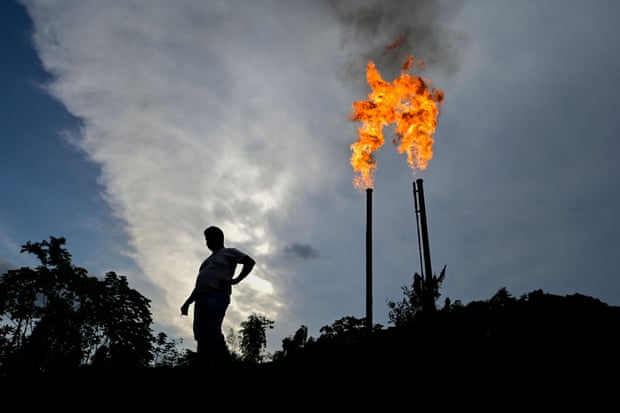
Reform UK has received more than £2.3 million from oil and gas interests, highly polluting industries, and climate science deniers since December 2019, amounting to 92 percent of the party’s donations. 

This week, Nigel Farage confirmed he would be returning as leader of Reform and standing in the general election, threatening to split the already fragile Conservative vote. His populist party, which campaigns to “scrap all of net zero”, claims to represent ordinary people against out of touch elites. 

Yet Reform’s official register of donations reveals the party is bankrolled by rich businessmen who reject climate science or make money from polluting industries.

In the past 12 months, Reform has received £200,000 from First Corporate Consultants. The firm is owned by Terence Mordaunt, a director and former chair of the Global Warming Policy Foundation (GWPF), the UK’s leading climate science denial group. 

The GWPF has in the past expressed the view that carbon dioxide has been mis-characterised as pollution, when in fact it is a “benefit to the planet”. Mordaunt himself told openDemocracy in 2019 that “no one has proved yet that CO2 is the culprit” of climate change.

The UN’s Intergovernmental Panel on Climate Change (IPCC), the world’s top climate science body, has stated that it is “unequivocal that human influence has warmed the atmosphere, ocean and land”. It has also stated that carbon dioxide “is responsible for most of global warming” since the late 19th century, which has increased the “severity and frequency of weather and climate extremes, like heat waves, heavy rains, and drought”.

Reform has also received more than £500,000 since the last election from Jeremy Hosking, whose investment firm Hosking Partners had more than $134 million (around £108 million) invested in the energy sector at the close of 2021, two thirds of which was in the oil industry, along with millions in coal and gas. 

Hosking previously told DeSmog: “I do not have millions in fossil fuels; it is the clients of Hosking Partners who are the beneficiaries of these investments.” 

Since December 2019, Reform has also received £465,000 from Christopher Harborne, owner of AML Global, an aviation fuel supplier with a distribution network that includes “main and regional oil companies”, according to its website. Harborne is also the CEO of Sheriff Global Group, which trades in private jets. 

Aviation emissions accounted for eight percent of the UK’s annual greenhouse gas emissions before the pandemic, according to the government’s Climate Change Committee. 

In response to DeSmog’s request for comment, Harborne posted a lengthy statement on the AML Global website. He said: “I am not a climate science denier and … I do not seek to influence any government through donations or lobbying regarding their policies on climate change or in favour of corporate interests.”

Harborne added that “there is overwhelming scientific evidence that human activity and in particular the use of hydrocarbons as an energy source is accelerating climate warming due to the greenhouse effect.”

Reform has also received more than £1.1 million in donations from Richard Tice, a property millionaire and the party’s leader until this week. Tice has now become the party’s chairman. 

In addition (and not included in the overall figures for this analysis), Reform has received more than 50 loans collectively worth around £1.4 million from a company called Tisun Investments, which is owned by Tice, since the start of 2020.

Tice is one of the UK’s most prominent climate deniers, his presenting role on the right-wing broadcaster GB News to attack net zero policies and the science behind them. Tice has claimed that “there is no climate crisis” and expressed the view that “CO2 isn’t a poison. It’s plant food”.

DeSmog has also revealed that the governing Conservative Party has received £8.4 million since December 2019 from oil and gas interests, highly polluting industries, and individuals who have expressed or supported climate science denial.

“No political party should be taking any money from fossil fuel interests whatsoever,” Caroline Lucas, until recently the Green Party MP for Brighton Pavilion, told DeSmog. 

Reform’s Climate Science Denial

Reform’s platform on climate change conforms to the views and business interests of its major donors. 

The party’s manifesto falsely claims that “scientists disagree as to how much” humans have had an impact on global warming. 

A number of climate consensus studies conducted between 2004 and 2015 found that between 90 percent and 100 percent of experts agree that humans are responsible for climate change. A study published in 2021, which reviewed over 3,000 scientific papers, found that over 99 percent of climate science literature says that global warming is caused by human activity.

Reform wants to develop new oil and gas fields in the North Sea, open onshore fracking sites across the country, end the windfall tax on oil and gas companies, and “restart opencast coal mines using the latest cleanest techniques”.

The party has campaigned for a referendum on the UK’s 2050 net zero emissions target, and supports scrapping the policy entirely. 

Farage himself also has a long history of opposing green reforms and criticising established climate science. 

Speaking on GB News in August 2021, Farage said that he was “very much an environmentalist” and that he couldn’t “abide things like plastics in our seas, pollution in our rivers.” However, on the issue of climate change, he added: “What annoys me though, is this complete obsession with carbon dioxide almost to the exclusion of everything else, the alarmism that comes with it, based on dodgy predictions and science.”

Reform’s only MP, Lee Anderson, who defected from the Conservative Party in March, has repeatedly attacked the government’s net zero policies, arguing in February 2024 that a net zero UK “wouldn’t make a blind bit of difference to the Earth’s atmosphere”.

Anderson is also a vocal backer of new oil, gas, and coal extraction in the UK. In 2022 he supported the government’s decision to approve a new coal mine in Cumbria – the UK’s first new coal mine for 30 years.

A Reform UK spokesman said: “Climate change is real, Reform UK believes we must adapt, rather than foolishly think you can stop it. We are proud to be the only party to understand that economic growth depends on cheap domestic energy and we are proud that we are the only party that are climate science realists, realising you can not stop the power of the sun, volcanoes or sea level oscillation.

“The deniers are those who continually gaslight the public into thinking you can stop these powerful natural forces. We must use the energy under our feet, rather than send our money and jobs abroad.”

Original article by Adam Barnett and Sam Bright republished from DeSmog.

Nigel Farage urges you to ignore facts and reality and be a climate science denier like him. He says that Reform UK has received millions and millions from the fossil fuel industry to promote climate denial and destroy the planet.
Donald Trump urges you to be a Climate Science denier like him. He says that he makes millions and millions for destroying the planet, Burn, Baby, Burn and Flood, Baby, Flood.
Nigel Farage explains the politics of Reform UK: Racism, Fake anti-establishmentism, Deregulation, Corporatism, Climate Change Denial, Mysogyny and Transphobia.
Continue ReadingNigel Farage’s Reform Party Has Accepted £2.3 Million from Fossil Fuel Interests, Climate Deniers, and Polluters Since 2019 Election

Have you noticed that Nigel Farage doesn’t talk about Donald Trump anymore?

Spread the love
Farage on stage with Trump at a 2016 rally. Alamy/Gerald Herbert

Martin Farr, Newcastle University

Each is the main political subject in their country, and one is the main political subject in the world. Each rode the populist wave in 2016, campaigning for the other. In 2024 the tandem surfers remounted on to an even greater breaker. Yet, though nothing has happened to suggest that bromance is dead, neither Donald Trump nor Nigel Farage publicly now speak of the other.

Trump’s presidential campaign shared personnel with Leave.eu, the unofficial Brexit campaign. Farage was on the stump with Trump, and his “bad boys of Brexit” made their pilgrimage to Trump Tower after its owner’s own triumph in the US election. Each exulted in the other’s success, and what it portended.

Trump duly proposed giving the UK ambassadorship to the United States to Farage. Instead, Farage became not merely MP for Clacton, but leader of the first insurgent party to potentially reset Britain’s electoral calculus since Labour broke through in 1922.

Then, Labour’s challenge was to replace the Liberals as the alternative party of government. It took two years. Reform UK could replace the Conservatives in four.


Get your news from actual experts, straight to your inbox. Sign up to our daily newsletter to receive all The Conversation UK’s latest coverage of news and research, from politics and business to the arts and sciences.


Trump, meanwhile, has achieved what in Britain has either been thwarted (Militant and the Labour party in the 1980s) or has at most had temporary, aberrant, success (Momentum and the Labour party in the 2010s): the takeover of a party from within. Farage has been doing so – hitherto – from without.

At one of those historic forks in a road where change is a matter of chance, after Brexit finally took place, Farage considered his own personal leave – to go and break America.

The path had been trodden by Trump-friendly high-profile provocateurs before him: Steve Hilton, from David Cameron’s Downing Street, via cable news, now standing to be governor of California; Piers Morgan, off to CNN to replace the doyen of cable news Larry King, only to crash, but then to burn on, online. Liz Truss, never knowingly understated, has found her safe space – the rightwing speaking circuit.

But Farage remained stateside. He knew his domestic platform was primed more fully to exploit the voter distrust that his nationalist crusade had done so much to provoke.

The Trump effect

Genuine peacetime transatlantic affiliations are rare, usually confined to the leaders of established parties: Ronald Reagan and Margaret Thatcher, Bill Clinton and Tony Blair. One consequence of the 2016 political shift is that the US Republicans and the British Conservatives, the latter still at least partially tethered to traditional politics, have become distanced.

During the first Trump administration, and even in the build up to the second, it was Farage who was seen as the UK’s bridge to the president. But today, at the peak of their influence, for Farage association can only be by inference, friendship with the US president is not – put mildly – of political advantage. For UK voters, Trump is the 19th most popular foreign politician, in between the King of Denmark and Benjamin Netanyahu.

There is, moreover, the “Trump effect”. Measuring this is crude – circumstances differ – but the trend is that elections may be won by openly criticising, rather than associating with, Trump. This was the case for Mark Carney in Canada, Anthony Albanese in Australia, and Nicușor Dan in Romania.

Trump’s second state visit to the UK will certainly be less awkward for Farage than it will be Starmer, the man who willed it. Farage will likely not – and has no reason to – be seen welcoming so divisive a figure.

Farage and Trump were pictured together during the latter’s visit to his golf course in South Ayrshire in 2023 but didn’t do any public events together. Alamy

Starmer has no choice but to, and to do so ostentatiously. It is typical of Starmer’s perfect storm of an administration that he will, in the process, do nothing to appeal to the sliver of British voters partial to Trump while further shredding his reputation with Labour voters. Farage would be well served in taking one of his tactical European sojourns for the duration. Starmer may be tempted too.

Outmanoeuvring the establishment

Reflecting the historic cultural differences of their countries, Trump’s prescription is less state, Farage’s is more. The Farage of 2025 that is. He had been robustly Thatcherite, but has lately embraced socialist interventionism, albeit through a most Thatcherite analysis: “the gap in the market was enormous”.

Reform UK now appears to stand for what Labour – in the mind of many of its voters – ought to. Eyeing the opportunity of smokestack grievances, Farage called for state control of steel production even as Trump was considering quite how high a tariff to put on it. Nationalisation and economic nationalism: associated restoratives for national malaise.

Aggressively heteronormative, Trump and Farage dabble in the natalism burgeoning in both countries – as much a cultural as an economic imperative. Each has mastered – and much more than their adversaries – social media. Each has come to recognise the demerits in publicly appeasing Putin.

And Reform’s rise in a hitherto Farage-resistant Scotland can only endear him further to a president whose Hebridean mother was thought of (in desperation) as potentially his Rosebud by British officials preparing for his first administration.

Given their rhetorical selectivity, Trump and Farage’s rolling pitches are almost unanswerable for convention-confined political opponents and reporters. These two anti-elite elitists continue to confound.

Unprecedentedly, for a former president, Trump ran against the incumbent; Farage will continue to exploit anti-incumbency, despite his party now being in office. Most elementally, the pair are bound for life by their very public near-death experiences. Theirs is, by any conceivable measure, an uncommon association.

Farage’s fleetness of foot would be apparent even without comparison with the leaden steps of the leaders of the legacy parties. His is a genius of opportunism. That’s why he knows not to remind us of his confrere across the water.

Martin Farr, Senior Lecturer in Contemporary British History, Newcastle University

This article is republished from The Conversation under a Creative Commons license. Read the original article.

Nigel Farage urges you to ignore facts and reality and be a climate science denier like him. He says that Reform UK has received millions and millions from the fossil fuel industry to promote climate denial and destroy the planet.
Donald Trump urges you to be a Climate Science denier like him. He says that he makes millions and millions for destroying the planet, Burn, Baby, Burn and Flood, Baby, Flood.
Nigel Farage explains the politics of Reform UK: Racism, Fake anti-establishmentism, Deregulation, Corporatism, Climate Change Denial, Mysogyny and Transphobia.

Continue ReadingHave you noticed that Nigel Farage doesn’t talk about Donald Trump anymore?