US maintains “Christian genocide” narrative at UN special event

Spread the love

Original article by Nicholas Mwangi republished from peoples dispatch under a Creative Commons Attribution-ShareAlike 4.0 (CC BY-SA) license.
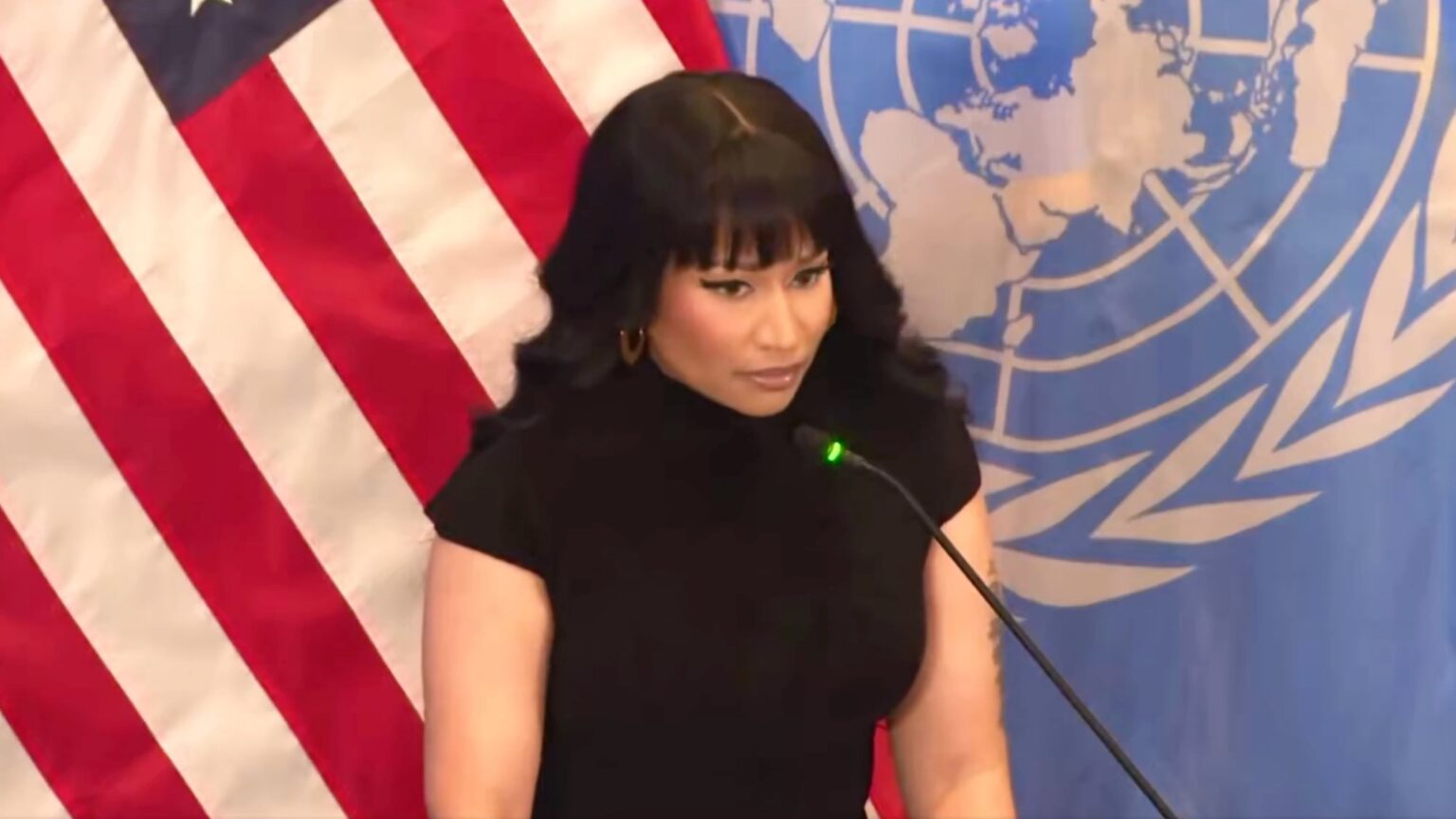
Nicki Minaj repeats US media narrative of Christian genocide in Nigeria at UN event in NY. Photo: screenshot

Analysts argue that framing the conflict as religious persecution masks a deeper geopolitical struggle over Nigeria’s enormous mineral wealth.

The United States intensified its claims that Nigeria is facing a “genocide against Christians” during a special event at the United Nations held in November called “Combating Christian Violence and the Killing of Christians in Nigeria”. The session, led by US Ambassador Mike Waltz, featured American rapper Nicki Minaj as one of the keynote speakers, and further amplified a narrative that Nigerian officials and regional analysts have repeatedly dismissed as misleading and politically motivated.

The UN event follows a recent wave of rhetoric by US President Donald Trump, who alleged widespread, systematic killings of Christians in the West African nation. Nigeria has rejected the accusations, insisting they are based on distorted reports and selective data that ignore the complex security realities in the country. Officials acknowledge the ongoing threat of Boko Haram and other armed groups but argue that the situation cannot be reduced to a one-sided religious persecution narrative.

Media organizations, including the BBC, have also noted that several of the claims circulating in US political circles cannot be independently verified.

Nicki Minaj repeats Trump’s narrative at UN stage

Nicki Minaj, whose earlier social media statements echoed Trump’s message, reiterated her comments at the UN event. She stated:

“In Nigeria, Christians are being targeted, driven from their homes and killed. Churches have been burned, families torn apart, and entire communities live in fear constantly, simply because of how they pray.”

Her remarks closely mirrored the religious persecution framing popularized in US conservative media, which African analysts argue oversimplifies a multidimensional conflict involving poverty, state fragility, armed groups, climate pressures, and competition over land and mineral resources.

African analysts push back

Journalist David Hundeyin, speaking to BreakThrough News, challenged the US framing, saying the violence in northern and central Nigeria cannot be understood simply as a religious conflict. He stressed that:

Boko Haram and affiliated groups have killed between 50,000 and 150,000 people, though the exact numbers remain unclear. The majority of victims have been Muslims, not Christians, since most violence occurs in predominantly Muslim regions of the north and middle belt.

Armed groups attack both Christians and Muslims, and “everyone is dying in numbers … they’re all poor people and powerless.”

According to Hundeyin, framing the conflict as religious persecution masks a deeper geopolitical struggle over Nigeria’s enormous mineral wealth, including rare earth elements crucial for global technology industries. He argues: Presenting the conflict as “Islamists killing Christians” provides a moral pretext for deeper US involvement in a region with strategic resources.

A key part of Hundeyin’s critique is the near-total absence of Muslim deaths in Western coverage. Although Muslims make up the majority of victims, their deaths rarely appear in narratives circulated in US conservative politics, which instead portray Nigeria as the world’s “epicenter of Christian persecution”.

Read more: Trump threatens war on Africa’s most populous country to “save” “our CHERISHED Christians”

As Pavan Kulkarni wrote in a Peoples Dispatch report last month, “The majority of people killed by the Boko Haram and Islamic State West Africa Province are Muslims, simply because they make up the majority in the northern region these Islamist insurgencies are ravaging. For the same demographic reasons, Muslims are also the majority victims of bandits who kill, loot, and kidnap in the northwest region, where the state is struggling to enforce the rule of law. In the central region, Christian victims of violence are in the majority, not because of their religious identity but because of their occupation: farming. Amid intensifying competition over depleting land and water due to climate change, raids on farmlands by mobile herders, groups of whom are armed, are a serious problem in several African countries suffering desertification.”

The Nigerian government maintains that while terrorism remains a serious challenge, portraying the crisis as a Christian genocide is inaccurate and dangerous. Officials argue that such language obscures the socio-economic drivers of violence, including state collapse in rural areas, the proliferation of weapons, land-use conflicts, and climate-related displacement across the Sahel.

Read More: World Bank acknowledges poverty increase in Nigeria, but doubles down on the reforms causing it

African Union issues statement

The African Union Commission (AUC), released a statement,  reaffirming its commitment to sovereignty, non-interference, religious freedom, and the rule of law as outlined in the AU Constitutive Act, and expressed concern over US allegations accusing Nigeria of targeting Christians and threatening military action, emphasizing that Nigeria is a longstanding and vital AU Member State whose sovereign right to manage its internal affairs, particularly regarding security, human rights, and religious freedom, must be fully respected by all external partners.

Nigeria’s struggles with insecurity demand nuanced understanding rather than a blanket accusation of Christians being targeted in the country.

Original article by Nicholas Mwangi republished from peoples dispatch under a Creative Commons Attribution-ShareAlike 4.0 (CC BY-SA) license.
Continue ReadingUS maintains “Christian genocide” narrative at UN special event

Trump threatens war on Africa’s most populous country to “save” “our CHERISHED Christians”

Spread the love

Original article by republished from peoples dispatch under a Creative Commons Attribution-ShareAlike 4.0 (CC BY-SA) license.

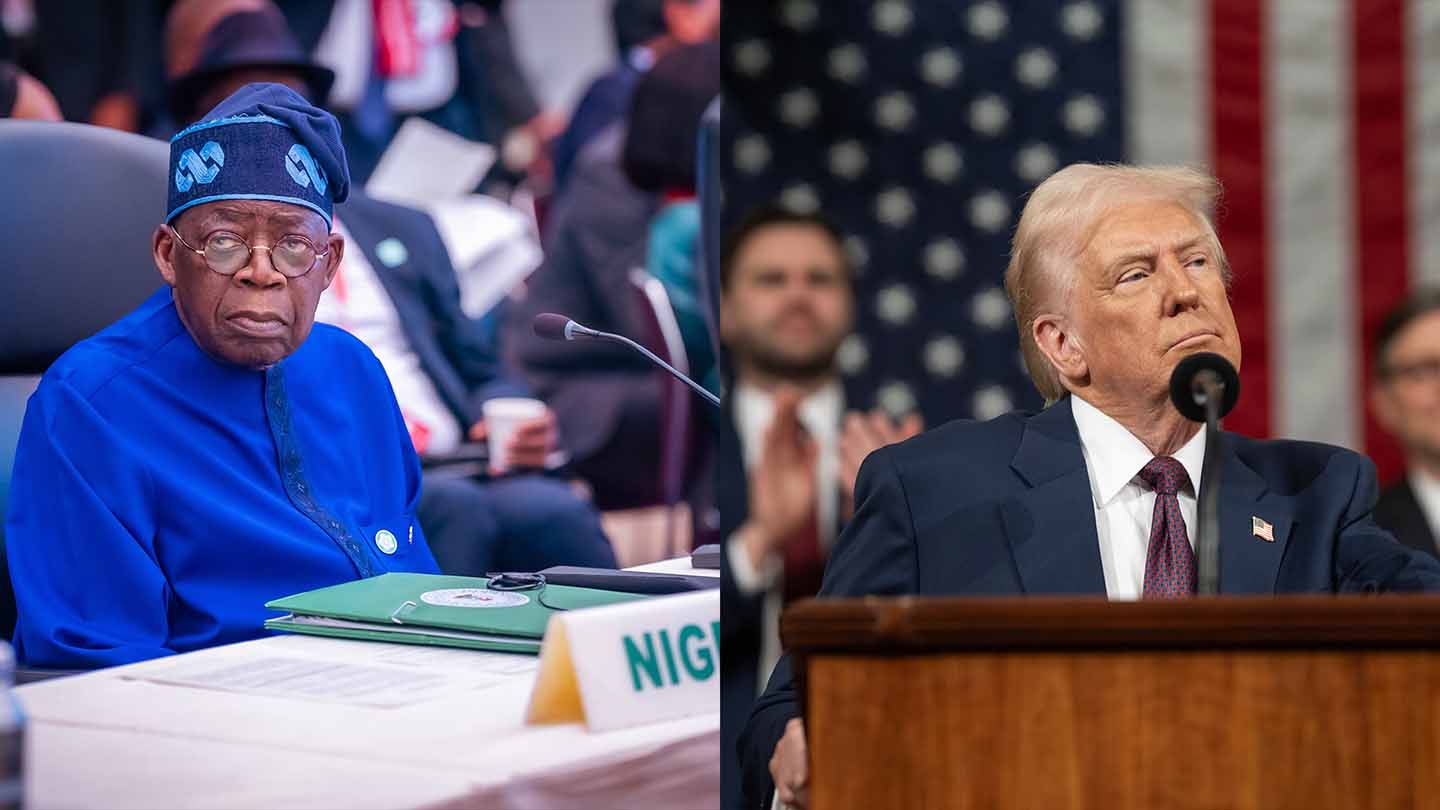
Nigerian President Bola Ahmed Tinubu and US President Donald Trump. Photos via X

“We know the heart and intent of Trump is to help us fight insecurity,” states the spokesperson of Nigeria’s President Bola Tinubu, who has time and again demonstrated his loyalty to the West.

US President Donald Trump has threatened to go “guns-a-blazing” into Africa’s most populous country, Nigeria, which he denigrated as a “disgraced country”. In a social media post on Saturday, November 1, he declared, “I am hereby instructing our Department of War to prepare for possible action. If we attack, it will be fast, vicious, and sweet.”

“Yes sir,” War Secretary Pete Hegseth replied to his post. “The Department of War is preparing for action.”

Why? Ostensibly to “wipe out the Islamic Terrorists who are committing these horrible atrocities” against “our CHERISHED Christians”. For over two months, the US right wing has been peddling a conspiracy about a “genocide” against Christians in Nigeria.

Championing this false claim, Senator Ted Cruz has proposed the so-called “Nigeria Religious Freedom Accountability Act” to use “powerful sanctions and other tools” against Nigerian officials he accuses of “ignoring and even facilitating the mass murder of Christians by Islamist jihadists.”

Myth of Christian genocide

Facts, however, contradict this accusation. The majority of people killed by the Boko Haram and Islamic State West Africa Province are Muslims, simply because they make up the majority in the northern region these Islamist insurgencies are ravaging. For the same demographic reasons, Muslims are also the majority victims of bandits who kill, loot, and kidnap in the northwest region, where the state is struggling to enforce the rule of law.

In the central region, Christian victims of violence are in the majority, not because of their religious identity but because of their occupation: farming. Amid intensifying competition over depleting land and water due to climate change, raids on farmlands by mobile herders, groups of whom are armed, are a serious problem in several African countries suffering desertification.

90% of these herders are Muslims, while in this region of Nigeria, farmers are predominantly Christian. But the violence is over resources, not faith. There is no evidence of a systematic and large-scale, religiously motivated targeting of Christians in Nigeria, where they are almost equal to Muslims in population.

“While Christians make up roughly 50% of the population, violence in which Christians have been specifically targeted in relation to their religious identity accounts for only 5% of reported civilian targeting events,” the Armed Conflict Location & Event Data Project reported in mid-2022.

Trump’s own envoy for Arab and African affairs, Massad Boulos, had pointed out at a summit last month in Italy to discuss counter-terrorism in West Africa that Boko Haram has killed more Muslims than Christians. Facts notwithstanding, “Christianity is facing an existential threat in Nigeria,” Trump insisted.

“Thousands of Christians are being killed. Radical Islamists are responsible for this mass slaughter,” he claimed, announcing on Friday, October 31, his decision to designate Nigeria a “country of particular concern” for systematic violation of religious freedoms.

“The characterization of Nigeria as religiously intolerant does not reflect our national reality, nor does it recognize government efforts to safeguard freedom of religion and belief,” replied Nigeria’s president, Bola Tinubu, a Muslim, married to a Christian Pastor.

A secular suffering

Under his secular regime, Christians, Muslims, and non-believers have all suffered alike, from hunger, unaffordability, unemployment, etc, as a consequence of his aggressive implementation of the IMF-World Bank prescribed reforms.

Read: World Bank acknowledges poverty increase in Nigeria, but doubles down on the reforms causing it

This crisis has enhanced the fertility of the ground for terror groups, bandits, and other criminal gangs to harvest more recruits, especially in the hinterlands and remote areas the state is struggling to police.

While struggling to restore security in these regions, Tinubu tried, albeit unsuccessfully, to lead the Nigerian military into a war with neighboring Niger at the behest of US ally France after its neocolonial puppet regime in Niger was ousted in mid-2023.

Read: Nigeria’s Senate refuses to support ECOWAS plan for West-backed military intervention

A year later, he unleashed his security forces on the domestic front to crush the “hunger protests” demanding a reversal of the IMF-World Bank prescribed liberalization, killing at least two dozen people. Another 1,200 protesters were arrested, many of whom were tortured in custody. Several, including minors, faced charges of treason.

Read: Nigerian president Bola Tinubu enforced violent crackdown on hunger protests to satisfy IMF demands

Later in November, allegations of treason were leveled against Tinubu himself when the CIA objected to the release of the unredacted files of the US Drug Enforcement Agency (DEA) investigation into Tinubu in the early 1990s. Accused of laundering money for a major heroin racket in Chicago at the time, Tinubu entered into a plea bargain to avoid a trial, forfeiting USD 460,000 to US authorities.

Tinubu’s loyalty to the West, unrewarded

In response to Freedom of Information Act (FOIA) requests for the release of unredacted files of the investigation, “We oppose the full… release of the DEA’s Bola Tinubu heroin trafficking investigation records,” the DEA insisted. “While Nigerians have a right to be informed about what their government is up to, they do not have a right to know what their president is up to.”

Reminding that its activities are “carried out through clandestine means, and therefore they must remain secret,” the CIA objected to full release as it could “cause damage to US national security by indicating whether or not the CIA maintained any human intelligence sources related to Tinubu.”

“The CIA effectively confirmed that Nigeria’s sitting president is an active CIA asset,” remarked David Hundeyin, author of the documentary “Bola Ahmed Tinubu: From Drug Lord to Presidential Candidate.”

From his alleged contribution to US intelligence, his readiness to hurl Nigeria into war with a neighbor for France, his obedient implementation of IMF-World Bank diktats, and ruthless crushing of protests against it – Tinubu has time and again demonstrated his loyalty to the West.

But Trump is not placated. Ordering the Department of War to prepare for a military action, Trump doubled down on Sunday, adding that both airstrikes and boots on the ground were open options.

Groveling again

“Nigeria is US’s partner in the global fight against terrorism,” said Tinubu’s spokesperson, Daniel Bwala. “We know the heart and intent of Trump is to help us fight insecurity,” he groveled. “We do not see (Trump’s threat) in the literal sense… We know that Donald Trump has his own style of communication.” It was, he suggested, Trump’s way to “force a sit-down between the two leaders so they can iron out a common front to fight their insecurity”.

But he is confident that when Tinubu and Trump meet, “there will be better outcomes.” Will these “outcomes” from the suggested meeting include Tinubu’s walking back on his refusal to accept foreign nationals deported by the US? Will he throw open Nigeria’s vast critical mineral deposits for US extraction, which the establishment think tank, Brookings Institution, deems “a win-win policy”?

Original article by republished from peoples dispatch under a Creative Commons Attribution-ShareAlike 4.0 (CC BY-SA) license.
Orcas discuss how Trump was re-elected and him being an obviously insane, xenophobic Fascist.

Continue ReadingTrump threatens war on Africa’s most populous country to “save” “our CHERISHED Christians”

‘Workers are  being employed as indentured labour’

Spread the love

https://morningstaronline.co.uk/article/workers-are-being-employed-as-indentured-labour

Staff on a NHS hospital ward at Ealing Hospital in London, January 18, 2023

Damning report finds migrant workers propping up Britain’s crumbling care system are trapped in awful working conditions

CAMPAIGNERS demanded reform today after a damning report laid bare shocking conditions facing migrant workers propping up Britain’s crumbling care system.

Unison surveyed more than 3,000 people who came to Britain on health and care worker visas to tackle shortages in the sector.

It found that nearly a quarter had paid fees to an employer or an intermediary upfront in return for a job — with dozens handing over more than £20,000.

Many workers, who are from countries including Nigeria, Zimbabwe and Zambia as well as India and the Philippines, were given no shifts when they arrived, or not the number promised.

Around 18 per cent said employers had deducted money from their salaries since arriving, with firms claiming the fees were for expenses such as training and administration.

Pay issues impacted three in 10 migrant care staff, with problems including unpaid travel time between care visits and no sick pay.

More than a quarter were paid below the legal minimum wage of £11.44 an hour.

In one shocking testimony, a worker reported having to sleep on the streets because their employer did not pay them for shadowing other colleagues.

And 9 per cent described the accommodation they were provided with as poor or very poor.

Public Services International care organiser Huma Haq said the findings reflect a broader global crisis in care: “The exploitation of migrant care workers in the UK is not an isolated incident but a symptom of a broken system globally where governments have increasingly privatised and underfunded essential care services.

“Governments must step up and take responsibility for providing quality public care services.”

Original article is at https://morningstaronline.co.uk/article/workers-are-being-employed-as-indentured-labour

Continue Reading‘Workers are  being employed as indentured labour’

Fossil fuel supply: the elephant in the room at climate change conferences

Spread the love

Ded pixto/Shutterstock

Jordi Roca Jusmet, Universitat de Barcelona

“Natural resources … are a gift from God. Every natural resource, whether it’s oil, gas, wind, sun, gold, silver, copper, they are all natural resources. Countries should not be blamed for having them, and should not be blamed for bringing these resources to the market because the market needs them. The people need them.”

These were the words of Ilham Aliyev, president of Azerbaijan, at the opening of the recent United Nations COP29 convention on climate change in Baku. https://www.youtube.com/embed/4pqVwrMAGSc?wmode=transparent&start=0 Ilham Aliyev’s speech at COP29.

It seems completely inappropriate to sing the praises of fossil fuels at an international gathering that aims to radically reducing greenhouse gas emissions. Indeed, this goal is absolutely unachievable without drastic cuts to fossil fuel use, but Aliyev’s speech does have a positive, if indirect, impact – it points a spotlight at the elephant in the room, one that has remained virtually invisible throughout the United Nations Framework Convention on Climate Change’s (UNFCCC) long history.

COP agreements have never made commitments to limit fossil fuel extraction, even though this would be the most direct – and the only certain – way to rein in the leading cause of climate change.

Reducing demand but not supply: a pointless endeavour

Fossil fuels are key to climate change, but they are largely absent from COP agreements. The biggest achievement came in 2023, at COP28 in Dubai (United Arab Emirates), when an unspecified proposal was made to “transition away from fossil fuels”. This was not ratified at COP29, mainly due to pressure from Saudi Arabia.

In economic terms, the focus of climate agreements has always been on demand. It is expected that national measures, such as promoting renewable energy and public transport, or penalising the use of fossil fuels by putting a price on carbon emissions will indirectly lead to less fossil fuels being put on the market.

While these measures can be effective, they often end up lacking, or even non-existent, because they depend completely on the policies and reactions of the nations and companies who own, supply, and profit from these resources.

Commitments to supply-side agreements are not on the COP agenda, even though most of the fossil fuel reserves that are considered exploitable – and therefore economically valuable – cannot be burned if we are to even come close to the UNFCCC climate goals. They must be left in the ground.

However, global CO₂ emissions are not falling. On the contrary, the use of coal, petroleum and natural gas have hit record highs in 2024.

Evolution of global CO₂ emissions. Global Carbon Project, CC BY-SA

How can we restrict fossil fuel extraction?

Limits have been put forward in the past. In 2014, for instance, economists Paul Collier and Anthony J. Venables proposed a sequenced plan for phasing out coal, which would involve progressive measures not to start new operations and to close mines, with countries staggered in a fair order. “Fairness” would be determined by ability to pay, per capita emissions and historical responsibility.

We can also take inspiration from nuclear weapons treaties, as Professor of International Relations Peter Newell and political economist Andrew Simms have done. They advocate for a fossil fuel non-proliferation treaty along the lines of the nuclear non-proliferation treaty. Many states and cities around the world have already signed up to the initiative.

There have also been local initiatives, such as the commitment to stop extracting oil in an area of the Yasuní National Park in Ecuador due to its exceptional biodiversity and the existence of populations in voluntary isolation. This will also benefit the global climate by reducing emissions.

The proposal was initially taken up in 2007 by the then president Rafael Correa on the condition that the international community would financially compensate part of the sacrificed monetary income. However, scarce contributions to the compensation fund led Correa to renounce the initiative and allow oil exploitation.

Environmentalists, affected communities and academics demanded a referendum and, after years of litigation, the right to consultation was recognised by the courts. In August 2023, a large majority (almost 60 %) voted in favour of keeping the oil reserves “in the ground indefinitely”. Money does not always prevail, even in poor countries, though the Ecuadorian government has postponed its mandate to dismantle drilling sites, meaning many are still operational today.

A blessing for some, a curse for others

The above case and many others – such as the Niger Delta (Nigeria), where Shell has been extracting oil since 1958 – remind us that “God’s gift” of natural resources can also be a curse.

A gift for some – usually multinational companies or small numbers of wealthy people – can be a curse not only for the planet, but also for the local population who suffer the devastating environmental and social consequences of extracting these resources, and who face violent repression when they protest.

It was in places like Nigeria and Ecuador that the activist slogan “leave fossil fuels in the ground” was coined. Even if their motivation is primarily or solely to protect their territory, social movements opposing coal mining or hydrocarbon extraction undeniably contribute – from the supply side – to curbing climate change.

Together with social movements, academic and political work is key to defining the areas where preventing the exploitation of fossil fuels is a priority, and to establishing economic compensation. Martí Orta-Martínez, from the University of Barcelona, is doing just this. He is leading a project to geographically define the fossil fuel deposits that should not be burned, which was presented at a seminar in the framework of COP29.

It may sound utopian to seek supply-side international agreements, but the truth is that it is impossible to reduce global emissions and move towards decarbonisation without a rapid decrease in the extraction of fossil fuels. COPs should heed this evidence.

Given the magnitude of the climate challenge, it is not a question of deciding between demand or supply-side policies, but of using both, promoting them in each country, and reaching robust agreements at an international level.

Jordi Roca Jusmet, Catedrático de Economía, Universitat de Barcelona

This article is republished from The Conversation under a Creative Commons license. Read the original article.

Continue ReadingFossil fuel supply: the elephant in the room at climate change conferences