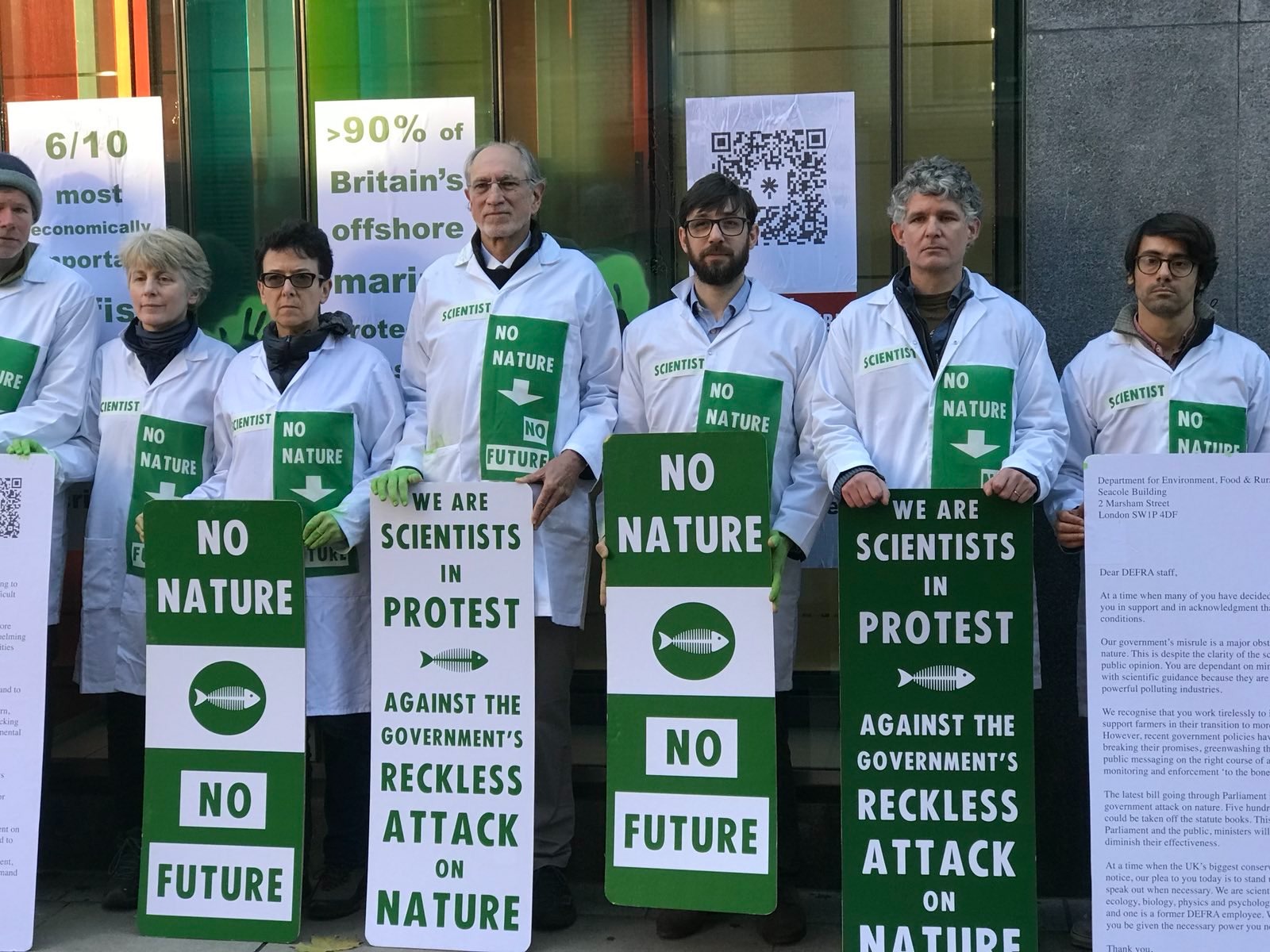
Scientists protest climate inaction 25 November 2022
Dubai, UAE – Analysis released today by the Pacific Islands Climate Action Network (PICAN) and Oil Change International confirms that:
At least 127 countries have called for or endorsed a decision to phaseout fossil fuels at this year’s UN climate negotiations
These countries account for 71.7% of the Parties to the UN Framework Convention on Climate Change, and represent 46.5% of global greenhouse gas emissions and 69.7% of global GDP
By comparison, at last year’s UN climate negotiations, 80 countries called for a phaseout or phase down of fossil fuels – and that call was limited to only the electricity sector. This analysis confirms that there is now unprecedented momentum to phaseout all fossil fuels.
Of those countries that have not yet endorsed phasing out fossil fuels, very few have actively opposed. Almost all the remaining countries would likely agree to phaseout fossil fuels if this was tied to financial support, coupled with a successful outcome on adaptation, and differentiated developed and developing countries.
Lavetanalagi Seru, Regional Coordinator for the Pacific Islands Climate Action Network, said:
“A call that originated in the Pacific has now become an unstoppable global force. Pacific nations were the first to call for an end to fossil fuel expansion and a just and complete phaseout of fossil fuels, as a matter of vital necessity, to guarantee our collective survival. Now, we urge countries present at COP28 to heed this call and deliver an agreement on the end of the fossil fuel era. A small minority of blockers cannot be allowed to jeopardize the future of our nations”.
Romain Ioualalen, Global Policy manager for Oil Change International, said:
“There is unprecedented people-powered momentum – supported by 127 countries – for a historic agreement on fossil fuel phaseout at COP28 to finally tackle the root cause of the climate crisis: oil, gas, and coal. The opposition comes from two groups. First, a small group of rich and powerful governments and companies are trying to prolong the fossil fuel economy, as illustrated by a letter sent by OPEC to OPEC member countries encouraging them to reject any language on fossil fuel phaseout. Second, there are developing countries who would agree to phaseout fossil fuels if wealthy nations provided real assurances of finance and support, unlocked a meaningful outcome on adaptation, and agreed to act first and fastest to phase out fossil fuels.
“We must call out the fossil fuel lobby’s lies, and push wealthy nations to hear developing states’ demands for equity and justice. 2023 can still be the year where countries commit to phaseout fossil fuels. As the negotiations heat up in their final hours, countries’ actions must match their words. There is no time to waste. We need action commensurate with the scientific consensus: a full, fast, fair, funded phaseout of fossil fuels.”
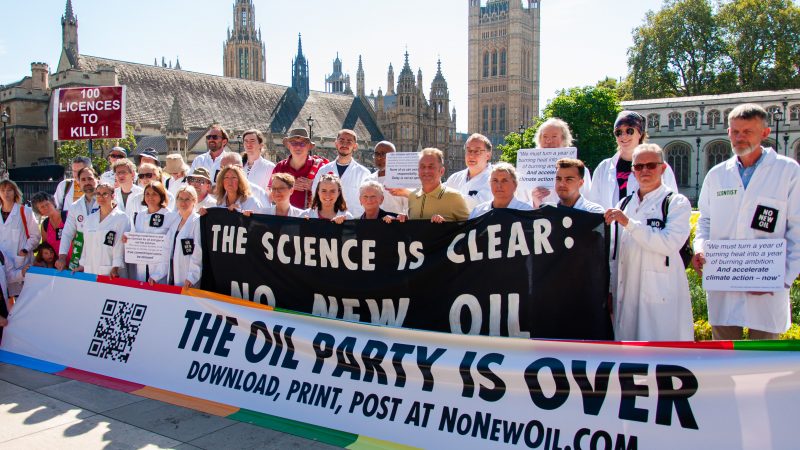
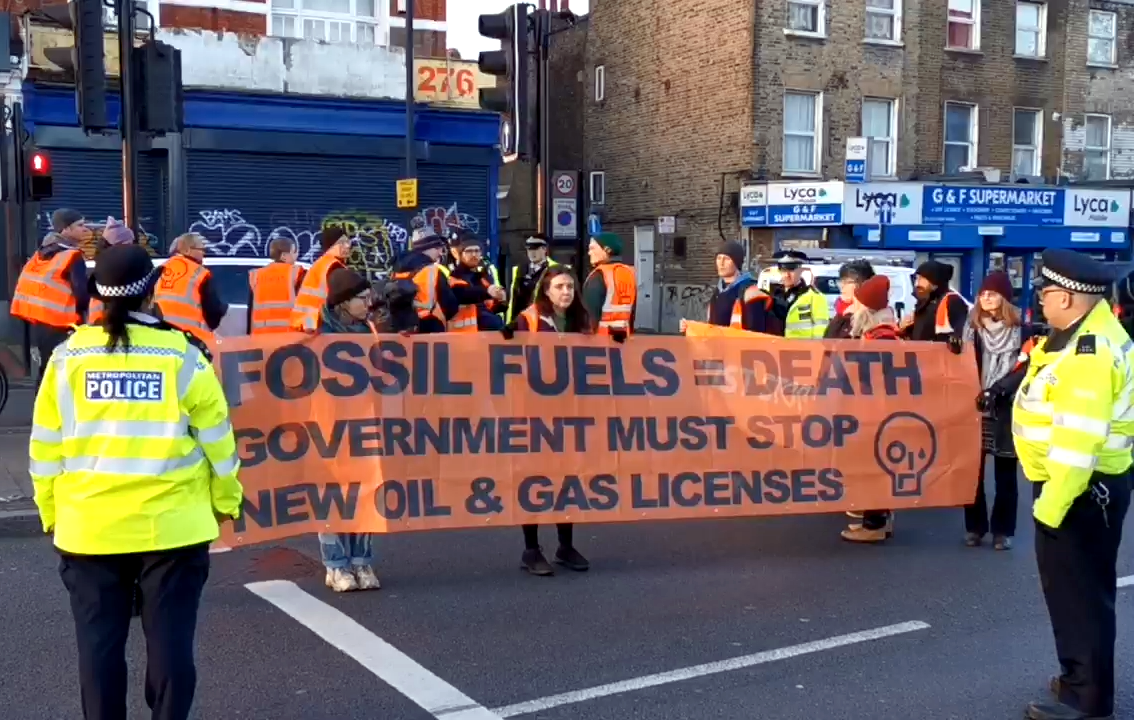
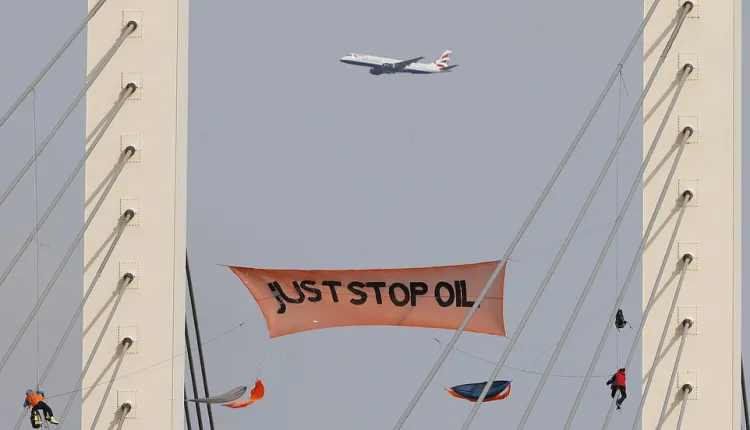
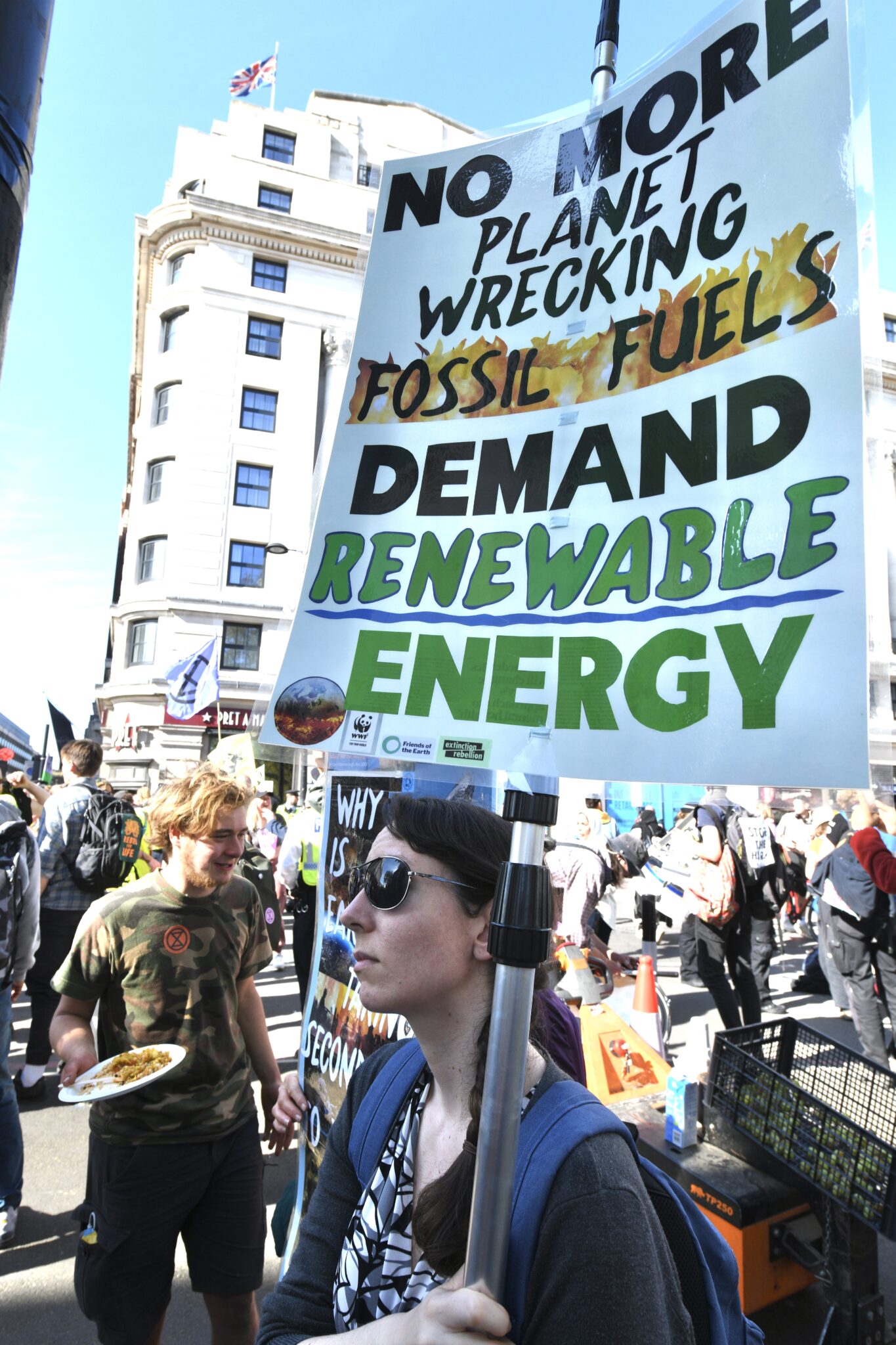
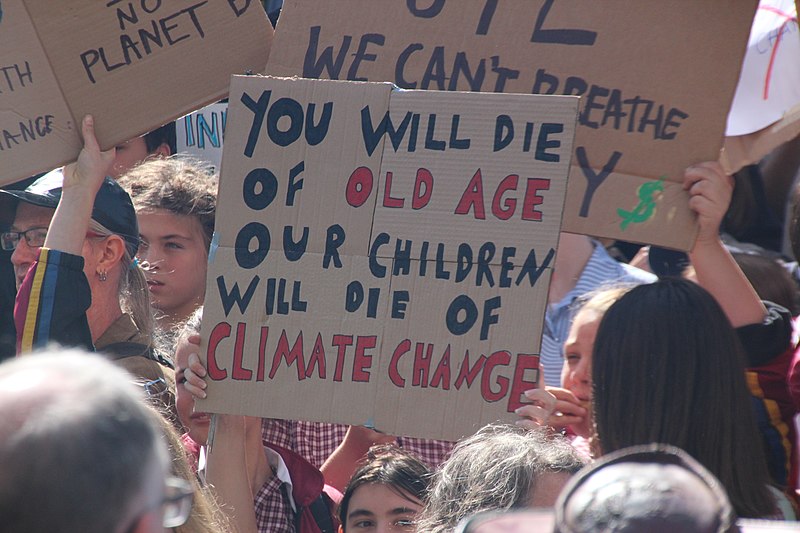
Scientists protest at UK Parliament 5 September 2023.Just Stop Oil protesting in London 6 December 2022.Morgan Trowland and Marcus Decker protest and close the M25 Dartford Bridge.
The next few days could be the world’s last chance of keeping global heating within safe limits, nations meeting for the Cop28 UN climate summit have been told.
With talks in Dubai now entering their final phase, the world’s governments are still far apart on the central question of whether to phase out fossil fuels.
Dan Jørgensen, Denmark’s climate minister, who has been charged with one of the key roles in forging an agreement among deeply divided governments, said: “We cannot negotiate with nature. The climate cannot compromise. No well meaning words will change a single thing unless we act. This week may be our last opportunity to bring us on course to keeping 1.5C alive.”
Jørgensen, along with the South African minister Barbara Creecy, will chair negotiations on the global stocktake, a process under the 2015 Paris climate agreement that assesses progress – or the lack of it – towards meeting the treaty’s goals of holding global temperature rises “well below” 2C and “pursuing efforts” to keep them to 1.5C above pre-industrial levels.
It is well established that the world is far off track to stay within those limits, which scientists say are vital to staving off the worst impacts of the climate crisis. Average temperatures for this year are likely to break records and come close to the 1.5C threshold, and on current trends the world will hit 3C of heating, rendering swathes of the planet effectively uninhabitable.
For those reasons, the global stocktake will also contain recommendations to governments for a “course correction”, asking them to change policies and bring in measures that will reduce greenhouse gas emissions drastically. The latest draft was published on Friday, and is currently being examined, but there are likely to be more iterations of it before the end of the talks.
…
Romain Ioualalen, global policy manager at Oil Change International, a pressure group, said: “It shows unprecedented momentum for an agreement on phasing out all fossil fuels, owing to the relentless pressure from people and governments that are aligned with the science. The Cop president emphasised again today that 1.5C is his north star – and he must deliver on that promise with a Cop decision to build a fast, fair, full and financed fossil fuel phase-out rooted in equity, and enabled by governments redirecting trillions in finance from fossil fuel industry handouts to the real solution: renewable energy and energy efficiency.”
As well as phasing down fossil fuels, countries are being asked to triple global renewable energy generation and to double energy efficiency. The former is already likely to be met, on current trends, and the latter should save money amid high fossil fuel prices and a cost of living crisis around the world.
Developing countries are also concerned that a target to double the amount of finance they get to help them adapt to the impacts of the climate crisis has also not been met. Stiell called for more progress on this issue. “I don’t want to see diversions and political tactics that hold climate adaptation hostage,” he warned.
Failure to agree a phase-out of fossil fuels at the UN Cop28 climate summit would push the world beyond the crucial 1.5C temperature limit and into climate breakdown, the UK’s former climate chief has warned.
Alok Sharma, who was president of the Cop26 summit in Glasgow, said it was vital that governments made a clear commitment in the next few days to eliminate coal, oil and gas.
“If you’re going to keep 1.5C alive, you’re going to have to have language on a phase-out of fossil fuels,” he told the Observer in an interview. “And you’re going to need to accompany that with a credible implementation plan.”
He urged governments to act. “We are running out of time. The window on 1.5C is closing fast, and unless we are willing to act now, with the urgency that this issue demands, we will lose that 1.5C,” he said. “We are literally in the last chance saloon to save our children’s future.”
More than 190 governments are meeting in Dubai for the final days of the Cop28 summit, which runs until Tuesday, with the question of whether to phase out fossil fuels at the top of the agenda. At least 100 countries are in favour of a phase-out, but some major fossil fuel producers – including Saudi Arabia, China and India – are opposed.
Sharma was credited with keeping 1.5C “alive” against the odds at the Glasgow summit he led in 2021, when he managed to forge a deal among more than 190 squabbling countries that focused on the goal of limiting global temperature rises to 1.5C above pre-industrial levels.
Greenpeace: COP28 must answer the call for a fossil fuel phase out
Dubai, UAE – As COP28 resumes for a second week, negotiators will be faced with answering the call for a commitment to a Fossil Fuel Phase Out in Dubai. Never before have we heard so many voices, coming from so many directions to seize the moment and commit to phasing out oil, coal and gas. And never before have alternative formulations on fossil fuel phase out made it this far into a draft text. But there are still no guarantees on a decision on fossil fuels, so all is in play.
Kaisa Kosonen, Head of the Greenpeace COP28 delegation said: “We are here to make fossil fuels history. By now governments know they can’t leave this summit without an agreement to end fossil fuels, in a fast and fair manner. Now the question is what is the package of solutions, support and cooperation that will get us over the finishing line. It’s clear that developed countries are the ones that need to take the lead here.
The solutions are ready – a fast and fair transition to renewable energy is possible – but it won’t happen fast enough unless we push the fossil fuel industry out of the way.
Activists protest against fossil fuels on the sidelines of the United Nations Climate Change Conference in Dubai, United Arab Emirates on December 5, 2023. (Photo: by Karim Sahib/AFP via Getty Images)
“We need to cut through the smoke and mirrors of ‘abated’ fossil and keep our eyes fixed on the goal of 1.5°C,” said a co-author of a new analysis.
While the United Nations climate summit continued in the Middle East, researchers in Germany warned Tuesday that depending on technology to trap and sequester planet-heating pollution could unleash a “carbon bomb” in the decades ahead.
Specifically, the new briefing from the Berlin-based think thank Climate Analytics states that reliance on carbon capture and storage (CCS) could release an extra 86 billion metric tons of greenhouse gases into the atmosphere between 2020 and 2050.fcv
“The climate talks at COP28 have centered around the need for a fossil fuel phaseout,” the publication notes, referring to the United Arab Emirates-hosted U.N. conference. “But some are calling for this to be limited to ‘unabated’ fossil fuels.”
“The term ‘abated’ is being used as a Trojan horse to allow fossil fuels with dismal capture rates to count as climate action.”
Over 100 countries at COP28 support calling for “accelerating efforts toward phasing out unabated fossil fuels,” or operations that don’t involve technological interventions such as CCS,” as Common Dreamsreported earlier Tuesday.
The new briefing highlights the risks of targeting only unabated fossil fuels. Contrary to claims that significant oil and gas consumption can continue thanks to new tech, it says, “pathways that achieve the Paris agreement’s 1.5°C limit in a sustainable manner show a near complete phaseout of fossil fuels by around 2050 and rely to a very limited degree, if at all, on fossil CCS.”
Additionally, “there is no agreed definition of the concept of abatement,” and “a weak definition of ‘abated’—or even no definition at all—could allow poorly performing fossil CCS projects to be classed as abated,” the document explains. The report’s authors suggest that the focus on unabated fossil fuels is driven by polluters who want to keep cashing in on wrecking the planet.
“The term ‘abated’ is being used as a Trojan horse to allow fossil fuels with dismal capture rates to count as climate action,” declared report co-author Claire Fyson. “‘Abated’ may sound like harmless jargon, but it’s actually language deliberately engineered and heavily promoted by the oil and gas industry to create the illusion we can keep expanding fossil fuels.”
🚨 NEW REPORT!
Unabated: the Carbon Capture and Storage 86 billion tonne carbon bomb aimed at derailing a fossil phase out
Why language at COP28 around 'abated' fossil fuels is a risk to 1.5°C.
Climate Analytics CEO Bill Hare, who also contributed to the document, said that “the false promises of ‘abated’ fossil fuels risks climate finance being funneled to fossil projects, particularly oil and gas, and will greenwash the ‘unabatable’ emissions from their final use, which account for 90% of fossil oil and gas emissions.”
Report co-author Neil Grant stressed that “we need to cut through the smoke and mirrors of ‘abated’ fossil and keep our eyes fixed on the goal of 1.5°C. That means slashing fossil fuel production by around 40% this decade, and a near complete phaseout of fossil fuels by around 2050.”
As a Tuesday analysis from the Civil Society Equity Review details, a “fair” phaseout by mid-century would involve rich nations ditching oil and gas faster than poor countries, and the former pouring billions of dollars into helping the latter. The United States, for example, should end fossil fuel use by 2031 and contribute $97.1 billion per year toward the global energy transition.
The United States is putting money toward what critics call “false solutions” like carbon capture, and it is not alone. An Oil Change International (OCI) report from last week notes that “governments have spent over $20 billion—and have legislated or announced policies that could spend up to $200 billion more—of public money on CCS, providing a lifeline for the fossil fuel industry.”
OCI found that rather than permanently sequestering carbon dioxide, 79% of the global CCS capacity sends captured CO2 to stimulate oil production in aging wells, which is called “enhanced oil recovery.” The group also reviewed six leading plants in the United States, Australia, and the Middle East, and concluded that they “overpromise and underdeliver, operating far below capacity.”
Lorne Stockman, OCI’s research director, asserted last week that “governments need to stop pretending that fossil fuels aren’t the problem. Instead of throwing a multibillion-dollar lifeline to the fossil fuel industry with our tax dollars, they should fund real climate solutions, including renewable energy and energy efficiency. Fossil fuel phaseout must be the central theme of COP28, not dangerous distractions like CCS propped up with public money.”
Underscoring Stockman’s point that such projects are incredibly expensive, the University of Oxford’s Smith School of Enterprise and the Environment on Monday published research showing that a high carbon capture and storage pathway to net-zero emissions in 2050 could cost at least $30 trillion more than a low CCS pathway.
“Relying on mass deployment of CCS to facilitate high ongoing use of fossil fuels would cost society around a trillion dollars extra each year—it would be highly economically damaging,” said Rupert Way, an honorary research associate at the school.
“Any hopes that the cost of CCS will decline in a similar way to renewable technologies like solar and batteries appear misplaced,” he added. “Our findings indicate a lack of technological learning in any part of the process, from CO2 capture to burial, even though all elements of the chain have been in use for decades.”
In response to COP28 President Al Jaber’s science-denying comments at the She Changes Climate Event, as reported by The Guardian, Romain Ioualalen, Oil Change International’s Global Policy lead, said:
“COP28 President Al Jaber’s science-denying statements are alarming and raise deep concerns about the Presidency’s capacity to lead the UN climate talks, at a time when leadership and a clear vision are most needed. Of course, denying science has been part of the fossil fuel industry’s playbook for decades. But science is not up for debate: we must phase out fossil fuels to have a livable planet.
“The science is clear. Not only do fossil fuels need to be phased out, but the phaseout needs to start now. The latest reports from the IEA and the IPCC show that maintaining a 50% chance of limiting global warming to 1.5°C requires an immediate end to investments in new oil, gas, and coal production and hazardous liquid fossil gas infrastructure.
“Instead of casting doubt on climate science, we expect the COP28 president to facilitate an outcome on a full, fast, fair, and funded phaseout of fossil fuels at COP28. Over 100 countries have now called for a phase out of fossil fuels and science is clear that limiting warming to 1.5°C without relying massively on dangerous technological distractions such as CCS requires eliminating fossil fuels from the global economy.”
Craig Bennett says the way recent and current older generations have allowed environmental degradation will be viewed harshly by people in the future who will have to live with consequences that, in many cases, will be increasingly devastating. Image: A1Cafel Creative Commons Attribution-Share Alike 2.0 Generic via wikimedia.
Romain Ioualalen, Global Policy Manager at Oil Change International said:
“It is positive to see this COP28 presidency and the IEA reflect the growing consensus that we need urgent action to rein in fossil fuel production and use. As COP28 negotiations start, countries must agree to end fossil fuel expansion, the only way to see fossil fuels decline significantly this decade, and for a full phase out of fossil fuels production and use. Distant promises and voluntary pledges are not enough, we need to see immediate action.
“The phase out will not happen on its own, even with growth in renewable energy. Without a strong agreement at COP28 that gets reflected in national policies, fossil fuels will not decline at the speed and scale necessary to limit temperature rise to 1.5°C.
“We deeply regret the inclusion of the fossil fuel industry’s favorite distractions, CCS and hydrogen, in this document and we urge parties to oppose any attempts to legitimize these failed technologies in a COP decision”.
David Tong, Global Industry Manager at Oil Change International said:
“Fatih Birol and the IEA reconfirmed this year that to limit global warming to 1.5ºC, there is no room for any new oil and gas expansion beyond existing fields and mines. To confront the climate crisis we need a full, fast, fair, and funded phase out of oil, gas, and coal.
“Oil Change International data show no big oil and gas company comes even close to aligning its business model with the Paris Agreement. Fossil fuel producers will not phase themselves out. The Big Oil and Gas business model cannot be reformed. Its foundation is destruction – of communities, of ecosystems, and all our futures. Cutting oil and gas companies’ operational emissions will achieve a maximum of 20% reduction in their total emissions. Governments must act to phase out the destructive fossil fuel industry and unlock the transition to nature-positive, community-owned, renewable energy.”
Greenpeace activists display a billboard during a protest outside Shell headquarters on July 27, 2023 in London. (Photo: Handout/Chris J. Ratcliffe for Greenpeace via Getty Images)