UK government lets airlines off the hook for £300m air pollution bill

Spread the love

Original article by Lucas Amin and Ben Webster at openDemocracy republished under a Creative Commons Attribution-NonCommercial 4.0 International licence.

The government wrote off emissions equivalent to 400,000 passengers flying from London to Sydney and back in one year

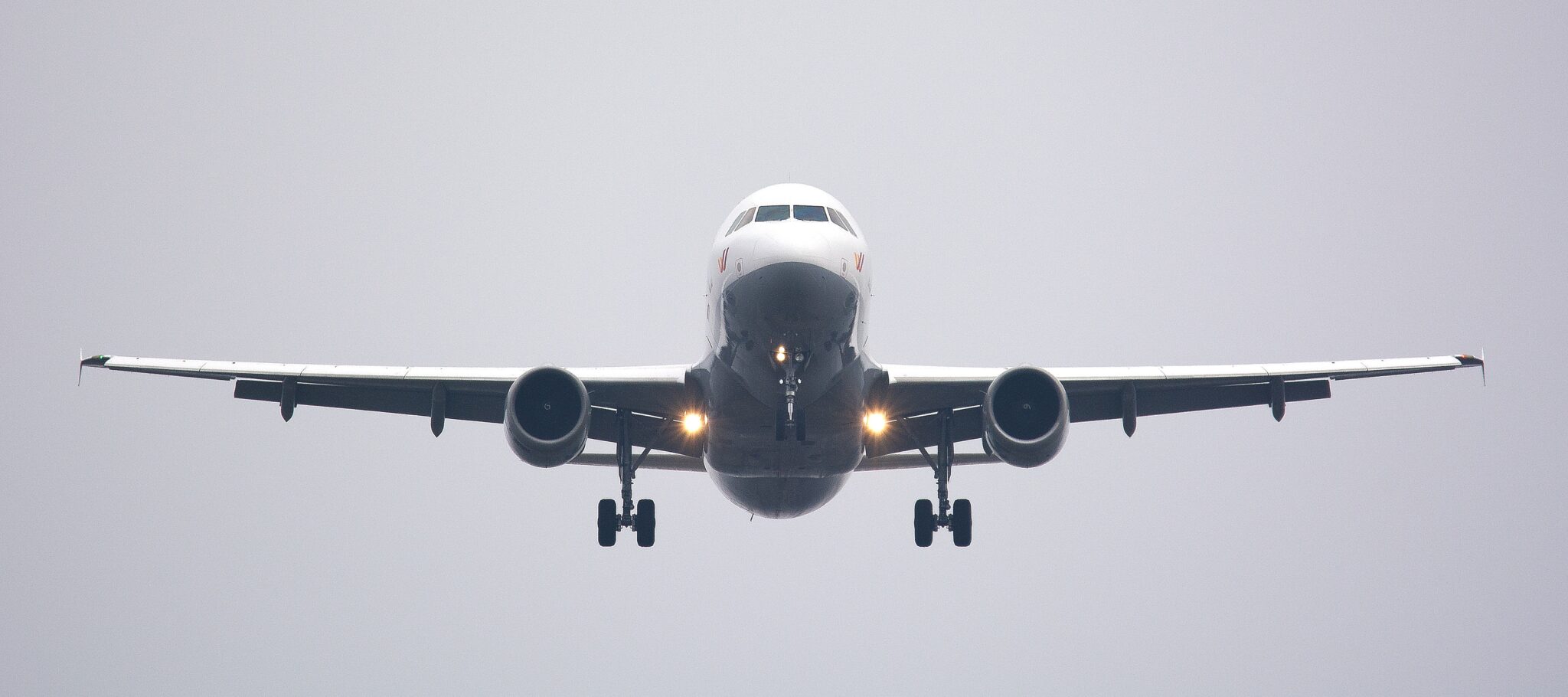
Photo by Pixabay from Pexels: https://www.pexels.com/photo/air-air-travel-airbus-aircraft-358319/

The government gave more than £300m worth of free ‘pollution permits’ to airline companies including British Airways, RyanAir and EasyJet under a scheme designed to tackle climate change.

The UK’s Emissions Trading Scheme is meant to reduce carbon emissions by forcing big polluters to buy a permit for each tonne of carbon they emit, with the money going into the public purse.

But data obtained by openDemocracy reveals the UK’s aviation sector was handed more than four million “pollution permits” last year, free of charge.

The 4.1 million tonnes of CO2 they represent are equivalent to the emissions of more than 400,000 passengers flying economy-class from London to Sydney and back. The free permits saved airlines the equivalent of £336m based on the annual average carbon price – 39% more than the previous year, 2021.

EasyJet, RyanAir and British Airways were the big winners of the handouts, bagging permits worth £84m, £73m and £58m respectively. The companies all made heavy losses during the pandemic but have since become profitable again: British Airways owner International Airlines Group (IAG) announced profits of £1.3bn last month, while RyanAir just enjoyed its “most profitable December quarter on record” and easyJet is reporting “record-breaking sales”.

openDemocracy has previously revealed how oil and gas companies including Shell and BP were similarly handed more than £1bn worth of free pollution permits during 2022.

Caroline Lucas, the Green MP for Brighton Pavilion, told openDemocracy the government was “letting aviation companies get away with it” and “forcing the public to pick up the tab”.

“Ministers must bring an end to these free pollution permits immediately, and make high-carbon companies pay for the climate-wrecking damage they’re causing,” she added.

The Department for Net Zero and Energy Security is now analysing the results of a consultation on phasing out free permits for the aviation sector – but policy changes will not take effect until at least 2026.

The government has already allocated 12.2 million free permits for the next three years, which at last year’s carbon price will be worth a further £965m.

A government spokesperson told openDemocracy the UK was giving away free permits because it was “committed to tackling climate change” but also to “protecting our industry from carbon leakage”.

But the risk of carbon leakage – when companies relocate to countries that do not have carbon pricing – is “minimal”, according to research commissioned by the government itself.

The study by Frontier Economics on behalf of the Department for Business, Energy and Industrial Strategy (BEIS) also found that ending permit giveaways would lead to a decrease in airline profits and improve market competition.

Daniele de Rao, an aviation expert at Carbon Market Watch, told openDemocracy: “Despite several studies showing that the risk of carbon leakage in the aviation sector is insignificant, airlines are still receiving an enormous amount of free allocation.

“The United Kingdom should apply the ‘polluters pay’ principle in its own ETS and, following the European Union’s example, should end the handout of free pollution permits to airlines as soon as possible.”

Matt Finch, UK policy manager of campaign group Transport & Environment, added: “The nation is up in arms about sewage pollution, but at the same time our government is paying airlines millions of pounds a year to pollute. Are these the actions of a climate leader? No. Free allowances should be phased out of the ETS as quickly as possible.”

The remaining £120m in free permits was carved up among the rest of the UK airline industry – with even the owners of private jets getting handouts.

Ineos Aviation, the company owned by oil and gas billionaire Jim Ratcliffe, was given free permits worth around £2,000.

The government has claimed that “our UK ETS is more ambitious than the EU system it replaces”.

But the EU has voted to phase out free permit allocations from 2026. It also redistributes the revenues raised by permit sales to environmental projects – whereas in the UK the proceeds are retained by the Treasury.

A government spokesperson told openDemocracy: “The UK is committed to tackling climate change while protecting our industry from carbon leakage. That is why a proportion of allowances are allocated for free to businesses under the UK Emissions Trading Scheme.”

They claimed handing free permits to airline giants would “support industry in the transition to net zero in the context of high global energy prices while incentivising long term decarbonisation”.

Whatever you’re interested in, there’s a free openDemocracy newsletter for you. HAVE A LOOK
Original article by Lucas Amin and Ben Webster at openDemocracy republished under a Creative Commons Attribution-NonCommercial 4.0 International licence.

Continue ReadingUK government lets airlines off the hook for £300m air pollution bill

Ofgem ignored 700,000 debt complaints before British Gas scandal

Spread the love

Original article by Adam Bychawski republished from openDemocracy under a Creative Commons Attribution-NonCommercial 4.0 International licence

Exclusive: Energy regulator did nothing about mountain of complaints until British Gas prepayment scandal was revealed

Image of banknotes and prepayment meter key
More than 30,000 complaints were about the disconnection and forced installation of prepayment meters.  Image of banknotes and a prepayment meter key

Energy companies received more than 700,000 complaints about their treatment of debt-ridden customers over the last five years, openDemocracy can reveal.

In the last year alone, the energy regulator Ofgem was made aware of 40,000 complaints relating to the controversial forced fitting or disconnecting of pre-payment meters.

Yet the watchdog was only forced into action earlier this month when an undercover Times investigation found British Gas had sent bailiffs to break into vulnerable people’s homes and fit the meters by force. Following the expose, it suspended the practice until the end of March.

Centrica, the owner of British Gas, announced today that its profit had hit £3.3bn for 2022 – more than triple the £948m it made in 2021 – just weeks after the regulator launched an investigation into its use of bailiffs against at-risk customers.

Now, data obtained by openDemocracy through a Freedom of Information request has revealed for the first time the scale of alleged mistreatment of vulnerable customers since the energy price cap was first hiked in April.

“Ofgem has known about this crisis for years, and so have the companies themselves. Suppliers are not being honest when they act like they’ve just discovered it and they’re shocked, like the CEO of Centrica did,” Ruth London, co-founder of the Fuel Poverty Action campaign group, told openDemocracy.

Energy companies are required to report the number of complaints they receive from customers every month to Ofgem. Last year, they received 161,103 complaints related to disconnection and debt issues – of which 40,458 were about pre-payment meters – though Ofgem has consistently refused to tell us which suppliers received the most.

The category includes complaints from customers about their energy supply being disconnected or having a prepayment meter installed forcibly without a warrant or despite them being vulnerable.

Other examples of complaints include customers being disconnected by error or without due process and being put on debt repayment plans that are unsuitable or unaffordable.

The true number of people being ill-treated is likely to be much higher. Ofgem revealed at the beginning of February that customers were being left on hold for hours by energy companies, leading to more than half hanging up before they could report an issue.

Ofgem said revealing how many complaints different companies had received would breach Section 105 of the 2000 Utilities Act, which states that the public disclosure of information companies supply to the regulator is prohibited in order to protect national security. The law has previously been criticised for preventing whistleblowers from raising issues about the energy sector that are in the public interest.

The regulator said after the British Gas scandal broke that it was “unacceptable” to forcibly install prepayment meters before all other options had been exhausted.

But charities have criticised it for ignoring calls to end the practice for months.

“Lives have been and are being lost because of their silence and refusal to act on the truth they have long known,” said London.

Clare Moriarty, the chief executive of Citizens Advice, said it “should not have taken this long” for Ofgem to act. 

The charity said it saw more people unable to afford to top up their pre-payment metre last year than for the entirety of the previous decade combined.

The Times reported that British Gas customers who had prepayment meters forcibly installed had included a woman in her 50s who the company’s bailiffs were told had severe mental health problems and a mother whose “daughter is disabled and has a hoist and electric wheelchair”.

The paper’s undercover investigation also alleged that the Arvato Financial Solutions employees were incentivised with bonuses to fit prepayment meters. The boss of British Gas owner Centrica apologised and said he was “disappointed, livid and gutted”.

Last year, a non-executive director at the regulator resigned saying Ofgem had “not struck the right balance between the interests of consumers and interests of suppliers”.

Peter Smith, policy director at the charity National Energy Action, said: “The recent announcement by major suppliers that they would temporarily pause forced installations of pre-payment meters is welcome, but this was prompted by public shaming of suppliers and there is still no market-wide ban.

“We also desperately need a coherent plan to help millions of people already trapped on prepayment meters. This means rewiring the energy market to provide more affordable tariffs and finding new ways to address the underlying debt issues which are rife due to soaring energy costs.”

Richard Lane, Director of External Affairs at StepChange Debt Charity, said: “We welcome Ofgem’s move to suspend the forced installation of prepayment meters (PPMs), but it’s clear that thousands of households have been struggling with energy bills for some time now, which is evident in our own client data.

“For the people that have already been moved onto PPMs, there must be better protection to prevent self-disconnection and extreme energy rationing.”


Updated, 16 February 2023: This story has been amended to include fresh data obtained through freedom of information law on the number of complaints notified to Ofgem between 2018 and 2022. Previously, it just contained data for 10 months of 2022.

Original article by Adam Bychawski republished from openDemocracy under a Creative Commons Attribution-NonCommercial 4.0 International licence

Continue ReadingOfgem ignored 700,000 debt complaints before British Gas scandal

openDemocracy’s corruption revelations see UK plunge in global ranking

Spread the love

Original article republished from Open |Democracy under under a Creative Commons Attribution-NonCommercial 4.0 International licence.

Government rule breaches are to blame for UK’s corruption nadir, says Transparency International

Image of Elmo and former Prime Minister Tory idiot Boris Johnson

openDemocracy’s revelations of corruption in UK public life have been cited in a damning new index that ranks perceptions of Britain’s transparency at an all-time low.

A ‘poll of polls’ by Transparency International’s Corruption Perceptions Index (CPI) found industry experts think the UK is more corrupt than ever.

The UK’s CPI score is based on data from eight independent sources including the Economist Intelligence Unit and the World Economic Forum, who surveyed experts and business executives for their views on abuses of public office for private gain and bribery in the UK.

Britain scored 73 this year, down from 78 in 2022, on a scale where zero means a country is perceived as highly corrupt and 100 means it is perceived as very clean. The NGO cited several pieces of journalism by openDemocracy as partial explanation for the slump, which saw the UK tumble in the global rankings from 11th to 18th.

They include revelations in November 2021 that former Tory Party treasurers appeared to be guaranteed peerages so long as they donated more than £3m to the party.

The NGO also pointed to 40 potential breaches of the ministerial code in the last five years that were not investigated as another factor likely contributing to the UK’s fall in the rankings.

openDemocracy was cited as revealing four of these breaches, one of which involved the government keeping large payments to the former prime minister Boris Johnson and other ministers secret for up to eight months. 

Other potential breaches discovered by this website include an MP failing to disclose that he owns a private PR company, and the blocking of Freedom of Information requests by a department that was then under Michael Gove’s watch.

Last year, the Cabinet Office insisted it would radically overhaul an ‘Orwellian’ government unit, almost two years after openDemocracy first revealed that it was vetting Freedom of Information requests.

Only five of the 180 countries assessed by Transparency for the 2022 Index saw their year-on-year scores drop by five or more points. The UK (-5) was joined by World Cup 2022 host Qatar (-5), Myanmar (-5), Azerbaijan (-7), and Oman (-8).

The countries perceived to be the least corrupt were Denmark, Finland and New Zealand, while those ranked most corrupt were South Sudan, Syria and Somalia. 

Transparency International acknowledged that most countries at the bottom of its index were either currently experiencing conflict or had recently done so. It added that although most Western European countries had been ranked higher than African, Asian and Middle Eastern countries, they in fact played a central role in fostering global corruption.

“For decades, they have welcomed dirty money from abroad, allowing kleptocrats to increase their wealth, power and destructive geopolitical ambitions,” the report said.

Original article republished from Open |Democracy under under a Creative Commons Attribution-NonCommercial 4.0 International licence.

Continue ReadingopenDemocracy’s corruption revelations see UK plunge in global ranking

Revealed: Taskforce to tackle NHS backlog is stuffed with private health CEOs

Spread the love

Original article republished from Open Democracy under a Creative Commons Attribution-NonCommercial 4.0 International licence.

Lobbyists for private health corporations were among those tasked with shaping proposals for NHS recovery plan

Adam Bychawski 19 January 2023, 3.31pm

Sunak met with the CEOs of several UK private health corporations in Number 10 in December.
| No 10 Downing Street

Rishi Sunak hosted a meeting with seven bosses from the UK’s biggest private health companies to discuss how to tackle the NHS backlog, openDemocracy can reveal.

Campaigners have raised concerns that the close involvement of private healthcare corporations in the government’s response to the NHS crisis will benefit shareholders at the expense of public investment.

The government announced the creation of the Elective Recovery Taskforce in December to provide advice on how to “turbocharge NHS recovery from the pandemic, reduce waiting times for patients and eliminate waits for routine care of over a year by 2025”.

At the time, the Department of Health and Social Care (DHSC) refused to give openDemocracy details of the group’s members, or say who had attended its launch at Number 10 led by the PM and health secretary Steve Barclay in December.

A guestlist for the event, obtained by openDemocracy through a Freedom of Information request, reveals that half a dozen CEOs from private health firms were in attendance. 

Guests included the chief execs of the UK’s two largest private hospital operators: Paolo Pieri, the chief exec of Circle Health Group, and Justin Ash, who heads up Spire Healthcare. Also present was Jim Easton, the chief executive of Practice Plus Group, the NHS’s top private healthcare provider.

They were joined by David Hare, the chief executive of Independent Healthcare Provider Network, a lobby group that represents for-profit and not-for-profit private health organisations including Bupa and HCA, one of the biggest healthcare facility companies in the US.

Related story

2H2J51G

Revealed: Conservatives took more than £800,000 from private health firms

Private health tycoons have wined and dined senior ministers while cashing in on NHS contracts

The private healthcare executives, which also included CEOs from Horder Healthcare, Newmedica, InHealth and Medefer, outnumbered the five NHS England directors invited to the event.

DHSC said it could not provide openDemocracy with minutes from the meeting because none were taken, and refused to share any papers handed out to attendees.

Separately, the government quietly published a list of members of the Elective Recovery Taskforce on Monday. The 16-person group includes DHSC ministers, six NHS bosses, and Hare.

Other members include Bill Morgan, a private healthcare lobbyist whose past clients included Virgin Care, who was appointed a Number 10 adviser in November, and Paul Manning, an NHS consultant surgeon who is also chief medical officer for Circle Healthcare.

The government said the role of the task force would be to “shape proposals for how the healthcare system can make use of all resources at its disposal, further tackling the backlog caused by the Covid-19 pandemic”. It will conclude its work in March.

Last week, the prime minister said he had signed up to an NHS GP after the Guardian reported that he had registered with a private clinic in west London that charges £250 for a consultation.

The British Medical Association warned last year that the government’s NHS recovery plan would significantly increase the outsourcing of services to private providers and that it “threatens the clinical and financial viability and sustainability of the NHS”.

Tony O’Sullivan, a retired consultant paediatrician and co-chair of Keep Our NHS Public, told openDemocracy: “The head parasites are at the table to maximise future extraction of NHS funds.”

He added: “This is an important disclosure extracted from the government proving the direction of travel – to continue disinvesting in the NHS and increase its enforced dependence on private health care.

“The private sector was bailed out during Covid, has a lucrative four-year £10bn deal ongoing and is also in a position to earn massive profits from patients forced to go privately to avoid NHS queues of 7.2 million.”

openDemocracy has no paywall and relies on the backing of thousands of our readers to make stories like this freely available to everyone. You can support our work by making a donation here.

Original article republished from Open Democracy under a Creative Commons Attribution-NonCommercial 4.0 International licence.

Continue ReadingRevealed: Taskforce to tackle NHS backlog is stuffed with private health CEOs

I’ve been an NHS nurse for 15 years. Here’s why I’m going on strike

Spread the love
NHS sign
NHS nurses have voted to go on strike for the first time in their history

Original article republished from OpenDemocracy under a Creative Commons Attribution-NonCommercial 4.0 International licence

OPINION: As nurses announce strikes in December, the Tories must start paying them fairly to save the NHS from collapse

Holly Turner

25 November 2022, 12.00am

The first-ever national strikes of NHS nurses will take place on 15 and 20 December, the Royal College of Nursing (RCN) has announced.

The RCN, whose members made history by voting for direct action across England, Wales and Northern Ireland, has accused the government of “choosing strike action” by refusing to negotiate on pay.

Other health unions, meanwhile, continue to ballot their members across both England and Wales, while strike mandates have been achieved across Scotland and Northern Ireland.

Direct action will now take place in all corners of the NHS, including ambulance services. These ballot results are evidence that there has been a dramatic shift in mood among health workers over the last year.

In 2021, I wrote for openDemocracy about a general feeling of despair among colleagues. By contrast, everyone now appears angry and focused, a feeling that I think has been encouraged by the recent wave of strike and trade union activity across other industries.

We hear reports of the NHS in crisis, hospitals running at capacity and dangerously low staffing levels. But without working within these services, it’s impossible to truly understand what this looks like for staff, and the patients these staff are doing their best to care for.

What staff are witnessing first hand is a catastrophic breakdown of services that has left us with vacancies hitting 135,000 and patients in danger. We desperately need to focus on retention of staff: without addressing that, we have no chance of tackling the backlog of seven million patients. Sadly, neither the government or opposition ever bring retention into the conversation, because that would mean putting pay restoration on the agenda.

In a recent survey by the GMB union, one in three ambulance staff said they had been involved in a delay that had resulted in a person dying. This is a terrifying statistic, and just one of many that the government should be taking far more seriously.

Staff are not prepared to stand with their hands behind their backs while the NHS is ripped apart in front of our eyes

What we are now witnessing are increasingly extreme attacks from the right-wing press and commentators attempting to demonise us, and to guilt us into abandoning our fight for what we are owed.

However, as I commented to a colleague, nothing they can say about us will be as bad as what staff are witnessing day in, day out. Things cannot continue as they are, and staff are not prepared to stand with their hands behind their backs while the NHS is ripped apart in front of our eyes.

I have worked as an NHS nurse for 15 years. I love my job. But my pay, and that of my colleagues, has been deliberately eroded for over a decade, with some workers up to 29% worse off in real terms. What we are left with is a group of workers carrying the entire burden of keeping patients safe, while the government washes its hands of any responsibility or accountability for the state of the service within which they work.

These are the staff who find themselves skipping breaks, working overtime for free, selling back their annual leave to make ends meet, sleeping in their cars as they cannot afford fuel to and from work – and ultimately quitting, as the moral injury of delivering substandard care is not sustainable.

We should all be united in our outrage. While this is an industrial dispute about pay, the fight is about so much more. During the pandemic we witnessed the devastating impact of dramatically increased demand on an NHS that has been stripped to the bone. We cannot let this happen again.

This is why we are taking our fight to this government and standing up not only for ourselves, but for our families and communities, and for the future of the NHS. So when the time comes, and it will, please join NHS staff on the picket lines.

Without action now, there will be no NHS left to fight for.

Original article republished from OpenDemocracy under a Creative Commons Attribution-NonCommercial 4.0 International licence

Continue ReadingI’ve been an NHS nurse for 15 years. Here’s why I’m going on strike