A Third of the Arctic’s Landmass is Now a Source of Carbon: Study

Spread the love

Original article by Eloise Goldsmith republished from Common Dreams under Creative Commons (CC BY-NC-ND 3.0).
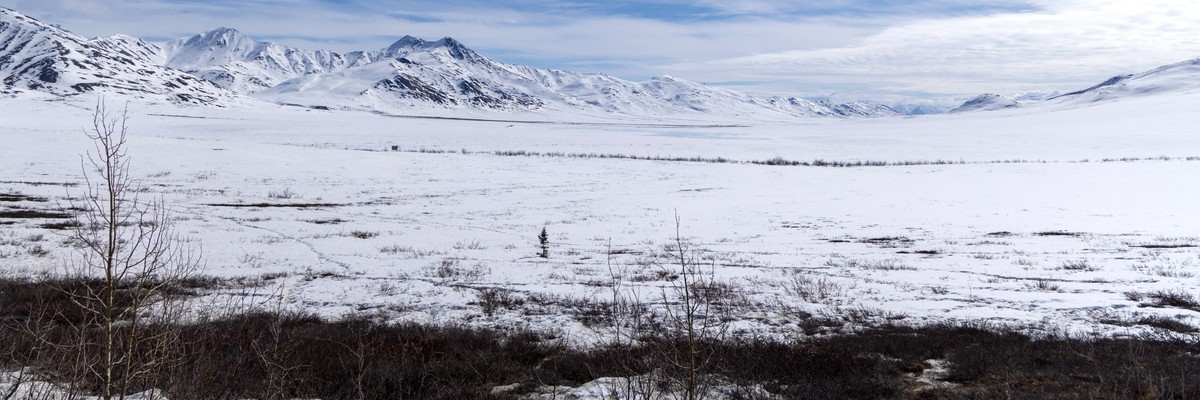
The study was published as President Donald Trump was blasted for an executive order that one critic said shows he wants to turn the Alaskan Arctic into the “the world’s largest gas station.”

For thousands of years, the land areas of the Arctic have served as a “carbon sink,” storing potential carbon emissions in the permafrost. But according to a study published in the journal Nature Climate Change Tuesday, more than 34% of the Arctic is now a source of carbon to the atmosphere, as permafrost melts and the Arctic becomes greener.

“When emissions from fire were added, the percentage grew to 40%,” according to the Woodwell Climate Research Center, which led the international team that conducted the research.

The study, which was first reported on by The Guardian, was released the day after President Donald Trump issued multiple presidential actions influencing the United States’ ability to confront the climate crisis, which is primarily caused by fossil fuel emissions, including one directly impacting resource extraction in Alaska, a section of which is within the Arctic Circle.

Sue Natali, one of the researchers who worked on the study published in Nature Climate Change, told NPR in December (in reference to similar research) that the Arctic’s warming “is not an issue of what party you support.”

“This is something that impacts everyone,” she said.

As the permafrost—ground that remains frozen for two or more years—holds less carbon, it releases CO2 into the atmosphere that could “considerably exacerbate climate change,” according to the study.

“There is a load of carbon in the Arctic soils. It’s close to half of the Earth’s soil carbon pool. That’s much more than there is in the atmosphere. There’s a huge potential reservoir that should ideally stay in the ground,” said Anna Virkkala, the lead author of the study, in an interview with The Guardian.

The dire warning was released on the heels of Trump’s executive order titled “Unleashing the Alaska’s Extraordinary Resource Potential” that calls for expedited “permitting and leasing of energy and natural resource projects in Alaska,” as well as for the prioritization of “development of Alaska’s liquefied natural gas (LNG) potential, including the sale and transportation of Alaskan LNG to other regions of the United States and allied nations within the Pacific region.”

The order also rolls back a number of Biden-era restrictions on drilling and extraction in Alaska, which included protecting areas within the Arctic National Wildlife Refuge from oil and gas leasing.

“Alaska is warming four times faster than the rest of the planet, a trend that is wreaking havoc on communities, ecosystems, fish, wildlife, and ways of life that depend on healthy lands and waters,” said Carole Holley, managing attorney for the Alaska Office of the environmental group Earthjustice, in a statement Monday.

“Earthjustice and its clients will not stand idly by while Trump once again forces a harmful industry-driven agenda on our state for political gain and the benefit of a wealthy few,” she added.

Trump wants to turn the Alaskan Arctic into the “the world’s largest gas station,” said Athan Manuel, director of Sierra Club’s Lands Protection Program, in a statement Monday. “Make no mistake, Trump’s rushed and sloppy actions today are an existential threat to these lands and waters, and the communities and wildlife that depend on them.”

Original article by Eloise Goldsmith republished from Common Dreams under Creative Commons (CC BY-NC-ND 3.0).

Orcas comment on killer apes destroying the planet by continuing to burn fossil fuels.
Continue ReadingA Third of the Arctic’s Landmass is Now a Source of Carbon: Study

Arctic Tundra Has Turned From ‘Carbon Sink to Carbon Source’ in Dangerous Flip: NOAA

Spread the love

Original article by Julia Conley republished from Common Dreams under Creative Commons (CC BY-NC-ND 3.0).
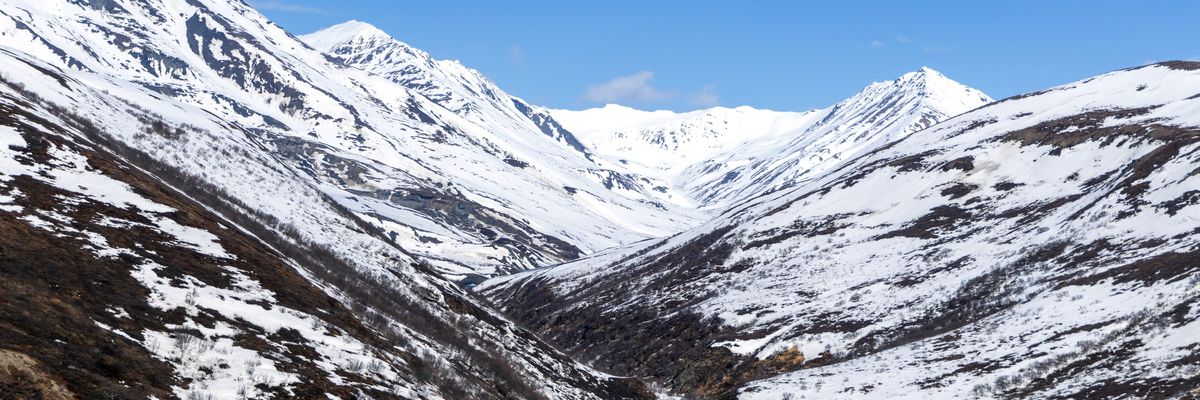
A view of Brooks Range as seen from the Dalton Highway on May 10, 2024 in North Slope Borough, Alaska. (Photo: Lance King/Getty Images)

“This is yet one more sign, predicted by scientists, of the consequences of inadequately reducing fossil fuel pollution,” said one scientist.

Permafrost in the Arctic has stored carbon dioxide for millennia, but the annual Arctic Report Card released by the National Oceanic and Atmospheric Administration reveals a concerning shift linked to planetary heating and a rising number of wildfires in the icy region: The tundra is now emitting more carbon than it is storing.

The report card revealed that over the last year, the tundra’s temperature rose to its second-highest level on record, causing the frozen soil to melt.

The melting of the permafrost activates microbes in the soil which decompose the trapped carbon, causing it to be released into the atmosphere as planet-heating carbon dioxide and methane.

The release of fossil fuels from the permafrost is also being caused by increased Arctic wildfires, which have emitted an average of 207 million tons of carbon per year since 2003.

“Our observations now show that the Arctic tundra, which is experiencing warming and increased wildfire, is now emitting more carbon than it stores, which will worsen climate change impacts,” said Rick Spinrad, administrator of NOAA. “This is yet one more sign, predicted by scientists, of the consequences of inadequately reducing fossil fuel pollution.”

Sue Natali, a scientist at the Woodwell Climate Research Center in Massachusetts and one of 97 international scientists who contributed to the Arctic Report Card, told NPR that 1.5 trillion tons of carbon are still being stored in the tundra—suggesting that the continued warming of the permafrost could make it a huge source of planet-heating greenhouse gas emissions.

Along with the “Arctic tundra transformation from carbon sink to carbon source,” NOAA reported declines in caribou herds and increasing winter precipitation.

The report card showed that the autumn of 2023 and summer of 2024 saw the second- and third-warmest temperatures on record across the Arctic, and a heatwave in August 2024 set an all-time record for daily temperatures in several communities in northern Alaska and Canada.

The last nine years have been the nine warmest on record in the Arctic region.

“Many of the Arctic’s vital signs that we track are either setting or flirting with record-high or record-low values nearly every year,” said Gerald (J.J.) Frost, a senior scientist with Alaska Biological Research, Inc. and a veteran Arctic Report Card author. “This is an indication that recent extreme years are the result of long-term, persistent changes, and not the result of variability in the climate system.”

Brenda Ekwurzel, a climate scientist at the Union of Concerned Scientists, emphasized that the continuous release of fossil fuel emissions from oil and gas extraction and other pollution has caused the Arctic to warm at a faster rate than the Earth as a whole over the past 11 years.

“These combined changes are contributing to worsening wildfires and thawing permafrost to an extent so historic that it caused the Arctic to be a net carbon source after millennia serving as a net carbon storage region,” said Ekwurzel. “If this becomes a consistent trend, it will further increase climate change globally.”

The Arctic Report Card was released weeks before President-elect Donald Trump is set to take office. Trump has pledged to slash climate regulations introduced by the Biden administration and to increase oil and gas production. He has mused that sea-level rise will create “more oceanfront property” and has called the climate crisis a “hoax,” while his nominee for energy secretary, Chris Wright, the CEO of the fracking company Liberty Energy, has claimed that climate warming is good for the planet.

“These sobering impacts in the Arctic are one more manifestation of how policymakers in the United States and around the world are continuing to prioritize the profits of fossil fuel polluters over the well-being of people and the planet and putting the goals of the Paris climate agreement in peril,” said Ekwurzel. “All countries, but especially wealthy, high-emitting nations, need to drastically reduce heat-trapping emissions at a rapid pace in accord with the latest science and aid in efforts of climate-vulnerable communities to prepare for what’s to come and help lower-resourced countries working to decrease emissions too.”

Original article by Julia Conley republished from Common Dreams under Creative Commons (CC BY-NC-ND 3.0).
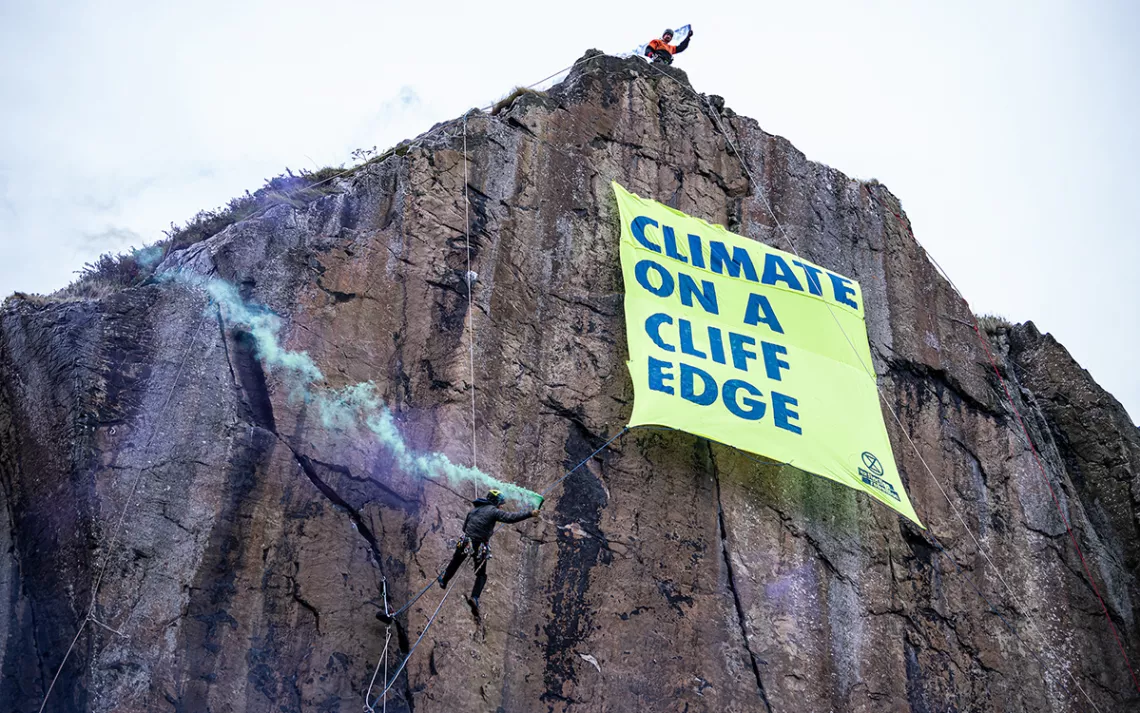
Experienced climbers scale a rock face near the historic Dumbarton castle in Glasgow, releasing a banner that reads “Climate on a Cliff Edge.” One activist, dressed as a globe, symbolically looms near the edge, while another plays the bagpipes on the shores below. | Photo courtesy of Extinction Rebellion and Mark Richards
Continue ReadingArctic Tundra Has Turned From ‘Carbon Sink to Carbon Source’ in Dangerous Flip: NOAA

Arctic Warming Threatens to Set Off Toxic ‘Mercury Bomb,’ Study Warns

Spread the love

Original article by JAKE JOHNSON republished from Common Dreams under Creative Commons (CC BY-NC-ND 3.0).

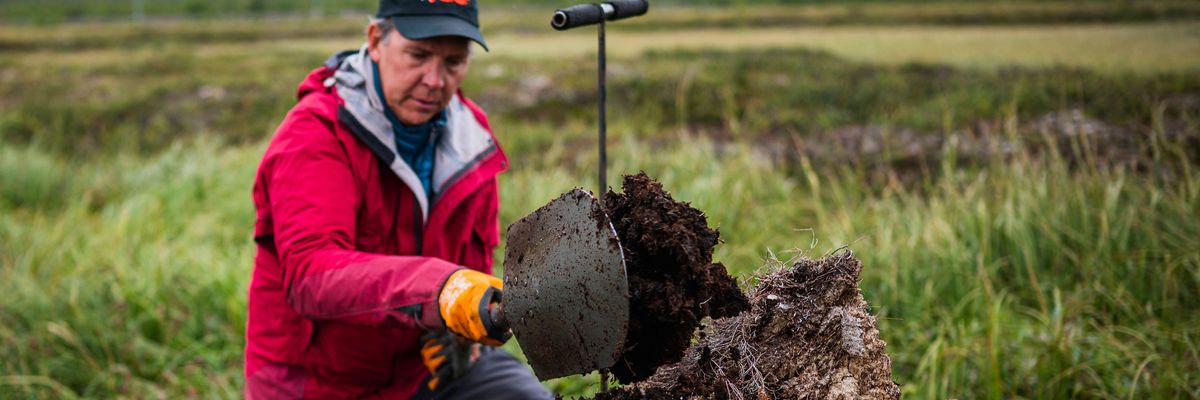
A researcher digs down to permafrost under near the village of Abisko, Sweden on August 24, 2021. (Photo: Jonathan Nackstrand/AFP via Getty Images)

The release of mercury from permafrost “could take a huge toll on the environment and the health of those living in these areas,” said a co-author of the new study.

study published Thursday in Environmental Research Letters warns that Arctic warming could unleash toxic mercury currently contained in rapidly thawing permafrost, potentially threatening the region’s food supply and water quality.

Researchers from the University of Southern California’s Dornsife College of Letters, Arts, and Sciences noted in the new study that the Arctic is “warming four times faster than the global average, destabilizing permafrost soils that have remained frozen for two or more years and that underlie much of the Arctic.”

Mercury (Hg) deposits in the region’s permafrost have “accumulated over thousands of years,” the study authors noted, “and Hg in the top meter of Arctic soils potentially exceeds the total amount stored in the atmosphere, ocean, and all other soils.”

Josh West, professor of Earth sciences and environmental studies at USC Dornsife and a study co-author, said in a statement that “there could be this giant mercury bomb in the Arctic waiting to explode.”

The study notes that “a range of processes” can release mercury from permafrost, including riverbank erosion.

“The rivers are reburying a considerable amount of the mercury,” West said. “To really get a handle on how much of a threat the mercury poses, we have to understand both the erosion and reburial processes.”

Isabel Smith, a doctoral candidate at USC Dornsife and another study co-author, warned that “decades of exposure” to the toxic element, “especially with increasing levels as more mercury is released, could take a huge toll on the environment and the health of those living in these areas.”

The study was published as parts of the Arctic experienced what The Washington Post‘s Ian Livingston described as “exceptionally high temperatures—up 30 to 40 degrees above normal.”

“And it’s happening as the National Oceanic and Atmospheric Administration just announced July was the 14th successive month with record-high global temperatures,” Livingston wrote earlier this week. “Over the past week, temperatures soared to nearly 100 degrees Fahrenheit in Norman Wells, Canada, just 90 miles south of the Arctic Circle. Locations in Alaska set numerous record highs.”

“Off the coast of Greenland, Longyearbyen, Norway, the northernmost city on Earth with a sizable population, witnessed its warmest August day, with a high of nearly 70,” he added.

Original article by JAKE JOHNSON republished from Common Dreams under Creative Commons (CC BY-NC-ND 3.0).

Continue ReadingArctic Warming Threatens to Set Off Toxic ‘Mercury Bomb,’ Study Warns