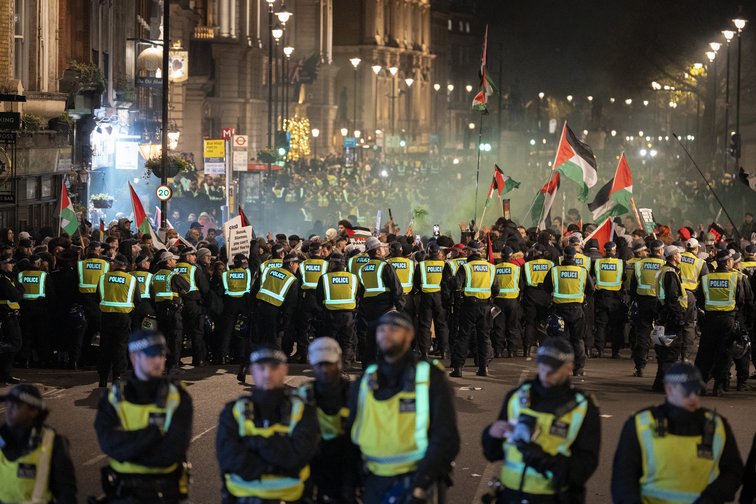
Defiant in the face of smears & intimidation

Spread the love

The government wants to silence protest, but who can stand by during a genocide and do nothing?

Original article by by Terina Hine

The Labour government has been making it increasingly difficult to organise the National Palestine marches, now they are using the draconian Public Order Act in an attempt to intimidate us. 

It’s a truism to say governments don’t like protest, and after 18 months of Palestine demonstrations ours is making its distaste for mass mobilisation abundantly clear. It’s using the Met police as its enforcer and the BBC as its propaganda tool.

Smearing protesters as anti-semitic hate marchers failed to have any impact on the size or frequency of the demonstrations, so the government has resorted to the using the Public Order Act against the march organisers and is placing ever more restrictive exclusion orders on the protests. 

Negotiations between organisers and the police have become increasingly arduous as time after time conditions are changed at late notice, restrictions are imposed for no justifiable reason other than to deter and confuse protesters and make organising more difficult. And now the police have charged and questioned under caution various members of the movement’s leadership, alongside some of its high profile supporters.

In this Orwellian world, 87 year-old Jewish Holocaust survivor, Stephen Kapos, was called in for questioning by the Met. Refusing to be cowed Kapos made clear that it is vital for us all to continue to protest for Palestine and speak out against our own government’s complicity in Israel’s genocide.

Khalid Abdalla, actor and activist, was also called in by the Met for questioning. In a statement made as he approached Charring Cross police station in central London he said he was both ‘incredibly sad’ but also ‘proud’ to attend his police interview. Sad because of what it says about the British state’s intension to subjugate the movement, proud to be on the right side of history. 

Alex Kenny, Chair of StW, Lindsey German, StW Convenor, Andrew Murray,  StW Deputy President and Sophie Bolt, General Secretary of CND, were all interviewed under caution this week. 

Chris Nineham (StW) and Ben Jamal, Director of PSC have been charged under the Public Order Act and are awaiting trial. 

The police hope that through a duel process of intimidating the movement’s leaders and imposing large restriction zones London marches will become confined to ever smaller areas and routes, especially on Saturdays, when it is becoming almost impossible to march through the centre of the city.

Heavily lobbied by Israeli zionists, including the Chief Rabbi, organisers have been told that protesters cannot march in the vicinity of a synagogue on Saturdays, regardless than there has been no reported incidents of intimidation at synagogues or indeed of Jewish people on the marches, and regardless that thousands of marchers themselves are Jewish. When the march organisers requested to also meet with Mark Rowley, the head of the Met Police, they were met with silence.

The police have even suggested we stop marching altogether, saying the marches have been going on too long. No acknowledgement that it’s the war on Gaza that has been going on for too long, or that it’s time for the genocide to stop.

Democratic governments are expected to facilitate demonstrations, whether they like it or not. Demonstrating is how our rights are won, and in this country we have a long and proud history of demonstrations. The right to protest is a fundamental part of living in a democracy. When opposition to government policy is significant, protest poses a challenge to the ruling elite, and the bigger the protest the bigger that challenge. 

The next national demonstration is on 17 May, Nakba Day, Central London at 12 noon. The 12 April is a National Day of Demonstrations for Palestine, when towns and villages around the country will be protesting the genocide – get organising!

Experiencing issues with this image not appearing. I suspect because it's so critical of Zionist Keir Starmer's support of and complicity in Israel's genocides.
Genocide denier and Current UK Prime Minister Keir Starmer is quoted that he supports Zionism without qualification. He also confirms that UK air force support has been essential in Israel’s mass-murdering genocide. Includes URLs https://www.declassifieduk.org/keir-starmers-100-spy-flights-over-gaza-in-support-of-israel/ and https://youtu.be/O74hZCKKdpA
UK Foreign Minister David Lammy confirms that UK government and military are active participants in Israel’s genocides and that the F-35 parts that they suspended from supplying to Israel are instead simply diverted via the United States. He says see https://youtu.be/QILgUHrdWRE
Continue ReadingDefiant in the face of smears & intimidation

‘We have got to uphold the right to protest’

Spread the love

https://morningstaronline.co.uk/article/we-have-got-to-uphold-the-right-to-protest

A protest outside Westminster Magistrates’ Court, February 13, 2025 Photo: Jennie Walsh

Hundreds protest outside Westminster Magistrates’ Court as Stop the War Coalition and Palestine Solidarity Campaign activists attend court

HUNDREDS rallied outside Westminster Magistrates’ Court today to demand the government stop criminalising protest.

The large and noisy protest was held outside the court in support of Palestine marches chief steward Chris Nineham, who had his first court appearance today.

Mr Nineham, also long-standing vice-chair of the Stop the War Coalition, was violently arrested by police at the end of an entirely peaceful protest for Palestine in London last month.

He has been charged, together with Palestine Solidarity Campaign (PSC) director Ben Jamal, with breaches of the Public Order Act.

Mr Jamal’s own hearing is next week. His was among 77 arrests made by police at the demonstration.

Demonstrators heard speeches linking the state attack on the right to protest with the overriding issue of solidarity with the Palestinian people.

https://morningstaronline.co.uk/article/we-have-got-to-uphold-the-right-to-protest

Continue Reading‘We have got to uphold the right to protest’

Braverman’s consultation on anti-protest laws was ‘only open to police’

Spread the love

Original article by Anita Mureithi republished from OpenDemocracy under a Creative Commons Attribution-NonCommercial 4.0 International licence

Liberty’s lawyers say police feedback was ‘directly incorporated into the final text’ of Braverman’s anti-protest laws  | Richard Baker / In Pictures via Getty Images

High Court told government only sought feedback from people it knew would agree with its controversial changes

Only police were consulted on anti-protest laws before they were forced through by the UK government, according to human rights lawyers suing the home secretary.

Campaign group Liberty has been in court this week challenging James Cleverly over amendments to the Public Order Act that were pushed through by his predecessor, Suella Braverman, last year.

Liberty was given permission to take legal action against Braverman in October after she used secondary legislation – subject to less parliamentary scrutiny – to strengthen police powers to shut down protests that cause “more than minor disruption to the life of the community”.

The group says Braverman’s actions amounted to a “serious overreach” and that she acted unlawfully because the changes to the law had already been rejected in the House of Lords.

And Liberty has labelled a consultation on the proposed laws in 2022 as “one-sided” and “unfair” – because the Home Office only consulted police. The government gave the Met, Staffordshire Police, Essex Police, the National Police Chiefs’ Council, and the College of Policing opportunities to give their views on the legislation, but did not seek input from anyone who might be impacted by the laws.

Liberty argued: “The [home secretary] voluntarily embarked upon a process of consultation about the contents and drafting of the regulations but then only consulted a narrow group of stakeholders in support of the amendments rather than an even-handed group representative of all those whose interests may be adversely impacted.”

Its lawyers also say police feedback was “directly incorporated into the final text” of the amendments to the Public Order Act, including on the definition of “serious disruption to the life of the community”.

The new powers have been criticised by Liberty and other human rights groups due to the vagueness of the new language, which campaigners say allows police to shut down almost any protests. The changes forced through by Braverman mean officers can interfere with and arrest anyone taking part in protests that they believe will cause “more than minor disruption to the life of the community”.

Police feedback on “cumulative disruption” was also included in the final amendments to the act. Under this law, officers must take into account all “relevant cumulative disruption”, regardless of whether or not your protest is related to any other protest or disruption in the same area. Before this amendment, there was no explicit requirement for police to consider this.

While the government held multiple meetings with police representatives in December 2022 to seek input and “refine policy”, Liberty argues that the fact that no rights groups or members of the public were consulted is rooted in “procedural unfairness” and that the changes must be reversed.

Katy Watts, Liberty’s lawyer leading the case said: “The government has shown it’s determined to put itself above the law, avoid scrutiny and become untouchable – so it’s no surprise it only consulted people it knew would agree with its new law.

“Our democracy exists to make sure a government can’t just do whatever it wants, and an important part of that is consulting a wide range of voices on new laws – especially those likely to raise reasonable concerns. This improves government decision making and helps to make our laws better. The government’s failure to do this is just one of the ways it acted unlawfully when it forced these powers though.”

The laws were initially brought in to clamp down on protests by climate activist groups like Just Stop Oil, Insulate Britain, and Extinction Rebellion, but other protesters are now also being targeted.

The government has accused pro-Palestine protesters of “hijacking legitimate protests”, “shouting down and coercing elected representatives”, and has also called them “un-British” and “undemocratic”.

In a new ‘defending democracy policing protocol’ released this week, the government pledged £31m of additional funding to protect MPs after safety fears were raised.

The Home Office said it wants to “protect the democratic process from intimidation” but according to its own policy paper, only met with police representatives from the National Police Chiefs Council, the Association of Police and Crime Commissioners, and the College of Policing.

The Home Office did not respond to a request for comment.

The two-day hearing ended yesterday and Liberty’s lawyers expect a decision could take up to three months.

Original article by Anita Mureithi republished from OpenDemocracy under a Creative Commons Attribution-NonCommercial 4.0 International

licence

OpenDemocracy’s free daily email

Protest isn’t harassment, says group suing UK government over law change

Home Office ‘did not discuss’ Islamophobia risk in wake of Hamas attacks

Continue ReadingBraverman’s consultation on anti-protest laws was ‘only open to police’

How police in England can now stop basically any protest

Spread the love

Original article republished from openDemocracy under a Creative Commons Attribution-NonCommercial 4.0 International licence.

New anti-protest legislation forced through by Suella Braverman has been labelled “unlawful”

Adam Ramsay

15 June 2023, 3.55pm

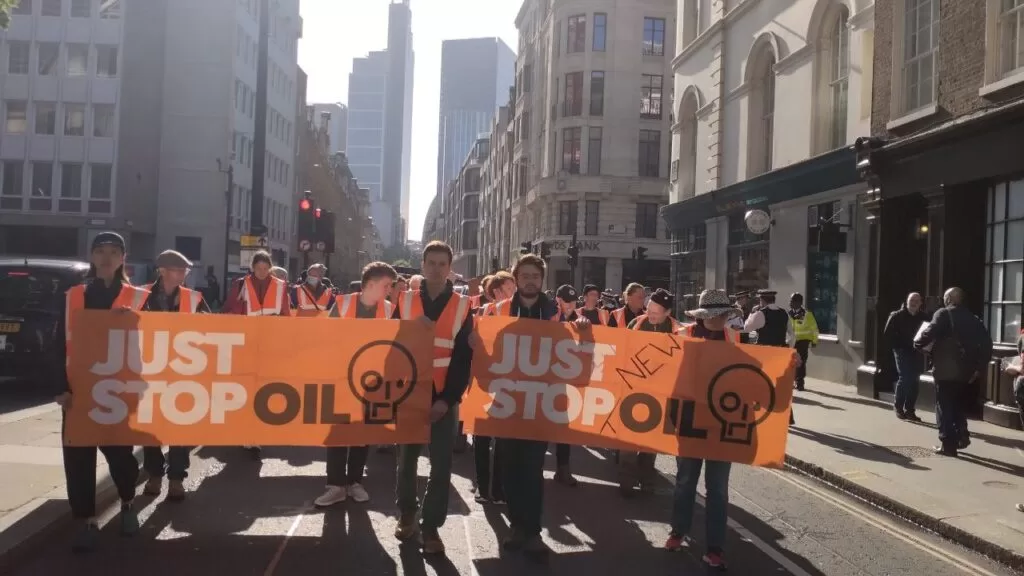
A Just Stop Oil protest in central London
Suella Braverman forced through new anti-protest laws after slow-marching demonstrations from Just Stop Oil activists in London

At midnight last night, the right to protest in England and Wales became a matter of police discretion.

Yesterday, the police could restrict or stop a protest to prevent it causing either “serious public disorder, serious damage to property, or significant and prolonged disruption to the life of the community”.

Those powers already allowed plenty of room for interpretation, but from today the threshold is even lower. This week, home secretary Suella Braverman forced through new laws in a way never seen before in the UK. Here’s what you need to know.

What are the new police powers targeting protests?

Changes to the Public Order Act mean police can now restrict or stop a protest if they believe it could cause “more than minor disruption to the life of the community”. They have the power to arrest anyone taking part in a protest, or even anyone encouraging others to take part.

Officers are also now required to consider “cumulative disruption” from protest, even if the protests in question are organised by different people and about different issues. And the definition of “community” has been changed to include anyone affected by a protest, not just people who live or work in the area it’s happening in.

“The regulations also say the police will be required to take into account all relevant disruption. For example, if there are regular traffic jams in the area, that would have to be taken into account [when the police decide whether to ban a protest], even if it had nothing to do with the protest”, Jodie Beck, policy and campaigns officer at Liberty told openDemocracy.

Braverman argued the new laws were needed to target slow-marching protests from climate activists Just Stop Oil and Extinction Rebellion.

What do they mean?

In reality, the police could find a way to argue that any protest meets the threshold for imposing restrictions, if they wanted to. The new law, says Beck, is a “huge expansion of police powers” that could also lead to police allowing some protests to go ahead while imposing restrictions on others, simply based on how the officers felt about the message behind them.

While the government has focused on one particular type of protest – slow-marching – all protests are potentially impacted.

Beck gives the example of striking railway workers and their supporters holding a rally outside a train station. The police “could decide that means a more than minor disruption to people’s travel,” and so ban the gathering, and arrest anyone taking part.

It could even be that police officers rule that a picket line causes “more than minor” disruption to the workplace it is picketing – after all, that’s the point.

But it’s not just the new laws which have shocked experts. It’s also how they came about this week.

How did the new laws restricting protests get passed?

Originally, Suella Braverman tried to sneak the new legislation into the Public Order Act, which passed earlier this year and came into effect just before the coronation. Rather than allowing these changes to face the usual scrutiny in the House of Commons, the home secretary had them added as last minute amendments to the bill in the House of Lords, after MPs had already voted on it. Her attempt failed – the Lords thought these measures were too draconian and voted them down, though they approved the broader new bill.

Undeterred, Braverman turned to a constitutional trick that’s never been used before. Because while new bills – known as ‘primary legislation’ – require line-by-line scrutiny in both houses, various laws already on the statute book give ministers powers to make small changes via something called ‘secondary legislation’. And secondary legislation doesn’t get nearly as much scrutiny, with both the Commons and Lords simply voting for or against.

The home secretary argued that another act passed last year by then-home secretary Priti Patel – the Police, Crime, Sentencing and Courts Act – already gave her the power to make these changes via secondary legislation. So that’s what she did this week, making it the first time ever that a government has used secondary legislation to push through a measure that had already been voted down by parliament.

The secondary legislation passed through the Commons on Monday, with the Tories taking full advantage of their majority. In the Lords, Green peer Jenny Jones filed a highly unusual fatal motion, a rare procedure used to try and kill off the passage of a bill. Normally, because it’s an unelected house, the Lords tweaks legislation passed by the Commons, but doesn’t ultimately vote it down. Jones argued that, because the government was bringing back a law which had already been voted down by parliament through a route which requires almost no scrutiny, this should be an exception.

Labour, although they complained about Braverman’s shenanigans, refused to back Jones, and abstained on the motion, meaning it passed. Police, Crime and Fire minister Chris Philp then enacted the new measures from midnight last night (secondary legislation doesn’t need royal assent). And so now, the police can shut down any protest they like.

The story doesn’t end there. Liberty is taking the government to court, calling the move “unlawful” and arguing that it broke many of the basic principles of the British constitution.

What do human rights campaigners say?

Katy Watts, a lawyer at Liberty, accused the government of “putting itself above the law” and said the move gives police “almost unlimited powers to stop any protest the government doesn’t agree with”.

And Beck believes we need to see this in the context of a much broader attack on our democratic rights. Noisy protests have been banned. The government is already attacking the right to strike, making it easier for bosses to sack people who vote to withdraw their labour. They’ve made it harder to vote, and harder to challenge them in the courts.

“Even if you’ve never been to a protest, you never know when you might need to,” she said.

With the new laws, there is a growing chance you’ll be arrested if you do.

Original article republished from openDemocracy under a Creative Commons Attribution-NonCommercial 4.0 International licence.

Continue ReadingHow police in England can now stop basically any protest

Just Stop Oil activists arrested in blanket ban on protests on London roads

Spread the love
A Just Stop Oil protest in central London

‘Your government has taken away your right to peaceful protest,’ the activists say. ‘If you are not outraged by this, you are not paying attention’

ACTIVISTS from Just Stop Oil were arrested during their daily action in Parliament Square today as they marched against the detaining of protesters and fossil fuel projects in Britain.

More than 40 protesters set off from Charing Cross in central London at 8am, but were forced to move their action onto the pavement after being approached by police officers who said they would impose conditions under the Public Order Act (Section 12).

A blanket notice under the Act was issued on all London roads ahead of the action, making protests unlawful.

The protesters returned to the road while marching past Whitehall before being told to get off the road once again.

They returned to the road for a third time at Parliament Square at which point around 12 protesters were arrested.

Continue ReadingJust Stop Oil activists arrested in blanket ban on protests on London roads