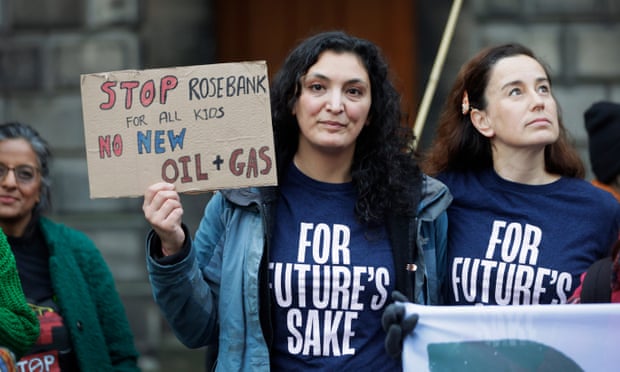
Climate campaigners say the Rosebank oil field will be a ‘defining test’ of the government’s credibility on climate change. (Lucy North/PA)
Equinor, which owns the majority of the oil field, stressed it was committed to advancing the ‘Rosebank project’
Climate campaigners have challenged the UK Government to “do the right thing” and turn down plans for drilling in the Rosebank oil field.
The group Uplift – which wants to see a “rapid and fair transition away from oil and gas production in the UK” – said whether the green light is granted for the development would be the “defining test of this Government’s credibility on climate change”.
It came as it was confirmed Equinor, which owns an 80% majority stake in the oil field, confirmed it has submitted a scope 3 assessment – setting out all associated greenhouse gas emissions for the project, in compliance with new guidelines from UK authorities.
And the company said it is “fully committed” to working with all relevant bodies to “advance the Rosebank project”.
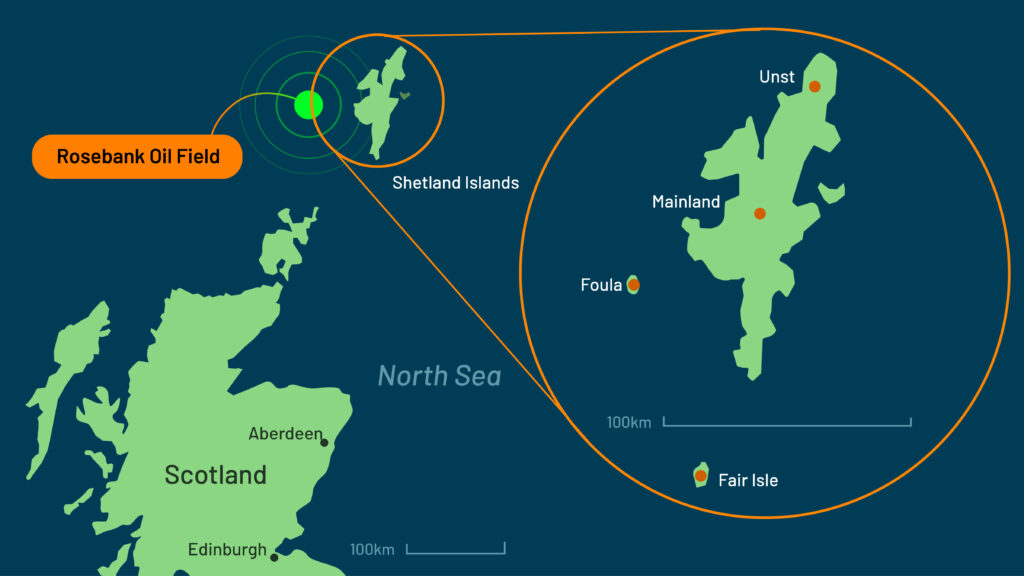
The Rosebank field, which is located some 80 miles west of Shetland, is the UK’s largest untapped oil field and is estimated to contain up to 300 million barrels of oil.
…
Robin Wells, director of Fossil Free London, said: “In the face of this decision on the biggest undeveloped oil field in the North Sea, we must be crystal clear. Rosebank will be the defining test of this Government’s climate promise.”
Nigel Farage urges you to ignore facts and reality and be a climate science denier like him and his Deputy Richard Tice. He says that Reform UK has received £Millions and £Millions from the fossil fuel industry to promote climate denial and destroy the planet.Donald Trump urges you to be a Climate Science denier like him. He says that he makes millions and millions for destroying the planet, Burn, Baby, Burn and Flood, Baby, Flood.Orcas comment on killer apes destroying the planet by continuing to burn fossil fuels.
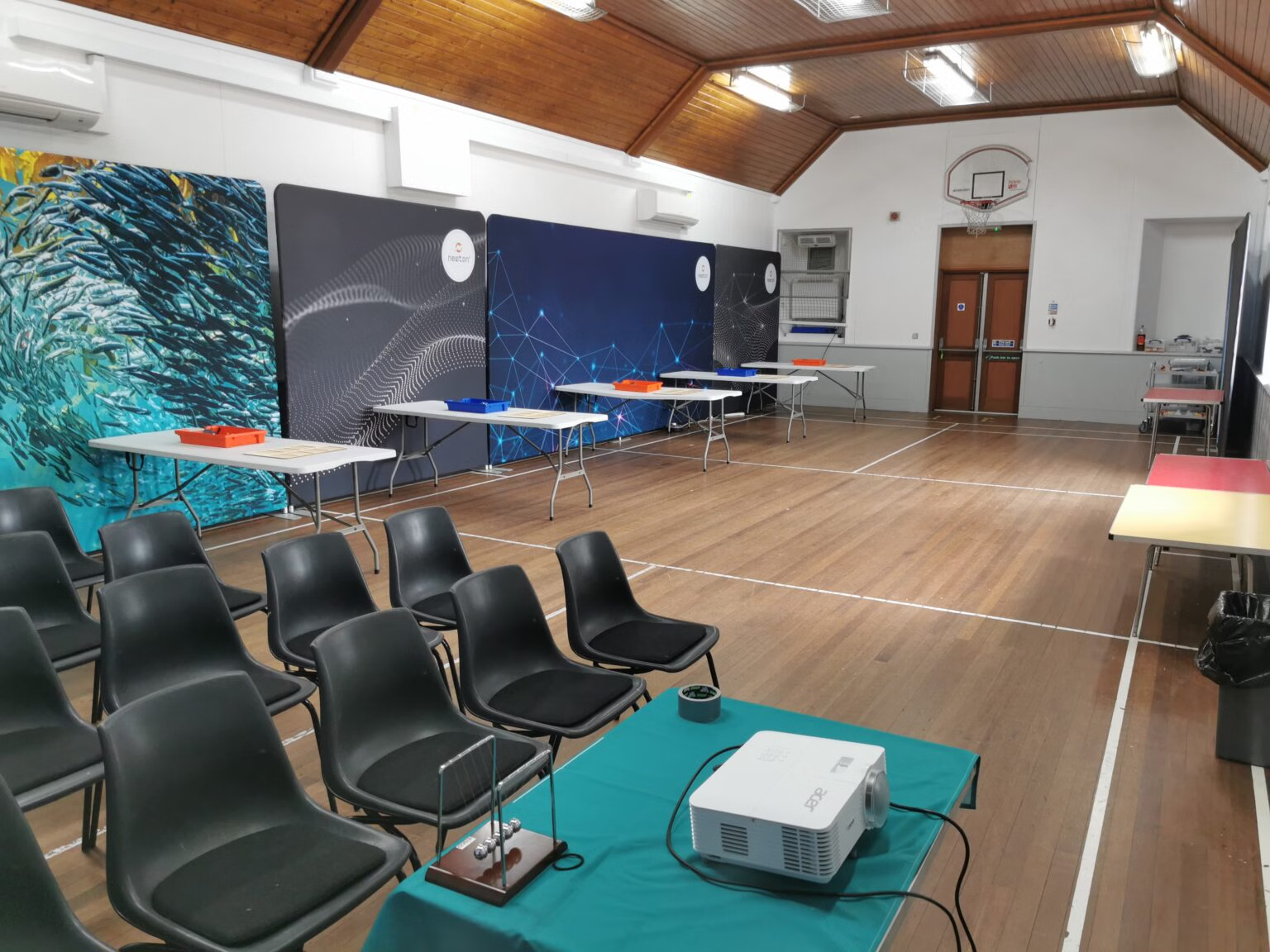
A mobile “Newton Room” classroom operating in Scotland. Credit: Scott O’Hara
Critics fear that Equinor’s latest UK education deal is aimed at quelling opposition to North Sea drilling.
This story was published in partnership with Norway’s E24.
Norwegian oil company Equinor is spending more than £200,000 to sponsor science classrooms in the Shetland Islands, as it seeks approval for plans to develop the vast Rosebank oilfield 80 miles off the coast.
Opponents of Rosebank — the largest new oil and gas field in the North Sea — have accused Equinor of using its deep pockets to dilute concerns over further drilling. Developing the project would result the release of millions of tonnes of planet-heating carbon dioxide (CO2) emissions when the oil it pumps is burned.
Ariane Burgess, a Scottish Green Member of the Scottish Parliament, said Equinor’s backing for the classrooms was “concerning.”
“The timing and location of these investments raise questions about the motives behind them, particularly in light of Equinor’s broader strategy to secure social license to operate in sensitive areas,” said Burgess, one of seven Scottish Green law-makers in the 129-seat assembly in Edinburgh.
The pop-up classroom — known as a “Newton Room” — launched in March and aims to reach 1,000 children aged 10 to 14 across the archipelago of 20,000 people over the next two years, said Highlands and Islands Enterprise, a Scottish agency partnering on the project.
The classroom will be set up in community centres near primary and secondary schools on several of Shetland’s 16 inhabited islands, taking in the Shetland mainland, Unst, Foula, Yell and Fair Isle.
Equinor, which is majority-owned by the Norwegian state, said the project would deliver “pioneering, face-to-face” programmes to develop science, technology, engineering and mathematics skills. The decision to fund the initiative had “no link” to Equinor’s plan to develop Rosebank, and it had declined an opportunity to include its corporate logo, the company said.
“We are proud to support the first Shetland mobile Newton Room and to assist its core operations in the Highlands and Islands,” said Alice Baxter, Equinor’s UK spokesperson. “We look forward to seeing how the mobile Newton Room benefits the wider Shetland community and are delighted to be a key partner in this great programme for the region.”
Credit: Sabrina Bedford
‘Brainwash Children’
Equinor spent a total of $82.7 million on sponsorships between 2020 and 2024, with science, education and research as the main focus, according to a government response to a parliamentary question submitted by Lars Haltbrekken, an MP for the Socialist Left Party, on June 16.
Haltbrekken, a long-time critic of Equinor’s 30-year history of sponsoring education in Norway, had submitted the question in response to reports in Norwegian media detailing the company’s backing for a computer game aimed at UK schoolchildren. The game, called EnergyTown, was developed in partnership with London-based marketing agency We Are Futures and the Association for Science Education, a professional teachers’ body.
Climate campaigners said the game crossed the line between education and promoting fossil fuels because it portrayed renewable energy as “less reliable.”
EnergyTown was part of a two-year-old science education initiative called Wonderverse which has reached over 80,000 schoolchildren in the UK, according to Equinor’s website. Website copy that has since been deleted described Wonderverse as designed to “build future talent pipelines and secure permission to operate at a time of sensitivity around fossil fuels, particularly in light of approval for the Rosebank development.” We Are Futures did not respond to a request for comment.
“[Equinor] is trying to brainwash children into thinking it has the solution to the climate crisis, when in reality, fossil fuels are the reason we are struggling with the climate crisis today,” Haltbrekken told DeSmog.
Equinor, formerly known as Statoil, was the founding partner of the Newton Rooms mobile classroom programme developed by the nonprofit FIRST Scandinavia in Norway in 2003.
“It’s interesting to see how Equinor has developed a playbook for influencing children in Norway and then copy-pasted it to other countries like Scotland,” said Julie Forchhammer, co-founder of Norwegian climate advocacy group Klimakultur.
In Scotland, Equinor’s current education partnerships include a deal with the Aberdeen Science Centre, a museum near the Norwegian company’s UK headquarters in Aberdeen, and another with the city’s TechFest annual science festival.
Equinor committed £208,500 for the Shetland Islands mobile classroom project as part of a total package of £385,000 to support the Science Skills Academy education initiative run by Highlands and Islands Enterprise, said Morven Fancey, the agency’s head of housing, skills and population.
“Our core content and supporting educational materials for Newton Room activities were developed at the beginning of the Highland operation and are branded by [Science Skills Academy] independently of any industry involvement,” Fancey said.
Island Opinion Divided
The sponsorship deal with Highlands and Islands Enterprise was agreed in 2023, Fancey said. That was the same year that Equinor won approval for Rosebank from the UK’s former Conservative government, sparking outcry among climate campaigners.
Equinor is now seeking re-approval for Rosebank after Scotland’s highest court dealt a blow to the project in January by ruling the original decision unlawful because it had failed to consider the environmental impacts of burning the fossil fuels extracted from the oilfield.
Opening any new oil and gas fields in the North Sea is incompatible with achieving 2015 Paris Agreement goals of avoiding catastrophic climate change by limiting global warming to 1.5°C, according to a June report by academics at University College London. Burning Rosebank’s oil and gas would produce up to 200 million tonnes of CO2 over the project’s lifetime, which is more than the combined annual emissions of 28-low income countries, wrote one of the report’s authors in an article for The Conversation.
Opinion over Equinor’s role in sponsoring the classrooms is divided on the Shetland Islands, which have historically benefitted from oil and gas money.
“In Shetland, the fact that our kids have amazing leisure facilities, the roads have no potholes, and the care homes are good is all because of fossil fuels,” said Margaret Goddard, a doctor who lives on the islands of Burra, and who has daughters aged 11 and 14.
But she expressed concerns over the climate crisis, and Equinor’s motives, acknowledging, “These things are very difficult.”
Alex Armitage, a Scottish Green councillor for Shetland Islands Council said he found Equinor’s role “quite dystopian.”
“An oil company that’s making very little effort to reduce carbon emissions and is greenwashing all of its operations is seeking to show that it’s trying to help the next generation,” Armitage said. “Everything it’s doing goes against that.”
Like other oil companies, Equinor has rowed back on its climate commitments in the past year, having announced in February that it would slash planned investment in renewables and low-carbon solutions by around 50 percent between 2024 and 2027. By 2026, Equinor plans to maintain over 95 percent of its energy production from fossil fuels, according to analysis by the environmental law nonprofit ClientEarth.
Equinor holds an 80 percent stake in Rosebank in a joint venture with Ithaca Energy, which is owned by Israel’s Delek Group. In 2023, Delek Group appeared on a UN list of 97 companies whose activities in the West Bank “raised particular human rights concerns.”
‘Extensive Influence’
Oil companies view educational and cultural sponsorships as crucial tools for deflecting pressure from climate activists, influencing legislation, and portraying themselves as gatekeepers to climate solutions, according to a previous DeSmog review of internal industry documents subpoenaed by the U.S Congress as part of an investigation into oil industry disinformation that concluded last year.
Equinor was not a direct target of the investigation, which focused on the U.S. businesses of ExxonMobil , Chevron, Shell USA Inc. and BP America. The Norwegian company is, however, a member of the American Petroleum Institute lobby group, which described sponsored community groups as among the “best and most influential voices with targeted policymakers on industry issues,” according to a subpoenaed document from October 2017.
The findings built on previous research showing how the fossil fuel industry has spent nearly a century using educational sponsorships to shape public opinion about energy and the environment. As early as 1928, Standard Oil of California (which became Chevron) was sponsoring educational radio broadcasts that reached millions of American students over decades. Recent programmes include BP’s Science Explorers, a series of free online resources that now reaches over half of UK secondary schools.
In the latest sign of the oil and gas industry seeking to influence young people, DeSmog reported on June 30 that a group of six Canadian fossil fuel companies known as Pathways Alliance had been sponsoring science fairs for children. The finding followed a report issued by the Canadian Association of Physicians for the Environment earlier this year that documented the sector’s “extensive influence on climate education for elementary and secondary school students.”
‘Cynical Tactic’
Equinor has been a sponsor of the Aberdeen Science Centre since 2019, funding the facility and supporting its partnership with Norway’s Vitenfabrikken (The Science Factory), a children’s science museum in the city of Bergen. The two institutions are linked via an initiative called the North Sea Collaboration Project, which develops science and technology activities aimed at children, focused on “carbon emissions reduction solutions” and climate awareness, according to the Aberdeen Science Centre’s website.
Aberdeen Science Centre did not respond to a request for comment.
The TechFest event, which Equinor sponsors alongside BP and Shell, includes Equinor branding in its 2025 programme directory next to listings for workshops aimed at children as young as four. TechFest did not respond to a request for comment.
Through its Hywind floating wind project, Equinor provided £60,000 to transform a disused classroom at Peterhead Academy into what the school called an “ultra-modern” renewables space, complete with screens, break-out areas and turbine models, which opened in 2018, according to trade publication Energy Voice.
Peterhead is also the site of a planned Equinor carbon capture and storage project, which is facing questions over its likely economic viability and climate impact. DeSmog revealed in June that UK Chancellor Rachel Reeves had told Equinor last year that the industry would receive a “quid pro quo” in return for higher taxes on its windfall profits in the form of carbon capture subsidies.
Such programmes reflect a broader oil industry strategy to preserve its reputation among future generations, said Klimakultur’s Forchhammer. “It’s a cynical tactic, but they wouldn’t do it if it wasn’t working.”
Additional reporting by Daniel Shailer, Shetland Times
[Guardian] Exclusive: MPs and ministers say they would oppose Starmer if he tries to approve Rosebank development
Senior Labour figures are warning of a serious fight if Keir Starmer tries to give the go-ahead to a giant new oilfield off Shetland later this year.
MPs and ministers have told the Guardian they are prepared to oppose the UK prime minister should he try and give final consent to the Rosebank development, which is Britain’s biggest untapped oilfield.
Many in the party see the battle over Rosebank as the next front in the struggle between its environmental wing and those around Rachel Reeves who want to push for economic growth above all else. The chancellor signalled her support for a third runway at Heathrow this week as part of the government’s latest push to stimulate the economy.
One ally of the energy secretary, Ed Miliband, who is leading the government’s climate agenda, said the former Labour leader would have a “punchy” response for any attempt to give consent to Rosebank. The ally said: “Ed will come to that fight armed with a lot of evidence about what Rosebank will do to our carbon emissions.”
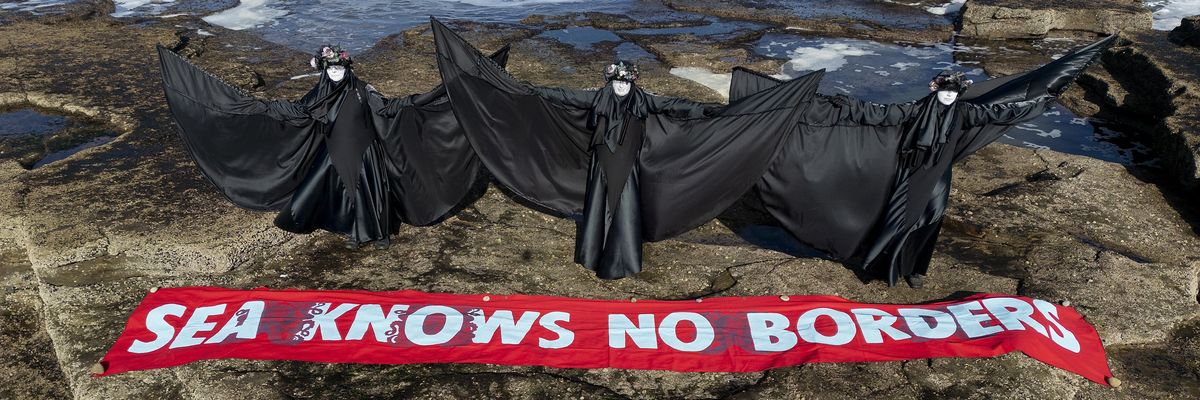
The “oil slicks” performance artist group demonstrates the impacts of a potential oil spill on Scotland’s Moray Firth as part of a North Sea-wide day of action on March 16, 2024. (Photo: XR Forres)
“Going full steam ahead with new North Sea oil and gas is a sure fire route to the worst climate scenarios,” one campaigner said.
Climate activists in six North Sea countries came together on Saturday to carry out acts of civil disobedience in protest of their governments’ continued fossil fuel development.
Demonstrators in the United Kingdom, Norway, Sweden, Denmark, Germany, and the Netherlands blockaded roads, ports, and refineries; dropped banners; and held solidarity concerts as part of the North Sea Fossil Free campaign to demand that their governments align their plans for the shared body of water with the Paris agreement goal of limiting global heating to 1.5°C above preindustrial levels.
“For too long, the U.K., Norway, and other North Sea countries have avoided scrutiny for their oil drilling plans as the emissions are not included in their national inventories,” a spokesperson for Extinction Rebellion U.K. told Common Dreams. “Going full steam ahead with new North Sea oil and gas is a sure fire route to the worst climate scenarios.”
“The only serious response we can make is for citizens to unite, but we need to see many many more people doing this work.”
The day of action, which was organized by Extinction Rebellion (XR), came days after a new report from Oil Change Internationalrevealed that none of five North Sea countries—Norway, the U.K., the Netherlands, Germany, and Denmark—have plans consistent either with limiting warming to 1.5°C or with the agreement to transition away from fossil fuels reached at last year’s United Nations COP28 climate conference. If the five countries were counted as one, they would be the seventh biggest producer of oil and gas in the world.
In particular, these governments continue to issue permits to explore for and develop oil and gas fields, despite the fact that the International Energy Agency has said that no new fossil fuel development is compatible with limiting global temperature rise to 1.5°C. In one high-profile example, the U.K. approved the undeveloped Rosebank oil field in September 2023. Taken together, these permits could lead to more than 10 billion metric tons of greenhouse gas emissions.
The worst offenders were Norway and the U.K., which could be among the top 20 developers of oil and gas fields through mid-century if they do not change course.
“The five major North Sea countries are at a crossroads: One path leads toward global leadership in climate action and green industries, where they take bold action to phase out oil and gas production that creates sustainable jobs and communities. The other path leads to catastrophic climate change, economic crisis, and the loss of status as climate leaders globally, as they cling to outdated practices while the world moves forward,” Silje Ask Lundberg, North Sea campaign manager at Oil Change International, said when the report was released.
Extinction Rebellion co-founder Clare Farrell said that the North Sea governments’ policies were a betrayal of their citizens and the world following the hottest year on record.
“Temperatures have tracked 1.5°C above average recently, almost 2°C,” Farrell said. “Our global commitments, such that they are, are being flushed away with no regard for what the public really want. Where’s the consent for that here in our democracies? No government has a mandate to do that. So people deserve to know that our governments are willfully destroying everything. The people of these North Sea nations have not consented to destroying civilization, but that’s what is going to happen. Their governments are unhinged and unchecked.”
Saturday’s protests, Farrell continued, were a way for the people in these countries to make their voices heard.
“The only serious response we can make is for citizens to unite, but we need to see many many more people doing this work,” Farrell said. “Direct action like this should shake us awake; our governments will destroy democracy and society if we let them continue, that’s the course we are on, and they are redoubling their efforts despite the facts and knowing how much suffering they are already causing all over the world as climate breaks down.”
The demands of Saturday’s protests were threefold: An end to new oil and gas infrastructure in the North Sea, for governments to tell the truth about the realities of the climate crisis, and for the countries to pursue a just transition to renewable energy. In addition, many activists made additional demands specific to their nations’ policies.
— Extinction Rebellion Nederland (@NLRebellion) March 16, 2024
In the Netherlands, activists with Extinction Rebellion and Scientist Rebellion blocked all roads and railways leading to the largest oil refinery in Europe: Shell’s Pernis refinery. They targeted Shell because the oil major has received new permits to drill in the Victory Gas Field and has also restarted its drilling in the Pierce Field. What’s more, the company has refused to clean up its aging equipment in the North Sea, leaving old pipelines and drilling platforms to rust and pollute the sea with mercury, polonium, and radioactive lead. While there are 75 aging Shell oil and gas platforms in the Dutch North Sea that should be removed by 2035, current efforts are not on track to meet this deadline.
“Like the rest of the fossil industry, Shell is only interested in profits and shareholder returns,” said Bram Kroezen of XR Netherlands, adding that Shell’s appeal of a landmark court ruling ordering it to reduce emissions showed that the company “completely lacks a moral compass.”
Germany
As part of today's concerted action #NorthSeaFossilFree, we shut down access inroads to water-bound LNG-infrastructure in #Brunsbüttel✊🏼
— Ende Gelände International #StopColonialViolence (@ende_gelande) March 16, 2024
Activists with Ende Gelände blocked off access to a floating liquefied natural gas (LNG) terminal in the port of Brunsbüttel, Germany, beginning at 9:00 am local time. The activists are calling for an end to LNG imports, as new science reveals the so-called “bridge” fuel may in fact be at least as damaging to the climate as coal due to previously unaccounted for methane leaks.
“LNG is a double climate killer,” Rita Tesch, spokesperson for Ende Gelände, said in a statement. “Because it consists of methane. Methane is even more harmful to the climate than carbon dioxide. It escapes into the atmosphere during transportation by LNG ships and at terminals such as here in Brunsbüttel, and heats it up rapidly. The carbon dioxide from burning it is on top of that. It’s clear: LNG imports are a climate crime!”
Norway
EXTINCTION REBELLION NORWAY BLOCKS RAFNES REFINERY Extinction Rebellion Norway (XR) is conducting a large-scale action aimed at Rafnes refinery in Bamble.XR-activists are now on their way into the security zone with a boat. Dozens of activists are blocking the main entrance on… pic.twitter.com/e2x9Vx1t6M
— Extinction Rebellion Norway (@XR_Norge) March 16, 2024
Activists with XR Norway targeted Rafnes Petroleum Refinery, with some blockading access on land while another group entered the security area by boat.
“I’m ashamed to be a Norwegian,” XR Norway spokesperson Jonas Kittelsen said in a statement. “Norway profits massively from aggressively expanding our oil and gas sector, causing mass suffering and death globally. My government portrays us as better than the rest of the world, which we are not.”
Denmark
Punkband Octopussy Riot is performing on top of a container next to the Total headquarter at Esbjerg Harbour in protest of new oil and gas extraction in the north sea. Becoming species and XR are part of an international action today all across The North Sea #NorthSeaFossilFreepic.twitter.com/wfheUpXVgd
— Extinction Rebellion Danmark (@ExtinctionRDK) March 16, 2024
Performance collective Becoming Species and Extinction Rebellion Denmark worked together to stage a creative protest targeting the oil company Total Energies, which is the leading oil and gas producer in the Danish North Sea and currently has plans to reopen “Tyra Feltet,” Denmark’s largest gas field. Four members of the band Octopussy Riot climbed a Total-owned container and staged a punk concert in Denmark’s Esbjerg Harbor.
“We octopuses have formed the band Octopussy Riot and have arrived here to play our song, a demand for you two-legs to stop oil and gas extraction,” performer Linh Le, said. “The sea is dying, our climate collapsing. We will not accept that the most rich and powerful destroy our home. We do not want to go extinct.”
Sweden
Kom till Göteborg nu på lördag 16:e mars och delta i denna kampanj mot ny fossil infrastruktur i Nordsjön: – Inga nya fossila investeringar i Nordsjön. – Fossilgas är inget alternativ. – Ta bort gamla oljeplattformar. – Sluta borra! pic.twitter.com/n3GzFhI05E
— Extinction Rebellion Sverige (@ExtinctionR_SV) March 14, 2024
Members of XR Sweden blocked the road to Gothenburg’s Oil Harbor, where the group has been protesting since May of 2022. The activists called on Sweden to stop investing in the harbor and on city officials to develop a plan to dismantle the harbor and refineries.
“Twenty-two million tons of oil enter Gothenburg’s port every year, which is owned by the city,” one activist said. “There is no plan for decommissioning. This does not go together with the climate goals.”
Scotland
XR Scotland Oil Slicks and Scottish groups in Forres, Shetland, Aberdeen and Dundee are supporting amazing #NorthSeaFossilFree blockades of fossil fuel infrastructure in 5 countries.
— Extinction Rebellion Scotland (@ScotlandXr) March 16, 2024
Finally, protesters across Scotland stood in solidarity with the other actions with performances and banner drops. In Aberdeen, activists unfurled banners outside the offices of Equinor, which owns 80% of Rosebank, and Ithaca, which owns the remaining 20%. The banners read, “North Sea Fossil Free,” “Stop Rosebank,” and “Sea knows no borders.” In Dundee, protesters targeted the Valaris 123 oil platform off the coast with banners. Shetland Stop Rosebank also brought signs to Lerwick Harbor, from where the first stage of Rosebank’s development is launching. XR Forres organized a performance of the group the “oil slicks” along the Moray Firth, to demonstrate what an oil spill would do to its unique coastal landscape.
“All countries should align their drilling plans with the Paris agreement now,” the XR U.K. spokesperson said. “We thank everyone who has taken action today in defense of a livable planet.”