The DWP confirms that draconian ‘savings’ are coming down the track. Are we a nation that will repair hospitals, but not help a nurse with long Covid?
In the days after the budget, the headlines were dominated by talk of Rachel Reeves’s “tax and spend” bonanza. The message was clear: austerity is officially over. When there was concern about squeezed incomes, it was solely for workers. As the Mail front page put it: “Reeves’ £40bn tax bombshell for Britain’s strivers”. Almost a week later, there has still barely been a word about the policy set to hit the group long scapegoated as Britain’s skivers: the billions of pounds’ worth of benefit cuts for disabled people.
Making up just a couple of lines in a 77-minute speech, you’d have been forgiven for dozing past Reeves’ blink-and-you’d-miss-it bombshell. With a record number of Britons off work with long-term illness, the government will need to “reduce the benefits bill”, she said, before noting ministers had “inherited” the Conservatives’ plans to reform the work capability assessment (WCA). That plan, let’s not forget, was to take up to £4,900 a year each from 450,000 people who are too sick or disabled to work – a move that the Resolution Foundation says would “degrade living standards” for families already on some of the lowest incomes in the country.
…
Much like when George Osborne aimed to cut the disability benefits bill by a fifth, “welfare reform” based on arbitrary cost-cutting says the quiet part out loud: benefits won’t be awarded based on who needs them – just on what they cost. It is social security by spreadsheet, severing the social contract that promises the state will be there in times of sickness and disability, and adding a footnote that says, “but only if we can afford it”. That last week’s budget revealed huge investment for infrastructure at the same time as disability benefit cuts exposes how even the affordability argument is largely fabricated. There is money to fix hospital buildings but not to feed a nurse bedbound with long Covid.
The financial impact of such “reform” on those relying on benefits is well established but the psychological toll should not be underestimated. Since gaining power, Labour has drip-fed the rightwing press sound bites and op-eds on potential benefit cuts, leaving news outlets to speculate wildly for clicks. The budget’s half-announcement has only added to the confusion and fear, issuing vague dog whistles of “fraud” and high “benefit bills” while forcing millions of people to wait months to find out if they will lose the money they need to live.
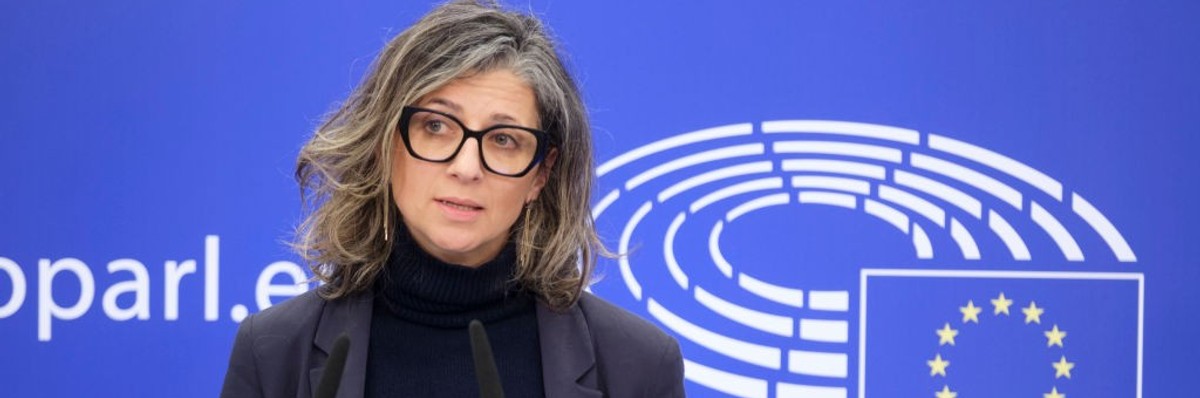
United Nations special rapporteur on the Occupied Palestinian Territories Francesca Albanese addresses the European Parliament in Brussels on April 10, 2024. (Photo: Thierry Monasse/Getty Images)
One expert even asked if Israel’s United Nations membership should be reconsidered given the country “seems to have zero respect” for the world body.
United Nations human rights experts warned Monday that Israel risks becoming an international “pariah” over its ongoing assault on Gaza—for which it is on trial for genocide at the world body’s International Court of Justice.
The special rapporteurs—who are appointed by the U.N. but do not speak on its behalf—condemned Israel’s human rights violations against Palestinians, as well as its blatant disregard for international law and multiple rulings from the ICJ.
George Katrougalos, the U.N. special rapporteur on the promotion of democratic and equitable international order and a former Greek foreign minister, said during a press conference that the “first obligation” for harmonious relations between nations “is for everybody to respect the United Nations rules.”
“This is not happening in the case of Israel,” Katrougalos noted.
"In order to be able to work… a first obligation is for everyone to respect the UN rules. This is not happening in the case of Israel"
UN Special Rapporteur @gkatr explains that if this continues Israel will become a pariah state like apartheid South Africa was pic.twitter.com/Hl790IqRWM
The United Nations agency for Palestinian relief says that around 200 of its staff members have been killed in more than 450 Israeli attacks on agency facilities since October. More than 500 Palestinians have been killed while seeking shelter under the U.N. flag.
Overall, more than 146,000 Palestinians have been killed or wounded by Israeli forces since October. Almost all of Gaza’s 2.3 million people have been forcibly displaced, and Israel’s “complete siege” has caused widespread starvation—sometimes deadly—and sickness throughout the coastal enclave.
Comparing the international community’s reaction to Russia’s ongoing invasion of Ukraine and Israel’s war on Gaza, Katrougalos stressed that “we cannot anymore stand this kind of double standards and hypocrisy.”
“I trust that the progressive and democratic citizens of Israel would not let their country become a pariah like South Africa [had] become during the times of apartheid,” he added. South Africa is leading the genocide case against Israel at the ICJ.
Francesca Albanese, the U.N. special rapporteur on the rights situation in the occupied Palestinian territory, said that “I think it’s unavoidable for Israel to become a pariah in the face of its continuous, relentless, vilifying assault of the United Nations, on top of millions of Palestinians.”
“Shockingly, in the face of the abyss reached in the OPT… most member states remained inactive at best, or [are] actively aiding and assisting Israel’s criminal conduct,” she continued.
“Should there be a consideration of its membership as part of this organization, which Israel seems to have zero respect for?” Albanese added.
Pedro Arrojo-Agudo, the U.N. special rapporteur on the rights to safe drinking water and sanitation, warned that “we are blowing up the United Nations if we don’t react” to Israel’s human rights violations.
Arrojo-Agudo added that, as with starvation, Israel is using deprivation of water as a “weapon” and disavowed Israel’s claim that Hamas—which led the October 7 attack on Israel—has “completely mismanaged water in Gaza.”
The special rapporteurs’ remarks came as representatives of U.N. member states gathered in New York for this year’s annual General Assembly. General debate sessions are set for next week.
Chancellor Jeremy Hunt has threatened to cut benefits for people with disabilities and long-term illnesses who do not get a remote job | Nathan Stirk/Getty Images
The long-term effects of a dangerously mismanaged pandemic and cuts to health and social care are kicking in, with a record 2.5 million working-age people in the UK having disabilities or long-term health conditions that prevent or restrict their ability to work.
This should be the time to reform our punitive welfare system, which fewer Britons than ever believe offers enough support to those who need it. Instead, chancellor Jeremy Hunt has used his autumn statement to inflict yet more pain.
Hunt announced plans to stop people who are unemployed but not actively looking for work due to long-term sickness or disability from claiming free prescriptions and discounted bus travel, as well as to tell people they must find remote jobs or risk losing their benefits.
The news is hardly surprising – the government has long tried to paint Disabled people as ‘scroungers’. Yesterday, Laura Trott, chief secretary to the Treasury, callously told interviewers that Disabled or ill people have “a duty” to work. And just last month, Hunt promised to review benefit sanctions, telling the Conservative Party conference that “around 100,000 people are leaving the labour market every year for a life on benefits”.
What Hunt omitted, though, is that the UK already has one of the least generous welfare systems in Western Europe. Disabled people have lost an average of £1,200 a year between 2008 and 2019 due to a series of cuts and reforms, including the introduction of Employment and Support Allowance, the Work Capability Assessment, Personal Independence Payment, the bedroom tax, the benefit cap, the two-child limit, and Universal Credit.
A reduction in financial support can be difficult for anyone. But for Disabled people, it’s devastating. A household with at least one Disabled adult or child needs an additional £975 a month to have the same standard of living as non-disabled households, according to Scope disability rights charity.
The government is well aware of the mental anguish our threadbare welfare system causes. Just this week, a coroner warned work and pensions secretary Mel Stride that the system can worsen symptoms of mental illness, after a man whose “anxiety was exacerbated by his application for Universal Credit” died by suicide. The number of secret reviews into the deaths of benefit claimants carried out by the Department for Work and Pensions (DWP) has also more than doubled over the past three years.
Emma, a freelance benefits adviser in Greater London who requested that their surname not be published, knows better than most how to navigate the welfare system – they spend their working life helping others to do so.
Yet even Emma was told last year that their Hypermobile-Ehlers-Danlos Syndrome didn’t classify them for an enhanced Personal Independence Payment (PIP), which is designed to help a person with an illness, disability or mental health condition with everyday life. This money would have been a lifeline for Emma, who, despite being in work, was struggling to cover the extra costs that many Disabled people face, including, in their case, the purchase of two wheelchairs and an E-bike to help them get around.
“As a benefits adviser myself, I was able to give examples of how I met the enhanced rate mobility descriptors,” she said, referring to the criteria that must be met to be eligible for the enhanced mobility element of PIP, which is worth £71 a week. “But the caseworker [at the DWP] still refused and eventually offered me the standard rate [of £26.90 a week].”
“The whole process was incredibly stressful… He told me I had to decide there and then whether to accept his offer and that there would be no point in taking the appeal further as it would be unsuccessful.”
Pushing Disabled people towards work with threats often results in them becoming more unwell and further from the labour marketTom Pollard, head of social policy at the New Economics Foundation
Emma eventually worked with Citizens Advice to lodge a new appeal, which was successful, but it took them months to eventually receive PIP, making dealing with the additional costs associated with disability very difficult.
Having witnessed firsthand the difficulties of the current welfare system, Emma branded “current conversations” about sanctions and “getting people back to work” as “scary”.
They said: “Sanctions are an easy way [for the government] to save some money, at a time when finances are under pressure and scrutiny and they don’t know of a better way. And because they don’t understand the ramifications that sanctions will have on Disabled people”.
Emma’s sentiment was echoed by Tom Pollard, head of social policy at the New Economics Foundation. He told openDemocracy that Hunt’s threats to sanction people who do not find work will backfire and fail to achieve their stated aims.
“Any attempt to push [Disabled people] towards work by applying pressure and threats often simply results in people becoming more unwell and further from the labour market,” Pollard explained.
Labour’s position, should it take power next year, is not much better than the Tories’. In January, the then shadow work and pensions secretary, Jonathan Ashworth, announced that there would be “conditionality” – which requires people to behave a certain way to access benefits – in any welfare system the party oversees. This line appears unchanged, despite claims on the fringes of the Labour conference that the party would “co-produce” its benefits system with Disabled people.
That both of the biggest parties are resorting to threats of further sanctions or more conditionality is indicative of a system in desperate need of repair, said Geoff Fimister, policy co-chair at the Disability Benefits Consortium. “Ministers have so little confidence in what is on offer,” he explained, “that they feel they need to resort to threats to promote uptake.”
Linda Burnip from Disabled People Against Cuts, agreed, saying: “[Politicians] aren’t interested in how a good system works.” She added: “Ideologically, their only interest is in removing state aid to those who need it.”
The social security system should be an essential public service – a piece of social infrastructure that ensures we all have access to the right support when we need it. But after years of dire cuts and reforms, it has been torn apart. Hunt’s crackdown will only serve to worsen it, with disastrous consequences for those who are reliant on it.
This should be our moment for creating a system built on respect, dignity and support, that enables us to live the lives we deserve – not imprison us. We should be introducing a Guaranteed Decent Income – based on 50% of the minimum wage – and doing away with punitive sanctions, benefit caps, bedroom tax, conditionality, five-week wait for the first payment, and the two-child limit.
These are must-haves to create a system where everyone has chances and is valued and treated as equal citizens. One that pushes through the barriers of this cross-party consensus on inflicting suffering, which is completely out of line with the general public’s views.