Israel-US and Iran War: A geostrategic transformation

Spread the love

This work by Middle East Monitor is licensed under a Creative Commons Attribution-NonCommercial-ShareAlike 4.0 International License

U.S. Navy warplane takes off from the aircraft carrier USS Abraham Lincoln during Operation Epic Fury targeting Iran in the Gulf of Oman, on March 01, 2026. [U.S. Navy / Handout – Anadolu Agency]

by Dr Zakir Hussain

After the 12-day war in May last year, it was clear that both sides would be face-to-face soon. They restarted on 28th February 2026. Israel-US adopted the same pattern of targeting the top brass, including the Grand Leader, Ayatollah Ali Khamenei, on the very first day, thinking that in the absence of these officials, the Iranian administration would be like a rudderless ship. This would create confusion and provide an easy opportunity for regime change.

Thirteen days have passed, yet there are no visible signs of either the fall of the regime or a pause or ceasefire. Despite US-Israel’s anguish, Iran selected Mojtaba Khamenei as the new supreme leader – an act of defiance.

Both sides continue to bombard each other’s vital infrastructure, including civilian and military targets. Energy installations such as oil depots and refineries have become primary targets. Under a tit-for-tat policy, Iran has also declared that financial centers, banks, and offices of major technology companies such as Google, YouTube, and Microsoft could be the next targets. Already 26 US bases have been targeted. Following the assassination of Ayatollah Ali Khamenei, the conflict rapidly expanded from a limited confrontation into a regional war, and with the blockade of the Strait of Hormuz, its effects are now visible in the global economy and in the daily lives of ordinary people. Approximately 130 oil ships are anchored, stopping 20% oil which passes through the narrow strait of 33 km. Already four ships were targeted which tried to bypass the warning.

Among the GCC countries, the UAE faced the highest number of attacks.

Iran’s aggressive response and selection of Mojtaba, a hardliner, as Ayatollah, appear to indicate that Iran is prepared for a prolonged conflict, whereas the United States and Israel seem eager to conclude the war quickly. Meanwhile, President Trump’s plan to send Kurdish Peshmerga into Iran via Iraq seems like another disaster.

READ: Trump says US ‘ahead of schedule’ in Iran war, claims most missiles destroyed

Tehran had been closely and patiently observing military buildups in the Indian Ocean, the Gulf of Oman, and the Mediterranean Sea for several weeks. The United States mobilized a substantial part of its defence capabilities, including naval armadas and two aircraft carriers, Abraham Lincoln and Gerald Ford. Hundreds of fifth-generation stealth fighter jets were deployed along with advanced air-defence systems such as THAAD and large stockpiles of interceptors.

In addition, the United States strengthened its military presence across several bases in the Gulf region, including Qatar, Bahrain, Oman, the United Arab Emirates, Kuwait, Saudi Arabia, Jordan, and Iraq.

Israel also appeared determined to launch what it described as a “fight-to-the-finish” war with the Islamic Republic. Prime Minister Benjamin Netanyahu repeatedly stated that he had been waiting for such a war for nearly forty years. Iran, on the other hand, has long maintained that it began preparing for such a scenario after the 2003 US-led invasion of Iraq and the fall of Saddam Hussein.

The earlier conflict in May had already revealed the strengths and weaknesses of both sides. However, the current course of the war suggests that the US–Israel alliance underestimated Iran’s military capabilities, particularly its missile and drone systems, careful planning, and effective use of its military resources.

Compared with the US–Israel alliance, Tehran appears to possess a clearer understanding of its adversaries’ strengths, limitations, and operational constraints.

Iran was also aware of its own limitations. Its air force cannot match the capabilities of US and Israeli fighter jets, and its airspace remains vulnerable to aerial attacks. As the conflict expanded, these vulnerabilities became evident. At the same time, the United States and Israel appeared to have an incomplete assessment of Iran’s capabilities. Although they possessed precise intelligence about the locations of Iranian leaders and senior officials—they killed several commanders and Ayatollah Ali Khamenei-they appeared to lack detailed knowledge of Iran’s missile infrastructure, drone networks, and underground silos developed over several decades.

It also appears that the US–Israel side underestimated the possibility of indirect assistance from Russia and China, relying heavily instead on air superiority and defensive shield systems.

Iran’s war strategy

A detailed military assessment would require expert analysis, but developments in the conflict suggest that Iran followed a three-stage strategy.

First, Iran responded to the US-Israel attacks by deploying large numbers of drones, many reportedly stored since 2011 and 2013. These drones forced US–Israel defence systems to respond with expensive interceptors. In financial terms, this created an asymmetric dynamic: Iranian drones costing between $20,000 and $50,000 were intercepted by missiles costing between $1 million and $2 million. As the wave of drone attacks continued, interceptor stocks began to decline, gradually exposing the airspace of US bases and Israel to greater risk.

Second, once defensive systems were strained, Iran launched more advanced missiles targeting radar installations, communication centres, satellites, and data facilities. Reports indicate damage to communication and data infrastructure at the Al Udeid Air Base in Qatar and at military installations in Bahrain. Such attacks disrupted surveillance and communication systems that coordinate missile defence networks such as THAAD, David’s Sling, Arrow, and Iron Dome. Command and monitoring centres that once gathered and transmitted military data across thousands of kilometres became severely limited in their operations.

Third,

Iran escalated its attacks using hypersonic missiles while adopting a tit-for-tat strategy. These strikes targeted refineries, military bases, and strategic infrastructure in Israel. Some reports suggest the use of the Khorramshahr-1 missile equipped with submunitions capable of dispersing dozens of warheads over a wide area, complicating interception efforts.

Meanwhile, attacks on naval assets reportedly forced aircraft carriers operating in the Gulf of Oman to reposition farther from the Iranian coastline.

READ: Two weeks in, Iran strikes inflict nearly $4B in US military losses

Hormuz blockade and its impact

After weakening regional defence systems, Iran announced a blockade of the Strait of Hormuz. This strait is one of the world’s most critical energy corridors, through which roughly 20 percent of global crude oil and a similar share of liquefied natural gas passes.

At present, around 130 oil tankers are reportedly anchored in the strait. Iran claims effective control over the Hormuz chokepoint.

It has targeted four vessels, including one linked to India, that attempted to pass through. Iran has reportedly deployed underwater tunnels and small, agile boats to intercept or attack ships that violate the blockade.

At the same time, attacks on energy facilities in Saudi Arabia and the temporary closure of Qatar’s Ras Laffan gas facilities disrupted global energy supplies. As a result, gas prices in Europe rose sharply while crude oil prices increased from about $62 per barrel to more than $100. Some analysts warn that if the conflict continues, oil prices could rise further, potentially reaching $200 per barrel. Such developments could trigger inflation, supply-chain disruptions, and rising unemployment worldwide.

Future of the War

Iran appears determined to pursue its objectives and may not halt operations even if a ceasefire is proposed by the United States or Israel. The selection of Mojtaba Khamenei as the new supreme authority signals continuity of leadership, consolidation of political control, and a claim of legitimacy within the existing system.

Large public gatherings during funeral processions and demonstrations suggest that, at least during wartime, sections of the population have rallied around the leadership.

Reports have also mentioned proposals to deploy Kurdish Peshmerga forces into Iran through Iraq. However, the region’s history suggests that such operations would face significant geographical and logistical difficulties. During the Iran–Iraq War, Saddam Hussein also attempted to advance through the mountainous terrain of the Zagros region but faced serious constraints.

Some Iranian sources have claimed the capture of US special forces personnel and the killing of several Israeli officials during the conflict, although many of these claims remain difficult to verify independently.

Chances of a Ceasefire

Iranian authorities have reportedly outlined three conditions for a ceasefire. First, all military attacks by the United States and Israel must stop immediately. Second, Tehran seeks assurances that such attacks will not be repeated in the future. Third, Iran demands recognition of its sovereignty and compensation for damages caused during the conflict. These conditions are not easy. Who will ensure that the U.S. and Israel would not attack in the future? Second, who will pay the reconstruction cost, etc.? It is true that regional problems can be resolved only when the issue of Palestine is resolved in a fair and just manner. Lebanon and Yemen, Syria also need attention.

Future Trajectory-Palestine solution is the only solution

Even if the present war stops, regional stability will remain uncertain. Long-standing political and security disputes remain unresolved. Israel is unlikely to abandon its strategic objectives, Greater Israel, while tensions involving Hezbollah and Hamas are likely to persist. The United States may also increase pressure on Gulf states to revise their security arrangements so that regional partners become more directly involved in future conflicts.

Implications for India

For India, energy security remains a major concern. Disruptions in the Strait of Hormuz could affect oil supplies and trade routes. Approximately 50% oil passes through the route, while Houthis are there to choke off the Red Sea navigation. 

India must also prepare contingency plans for the evacuation of its 9 million workers from the region and strengthen logistical arrangements to safeguard trade and shipping routes in the event of prolonged instability. Chemical fertilizers are another major concern for India. The region provides the bulk of fertilizers and ensures food security. Disruption in supply line has significantly affected the supply of fresh vegetables, perishable items including agriproducts , poultry and meat products 

In the long term, India is to sign a long term energy agreement with the US. At the same time, India needs a more coherent West Asia policy and must avoid being drawn into the region’s strategic conflicts. The region is sensitive as well as vital to India’s economy and geostrategy. India needs a careful policy.

OPINION: Iran is not Venezuela: Gen-Z would fail to defeat diehard ayatollahs

The views expressed in this article belong to the author and do not necessarily reflect the editorial policy of Middle East Monitor.

This work by Middle East Monitor is licensed under a Creative Commons Attribution-NonCommercial-ShareAlike 4.0 International License

Climate science denier Donald Trump says that more liquid gold is being secured according to his policy of global privateering
Donald Trump explains why he established his Bored of Peace
Donald Trump warns against following the https://onaquietday.org blog, says that it's easy atm, she only needs to report war crimes supporting Israel's genocidal expansion.
Donald Trump warns against following the https://onaquietday.org blog, says that it’s easy atm, she only needs to report war crimes supporting Israel’s genocidal expansion.
Continue ReadingIsrael-US and Iran War: A geostrategic transformation

Jeremy Corbyn: Voters’ voices are being shut out of British politics. Your Party has a radical plan to change that

Spread the love
Image of Jeremy Corbyn MP, former leader of the Labour Party
Jeremy Corbyn MP, former leader of the Labour Party

https://www.theguardian.com/commentisfree/2025/oct/13/your-party-conference-jeremy-corbyn-members

At our conference in November we will use a jury service-type model to allow members to discuss and decide policy, strategy and even the name of our party

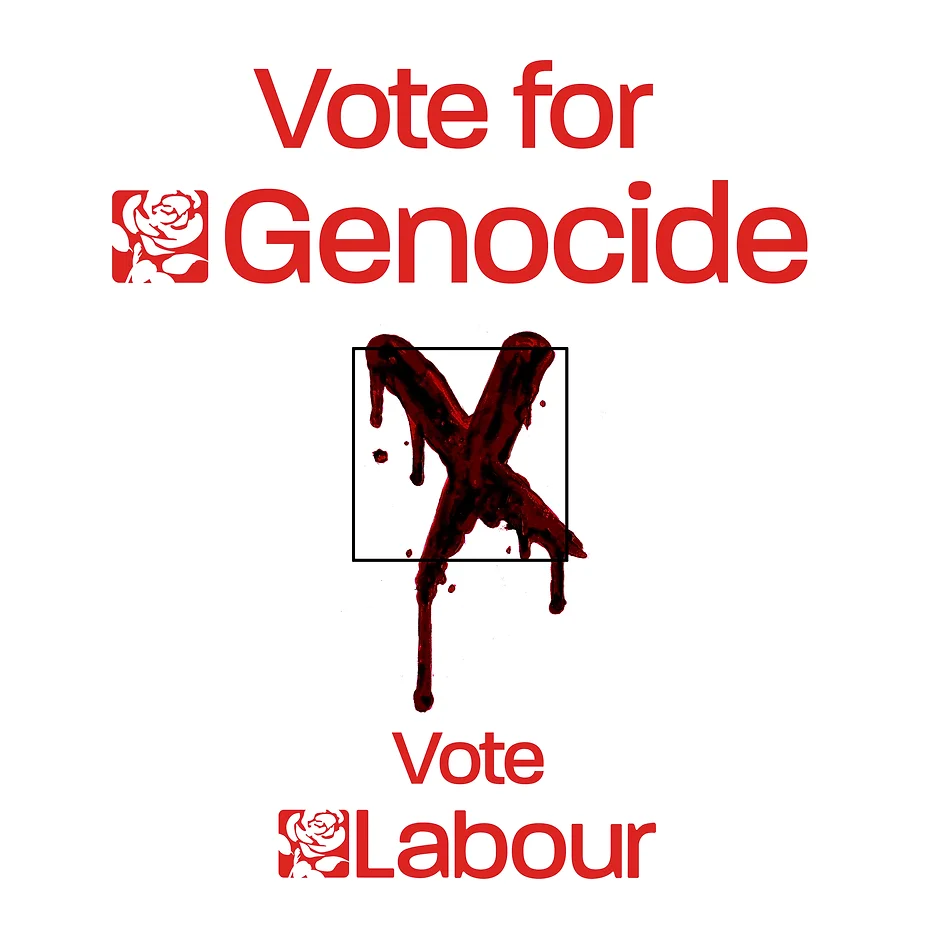
At Labour’s latest conference, one thing stood out: the party no longer believes in democracy. Members and trade union affiliates voted to back, first the findings of a UN commission of inquiry that Israel is committing genocide, and second that the government must do all it can to prevent it.

It is now two weeks since this motion was passed, but still the Labour government refuses to recognise the genocide in Gaza and allows the supply of weapons to Israel.

Over the past 40 years in parliament, I have witnessed at first-hand the democratic deficit in our political system. For too long, top-down political parties have disempowered their membership and crushed internal debate. Now, Your Party will try to do something unprecedented in British politics: forge a mass, democratic party from scratch.

When we launched, we announced that members would decide the policies, the strategy and even the name. In the meantime, we called it Your PartyIt was an apt choice because it expressed the essence of what we are trying to build: a new kind of political party that belongs to its members.

Article continues at https://www.theguardian.com/commentisfree/2025/oct/13/your-party-conference-jeremy-corbyn-members

Keir Starmer objects to criticism of the IDF. He asks how could anyone object to them starving people to death, forced marches like the Nazis did, bombing Gaza's hospitals and universities, mass-murdering journalists, healthworkers and starving people queuing for food, killing and raping prisoners and murdering children. He calls for people to stop obstructing his genocide for Israel.
Keir Starmer objects to criticism of the IDF. He asks how could anyone object to them starving people to death, forced marches like the Nazis did, bombing Gaza’s hospitals and universities, mass-murdering journalists, healthworkers and starving people queuing for food, killing and raping prisoners and murdering children. He calls for people to stop obstructing his genocide for Israel.
Experiencing issues with this image not appearing. I suspect because it's so critical of Zionist Keir Starmer's support of and complicity in Israel's genocides.
Genocide denier and Current UK Prime Minister Keir Starmer is quoted that he supports Zionism without qualification. He also confirms that UK air force support has been essential in Israel’s mass-murdering genocide. Includes URLs https://www.declassifieduk.org/keir-starmers-100-spy-flights-over-gaza-in-support-of-israel/ and https://youtu.be/O74hZCKKdpA
Vote Labour for Genocide.
Continue ReadingJeremy Corbyn: Voters’ voices are being shut out of British politics. Your Party has a radical plan to change that

Starvation as strategy: Netanyahu’s war crimes and America’s shame

Spread the love

This work by Middle East Monitor is licensed under a Creative Commons Attribution-NonCommercial-ShareAlike 4.0 International License.

Palestinians gather at an aid distribution point near the Zikim border crossing in a desperate attempt to receive limited flour supplies in Gaza City, Gaza, on July 29, 2025. [Ali Jadallah – Anadolu Agency]

by Jasim Al-Azzawi

Moral outrage and political tsunami

The pièce de résistance in the political tsunami that swept across parliaments, streets of world capitals, and podiums, culminating in a cascade of recognitions for Palestine, was Israel’s starvation campaign. A deliberate deprivation that tore through the veil of diplomatic neutrality. When images of emaciated children and hollow-eyed families flooded the world’s screens, the silence shattered. From Madrid to Brasília, from Pretoria to Dublin, governments that once tiptoed around the issue found their voices. Chile, Spain, Norway—each stepped forward, not out of political convenience, but because the moral cost of inaction had become unbearable. The campaign was not just a humanitarian crisis—it was the moral rupture that forced the world to choose: complicity or conscience.

This rupture was not born in isolation. It followed months of mounting evidence, from UN agencies and human rights organizations, that Israel’s siege on Gaza had crossed every red line of international law. The deliberate targeting of food supplies, the obstruction of humanitarian aid, and the weaponization of starvation are not just morally abhorrent—they are prosecutable war crimes under the Rome Statute. And yet, the United States, long seen as the indispensable power in global diplomacy, chose silence. Worse—it chose endorsement.

The US endorsement of Israel’s starvation siege on Gaza is not just a policy misstep—it is a grotesque moral betrayal that will haunt the nation’s soul and forever brand President Trump’s legacy with shame. To support the deliberate starvation of children is to stand on the wrong side of humanity. The harrowing images of skeletal Palestinian toddlers conjure the darkest chapters of history—ghastly reminders of Jewish children in Nazi death camps. That such horrors are now mirrored with American complicity is a stain that no amount of spin or silence can erase. This is not hyperbole—it is history repeating itself in grotesque imitation. The very nation that once vowed “never again” now finds itself employing the same tactics it once condemned. And the man at the center of this moral collapse is Benjamin Netanyahu.

Netanyahu, drunk on his cunning, believes he can outmaneuver justice, stretching the Gaza war like a smokescreen to dodge the noose tightening around him at home. In his desperate bid for survival, he’s not just burying Gaza in rubble and grief; he’s dragging America’s reputation through blood-soaked mud, staining it with shame and criminal complicity. Every day this war drags on is another day the US is tethered to a man who treats human suffering as a political chess piece.

READ: ‘Unimaginable’ hunger: US doctor in Gaza reports children starving to death due to Israeli blockade

Like a modern-day Macbeth, Netanyahu clings to power with bloodied hands, convinced that his mastery of manipulation can outwit fate. He drags the Gaza war endlessly, not for strategy but for survival, hoping the fog of war will obscure the reckoning awaiting him at home, the noose tightening with every indictment and protest. In doing so, he mirrors the tyrants of history who believed brutality could buy them time—Milosevic in the Balkans, Pinochet in Chile—men who misinterpreted carnage for control. And as he orchestrates this siege, he pulls the United States into the mire, staining its legacy with complicity, shame, and the kind of moral failure that history never forgets. Gaza burns, and with it, the illusion that this war is anything but a desperate man’s gambit.

What makes this moment especially perilous is the semi-silence of American institutions. What would it take for the growing dissent within the US Congress, the media, and civil society to reach a critical mass that convinces President Trump to pressure Netanyahu into ending the conflict in Gaza? Where is the moral clarity that once defined American leadership? The answer lies in a toxic blend of political inertia and strategic delusion—a belief that supporting Israel, no matter the cost is a geopolitical imperative. But this calculus is crumbling. The world is watching, and the moral ledger is being written in real time.

Trump, Netanyahu, the donor class, and the GHF death trap   

President Trump must awaken to the peril of Netanyahu’s war of deception. This is not a statesman’s struggle—it is the desperate theater of a man cornered by scandal, clinging to power through destruction. If Trump continues to tether himself to Netanyahu’s intrigue, he risks allowing Netanyahu to drag him into a moral and political abyss from which there may be no return. History is merciless to those who stand beside tyrants in their final acts. The bloodshed in Gaza is not just a humanitarian catastrophe—it is a trap. And unless Trump distances himself now, he will find his legacy shackled to a war that was never his, but whose shame will be his to bear.

Why does President Trump allow Netanyahu to run circles around him, dragging his reputation through blood and betrayal? The answer is simple: money and influence. The Zionist lobby and donor class that bankrolled Trump’s rise now demand unwavering loyalty to Israel, even as his MAGA base grows disillusioned. “My people are starting to hate Israel,” Trump reportedly warned a prominent Jewish donor. Yet the financial leash remains tight, and Trump’s silence is bought at the cost of his legacy. The Gaza Humanitarian Fund (GHF), a private aid contractor with no prior experience in humanitarian relief, has become a grotesque symbol of failure and cruelty. Designed as an alternative to UN agencies, its distribution sites have turned into death traps. Over 1,400 Palestinians have been killed while seeking food, shot by Israeli soldiers working alongside GHF contractors. Retired U.S. Green Beret Anthony Aguilar, who served as a subcontractor, testified: “What I witnessed were war crimes—indiscriminate violence against starving civilians.” 

OPINION: Israel at a crossroads: Warnings from within on war crimes and the cost of denial

The views expressed in this article belong to the author and do not necessarily reflect the editorial policy of Middle East Monitor.

This work by Middle East Monitor is licensed under a Creative Commons Attribution-NonCommercial-ShareAlike 4.0 International License.

Continue ReadingStarvation as strategy: Netanyahu’s war crimes and America’s shame

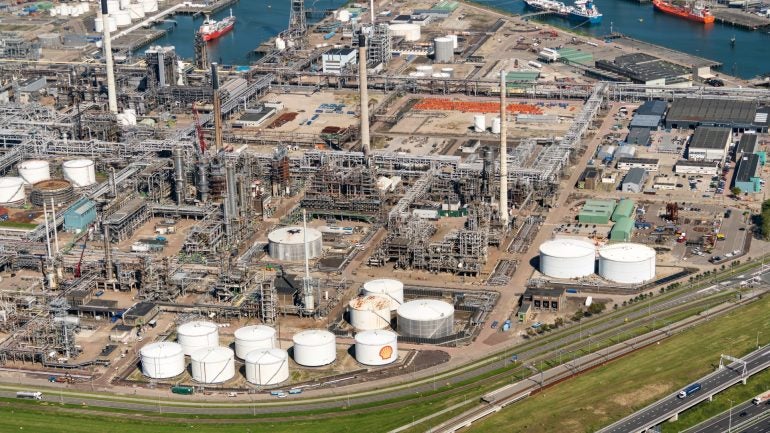
New report accuses fossil fuel companies of greenwashing, but profits are up

Spread the love

https://www.energymonitor.ai/features/new-report-accuses-fossil-fuel-companies-of-greenwashing-but-profits-are-up/

A new report by the Senate Committee on the Budget details how fossil fuel companies have avoided tackling the climate crisis.

Last week, US Democrats released a report three years in the making detailing the ways that large fossil fuel producers including ShellBP and Exxon have sought to avoid responsibility for the climate crisis.

The 65 page-long report, jointly authored by the Democrats House Committee On Oversight And Accountability and the Senate Committee on the Budget, contains files subpoenaed from big oil companies that “demonstrate for the first time that fossil fuel companies internally do not dispute that they have understood since at least the 1960s that burning fossil fuels causes climate change and then worked for decades to undermine public understanding of this fact and to deny the underlying science”.

Previous documentation has shown that companies including Exxon knew about human-made climate change since at least 1981, and files released earlier this year suggest it may have been known since the 1950s. The importance of this report lies in proving that fossil fuel companies not only knew, but privately believed the science despite public rejection.

The files also show the tactics used by major fossil companies to discredit climate activism, the report says, among them “pivot[ing] from outright climate denial to a new strategy of deception. Instead of misrepresenting the science and the consequences of climate change, they pivoted to misrepresenting their business plans, their investments in low carbon technologies, the alleged safety of natural gas, and their support for various climate policies and emission reduction targets”.

Article continues at https://www.energymonitor.ai/features/new-report-accuses-fossil-fuel-companies-of-greenwashing-but-profits-are-up/

Continue ReadingNew report accuses fossil fuel companies of greenwashing, but profits are up