A newborn baby in an incubator struggles to survive following Israel’s blockade of food and medical aid in Gaza City, Gaza on March 11, 2025. (Photo: Khalil Ramzi Alkahlut/Anadolu via Getty Images)
The Associated Press reported Wednesday that 580 premature infants are at risk of death due to “depleted” reserves of baby formula.
The Associated Press reported Wednesday that 580 premature infants are at risk of death, according to the Gaza Health Ministry, due to a shortage of medical-grade formula entering the strip.
Despite a recent policy change by Israeli Prime Minister Benjamin Netanyahu to allow “minimal aid” into the strip following a total blockade of food, water, shelter, and medication, it has proven far too little to keep hospitals running and keep people fed. It has proven especially deadly for children.
The AP report quotes Dr. Ahmed al-Farah, head of the pediatrics and obstetrics department at Nasser Hospital in Khan Younis, one of the few functional medical facilities left in Gaza.
Last week, al-Farah warned that the hospital’s stock of milk was “completely depleted,” and that unless aid was delivered immediately, the babies would face “an avoidable disaster.” The widely publicized call was answered with the shipment of 20 boxes of formula from the U.S. aid group Rahma Worldwide.
Al-Farah said this was enough to meet the needs of 10 babies for two weeks, but warned that in the long run it would be far too little, especially with no guarantee of aid in the future.
“This is not enough at all,” he told the AP. “It solved the problem temporarily, but what we need is a permeant solution: Lift the siege.”
Many other hospitals reported shortages of formula that had not been answered, such as Al-Rantisi Hospital in Gaza City, which was completely out of stock.
Fortified milk has become increasingly necessary in Gaza due to the increasing number of premature births. In May, the United Nations Children’s Fund (UNICEF) reported that as a result of widespread hunger, 1 in 5 children is now born pre-term or underweight. That malnutrition has also left many new mothers unable to breastfeed.
Dr. Asaad Nawajha, a pediatric specialist at Nasser Hospital, told Middle East Eye that the blockade has proven catastrophic for the health of both children and their mothers.
“This all goes back to the [harsh] conditions mothers endure amid this vicious war on the Gaza Strip,” Nawajha said. “Due to the lack of nutritious items entering the Gaza Strip, both mothers and children have been exposed to illnesses resulting from malnutrition.”
The Israeli government’s Coordinator of Government Activities in the Territories (COGAT) has insisted that the amount of aid allowed into Gaza is sufficient to provide for the population.
On June 22, COGAT announced that 430 aid trucks had been allowed to enter the strip during the preceding week. However, this is but a fraction of the more than 600 trucks per day that the United Nations is necessary to meet their needs.
Many people who have come to aid sites administered by the Gaza Humanitarian Foundation (GHF), to obtain the meager supplies available, have been met with deadly violence from the Israeli military.
Since May 27, at least 549 Palestinians have been killed and more than 4,000 injured by Israeli forces at these sites, according to the U.N. Office for Coordinated Humanitarian Affairs (OCHA) and the Gaza Ministry of Health. The Gaza Media Office reports at least 19 fatal incidents at these GHF sites over the span of just one month.
Many of the victims have been children. According to a study released Thursday by the humanitarian group Save the Children, children have been killed at 10 of those 19 incidents.
“No child should be killed searching for food,” said Ahmad Alhendawi, Save the Children’s regional director for the Middle East, North Africa, and Eastern Europe. “This is not a humanitarian operation—it’s a death trap.”
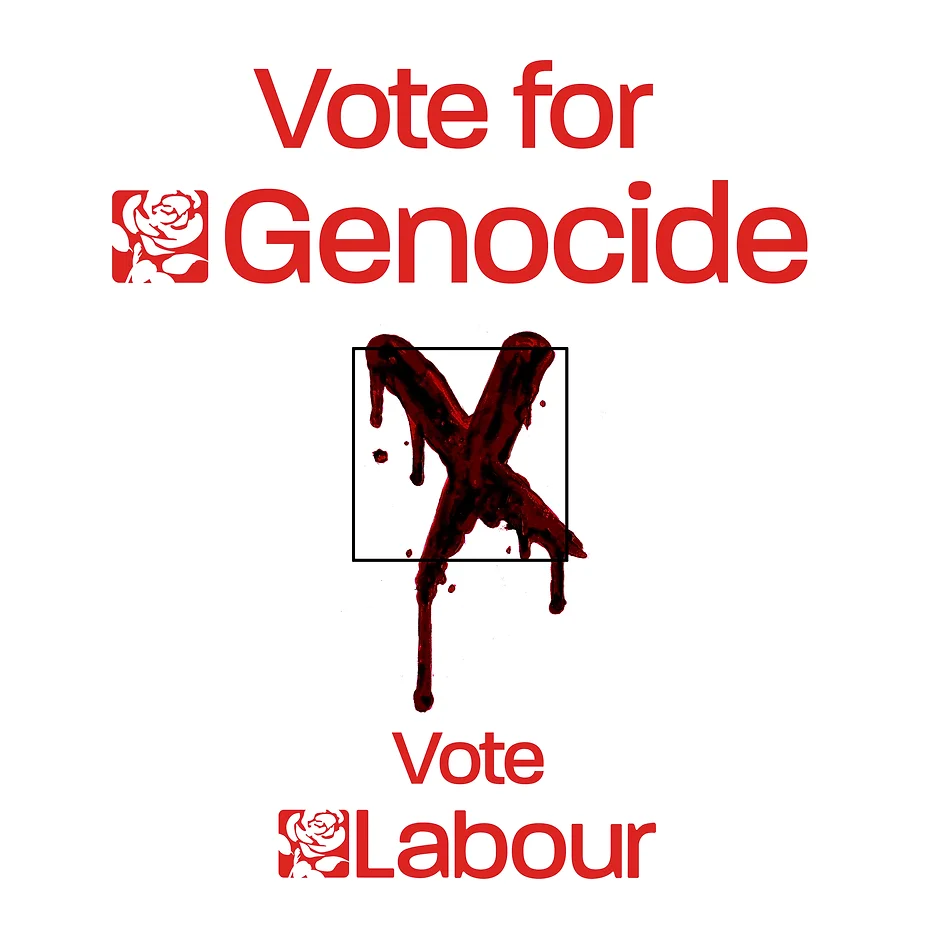
Vote Labour for Genocide.Genocide denier and Current UK Prime Minister Keir Starmer is quoted that he supports Zionism without qualification. He also confirms that UK air force support has been essential in Israel’s mass-murdering genocide. Includes URLs https://www.declassifieduk.org/keir-starmers-100-spy-flights-over-gaza-in-support-of-israel/ and https://youtu.be/O74hZCKKdpAUK Labour Party government ministers Keir Starmer, Angela Rayner and Rachel Reeves explain that they are partners complicit in Israel’s Gaza genocide. The UK has provided Israel with arms, military and air force support. They explain that they don’t do gas chambers but do do forced marches, starvation, destroy hospitals, mass-murders of journalists and healthcare workers.
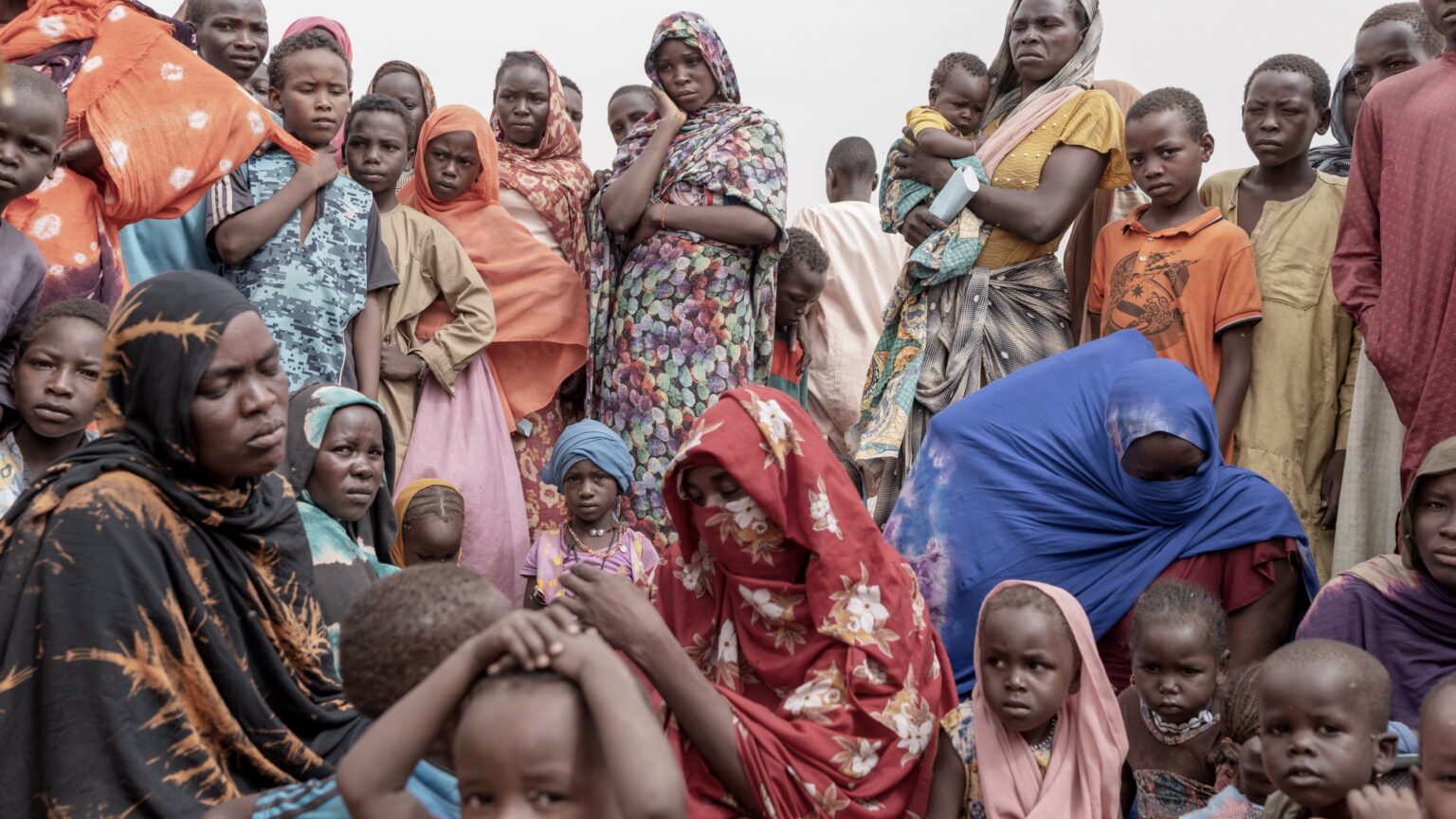
The violence in Sudan has pushed North Darfur’s Zamzam camp, home to over 500,000 people, into famine. Photo: WHO
“The world has completely forgotten the crisis in Sudan” where “a slow death” has become the plight of millions, decried Adam Rojal, spokesperson of the General Coordination of Darfur Displaced People and Refugees.
As the fighting between the Sudanese Armed Forces (SAF) and the paramilitary Rapid Support Forces (RSF) intensifies in North Darfur state and the Kordofan region, UN Human Rights Chief Volker Türk warned on Friday, June 20 of a “further aggravation in an already brutal and deadly conflict.”
The war, which began in April 2023, has created the world’s worst humanitarian disaster, displacing nearly 13 million, leaving Sudan with the highest number of displaced people globally. 30 million, almost two-thirds of the population, need humanitarian aid, including food assistance.
The worst affected are children, amounting to half of the hungry and displaced population, the UN said last week, decrying a severe fund shortage, leaving it unable to assist over 80% of the children in need.
Children under the age of five are the largest group of victims of the measles outbreak, amounting to over 60% of the 2,200 suspected cases since the start of this year. Another 230 children have been killed and 7,300 suspected to have been infected by cholera, which broke out last July, killing over 2,000 and suspectedly infecting over 80,000 people.
The number of cholera cases sharply spiked earlier this year in Sudan’s capital region of Khartoum where over 34,000 displaced people returned mainly since March after the SAF retook control from the RSF.
Damaged in the fighting, most of the homes to which they returned lacked water or sanitation. In May, the RSF launched a series of drone strikes on water purification units and power plants, further curtailing water supply, and forcing residents to resort to unsafe sources, which caused over a nine-fold rise in cholera cases in the second half of that month.
Last week, Doctors Without Borders (MSF) raised the alarm that the cholera wave had now reached the western semi-arid region of Darfur for the first time since the war began.
In a press statement on Sunday, June 22, the General Coordination of Darfur Displaced People and Refugees warned that diseases may spread rapidly as monsoon season has begun in Darfur, with rains lashing over the displaced sheltering only under plastic sheets with no sanitation facilities.
Particularly vulnerable to the deadly diseases are the children and the pregnant and breast-feeding women who are already suffering from malnutrition, its spokesperson Adam Rojal told Peoples Dispatch, “The world has completely forgotten the crisis in Sudan” where “a slow death” has become the plight of millions, he decried.
The Darfur region consists of five states, of which North Darfur remains the only state where the SAF has retained a foothold in its capital El Fasher. The RSF, which controls the rest of the region, has laid a siege on the city for over a year now, cutting off its supply of food and other essentials, and frequently bombarding the famine-stricken displaced peoples camp on its outskirts. Activists have warned that El Fasher itself is on the verge of famine.
Now in its third year, the war that has caused a humanitarian catastrophe on such a scale “is far from over”, a UN fact-finding mission warned last week.
The RSF – which the SAF claims to have killed 28,613 and wounded 43,575 since the start of the war – is also making advances in the Kordofan region in the center and southern region of Sudan. Civilians in South Kordofan’s city of El-Dibeibat – a crucial crossroad linking the state with North Kordofan and West Darfur – have been caught up in the crossfire for over two years.
Fleeing this city, thousands sought refuge in North Kordofan’s capital El-Obeid, under SAF’s control. However, the RSF has surrounded El-Obeid, “and may attack it in the coming days, as announced by the RSF commander,” the UN Human Rights Office of the High Commissioner said on June 20.
Article by Chris Hedges republished from MPN under a Creative Commons Attribution-NonCommercial-ShareAlike 3.0 International License.
This is the end. The final blood-soaked chapter of the genocide. It will be over soon. Weeks. At most. Two million people are camped out amongst the rubble or in the open air. Dozens are killed and wounded daily from Israeli shells, missiles, drones, bombs and bullets. They lack clean water, medicine and food. They have reached a point of collapse. Sick. Injured. Terrified. Humiliated. Abandoned. Destitute. Starving. Hopeless.
In the last pages of this horror story, Israel is sadistically baiting starving Palestinians with promises of food, luring them to the narrow and congested nine-mile ribbon of land that borders Egypt. Israel and its cynically named Gaza Humanitarian Foundation (GHF), allegedly funded by Israel’s Ministry of Defense and the Mossad, is weaponizing starvation. It is enticing Palestinians to southern Gaza the way the Nazis enticed starving Jews in the Warsaw Ghetto to board trains to the death camps. The goal is not to feed the Palestinians. No one seriously argues there is enough food or aid hubs. The goal is to cram Palestinians into heavily guarded compounds and deport them.
What comes next? I long ago stopped trying to predict the future. Fate has a way of surprising us. But there will be a final humanitarian explosion in Gaza’s human slaughterhouse. We see it with the surging crowds of Palestinians fighting to get a food parcel, which has resulted in Israeli and U.S. private contractors shooting dead at least 130 and wounding over seven hundred others in the first eight days of aid distribution. We see it with Benjamin Netanyahu’s armingISIS-linked gangs in Gaza that loot food supplies. Israel, which has eliminated hundreds of employees with the United Nations Relief and Works Agency for Palestine Refugees in the Near East (UNRWA), doctors, journalists, civil servants and police in targeted assassinations, has orchestrated the implosion of civil society.
I suspect Israel will facilitate a breach in the fence along the Egyptian border. Desperate Palestinians will stampede into the Egyptian Sinai. Maybe it will end some other way. But it will end soon. There is not much more Palestinians can take.
We — full participants in this genocide — will have achieved our demented goal of emptying Gaza and expanding Greater Israel. We will bring down the curtain on the live-streamed genocide. We will have mocked the ubiquitous university programs of Holocaust studies, designed, it turns out, not to equip us to end genocides, but deify Israel as an eternal victim licensed to carry out mass slaughter. The mantra of never again is a joke. The understanding that when we have the capacity to halt genocide and we do not, we are culpable, does not apply to us. Genocide is public policy. Endorsed and sustained by our two ruling parties.
There is nothing left to say. Maybe that is the point. To render us speechless. Who does not feel paralyzed? And maybe, that too, is the point. To paralyze us. Who is not traumatized? And maybe that too was planned. Nothing we do, it seems, can halt the killing. We feel defenseless. We feel helpless. Genocide as spectacle.
I have stopped looking at the images. The rows of little shrouded bodies. The decapitated men and women. Families burned alive in their tents. The children who have lost limbs or are paralyzed. The chalky death masks of those pulled from under the rubble. The wails of grief. The emaciated faces. I can’t.
This genocide will haunt us. It will echo down history with the force of a tsunami. It will divide us forever. There is no going back.
And how will we remember? By not remembering.
Once it is over, all those who supported it, all those who ignored it, all those who did nothing, will rewrite history, including their personal history. It was hard to find anyone who admitted to being a Nazi in post-war Germany, or a member of the Klu Klux Klan once segregation in the southern United States ended. A nation of innocents. Victims even. It will be the same. We like to think we would have saved Anne Frank. The truth is different. The truth is, crippled by fear, nearly all of us will only save ourselves, even at the expense of others. But that is a truth that is hard to face. That is the real lesson of the Holocaust. Better it be erased.
Should a drone vaporize some nameless soul on the other side of the planet, who among us wants to make a fuss? What if it turns out they were a terrorist? What if the default accusation proves true, and we by implication be labeled terrorist sympathizers, ostracized, yelled at? It is generally the case that people are most zealously motivated by the worst plausible thing that could happen to them. For some, the worst plausible thing might be the ending of their bloodline in a missile strike. Their entire lives turned to rubble and all of it preemptively justified in the name of fighting terrorists who are terrorists by default on account of having been killed. For others, the worst plausible thing is being yelled at.
You cannot decimate a people, carry out saturation bombing over 20 months to obliterate their homes, villages and cities, massacre tens of thousands of innocent people, set up a siege to ensure mass starvation, drive them from land where they have lived for centuries and not expect blowback. The genocide will end. The response to the reign of state terror will begin. If you think it won’t you know nothing about human nature or history. The killing of two Israeli diplomats in Washington and the attack against supporters of Israel at a protest in Boulder, Colorado, are only the start.
Chaim Engel, who took part in the uprising at the Nazis’ Sobibor death camp in Poland, described how, armed with a knife, he attacked a guard in the camp.
“It’s not a decision,” Engel explained years later. “You just react, instinctively you react to that, and I figured, ‘Let us to do, and go and do it.’ And I went. I went with the man in the office and we killed this German. With every jab, I said, ‘That is for my father, for my mother, for all these people, all the Jews you killed.’”
Does anyone expect Palestinians to act differently? How are they to react when Europe and the United States, who hold themselves up as the vanguards of civilization, backed a genocide that butchered their parents, their children, their communities, occupied their land and blasted their cities and homes into rubble? How can they not hate those who did this to them?
What message has this genocide imparted not only to Palestinians, but to all in the Global South?
It is unequivocal. You do not matter. Humanitarian law does not apply to you. We do not care about your suffering, the murder of your children. You are vermin. You are worthless. You deserve to be killed, starved and dispossessed. You should be erased from the face of the earth.
“To preserve the values of the civilized world, it is necessary to set fire to a library,” El Akkad writes:
To blow up a mosque. To incinerate olive trees. To dress up in the lingerie of women who fled and then take pictures. To level universities. To loot jewelry, art, food. Banks. To arrest children for picking vegetables. To shoot children for throwing stones. To parade the captured in their underwear. To break a man’s teeth and shove a toilet brush in his mouth. To let combat dogs loose on a man with Down syndrome and then leave him to die. Otherwise, the uncivilized world might win.
There are people I have known for years who I will never speak to again. They know what is happening. Who does not know? They will not risk alienating their colleagues, being smeared as an antisemite, jeopardizing their status, being reprimanded or losing their jobs. They do not risk death, the way Palestinians do. They risk tarnishing the pathetic monuments of status and wealth they spent their lives constructing. Idols. They bow down before these idols. They worship these idols. They are enslaved by them.
At the feet of these idols lie tens of thousands of murdered Palestinians.
Feature photo | The Last Piece | Artwork by Mr. Fish
Chris Hedges is a Pulitzer Prize–winning journalist who was a foreign correspondent for fifteen years for The New York Times, where he served as the Middle East Bureau Chief and Balkan Bureau Chief for the paper. He previously worked overseas for The Dallas Morning News, The Christian Science Monitor, and NPR. He is the host of show The Chris Hedges Report.
Stories published in our Daily Digests section are chosen based on the interest of our readers. They are republished from a number of sources, and are not produced by MintPress News. The views expressed in these articles are the author’s own and do not necessarily reflect MintPress News editorial policy.
The views expressed in this article are the author’s own and do not necessarily reflect MintPress News editorial policy.
Article by Chris Hedges republished from MPN under a Creative Commons Attribution-NonCommercial-ShareAlike 3.0 International License.
Genocide denier and Current UK Prime Minister Keir Starmer is quoted that he supports Zionism without qualification. He also confirms that UK air force support has been essential in Israel’s mass-murdering genocide. Includes URLs https://www.declassifieduk.org/keir-starmers-100-spy-flights-over-gaza-in-support-of-israel/ and https://youtu.be/O74hZCKKdpAUK Labour Party government ministers Keir Starmer, Angela Rayner and Rachel Reeves explain that they are partners complicit in Israel’s Gaza genocide. The UK has provided Israel with arms, military and air force support. They explain that they don’t do gas chambers but do do forced marches, starvation, destroy hospitals, mass-murders of journalists and healthcare workers.
A worker from Thames Water delivering a temporary water supply from a tanker to the village of Northend in Oxfordshire
THAMES Water’s record fines for sewage spills and improper dividends only underline our inability to hold water companies to account.
Water regulator Ofwat is hardly blameless when it comes to the supplier’s crippling debts, amassed by unscrupulous transnational corporations to shower their shareholders in cash — safe in the knowledge that when an essential service goes bust, it’s the British public that foots the bill.
…
Ofwat is a captured regulator, and not just because chairman Iain Coucher (who made a fortune in another publicly subsidised privatised service, the railway, and who has named his extensive Sound of Jura estate Iainland) has been caught enjoying the hospitality of the water companies (as has Steve Reed).
Its negotiations with water firms on price hikes have allowed steep rises in household bills despite the rotten state of the network, which they say they have to pay to repair, being the direct result of their own mismanagement.
As Weston has himself made clear before parliamentary committees, making a privatised water firm pay for its crimes will simply see investors pull out, forcing the government to rescue it. Fines for bad behaviour are just one of the recognised business costs they weigh against the greater cost of water companies investing in infrastructure and repairs, or delivering a value-for-money service.
Designing elaborate regulatory regimes to stop capitalists behaving like capitalists hasn’t worked any better for water than it has for energy. It’s a con, and the only way to ensure our water supply is managed in the public interest is to take it into public hands.
CAMPAIGNERS called for an end to water privatisation as Thames Water was today fined a record £122.7 million for breaking rules over sewage treatment and paying out dividends.
An investigation into Britain’s biggest water supplier revealed “a series of failures by the company to build, maintain and operate adequate infrastructure,” said water regulator Ofwat.
Nearly £170m of dividend payments by Thames in October 2023 and March 2024 were not justified in “a clear-cut case where Thames Water has let down its customers and failed to protect the environment,” said Ofwat chief executive David Black.
We Own It founder and director Cat Hobbs said: “None of this changes the underlying problem — as long as water is privatised, we will continue to be ripped off, and rivers will continue to be polluted for profit.”
River Action chief James Wallace added that “nothing will change unless the privatisation of Thames Water stops.” He urged Environment Secretary Steve Reed to “put this failing company into special administration and restructure its ownership and governance so it can be owned by and operated for public benefit.”





 A worker from Thames Water delivering a temporary water supply from a tanker to the village of Northend in Oxfordshire