The Paris Agreement 2015 is the latest international treaty on climate change.
Quoted from wikipedia
...
The Paris Agreement's long-term temperature goal is to keep the rise in mean global temperature to well below 2 °C (3.6 °F) above pre-industrial levels, and preferably limit the increase to 1.5 °C (2.7 °F), recognizing that this would substantially reduce the effects of climate change. Emissions should be reduced as soon as possible and reach net-zero by the middle of the 21st century.[3] To stay below 1.5 °C of global warming, emissions need to be cut by roughly 50% by 2030. This is an aggregate of each country's nationally determined contributions.
...
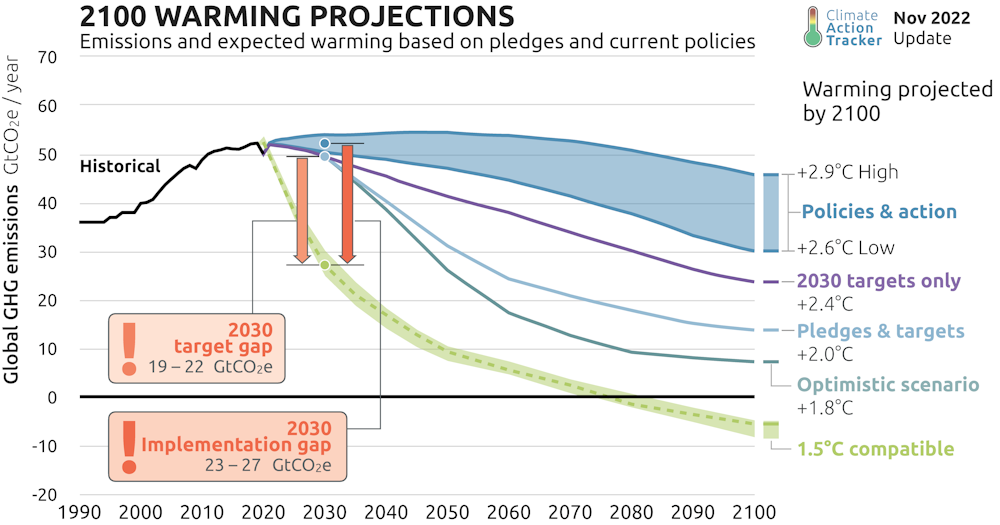
According to the 2020 United Nations Environment Programme (UNEP), with the current climate commitments of the Paris Agreement, global mean temperatures will likely rise by more than 3 °C by the end of the 21st century.
...
Countries determine themselves what contributions they should make to achieve the aims of the treaty. As such, these plans are called nationally determined contributions (NDCs).
...
In 2021, a study using a probabilistic model concluded that the rates of emissions reductions would have to increase by 80% beyond NDCs to likely meet the 2 °C upper target of the Paris Agreement, that the probabilities of major emitters meeting their NDCs without such an increase is very low. It estimated that with current trends the probability of staying below 2 °C of warming is 5% – and 26% if NDCs were met and continued post-2030 by all signatories.
...
The message from the above quotations is
1. The Paris Agreement is an attempt to limit climate change effects by keeping global mean (average) temperatures below 1.5C or 2C.
2. We are likely looking at global temperature rises between 2C and over 3C by the end of the century.
We are currently at 1.1 or 1.2C global mean temperature above pre-industrial levels. There are extreme climate events now never mind at 1.5, 2 or over 3C.
2022 saw record-breaking heat in UK while there were heatwaves and vast wildfires in North America, record-breaking temperatures and huge wildfires across France and Western Europe, huge drought followed by severe flooding in Pakistan, repeated flooding in Eastern Australia and currently East Africa is suffering the worst drought in decades.
We are in a climate crisis at 1.2C. The crisis is now.
The main cause of global warming is the use of fossil fuels. The best response to the climate crisis is to stop the use of fossil fuels as much as we possibly can and to transition to renewable sources of energy instead. This would also involve a programme of insulation to reduce the use of fossil fuels.
Politicians worldwide are neglecting to address the climate crisis in any meaningful way. The protest group Just Stop Oil is calling for no new development of fossil fuels. Grant Shapps, UK's Secretary of State for Business, Energy and Industrial Strategy is so totally out of touch that he's not even familiar with Just Stop Oil's objectives:“I’ve no issue with people arguing for lower levels of petrol, gas or whatever other thing they want to campaign for usage, that is fine, that is one thing. But don’t go disrupting other people’s lives - it’s unacceptable, it’s illegal!”, the Business Secretary said.
Young people particularly should get active opposing climate destruction because it's fekking their futures and otherwise they're just going to keep on getting totally disregarded, shat on. Extreme weather events at 1.2C are so serious, 3C may well lead to extinction and next to nothing is being done to prevent it.
Some links - try searching for your own e.g. extreme weather events 2022
https://en.wikipedia.org/wiki/Paris_Agreement
Met Office: Unprecedented extreme heatwave (UK), July 2022Analysis: Africa’s unreported extreme weather in 2022 and climate changeOver 20,000 died in western Europe’s summer heatwaves, figures show
16/12/22 Climate Reality Check 2021
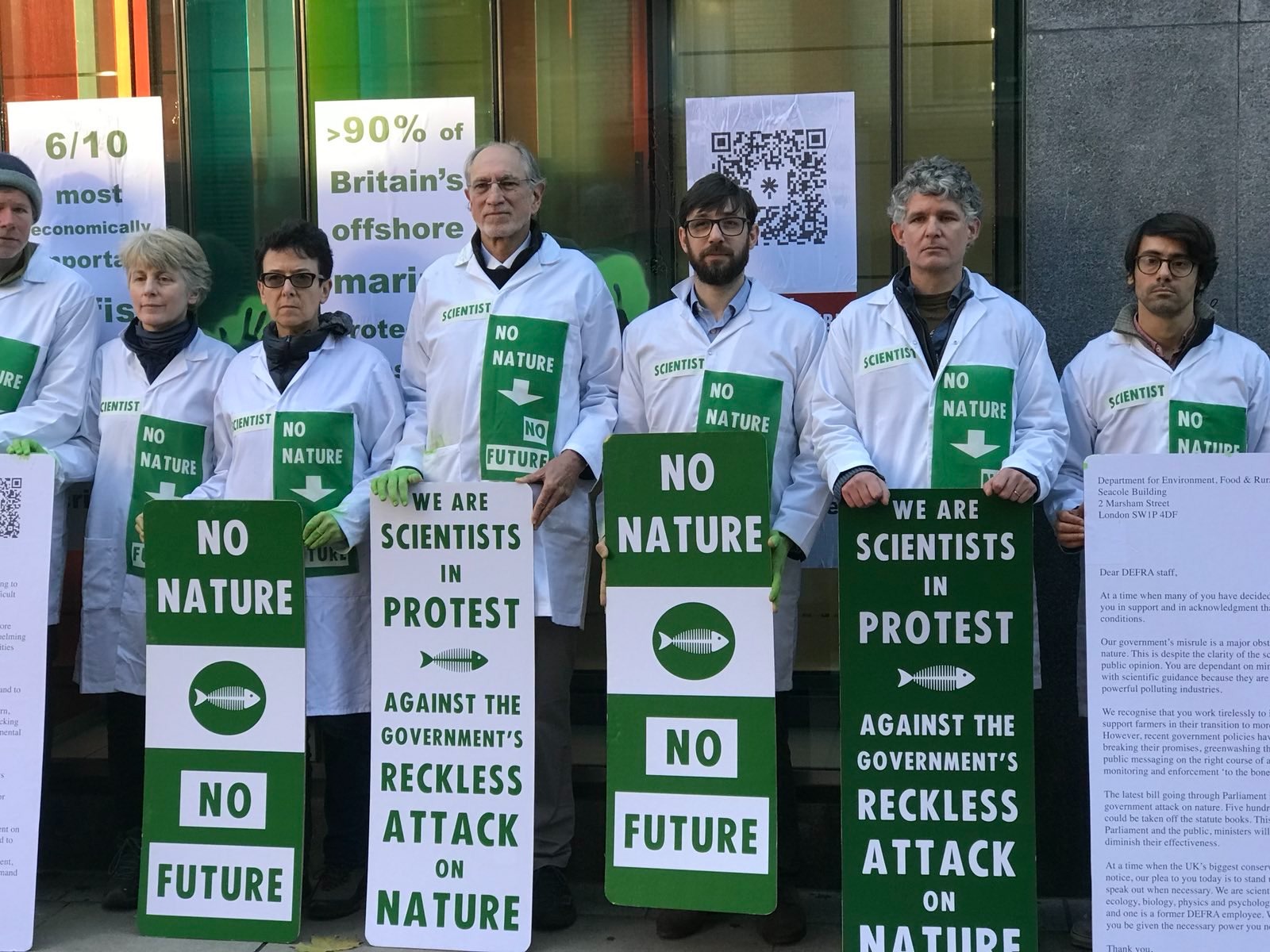
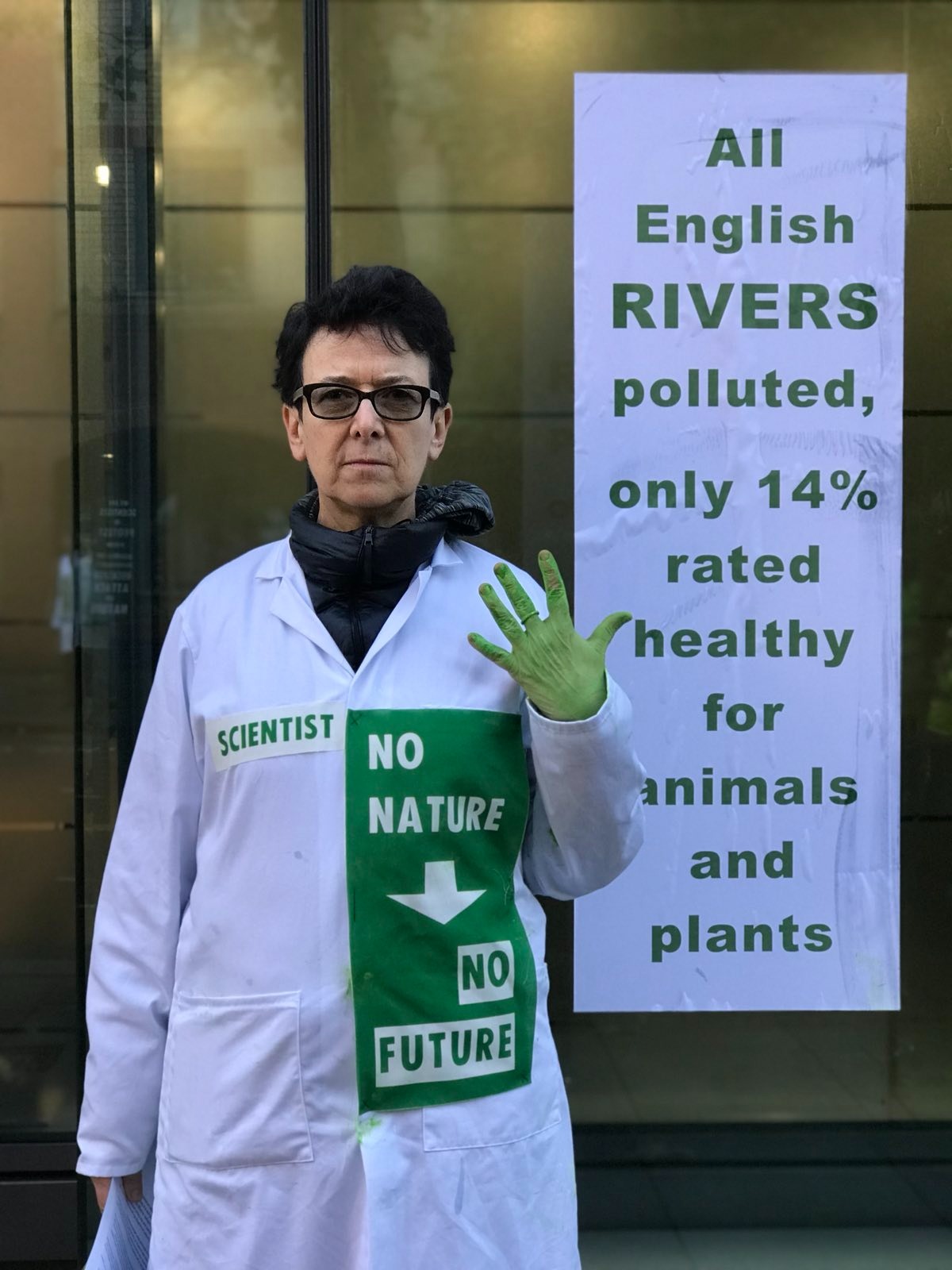
Scientists for Extinction Rebellion protest at the Department for Environment, Food & Rural Affairs (DEFRA) to highlight the state of nature in the UK and the failure of the government to protect it. The scientists who took part in the action and risked arrest included leading experts in ecology and conservation science who have previously worked for or advised Defra.
Scientists for Extinction Rebellion protest at DEFRA 25 November 2022. Image: Extinction Rebellion
The action comes just a few days before the start of a major UN biodiversity conference in Montreal, Canada where leaders will face the fact that the globe has failed to meet a single one of the Aichi goals for protecting nature agreed in 2010. This is at a time when scientists warn the world is facing unprecedented rates of biodiversity loss, with 1 million species now threatened with extinction worldwide.
Posters highlighted scientific evidence showing the dramatic recent decline in species and precious natural habitats like peatlands, wetlands and ancient forests, failure of government to deliver on commitments and the threat posed by new government actions intended to scrap existing protection measures.
Scientists for Extinction Rebellion protest at DEFRA 25 November 2022. Image: Extinction Rebellion
Scientists for Extinction Rebellion made clear that the protest was not directed at DEFRA employees, acknowledging that they are doing a crucial job in difficult conditions. Public funding for nature protection has seen a one third cut in real terms in just the last 5 years. DEFRA employees and their scientific advisors are being prevented by government from doing their job.
Scientists for Extinction Rebellion protest at DEFRA 25 November 2022. NB: Marine-protected areas bottom-trawled. Image: Extinction Rebellion
Quotes from the scientists who took part in the action:
Professor Jeff Waage OBE, an ecologist and former member of Defra’s Science Advisory Committee, said: “Ours is one of the most nature-depleted countries in the world. The Government has made commitments to address this dire situation, based on excellent scientific advice, but it is failing profoundly to deliver on these.
“Further, it is misleading the public, claiming for instance that it is close to its target of protecting 30% of England for nature by 2030, when the true level is currently about 5%. Adding to this its recent failure to meet legal deadlines to set targets for clean water and nature recovery, it is clear to me that this Government is not taking its commitments seriously. Critical nature recovery in the UK is being actively delayed, avoided and undermined. Habitat- and species-loss looms large, and nature-loving citizens need to hear the truth. That is why I am here today.”
Dr Laura Thomas-Walters, a conservation social scientist, said: “I left my job as a senior analyst at Defra this year because I felt I had no opportunity to make real change. I worked with wonderful colleagues, smart scientists, but we were stymied by a lack of ministerial support. Civil servants are there to serve at the discretion of their ministers, and without buy-in from the Government we couldn’t work on vital issues.
“Biodiversity loss is just as big a threat as climate breakdown – we are racing at breakneck speed into an environmental catastrophe, and the ministers are the ones cutting the brakes. I left Government so I could speak up, to finally demand the change we need.“
Dr Ryan Walker, an ecologist and conservation biologist, said:“During my lifetime I have watched the decline of once numerous species such as lapwing, curlew and hedgehogs, descend to critically low numbers in this country. Tragically, our government’s response to this biodiversity crisis is a proposal that threatens 570 pieces of legislation specifically protecting nature and our natural environment. Our habitats and environmental legislation desperately needs strengthening, not disregarding as this Government is proposing. Healthy, and functioning ecosystems are essential to our food security and the clean water and air that we all depend upon.
“We are here as a coalition of scientists, to demand unequivocally that this Government takes its commitments to nature protection seriously, this is now a matter of survival, without nature there is no future”
Republished from Common Dreams under Creative Commons (CC BY-NC-ND 3.0). Feel free to republish and share widely.
“We will not stop telling the truth about the Thanksgiving story and what happened to our ancestors,” says Kisha James, whose grandfather founded the National Day of Mourning in 1970.
The United American Indians of New England and allies gathered at noon Thursday at Cole’s Hill in Plymouth, Massachusetts for the 53rd National Day of Mourning—an annual tradition that serves as “a day of remembrance and spiritual connection, as well as a protest against the racism and oppression that Indigenous people continue to experience worldwide.”
“It has continued for all these years as a powerful demonstration of Indigenous unity and of the unity of all people who speak truth to power.”
“We don’t have any issues with people sitting down with their family and giving thanks,” Kisha James—who is an enrolled member of the Wampanoag Tribe of Gay Head (Aquinnah) and is also Oglala Lakota—toldBBC. “What we do object to is the Thanksgiving mythology.”
In a Thursday speech, James—whose grandfather founded the National Day of Mourning in 1970—challenged the lies of “mythmakers” and history books, instead highlighting “genocide, the theft of our lands, the destruction of our traditional ways of life, slavery, starvation, and never-ending oppression.”
“When people celebrate the myth of Thanksgiving, they are not only erasing our genocide but also celebrating it. We did not simply fade into the background as the Thanksgiving myth says. We have survived and flourished. We have persevered,” she declared.
#Thanksgiving should be a day of remembrance and reflection on the history of the genocide, violent assimilation, and marginalization of #NativePeoples throughout US history.
“That first Day of Mourning in 1970 was a powerful demonstration of Native unity,” she said, “and it has continued for all these years as a powerful demonstration of Indigenous unity and of the unity of all people who speak truth to power.”
James noted that “many of the conditions that prevailed in Indian Country in 1970 still prevail today,” pointing to life expectancy, suicide, and infant mortality rates—along with the rising death rate for Native women—and taking aim at racism and “the oppression of a capitalist system which forces people to make a bitter choice between heating and eating.”
“And we will continue to gather on this hill until we are free from the oppressive system; until corporations and the U.S. military stop polluting the Earth; until we dismantle the brutal apparatus of mass incarceration,” James vowed.
“We will not stop,” she said, “until the oppression of our LGBTQ siblings is a thing of the past; until unhoused people have homes; until human beings are no longer locked in cages at the U.S. border despite the fact that no one is illegal on stolen land; until Palestine is free; until no person goes hungry or is left to die because they have little or no access to quality healthcare; until insulin is free; until union-busting is a thing of the past; until then, the struggle will continue.”
Writing about the annual event for The Lily last year, James explained that “my grandfather was heroic, and I am proud to be his granddaughter and help lead UAINE as we continue our work. But I also have noticed over the years, and especially while going through old newspaper clippings, that for decades the media often focused solely on the men as spokespeople and organizers of National Day of Mourning.”
She continued:
In recent years, my mother and I have worked to ensure that women’s voices, as well as those of two-spirit and LGBTQ people, are amplified at the National Day of Mourning. When I look at the Line 3 struggle or at the Indigenous people who were on the streets in Glasgow demanding climate justice, I see Indigenous people of all ages, and especially women and two-spirit leaders, as part of a continuum of resistance leading into the future.
Women have long been at the center of Indigenous activism, and are respected and revered within many traditional Indigenous cultures as leaders and culture-bearers—even if they were silenced by settlers. That’s why it’s crucial for our voices to be amplified within modern-day movements, especially because settler-colonial violence continues to disproportionately impact women, as evidenced by the ongoing epidemic of Missing and Murdered Indigenous Women in the United States and Canada.
James pledged that “we will not stop telling the truth about the Thanksgiving story and what happened to our ancestors.”
We remind our Indigenous relatives that today our traditional values of ceremony, gratitude, and deep relationships to food, land, and water are upheld despite the mistruths and colonizer holiday of Thanksgiving. ✊🏽🪶 pic.twitter.com/hwJpPIwyiw
The gathering in Massachusetts was not the only annual Indigenous-led event held Thursday.
Lakota historian Nick Estes—a citizen of the Lower Brule Sioux Tribe, co-founder of the Red Nation, and author of the book Our History Is the Future—tweeted: “On the East Coast, there is the National Day of Mourning. On the West Coast, today is marked by a sunrise ceremony to commemorate the Alcatraz Island takeover by the Indians of All Tribes in 1969.”
On the east coast, there is the National Day of Mourning. On the west coast, today is marked by a sunrise ceremony to commemorate the Alcatraz Island takeover by the Indians of All Tribes in 1969. Learn more about that history from LaNada War Jack who was there leading it. https://t.co/Hj3UYH06DXpic.twitter.com/y8SL4YGmdm
“The reclaiming of Alcatraz… I call it one of the original ‘land back’ movements,” Morning Star Gali, the community liaison coordinator for the International Indian Treaty Council (IITC), toldAxios. “Alcatraz represented the lack of housing, the lack of education, the lack of having access to healthy food and clean water. None of that existed on the island.”
The purpose of the 43rd annual Indigenous Peoples Thanksgiving Sunrise Gathering on Alcatraz Island, Ohlone Territory—hosted by IITC—is “to celebrate our resilience, resistance, and survival and to affirm truth in history,” Gali wrote earlier this week for the San Francisco Examiner.
According to Gali:
Many Americans prefer a skewed retelling of Thanksgiving over the painful and shameful truth, because viewing the Day of Mourning through the lens of tribal people challenges their role in the continuing colonization of Native people in the United States and around the world. This includes appropriation of lands and resources, strategic disempowerment, and dehumanization of Indigenous people.
During the fall-themed holiday, the average American consumes 3,000 calories in celebration of an abundance of resources, while at the same time a recent study by the Native American Agricultural Fund found that 56% of Native people reported food insecurity during the pandemic. Many tribal nations in rural reservations have been designated as “food deserts” with lack of access to affordable, healthy, and traditional foods, resulting in diabetes and other poor health outcomes. Thanksgiving is the embodiment of Eurocentrism, overindulgence, and complete disregard for the trauma and lived experiences of Indigenous people.
“Today, Native people are disproportionately incarcerated in comparison to other racial and ethnic groups—double the incarceration of whites. Criminalization and confinement of Native people, Native women and youth in particular, is as American as apple pie,” she added. “To gather diverse people and cultures in Indigenous-led prayer and solidarity on the island turns the notion of colonial Thanksgiving on its head and asserts the interconnection and resilience of Indigenous people, cultures, and lands.”
Republished from Common Dreams under Creative Commons (CC BY-NC-ND 3.0). Feel free to republish and share widely.
Rapid and drastic cuts to global greenhouse gas emissions are necessary to curb warming and prevent the most dire climate scenarios from becoming reality.
But a new study released Friday by the Global Carbon Project finds “no sign of the decrease that is urgently needed” as emissions remain at record levels this year, with fossil fuel giants and governments plowing ahead with new extraction efforts that could push critical climate targets out of reach.
Scientists with the Global Carbon Project estimate that total CO2 emissions will reach 40.6 billion tonnes this year—driven by rising pollution from fossil fuels—and will likely continue to rise in 2023 without bold action from policymakers worldwide.
“If current emissions levels persist, there is now a 50% chance that global warming of 1.5°C will be exceeded in nine years,” the researchers note. “Projected emissions from coal and oil are above their 2021 levels, with oil being the largest contributor to total emissions growth.”
“The 2022 picture among major emitters is mixed: emissions are projected to fall in China (0.9%) and the E.U. (0.8%), and increase in the USA (1.5%) and India (6%), with a 1.7% rise in the rest of the world combined,” the report finds.
The Global Carbon Budget 2022 is out now. It's the work of over 100 scientists around the world. Get the facts and figures that tell the truth about climate action: https://t.co/ySsv2yT95X#COP27pic.twitter.com/I7JLYLVZec
Professor Pierre Friedlingstein of Exeter’s Global Systems Institute, the lead author of the new study, lamented in a statement that “we see yet another rise in global fossil CO2 emissions” in 2022 “when we need a rapid decline.”
“There are some positive signs,” Friedlingstein added, pointing to the slowing growth of fossil fuel emissions over the long term, “but leaders meeting at COP27 will have to take meaningful action if we are to have any chance of limiting global warming close to 1.5°C.”
That increasingly imperiled warming target remains a focus as world leaders gather in Sharm El-Sheikh, Egypt for the annual United Nations climate conference, a key opportunity for nations to commit to collective action against a climate emergency that is wreaking havoc worldwide.
Climate campaigners warn the opportunity is at risk of being squandered as Big Oil lobbyists swarm the conference and gas producers use the event to push their dirty energy source as a “transition fuel.”
Professor Corinne Le Quéré of the University of East Anglia, a co-author of the Global Carbon Project study, said that if governments respond to worsening climate chaos “by turbocharging clean energy investments and planting, not cutting, trees, global emissions could rapidly start to fall.”
“We are at a turning point and must not allow world events to distract us from the urgent and sustained need to cut our emissions to stabilize the global climate and reduce cascading risks,” Le Quéré warned.
Allowing planetary heating to exceed 1.5°C above preindustrial levels by the end of the century would spell disaster for large swaths of the planet as trends already seen around the world—from increasingly extreme weather events to species extinctions to rapidly melting sea ice—would accelerate, potentially locking in irreversible climate damage.
Professor Mark Maslin of University College London toldThe Guardian that the Global Carbon Project study is “deeply depressing.”
“It sends a clear message to the leaders at COP27—the world needs to have significant cuts in global emissions in 2023 if we are to have any chance to keep climate change to 1.5°C,” said Maslin.
Republished from Common Dreams under Creative Commons (CC BY-NC-ND 3.0). Feel free to republish and share widely.
Part of the problem was evident at COP27, the United Nations climate conference in Egypt.
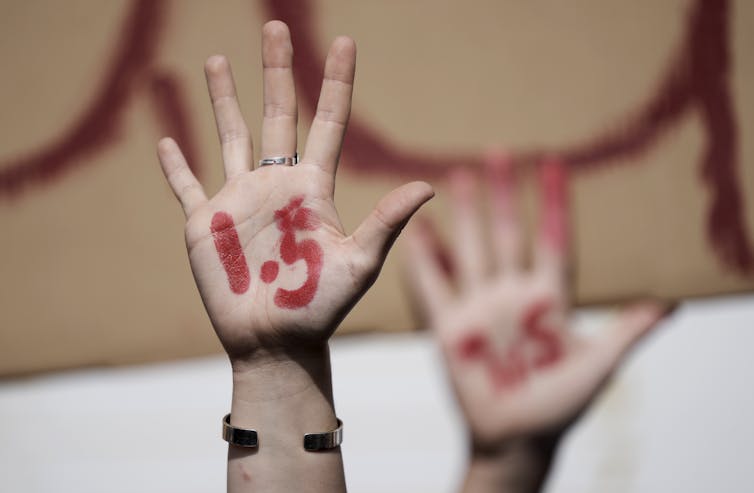
While nations’ climate negotiators were successfully fighting to “keep 1.5 alive” as the global goal in the official agreement, reached Nov. 20, 2022, some of their countries were negotiating new fossil fuel deals, driven in part by the global energy crisis. Any expansion of fossil fuels – the primary driver of climate change – makes keeping warming under 1.5 C (2.7 Fahrenheit) compared to pre-industrial times much harder.
Attempts at the climate talks to get all countries to agree to phase out coal, oil, natural gas and all fossil fuel subsidies failed. And countries have done little to strengthen their commitments to cut greenhouse gas emissions in the past year.
But all signs now point toward a scenario in which the world will overshoot the 1.5 C limit, likely by a large amount. The World Meteorological Organization estimates global temperatures have a 50-50 chance of reaching 1.5C of warming, at least temporarily, in the next five years.
There is consensusamong climate scientists, myself included, that 1.5 C of global warming is a threshold beyond which humankind would dangerously interfere with the climate system. https://ourworldindata.org/grapher/temperature-anomaly?time=earliest..latest
We know from the reconstruction of historical climate records that, over the past 12,000 years, life was able to thrive on Earth at a global annual average temperature of around 14 C (57 F). As one would expect from the behavior of a complex system, the temperatures varied, but they never warmed by more than about 1.5 C during this relatively stable climate regime.
Today, with the world 1.2 C warmer than pre-industrial times, people are already experiencing the effects of climate change in more locations, more forms and at higher frequencies and amplitudes.
Climate model projections clearly show that warming beyond 1.5 C will dramatically increase the risk of extreme weather events, more frequent wildfires with higher intensity, sea level rise, and changes in flood and drought patterns with implications for food systems collapse, among other adverse impacts. And there can be abrupt transitions, the impacts of which will result in major challenges on local to global scales. https://www.youtube.com/embed/MR6-sgRqW0k?wmode=transparent&start=0 Tipping points: Warmer ocean water is contributing to the collapse of the Thwaites Glacier, a major contributor to sea level rise with global consequences.
Steep reductions and negative emissions
Meeting the 1.5 goal at this point will require steep reductions in carbon dioxide emissions, but that alone isn’t enough. It will also require “negative emissions” to reduce the concentration of carbon dioxide that human activities have already put into the atmosphere.
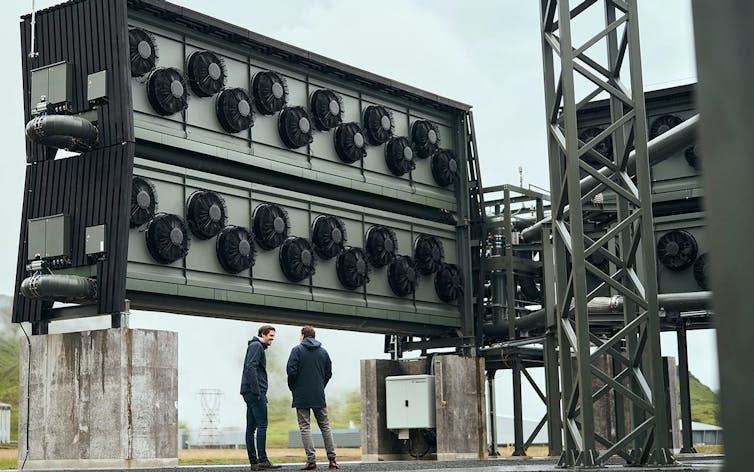
Carbon dioxide lingers in the atmosphere for decades to centuries, so just stopping emissions doesn’t stop its warming effect. Technology exists that can pull carbon dioxide out of the air and lock it away. It’s still only operating at a very small scale, but corporate agreements like Microsoft’s 10-year commitment to pay for carbon removed could help scale it up.
A report in 2018 by the Intergovernmental Panel on Climate Change determined that meeting the 1.5 C goal would require cutting carbon dioxide emissions by 50% globally by 2030 – plus significant negative emissions from both technology and natural sources by 2050 up to about half of present-day emissions.
A direct air capture project in Iceland stores captured carbon dioxide underground in basalt formations, where chemical reactions mineralize it. Climeworks
A recent report by the United Nations Environment Program highlights the shortfalls. The world is on track to produce 58 gigatons of carbon dioxide-equivalent greenhouse gas emissions in 2030 – more than twice where it should be for the path to 1.5 C. The result would be an average global temperature increase of 2.7 C (4.9 F) in this century, nearly double the 1.5 C target.
Given the gap between countries’ actual commitments and the emissions cuts required to keep temperatures to 1.5 C, it appears practically impossible to stay within the 1.5 C goal.
Global emissions aren’t close to plateauing, and with the amount of carbon dioxide already in the atmosphere, it is very likely that the world will reach the 1.5 C warming level within the next five to 10 years.
With current policies and pledges, the world will far exceed the 1.5 C goal. Climate Action Tracker
How large the overshoot will be and for how long it will exist critically hinges on accelerating emissions cuts and scaling up negative emissions solutions, including carbon capture technology.
At this point, nothing short of an extraordinary and unprecedented effort to cut emissions will save the 1.5 C goal. We know what can be done – the question is whether people are ready for a radical and immediate change of the actions that lead to climate change, primarily a transformation away from a fossil fuel-based energy system.