6 reasons why global temperatures are spiking right now

Andrew King, The University of Melbourne
The world is very warm right now. We’re not only seeing record temperatures, but the records are being broken by record-wide margins.
Take the preliminary September global-average temperature anomaly of 1.7°C above pre-industrial levels, for example. It’s an incredible 0.5°C above the previous record.
So why is the world so incredibly hot right now? And what does it mean for keeping our Paris Agreement targets?
Here are six contributing factors – with climate change the main reason temperatures are so high.
1. El Niño
One reason for the exceptional heat is we are in a significant El Niño that is still strengthening. During El Niño we see warming of the surface ocean over much of the tropical Pacific. This warming, and the effects of El Niño in other parts of the world, raises global average temperatures by about 0.1 to 0.2°C.
Taking into account the fact we’ve just come out of a triple La Niña, which cools global average temperatures slightly, and the fact this is the first major El Niño in eight years, it’s not too surprising we’re seeing unusually high temperatures at the moment.
Still, El Niño alone isn’t enough to explain the crazily high temperatures the world is experiencing.
2. Falling pollution
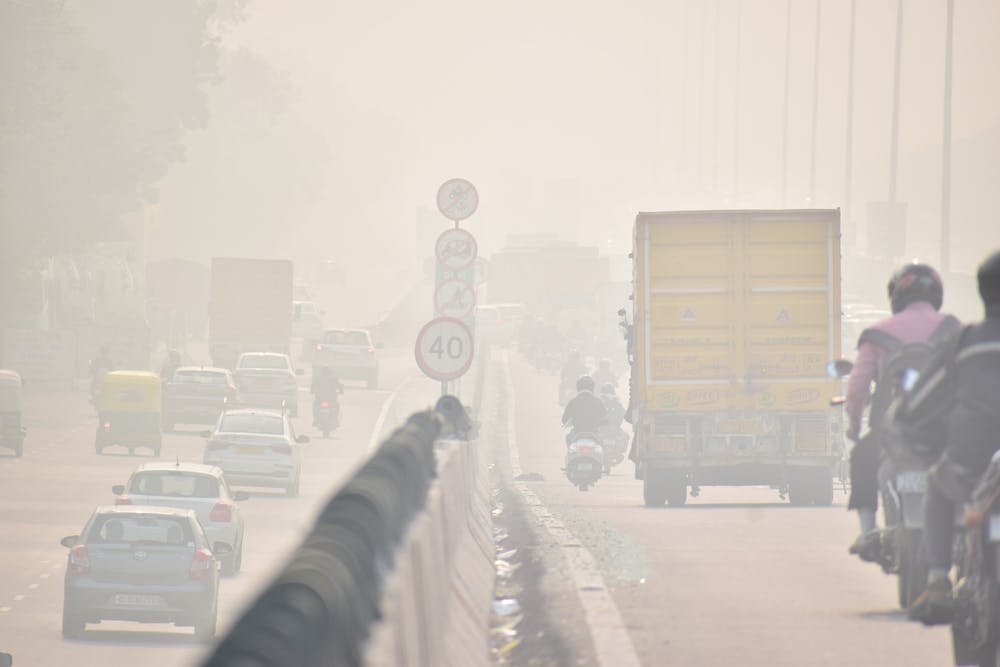
Air pollution from human activities cools the planet and has offset some of the warming caused by humanity’s greenhouse gas emissions. There have been efforts to reduce this pollution – since 2020 there has been an international agreement to reduce sulphur dioxide emissions from the global shipping industry.
It has been speculated this cleaner air has contributed to the recent heat, particularly over the record-warm north Atlantic and Pacific regions with high shipping traffic.
It’s likely this is contributing to the extreme high global temperatures – but only on the order of hundredths of a degree. Recent analysis suggests the effect of the 2020 shipping agreement is about an extra 0.05°C warming by 2050.
Shutterstock
3. Increasing solar activity
While falling pollution levels mean more of the Sun’s energy reaches Earth’s surface, the amount of the energy the Sun emits is itself variable. There are different solar cycles, but an 11-year cycle is the most relevant one to today’s climate.
The Sun is becoming more active from a minimum in late 2019. This is also contributing a small amount to the spike in global temperatures. Overall, increasing solar activity is contributing only hundredths of a degree at most to the recent global heat.
4. Water vapour from Hunga Tonga eruption
On January 15 2022 the underwater Hunga Tonga–Hunga Haʻapai volcano erupted in the South Pacific Ocean, sending large amounts of water vapour high up into the upper atmosphere. Water vapour is a greenhouse gas, so increasing its concentration in the atmosphere in this way does intensify the greenhouse effect.
Even though the eruption happened almost two years ago, it’s still having a small warming effect on the planet. However, as with the reduced pollution and increasing solar activity, we’re talking about hundredths of a degree.
5. Bad luck
We see variability in global temperatures from one year to the next even without factors like El Niño or major changes in pollution. Part of the reason this September was so extreme was likely due to weather systems being in the right place to heat the land surface.
When we have persistent high-pressure systems over land regions, as seen recently over places like western Europe and Australia, we see local temperatures rise and the conditions for unseasonable heat.
As water requires more energy to warm and the ocean moves around, we don’t see the same quick response in temperatures over the seas when we have high-pressure systems.
The positioning of weather systems warming up many land areas coupled with persistent ocean heat is likely a contributor to the global-average heat too.
6. Climate change
By far the biggest contributor to the overall +1.7°C global temperature anomaly is human-caused climate change. Overall, humanity’s effect on the climate has been a global warming of about 1.2°C.
The record-high rate of greenhouse gas emissions means we should expect global warming to accelerate too.
While humanity’s greenhouse gas emissions explain the trend seen in September temperatures over many decades, they don’t really explain the big difference from last September (when the greenhouse effect was almost as strong as it is today) and September 2023.
Much of the difference between this year and last comes back to the switch from La Niña to El Niño, and the right weather systems in the right place at the right time.
The upshot: we need to accelerate climate action
September 2023 shows that with a combination of climate change and other factors aligning we can see alarmingly high temperatures.
These anomalies may appear to be above the 1.5°C global warming level referred to in the Paris Agreement, but that’s about keeping long-term global warming to low levels and not individual months of heat.
But we are seeing the effects of climate change unfolding more and more clearly.
The most vulnerable are suffering the biggest impacts as wealthier nations continue to emit the largest proportion of greenhouse gases. Humanity must accelerate the path to net zero to prevent more record-shattering global temperatures and damaging extreme events.
Andrew King, Senior Lecturer in Climate Science, The University of Melbourne
This article is republished from The Conversation under a Creative Commons license. Read the original article.
Gas Executive ‘Lobbying to Slow Climate Action’ At Labour Party Conference
Original article by Phoebe Cooke republished from DeSmog.
Tony Ballance from Cadent told the Labour conference to ignore scientific studies that show the limitations of hydrogen for heating.
LIVERPOOL – A senior executive at the UK’s largest gas distributor has been accused of lobbying to slow down climate action after pushing for the use of hydrogen in heating at a Labour Party conference panel on net zero.
Tony Ballance, Cadent’s chief strategy and regulation officer, told a packed event on Monday to ignore a growing body of scientific evidence that finds the fuel to be expensive, resource intensive and inefficient at heating homes.
Emails previously revealed by DeSmog show how the hydrogen lobby is now targeting Labour – which has been hosting its annual conference in Liverpool since Sunday – as the party most likely to win the next general election.
Cadent, the sponsor of the New Statesman event that hosted Ballance, distributes gas to 11 million homes and businesses in the UK. Gas boilers are used to heat around 85 percent of UK homes, which together produce 14 percent of the UK’s greenhouse gas emissions.
The rapid roll-out of electricity-powered heat pumps to replace gas heating is seen as essential for the UK to reach net zero targets by 2050. Hydrogen, while widely seen as important for decarbonising industrial processes such as steel and concrete manufacture, is not seen by the vast majority of scientists to have a major future role in heating homes.
The gas industry has championed hydrogen as a replacement for gas in heating, arguing that it can easily replace existing methane gas and can use existing pipelines to transport and store the fuel.
However, a study published this year found heat pumps to be two to three times more efficient than oil and gas based fossil heating systems, even in cold and sub-zero temperatures. It is one of over 40 studies that find hydrogen should only ever play a “limited and complementary role” in heating.
Addressing a question from DeSmog about whether Cadent had taken these studies into account, Ballance claimed that the evidence was “limited”, and encouraged policymakers to consult “more authoritative sources” – such as gas boiler manufacturers.
DeSmog previously revealed that a major gas industry group had paid a PR firm to drum up opposition to heat pumps in the UK press – and promote hydrogen instead.
In response to Ballance’s claim at the Labour Party conference, Richard Lowes, a heating specialist at the Regulatory Assistance Project (RAP), accused Cadent of lobbying “to protect their investment and slow down climate action”.
“This is all about lobbying MPs to try and convince them that gas has a future, when the evidence shows it doesn’t,” Lowes told DeSmog.
“The more we learn about using hydrogen for heating, the worse the evidence gets: it is more expensive, extremely inefficient and unsustainable. Together these make it seem very unlikely it will come to anything.”
‘Twee’ Argument
Cadent was one of two gas networks to win a government contract to trial hydrogen for home heating ahead of the government’s decision on the policy, expected in 2026. But plans for the village of Whitby in Cheshire were scrapped in July after a sustained local campaign, which raised concerns over the safety of hydrogen in homes.
In response, then Energy Secretary Grant Shapps indicated that the government was poised to drop plans to replace home gas boilers with hydrogen alternatives.
However, the gas industry is still pushing for a role for hydrogen. Ballance said: “Now as many of you know, there was considerable opposition to the [Whitby] trial… not helped by an anti-hydrogen lobby coming to town, whipping up the anti-hydrogen campaign.”
Despite the considerable and sustained concerns over the safety and environmental impact of hydrogen, Ballance said there “wasn’t opposition” to hydrogen in Whitby – rather, “it was opposition to being forced” into the trial.
In answer to DeSmog’s question about scientific studies showing the inefficiency of hydrogen for heating, Ballance said: “Frankly.. When you scratch the surface.. Frankly it doesn’t pass.”
He said: “You [should] talk to the boiler manufacturers who have the technology and they’re looking at this. You have to scratch below the surface rather than someone just counting up studies and wanting to see things in studies that are actually sometimes misrepresented. It’s about not seeing this [hydrogen versus heat pumps debate] as some kind of twee argument and being really serious about this.”
An investigation by DeSmog found that the Energy and Utilities Alliance (EUA), which represents the vast majority of the UK’s gas boiler manufacturers and distributors – including Cadent – had paid for an extensive negative PR campaign to “spark outrage” against heat pumps in the British press.
Along with other regional gas distributors, Cadent has been advocating for hydrogen via a campaign called Hello Hydrogen, which was launched in October 2022 to “raise awareness of hydrogen gas for heating our homes and calling on the government to commit to a hydrogen future”.
At the event on Monday, Ballance also argued that some of the scientific studies “were in Brazil and California, where it’s not surprising – gas is not going to be the preferred source of heating in much hotter, different countries”.
Richard Lowes told DeSmog that while not all of the studies covered by the academic analysis referred to the UK, many of them do.
“The same outcomes from around the world show that hydrogen will have a limited role in heating and that should reinforce what a terrible idea it is,” he said.
“To my knowledge, no UK study [which is] based on hitting the UK’s net zero climate targets, has ever shown anything more than a marginal role for hydrogen.”
Original article by Phoebe Cooke republished from DeSmog.