Was the freak ‘medicane’ storm that devastated Libya a glimpse of North Africa’s future?

Spread the love

Mike Rogerson, Northumbria University, Newcastle; Belkasem Alkaryani, University of Tobruk, and Mahjoor Lone, Northumbria University, Newcastle

Storm Daniel landed on the Libyan coastal town of Toukrah in the early hours of September 10 and started moving east. Soon the wind was rising and heavy rain falling, forcing people to stay indoors. By afternoon the rain was clearly out of the ordinary.

Albaydah city on the coast would receive 80% of its annual rain before midnight, according to records from a local weather station that we have accessed. In less than 24 hours, thousands of people were dead, hundreds of thousands were missing, and towns and villages across Jebel Akhdar (the Green Mountain) in north-eastern Libya resembled a Hollywood disaster movie.

Storm Daniel was a Mediterranean cyclone or hurricane (a so-called medicane) which struck Greece, Bulgaria, Libya, Egypt and Turkey over the course of a week. Medicanes are not rare. Such large storms happen in this part of the world every few years. But Daniel has proved to be the deadliest.

At the time of writing, the World Health Organization estimates that at least 3,958 people have died across Libya as a result of the floods, with more than 9,000 people still missing.

Daniel was not an exceptionally big storm though. The medicane with the highest wind speeds was medicane Ianos in September 2020, which killed around four people and caused more than €224 million (£193 million) of damage. So what made Storm Daniel different?

Less frequent, but stronger

Like tropical cyclones, medicanes form in hot conditions at the end of summer. Most medicanes form to the west of the islands of Corsica and Sardinia. As they tend to strike the same regions each time, the people living in the western Mediterranean, southern Italy and western Greece, have built structures to deal with these storms and the occasional downpours they bring.

Daniel formed relatively far to the east and struck north-eastern Libya, which is rare. Dozens of people were killed in communities across Cyrenaica, the eastern portion of the country.

In the mountain gorge above the city of Derna, two dams failed in the middle of the night. Thousands of people, most of whom were asleep, are thought to have perished when the wave of water and debris swept down to the coast, destroying a quarter of the city.

A composite image of two aerial photographs of a city taken by satellite.
Derna, a city in eastern Libya, before and after Storm Daniel.
Google Earth/Holly Squire, CC BY

Since medicanes are formed in part by excess heat, events like this are highly sensitive to climate change. A rapid attribution study suggested greenhouse gas emissions made Daniel 50 times more likely.

Despite this, the sixth assessment report from the UN Intergovernmental Panel on Climate Change (IPCC) concluded that medicanes are becoming less frequent but larger. Storm Daniel suggests where medicanes form and make landfall might be more important than their frequency and size.

So does Libya need to brace itself for more of these events in the future than it has in the past, even if they affect the western Mediterranean less often?

Clues from the past

An important clue might lie deep underground, inside caves within north-eastern Libya. Although the caves are often dry today, they contain stalagmites which formed when rain passed through the soil, into the rock and dripped into the cave below thousands of years ago.

These rock formations attest to times in the past when this region was considerably wetter. The caves in Libya – and in Tunisia and Egypt too – form these stalagmites when the global climate is warm.

These bygone warm periods are not quite the same as the warm periods IPCC forecasts suggest modern climate change will usher in. But the way a hot world, a relatively ice-free Europe and North America and a wet northern Africa have regularly coincided in the past is striking. Striking and difficult to understand.
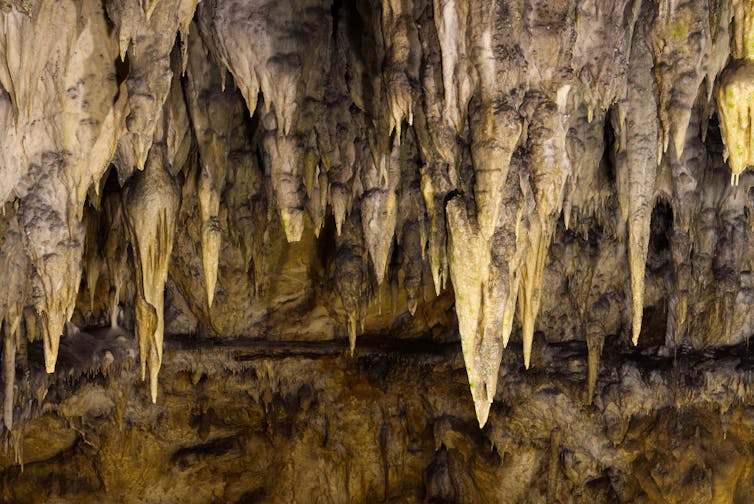
Pointed rocks hanging from a cave ceiling.
Stalagmites formed in the distant past contain clues about the ancient climate.
InFocus.ee/Shutterstock

That’s because the experiments that suggest medicanes will become less frequent as the climate warms belong to a pattern described by IPCC climate assessments, in which wet parts of the world are expected to get wetter and dry parts drier. So it is hard to understand why stalagmites tell us warmer periods in the past involved wetter conditions across the northern margin of the Sahara – one of the driest regions on Earth.

Fortunately, scientists can learn more from the way stalagmites sometimes grow imperfectly, leaving tiny blobs of water trapped between the crystals.

The stalagmite we recovered from Susah Cave on the outskirts of Libya’s Susah city, which was severely damaged in the storm, had quite a lot of water in it from wet periods dating to 70,000 to 30,000 years ago. The oxygen and hydrogen isotopes in this water are suggestive of rain drawn from the Mediterranean. This could indicate more medicanes were hitting the Libyan coast then.

Our finding that more rain was falling above Susah Cave during warm periods suggests we should get more storms hitting eastern Libya as the climate warms. This is not quite what the IPCC forecasts, with their prediction of fewer but larger storms, show.

But storm strength is measured in wind speed, not rainfall. The caves could well be recording an important detail of past storminess which we’re not yet able to forecast.

Are stalagmites warning us that North Africa must prepare for future medicanes shifting further east? Our ongoing research aims to answer that question.

The pattern of ancient desert margins receiving more rain during warm periods despite the “dry gets drier” pattern of global climate models is not unique to northern Africa but found around the world. Over millions of years, globally warm periods almost always correspond with smaller deserts in Africa, Arabia, Asia and Australia.

This “dryland climate paradox” is important to unravel. Understanding the differences between climate models and studies of ancient rain will be key to navigating the future as safely as possible.


Imagine weekly climate newsletter

Don’t have time to read about climate change as much as you’d like?

Get a weekly roundup in your inbox instead. Every Wednesday, The Conversation’s environment editor writes Imagine, a short email that goes a little deeper into just one climate issue. Join the 20,000+ readers who’ve subscribed so far.The Conversation


Mike Rogerson, Senior Lecturer in Earth System Science, Northumbria University, Newcastle; Belkasem Alkaryani, Lecturer in Geology, University of Tobruk, and Mahjoor Lone, Postdoctoral Research Associate in Palaeoclimatology, Northumbria University, Newcastle

This article is republished from The Conversation under a Creative Commons license. Read the original article.
Continue ReadingWas the freak ‘medicane’ storm that devastated Libya a glimpse of North Africa’s future?

One in six UK species threatened with extinction – here’s what we could lose (plus how to save them)

Spread the love
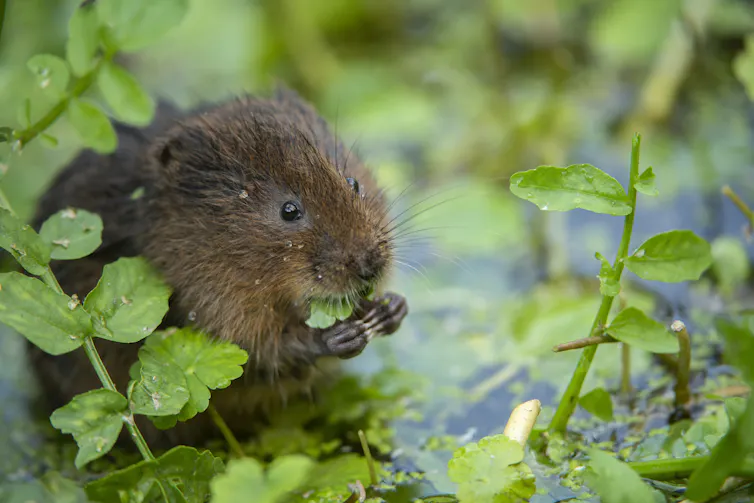
Water voles are endangered mammals in the British Isles.
Ben Andrew/RSPB

Richard Gregory, UCL

The UK is considered one of the most nature-depleted countries in the world. This is not surprising given its history of early industrialisation and agricultural intensification.

These islands have lost species and unique habitats have shrunk to tiny remnants. Nearly every landscape and view has transformed.

What is more surprising is that over the last 50 years or so, from when scientists started to collect information about biodiversity systematically, there has been no let-up in that downward slide.

More than 750 assessed species have declined by 19% on average since monitoring began in 1970. The losses continue despite the heroic efforts of many passionate people and organisations. Today, out of over 10,000 species assessed, 16% (1,500, or one in six) are threatened with extinction.

That is the sobering conclusion of the latest state of nature report, compiled by experts from over 60 of the top research and conservation organisations in the UK, using the latest and most accurate information about biodiversity on land, in freshwater, around the coast and in the ocean.

The evidence that species and habitats are being lost is clear. And yet, as the report shows, there has never been a better understanding of the state of nature and, importantly, what is needed to fix it.

Nature continues to decline

Everyone depends on nature for the things it provides for free: so-called ecosystem services like healthy food, materials, clean air and water. You could add human wellbeing, physical and mental health – and for many, inspiration, solace and joy.

There is cause to protect nature because it aligns with our values, from the moral responsibility we feel to future generations to the intrinsic worth we know nature has. These are all good reasons, but self-preservation is compelling.

The new report presents evidence on how and why nature is changing in the UK and in its four constituent countries. To do this, the authors analysed three measures: species abundance (the number of individuals), species distribution (the proportion of sites occupied) and national extinction risk.

These measures have been assessed for hundreds – and in some cases thousands – of species native to the UK. Our new findings are in line with previous reports (2013, 2016, 2019) in pointing to a pattern of continued biodiversity loss.

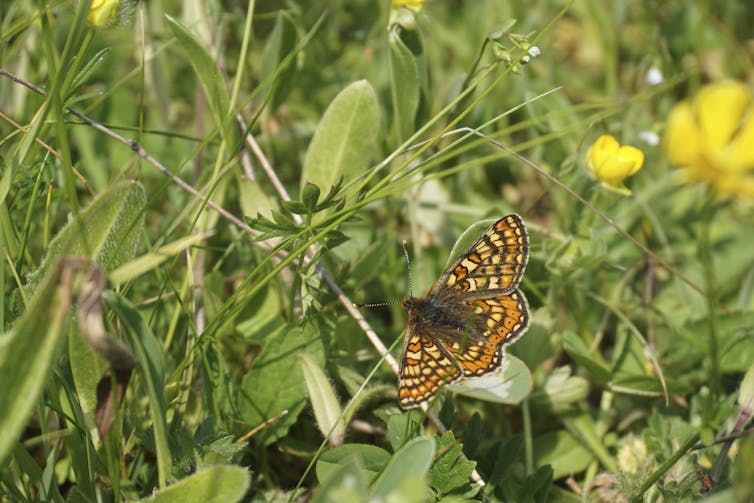
An orange and brown patterned butterfly among wildflowers.
The threatened marsh fritillary butterfly.
Patrick Cashman/RSPB

The new report’s key findings include:

  • The distributions of almost 5,000 invertebrate species have on average shrunk by 13% since 1970. Strong declines were seen in insect groups that perform key ecosystem functions, including pollinators (18% decrease) and pest controllers (34% decrease).
  • The distributions of 54% of flowering plant species and 59% of bryophytes (mosses and liverworts) have decreased across Britain since 1970. By comparison, only 15% and 26% of these groups have increased respectively.
  • The abundance of 13 species of seabird has fallen by an average of 24% in the UK since 1986. But these results pre-date an ongoing outbreak of Highly Pathogenic Avian Influenza, which has killed thousands of seabirds, some belonging to populations constituting the bulk of an entire species.
  • Roughly 2% of species (151) once found in the UK have disappeared. These include the great auk, Kentish plover, Norfolk damselfly, burbot and large copper butterfly.

The report shows that climate change – which is predominantly caused by burning fossil fuels – is among the biggest threats to wildlife in all ecosystems. The intensive way in which land is managed for farming (with the loss of hedgerows, farm ponds and scruffy margins and the increasing use of pesticides and fertilisers, as well as changes in crops and cropping patterns) is also a major driver of biodiversity loss, and contributes to climate change.

At sea, unsustainable fishing practices are a major factor. Added to these pressures on wildlife are invasive species, pollution and for some, such as birds of prey, persecution.

Solving all of these problems will involve several actions that can be joined up to support each other. This must be swift and extensive to be effective.

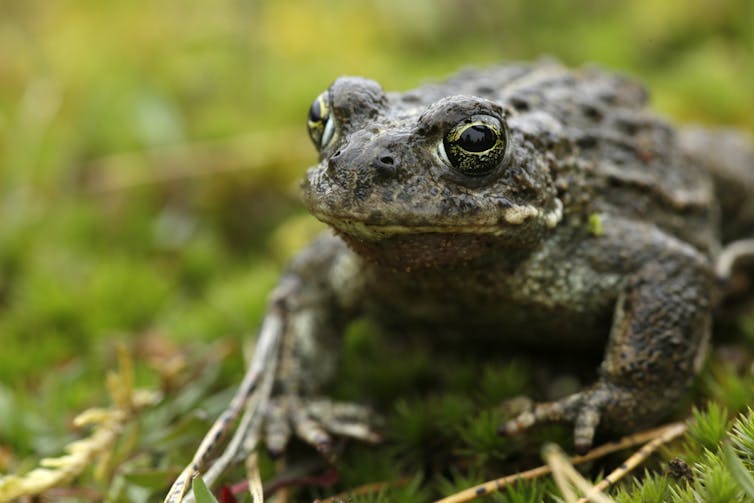
The report establishes what is known about the success or failure of conservation efforts. Fortunately, there are many success stories. Species like natterjack toads, Duke of Burgundy butterflies, bitterns, and large marsh grasshoppers have all benefited from bespoke conservation projects and are bouncing back.

A toad.
Natterjack toads cling on in a handful of shallow coastal pools.
Andy Hay/RSPB

Cairngorms Connect is the UK’s largest habitat restoration project, covering 60,000 hectares in the Scottish national park. It aims to restore native woodland, peatlands and rivers over the next 200 years. This is the scale at which conservationists need to operate in order to reverse nature’s decline.

Recovery by 2050?

It is only through the collective efforts of thousands of people, most of them volunteers, that we can report on the state of nature with such clarity and breadth. Without their enthusiasm, commitment and skill, we’d only have a sketchy understanding of how the environment is changing, and whether conservation efforts are making a difference.

The 2023 state of nature report is timely given the recent adoption of global targets to recover nature. The Convention on Biological Diversity’s new global framework, signed by nearly 200 countries in December 2022, aims to maintain, enhance, restore and expand ecosystems, reduce the number of species threatened with extinction and increase the abundance of native species by 2030, putting nature on a path to recovery by 2050.

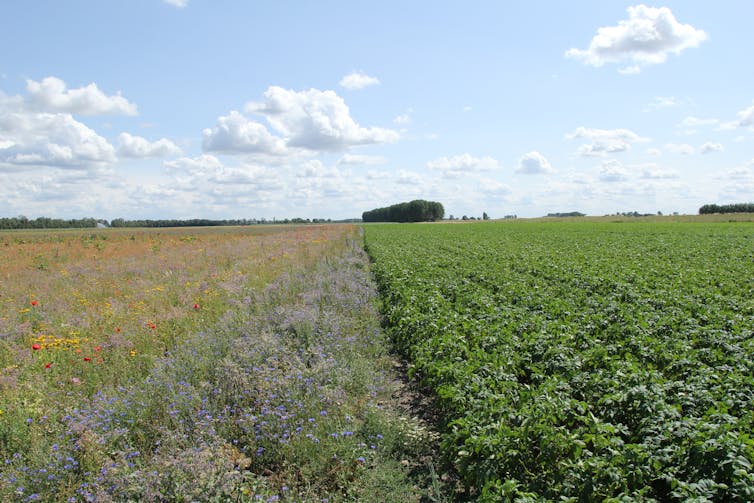
A farm field margin covered in wildflowers.
Restoring meadows on farmland could benefit pollinating insects.
Angel217/Shutterstock

To halt and reverse biodiversity loss in the UK, efforts to conserve and restore species and habitats must ramp up. But the underlying drivers of this loss must be addressed too, especially those attached to our food system.

That means making food production more sustainable and nature-friendly on land and at sea, and adjusting our diets to cut demand for products that drive the loss of nature, such as meat.

Nature-based solutions to climate change, such as restoring and protecting carbon-absorbing forests and wetlands in river catchments, or restoring coastal habitats, can also boost biodiversity if well designed (think saving two birds with one tree).

We have never had a better understanding of the state of nature and what is needed to fix it. Now we need action.


Imagine weekly climate newsletter

Don’t have time to read about climate change as much as you’d like?

Get a weekly roundup in your inbox instead. Every Wednesday, The Conversation’s environment editor writes Imagine, a short email that goes a little deeper into just one climate issue. Join the 20,000+ readers who’ve subscribed so far.The Conversation


Richard Gregory, Honorary Professor of Genetics, Evolution & Environment, UCL

This article is republished from The Conversation under a Creative Commons license. Read the original article.
Continue ReadingOne in six UK species threatened with extinction – here’s what we could lose (plus how to save them)

Train named after railway worker who overturned racist recruitment policy

Spread the love

https://morningstaronline.co.uk/article/train-named-after-railway-worker-who-overturned-racist-recruitment-policy

Maria Magdalena-Xavier (right) and Sheena Xavier stand next to an Avanti West Coast train named in honour of their father, Asquith Xavier, who overturned a racist recruitment policy, October 1, 2023

A TRAIN has been named after a railway worker who overturned a racist recruitment policy, to reflect his “incredible legacy,” Avanti West Coast said today.

In 1966, Asquith Xavier successfully fought against a decision not to employ him as a guard at London’s Euston station because of his ethnicity.

The unofficial policy was known as the colour bar.

Avanti West Coast has now named one of its Pendolino trains after Xavier.

https://morningstaronline.co.uk/article/train-named-after-railway-worker-who-overturned-racist-recruitment-policy

Continue ReadingTrain named after railway worker who overturned racist recruitment policy

Cop28 president-designate hits back at critics even as his company increases oil drilling investments

Spread the love

https://morningstaronline.co.uk/article/cop28-president-designate-hits-back-at-critics-even-as-his-company-increases-oil-drilling-investments

THE Emirati president-designate for the upcoming United Nations Cop28 climate conference hit back on Saturday at critics of his appointment, even as the firm he leads increases investment in fossil fuel extraction.

Climate activists have roundly criticised Sultan al-Jaber’s appointment as the president-designate of the talks because he serves as the CEO of the Abu Dhabi National Oil Company.

But Mr Jaber dismissed the critics as people who “just go on the attack without knowing anything, without knowing who we are.”

Speaking to an audience in the UAE capital Abu Dhabi, Mr Jaber pointed to his 20 years of work on renewable energy as a sign that he and the Emirates represent the best chance to reach a consensus to address climate change worldwide.

Although Mr Jaber, a trusted confidant of UAE leader Sheikh Mohammed bin Zayed al-Nahyan, has been behind tens of billions of dollars spent or pledged toward renewable energy, he also leads an oil company that extracts some four million barrels of crude every day.

https://morningstaronline.co.uk/article/cop28-president-designate-hits-back-at-critics-even-as-his-company-increases-oil-drilling-investments

Continue ReadingCop28 president-designate hits back at critics even as his company increases oil drilling investments

Former prime minister wins Slovakia’s elections pledging to end military support for Ukraine

Spread the love

https://morningstaronline.co.uk/article/former-prime-minister-wins-slovakia-elections-pledging-to-end-military-support-for-ukraine

FORMER Slovak prime minister Robert Fico and his left-wing Smer (Direction) party came first in the country’s parliamentary elections today after campaigning on a pro-Russian and anti-US message.

Mr Fico and his party got more than 23 per cent of the vote, with the pro-West Progressive Slovakia party second with 18 per cent and the left-wing Hlas (Voice) party third with 15 per cent.

The Hlas party, led by Mr Fico’s former deputy in Smer, Peter Pellegrini, alongside the pro-Russian Slovak National Party, which received 5.7 per cent, would have a parliamentary majority if they joined forces in a coalition government.

Slovakia has backed Ukraine since Russia invaded last February, donating arms and opening the borders for refugees fleeing the war.

During the election campaign Mr Fico, who served as prime minister between 2006 and 2010 and again from 2012 to 2018, vowed to withdraw Slovakia’s military support for Ukraine if he was returned to power.

Mr Fico has blamed “Ukrainian neonazis and fascists” for provoking Russia into launching its invasion in 2022.

During the campaign he said: “The Soviets freed us from the Nazis, we should show some respect.

“We must tell the whole world that freedom comes from the East; war always comes from the West.”

https://morningstaronline.co.uk/article/former-prime-minister-wins-slovakia-elections-pledging-to-end-military-support-for-ukraine

Continue ReadingFormer prime minister wins Slovakia’s elections pledging to end military support for Ukraine