April 2023 Surfers Against Sewage and Extinction Rebellion protests in St Agnes, Perranporth, Truro and Charlestown which unveiled spoof Blue Plaques to the MPs and Conservative Government who allowed raw sewage to be dumped in the sea (Image: Surfers Against Sewage)
The Mayor of London, Sadiq Khan, has been urged to clamp down on sewage dumping in London’s rivers, as the capital’s water companies have only been prosecuted twice in four years. This comes after data has revealed that 31 of the city’s waterways saw 1,809 combined overflow discharges, resulting in raw sewage being pumped into London’s rivers and streams for over 7,000 hours in 2022.
A freedom of information request sent by the Liberal Democrats to the Environment Agency last year revealed that the organisation took action over pollution in London rivers on only eight occasions between 2017 and 2021, and just two incidents resulted in prosecutions.
Mr Khan pledged in July 2020 to reduce water pollution incidents by 30 per cent by 2025. Hina Bokhari AM, the Liberal Dems’ London Assembly environment spokesperson, said: “It is clear from the sheer scale of raw sewage entering London’s waters that the UK Conservative Government has utterly failed to get to grips with this problem. Sewage dumping is endangering human health, our wildlife and our tourism industry across London and the whole country.
At least six senior workers identified as moving jobs between regulators including Ofwat and the Environment Agency and water companies in Lib Dem investigation
It comes amid widespread concerns around the number of sewage spills in the UK (Photo: Finnbarr Webster/Getty)
There is a “revolving door” of executives between regulators supposed to clamp down on sewage spills and water companies, raising questions about a “conflict of interest”, an investigation has revealed.
At least six senior current industry staff members have been identified as moving jobs between regulators including Ofwat and the Environment Agency and water firms such as Southern, Northumbrian and South West Water.
It has triggered warnings that regulators could feel “sympathetic to their mates at their former company” or “water company executives who know how to avoid regulations”, and calls for the anti-corruption watchdog Acoba (Advisory Committee on Business Appointments) to investigate.
Data shared with DeSmog shows that only one in ten proposals have committed to using climate-friendly green hydrogen.
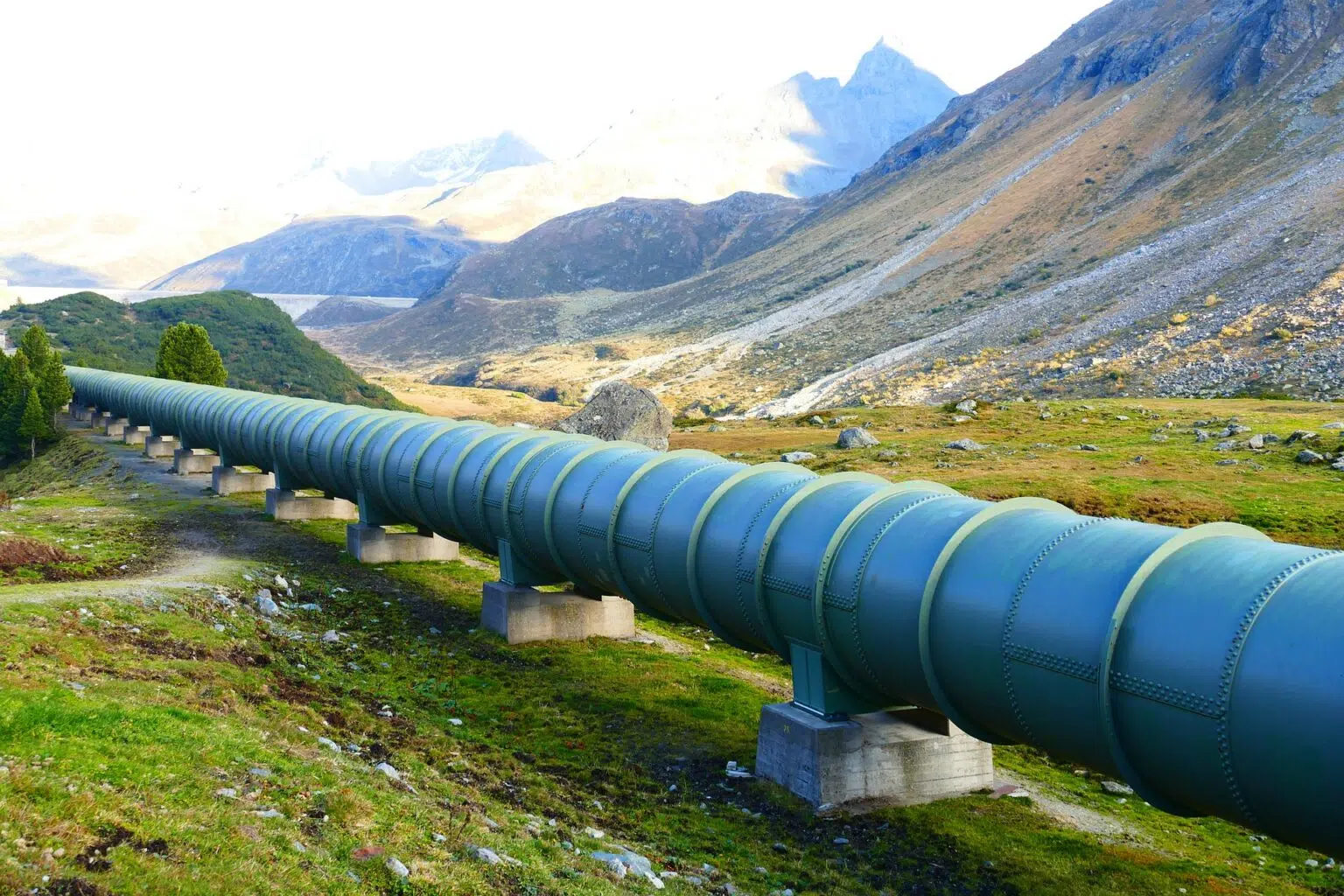
Grid operators across Europe are seeking to repurpose gas pipelines to transport hydrogen. Credit: Flickr (CC0 1.0)
The European Commission is facing calls to assess the climate impact of scores of proposed hydrogen projects after data revealed that 90 percent of them could be used to prolong the use of planet-warming natural gas.
Companies operating Europe’s existing natural gas infrastructure are seeking to preserve the value of their assets by converting them to carry clean-burning hydrogen to power homes and industry in line with legally-binding climate targets.
But the data compiled by Brussels-based research and advocacy group Food & Water Action Europe, and shared with DeSmog, shows that 57 percent of 147 hydrogen projects under consideration by the European Commission are designed to also carry natural gas, or “blue” hydrogen made from the fossil fuel. A further 33 percent of projects have failed to rule out carrying fossil-based hydrogen, or have no credible plans to source climate-friendly “green” hydrogen.
Only 10 percent of the projects explicitly commit to using green hydrogen – which is produced from water using a process powered by wind or solar energy, and does not produce the carbon dioxide (CO2) emissions associated with other forms of the energy carrier.
Many of the hydrogen schemes also fail to adequately consider how they would align with climate targets; the risk of hydrogen leaks; whether there will be sufficient hydrogen demand; where hydrogen will be sourced, or the economics of hydrogen infrastructure, campaigners say.
In response to the findings, Marie Toussaint, a French Green Party politician, urged policymakers to assess whether each project aligned with a European Union target to slash emissions by more than half by the end of this decade, compared to 1990 levels.
“We call on the Commission to stand firm and prevent European public money from financing the ‘hydrogen hype’ via disproportionate climate-killing projects pushed by certain member states and lobbies,” Toussaint, who is a member of the European Parliament, told DeSmog.
“Climate change is accelerating and droughts and floods are hitting our continent,” she said. “The roadmap is clear, and repeated many times by scientists: We must no longer, the European Union must no longer, invest the slightest euro in fossil fuels.”
The European Commission did not respond to a request for comment.
The data was derived from a review of hydrogen projects applying for classification as European Commission “Projects of Common or Mutual Interest” (PCIs or PMIs) — key projects to increase energy infrastructure connectivity, while meeting climate targets, that may be eligible for public funds. Successful projects are to be announced in November.
Hydrogen was included in the PCI/PMI category for the first time this year – a sign of the increasingly strong legislative and policy support hydrogen projects enjoy within Europe.
European gas companies proposed more than 90 percent of the hydrogen projects, ranging from pipeline networks and energy ‘corridors’, to salt caverns capable of storing liquefied hydrogen.
The proposals included a storage facility in Slovakia that would store 95 percent natural gas and five percent hydrogen, and H2 Med, a pipeline project connecting Spain, Portugal, France and Germany that has not ruled out transporting hydrogen made using natural gas.
Green Hydrogen
The EU has set ambitious goals to develop green hydrogen which is seen as a possible solution for decarbonising so called hard-to-abate industries, such as steel. However, the data showed that many of the proposals contained no mention of green hydrogen at all.
Most of the proposed hydrogen projects would either allow for continued use of natural gas within pipelines; carry a blend of natural gas and hydrogen, or rely heavily on blue hydrogen, made from natural gas.
The fossil fuel industry says blue hydrogen can be a climate solution since the CO2 generated during the production process is sequestered underground using a process known as carbon capture and storage. Critics dismiss that claim, arguing that the process prolongs demand for fossil gas; is inefficient; and leaks large amounts of CO2.
More than a hundred of the project submissions were made by members of the Brussels-based European Network of Transmission System Operators for Gas, a trade association representing gas networks across Europe. “ENTSOG sees green hydrogen to be the dominant source of hydrogen for the future European energy infrastructure,” a spokesperson told DeSmog.
A further 37 projects were submitted by other fossil fuel companies, including Germany utility Uniper, Norwegian oil and gas company Equinor, and oil majors Shell and BP.
More than a hundred of the projects would repurpose existing fossil fuel infrastructure.
Frida Kieninger of Food & Water Action Europe, who led the analysis, said the fossil fuel industry enjoyed a priority seat at the table in deciding on key infrastructure.
“Unsurprisingly, they have little to no concern about these giant infrastructure projects transporting hydrogen made from dirty fossil fuels,” Kieninger told DeSmog.
“It’s not hard to imagine what this risks leading to: billions spent on hydrogen pipes despite high uncertainties around future demand and supply – and a damaging impact on the climate.”
Touissant, of the Green Party, says the criteria for approving the projects should exclude hydrogen produced from natural gas and require projects to run on green hydrogen by 2029.
“If a project does not respect the imposed conditions…the project leaders must be sanctioned and ordered to reimburse the public funds received,” she said.
“Greenwashing must be fought, especially when it comes to using public money.”
Keir Starmer, his mini-me Wes Streeting, the dire Rachel Reeves have partied with S*n owner Rupert Murdoch and a string of Tories at his ‘summer party’, including Rishi Sunak, Suella ‘ship them all to Rwanda’ Braverman, disgraced former Chancellor Nadhim Zahawi and ‘Scum’ hacks:
The contempt of Starmeroids for ordinary people has long been on show, with Starmer writing repeatedly, and Reeves and Streeting at least once, for Murdoch’s ‘Scum’ rag despite its lies, racism and its decades-long smear campaign against the victims and survivors of the Hillsborough disaster.
So great is the arrogance of the Labour right that they no longer even bother to try to hide their billionaire fetish and barely even try to pretend that they have the needs of ordinary people remotely at heart. No doubt the apologists for the ghoulish regime will roll out their tired excuse that the party needs to appeal to the hard-right readers of the S*n, but appealing to the millions who need real change is clearly an idea that has been passed through the shredder repeatedly to make sure the interests of the rich and powerful are not threatened.
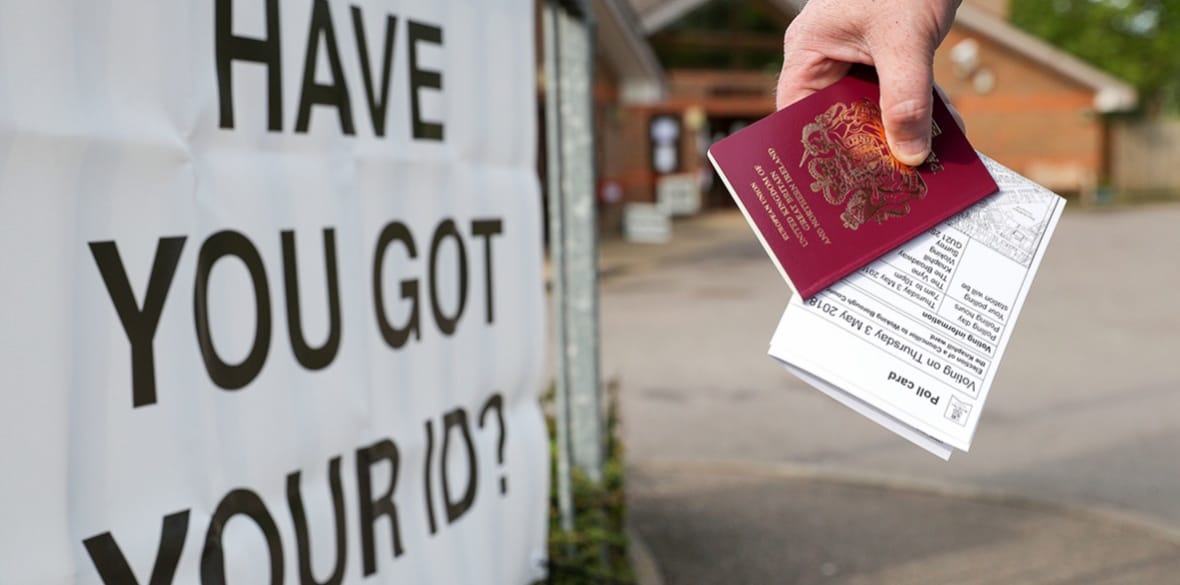
THE Tories were accused of voter suppression today after thousands of people were stopped from taking part in the local elections due to not having voter ID.
Interim analysis from the Electoral Commission found that around 14,000 people did not vote after being unable to show an accepted form of photo ID during England’s local elections in May.
Commission officials said the data suggested “significantly more” people were likely to have not turned out because of the policy.
Craig Westwood, the independent watchdog’s director of communications, added there was “concerning” evidence that disabled and unemployed people were “more likely than other groups to give a reason related to ID for not voting.”