The government should halt all new roads unless there are exceptional circumstances, the government’s climate advisers are likely to say next week.
On Wednesday the Committee on Climate Change will publish its latest report on the UK’s progress in dealing with the climate crisis. Speaking at Glastonbury on Friday, the climate change committee chair, Lord Deben, said new roads inevitably increased traffic and emissions.
The report is likely to advise that any new developments that make climate breakdown worse should be banned.
If the recommendation is followed through, it would sound the death knell for the government’s road-building programme – and had it been adopted earlier, it would have meant the high-speed HS2 rail line would never have been approved.
The Church of England is selling all its remaining oil and gas investments, saying that “not nearly enough” progress had been made by fossil fuel companies in transitioning to net zero.
The decision by the Church Commissioners for England, which manages the Anglican church’s £10.3 billion endowment fund, cuts off investments in oil majors including Shell, BP and Total.
It will also see the church divest from all other companies involved in oil and gas production unless they are in “genuine alignment” with Paris Agreement goals to limit global heating to 1.5C above pre-industrial levels, the Commissioners said.
Archbishop of Canterbury Justin Welby said the climate crisis “threatens the planet we live on, and people around the world who Jesus Christ calls us to love as our neighbors.”
“It is our duty to protect God’s creation, and energy companies have a special responsibility to help us achieve the just transition to the low carbon economy we need,” he added.
If it wins the next general election in the UK, Keir Starmer’s Labour Party could try to fix the damage inflicted on the National Health Service by years of Tory austerity. But Labour seems set on further privatizing the NHS.
Everywhere you look in the health service, the signs of thirteen years of austerity and willful Tory neglect are apparent. The Tories have, throughout their time in government, allowed the National Health Service (NHS) to go to rack and ruin, sending staff morale crashing through the floor and putting patients’ lives at risk.
The waiting list for surgery or specialist clinical care — partly a consequence of the coronavirus pandemic but exacerbated by years of chronic underfunding — stands at a record high of 7.22 million. Millions of patients, meanwhile, are struggling to get general practitioner (GP) appointments due to the immense pressures on NHS primary care.
Ambulance waiting times are alarmingly long: in December, response times in England were the worst on record, while the number of patients waiting twelve hours or more to be admitted to accidents and emergency department (A&E) also hit a new all-time high. NHS dentistry, in addition, is in a state of almost-total collapse.
Both opinion polls and the recent local elections in England indicate that the Tories are on track to lose the next general election. While the differences between Keir Starmer’s Labour and Rishi Sunak’s Conservatives are narrowing all the time, it might at least be expected that the Labour Party would repair the worst of the damage done since 2010. The NHS remains the great survivor of postwar social democracy. But statements from the Labour front bench suggest otherwise.
The Labour leader was appearing on Times Radio on Thursday when he quizzed on briefings from senior figures within his own party that he was planning to fill the House of Lords with “dozens” of new peers – despite previous pledges to abolish the chamber altogether.
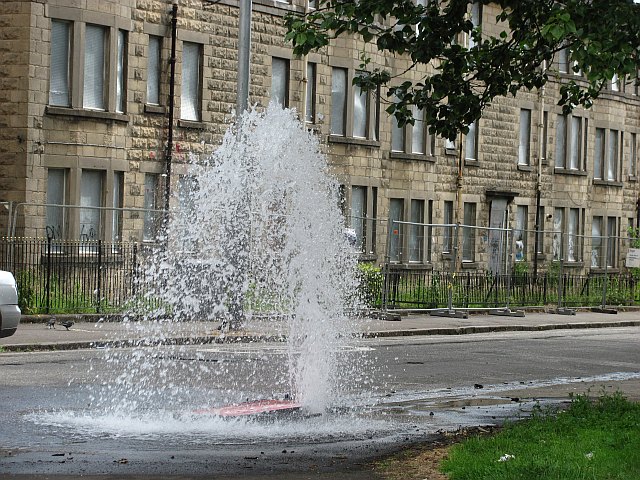
Campaigners have called for water to be taken into public ownership
Image: Richard Webb / Burst water main / CC BY-SA 2.0
Private water firm Thames Water is under fire once again after revelations that the rate of leaks from its pipes are at the highest level for five years. The news has sparked renewed calls for the three decade long privatisation experiment to be brought to an end.
Letters between the CEO of Thames Water Sarah Bentley and environment minister Rebecca Pow have been released under freedom of information laws and have revealed the scale of the company’s leakage problem.
According to the Guardian, Bentley told Pow: “Right now, we have the highest leakage rate since 2018. Consequently, we have already signalled to Ofwat that we are behind on our 2022/23 leakage performance and our target this year will now be very challenging to achieve.”
These revelations have been met with outrage by campaigners. Anti-privatisation group We Own It has reiterated their call for the water sector to be taken into public ownership.