Move would cost less than $5bn and cut toll of deaths from power outages and lack of supply, Cop28 delegates will hear
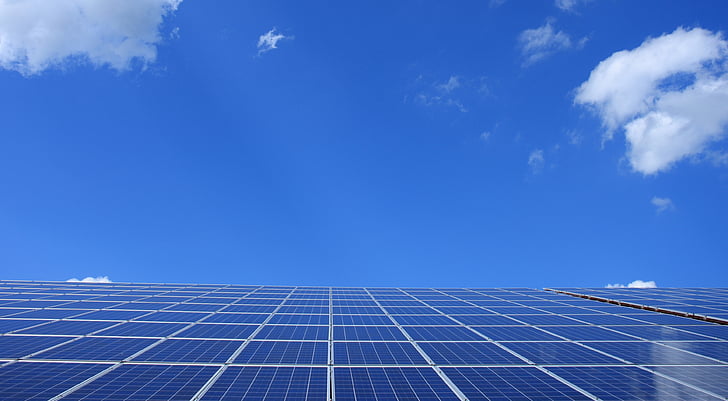
All healthcare facilities in poorer countries could be electrified using solar energy within five years for less than $5bn, putting an end to the risk of life from power outages, experts will argue at Cop28 this month.
“I would like the international community to commit to a deadline and funding to electrify all healthcare facilities,” said Salvatore Vinci, an adviser on sustainable energy at the World Health Organization and a member of its Cop28 delegation. “We have solutions now that were not available 10 years ago – there is no reason why babies should be dying today because there is not electricity to power their incubators.
“It’s a low-hanging fruit. There is nothing stopping us,” he said.
About 1 billion people around the world do not have access to a healthcare facility with a stable electricity connection, including 433 million in low-income countries who rely on facilities with no electricity at all, according to the WHO’s Energising Health: Accelerating Electricity Access in Healthcare Facilities report, which was published in January, and co-authored by Vinci.
Electricity is the lifeblood of a functioning healthcare facility, not only powering devices such as ventilators and cardiac monitors, but providing basics amenities such as lighting. Without these basic facilities, even routine conditions can be deadly or lead to complications. Healthcare facilities in countries vulnerable to the impact of extreme weather events will often experience outages because of storms and flooding.
Keir Starmer sucking up to the rich and powerful at World Economic Forum, Davos.
A Guardian article is saying that Labour Party leader Keith Starmer and shadow climate secretary Ed Miliband are promoting “carbon capture to support industries that still need oil and gas to pipe their waste CO2 into depleted North Sea oilfields; building floating windfarms for deep-water sites; and in green hydrogen – a zero carbon fuel needed for energy-intensive industries such as steelmaking, railways and chemicals production.”
Carbon capture is a scam to benefit the fossil-fuel industry, I don’t know if windfarms are needed for deep-water sites and green hydrogen is far from ideal. What’s needed really is a move from or transform these industries so that they don’t need vast amounts of energy. Green hydrogen needs vast amounts of energy in it’s production. Starmer can’t get away from sucking up to the fossil-fuel industry, it’s not going to be any different with him.
11.30 I’ve worked out how to secure deep-water windfarms assuming that securing them is the problem.
Analysis deems technology promoted by Sultan Ahmed Al Jaber ‘dangerous red herring’
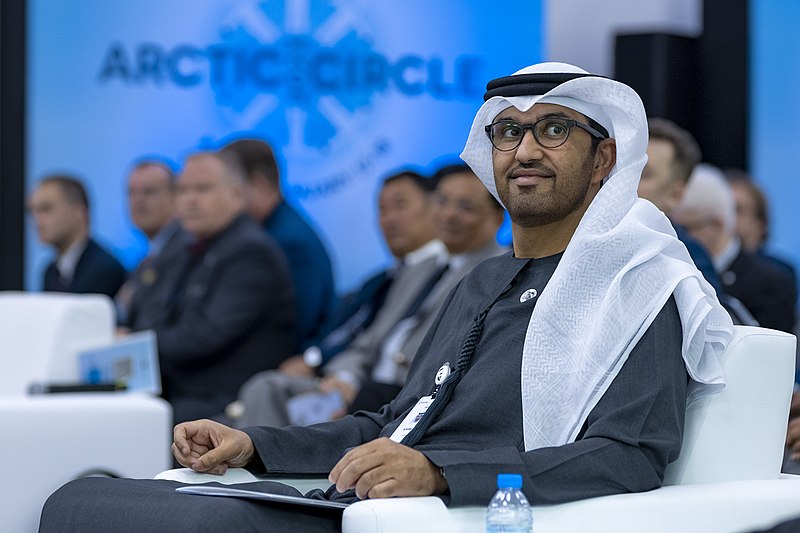
Dr. Sultan al Jaber. Image: Arctic Circle, CC BY 2.0, via Wikimedia Commons
Climate-wrecking emissions produced by the oil company of the Cop28 president, Sultan Ahmed Al Jaber, would take hundreds of years to remove using the carbon capture technology he has been promoting.
With just weeks to go until the crucial Cop28 climate summit, Al Jaber, who is the boss of United Arab Emirate oil company Adnoc, has been backing carbon capture as one solution to the climate crisis.
But analysis by Global Witness has found it would take the company 343 years to capture all the CO2 emissions it will produce in just the next six years.
Jonathan Noronha Gant from Global Witness said the findings proved carbon capture was “a dangerous red herring” that would do nothing to tackle the climate crisis.
“Sultan Al Jaber’s Cop is shaping up to be the Cop of false solutions, inundated by fossil fuel lobbyists pushing empty promises. If Al Jaber is serious – if we are serious – we must immediately reject the CCS [carbon capture and storage] false solution and tackle the existential oil and gas problem head on.’’
Guardian Exclusive: Fields run by climate summit host have burned gas near daily despite 20-year-old pledge, satellite monitoring reveals
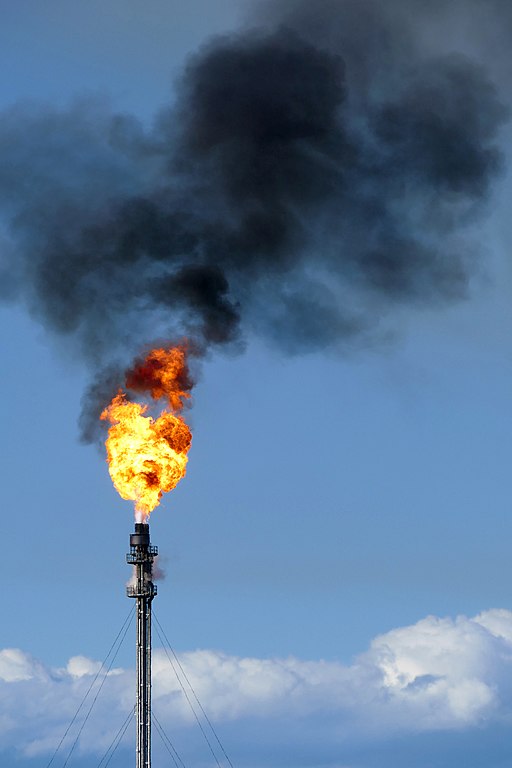
State-run oil and gas fields in the United Arab Emirates have been flaring gas virtually daily despite having committed 20 years ago to a policy of zero routine flaring, the Guardian can reveal.
The UAE is hosting the UN Cop28 summit, which starts on 30 November, and Sultan Al Jaber, the CEO of the state oil company Adnoc, will preside over the international negotiations to urgently tackle the climate crisis.
Flaring is the burning of extracted gas that is not captured and sold, and it has been called “wasteful and polluting” by the World Bank. Flaring occurs when no equipment has been installed to capture it or when gas has to be unexpectedly released for safety reasons. Flaring also allows the escape of some unburned methane gas, which is a powerful greenhouse gas.
One field, Adnoc LNG, flared gas on more than 99% of the days monitored by satellite from 2018 to 2022, according to data produced for the Guardian by the Centre for Research on Energy and Clean Air (Crea). One expert said this was routine flaring “by any normal definition”.
The analysis assessed flaring in 32 oil and gas fields in the UAE, 20 of which are run by Adnoc. It shows four fields flared on at least 97% of the days for which data was available, which was most days as measurements were interrupted by cloud cover on only one day in five.
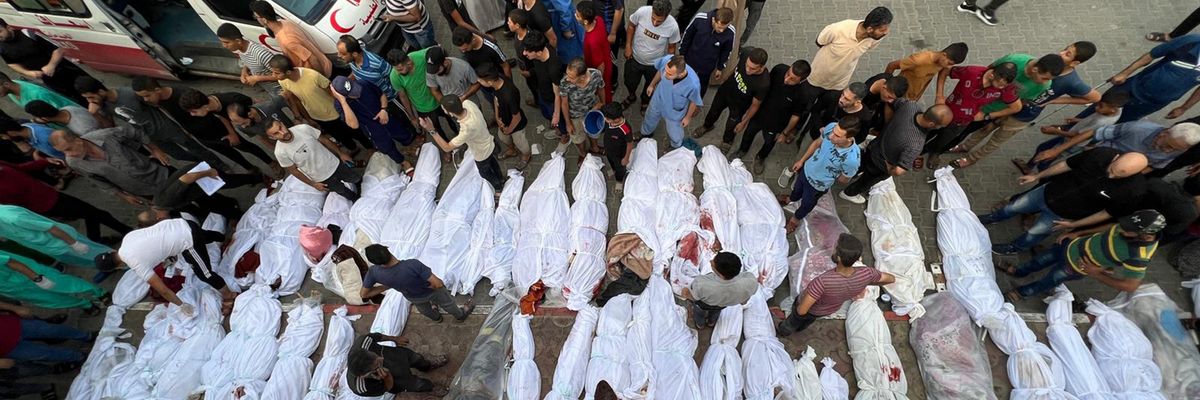
The bodies of victims of the October 31, 2023 Israeli bombing of the Jabalia refugee camp in the Gaza Strip are lined up outside the Indonesian Hospital in Gaza City. (Photo: Fadi Alwhidi/Anadolu via Getty Images)
Airwars noted that this is “the most named victims we have ever monitored in a single event.”
Israel’s war on Gaza has killed more than 11,000 Palestinians, including over 100 civilian victims of a single Israeli bombing in the densely populated Jabalia refugee camp on October 31 who were publicly identified on Thursday by the U.K.-based watchdog Airwars.
The group identified 116 names of civilians killed in the strike—including 10 cases with the death of multiple family members, three of which reportedly involved entire families being wiped out. The estimated civilian death toll is 126-136, including 69 children.
Airwars noted on social media that this is “the most named victims we have ever monitored in a single event,” and “almost every named victim we found died along with at least one other family member.” The analysis is just for the Israeli attack on October 31, but the group is separately reviewing a strike from the following day. The Israel Defense Forces (IDF) confirmed both bombings and claimed to be targeting “a very senior Hamas commander.”
A spokesperson for the Israeli military said the attack had been authorized to assassinate a senior Hamas commander and destroy his base. IDF spokesperson Daniel Hagari named the target as Ibrahim Biari, commander of Central Jabaliya Battalion, who he said had been leading fighting in northern Gaza from a network of tunnels under the camp.
Hagari declined to comment on how many munitions, or which types, were used to target the camp, or identify which craters were caused by tunnel collapses. He said Israel would provide some of these details at a later date.
But a visual analysis by The Guardian has identified at least five craters in the densely populated refugee camp, which weapons experts said were left by the use of multiple JDAMs—joint direct attack munitions—in the airstrike.
“Hamas spokesperson Hazem Qassem denied any senior commander there and called the claim an Israeli pretext for killing civilians,” according toReuters.
Ahmad al-Kahlout, a spokesperson for the Hamas-controlled Gaza Interior Ministry in Gaza, told reporters at the time that “these buildings house hundreds of citizens. The occupation’s air force destroyed this district with six U.S.-made bombs. It is the latest massacre caused by Israeli aggression on the Gaza Strip.”
Hagari claimed the IDF killed “scores” of militants alongside Biari.
“With ambiguity around the exact number of militants killed, Airwars has applied a 12-24 combatant casualty range to account for comments such as ‘dozens’ of targets killed,” the watchdog said.
Those in the camp remain at risk. Middle East Eye reported Wednesday that “renewed heavy Israeli shelling has targeted residential homes in the Jabalia refugee camp. Footage showed blocks falling to the ground and survivors digging in the rubble with their hands to retrieve dead bodies.”
After the airstrikes on a block of houses in the Jabalia refugee camp a couple of hours ago, another airstrike on a house in the Nuseirat refugee camp (south of Gaza). Around 40 ppl thought to have been sheltering in that house. https://t.co/2HpjvMIbAl
The IDF strikes on Jabalia have been globally condemned as war crimes—as have various other Israeli actions since October 7, when the nation launched what experts are calling a “genocidal” war in response to a Hamas-led attack.
Throughout Israel’s bombing campaign and ground operations in Gaza—which along with killing and wounding thousands of civilians have destroyed civilian infrastructure and displaced around three-quarters of the population—global calls for a cease-fire have mounted.
There have also been growing demands for International Criminal Court action. Rutgers Law School professor and Just Security executive editor Adil Haque tagged the ICC prosecutor, Karim A. A. Khan, in a social media post about the Airwars analysis.
Khan last month asked civil society groups “to send us any and all evidence that underpins their reports or their communiques or their notices that they issue” on Gaza, explaining that “reports by themselves are, of course, not evidence and I cannot and will not act pursuant to my oath of office without reliable evidence that we can validate that can stand up in a court of law.”