HMRC fraud team’s civil inquiries fall by half over five years

Spread the love

Original article by Ed Siddons republished from The Bureau of Investigative Journalism under a Creative Commons Attribution-NonCommercial-NoDerivs 3.0 Unported License.

The number of civil tax avoidance leads looked into by HMRC’s Fraud Investigation Service has fallen by almost half in five years, while the number of civil cases it has formally opened has decreased by more than a quarter.

These figures, obtained by the Bureau of Investigative Journalism (TBIJ) under Freedom of Information laws, raise questions about the tax authority’s performance since the start of the pandemic.

The findings follow revelations by TBIJ and the Observer in September that prosecutions following HMRC investigations plummeted by two thirds in five years. TBIJ then revealed in January that HMRC has not charged a single company under a landmark 2017 law to clamp down on corporate tax evasion.

The new figures suggest that the tax authority’s civil enforcement has also declined alongside its use of criminal powers.

Margaret Hodge MP called on HMRC to “finally crack down on egregious tax avoidance and collect the revenues we desperately need”.

In the tax year of 2018/19, HMRC’s Fraud Investigation Service opened 37,273 “risks”, a term used to describe a preliminary inquiry into suspected error or false declaration. In 2022/23, that figure fell to just 21,338 – a 43% decline in five years.

The number of civil cases that were formally opened fell by 28% in the same period, from 17,424 to 12,585.

More from this projectJust 11 ‘wealthy’ people prosecuted for tax fraud last yearNot a single company charged with tax evasion under stronger HMRC powers

“The new revelations that HMRC is failing to make up for [declining numbers of criminal prosecutions] by undertaking more civil investigations is just disgraceful,” said Hodge. “These consecutive failures mean tax dodgers and their enablers can continue getting away scot-free.”

Stephen Daly, senior lecturer in corporate law at King’s College London, said: “[The number of] investigations has fallen off a cliff, and that can’t be good … If you don’t enforce the rules, then you create a culture in which people don’t have to worry about their tax returns later being checked.”

Civil inquiries and investigations declined sharply in 2020, when the Covid-19 pandemic interrupted HMRC’s enforcement activity. But despite a significant rise last year, the number of cases remains well below pre-pandemic levels. “If, in fact, this isn’t explained by Covid, then it’s unacceptable,” said Daly.

A HMRC spokesperson told TBIJ that figures relating to its Fraud Investigation Service “do not take account of our overall compliance activity”, including 300,000 interventions opened in 2022/23. They said the authority has recouped £136bn from compliance interventions since 2018/19.

Easy targets?

As well as the general decline in civil cases opened by HMRC’s fraud unit, the number opened by its team for investigating offshore, corporate and wealthy taxpayers has fallen especially steeply, by 56% in five years.

“Even when [HMRC is] opening civil cases, they appear to be going after the easier, lower value targets,” said Fiona Fernie, a partner at tax advisory firm Blick Rothenberg.

Last year, HMRC reached one of its highest ever tax settlements when former F1 mogul Bernie Ecclestone paid £650m after pleading guilty to tax fraud – but that success was “the exception, not the rule”, said Fernie.

Part of the problem is that the UK has an increasingly complex tax code, which makes enforcement action difficult, she said. “The staff are under considerable pressure, we get an increasingly complicated system every year, [and] it’s very difficult to get anybody to keep up with it.”

Robert Palmer, executive director of Tax Justice UK, said another issue was lack of resources. “We know HMRC is underfunded and resources have been diverted for work on Covid and Brexit,” he said.

HMRC estimates that it collects 95% of all the tax owed in the UK, a proportion it says has remained stable in recent years. However, it estimates that the remaining 5% still accounts for about £36bn.

“Parliamentary research shows that when the government invests in HMRC, the return on investment is significant. Until the department is properly funded, vast sums of money owed, often by the richest people and companies, will go unrecovered,” said Palmer.

The Public Accounts Committee last year found that for every £1 spent on compliance, HMRC recovers £18 in additional tax revenue. “The government is missing the opportunity to recover billions in lost revenue by not resourcing compliance,” it said.

Original article by Ed Siddons republished from The Bureau of Investigative Journalism under a Creative Commons Attribution-NonCommercial-NoDerivs 3.0 Unported License.

Continue ReadingHMRC fraud team’s civil inquiries fall by half over five years

Santander arranged billion-dollar oil bond after making green pledge

Spread the love

Original article by Nimra Shahid Rob Soutar republished from The Bureau of Investigative Journalism under a Creative Commons Attribution-NonCommercial-NoDerivs 3.0 Unported License.
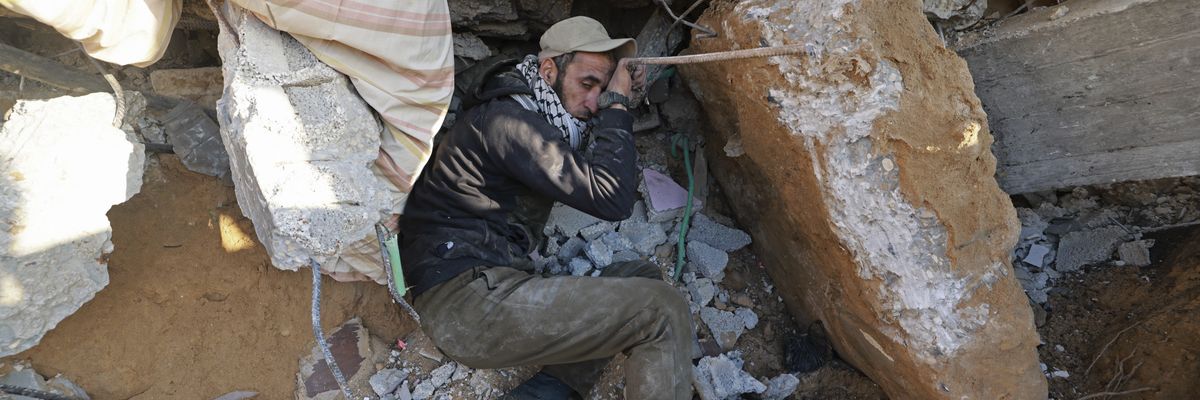
HSBC also helped on refinery deal that will boost Amazon oil production

The Pastaza River complex, the largest wetland in the Peruvian Amazon, is a hub of biodiversity. It is home to nearly 300 species of fish and rare birds, and a source of food for the numerous Indigenous communities that live there. Its freshwater tributaries, lakes and palm swamps offer a vital buffer against climate change and its international importance is recognised by Ramsar, the UN convention on wetlands conservation.

Slicing through this land is the Norperuano pipeline, a huge 1,100km structure owned by the national oil company PetroPerú. The pipeline has been the source of more than 53 oil leaks since 2013. PetroPerú spent more than $80m on cleaning up spills related to it between 2017 and 2020.

In December, PetroPerú hailed the completion of a $5bn, 10-year project revamping its Talara refinery on the country’s Pacific coast. This new-look facility will be the destination for huge amounts of oil being carried by the Norperuano pipeline across the country from the rainforest, where PetroPerú is set to drill at two controversial new sites. And working behind the scenes to aid the financing of this project have been major international banks that claim to hold strict green policies.

In 2021, Santander helped coordinate a bond that raised $1bn for PetroPerú, which sought funds to upgrade its Talara refinery and expand its capacity to process oil from the Amazon. Two years previously, it had ruled out providing finance or services for “projects or activities in recognised Ramsar sites”. HSBC, which has a similar policy restricting finance that affects wetlands, also worked on the deal.

The money raised by the bond was to be spent on the Talara upgrade, which PetroPerú says helped the facility “produce cleaner fuels” and expanded its processing capacity by nearly 50%, to 95,000 barrels of oil per day.

Much of that oil is likely to be transported through the Norperuano pipeline from the Peruvian Amazon, where PetroPerú has extraction contracts for two drilling sites, one of which also overlaps with the Pastaza wetlands.

“There can be no financing for a company that needs to expand oil production in areas as sensitive as Ramsar sites,” said Leila Salazar-López, executive director of Amazon Watch. She added that it was “difficult to understand” how a company that has demonstrated an inability to stop spills and repair its damage “can gain the confidence of ‘climate-responsible’ investors”.

Santander told TBIJ it did not comment on clients or transactions but said it “operates strict policies that govern our financing. This includes our social, environmental and climate change risk management policy, which governs our criteria to lend to sectors such as energy, mining, metals, and soft commodities.”

HSBC said: “We are committed to supporting a just transition in developing markets and are, therefore, engaging with clients on their transition plans and operating models. Our work with clients is in line with our policies which include specific standards for environmental and human rights considerations.”

Original article by Nimra Shahid Rob Soutar republished from The Bureau of Investigative Journalism under a Creative Commons Attribution-NonCommercial-NoDerivs 3.0 Unported License.

Continue ReadingSantander arranged billion-dollar oil bond after making green pledge

“Six million UK households still in fuel poverty despite energy bill drop”

Spread the love

https://www.energylivenews.com/2024/02/23/six-million-uk-households-still-in-fuel-poverty-despite-energy-bill-drop/

Dimitris Mavrokefalidis

Ofgem’s announcement of a 12% drop in energy bills for April to June is welcomed, but National Energy Action warns that six million UK households will still face fuel poverty

Today, Ofgem revealed the energy price cap for April to June, showing a 12% drop in typical annual energy bills to £1,690.

Despite this reduction, National Energy Action (NEA) cautions that 6 million UK households will continue to grapple with fuel poverty.

This figure marks a significant increase from the 4.5 million households affected at the onset of the energy crisis in October 2021.

The persistent challenge of fuel poverty is exacerbated by the fact that current energy bills remain 49% higher than pre-crisis levels.

Adam Scorer, Chief Executive of NEA, said: “This is, of course, good news – any fall in energy bills is welcome. However, the drop coming in April still leaves bills significantly higher than they were before the energy crisis began.

https://www.energylivenews.com/2024/02/23/six-million-uk-households-still-in-fuel-poverty-despite-energy-bill-drop/

Continue Reading“Six million UK households still in fuel poverty despite energy bill drop”

UN Experts Say Arms Exports to Israel ‘Must Cease Immediately’

Spread the love

Original article by JAKE JOHNSON republished from Common Dreams under Creative Commons (CC BY-NC-ND 3.0). 

A man looks for survivors amid the debris of destroyed houses in the aftermath of Israeli airstrikes in Rafah in the southern Gaza Strip on February 22, 2024.  (Photo: Mohammed Abed/AFP via Getty Images)

“State officials involved in arms exports may be individually criminally liable for aiding and abetting any war crimes, crimes against humanity, or acts of genocide.”

Dozens of United Nations experts on Friday called for an immediate arms embargo on Israel and warned that countries and private companies still sending weapons to the Israeli military during its assault on Gaza could be complicit in crimes against humanity.

The experts—including special rapporteurs on education and the rights of displaced people—said in a joint statement that “any transfer of weapons or ammunition to Israel that would be used in Gaza is likely to violate international humanitarian law and must cease immediately.”

“Such transfers are prohibited even if the exporting state does not intend the arms to be used in violation of the law—or does not know with certainty that they would be used in such a way—as long as there is a clear risk,” they said. “State officials involved in arms exports may be individually criminally liable for aiding and abetting any war crimes, crimes against humanity, or acts of genocide.”

The U.N. experts noted that the United States and Germany are “by far” Israel’s largest arms suppliers, though France, the United Kingdom, Canada, and Australia also export weapons to the Israeli government, which the International Court of Justice (ICJ) ruled is plausibly committing genocide in the Gaza Strip.

The ICJ’s interim ruling, which Israel has disregarded, has “heightened” the need for an arms embargo, the experts said, noting that compliance with the Genocide Convention of 1948 “requires states parties to employ all means reasonably available to them to prevent genocide in another state as far as possible.”

The experts also said that “arms companies contributing to the production and transfer of arms to Israel and businesses investing in those companies bear their own responsibility to respect human rights, international humanitarian law and international criminal law.”

“They have not publicly demonstrated the heightened human rights due diligence required of them and accordingly risk complicity in violations,” they said.

“All states must not be complicit in international crimes through arms transfers. They must do their part to urgently end the unrelenting humanitarian catastrophe in Gaza.”

The statement comes two weeks after a Dutch court ordered the Netherlands’ government to stop exporting jet parts to Israel, citing the “clear risk” that the aircraft might be used to “commit serious violations of international humanitarian law.” The government is appealing the ruling.

Other countries, including Italy and Spain, have said they have suspended arms sales to Israel since its latest assault on Gaza began—though a Spanish newspaper reported earlier this month that the country exported $1.1 million worth of ammunition to Israel in November.

The U.S., meanwhile, is reportedly planning to send additional weaponry to Israel and has refused to attach conditions to its arms exports even as top officials—including President Joe Biden—publicly voice concerns about the rising death toll in Gaza and Israel’s looming ground invasion of Rafah, where more than half of the enclave’s population is currently sheltering.

According to The Wall Street Journal, the latest proposed arms shipment “includes roughly a thousand each of MK-82 bombs, KMU-572 Joint Direct Attack Munitions that add precision guidance to bombs, and FMU-139 bomb fuses.”

“The arms are estimated to be worth tens of millions of dollars,” the Journal added. “The proposed delivery is still being reviewed internally by the administration, a U.S. official said, and the details of the proposal could change before the Biden administration notifies congressional committee leaders who would need to approve the transfer.”

Israel has used U.S. weaponry to commit atrocities in the Gaza Strip, including airstrikes on homes full of children. An Amnesty International investigation released earlier this month found that a January 9 Israeli airstrike on a residential building in southern Gaza killed 18 civilians, including 10 children.

Based on ordnance fragments recovered from the rubble, the weapon used in the attack was identified as a GBU-39 Small Diameter Bomb—made by the U.S. company Boeing.

On Friday, Gaza’s health ministry said that Israeli airstrikes killed more than 100 people over the past 24 hours and injured at least 160 more. Israeli strikes on the severely overcrowded city of Rafah on Thursday destroyed a mosque and several homes, killing or wounding many people and leaving others trapped under the rubble.

“International law does not enforce itself,” the U.N. experts said Friday. “All states must not be complicit in international crimes through arms transfers. They must do their part to urgently end the unrelenting humanitarian catastrophe in Gaza.”

Original article by JAKE JOHNSON republished from Common Dreams under Creative Commons (CC BY-NC-ND 3.0). 

Jewish-Led NYC Rally Targets AIPAC, Dem Allies Who Oppose Gaza Cease-Fire

“AIPAC uses money and racist bullying to ensure congressional complicity in the genocide of Gaza,” said Jewish Voice for Peace.

‘People of Gaza Need a Cease-Fire,’ Medical Aid Leader Tells UN Security Council

“This body has failed to effectively address this conflict. We have watched members of this council deliberate and delay while civilians die.”

All of Us Must ‘Confront the Current Siege in Gaza’

As the Nuremberg Tribunal and U.S. law make clear, it is the responsibility of the people to halt crimes that the courts have proved impotent to prevent.

Continue ReadingUN Experts Say Arms Exports to Israel ‘Must Cease Immediately’

Oxfam Rips UK Parliament for ‘Squabbling’ Over Cease-Fire as Israel Pummels Gaza

Spread the love

Original article by JAKE JOHNSON republished from Common Dreams under Creative Commons (CC BY-NC-ND 3.0). 

Pro-Palestinian demonstrators hold a protest in Parliament Square in London on February 21, 2024.  (Photo: Henry Nicholls/AFP via Getty Images)

“It is a disgrace that there has been so much playground politics in Parliament this evening, while so many lives are at stake.”

What was supposed to be a debate over a motion demanding an immediate cease-fire in the Gaza Strip quickly descended into mayhem and partisan bickering on Wednesday as members of the U.K. Parliament jockeyed for position—all while Israel continued dropping bombs on starving Palestinians.

Wednesday’s debate was started by the Scottish National Party (SNP), which introduced a motion calling for an immediate cease-fire in Gaza, the release of all hostages, and “an end to the collective punishment of the Palestinian people.”

The Conservative and Labour parties both put forth amendments aimed at watering down the SNP motion. House of Commons Speaker Lindsay Hoyle moved to allow a vote on all three motions, angering Tories who said the decision violated convention.

Ultimately, as The Associated Press reported, “many Conservatives and SNP members walked out, and in their absence the Labour version of the cease-fire call passed on a voice vote—by calls of ‘Aye’—without a full formal vote.” The Labour amendment dropped the SNP motion’s call for an end to collective punishment.

Diane Abbott, an MP for Hackney North and Stoke Newington, said she entered Parliament on Wednesday to support the SNP motion, which she called “the only genuinely meant cease-fire motion on the order paper.”

“Instead things descended into a shambles,” said Abbott. “Meanwhile Israel’s military continues to kill 250 Palestinians a day.”

Jeremy Corbyn, an independent MP for Islington North and the former leader of the Labour Party, wrote Thursday that “yesterday was an appalling day for British Parliament.

“It was much, much worse for the people of Gaza, who are dying slowly and painfully from dehydration, disease, and starvation,” Corbyn added. “We must end this systematic slaughter—the existence of the Palestinian people is at stake.”

“An immediate and permanent cease-fire is the only solution to stop this devastating cycle of bloodshed.”

Oxfam GB’s head of advocacy, Katy Chakrabortty, also voiced outrage over Wednesday’s proceedings, saying in a statement, “It is a disgrace that there has been so much playground politics in Parliament this evening, while so many lives are at stake.”

“The people of Gaza can’t wait for our politicians to stop squabbling,” said Chakrabortty. “Much of the country lies in ruins and Rafah, where many Palestinian families have been forced to flee, is under threat of a full-scale military offensive. Children in the North of Gaza are dying from hunger because no aid can reach them due to Israel’s continued assault and restrictions on access.”

“An immediate and permanent cease-fire is the only solution to stop this devastating cycle of bloodshed, to ensure the safe release of hostages, and to allow urgent aid to reach all of those in desperate need,” Chakrabortty continued. “Many MPs spoke passionately tonight of the horrors in Gaza and we thank those who raised their voices. The government must listen and support U.N. votes for a cease-fire and end the sale of arms to Israel.”

Citing unnamed sources, The Guardian on Wednesday reported that the U.K.’s Tory government “will consider suspending arms export licenses to Israel” if the country’s military goes ahead with a ground invasion of Rafah, a severely overcrowded city near Gaza’s border with Egypt.

The U.K. has licensed more than £474 million worth of military exports to Israel over the past decade, according to Human Rights Watch (HRW).

In December, HRW and other rights groups warned that “the U.K. risks being complicit in and facilitating serious violations of international humanitarian law if it fails to halt arms exports to Israel immediately.”

“Our organizations demand an immediate suspension of arms transfers to all parties to the current conflict,” the groups wrote in a joint letter. “For the U.K. government, this requires a halt to the arming of Israel. Failure to do so risks the government breaching its own laws and being complicit in grave abuses.”

Original article by JAKE JOHNSON republished from Common Dreams under Creative Commons (CC BY-NC-ND 3.0). 

dizzy: While this is a very good account of what happened, I’m going to emphasize some extra issues. While the Speaker is supposed to be impartial he is acually an MP, currently a Labour MP. Labour Leader Keir Starmer acted improperly by effectively ‘lobbying’ the Speaker in person yesterday. Starmer has said that he didn’t threaten or impose pressure on the Speaker. I suggest that lobbying him in any way is out of order. The Speaker claims that he was concerned for MPs safety, that they are getting confronted by their constituents.

The winner from yesterday’s events is Keir Starmer since huge numbers – perhaps a hundred – of Labour MPs were expected to vote for the SNP’s motion against their party’s instruction. I consider that the Speaker should not be concerned with MPs’ safety and that they should be expected to be confronted by their constituents. The point here is that if you don’t want to be accused of complicity in genocide don’t be complicit in genocide.

24/2/24 I’ve used the wrong term ‘lobbying’. MPs are whipped by their own parties to follow their party’s chosen course of action.

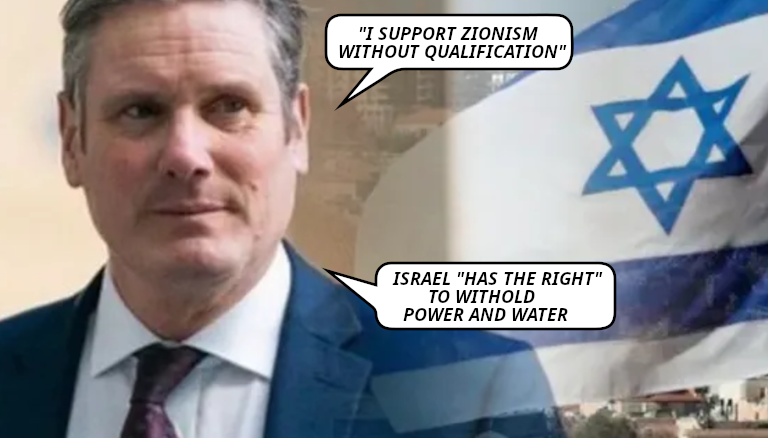
Zionist Keir Starmer supports Israel's Gaza genocide.
Zionist Keir Starmer supports Israel’s Gaza genocide.

22/2/24 10pm How Keir Starmer placed his political image over the lives of those in Gaza

Continue ReadingOxfam Rips UK Parliament for ‘Squabbling’ Over Cease-Fire as Israel Pummels Gaza