Braverman’s consultation on anti-protest laws was ‘only open to police’

Spread the love

Original article by Anita Mureithi republished from OpenDemocracy under a Creative Commons Attribution-NonCommercial 4.0 International licence

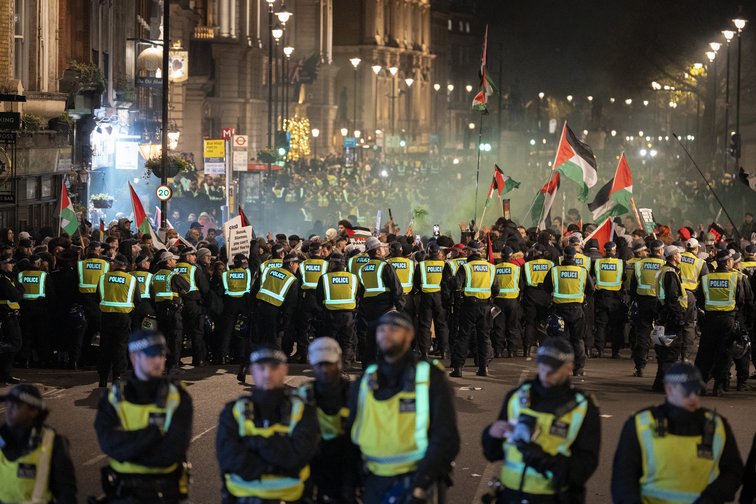
Liberty’s lawyers say police feedback was ‘directly incorporated into the final text’ of Braverman’s anti-protest laws  | Richard Baker / In Pictures via Getty Images

High Court told government only sought feedback from people it knew would agree with its controversial changes

Only police were consulted on anti-protest laws before they were forced through by the UK government, according to human rights lawyers suing the home secretary.

Campaign group Liberty has been in court this week challenging James Cleverly over amendments to the Public Order Act that were pushed through by his predecessor, Suella Braverman, last year.

Liberty was given permission to take legal action against Braverman in October after she used secondary legislation – subject to less parliamentary scrutiny – to strengthen police powers to shut down protests that cause “more than minor disruption to the life of the community”.

The group says Braverman’s actions amounted to a “serious overreach” and that she acted unlawfully because the changes to the law had already been rejected in the House of Lords.

And Liberty has labelled a consultation on the proposed laws in 2022 as “one-sided” and “unfair” – because the Home Office only consulted police. The government gave the Met, Staffordshire Police, Essex Police, the National Police Chiefs’ Council, and the College of Policing opportunities to give their views on the legislation, but did not seek input from anyone who might be impacted by the laws.

Liberty argued: “The [home secretary] voluntarily embarked upon a process of consultation about the contents and drafting of the regulations but then only consulted a narrow group of stakeholders in support of the amendments rather than an even-handed group representative of all those whose interests may be adversely impacted.”

Its lawyers also say police feedback was “directly incorporated into the final text” of the amendments to the Public Order Act, including on the definition of “serious disruption to the life of the community”.

The new powers have been criticised by Liberty and other human rights groups due to the vagueness of the new language, which campaigners say allows police to shut down almost any protests. The changes forced through by Braverman mean officers can interfere with and arrest anyone taking part in protests that they believe will cause “more than minor disruption to the life of the community”.

Police feedback on “cumulative disruption” was also included in the final amendments to the act. Under this law, officers must take into account all “relevant cumulative disruption”, regardless of whether or not your protest is related to any other protest or disruption in the same area. Before this amendment, there was no explicit requirement for police to consider this.

While the government held multiple meetings with police representatives in December 2022 to seek input and “refine policy”, Liberty argues that the fact that no rights groups or members of the public were consulted is rooted in “procedural unfairness” and that the changes must be reversed.

Katy Watts, Liberty’s lawyer leading the case said: “The government has shown it’s determined to put itself above the law, avoid scrutiny and become untouchable – so it’s no surprise it only consulted people it knew would agree with its new law.

“Our democracy exists to make sure a government can’t just do whatever it wants, and an important part of that is consulting a wide range of voices on new laws – especially those likely to raise reasonable concerns. This improves government decision making and helps to make our laws better. The government’s failure to do this is just one of the ways it acted unlawfully when it forced these powers though.”

The laws were initially brought in to clamp down on protests by climate activist groups like Just Stop Oil, Insulate Britain, and Extinction Rebellion, but other protesters are now also being targeted.

The government has accused pro-Palestine protesters of “hijacking legitimate protests”, “shouting down and coercing elected representatives”, and has also called them “un-British” and “undemocratic”.

In a new ‘defending democracy policing protocol’ released this week, the government pledged £31m of additional funding to protect MPs after safety fears were raised.

The Home Office said it wants to “protect the democratic process from intimidation” but according to its own policy paper, only met with police representatives from the National Police Chiefs Council, the Association of Police and Crime Commissioners, and the College of Policing.

The Home Office did not respond to a request for comment.

The two-day hearing ended yesterday and Liberty’s lawyers expect a decision could take up to three months.

Original article by Anita Mureithi republished from OpenDemocracy under a Creative Commons Attribution-NonCommercial 4.0 International

licence

OpenDemocracy’s free daily email

Protest isn’t harassment, says group suing UK government over law change

Home Office ‘did not discuss’ Islamophobia risk in wake of Hamas attacks
Continue ReadingBraverman’s consultation on anti-protest laws was ‘only open to police’

Judge Disqualifies Trump From Illinois Ballot, Citing Jan 6 Role

Spread the love

Original article by BRETT WILKINS republished from Common Dreams under Creative Commons (CC BY-NC-ND 3.0).

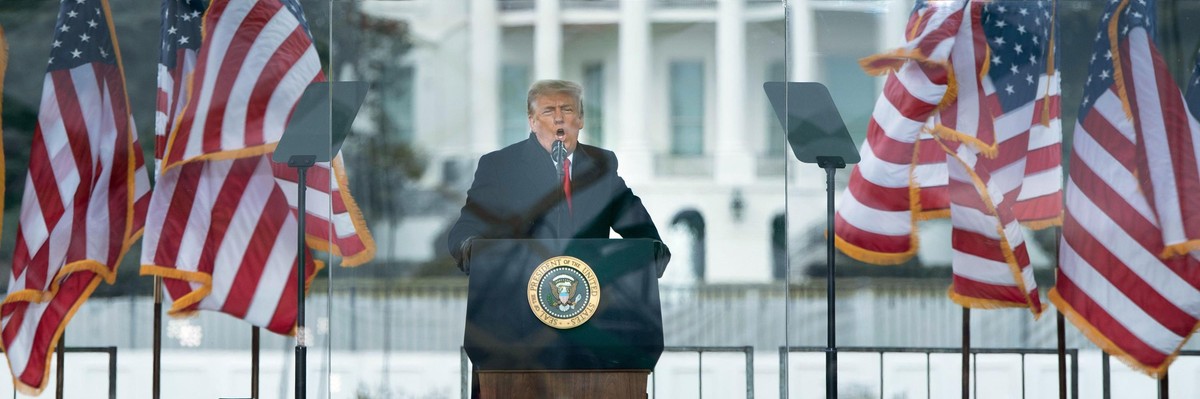
Then-U.S. President Donald Trump spoke to supporters near the White House on January 6, 2021, in Washington, D.C. (Photo: Brendan Smialowski/AFP via Getty Images)  (Photo: Brendan Smialowski/AFP via Getty Images

The decision comes ahead of a highly anticipated U.S. Supreme Court ruling on a Colorado challenge to the 2024 GOP front-runner’s candidacy based on the 14th Amendment’s insurrection clause.

An Illinois judge ruled Wednesday that former U.S. President Donald Trump cannot appear on the state’s presidential primary and general election ballots because of his role in the January 6, 2021 Capitol insurrection.

Judge Tracie Porter of the State Circuit Court in Cook County sided with Illinois voters who asserted that Trump—the 2024 GOP front-runner—must be disqualified from Illinois’ March 19 primary and November 5 general election ballots due to his violation of the 14th Amendment’s so-called “insurrection clause.”

Porter, a Democrat, placed a stay on her ruling if Trump appeals by Thursday, or if the U.S. Supreme Court issues a highly anticipated ruling in a Colorado case involving a 14th Amendment challenge.

“This is a historic victory,” said Ron Fein, legal director of Free Speech for People, the co-lead counsel in the case. “Every court or official that has addressed the merits of Trump’s constitutional eligibility has found that he engaged in insurrection after taking the oath of office and is therefore disqualified from the presidency.”

Enacted after the Civil War, Section 3 of the 14th Amendment bars from public office any “officer of the United States” who has taken an oath to uphold the U.S. Constitution but then participates in an insurrection or rebellion against the country. The text does not require a criminal conviction for the clause to apply.

Plaintiffs’ attorney Caryn Lederer called the ruling “a critical decision that is adding to decisions in Colorado and Maine on this point.”

Last month, a Maine judge deferred a ruling on yet another insurrection clause challenge, citing the Supreme Court’s Colorado case.

Steven Cheung, a spokesperson for Trump’s campaign, said that “today, an activist Democrat judge in Illinois summarily overruled the state’s Board of Elections and contradicted earlier decisions from dozens of other state and federal jurisdictions.”

“This is an unconstitutional ruling that we will quickly appeal,” he added.

According to The New York Times, courts in at least 18 states have dismissed or rejected efforts to exclude Trump from the ballot on 14th Amendment grounds, while unresolved challenges remain in 15 states.

Original article by BRETT WILKINS republished from Common Dreams under Creative Commons (CC BY-NC-ND 3.0).

Continue ReadingJudge Disqualifies Trump From Illinois Ballot, Citing Jan 6 Role

‘They took our home, our land, everything’: Palestinians displaced by illegal settlers tell their stories

Spread the love

https://www.theguardian.com/world/2024/mar/01/they-took-our-home-our-land-everything-palestinians-displaced-by-settlers-tell-their-stories

Azam Nawajeh, 62, said one of the Israeli settlers now sanctioned by the UK had blocked roads to his village compound, uprooted trees and destroyed water cisterns. Photograph: Quique Kierszenbaum/The Guardian

As the UK, US and France impose sanctions on ‘extremist Israeli settlers’, Palestinians face assault by gun, bulldozer and attack dog

Salah Abu Awad says he is haunted by memories of the night he was woken up by Israeli settlers who burst into his home and threatened him at gunpoint.

It was one of the many attacks that forced the 28-year-old shepherd and his family to dismantle their homes and abandon their land in the village of Widada in the occupied West Bank’s south Hebron hills.

Abu Awad said he identified the intruders in a police complaint as Ely Federman and Yinon Levy, from the nearby unauthorised outpost of Meitarim Farm.

This month, the UK imposed sanctions on Levy and Federman and two other “extremist Israeli settlers” accused of “egregious abuses of human rights” against Palestinians.

“I hope the sanctions mean something,” said Abu Awad as he grazed his animals on a rocky, windswept hill. “We have suffered a lot from Yinon and Ely. They have confronted me many times, tried to steal my sheep, and ransacked my home.”

https://www.theguardian.com/world/2024/mar/01/they-took-our-home-our-land-everything-palestinians-displaced-by-settlers-tell-their-stories

Continue Reading‘They took our home, our land, everything’: Palestinians displaced by illegal settlers tell their stories

Why were the red flags ignored?

Spread the love

https://morningstaronline.co.uk/article/why-were-the-red-flags-ignored

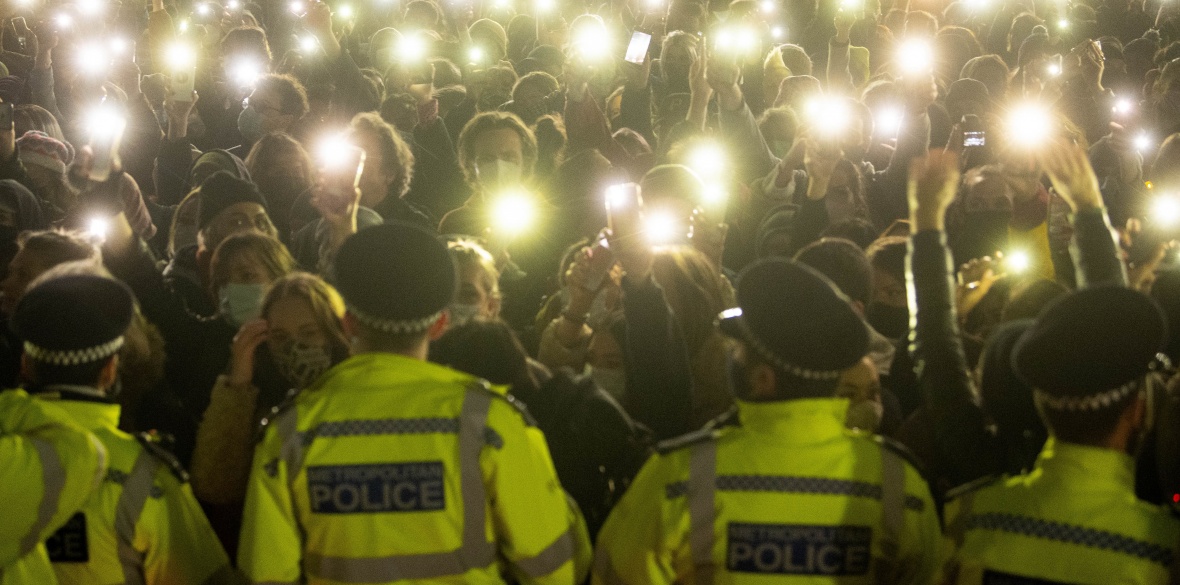
People in the crowd turn on their phone torches as they gather in Clapham Common, London, after the Reclaim These Streets vigil for Sarah Everard was officially cancelled, March 13, 2021

Family hit out as report reveals Wayne Couzens reported 8 times to police before Everard killing

MURDERER cop Wayne Couzens was reported to police eight times before he went on to kill Sarah Everard, an inquiry found today.

The review, chaired by Dame Elish Angiolini, found the killer had been carrying out other attacks over the span of decades.

The inquiry traced the former officer’s offences back to 1995 when he allegedly tried to kidnap a woman at knifepoint.

It also found evidence that he committed a “very serious sexual assault against a child” in 2002, and joined Kent Police soon after.

A woman said Mr Couzens raped her in 2006 while he was a special constable, and that he raped a woman in October 2019 while he was an officer with the Met.

Although no allegations reached the police, he was reported to the force for indecent exposure eight times.

But little action was taken and Dame Angiolini said that multiple “red flags” were ignored.

https://morningstaronline.co.uk/article/why-were-the-red-flags-ignored

Continue ReadingWhy were the red flags ignored?

Devolved leaders reject shortlist for climate watchdog chair over Tory links

Spread the love

https://www.theguardian.com/environment/2024/mar/01/devolved-leaders-reject-shortlist-for-climate-watchdog-chair-over-tory-links

Lord Deben, the Climate Change Committee’s first chair, was environment secretary under Margaret Thatcher and John Major. Photograph: Dorset Media Service/Alamy

Refusal by Welsh, Scottish and Northern Irish leaders to approve candidates means whole recruitment process may have to be rerun

Ministers in Westminster have been accused of trying to blunt the teeth of the UK’s net zero watchdog by appointing a Tory loyalist to the post of chair of the Climate Change Committee (CCC).

The leaders of the devolved governments in Wales, Scotland and Northern Ireland have refused to approve any of the six shortlisted candidates, saying they are all too close to the Conservatives and lack diversity.

The row has significantly delayed the UK government’s attempts to appoint a successor to John Gummer (Lord Deben), the committee’s first chair and a former Tory minister, who repeatedly challenged ministers for being insufficiently radical in their policies on combating global heating.

Since the CCC has a statutory duty to oversee climate policies for the UK government and all three devolved administrations, the shortlist requires consent from all four nations.

In a row that mirrors allegations about cronyism over appointments to chair the BBC and Ofcom, he said the UK government knew that Deben’s successor would be in post for 10 years.

https://www.theguardian.com/environment/2024/mar/01/devolved-leaders-reject-shortlist-for-climate-watchdog-chair-over-tory-links

Continue ReadingDevolved leaders reject shortlist for climate watchdog chair over Tory links