The Green Party has repeated its call for a full bilateral ceasefire, the release of all hostages, the suspension of arms exports to Israel, and for key players in the Netanyahu government to be held accountable for possible war crimes, six months on from the 7 October attacks by Hamas.
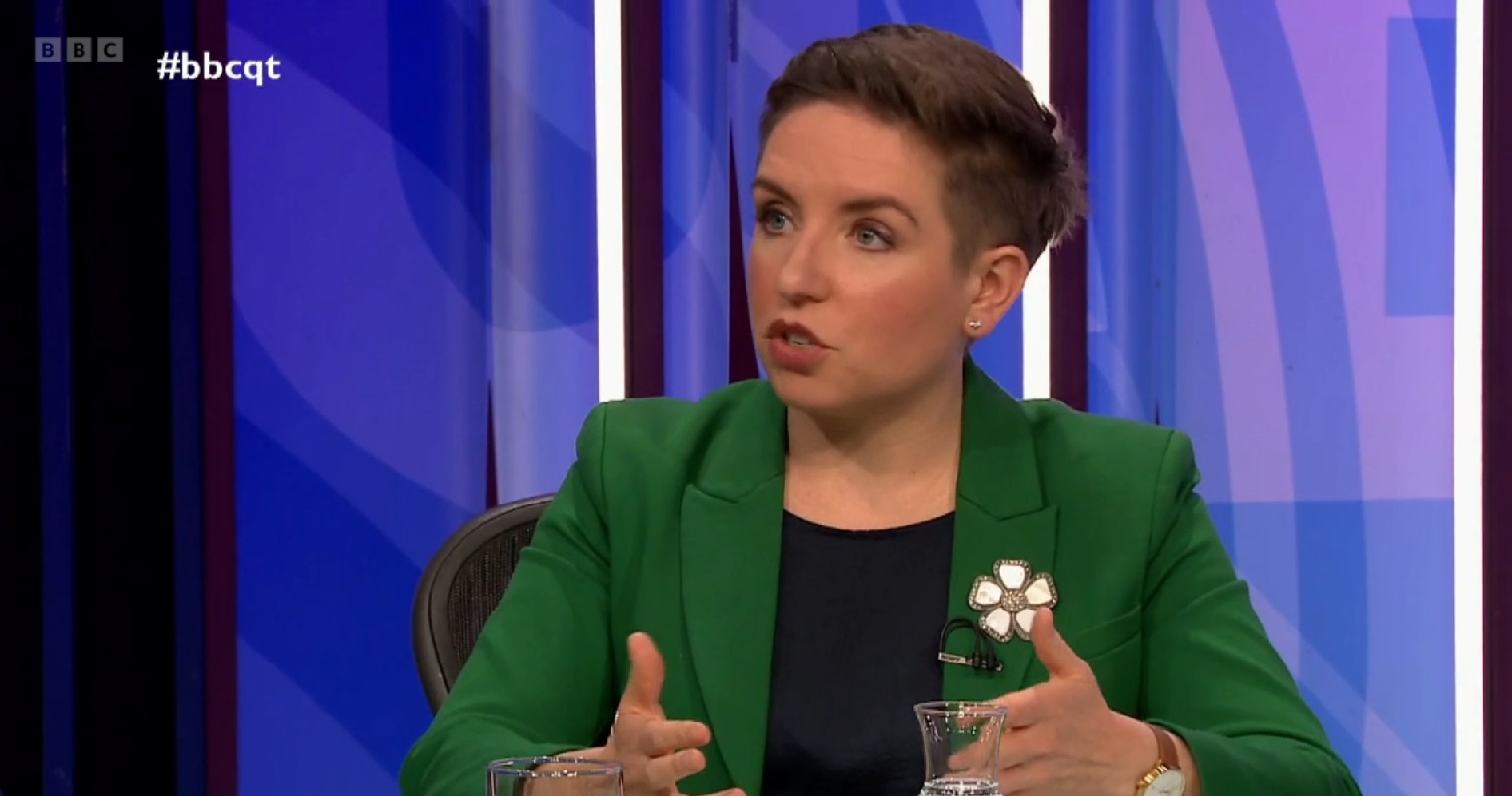
Image of the Green Party’s Carla Denyer on BBC Question Time.
Co-leader of the Green Party, Carla Denyer, said:
“This isn’t just a far away conflict that we have nothing to do with. By consistently refusing to call for a ceasefire and continuing to supply arms, the UK Government has been complicit in the deadly assault on Gaza by the Israel Defence Forces.
“Six months on from the horrific Hamas attacks on Israeli citizens, it is clear that the Netanyahu government’s response has been totally disproportionate. Over 33,000 innocent Palestinian civilians have now been killed, the majority of them women and children. This is not an act of self defence. As the UN’s Human Rights Council has resolved, the actions by the Israeli government are possible war crimes and crimes against humanity. Indeed, the UK Government itself has reportedly concluded secretly that Israel is breaking international humanitarian law.
“It is time for our Government to end their complicity and start leading efforts towards peace. They must finally call for a ceasefire, immediately suspend arms exports to Israel and back the UN Human Rights Council’s call for accountability for all violations of international humanitarian law and international human rights law.”
In the six months since October 7th, the Green Party of England and Wales has called for:
A full bilateral ceasefire
The release of all hostages
A suspension of all arms export licences to Israel until the violence stops
The cessation of all military collaboration with Israel, including use of British bases by Israeli forces, and intelligence sharing
Targeted Boycott, Divestment and Sanctions against individuals and institutions supporting or facilitating Israel’s occupation of Palestine
An investigation by the Metropolitan Police and Director of Public Prosecutions of war crimes committed against UK citizens, or where UK citizens are potential perpetrators
The UK government to use its position as a permanent member of the UN Security Council to vote for, rather than abstain on, ceasefire votes
Targeted sanctions against key individuals in the Israeli leadership, including travel bans and asset freezes on Israel’s government ministers
An end to occupation of the Palestinian territories
The UK government to return to international law being the benchmark for UK policy, and repair the UK’s international reputation as a defender of the international rules-based order.
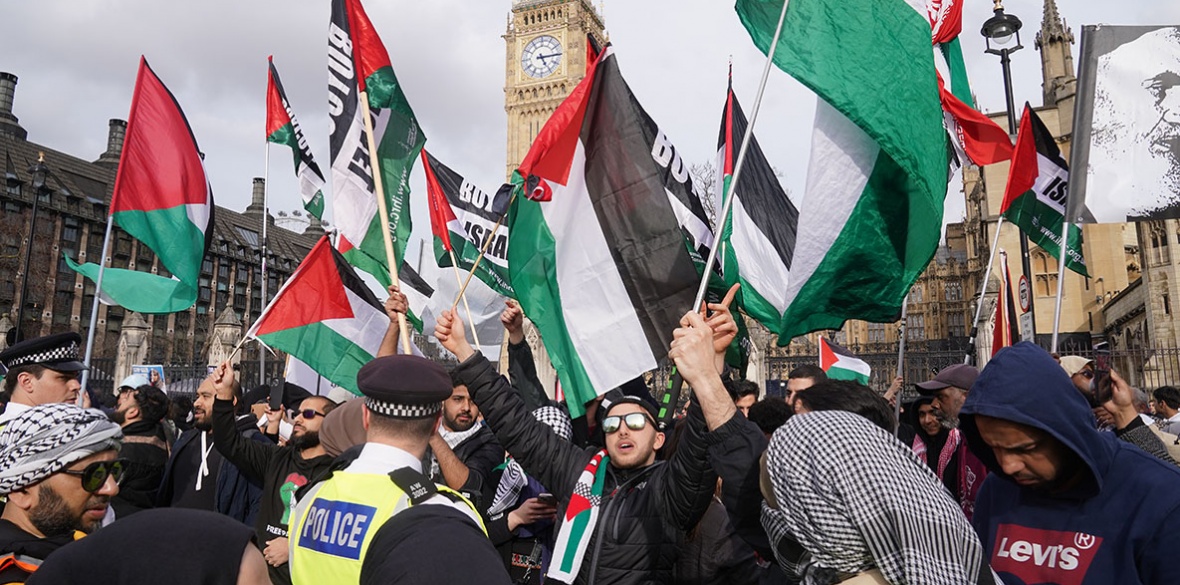
Demonstrators march through London, during an Al-Quds Day rally organised by the Islamic Human Rights Commission in support of Palestinians, April 5, 2024
Campaigners call on government to halt complicity in war crimes
CAMPAIGNERS accused the British government of “flouting their own rules” by exporting arms when there’s a risk of them being used to commit war crimes.
Labour’s David Lammy urged Foreign Secretary David Cameron to face MPs in the House of Commons and address concerns about arms export licences directly.
In January, documents filed in High Court showed that Lord Cameron recommended British arms sales to Israel despite “serious concerns” in the Foreign Office that it had breached international law.
More than 600 lawyers have since signed a letter warning the government to suspend the sales, or risk breaking international humanitarian law.
Lord Cameron has been urged to reveal whether he has received legal advice on continuing the licences, amid warnings that he could be breaching the ministerial code by not publishing the advice if he received it.
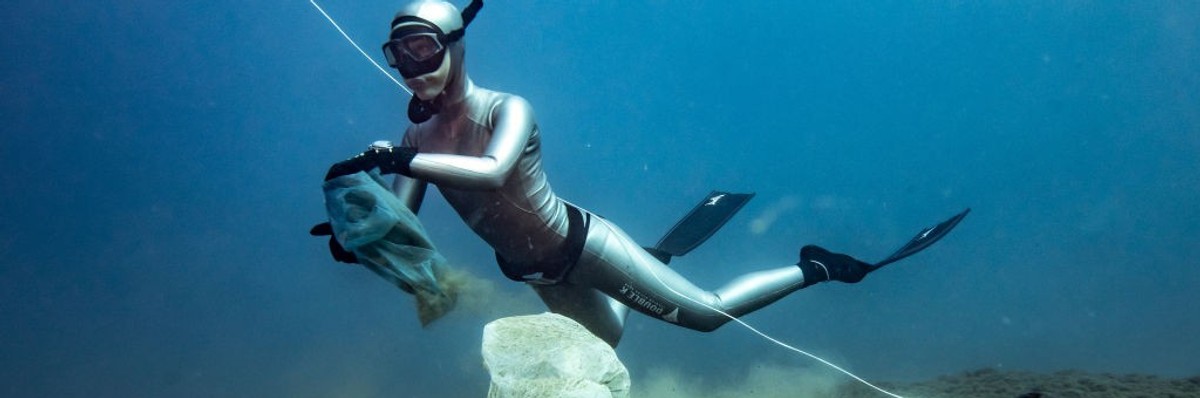
A diver removes plastic waste from the sea floor in Hatay, Turkey on December 2, 2022. (Photo: Sebnem Coskun/Anadolu Agency via Getty Images)
“Every minute, a garbage truck’s worth of plastic enters the ocean,” researchers said.
The amount of plastic waste littering the Earth’s ocean floors could be up to 100 times the quantity floating on the surface, according to a study published this week.
Researchers at the Commonwealth Scientific and Industrial Research Organization (CSIRO)—an Australian government agency—and the University of Toronto in Canada found that up to 11 million tons of plastic are polluting the planet’s ocean floors, including microplastics and larger objects like fishing nets, cups, and bags.
“We know that millions of tons of plastic waste enter our oceans every year but what we didn’t know is how much of this pollution ends up on our ocean floor,” CSIRO senior research scientist and study co-author Denise Hardesty said in a statement. “We discovered that the ocean floor has become a resting place, or reservoir, for most plastic pollution, with between 3 to 11 million tons of plastic estimated to be sinking to the ocean floor.”
"Every minute, a garbage truck's worth of plastic enters the ocean."
Study leader Alice Zhu, a doctoral candidate at the University of Toronto, said that “the ocean surface is a temporary resting place of plastic so it is expected that if we can stop plastic entering our oceans, the amount would be reduced.”
“However, our research found that plastic will continue to end up in the deep ocean,” Zhu stated. “These findings help to fill a longstanding knowledge gap on the behavior of plastic in the marine environment.”
“Understanding the driving forces behind the transport and accumulation of plastic in the deep ocean will help to inform source reduction and environmental remediation efforts, thereby reducing the risks that plastic pollution may pose to marine life,” she added.
The study is part of CSIRO’s Ending Plastic Waste program, whose goal is “an 80% reduction in plastic waste entering the Australian environment by 2030.”
Humans produce approximately 440 million tons of plastics annually, or roughly the combined weight of every person on the planet. Plastic pollution harms not only the environment and ecosystems, but also human health and economies.
Plastic use is expected to double by 2040. Negotiations on a global plastics treaty have made little progress amid lobbying by the fossil fuel and petrochemical industries.
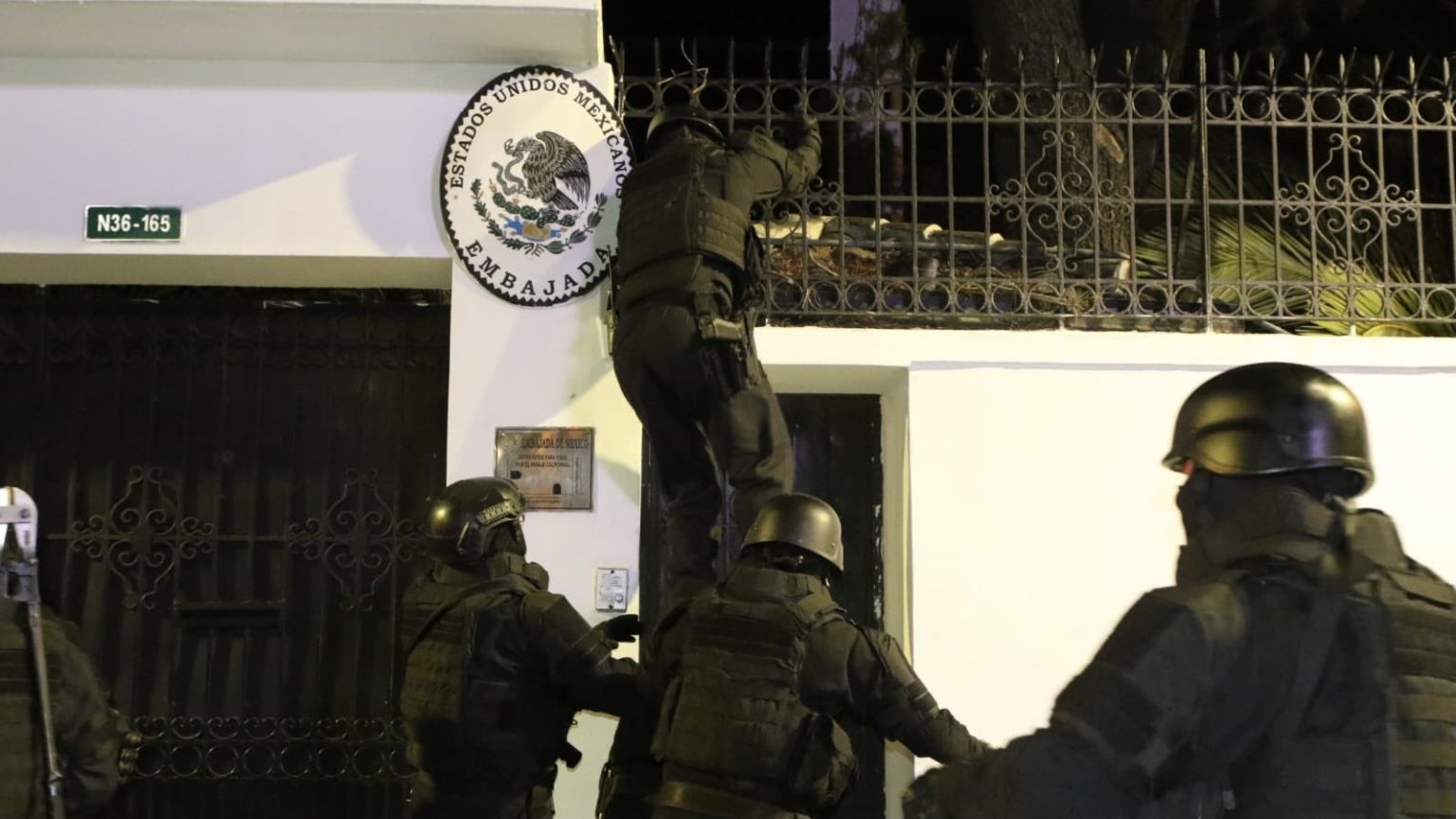
Late on Friday April 5, dozens of Ecuadorian police officers forcibly entered the Mexican Embassy in Quito and detained former Ecuadorian vice president Jorge Glas. Glas had been conceded political asylum by Mexico earlier that day after having applied in December 2023 amid intensified political persecution against him.
The move has been widely condemned by nearly the entire political spectrum in Mexico as a grave violation of Mexican sovereignty and has also been widely condemned by progressives in Ecuador.
Following the incident, Mexican President Andrés Manuel López Obrador and Foreign Minister Alicia Bárcena announced that Mexico was suspending diplomatic relations with the country.
Roberto Canseco, the head of Foreign Ministry and Political Affairs at the Mexican Embassy in Quito who was present when the incursion took place, spoke to the press shortly after the incident. “They threw me to the floor. I tried to physically stop them from entering but like criminals they raided the Mexican Embassy in Ecuador. This is not possible, this cannot be, it is insane,” Canseco told reporters incredulously.
The diplomat told reporters that there had been no prior warning to the police raid, but that it clearly happened because Glas is being persecuted. He also expressed concern over the whereabouts and wellbeing of the former VP.
He added, “Risking my life, I defended the honor and sovereignty of my country.”
The unprecedented incident took place amid rising tensions between the two countries. Jorge Glas had been seeking refuge at the Mexican embassy since December 18, 2023 and residing at the embassy as a “guest” after Ecuadorian authorities began to intensify pressure on Glas and summon him for investigations. This past week, the government of Daniel Noboa announced that it declared the Mexican Ambassador Raquel Serur Smeke a “persona non-grata” allegedly in response to comments made by President López Obrador in his morning press conference which insinuated that Noboa had benefited from the assassination of presidential candidate Fernando Villavicencio. However, many analysts have pointed to Glas’ presence in the embassy as the key factor behind Quito’s attacks on Mexico, and the events of April 5 seem to have confirmed this theory.
Jorge Glas: Victim of lawfare in Ecuador
Glas spent five years in prison, after being convicted of criminal conspiracy in the Odebrecht case, as part of the vicious lawfare campaign against members of Rafael Correa’s administration. Glas was later convicted in April 2020, along with Correa, in the “Bribes Case”, which alleged that they and 18 other government officials accepted bribes from private companies in exchange for public contracts. As prosecutors were unable to find evidence that the two received bribes, Glas and Correa were accused of “psychic influence” on their subordinates who allegedly carried out these deals and sentenced to several years in prison. Correa was also banned from participating in politics for 25 years.
Throughout the intense lawfare campaign against him and others, Glas has maintained that he is innocent and that both the charges and the harsh sentencing of him constitutes political persecution.
During the Correa presidency, Glas was one of the key leaders in the “Citizen’s Revolution” political project, which sought to make important social and economic reforms to better conditions for the majority. During this period, the Correa administration launched a Constituent Assembly to rewrite Ecuador’s constitution to guarantee essential rights for all, among other measures to promote national culture, Indigenous rights; it promoted Latin American regional integration over ties with the US and kicked out the US military base; and maintained anti-neoliberal economic policies, favoring social investment over cuts to public spending and social programs.
This project was brought to a halt in 2017 when Lenín Moreno was elected president and made a volte-face in Ecuador’s policies across the board, taking out a massive loan from the IMF, exiting regional integration spaces and attacking the country’s regional allies and economic partners like Venezuela, and imposing harsh austerity measures and brutally repressing protests against the measures. Under Moreno, the Attorney General also began its targeted attacks on leaders and officials of the Citizen’s Revolution.
Glas was eventually released on November 28, 2022 and granted “provisional freedom” as he had fulfilled over 40% of his prison sentence. However, in December 2023, days after he arrived at the Mexican embassy and weeks after Daniel Noboa took office as president, a judge revoked Glas’ provisional freedom and called for his arrest and imprisonment. Fearing for his life, Glas remained at the embassy and applied for political asylum, which was granted April 5, 2024.
The left in Ecuador responds
Progressive groups in Ecuador immediately expressed outrage at the actions of Noboa’s government and the National Police and issued sharp condemnations.
The Confederation of Indigenous Nationalities (CONAIE) wrote in a statement on X, “The violation of the Mexican embassy in Ecuador is an extremely serious fascist act that threatens diplomatic relations and international law…It is worrying to observe how the authoritarian and fascist government of Ecuador uses force to secure its political trophies. This flagrant violation not only affects bilateral relations between Mexico and Ecuador, but also sends a dangerous message to the international community.”
Pabel Muñoz, the mayor of Quito and a member of the Citizen’s Revolution Movement party, stated, “Unacceptable, a global embarrassment. What just happened in the Mexican Embassy in Quito creates a complex situation for Ecuador before the international system and law. Is there any doubt that Jorge Glas is the victim of terrible persecution? The more concerning part is that he had already been granted political asylum.”
Correa also issued a short statement repudiating the attack on Mexico and the arrest of Glas, “What the government of Noboa has done is unprecedented in Latin American history. Not even in the worst dictatorships was the embassy of a country violated. We do not live under rule of law, it is a state of barbarie, with a guy who improvises [Noboa] that confuses the Homeland with one of his banana farms. We hold Daniel Noboa responsible for the safety and physical and psychological integrity of former Vice President Jorge Glas. To Mexico, its people and its Government, our apologies and eternal admiration.”
Mexico unites in defense of its sovereignty
People across Mexico have expressed outrage in response to the brazen violation of the country’s sovereignty and of international law. In the statement announcing the suspension of diplomatic relations, President López Obrador said it was “an authoritarian act” and a “flagrant violation of international law and Mexican sovereignty”.
Foreign Minister Alicia Bárcena said in an interview with TeleSur that in addition to suspending diplomatic ties, Mexico would take Ecuador to the International Court of Justice and all multilateral bodies over its unprecedented actions.
Presidential candidate for MORENA, Dr. Claudia Sheinbaum called the incident “an attack on diplomacy and international law that is inadmissible”.
Mexico’s Senate also released a statement “energetically condemning” the Ecuadorian government’s actions and demanding “respect to our sovereignty and to the integrity of our Embassy and diplomatic personnel.” They called on the Ecuadorian government to reconsider its actions and resume the diplomatic path to resolve issues.
Both traditional right-wing parties PRI and PAN issued condemnations of the police invasion, while their joint candidate in the upcoming elections released a lukewarm statement saying that diplomatic missions cannot be violated.
‘With a General Election on the horizon, there is an opportunity for all parties to set out how they plan to tackle the scale of need.’
The economic and social costs of mental health in England soared to £300 billion in 2022, up from £119 billion in 2020, and £77 billion in 2003. This was the finding of new research from the Centre for Mental Health and commissioned by the NHS Confederation’s Mental Health Network.
The overall costs of mental ill health equate to double the NHS’s entire budget of £153bn in England in 2022. Shockingly, the costs are also similar to the estimated impact of Covid-19 on the UK economy in 2020 (£260bn in 2020 prices).
The economic costs, including unemployment, staff turnover, sickness days and presenteeism, equated to £110bn. The human costs in terms of wellbeing and reduced quality of life, were found to be £130bn, and the health and care costs £60bn.
The authors of The Economic and Social Costs of Mental Ill Health say that the new figures demonstrate the urgent need for action to turn the tide on rising poor mental health. They warn that failing to act could lead to even higher costs that no government can afford to ignore.
Following the publishing of the report, Dr Sarah Hughes, chief executive of the mental health charity Mind, said that the research adds to the “growing list of evidence showing this crisis is too big to ignore.”
“The government can no longer bury its head in the sand about the need for action.