The world no longer needs new fossil fuels – and the UK could lead the way in making them taboo

Spread the love
Savva_25/Shutterstock

Greg Muttitt, UCL; Fergus Green, UCL, and Steve Pye, UCL

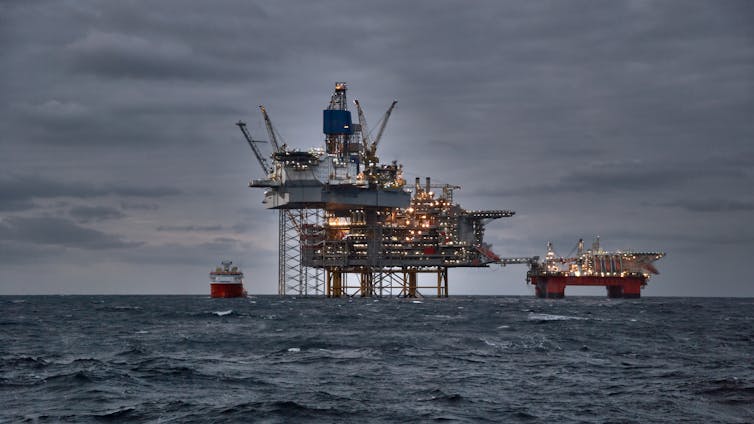
North Sea oil and gas has become a battleground issue in the UK general election.

The Labour party’s manifesto promises an end to issuing new licenses for finding oil and gas. The Conservative party meanwhile proposes a law that would require the next government to hold a licensing round every year.

Our recent study found that new fossil fuels are not needed, and that stopping the extraction of new coal, oil and gas is among the best ways to tackle the climate crisis.

Scientific assessments tell us that global warming above 1.5°C will mean escalating danger to the environment, human health and the economy. We found that, in a world that limits warming to 1.5°C, remaining global demand for fossil fuels could be met by assets that have already been built.

This means that Labour’s plans do not go far enough. Even under existing licenses, new oil and gas fields need not be opened, nor new platforms and pipelines built.

Surplus to requirements

Our research confirms an earlier finding of policy experts at the International Energy Agency (IEA): that no new fields are needed to meet energy demand as the world attempts to achieve net zero emissions. However, our analysis goes further by demonstrating that no new fossil-fuelled power stations are needed either.

If governments stop new projects, the production and consumption of fossil fuel will gradually decline over coming decades as existing assets reach the end of their lifespans. This gradual transition will give time to plan the process, to protect and create jobs and to build solar and wind farms that meet energy demand as fossil fuels are phased out.
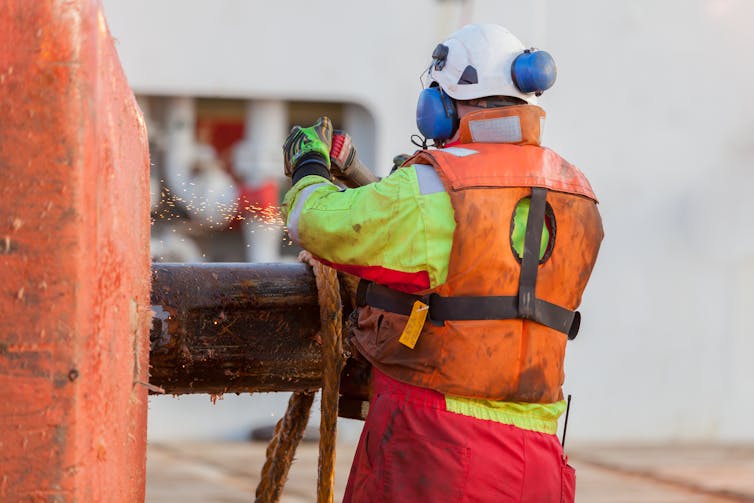
A seaman working on an offshore rig.
Winding down the fossil fuel industry should allow workers time to retrain.
Arild Lilleboe/Shutterstock

A stop to new fossil fuel projects is essential to “transitioning away” from coal, oil and gas, which is what governments agreed to do in December 2023 at the COP28 climate summit in Dubai. This is a necessary commitment, but since it is expressed as a vague and collective goal with an indeterminate end point, it is easy for governments to pay lip service to it while maintaining business-as-usual.

The IEA recently reported that global investment in fossil fuels has increased every year since 2020, even as governments announced net zero emissions targets. An investigation by campaign group Global Witness found that the United Arab Emirates signed over US$100 billion of oil deals in 2023 while it presided over climate negotiations.

Commitments to no new fossil fuels, such as Labour’s plan to end new licensing, are less prone to obfuscation because they are specific and immediate. What’s more, it is clear for everyone to see if a new fossil fuel project is being built. Making commitments that are easily verifiable is a proven recipe for building international trust and cooperation around a shared goal.

There are also political advantages to stopping new fossil fuel projects. Coalitions that support fossil fuels, including oil firms and their employees, are more capable of organising against the closure of existing assets than the cancellation of those yet to be built. Opposing coalitions, including communities living with the pollution and disruption of oil and gas extraction, tend to be more successful when mobilising against planned projects.

The new norm

By making a “no new fossil fuels” commitment, governments can help establish a new norm.

A norm is an expected standard of behaviour, like the norm against smoking in indoor public places, or the international norm against slavery. The more states and global institutions adopt a norm the more social pressure it places on others to follow suit. Once a critical mass has adopted the norm, its spread is self-sustaining.

Arguably, this process is well underway for coal – the dirtiest fossil fuel. The Powering Past Coal Alliance, a group of governments committed to phasing out coal power, was founded in 2017 by the UK and Canada. Already the alliance has expanded to include 60 national governments, including major coal consumers Germany and the US.
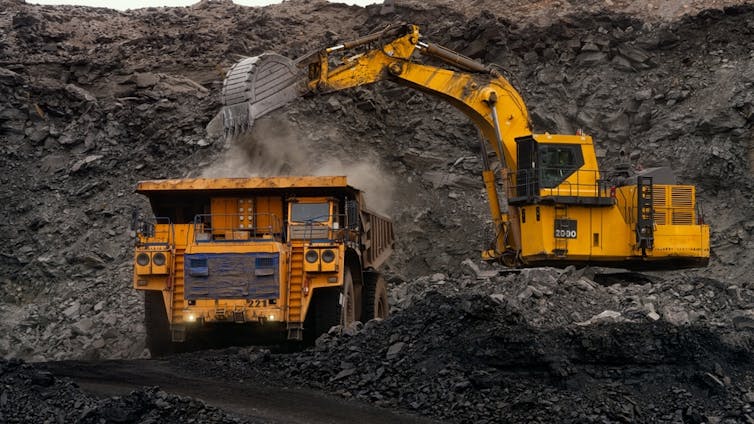
An excavator piles coal onto a truck.
Global coal demand rose when gas prices spiked in 2021 and 2022.
Roman Vasilenia/Shutterstock

The process of norm-building is gathering pace for other fossil fuels too. Governments that become core members of the Beyond Oil and Gas Alliance, which so far numbers 15, commit to issuing no new licenses for oil and gas exploration on a path to the total phase-out of fossil fuel production.

The Clean Energy Transition Partnership, comprising 41 governments and financial institutions, commits to ending international lending for fossil fuel projects. And in the private sector, 22 financial institutions have pledged to stop financing new oil and gas projects.

Were a future UK government to commit to stopping new oil and gas fields, it would lend considerable momentum to the norm, given the UK’s role in the history of the oil industry and the fact that is home to BP and Shell, two of the world’s five “supermajor” oil companies.

The UK Climate Change Committee, the government’s independent advisers, has noted that stopping new oil and gas projects would send an important signal to other countries. Such a move would also restore the UK’s reputation as an international leader on tackling climate change, at a critical time when the climate-denying far right is making inroads.


Imagine weekly climate newsletter

Don’t have time to read about climate change as much as you’d like?

Get a weekly roundup in your inbox instead. Every Wednesday, The Conversation’s environment editor writes Imagine, a short email that goes a little deeper into just one climate issue. Join the 30,000+ readers who’ve subscribed so far.The Conversation


Greg Muttitt, Honorary Research Fellow, Energy & Climate Change, UCL; Fergus Green, Lecturer in Political Theory and Public Policy, UCL, and Steve Pye, Associate Professor in Energy Systems, UCL

This article is republished from The Conversation under a Creative Commons license. Read the original article.
Continue ReadingThe world no longer needs new fossil fuels – and the UK could lead the way in making them taboo

Rosebank shows the UK’s offshore oil regulator no longer serves the public good

Spread the love
Igor Hotinsky / Shutterstock

Gisa Weszkalnys, London School of Economics and Political Science and Gavin Bridge, Durham University

In a four-line statement announcing the approval of the new Rosebank oil field 80 miles west of Shetland, the UK’s offshore oil and gas regulator showed its mission no longer serves the public good.

The announcement by the North Sea Transition Authority (NSTA), which regulates oil and gas extraction in the waters off the British coast, asserted that net zero considerations had been taken into account – a technical definition that makes it appear long-term oil production is compatible with climate goals. This has outraged and dismayed climate scientists, campaigners, and the many other people concerned about the UK’s faltering climate leadership.

The approval greenlights a process that is expected to produce first oil by 2026, and around 300 million barrels of oil (and a smaller amount of gas) over the next two decades. The project’s developers are Equinor, an oil company owned for the most part by the Norwegian state, and Ithaca Energy, owned by the Delek Group listed on the Tel Aviv stock exchange.

The decision is out of step with demands for rapid action on climate change coming from a range of quarters. This includes shareholder activists demanding corporations accelerate decarbonisation, direct action groups such as Just Stop Oil, and financiers concerned about the risks of “asset stranding” as renewables become cheaper than fossil fuels.

Public protests and legal challenges to the NSTA spotlight the irrationality and recklessness in the government’s expressed support for issuing new licenses. Activists are not alone in making this point.

A welter of scientific studies and reports by international agencies confirm that new fossil fuel extraction is incompatible with keeping global temperature increases well below 2°C.

Rosebank has been a major focus for climate activism in the past couple of years, as science, international policy and campaigners turn their attention to stopping new extraction, rather than solely focusing on reducing emissions. Calls to end new licensing for oil and gas are in line with climate science.

But a climate politics focused on new licensing alone misses the point. The thing is, like other North Sea oil fields yet to be approved, Rosebank was licensed for oil and gas extraction years ago.

The NSTA approval process follows licensing, sometimes after considerable time has passed. And it is this approval process that locks the UK into hydrocarbon production for years to come.

End ‘maximising economic recovery’

The core objective of the NSTA is to maximise the economic recovery of UK petroleum – a principle shorthanded as MER – as set out in the 1998 Petroleum Act. In practice, this means the regulator’s primary mission is to facilitate the extraction of oil and gas.

A revised strategy in 2021 paired MER with an obligation to support the UK’s net zero commitments. And the former Oil and Gas Authority changed its name to include an explicit reference to the “transition” in 2022, underpinned by ambitions for emissions reduction and decarbonisation.

NSTA sees its job as effecting the industry’s alignment with these goals. It is now also in charge of licensing for carbon capture and storage and offshore hydrogen storage.

Rosebank’s approval therefore reveals a deeper truth: the regulator’s guiding objective fails the public good test. Regulation aims to avoid economic, environmental and social harms, and ensure the public good through delivering collective benefits and upholding socially-desirable ideals. The Rosebank decision arguably breaches this principle.

Supporters of Rosebank argue it will contribute to the UK’s energy security and deploy decarbonisation technologies that reduce CO₂ emissions overall. These arguments do not stand scrutiny, however: oil from Rosebank, like around 80% of North Sea oil production, will be sold directly into international markets and will not materially affect the price of petrol or diesel for UK motorists.

Much of the value of that oil will flow into the portfolios of Equinor and Ithaca. That value could be harnessed to speed up transition to renewables or ensure its benefits are widely distributed, but that’s largely down to Equinor and Ithaca – not the UK government.

The NSTA asserts that its decision has “tak[en] net zero considerations into account”, yet the sector’s own decarbonisation ambitions count only those emissions associated with producing a barrel of oil, and exclude those from burning it (70%-90% of its total impact).

Rewrite the Petroleum Act

A decade ago, a decision by NSTA would not have raised much attention. Now it highlights a significant problem in need of reform. Piecemeal adaptation has left MER and other core regulatory principles untouched, which is at odds with the climate emergency.

Existing licensed fields escape the weak scrutiny embodied in instruments such as the climate compatibility checkpoint, a series of tests to be applied in decisions about future licensing rounds. What’s more, as a litmus test for approval, Rosebank indicates other licensed projects may get the go-ahead, like Cambo.

Removing NSTA’s central objective to maximise economic recovery requires nothing less than a rewrite of the Petroleum Act. This would be an opportunity to fundamentally revise what the North Sea is for, and whether or how to exploit its resources in the future. A start would be to consider a reversal of direction – a “minimising” of economic recovery, for example – which redefines the “economic” in terms of what is socially necessary.

Such a move will inevitably entail reviewing licences already in place, and will likely generate challenges from the sector and other powerful incumbents. Rosebank exposes, however, how the new mission of the offshore regulator has to be about securing a new public good. This needs wider social debate, and should ultimately be decided through parliament.


Imagine weekly climate newsletter

Don’t have time to read about climate change as much as you’d like?

Get a weekly roundup in your inbox instead. Every Wednesday, The Conversation’s environment editor writes Imagine, a short email that goes a little deeper into just one climate issue. Join the 20,000+ readers who’ve subscribed so far.The Conversation


Gisa Weszkalnys, Associate Professor of Anthropology, London School of Economics and Political Science and Gavin Bridge, Professor of Geography and Fellow of the Durham Energy Institute, Durham University

This article is republished from The Conversation under a Creative Commons license. Read the original article.

Continue ReadingRosebank shows the UK’s offshore oil regulator no longer serves the public good

UN Secretary-General Warns of ‘Climate Hell’ After Planet Experiences String of Record Temperatures

Spread the love

https://www.ecowatch.com/un-guterres-climate-hell-warning.html

Secretary-General António Guterres delivers his special address on climate action from the American Museum of Natural History in New York on June 5, 2024. United Nations

United Nations Secretary-General António Guterres has called for immediate action to avoid the world being in “climate hell” after this May was the warmest ever recorded, according to a recent report from the European Commission’s Copernicus Climate Change Service (C3S).

“It’s climate crunch time,” Guterres said at New York’s American Museum of Natural History on Wednesday, as UN News reported. “We stand at a moment of truth.”

Guterres emphasized that, though the need for measures to combat the climate crisis globally is at an all-time high, so are the occasions for sustainable development and economic prosperity.

“In the case of climate, we are not the dinosaurs. We are the meteor. We are not only in danger, we are the danger. But, we are also the solution,” Guterres said.

The UN chief cited C3S in saying emissions worldwide must be reduced by nine percent annually to maintain the 1.5 degrees Celsius temperature limit established in the 2015 Paris Agreement. Global emissions increased by one percent last year.

On Wednesday, the United Nations World Meteorological Organization said the temperature threshold has an 80 percent likelihood of being surpassed within the next five years.

“We are playing Russian roulette with our planet,” Guterres said, as reported by UN News. “We need an exit ramp off the highway to climate hell, and the truth is we have control of the wheel.”

Continues at https://www.ecowatch.com/un-guterres-climate-hell-warning.html

Continue ReadingUN Secretary-General Warns of ‘Climate Hell’ After Planet Experiences String of Record Temperatures

Deadly heat waves in Mecca and Greece underscore climate crisis

Spread the love

https://www.axios.com/2024/06/17/heat-waves-greece-mecca-saudi-arabia-climate-crisis

As the U.S. faces another potentially record heat wave this week, the Middle East and Europe’s Mediterranean have endured extreme temperatures that have proven deadly.

The big picture: Multiple heat-related deaths have been reported in Greece during the country’s earliest heat wave on record and Jordan’s official news agency said Sunday “14 Jordanian pilgrims died and 17 others were missing” in the searing heat while on the Islamic Hajj pilgrimage to Mecca in Saudi Arabia.

Tourists outside the Acropolis during high temperatures in Athens, Greece, on June 12, when authorities announced the closure of the ancient site for five hours due to soaring temperatures that also shut schools. Photo: Hilary Swift/Bloomberg via Getty Images
  • The heat waves sweeping these regions this month have been made “at least five times more likely” because of human-caused climate change, per new Climate Central analysis.

Context: Climate Central’s analysis is based on the group’s Climate Shift Index (CSI), which compares observed or forecast temperatures with simulations of the same weather conditions minus excess atmospheric greenhouse gases, per Alex Fitzpatrick.

  • The idea is to compare real-world conditions with what might have been the case had human-caused climate change been absent.
  • Saudi Arabia had a CSI of 5, meaning that human-caused climate change made a given daily average temperature five times more likely as of Monday morning. Greece, which has endured two weeks of extreme heat, had a CSI of 5 last week and 2 on Monday. Parts of Turkey had a CSI of 5.

Between the lines: Greece has been among the worst-affected European countries for extreme weather caused by the climate crisis in recent months, enduring an intense heat wave, severe wildfires and heavy rains flooding the country’s streets last year.

  • A joint report by UN and European Union agencies found in April that Europe’s temperatures are rising about twice as fast the global average due to human-caused climate change — making it the fastest-warming continent on Earth.

Continues at https://www.axios.com/2024/06/17/heat-waves-greece-mecca-saudi-arabia-climate-crisis

Continue ReadingDeadly heat waves in Mecca and Greece underscore climate crisis

Labour’s imposed candidate in Islington North ducks health debate with Jeremy Corbyn

Spread the love

https://morningstaronline.co.uk/article/labours-imposed-candidate-in-islington-north-ducks-health-debate-with-jeremy-corbyn

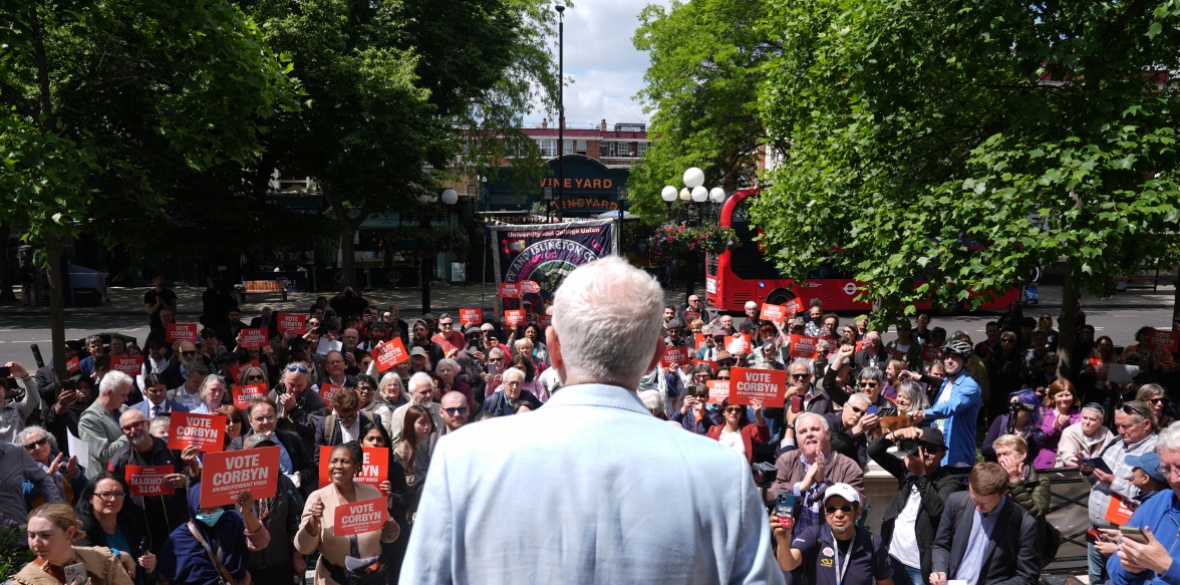
Jeremy Corbyn addresses supporters outside Islington Town Hall, north London, after handing in his nomination papers for the General Election on July 4, June 5, 2024

Praful Nargund, who is bidding to unseat Mr Corbyn, is a private health entrepreneur and has said privatisation is needed in the NHS

LABOUR’S imposed candidate in Islington North, Praful Nargund, has refused to attend hustings organised by Keep our NHS Public, forcing their cancellation.

The move is no surprise since Mr Nargund, bidding to unseat Jeremy Corbyn, is a private health entrepreneur who has said privatisation is needed in the NHS.

The no-hope Tory candidate for the seat also decided to duck the debate, forcing its cancellation.

Mr Corbyn, by way of contrast, spoke to hundreds at a rally in support of the NHS held in the constituency at the weekend.

Canvassing reports indicate massive support for the former Labour leader, particularly in the working-class areas of the constituency.

And in neighbouring Holborn and St Pancras, held by Mr Corbyn’s successor as Labour leader, independent challenger Andrew Feinstein is outgunning Sir Keir Starmer on the streets.

Continues at https://morningstaronline.co.uk/article/labours-imposed-candidate-in-islington-north-ducks-health-debate-with-jeremy-corbyn

Continue ReadingLabour’s imposed candidate in Islington North ducks health debate with Jeremy Corbyn