Climate Campaigners Must Understand the Implications of June’s Critical European Parliamentary Elections
Spread the love
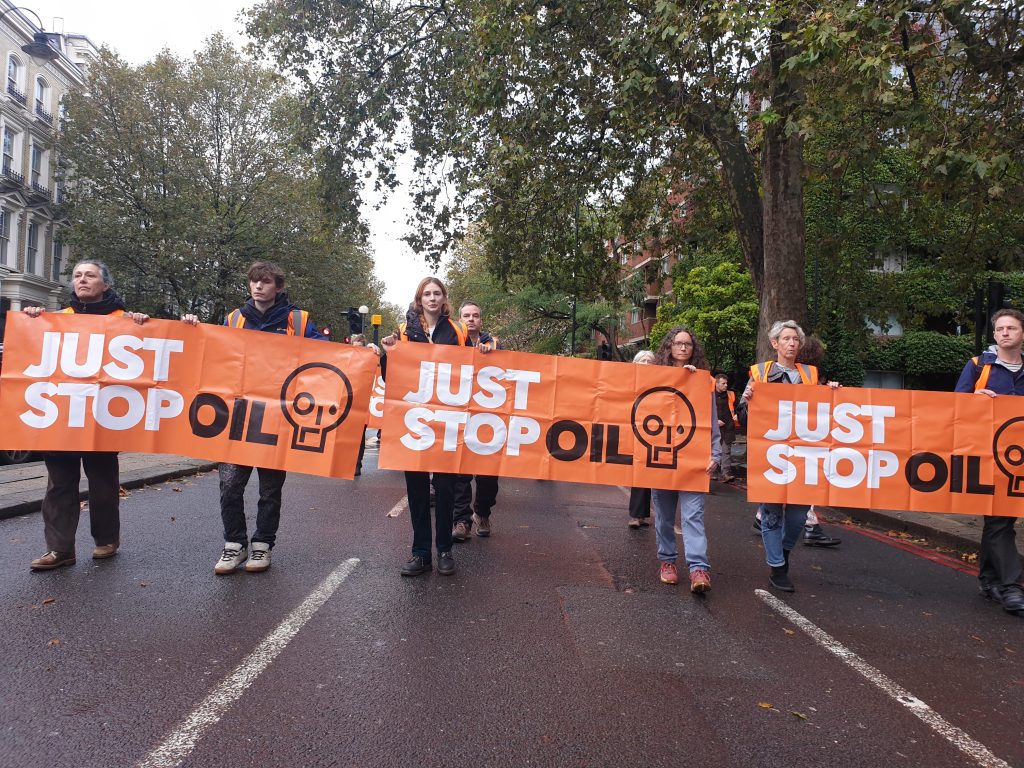
Just Stop Oil protest London 1 Nov 2023. Image: Just Stop Oil.

Original article by Hugh Wheelan republished from DeSmog

Climate campaigners should be thinking about the likely headlines coming out of the important European Parliament elections taking place from June 6-9.

The Parliament passes EU legislation alongside the Council of Ministers (representing EU Member State governments) following formulation by the European Commission in the EU’s tripartite rule-making system.

The latest poll of polls by Politico, released May 24, predicts a hard-right shift by voters for Parliament representatives, followed by related attacks on EU climate policy, which is now one of the lead policy objectives of the right across Europe.

The polls show the hard-right Identity and Democracy Group, which includes Italy’s Lega (LSP) and France’s Rassemblement National (RN) rising to 66 seats from 59 in the 720-seat parliament. That may now be optimistic given the expulsion last week of Germany’s Alternative für Deutschland from the group. 

The predicted rise would see it close in on Renew Europe, the pro-EU party that includes France’s Mouvement Democrate and the Dutch D66 and VVD parties, which is forecast to slip to 82 seats from 102.

A marginal rise in seats is also predicted for the right-wing European Conservatives and Reformists Group (ECR), from 72 to 74.

That will create serious climate headwinds in the European Parliament. 

‘Anti-Woke’

Right-wing parties now regularly oppose votes on environmental issues and are increasingly formulating their own “Motions for Resolutions” (proposals put forward for vote) with an anti-regulatory stance. 

The hard-right push won’t make the European policy weather though.

That’s made largely by the centre-right European People’s Party (EPP, Christian Democrats) – predicted to make a marginal rise to 176 from 174 seats – and the left-wing Progressive Alliance of Socialists and Democrats (S&D), also predicted to rise slightly to 144 from 140 seats.

The forecast is not cheery here either.

Sustainability campaigners say political support is waning for environmental, social and governance (ESG) – a moniker that started life in the push for policy and action in financial markets, but has become a broader catch-all term for sustainable economics.   

The EPP’s backing of ESG votes has dropped by 40 percent between 2020 and 2023, according to data compiled for nongovernmental organisations and seen by DeSmog. 

Even support from the left (S&D) has dropped by 10 percent, while Renew Europe backed 15 percent fewer ESG policy initiatives over the same period.

Why? 

Campaigners say part of the answer lies in the transatlantic wave effect of the so-called “anti-woke”, anti-ESG campaign from the United States to Europe. 

The U.S. anti-ESG movement has been driven largely by social wedge issues, such as LGBTQ+ rights and abortion, as well as diversity, equity, and inclusion (DEI) debates. 

In Europe, cost-of-living and migration are the arguments being deployed to derail, delay, or water down ESG policies. National nuances include stoked-up controversy around the transition to greener heating systems in Germany and France, or farmers and groundwater nitrate pollution in the Netherlands and Belgium.

Political attacks, from both right and left, on legislation related to ecodesign for sustainable products to create a circular economy, nature restoration, and the phasing out of internal combustible engines, have prompted the European Commission to delay green policies for fear of sparking an even wider backlash. Progressive groups have been slow to respond, fearing electoral consequences.

Green Deal

The European Union’s framework for a green, responsible economy looks roughly like this: The Green Deal provides the top-down policy direction for reducing emissions and green incentives, which feeds into the Green Taxonomy to classify what kinds of investments can be considered green. The Corporate Sustainability Reporting Directive (CSRD) requires companies to report on sustainable activities, and the Sustainable Finance Disclosure Regime (SFDR) forms an equivalent rulebook for investors. 

The EU’s regulatory activity between 2018-2024 has been a huge boost for sustainable finance. 

Has policy always been good? No. There is work still to do to make the rules pragmatic and understandable in terms of output. But this is the nature of regulation in these days of intense lobbying, counter-lobbying and political expediency. 

The end of the implementation phase for much of the EU’s regulatory advances comes next year. That will be a dangerous time. The cost of these policies will be fully visible for businesses, and ripe for pushback. 

In an inflationary economy, right wing parliamentarians will frame the financial and social implications of ESG regulations as unnecessary; too much, too soon, too costly. 

Anti-ESG actors are already weaponising the debate. 

Investors in the sustainable finance field expect the anti-ESG movement to become increasingly structured after the European Parliament elections. 

They believe populist parties will seek to co-opt concerns in the corporate and financial services sectors over the costs of ESG compliance, and seek to align with trade associations to increase opposition to new green rules. 

Indeed, European investors are already watering down their voting against pro-ESG shareholder resolutions, which is the primary way they can influence corporate activity.

A report earlier this year titled Voting Matters by ShareAction, the responsible investment campaign group, found that in 2023 just three percent of resolutions proposed to encourage companies to take action on carbon dioxide emissions and related environmental concerns were passed, compared to 32 percent in 2021. 

In the first instance, climate campaigners in Europe need to pay much more attention to the policy programmes of the parties and then get out the vote for the European Parliamentary elections.

Closer relationships will need to be built with the EPP on how to make green regulation work for voters in the longer term to head off the hard-right challenge. 

Much more clarity is also required on how green regulation can be used to incentivise companies and investors to adopt changes that will improve the living standards and environment of citizens over realistic timeframes. 

We should not shy away from the difficult debates and trade-offs that this will involve; indeed, we must be actively preparing for them. 

Hugh Wheelan is co-founder of Response Global Media, publisher of Responsible Investor. He has written extensively on ESG, investment, corporate, and sustainability issues for international publications including Financial News, The Guardian, and The Financial Times.

Original article by Hugh Wheelan republished from DeSmog

Continue ReadingClimate Campaigners Must Understand the Implications of June’s Critical European Parliamentary Elections

Diane Abbott ‘has Labour whip restored but banned from election run’

Spread the love

https://www.thenational.scot/news/24351541.diane-abbott-has-labour-whip-restored-banned-election-run

DIANE Abbott has had the Labour whip restored less than one day after Keir Starmer’s claims that an internal party probe into her was still “ongoing” were revealed to be untrue.

However, she is still to be banned from standing for the party at the next General Election, according to reports.

The PA news agency said that Abbott was given the Labour whip back following an internal investigation into comments she made suggesting that white minorities do not experience “racism” in the same way as others.

As Starmer used comments aimed at Abbott from Tory donor Frank Hester to attack his Conservative opponents in March, he also claimed she could not be given back the Labour whip because that internal probe into her was still ongoing.

However, the BBC reported on Monday night that the investigation had actually concluded in December, 2023.

https://www.thenational.scot/news/24351541.diane-abbott-has-labour-whip-restored-banned-election-run

Continue ReadingDiane Abbott ‘has Labour whip restored but banned from election run’

Starmer lies on Abbott exposed

Spread the love

https://morningstaronline.co.uk/article/starmer-lies-abbott-exposed

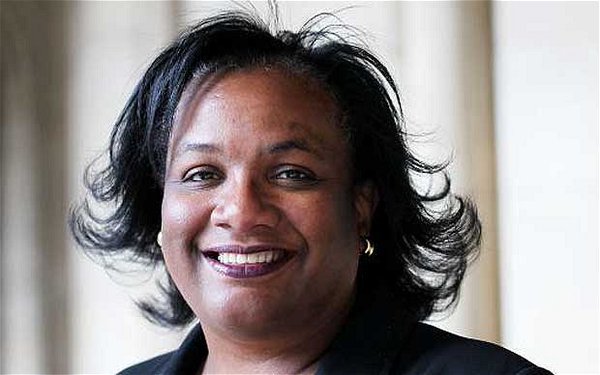
Image of Dianne Abbott
Dianne Abbott MP

SIR KEIR STARMER has been concealing the truth over Diane Abbott’s exclusion from Labour in Parliament, it was revealed today.

BBC Newsnight reported that the party probe into Ms Abbott’s offence — a brief newspaper letter for which she immediately apologised — finished last December.

She has since remained without the Labour whip entirely at the discretion of chief whip Alan Campbell, who is appointed by and answers to the Labour leader.

Yet Sir Keir has repeatedly claimed that the decision on Ms Abbott’s future — she cannot stand in the general election for Labour without the matter being resolved — was nothing to do with him.

This has now been exposed as a falsehood. The fact that Britain’s first black woman MP has remained suspended to the point where her career may be terminated has been a decision of the Labour leadership.

Ms Abbott has long ridiculed Sir Keir’s hands-off pretence, tweeting last week that the situation was “everything to do with him.”

https://morningstaronline.co.uk/article/starmer-lies-abbott-exposed

Continue ReadingStarmer lies on Abbott exposed

Morning Star: As the boss class flocks to Labour’s banner, workers face Swiss-cheese ‘new deal’

Spread the love

https://morningstaronline.co.uk/article/as-the-boss-class-flocks-to-labours-banner-workers-face-swiss-cheese-new-deal

Swiss Cheese

Image of Swiss Cheese by Janeen, Flickr

IT is no surprise that so many big business leaders have come out in support of the Labour Party.

It reflects two things. One is the banal fact that Labour looks like winning, and it does corporate leaders no harm at all to be able to say “I backed you at the election” when sitting down opposite ministers in a couple of months’ time to beg for assistance of one sort or another.

Keir Starmer and shadow chancellor Rachel Reeves have bent over backwards to place themselves in the service of monopoly capitalism.

That has been reflected in their rhetoric, pledging the “most business-friendly government” in British history, which is a very high hurdle, but is a clear indication of their aspiration.

Sometimes this is extended by a commitment to be “pro-worker and pro-business” as if there were never a conflict between the two.

As Unite’s Sharon Graham says, Labour’s New Deal for Working People now “has more holes than a Swiss cheese.” One can only hope that unions will be able to plug some of those gaps in Labour’s manifesto negotiations.

But the pro-capitalist turn goes much wider than safeguarding the bosses’ sacred right to exploit labour. It has permeated all aspects of the Starmer-Reeves approach.

The 120 signatories to the Labour-backing letter will have noticed that their corporation tax rate is not going to rise under Reeves.

They will have noticed that there is to be no wealth tax — of the kind Starmer once promised — under the impending Labour dispensation.

They will have noticed that outside a railway sector already under semi-control by the state, there is to be no extension of public ownership.

And they have noticed that despite the campaign slogan of “change” in fact Labour is offering nothing of the sort, but rather “economic stability.” That might have marked a point of divergence from the excitable Liz Truss but it hardly differs from Rishi Sunak, whose election boast is that he has restored — economic stability.

https://morningstaronline.co.uk/article/as-the-boss-class-flocks-to-labours-banner-workers-face-swiss-cheese-new-deal

Continue ReadingMorning Star: As the boss class flocks to Labour’s banner, workers face Swiss-cheese ‘new deal’

Israel subverts all international laws and rulings in its attack against Rafah

Spread the love

Original article republished from peoples dispatch under a Creative Commons Attribution-ShareAlike 4.0 (CC BY-SA) license.

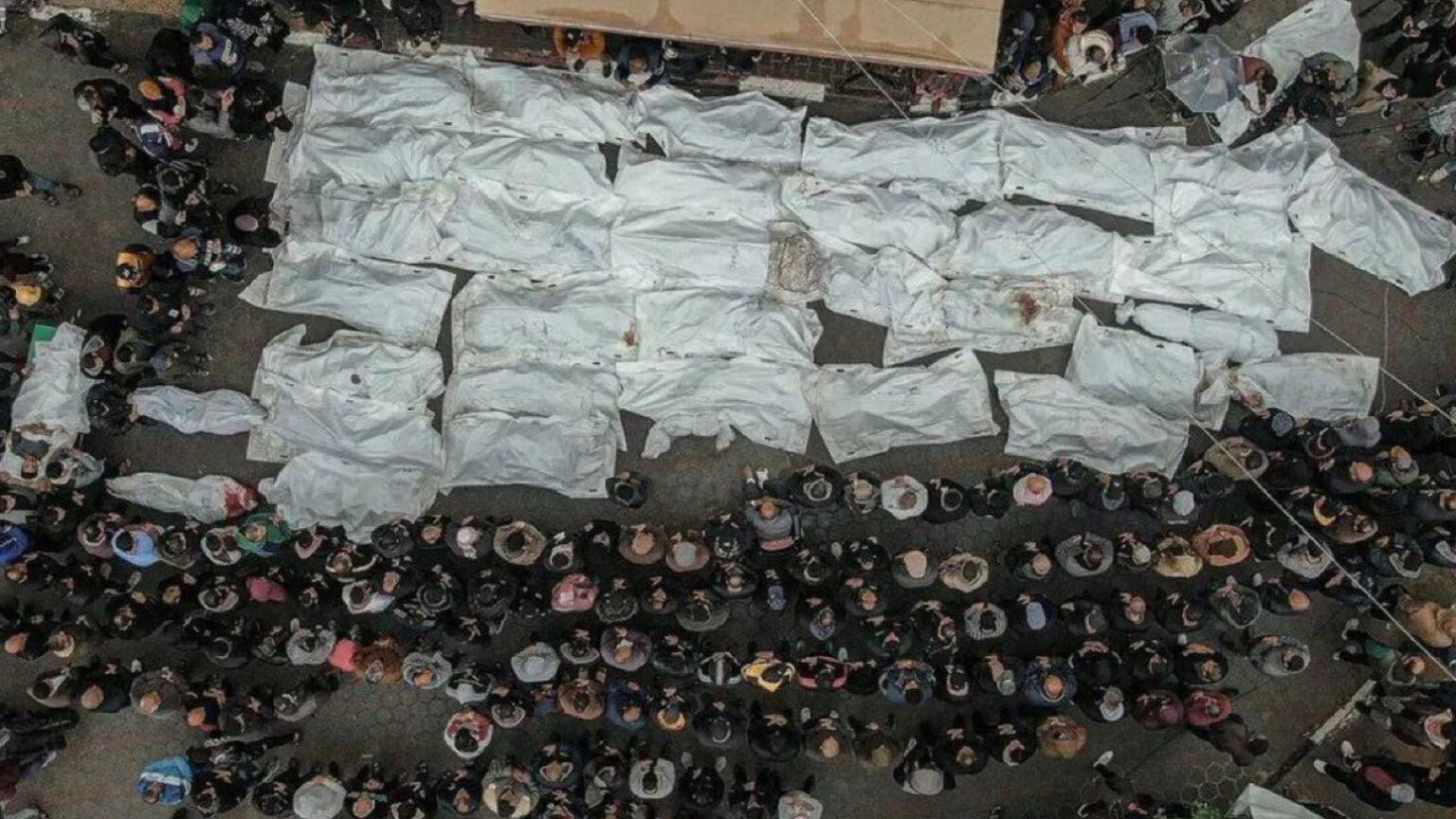
Palestinians perform funeral of victims of massacre in Rafah (Photo via Quds News Network/X)

Israel has intensified its attacks on Rafah in complete violation of the interim order of International Court of Justice (ICJ) on Friday, asking it to stop all attacks inside Rafah and open the border for greater humanitarian aid

At least 40 people, mostly women and children, were killed and scores of others were injured when Israel bombed a tent camp for displaced Palestinians in Rafah late in the evening on Sunday, May 26. 

The tent camp in Tal al-Sultan was recently built by UNRWA to shelter the Palestinians forced to move by Israeli forces from other parts of Rafah, and was a designated “safe zone,” Wafa News Agency reported.

At least eight Israeli missiles struck the camp in the late evening, when most were sleeping in the tents, causing a massive fire. According to the Palestinian Red Crescent Society (PRCS) hospitals in the region were already overcrowded and were in no position to handle all the injured in the attack.  

Videos and visuals of tents burning and people desperately trying to locate their loved ones in the chaos circulated on social media, along with a ghastly video of a headless body of a child, which volunteers pulled from the rubble.

The attack sparked worldwide condemnation, with even close allies such as France asking Israel to stop the attacks on Rafah. 

Several Arab countries demanded immediate UN Security Council intervention to stop the Israeli genocide of Palestinians. 

Chris Gunness, spokesperson of UNRWA told Al Jazeera that, “we are now seeing blatant disregard for the genocide convention. There is no exception to the Genocide convention. There are no excuses. This is a crime of crimes.”

Jeremy Cornyn wrote on X, “Palestinian children should wake up feeling excited to go to school and play with their friends. Instead, for those murdered in Rafah, their last moments on this earth were filled with unimaginable fear as bombs rained down on their tents. What a monstrous failure of humanity.

Ever since the beginning of the month, Israel has increased its attacks on Rafah, ignoring all the warnings and appeals made by the world community. It had ordered the evacuation of several eastern parts of Rafah, forcing nearly 800,000 Palestinians to relocate to new areas near the coast which do not even have basic facilities. 

Four days ago @IDF told Palestinians in Rafah to move to an area it calls “Block 2371,” designating it a “safe area.” This is the area “Israel” just bombed REFUGEE TENTS, carrying out a massacre. pic.twitter.com/SvxJWEpchE

— Ali Abunimah (@AliAbunimah) May 26, 2024

After claiming that the attack on Rafah was a response to Hamas’ attack, Israel termed it “very grave” and announced it has constituted an investigation in the attack on Tal al-Sultan in Rafah. 

More than 36,000 Palestinians, mostly women and children, have been killed by Israel in the 233 days of the war. The Israeli war has also injured over 81,000 other Palestinians so far. At least 160 Palestinians were killed in Israeli bombings in different other parts of Gaza on Sunday alone.

ICJ asks Israel to cease attacks, open Rafah borders 

Sunday’s attack was part of its increased assault on Rafah, particularly since the International Court of Justice (ICJ), as a provisional measure, asked Israel to stop such an attack on Friday. According to the Euro-Med Human Rights Monitor, Israel has struck Rafah at least 60 times since the ICJ order. 

The ICJ, in its interim order, had asked Israel to stop its attacks and open the border crossing with Egypt, which has been shut by it since May 7, hampering the flow of humanitarian aid in the war ravaged region. 

The ICJ issued a provisional measure asking Israel to comply with the Genocide Convention and “immediately halt its military offensive and any other action in Rafah governorate which may inflict upon the Palestinian group in Gaza conditions of life that would bring about its physical destruction in whole and in part.”

The decision was backed by 13 out of the 15 judges in the ICJ. 

The court also asked Israel to submit a report on the measures taken to implement the order within a month. 

The court was not convinced that Israel has taken enough measures to “enhance the security of civilians in the Gaza strip, and in particular those recently displaced from Rafah” as claimed by Israeli counsel during the hearing on the request made by South Africa in the court. 

Though ICJ orders are binding, Israel has refused to abide by them so far. Reacting to the judgment on Friday, Israel called it “outrageous, morally repugnant and disgusting.”

The provisional measures were granted in response to South Africa’s request made on May 10 under its original petition seeking action against Israel for its violations of Genocide Convention during the ongoing war in Gaza.

This was the third interim measure ordered by the ICJ since South Africa filed the petition in December. The Court issued an interim order in January asking Israel to take measures to prevent genocide in Gaza and increase aid delivery. A similar order was passed in March as well. 

Rafah is a narrow region in the southernmost tip of Gaza. Its population density has drastically increased, as it now shelters nearly 1.4 million people, over half of the total population of Gaza. Most of these people have been forcibly displaced by Israeli airstrikes and ground offensives in other parts of Gaza since the beginning of the genocidal war in October of last year. 

Original article republished from peoples dispatch under a Creative Commons Attribution-ShareAlike 4.0 (CC BY-SA) license.

Continue ReadingIsrael subverts all international laws and rulings in its attack against Rafah