Report: As Climate Crisis Expands, Canada Still Hands Billions to Fossil Fuel Industry

Spread the love

“That level of support could have fully funded every major wind and solar project in Canada from 2019 to 2021 12 times over”

Original article by Taylor Noakes republished from DeSmog.
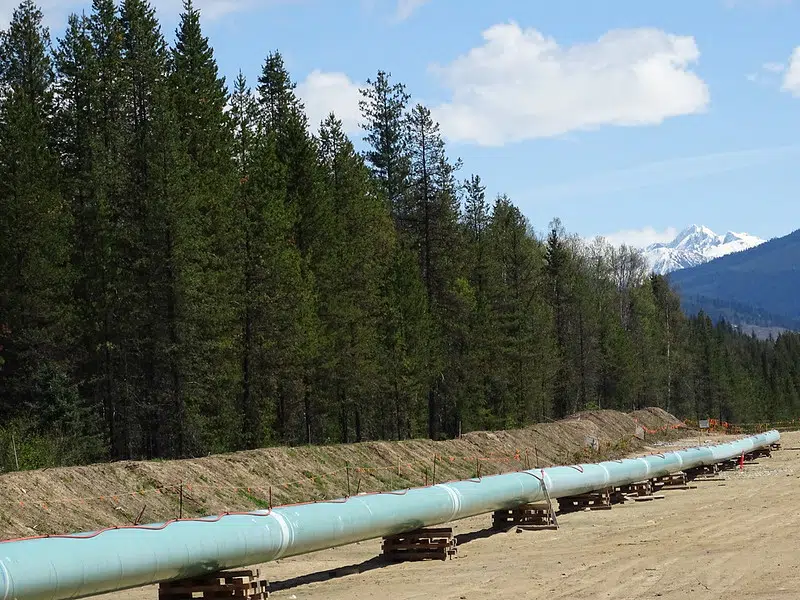
The Trans Mountain project would not have been possible without considerable direct federal government financial support. Credit: Adam Jones/Flickr (CC BY 2.0 DEED)

A new Environmental Defence analysis reveals that despite government promises to cut, the amount of taxpayers’ money given to the industry remains high.

Last year was one of the worst on record for climate change-related disasters, yet Canada’s federal government spent $18.6 billion supporting the fossil fuel and petrochemical industry.

new report by the nonprofit Environmental Defence indicates that, despite record profits for the fossil fuel industry and Canadian claims to eliminate subsidies, the government of Justin Trudeau continues to spend massive quantities of public money supporting the primary cause of climate change.

“As people across Canada faced a fossil fuel affordability crisis, and climate disasters continued to ravage the country and the world, the government of Canada continued providing financial support to an industry that we need to be winding down in order to avoid catastrophic levels of warming,” Julia Levin, associate director of National Climate at Environmental Defence told DeSmog. 

“Taxpayer handouts to Canada’s wealthiest companies means that less money is available for the types of investments that could actually help people across the country who are deciding between food and energy bills,” she said.

To put that in context, Environmental Defence’s “Canada’s Fossil Fuel Funding in 2023” report estimates that the Canadian government’s accumulated subsidies to the oil and gas sector over the last four years was at least $65 billion. 

“That level of support could have fully funded every major wind and solar project in Canada from 2019 to 2021 12 times over,” said Levin. “It is 10 times what the government has invested in climate change adaptation since 2015. Around half of that, $35 billion, is enough to double transit ridership across the country over the next 12 years.”

The report identified specific subsidies including loan guarantees of $8 billion for the Trans Mountain Expansion pipeline (TMX), and $7.3 billion in public financing through Crown corporation Export Development Canada. The report also noted over $1.3 billion in subsidies for carbon capture and storage projects, and approximately $1.8 billion in tax breaks for the oil and gas and related sectors.

The Trans Mountain project, controversially acquired by the Trudeau government early in 2018, would not have been possible without considerable direct federal government financial support. Initially estimated to cost $5.4 billion to complete, the most recent cost estimates are $34 billion. In addition to the added climate risk of a new pipeline exporting Canadian oil, with an anticipated drop in the global demand for oil, the project remains a substantial financial risk—one of the reasons Kinder Morgan abandoned it in the first place. The pipeline has been called a ‘global warming machine.’

Major Cost to Society

Environmental Defence’s report further notes the oil and gas sectors’ cost to society — in terms of air pollution, climate change-related natural disasters, and/or extreme weather — is estimated at $52 billion for 2023 alone.

Environmental Defence has been tracking the Canadian government’s subsidies to the oil and gas sector for several years, and as Levin explained in an interview with DeSmog, the organization has noticed certain trends.

“With the exception of 2020 as a COVID year, federal support to the oil and gas industry has been consistently around $18 to 20 billion in recent years,” she said. “We are seeing an increase in subsidies for carbon capture, and we know these are set to rise as the CCUS [Carbon Capture, Utilization, and Storage] investment tax credit gets finalized.”

Carbon capture and storage is the oil and gas industry’s preferred solution to addressing climate change, and the Canadian and American federal governments have heavily subsidized the technology. Critics warn that, rather than lowering emissions, carbon capture is emissions intensive and will be used to increase oil production through a technique called “enhanced oil recovery.” As previously reported by DeSmog, federal and provincial governments in Canada are preparing to spend billions in carbon capture subsidies.

Similarly, so-called blue hydrogen (hydrogen derived from natural gas using carbon capture) is also a costly, carbon- and resource-intensive false solution promoted by industry and government alike.

Levin called carbon capture and hydrogen “dangerous distractions.” 

“The government of Canada is finalizing a carbon capture investment tax credit as well as a hydrogen investment tax credit,” Levin pointed out. “Recent budget analysis from the Parliamentary Budget Office estimates that these two tax credits will collectively provide over $11 billion to carbon capture and hydrogen projects by 2028.”

“Despite 50 years of investment, carbon capture has never worked as promised,” said Levin. 

Delaying Clean Energy Transition

“Most projects never make it off the ground; the few that do fail to deliver the promised emissions reductions,” she said. “Oil and gas companies know this is a dead-end technology that won’t make a dent in emissions but they are promoting it to delay the clean energy transition and wring out even more subsidies.” 

Levin noted that hydrogen is also being used by oil and gas companies to justify continued, and even expanded, fossil fuel production.

The government’s misuse of public money isn’t limited to unproven technologies masquerading as climate change solutions. Environmental Defence’s report reveals that the same funds could have been used for new green energy projects and the development of public transit infrastructure, and could also have  taken a bite out of Canada’s affordability crisis.

“At a time when Canadians are dealing with a cost of living crisis, that level of funding could have retrofitted millions of homes to make them more energy efficient, therefore reducing energy bills,” Levin said. “It could have been used to reduce Canadians’ dependence on fossil fuels by switching our cars, furnaces, and stoves to electric options, which shields households from the inflationary pressures caused by fluctuating oil prices.”

Levin notes that there are other types of subsidies that Environmental Defence did not include in their inventory.

“The climate pollution created by oil and gas companies has massive costs, including health costs, property damage from extreme weather events, and decreased agricultural productivity due to changing weather patterns,” she said.

The report also found that oil and gas companies get considerable breaks on carbon pricing, which forms yet another kind of subsidy.

Canada’s continued subsidies to the fossil fuel sector defy explanation in this era of climate change. But they also contradict the government’s official messaging on fighting global warming, and the Canadian public’s expectations of their government.

“Ending fossil fuel subsidies should be the low hanging-fruit of climate policy,” said Levin. “It’s painfully obvious that when you’re in a hole, the first thing you do is stop digging.” 

While the government has promised to end funding to the fossil fuel industry, far more action is needed, Levin believes. 

“Finance Minister Chrystia Freeland must use Budget 2024 to announce the immediate steps the government is taking to eliminate all of its financing to the oil and gas industry, as was promised back in 2021,” said Levin.

“Rather than subsidizing fossils we should be taxing their massive profits – and investing the revenues into clean energy measures that will benefit Canadians.” 

Original article by Taylor Noakes republished from DeSmog.
Continue ReadingReport: As Climate Crisis Expands, Canada Still Hands Billions to Fossil Fuel Industry

Stop arming Israel, MPs demand

Spread the love

https://morningstaronline.co.uk/article/stop-arming-israel-mps-demand

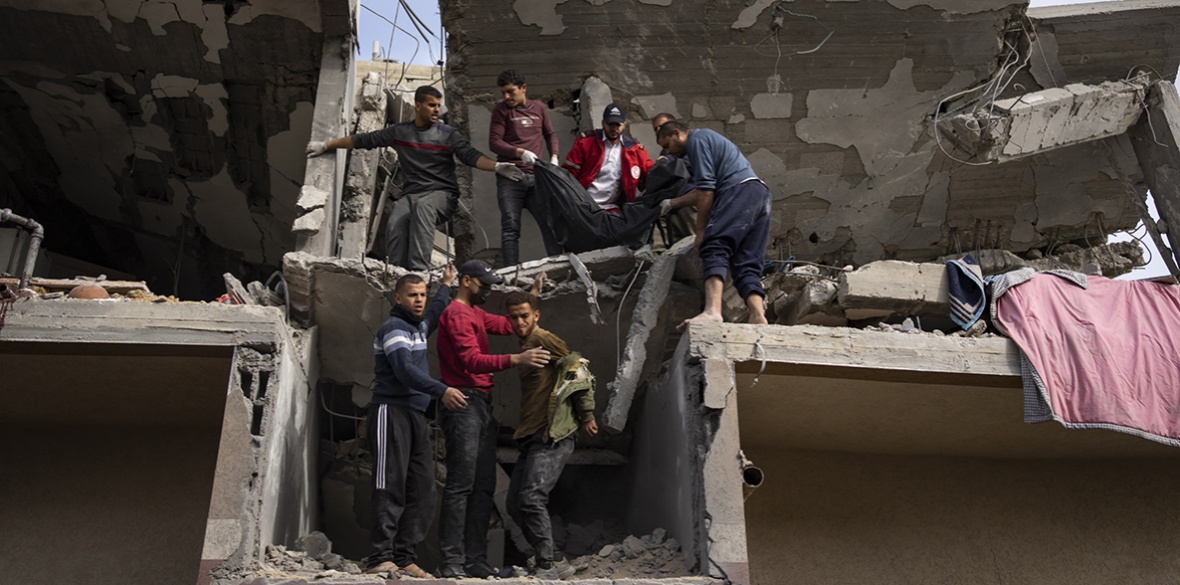
Palestinians carry the body of a woman found under the rubble of a destroyed building following an Israeli airstrike in Rafah, Gaza Strip, March 27, 2024

‘It is utterly unconscionable for arms sales to continue’ when Israel has plausibly breached the Genocide Convention, a letter coordinated by Zarah Sultana MP tells the government

MORE than 100 MPs demanded the government halt all arms sales to Israel today because of its genocidal assault on Gaza.

The 108 MPs backed the call in a letter co-ordinated by Coventry South MP Zarah Sultana, which was also signed by 27 members of the House of Lords.

It comes as pressure mounts on the British government to give effect to the United Nations security council resolution demanding an immediate ceasefire in Gaza passed earlier this week.

Israel has rejected the resolution and continues its assault. MPs expressed concerns earlier this week that continuing to arm Israel would make Britain complicit in war crimes and other breaches of international law.

Signatories include ex-Labour Leader Jeremy Corbyn, former Labour Middle East minister Lord Peter Hain, SNP Westminster leader Stephen Flynn and former Labour shadow minister Jess Phillips, who resigned from the front-bench in November over the party’s refusal to back a Gaza ceasefire.

Ms Sultana said that “when Israel is ‘plausibly’ in breach of the Genocide Convention and flagrantly violates international law on a daily basis, it is utterly unconscionable for arms sales to Israel to continue.

“But the UK government is refusing to act, making it complicit in this atrocity.

https://morningstaronline.co.uk/article/stop-arming-israel-mps-demand

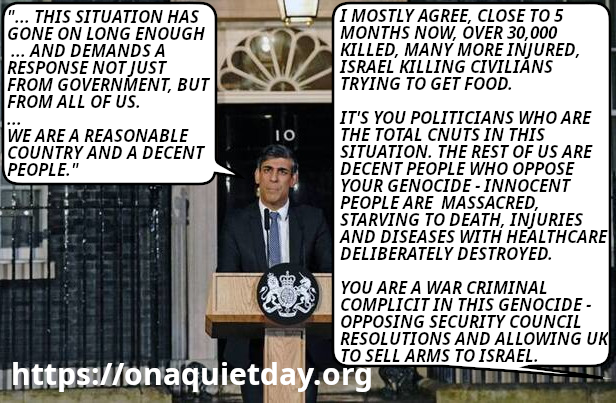
Response to Rishi Sunak's extremism speech at Downing Street 1 March 2024. Second version of this image with text slightly altered.
Response to Rishi Sunak’s extremism speech at Downing Street 1 March 2024. Second version of this image with text slightly altered.
Continue ReadingStop arming Israel, MPs demand

Morning Star: The public want a better funded NHS – it’s politicians who stand in the way

Spread the love

https://morningstaronline.co.uk/article/editorial-public-want-better-funded-nhs-its-politicians-who-stand-way

BRITAIN is worried about the NHS. The latest Social Attitudes Survey shows less than a quarter of the population are satisfied with the health service. That represents a drop of 29 per cent in just three years — the fastest fall ever.

That’s hardly surprising. Waiting lists at over seven million represent months of pain for people waiting on procedures. Seeing a GP in a hurry is all but impossible in many areas. Waiting times in A&E are breaching targets wherever you look.

This suits private healthcare interests down to the ground.

The number of privatised medical procedures hit a record last year. People who can afford it are going private: people who can’t afford it, the vast majority, are suffering.

The degradation of the NHS, and the consequent pressure for “reform” in the form of ever-greater dependence on for-profit provision, follows a familiar playbook. US academic Noam Chomsky summed it up: “That’s the standard technique of privatisation: defund, make sure things don’t work, people get angry, you hand it over to private capital.”

People are angry about the state of the NHS, but there is certainly no public enthusiasm, or even consent, to increasing the role of private capital.

The NHS’s founder Nye Bevan famously said the NHS would last as long as people had the faith to fight for it.

https://morningstaronline.co.uk/article/editorial-public-want-better-funded-nhs-its-politicians-who-stand-way

Continue ReadingMorning Star: The public want a better funded NHS – it’s politicians who stand in the way

Fresh crisis for Thames Water as investors pull plug on £500m of funding

Spread the love

https://www.theguardian.com/business/2024/mar/28/fresh-crisis-for-thames-water-as-investors-pull-plug-on-500m-of-funding

In July, Thames Water had agreed £750m of funding, with the first payment expected to be made on 31 March. Photograph: Maureen McLean/Shutterstock

Decision raises concerns about financial future of UK’s biggest water company

Investors at Thames Water have pulled the plug on £500m of emergency funding, raising concerns about the financial future of the country’s largest water company.

The beleaguered utilities firm announced this morning that its shareholders had refused to provide the first tranche of £750m funding set to secure its short-term cashflow, after the company had failed to meet certain conditions.

The crisis for Thames Water comes after devastating data on the scale of raw sewage discharges into rivers and seas this week.

Thames Water, who admit in their business plan they have been “sweating assets”, oversaw a 163% [increase?] in the duration of sewage dumping into rivers as their creaking infrastructure failed to cope with rainfall levels.

Thames is also at the centre of a major investigation by the water regulator Ofwat into sewage dumping from its treatment works, which could lead to massive financial penalties being imposed on the company.

Thames Water said on Wednesday that investors believed the conditions of funding had not been met and the £500m of new equity would not be handed over in the coming days.

A statement on behalf of Thames’s shareholders appeared to blame Ofwat: “After more than a year of negotiations with the regulator, Ofwat has not been prepared to provide the necessary regulatory support for a business plan which ultimately addresses the issues that Thames Water faces. As a result, shareholders are not in a position to provide further funding to Thames Water.

“Shareholders will work constructively with Thames Water, Ofwat and government on how to address the consequences of Ofwat’s decision.”

https://www.theguardian.com/business/2024/mar/28/fresh-crisis-for-thames-water-as-investors-pull-plug-on-500m-of-funding

Continue ReadingFresh crisis for Thames Water as investors pull plug on £500m of funding

What’s really behind Germany’s unshakeable support of Israel?

Spread the love

Original article by Matthew Read republished from peoples dispatch under a Creative Commons Attribution-ShareAlike 4.0 (CC BY-SA) license.

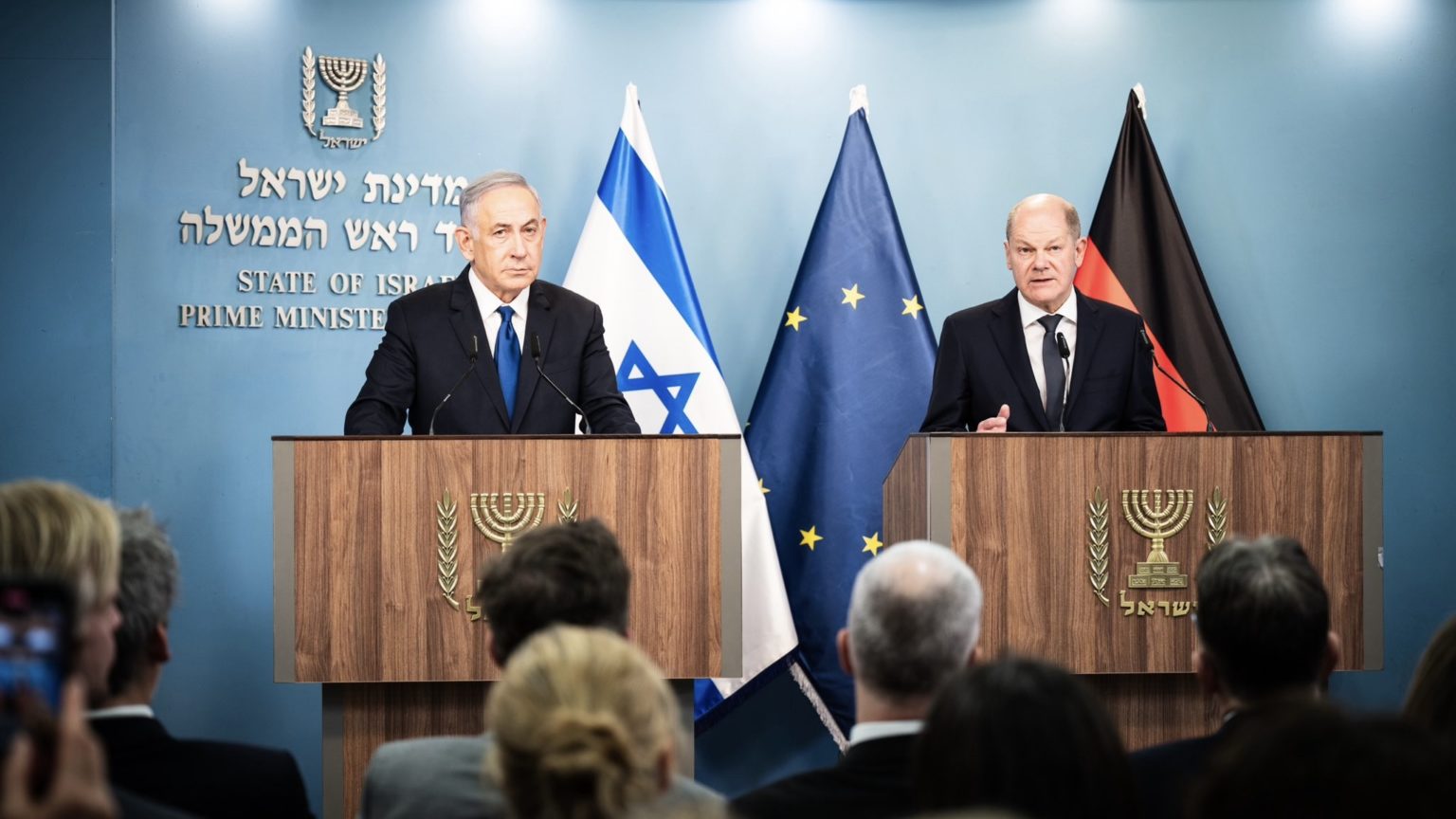
German Chancellor Olaf Scholz with Israeli PM Benjamin Netanyahu. Photo: Chancellor’s office

To understand Germany’s unconditional support for the Israeli genocide, one must understand the origins of the German state

The extent of the German government’s support for Israel during its ongoing offensive in Gaza has taken many by surprise. German Chancellor Olaf Scholz has been even more restrained in his criticisms of Tel Aviv than US President Joe Biden. A central point of reference for German politicians is the notion of Staatsräson (“state reason”). This was a term first coined in an essay by Germany’s former ambassador to Israel, Rudolf Dreßler, in the early 2000s and repeated by Angela Merkel in a speech before the Knesset in 2008. It has since become a centerpiece of German public statements and an ideological tool to legitimize Israel’s “right to self-defense”. As Scholz said on 12 October 2023: “At this moment there is only one place for Germany. We stand with Israel. …This is what we mean when we say, Israel’s security is Germany’s Staatsräson.

In this context, a growing number of nations from the Global South have begun to challenge Germany for whitewashing and even justifying the genocide of the Palestinians. In January 2024, Namibia’s late president Hage Geingob released a statement strongly criticizing Germany for its uncritical defense of Israel and emphasizing that the German government was now actively supporting a genocide in Palestine whilst it has still not atoned for its genocide against the Herero and Nama in Namibia (1904-1908). For similar reasons, the Nicaraguan government is now taking Germany to the International Court of Justice for aiding and abetting the Israeli genocide in Gaza.

To understand what lies behind Germany’s Staatsräson and its bilateral relationship with Israel, it is necessary to understand the origins of the current German state and the tradition in which it stands.

The historical context

The Federal Republic of Germany (FRG, commonly referred to as “West Germany” during the Cold War) was founded in May 1949. In a similar way to South Korea and Taiwan, the FRG was created after the Second World War under the wing of the USA to act as a bulwark against socialism. As a central actor in the West’s “containment” and “rollback” strategies, the West German state had to be both aggressive towards the socialist East and docile towards the capitalist West. The influence of the corporations that had funded Hitler was thus intentionally restored and the businessmen with ties to the Nazi party were unofficially pardoned for their role in fascist Germany’s crimes against humanity, despite often directly profiting from forced labor during the Third Reich (e.g., Daimler, Siemens, Rheinmetall, etc.). At the same time, the FRG was tightly bound into the US-led order through the Marshall Plan and the North Atlantic Treaty Organization (NATO), which to this day includes the stationing of tens of thousands of US troops in Germany.

The leaders of the young FRG were immediately confronted with the problem of how to publicly address the Holocaust. Pictures of concentration camp inmates sent shock waves around the world and gave rise to the international call: Never again! Yet domestically, West Germany could not afford a thorough denazification of society, for this would destabilize the capitalist basis of the FRG as it had done in East Germany, where Nazi war criminals and businessmen had been rigorously expropriated. Thus, rather than addressing the economic roots of fascism and prosecuting sections of the ruling class for abetting Hitler, conservatives and liberals in the FRG fostered a narrative of collective German guilt that all citizens would have to atone for. It was not capitalism and the liberal system of the Weimar Republic (1918-1933) that had enabled the rise of fascism, but the cultural propensities of the German people.

In this election poster from 1949, the Liberal Democratic party (FDP) – today a member of the governing coalition in Germany – lists an “End to Denazification” as its first demand.

This political strategy has been evident in West Germany’s support for the state of Israel, which had been founded one year prior to the FRG. The first West German chancellor, Konrad Adenauer, had publicly described the FRG’s first reparation agreement with Israel in 1952 as being “based on a compelling moral obligation”. In the face of domestic criticism over the three-billion-marks agreement – particularly from the Liberal Democratic party (FDP) and from his own Christian Democratic Union party (CDU) – Adenauer announced that “there are higher values than good business.” Yet, recently uncovered documents from the German Foreign Office reveal that Adenauer was in fact only “willing to negotiate reparations [with Israel] due to pressure from the USA”. The chancellor had referred to West Germany’s relationship with the USA and said that “breaking off negotiations with Israel without results would create the most serious political and economic dangers for the Federal Republic”.

In other words, it was stipulated by the USA that if the FRG wanted to become a powerful player in European politics again, it would have to provide significant political, economic, and military support to the state of Israel. While there was considerable domestic discontent over this precondition in the beginning, the leaders of the FRG have come to appreciate relations with Israel as conducive to their own interests, both in terms of geopolitical strategy and profitable ventures for German industries.

For instance, arms sales to Israel have skyrocketed in recent years; Siemens regularly profits from Israeli contracts, such as the 2018 tender by Israel Railways that was worth roughly one billion euros; and German drugmaker Merck (the founding family of which were staunch Nazis) also maintains research sites and projects worth millions across Israel. In the face of horrific images coming out of Palestine, the German media will justify the export of arms and capital to Israel by uncritically repeating the official government line: “In the past, Germany has above all supplied submarines to Israel and also subsidized exports with taxpayers’ money. The background to this is that Germany has declared Israel’s security to be Staatsräson in view of the murder of six million Jews by Nazi Germany.”

Concepts such as Staatsräson and collective German guilt have thus been developed as ideological instruments to both deflect responsibility from the German capitalist class for Nazi war crimes in the past and disguise the brutal pursuit of their economic and political interests in West Asia in the present day. This helps the German government to create extremely narrow confines for the public debate around these policies. Since October 7, Staatsräson has also been employed to drastically intensify anti-migrant measures. The most brazen of these is perhaps a new decree in the state of Saxony-Anhalt, where applicants for German citizenship will now have to pledge allegiance to Israel’s “right to exist”.

The Global South challenges German hypocrisy

While the FRG’s unconditional support for Israel is nothing new, it has come into the limelight as an increasing number of states from the Global South are speaking out against the Israeli genocide.

In the German press, commentators scrambled to delegitimize South Africa’s case against Israel at the International Court of Justice (ICJ) as “blatantly one-sided”. Responding to South Africa’s case, German Minister for Economic Affairs Robert Habeck (Greens) simply brushed it aside: “Accusing Israel of genocide, in my view, is a complete reversal of victims and perpetrators, and is just wrong.” Here, again, the role of the German capitalist class in fueling Nazism is conflated with a “special historical responsibility” that all Germans share towards Israel: “Due to the darkest chapters of our history, Germany has to live with the terrible responsibility for genocide perpetrated in its name. […] Nazi Germany committed one of the worst crimes in human history, the Holocaust against Jews in Europe. Bearing all of this in mind, we think that self-defense against a terrorist regime that hides behind the civilian population as human shields to maximize suffering and to render defense against its actions impossible, is not genocidal intent.”

Such arguments continue to sway a large section of the German population, but leaders in the Global South are less susceptible and have begun to challenge the German government’s hypocrisy. The first serious accusation came at the beginning of 2024, when Namibia’s then president Hage Geingob published a statement reminding the world that Germany had “committed the first genocide of the 20th century in 1904-1908, in which tens of thousands of innocent Namibians died in the most inhumane and brutal conditions.” Implicitly turning German Staaträson on its head, Geingob argued that by intervening at the ICJ “in defense and support of the genocidal acts of Israel”, the FRG has in fact revealed its “inability to draw lessons from its horrific history”.

In early March 2024 the next public challenge from the Global South came: Nicaragua filed a new case in the ICJ, this time directly against Germany, accusing Berlin of violating its obligations to the “Genocide Convention” of 1949. Through its political, financial, and military support to Israel and by defunding the United Nations Relief and Works Agency for Palestine Refugees in the Near East (UNRWA), “Germany is facilitating the commission of genocide and, in any case has failed in its obligation to do everything possible to prevent the commission of genocide”. German liberals were quick to write this case off as “a cheap diversionary tactic […] by a dictatorship that denies its own citizens any guarantees under the rule of law”.

Yet just several weeks later, the German government was once again publicly condemned, and this time it did not come from the “autocratic, left-wing governments” in Latin America, but from a hitherto close ally, Malaysia. At a joint press conference in Berlin, Malaysian Prime Minister Anwar Ibrahim responded to Scholz’s continued insistence on Israel’s right to self-defense by provocatively asking, “Where have we thrown away our humanity? Why this hypocrisy? Why this selective and ambivalent attitude towards one race?”

These developments are the latest signs that the West’s ideological and economic hegemony is faltering. Concepts such as the “rules-based international order” and Germany’s Staatsräson no longer hold enough weight to silence dissent internationally. An expression of the “new mood” in the Global South is the struggle over the ownership of international bodies such as the ICJ.

The west undermining its own ideological hegemony

The Federal Republic of Germany stands in the tradition of German capitalism, with all of the skeletons hiding in its closet. Its unconditional support for Israel is the product of, on the one hand, self-seeking economic and geopolitical interests in the region and, on the other, the effort to deflect responsibility for the holocaust and the unwillingness to denazify West German society. The other Germany – the German Democratic Republic (GDR) – stood in a very different tradition. It was governed by the communists and social democrats that had languished in exile or Hitler’s concentration camps during the Third Reich. There, the demand “Never again!” was understood not as collective guilt to be carried by all Germans, but as a militant duty to combat fascism and racism, regardless of the specific form they took. As such, the GDR was a staunch support for the Palestinian’s right to self-determination and resistance to occupation.

In Germany today, the space for public debate on this issue is becoming increasingly narrow. Support for Palestine is being censored or outright banned. Yet the German government cannot so easily silence Global South states. As it continues to travel from country to country, incessantly justifying the Israeli genocide in Gaza while propagating the notion of “feminist foreign policy”, the German government is rapidly undermining the West’s ideological hegemony and exposing its own hypocrisy to the world.

Matthew Read is a researcher with the Zetkin Forum based out of Berlin.

Original article by Matthew Read republished from peoples dispatch under a Creative Commons Attribution-ShareAlike 4.0 (CC BY-SA) license.

Continue ReadingWhat’s really behind Germany’s unshakeable support of Israel?