Advisors to former President Jair Bolsonaro were arrested this Thursday morning (8) – Douglas Magno/AFP
On Thursday (8), Brazil’s Federal Police (PF) carried out an operation to investigate the involvement of former President Jair Bolsonaro, some of his former ministers and advisers in a criminal organization that allegedly planned a coup d’état in 2023. Two of Bolsonaro’s former advisers were arrested, and multiple search and seizure warrants were executed.
The country’s Federal Police carried out 33 search and seizure warrants, four preventive arrest warrants and 48 additional precautionary measures. These measures included restrictions on contact with other individuals under investigation, travel bans (with an order to surrender Bolsonaro’s passport within 24 hours) and suspension of public functions. Notably, during the 2022 presidential campaign, organized groups allegedly spread misinformation about election fraud, intending to make it easier for military intervention.
The investigation focuses on two main aspects:
Dissemination of falsehoods: The first axis targets the spreading of lies about electronic voting machines, whose supposed “hacking” and “fraud” occurred during the 2022 elections, which Bolsonaro lost.
Acts to undermine democracy: The second axis involves planning actions to overthrow democracy, including the invasion of the National Congress on January 8, 2023, with military support.
The alleged offenses under investigation include criminal organization, the violent undermining of the democratic state and an attempted coup.
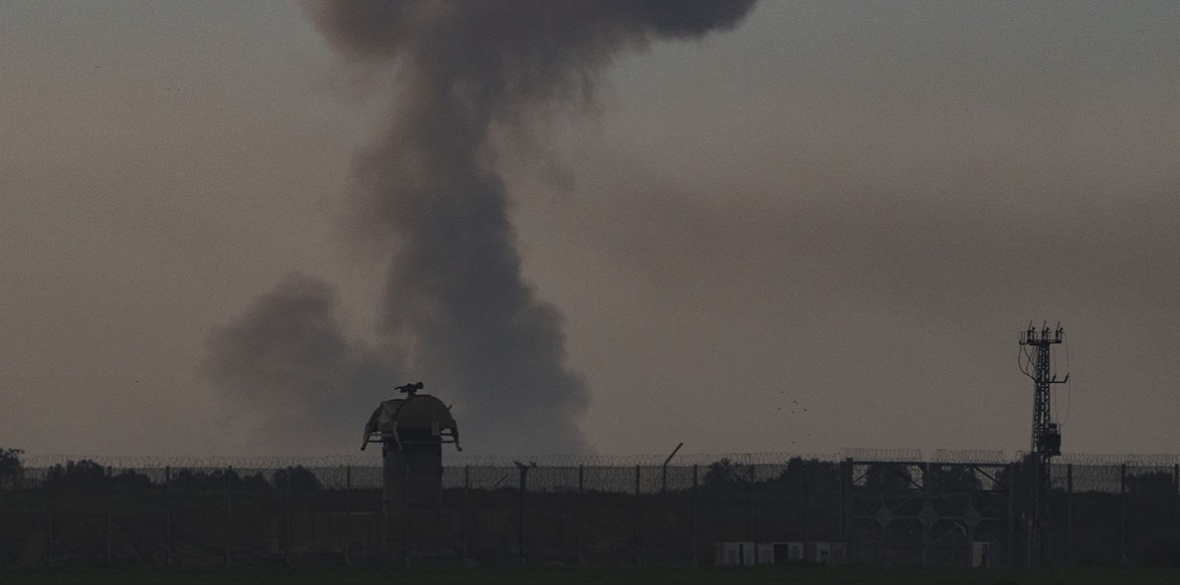
Smoke rises after a bombardment in the Gaza Strip, February 12, 2024
SOUTH AFRICA said it had lodged an urgent request with the United Nations International Court of Justice (ICJ) over Israel’s assault on Palestinians in the southern Gaza city of Rafah.
The South African government is asking the ICJ to consider whether Israel has committed a “further imminent breach of the rights of Palestinians in Gaza” following the provisional orders the court handed down last month.
This comes as progress is reportedly being made in securing a ceasefire deal between Hamas and the Israeli government.
In December, South Africa instituted proceedings at the ICJ accusing Israel of committing genocide against the Palestinian people in the Gaza Strip.
Among its six orders, the ICJ said that Israel must do all it can to prevent the deaths of Palestinians and the destruction of Gaza.
…
A statement released by the office of South African President Cyril Ramaphosa, said: “The South African government was gravely concerned that the unprecedented military offensive against Rafah, as announced by the state of Israel, has already led to and will result in further large-scale killing, harm and destruction.
“This would be in serious and irreparable breach both of the Genocide Convention and of the court’s order of January 26 2024.”
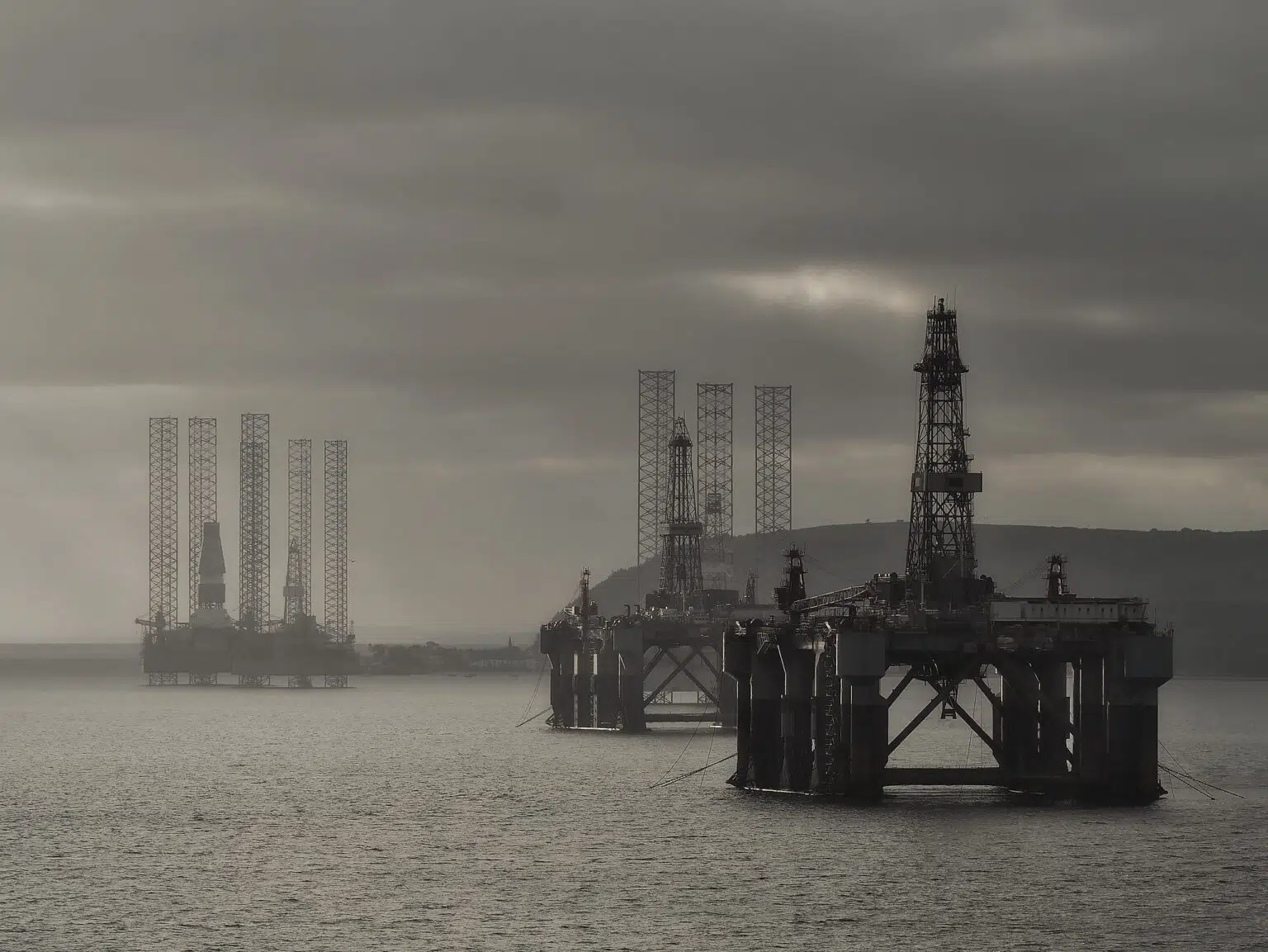
North Sea oil rigs in Cromarty Firth, Scotland. Credit: joiseyshowaa (CC BY-SA 2.0)
A public interest ban on big oil and gas companies engaging with and influencing politicians could be in the pipeline as the European Parliament is hosting a hearing on fossil fuel lobbying on February 14.
Something similar is already in place for the tobacco industry in order to safeguard public health. The European Parliament is set to examine what lessons can be learned to protect the environment from the harms associated with continued use of fossil fuels.
The context here is important. Restrictions on tobacco lobbyists, known as the Framework Convention on Tobacco Control (FCTC), came into force in 2005 and are legally binding in 182 countries. Among other relevant restrictions, Article 5.3 of the convention states that: “Parties shall act to protect [their public health] policies from commercial and other vested interests of the tobacco industry.”
The restrictions were promoted by the World Health Organization to protect public health, in the wake of class action lawsuits in the US demonstrating clearly that the tobacco industry had misled governments and regulators, and covered up the scientific evidence pointing to tobacco harms.
Tobacco-style regulations in the pipeline? ssuaphotos / shutterstock
The parallels with Big Oil are increasingly obvious. Litigation in the US has shown that some of the major oil companies actively engaged in deception, denial and increasingly now delay tactics. But delaying policies to address the climate emergency pose a huge societal risk. This is what is at stake in Brussels.
The oil industry insists on its right to democratic participation. But the European Parliament hearing will consider whether the industry has acted in bad faith, and whether it is time to develop new laws and guidelines to manage the risks and harms associated with fossil fuels.
Dominating discussions
There is increased awareness that current climate policies are not addressing the scale of the climate crisis. Fossil fuel interests dominated recent COP meetings, promoting a number of industry-friendly narratives such as an emphasis on reducing emissions rather than fossil fuel production itself, and a commitment to tackling only “unabated” fossil fuel use. This is code for continuing to burn fossil fuels, but to try to abate some of the emissions using as yet unproven carbon capture technologies.
Many leading climate scientists are growing increasingly concerned about the continued influence of oil and gas lobbyists. The industry still enjoys privileged access to the highest reaches of decision making in Europe. The EU’s delegation to the recent COP28 included over 130 oil and gas industry lobbyists.
For the past few years some of the leading environmental groups in Brussels have been boycotting events where oil and gas lobbyists are participating, to try to disrupt what they term the capture of energy policy by fossil fuel interests through sponsorships, partnerships and official collaborations. Lobbying disclosures on the EU’s Transparency Register show that fossil fuel interests are among the biggest spenders and most active lobbyists in Brussels.
The industry has unfettered access to senior officials and politicians, and has the deepest of pockets to pay for lobbyists, event sponsorships and employ experts to participate in technical and regulatory meetings in Brussels that inform EU policy. It is therefore little wonder that environmentalists and some Members of the European Parliament want to rethink the relationship between the fossil fuel industry and politics.
There were at least 2,456 fossil fuel lobbyists at COP28, outnumbering every national delegation bar two. Martin Divisek / EPA
Those working for oil and gas interests in Brussels are unlikely to welcome parallels being drawn between their sector and the tobacco industry. They insist that all interests have the right to legitimately participate in policy making (and in so doing they are defending their privileged position), and that the technical expertise of oil and gas companies is needed in the energy transition.
Recently, the industry has used concerns about energy supply since the conflict in Ukraine to propose renewed gas exploration within Europe. This is part of a new policy agenda that prioritises Europe’s “strategic autonomy” on energy issues, and in the view of oil and gas lobbyists necessitates increased reliance on fossil fuels – and existing infrastructure – in the short to medium term.
Another parallel with the tobacco industry is perhaps instructive here. The tobacco industry has been accused of promoting vaping as a health tool (since it claims vaping is an effective smoking cessation technology). But vaping has had the impact of hooking a huge number of young people into a new habit and creating another generation of tobacco industry customers.
Similarly, the fossil fuels industry has been heavily promoting the idea of gas as a transition fuel, and lobbying for the continued investment in gas exploration and exploitation, which will mean continued use of pipelines and industry infrastructure for many years to come.
With industry lobbyists working to “lock in” fossil fuels, and environmentalists considering how to “lock out” fossil fuels from policy making, the hearing in the European Parliament should be instructive. What happens with lobbying will give a sense of how Europe will grapple with the challenges of the transition to low carbon energy.
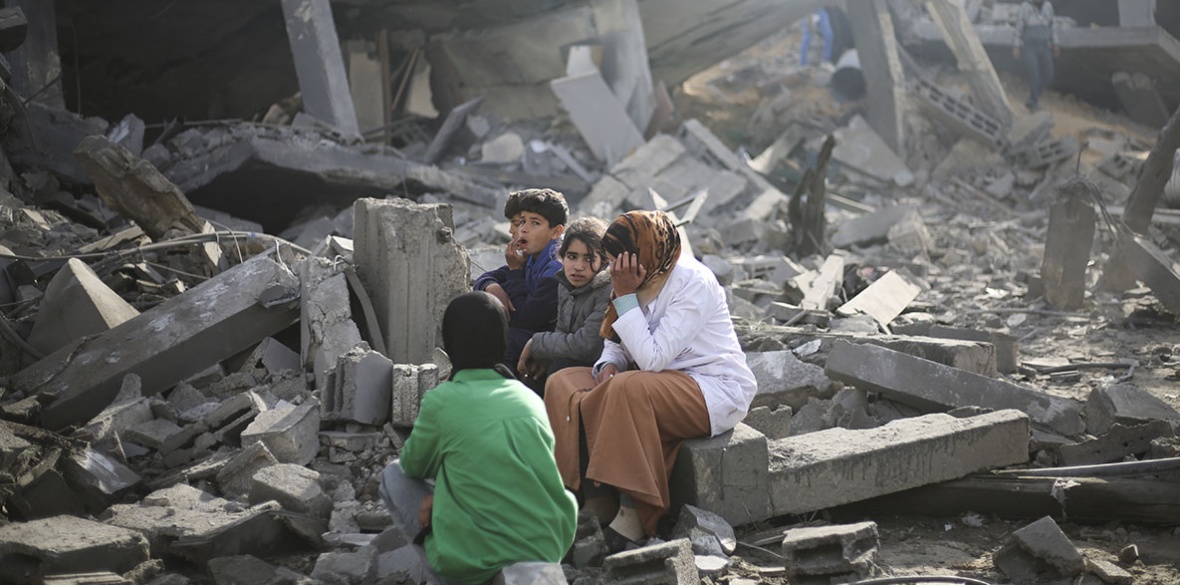
Palestinians sit by the destruction from the Israeli bombardment of the Gaza Strip in Rafah on February 12, 2024
AT LEAST 95 civilians were killed in four unlawful air strikes on an alleged “safe” area in Rafah, a damning new report by Amnesty International revealed today.
The dead included 42 children. The Gaza Health Ministry says more than 12,300 minors have been killed in the besieged enclave since Israel began its invasion of Gaza following the Hamas attack on it on October 7.
According to Israeli authorities, 1,139 people died during the Hamas assault and more than 200 people were taken as hostages.
It also comes as Israel intensified its bombing of Rafah in preparation for an expected ground assault. Palestinians had been ordered to evacuate to the area by Israeli authorities as a place of safety from the battle that raged in northern Gaza.
According to Amnesty the evidence shows that Israeli forces are flouting international humanitarian law in their military operations in Gaza.