- Post author:dizzy
- Post published:12 November 2024
- Post category:Fascism/human rights violations/Israel/Keir Starmer/Palestine/politics/Zionism
- Post comments:0 Comments
Extreme Weather Events Linked to Climate Change Have Cost the World $2 Trillion Over the Past Decade, Report Finds
https://www.ecowatch.com/climate-change-extreme-weather-events-global-cost.html

According to a new report by the International Chamber of Commerce and consultancy firm Oxera, extreme weather events over the past 10 years have cost a total of $2 trillion globally. The countries that have faced the biggest losses include the U.S., China and India.
The report tracked nearly 4,000 extreme weather events from 2014 through 2023. In total, the results found that these events affected more than 1.6 billion people and cost around $2 trillion in economic losses.
Over just the past two years, losses linked to extreme weather cost the world $451 billion. According to the report, that is about 19% more than the losses from the previous 8 years analyzed in the study.
“The data from the past decade shows definitively that climate change is not a future problem: major productivity losses from extreme weather events are being felt in the here and now by the real economy,” John W.H. Denton AO, secretary-general of the International Chamber of Commerce, said in a statement.
The report also warned about the increase in frequency of these extreme weather events, noting that there has been an 83% increase in climate disasters when comparing 1980–1999 to 2000–2019.
…
Original article at https://www.ecowatch.com/climate-change-extreme-weather-events-global-cost.html
Movement leaders in the US say Trump’s agenda will be met with a strong fightback
Original article republished from peoples dispatch under a Creative Commons Attribution-ShareAlike 4.0 (CC BY-SA) license.
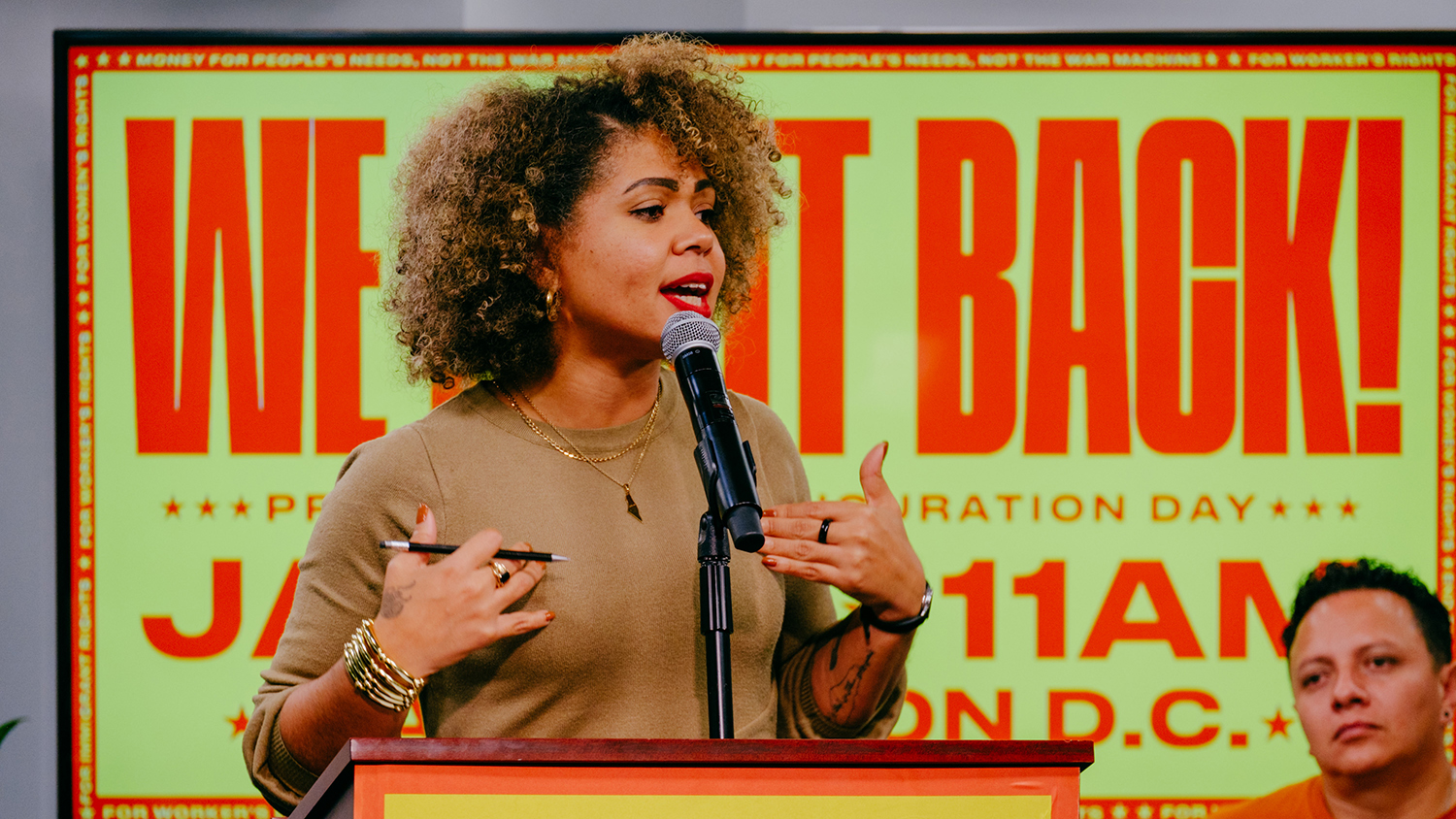
US-based movement leaders take up the task of answering the burning question: “What is to be done?”
Just two days after Donald Trump’s landslide victory against Vice President Kamala Harris, US socialists and movement leaders took up the task of answering the burning question: What is to be done following Trump’s win?
Hundreds of people gathered at the People’s Forum in New York City on November 8 for a panel discussion which featured the presidential candidate of the Party for Socialism and Liberation, Claudia De la Cruz, who ran against both Trump and Harris in a explicitly socialist campaign, Brian Becker, executive director of the anti-war organization the ANSWER Coalition, Eugene Puryear, journalist with BreakThrough News, Jorge Torres, part of the National Day Laborer Organizing Network with extensive experience organizing undocumented immigrant workers, and Miriam Osman, leader in the Palestinian Youth Movement, which has played a central role in the Palestine solidarity movement across North America.
Layan Fuleihan, Education Director of the People’s Forum, opened up the discussion. “We, the workers, the social movements, the immigrant families, the young people, the anti-war movement, the working class as a whole, we are faced with many urgent questions,” she said.
“How will we confront this continual rise of the right? Will we be driven by fear and apathy or pessimism? Will we stay home? Or will we organize our forces and chart our own path forward? Will we follow the lead of the Democratic Party and mourn their loss? Or will we assert that we reject the billionaire agenda no matter which party is executing its orders?”
Speakers put the blame for Trump’s win not on a shift to the right by working class people, but on the failures of the Democratic Party. Claudia De la Cruz spoke to what she called the “scapegoating of working class sectors” by the Democrats.
“They are saying we have to blame Black men, that we have to blame Latino men, that we have to blame immigrant communities, that we have to place judgment on those who didn’t go out and vote,” she said.
In reality, according to De la Cruz, “it is the spinelessness of the Democratic Party that has brought us here.”
“While Trump won this election, we cannot pretend that the Democrats have not allowed and conducted attacks against the working class people for decades,” De la Cruz said. “If we think about the last 16 years, the Democratic Party had power for 12 of those years, and they didn’t do anything. Not a single thing to protect or expand our rights. In fact, they sat back and watched how our rights were placed on a chopping block and said, we can’t do anything about it.”
Torres, who himself comes from a migrant background and was undocumented, spoke not only of the fear that exists within immigrant communities of Trump’s anti-migrant policy promises, but also the resolve to fight back. According to Torres, for the past few months, immigrant day laborers within the NDLON network were very scared of what would happen in the event of a Trump win. Trump has promised to deport between 15 to 20 million people in the largest mass deportation in US history, a policy which could result in family separations affecting up to 1 in 3 Latinos in the country.
But this did not paralyze these communities, who instead came together in a renewed resolve to “start organizing for real,” Torres described. Communities began to ask one another, “What does that mean when we say the people save the people?”
“We made a decision that it was about time to organize local communities in popular committees across the country,” Torres said. “We decided to organize popular assemblies across the country. In around one month we organize almost 25 assemblies across the country. And now we have almost 45+ committees led by workers, led by undocumented people, led by people that really are directly impacted.” Torres also mentioned that NDLON is working closely with the Landless Rural Workers’ Movement (MST) in Brazil, speaking to deep ties of international solidarity.
According to Torres, “most of the committees have lost their belief and hope and the Democratic Party or the Republican Party.”
“By now it is time to organize, and we just have us, and we don’t have no one else,” Torres asserted.
According to Eugene Puryear, Trump’s policy promises to round up migrant workers should be a call to action for a mass movement to defend immigrant communities. This movement can find inspiration from the history of the movement for the abolition of slavery in the United States. Puryear recalled the history of the Fugitive Slave Act, which imposed harsh punishments on those who sheltered runaway slaves. But this certainly did not stop abolitionists and anti-slavery activists from protecting slaves anyway.
“Whether or not the law said one thing, there was a higher law: that they had to fight against slavery no matter the risk,” Puryear described.
“So [abolitionists] formed things called vigilance committees, all across the country, that said that when a fugitive slave is brought before the bar into the courthouse, we will go to the courthouse and we will physically resist the imposition of returning them back. That we will physically remove them from the courthouse if we have to, and put them on the Underground Railroad and send them to Canada. And maybe we won’t succeed. Maybe we’ll be beaten. In many cases, these were serious tussles. People were pulling out guns. Maybe we’ll even be killed. But we would rather risk our lives than allow our formerly enslaved brothers and sisters to be taken back.”
There are parallels between the Fugitive Slave Act of 1850 and Trump’s promise to remove tens of millions of migrants from the country by force, Puryear argued. And the historic tasks of the mass movement, therefore, are similar to those shortly before slavery was abolished. “You can say it’s scary, and it is scary. You can say it’s odious, it is odious. But when they start bringing the trucks around to round people up, you can also say, I’m going to step outside of my door and I’m going to link arms with my neighbors. And if you’re going to throw them out, you better throw me out with them because we’re standing together no matter what,” Puryear said.
Brian Becker also echoed this same militant fighting spirit, rooted in the lessons of past movements. Becker drew attention in particular to the movement that arose after 2016 in opposition to Trump’s first election.
“There’s another side to the question of what is to be done, and that is what is to not be done,” Becker said. “Let’s learn the lesson of the first Trump administration when Trump came into office. So many people went to the airports because he said, we’re going to ban Muslims from coming into the country. Massive protests on Inauguration Day. We outnumbered Trump supporters. This was the anti-Trump resistance,” he described.
“But what happened? The Democratic Party completely co-opted that movement, completely took over that movement, because they said you have to resist Trump, the person, which meant that the best and practical way to do it, is to get rid of Trump by electing the Democrats.”
This co-optation marked the end of this mass movement, which because merely a “tail to the Democratic Party,” Becker described.
According to Becker, “the problem isn’t just Trump. The problem is the capitalist system and the ruling class parties. The Democrats and the Republicans are not an opposition to capitalism. They are the voice of capitalism.”
Becker spoke to the need to “build a political program” independent of the two establishment parties, which speaks to the needs of the masses of people.
Miriam Osman of the Palestinian Youth Movement spoke to the way that the movement in solidarity with Palestine has given people in the US renewed political clarity regarding the similarities between both major parties. “Our task is to draw more and more people into our struggle against the shared enemy, the shared enemy of the Palestinian people, the shared enemy of the working people of the world, and the shared enemy of working people in the United States,” which is the US ruling class, Osman articulated. “Our task is to build power. Our task is to unify our efforts, because this is the only thing that’s going to give us the force to transform this system.”
Original article republished from peoples dispatch under a Creative Commons Attribution-ShareAlike 4.0 (CC BY-SA) license.
10 reasons why US president-elect Donald Trump can’t derail global climate action
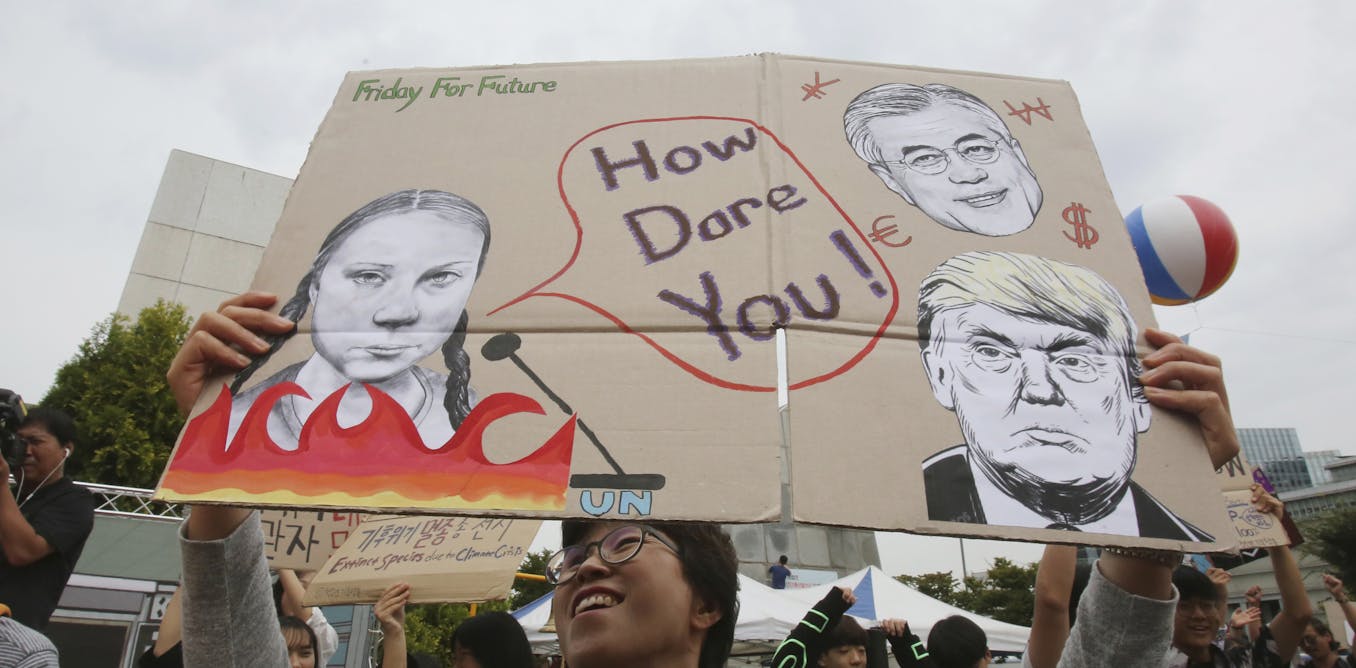
Wesley Morgan, UNSW Sydney and Ben Newell, UNSW Sydney
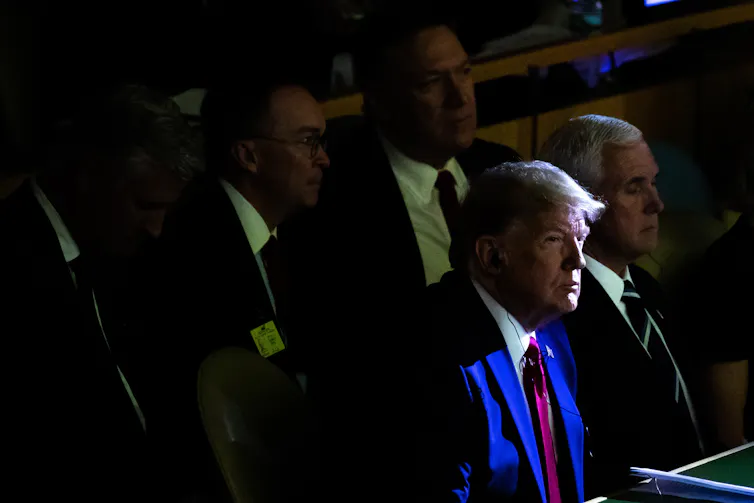
If you care about saving Earth from catastrophe, you might be feeling a little down about the re-election of Donald Trump as United States president. Undeniably, his return to the White House is a real setback for climate action.
Trump is a climate change denier who has promised to increase fossil fuel production and withdraw the US from the Paris climate deal, among other worrying pledges.
But beyond Trump and his circle, there remains deep concern about climate change, especially among younger people. Support for climate policy remains high in the US and around the world. And studies based on data from 60,000 people in more than 60 countries suggest individuals’ concern about climate change is widely underestimated.
So now is a good time to remember that efforts to tackle the climate crisis – both in Australia and globally – are much bigger than one man. Here are ten reasons to remain hopeful.
1. The global clean energy transition can’t be halted
The global shift to clean energy is accelerating, and Trump can’t stop it. Investment in clean energy has overtaken fossil fuels, and will be nearly double investment in coal, oil and gas in 2024. This is a historic mega-trend and will continue with or without American leadership.
2. Clean energy momentum is likely to continue in the US
Much of the Biden-era spending on clean energy industries went to Republican states and Congressional districts. New factories for batteries and electric vehicles will still go ahead under the Trump administration. After all, entrepreneur Elon Musk – who is expected to join the Trump administration – makes electric vehicles.
Some of Trump’s financial backers are receiving subsidies for clean energy manufacturing and 18 Republican Congress members have gone on record to oppose cuts to clean energy tax credits.

3. The US still wants to beat China
There is bipartisan concern in Washington about the US losing a technological edge to Beijing. China currently dominates global production of electric vehicles, batteries, wind turbines and solar panels. So internal pressure in the US to counter China’s manufacturing might will continue.
4. The federal government is not everything in the US
When Trump was last in power, he withdrew the US from some climate commitments, such as the Paris Agreement. But many state and local governments powered ahead with climate policy, and that will happen this time around, too. For example, California – the world’s fifth largest economy – plans to eliminate its greenhouse gas footprint by 2045. Even Texas, a Republican heartland, is leading a shift toward wind and solar power.
5. The US climate movement will be more energised than ever
During Trump’s first presidency, the US climate movement developed policy proposals for a “Green New Deal”. Many of these proposals were later implemented by the Biden administration. Initial reactions to Trump’s re-election suggest we can expect similar policy advocacy this time around.

6. Global climate cooperation is bigger than Trump
If Trump makes good on his promise to leave the Paris Agreement (again), he will only be leaving the room where the world’s future is being shaped. The US has walked away from global climate agreements before – for example, refusing to join the Kyoto Protocol in 2001. But other nations rallied for global action, and will do so again.
7. The rules-based global order will remain
When a nation walks away from rules that have been agreed after decades of negotiation, responsible countries must work together to bolster global cooperation. This applies to trade and security – and climate is no different.
As our Foreign Minister Penny Wong recently explained, Australia, as a middle power on the world stage, wants:
a world where disputes are resolved by engagement, negotiation and by reference to rules [and] norms […] We don’t want a world in which disputes are resolved by power alone.
8. Australian diplomacy matters
Australia is seeking to co-host the United Nations climate talks with Pacific island countries in 2026, and is emerging as the favourite. Hosting the conference, known as COP31, would be a chance for Australia to help broker a new era of international climate action, even if the US opts out under Trump.
Hosting the talks would also help cement Australia’s place in the Pacific and assist our Pacific neighbours to deal with the climate threat.

9. Australia’s clean energy shift is accelerating
About 40% of Australia’s main national electricity grid is powered by renewables and this is set to rise to 80% by 2030. Some states are surging ahead – for example, South Australia is aiming for 100% renewables by 2027.
Australians love clean energy at home, too. One in three households have rooftop solar installed, making us a world-leader in the technology’s uptake. Trump’s occupation of the Oval Office cannot stop this momentum.
10. Trump cannot change the science of climate change
The science is clear – burning coal, oil and gas fuels climate change and increases the risk of disasters that are harming communities right now. In Australia, we need look no further than the Black Summer bushfires in 2019-20 and unprecedented Lismore floods in 2022.
And the damage is happening across the globe. In October, twin hurricanes in the US – made stronger by the warming ocean – left a damage bill of more than US$100 billion. And hundreds of people died when a year’s worth of rain fell in one day in Spain last month.

On gloomy days – like, say, the election of a climate denier to the White House – it might feel humanity won’t rise to Earth’s biggest existential challenge. But there are many reasons for hope. The vast majority of us support policies to tackle climate change, and in many cases, the momentum is virtually unstoppable.
Wesley Morgan, Research Associate, Institute for Climate Risk and Response, UNSW Sydney and Ben Newell, Professor of Cognitive Psychology and Director of the UNSW Institute for Climate Risk and Response, UNSW Sydney
This article is republished from The Conversation under a Creative Commons license. Read the original article.
Shadow Foreign Secretary Priti Patel Has Ties to Group Behind ‘Extreme’ Trump Agenda
Original article by Sam Bright and Adam Barnett republished from DeSmog.
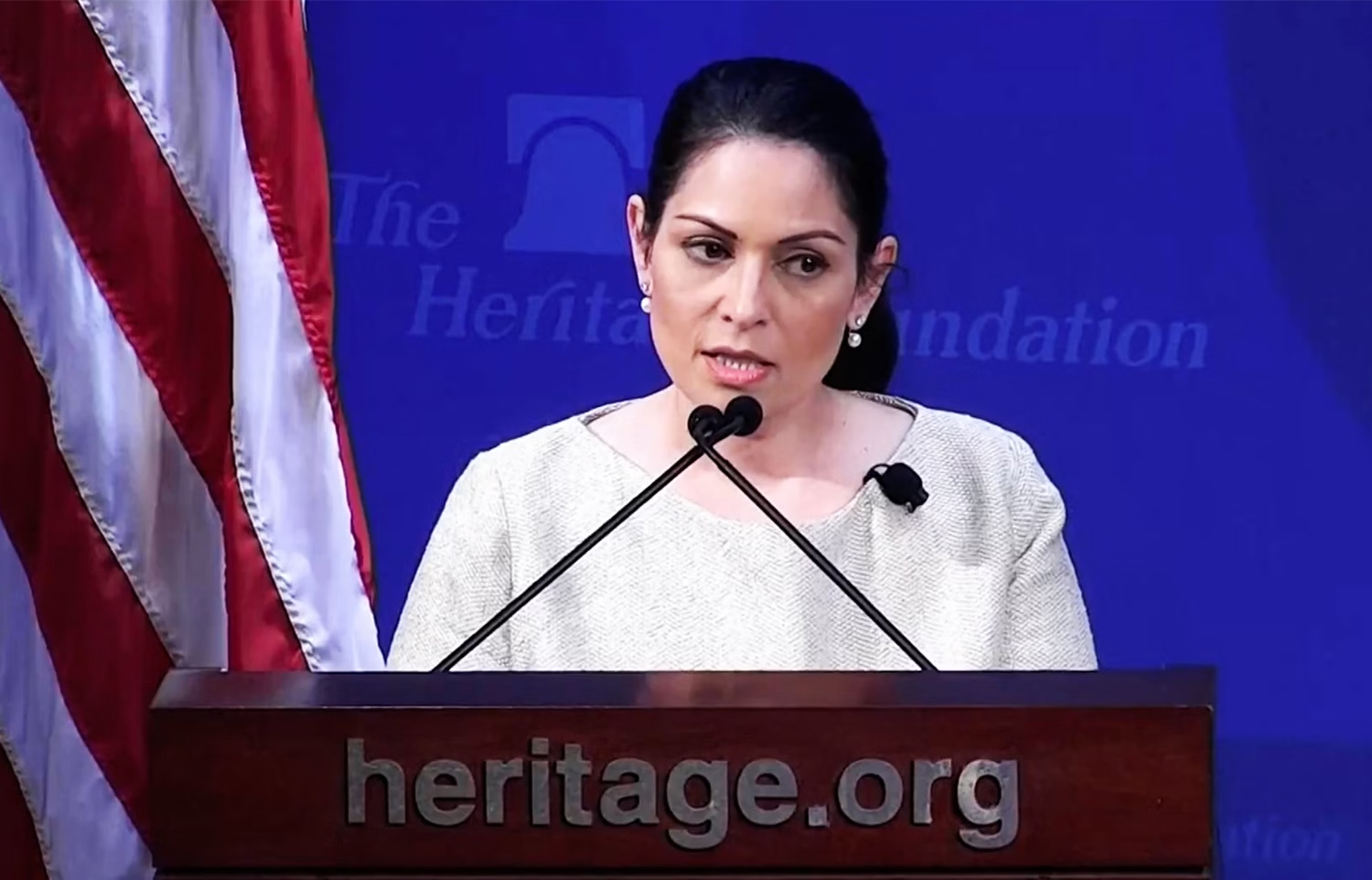
The Heritage Foundation’s Project 2025 blueprint proposes sweeping anti-climate policies.
New Shadow Foreign Secretary Priti Patel earlier this year welcomed into Parliament a radical U.S. organisation behind Donald Trump’s hard-right plan for a second term as president.
As reported by DeSmog, Conservative MP Patel met with Kevin Roberts and Nile Gardiner of the Heritage Foundation in March, praising the pair on her Facebook page as “our friends across the pond” who stand for “Conservative values and beliefs at home and abroad”.

Roberts is the president of the Heritage Foundation, while Gardiner is the director of its ‘Margaret Thatcher Center for Freedom’.
The Heritage Foundation is an ultra-conservative group that authored the controversial Project 2025 blueprint for a second Donald Trump term, which proposes a range of radical anti-climate policies, including slashing restrictions on fossil fuel extraction, scrapping investment in renewable energy, and gutting the Environmental Protection Agency.
Project 2025 has been accused of being “extreme” and “authoritarian” for setting out a plan to rapidly “reform” the U.S. government by shuttering bureaus and offices, overturning regulations, and replacing thousands of public sector employees with hand-picked political allies of Trump. The agenda also proposes radical tax cuts, and a crackdown on reproductive rights.
On Wednesday (6 November), following Trump’s victory in the U.S. presidential election, Roberts sent an email on behalf of the foundation, saying that: “starting now, we will execute our plans to dismantle the administrative state.”
At least 140 authors of Project 2025 worked for the last Trump administration, according to CNN, while several are expected to hold positions in the next Trump White House.
Patel also gave a speech about national security to the Heritage Foundation, hosted by Gardiner, in November 2021. Patel was at the time serving as home secretary, and her address was published on the UK government website.
This news comes as the Conservative Party realigns itself after the election of new leader Kemi Badenoch, positioning itself as having better relations with the incoming Trump administration.
In her first Prime Minister’s Questions (PMQs) this week, Badenoch called on Labour not to oppose a Trump address to Parliament, and asked whether Foreign Secretary David Lammy had apologised to the Republican for labelling him as a “neo-Nazi sympathising sociopath” in 2020.
Patel was appointed to Badenoch’s new shadow cabinet earlier this week, alongside Shadow Justice Secretary Robert Jenrick, who also has ties to the Heritage Foundation.
In February, Jenrick – who came second in the recent Tory leadership election – gave a speech to the Heritage Foundation in Washington DC entitled, “Securing Sovereign Borders in an Age of Mass Migration”.
Project 2025 proposes new sweeping restrictions on immigration into the U.S., while setting the foundations for mass deportations – a key promise of Trump’s 2024 campaign.
After being introduced by Roberts, Jenrick praised the foundation, and described meeting with and learning from Heritage while working as an intern for Condoleeza Rice, who served as secretary of state under Republican President George W. Bush.
Jenrick also praised the event’s co-host Gardiner, whom Jenrick described as “the special relationship made flesh”. He said Gardiner, who writes a regular column for the Daily Telegraph, “creates links between conservatives here and in the UK”.
As revealed by Democracy For Sale and Byline Times, Donald Trump and U.S. Republican campaigns received more than $45 million (£35 million) from donors who have funded the influential network of hard-wing Tufton Street think tanks in the UK.
“That senior Conservatives would take time out to travel halfway around the world to give talks at a pro-Trump think tanks is very revealing,” said Peter Geoghegan, editor of Democracy For Sale. “We need to be aware that the dark money that fuelled the likes of the Heritage Foundation is washing up in Britain, where secretive Tufton Street think tanks refuse to declare their donors but take millions from pro-Trump U.S. conservatives.”
A Heritage Foundation spokesperson previously told DeSmog: “Project 2025 is a coalition of conservatives who wrote ‘Mandate for Leadership: The Conservative Promise’ which was published in April 2023, before any candidate declared a run for office. Project 2025 does not speak for any candidate or campaign.”
Project 2025 and Climate Denial
Project 2025 proposes replacing green investment with the further deregulation of the oil and gas industry.
Speaking at an event co-hosted by the Heritage Foundation and the Hungarian Danube Institute in September, key Trump ally Robert Wilkie – who served as U.S. veterans’ affairs secretary from 2018 to 2021 – confirmed that his former boss would “kill” climate budgets.
The Heritage Foundation received over £4.9 million between 1997 and 2017 from groups linked to the fossil fuel giant Koch Industries. The brothers behind the company, Charles and the late David Koch, have been the principal funders of climate denial groups in the U.S. since the 1980s.
As revealed by DeSmog, advisory groups working on Project 2025 have received at least $9.6 million from Charles Koch since 2020, along with at least $21.5 million from the Sarah Scaife Foundation, which is funded by the Mellon oil and banking fortune.
The Heritage Foundation has disputed these figures, though has not offered its own calculations. A spokesperson previously told DeSmog: “Heritage research is independent and accurate, these numbers are not.”
At a 2022 Heritage Foundation event, Nile Gardiner said: “I do think the British government needs to rethink the whole green energy agenda. It’s not a conservative agenda, in fact it’s a socialist agenda”. He added: “I think net zero has become basically a form of religion, and anyone who questions the dogma on this immediately is accused of being a heretic.”
As DeSmog has reported, Kemi Badenoch has regularly criticised the UK’s green ambitions, describing herself as a “net zero sceptic” during her Conservative conference speech in October.
During the leadership contest, Badenoch published a 40-page manifesto that cited the Committee to Unleash Prosperity, a U.S. group led by former advisors to Trump, which has likened climate science to believing the earth is flat.
Jenrick has also attacked net zero policies and has advocated for increased fossil fuel extraction, including the development of new coal mines.
Original article by Sam Bright and Adam Barnett republished from DeSmog.