Israeli tanks gather outside of the occupied West Bank near Jenin, Sunday, Feb. 23, 2025
ISRAEL’S defence minister said today troops would remain “for the coming year” in parts of the occupied West Bank.
This follows complaints by Hamas over the decision by Tel Aviv to halt the release of detainees promised under the ceasefire deal.
The Israelis have deepened their crackdown on the Palestinian territory since launching their military offensive on the northern West Bank on January 21 — two days after the ceasefire that paused the war in Gaza took hold. They then expanded it to include other nearby areas.
Israel says it is determined to stamp out resistance in the territory, but Palestinians view such raids as part of an effort to cement Israeli control over the territory, where three million Palestinians live under military rule.
The deadly raids have devastated urban areas and displaced tens of thousands.
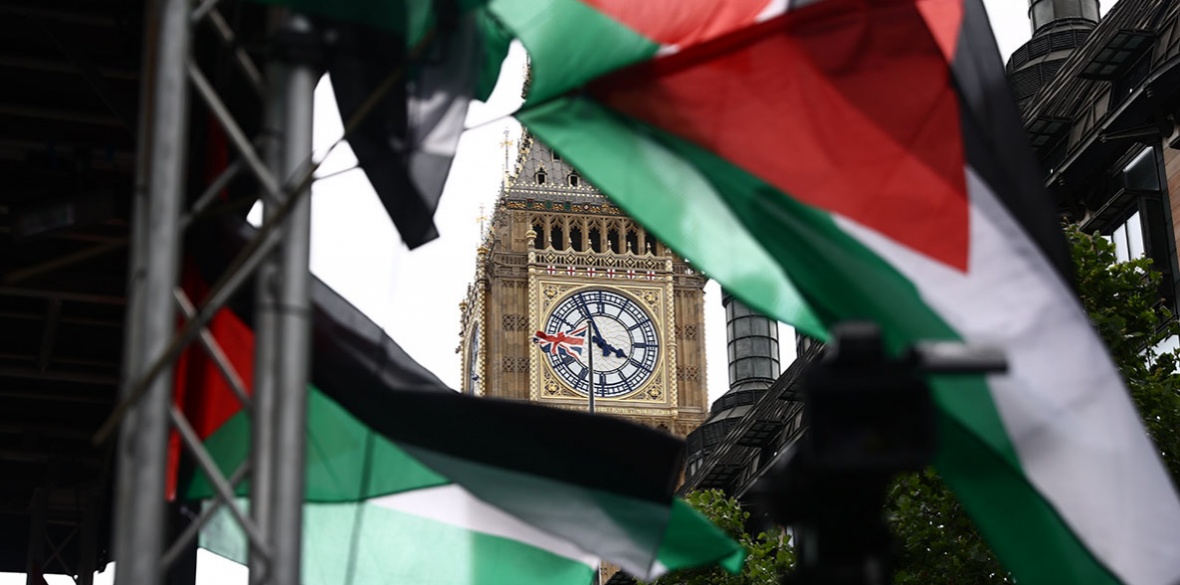
People take part in a pro-Palestine march in central London organised by the Palestine Solidarity Campaign, July 6, 2024
THE BBC has been urged not to give in to “cynical” attacks on a documentary on the Israeli invasion of Gaza, which it has pulled from iPlayer after criticism of its child narrator’s father being a Hamas official.
Gaza: How To Survive A War Zone is narrated by 13-year-old Abdullah, whose father is deputy minister of agriculture in Gaza’s Hamas government.
Last week Culture Secretary Lisa Nandy said she would raise this with the BBC’s director-general and chairman, “particularly around the way in which they sourced the people who were featured in the programme.”
A petition signed by socialist Jews including film-maker Mike Leigh, comedian and writer Alexei Sayle and actor Miriam Margolyes calls on the BBC to resist “censorship.”
Inheriting the worst set of public finances for decades, Labour was always going to face an uphill struggle trying to fund improvements to the UK’s public services.
Inflated debt and recent hikes in the cost of borrowing mean the government is faced with stark choices. For it will be difficult to meet the chancellor’s own tight fiscal rules without further tax rises or cuts in public spending.
But as the former chief economist at the Bank of England, Andy Haldane, has warned, further spending cuts would be “deeply counterproductive”.
One solution for avoiding ongoing austerity lies in raising a higher proportion of taxes from assets. For despite the UK enjoying a long personal wealth boom, little of this boom is the result of new wealth creation or higher productivity.
Much of it is unearned. Some is the product of corporate wealth extraction, where dividend payments and personal fortunes have have been prioritised over the long-term health of a company. Some privatised water firms, for example, have been turned into cash cows for their owners.
Another large part of British unearned wealth is the product of state-induced asset inflation. Since 1999, house prices in England have risen almost three times faster than incomes.
This kind of asset inflation is a classic example of “passive accumulation”. Or, as the 19th-century philosopher John Stuart Mill described it, getting rich in your sleep.
As a result, household wealth currently stands at over six times the UK’s GDP. It was three times in the 1970s.
Yet while Britain is asset rich, its tax system is heavily based on earnings from work. Taxes on income from dividends, capital gains and inheritance make a tiny contribution to the public purse.
This is a fundamental flaw of the tax system which does little to dent the growing concentration of wealth owned by the few. Through political inertia, the tax system has failed to catch up with the growing importance of wealth over income.
Inherit the earth?
The fallout from the low taxation on wealth is well illustrated by the role of inheritance.
Levels of wealth passed on after death in the UK have been rising sharply. Over the next three decades, some millennials are expected to inherit a staggering £5.5 trillion, dwarfing all previous transfers of wealth between generations.
The lion’s share of this transfer will go to the most affluent. The lifetime wealth of those with parents in the richest fifth will see their wealth grow by 29% – compared with 5% for those born to the poorest fifth.
This will only intensify the reproduction of the wealth divide of the past.
Extending the tax base is not just about fairness or revenue raising. Asset holdings are often little more than unused resources, while big inter-generational wealth transfers can play a counterproductive role in the economy.
Over a third of the UK’s wealth is stored in property (with the rest in pensions, savings and possessions). This is mostly only realised when passed on through inheritance , where its benefits accrue to the already privileged. Little of this process contributes to more productive activity, with one of its most malign effects being to fuel higher house prices, because the money is largely reinvested in property.
The unfairness of inherited wealth has long been recognised. The patron saint of economics, Adam Smith called it “manifestly absurd”.
A modest and phased rise in capital taxation would help to reduce the passive role played by wealth holdings. Even small changes would release funds which could be used to improve social infrastructure from schools to hospitals.
One approach would be to build on the existing tax system through higher rates and fewer reliefs and loopholes. The second would be to introduce new taxes.
In her first budget, Rachel Reeves took steps to raise revenue through the first option, from both inheritance and capital gains tax. But these were too modest to alter the overwhelming dominance of tax on earnings.
A more fundamental shift would be to reform the existing system of council tax with a larger number of tax bands at the top. Still based on 1991 property values, this is perhaps the least defensible tax in Britain. The most effective alternative would be to replace council tax and stamp duty with a single proportionate “property tax”.
Another option would be for a modest annual 1% tax on wealth over £2 million, which has the potential to raise around £16 billion a year, or double that on wealth over £1 million.
Such a measure could be sold politically as a “solidarity tax” to help pay for the things the UK needs. And while governments have been wary of the political reaction to higher taxes on wealth, the tide is turning.
Those supporting higher taxes on wealth include the Conservative-aligned think tank Bright Blue and an influential campaign group called the Patriotic Millionaires. There is also growing public support.
Continued public spending austerity would drive more years of stagnation. It would also be politically suicidal for this government, as it was for Labour in 1931 and in the 1970s. But harnessing a little more of the country’s immense private wealth would make the tax system more equitable and by providing the resources to boost social investment, ease the path to economic recovery.
Friedrich Merz says he is eager to re-engage with international partners
Germany’s chancellor-in-waiting didn’t wait for the final results of his country’s election on Sunday to herald a new era in Europe.
Declaring the US indifferent to this continent’s fate, Friedrich Merz questioned the future of Nato and demanded Europe boost its own defences. Quickly.
This tone from the close US ally – and from Friedrich Merz who is known to be a passionate Atlanticist – would have been unimaginable even a couple of months ago.
It’s a seismic shift. That may read like hyperbole, but what we are now experiencing in terms of transatlantic relations is unprecedented in the 80 years since the end of World War Two.
Big European powers have been shocked to the core by the Trump administration, which suggests it could revoke the security guarantees to Europe in place since 1945.
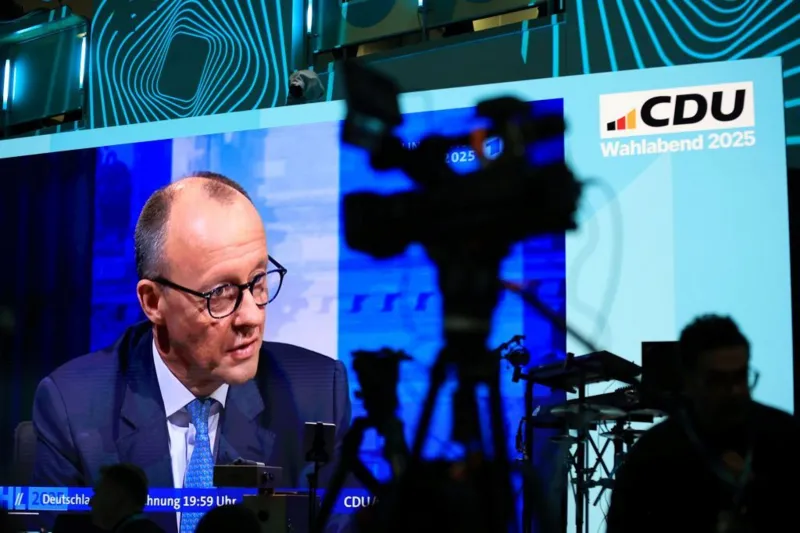
“I would never have thought that I would have to say something like this in a TV show but, after Donald Trump’s remarks last week… it is clear that this government does not care much about the fate of Europe,” Friedrich Merz said during a post-election debate on Sunday.
“My absolute priority will be to strengthen Europe as quickly as possible so that, step by step, we can really achieve independence from the USA,” he added.