Chart: Trump’s ‘big beautiful bill’ blows US emissions goal by 7bn tonnes

Spread the love

Original article by Josh Gabbatiss and Ho Woo Nam republished from Carbon Brief under a CC license.
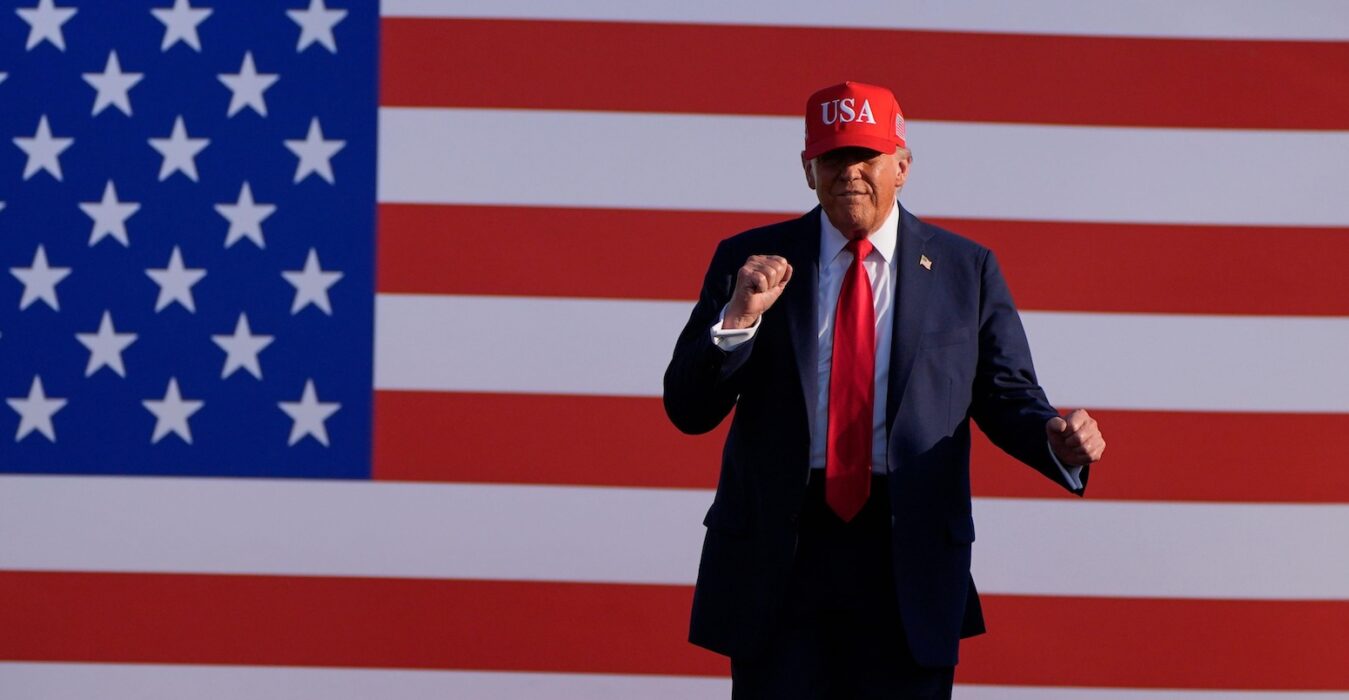
President Donald Trump at a rally at the Iowa State Fairgrounds. Credit: Alex Brandon / Alamy Stock Photo

President Donald Trump’s dismantling of climate policy means the US will add an extra 7bn tonnes of emissions to the atmosphere from now until 2030, compared to meeting its former climate pledge under the Paris Agreement.

Since winning office last November, he has issued a series of executive orders and is poised to sign his “big beautiful bill” that effectively terminates Biden-era climate policies.

Carbon Brief’s analysis of modelling from the Princeton University REPEAT Project shows that this means US emissions are now set to drop to just 3% below current levels by 2030 – effectively flatlining – rather than falling 40% as required to hit the now-defunct target.

This would leave the US around 2bn tonnes short of its greenhouse-gas emissions target for that year, adding emissions equivalent to around 4% of the current global total each year

To put this in context, it is roughly the annual output of Indonesia, the world’s sixth-largest emitter.

Trump is already withdrawing his nation from its international climate obligations under the Paris Agreement.

The passage of the new Republican-backed “megabill” means that US climate targets pursued by Trump’s predecessor now appear firmly out of reach. 

7bn tonnes

Trump is due to sign the so-called “big beautiful bill” into law after it was approved by the Republican-controlled US Congress on 3 July.

This “megabill” removes virtually all of the tax credits for renewable energy, electric vehicles and clean manufacturing that were at the core of Biden’s landmark Inflation Reduction Act (IRA).

(Ahead of the US presidential election last year, Carbon Brief estimated that, by reversing the IRA and other key policies, a Trump administration would add 4bn tonnes of emissions by 2030, compared to a continued Biden administration.)

Since his return to the White House, Trump has moved to strip away his predecessor’s climate policies, including via a series of executive actions. This includes targeting vehicle fuel-efficiency standards and power sector emissions standards.

The passage of the new bill means US solar and wind power expansion will likely slow down, as will sales of electric vehicles and energy efficiency improvements. The combined effect of these policy rollbacks can be seen in the chart below, based on modelling by the REPEAT Project.

Carbon Brief has compared the impact of Trump’s policies, including the megabill, to a pathway on which the US meets its former target, under the Paris Agreement, to cut greenhouse gas emissions by 50-52% from 2005 levels by 2030. 
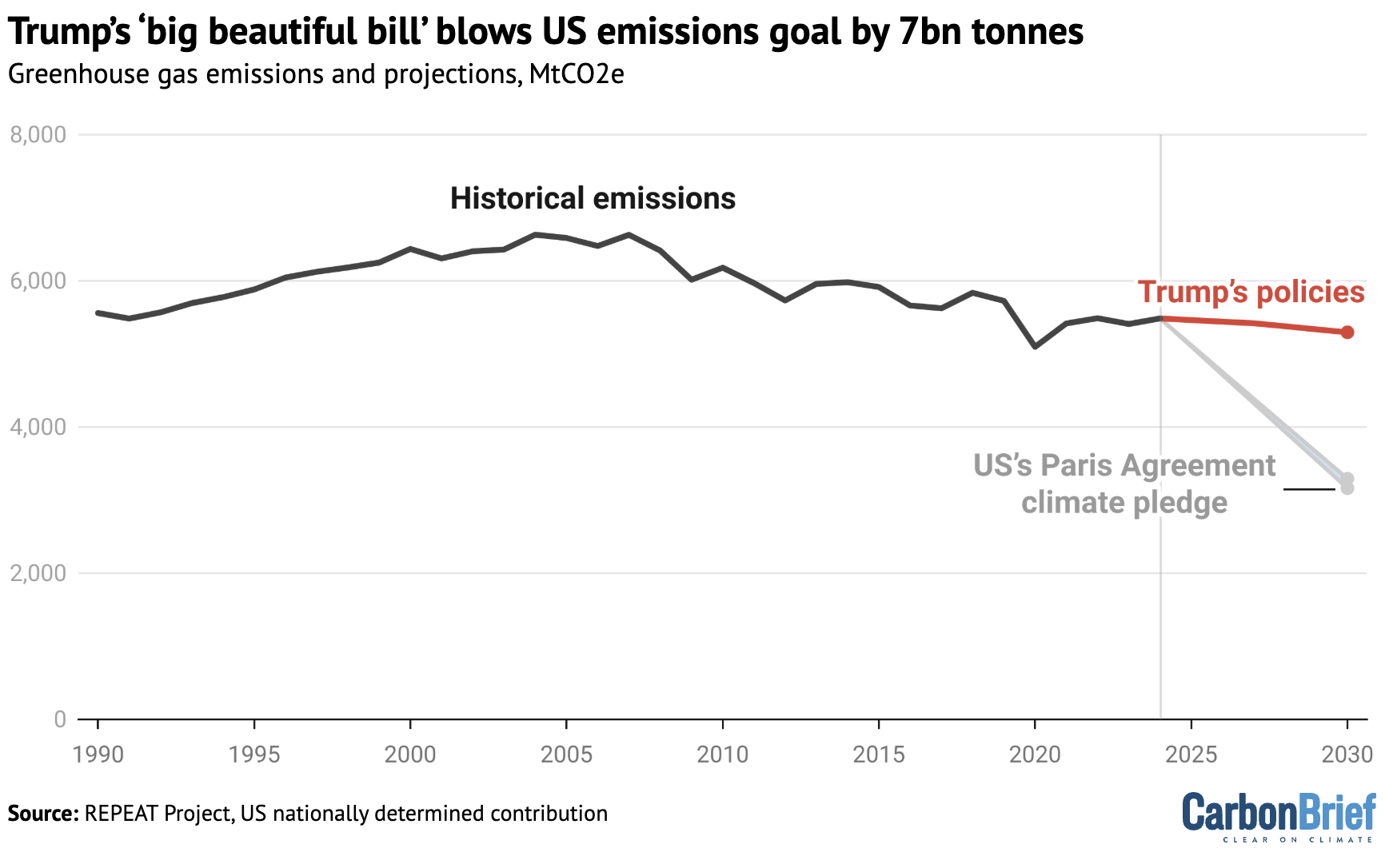
Trump's 'big beautiful bill' blows US emissions goal by 7bn tonnes
Source: REPEAT ProjectUS nationally determined contribution.

The cumulative gap between this pathway and the Trump administration’s trajectory amounts to 7bn tonnes of emissions over the next five years.

Based on the most recent central estimate of the “social cost of carbon” in 2030 from the US Environmental Protection Agency (EPA), published under the Biden administration, those 7bn tonnes of extra emissions would cause global climate damages worth more than $1.6tn.

Under this new set of US policies, emissions are only expected to be 20% lower than 2005 levels by 2030, rather than 50-52%, meaning the nation would be 2bn tonnes short of its goal.

This amounts to just a 3% drop from 2024 levels by 2030, meaning emissions are effectively flatlining.

Renewables down, prices up

Among the hundreds of provisions in the new Republican-backed bill are several key rollbacks that are expected to affect US emissions.

Under the IRA, wind and solar projects could receive tax credits up to 2034. Following the Republican bill, most projects would need to start construction within the next year to qualify.

Without federal support, the pipeline of new renewable-energy projects is expected to contract.

The REPEAT analysts estimate that cumulative new solar capacity additions will drop by 29 gigawatts (GW) by 2030 and around 140GW by 2035. For wind power, the decrease is set to be 43GW by 2030 and 160GW by 2035.

Some renewable projects will likely be built without support, but developers will need to contend with other Trump administration policies, such as stopping federal windfarm approvals.

The lost renewable capacity is unlikely to be entirely replaced by fossil fuels, due to a multi-year backlog in the construction of gas-fired power plants. 

Tax credits for nuclear and geothermal power have been retained until 2036 in the bill. While these projects generate clean electricity, they can also take a long time to build. 

Other key policies in the new bill include the removal of tax credits worth up to $7,500 to purchase electric vehicles, which could result in tens of millions fewer such cars and vans being sold. Ending tax credits for low-carbon manufacturing is also expected to undo progress in building clean technologies, such as solar panels and electric cars, domestically.

Beyond its effect on US emissions, various early analyses have suggested the Republican-backed bill is likely to increase energy prices and lead to job losses.

REPEAT estimates household energy costs are likely to be $165 higher in 2030 and more than $280 higher by 2035, following the passing of the bill.

Some of this increase can be attributed to fewer electric vehicles on the road, leading to higher petrol and diesel consumption and prices. Slowing construction of solar and wind projects as power demand increases will also likely affect the cost of electricity.

Without tax credits to boost the construction of new generation capacity, residential electricity prices are set to increase by 7% – or $110 – by 2026, for the average US customer, according to analysis conducted for trade body the Clean Energy Buyers Association.

In the state of Wyoming, the same analysis found that electricity prices may rise by as much as 30% over the next year. Other firmly Republican states, such as North Carolina and Tennessee, are also expected to see near-term price rises in the double digits.

Methodology

Modelling of the impact of the Trump administration’s “big beautiful bill” is from the REPEAT Project, a joint initiative of the Princeton University ZERO Lab and Evolved Energy Research

The project has assessed the emissions impact of the executive actions that the Trump administration has already taken to unwind Biden-era policies, as well as the bill itself. 

Carbon Brief compared this trajectory out to 2030 with a straight-line pathway towards the official US climate target for 2030. This is set out in the US’ nationally determined contribution (NDC) under the Paris Agreement. It is worth noting that the Trump administration is withdrawing the US from the Paris Agreement.

Original article by Josh Gabbatiss and Ho Woo Nam republished from Carbon Brief under a CC license.

Donald Trump urges you to be a Climate Science denier like him. He says that he makes millions and millions for destroying the planet, Burn, Baby, Burn and Flood, Baby, Flood.
Nigel Farage urges you to ignore facts and reality and be a climate science denier like him. He says that Reform UK has received millions and millions from the fossil fuel industry to promote climate denial and destroy the planet.
Orcas discuss Donald Trump and the killer apes' concept of democracy. Front Orca warns that Trump is crashing his country's economy and that everything he does he does for the fantastically wealthy.
Orcas discuss Donald Trump and the killer apes’ concept of democracy. Front Orca warns that Trump is crashing his country’s economy and that everything he does he does for the fantastically wealthy.
Continue ReadingChart: Trump’s ‘big beautiful bill’ blows US emissions goal by 7bn tonnes

250 million Indian workers and farmers on the streets in a national strike

Spread the love

Original article by Abdul Rahman republished form peoples dispatch under a Creative Commons Attribution-ShareAlike 4.0 (CC BY-SA) license.

The strike was called by the trade unions and farmers groups against anti-workers labor codes and failures of the government to enact a legal support price for farm products.July 09, 2025 by Abdul Rahman

250 million Indian workers and farmers on the streets in a national strike

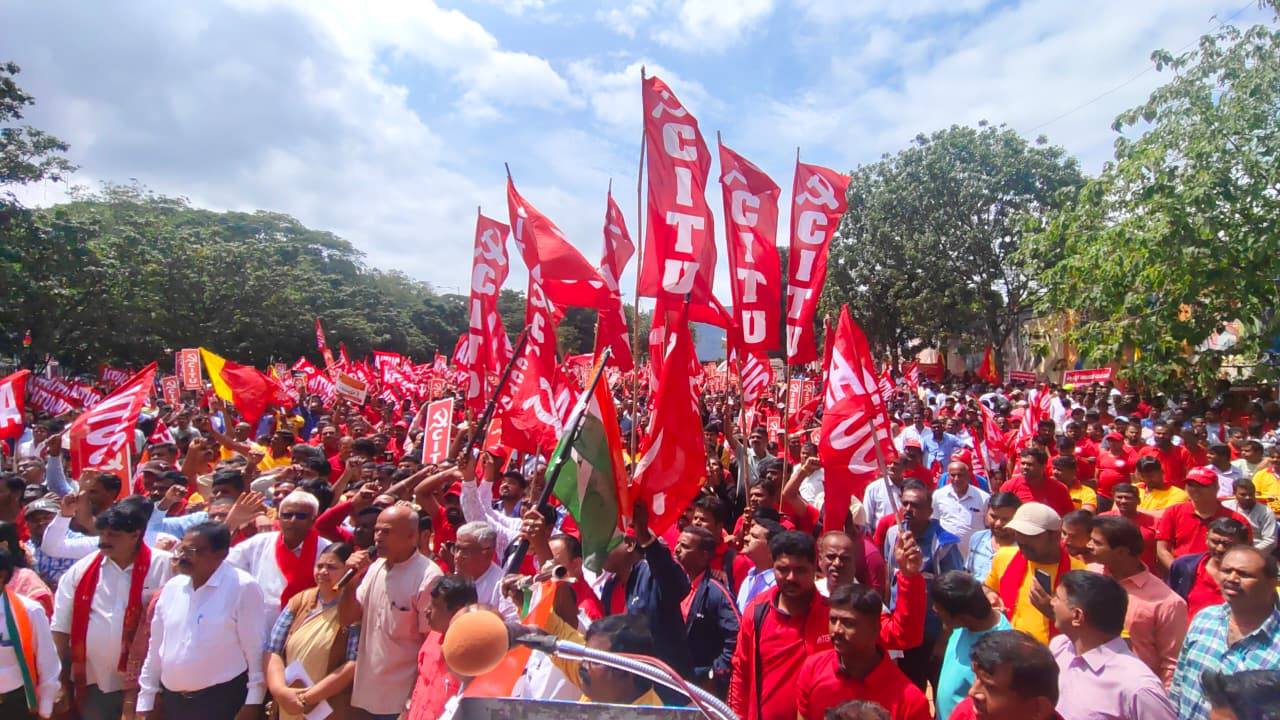
National strike against the “anti-worker” labor codes of the Modi government on July 9. Photo: CPI(M)

Millions took to the streets all over India on Wednesday, July 9, to observe a national strike call made by Central Trade Unions (CTU). They are striking against the anti-worker policies adopted by the ultra-right-wing government in the country. 

CTU is a platform of all the major trade union federations in the country, spanning the ideological and political spectrum. It includes the Center for Indian Trade Unions (CITU), the All India Trade Union Congress (AITUC), the Indian National Trade Union Congress (INTUC) and several others. 

The strike was also supported by all the major groups of farmers, students, women, and various professional unions such as teachers, journalists, and IT employees in the country. 

According to various estimates, more than 250 million workers and farmers – both in organized and unorganized sectors – directly participated in the strike and protests across the country. 

Workers in other organized sectors such as ports, airports, and banking also participated alongside those in various public sectors.

The strike affected most of the industrial activities in the country, particularly industries related to mining.

#Strike #GeneralStrike बी टी आर वाडको एम्पलाइज यूनियन के साथी अपनी कंपनी एस एफ सी सॉल्यूशन साहिबाबाद के गेट पर हड़ताल को कामयाब बनाते हुए। pic.twitter.com/311IoxICHS

— CPIM DELHI (@CPIMSTATEDELHI) July 9, 2025

In several places, workers blocked the movement of trains, blocked highways, and picketed factory gates to mobilize greater support. In some cases, such as the Kochi refinery in the southern state of Kerala, workers defied court orders and observed the strike.

Picket lines stand strong and militant in front of the factory gate.#9thJulyGeneralStrike pic.twitter.com/V2a33uoQT9

— CITU CENTRE (@cituhq) July 9, 2025

A total shut down of all major business was observed in various states in the country such as Kerala, Tripura, Bihar, Jharkhand, and others.

Anti-worker labor codes must be withdrawn

The workers were demanding immediate withdrawal of the new labor codes enacted by the ultra-right-wing government led by Narendra Modi at the center in 2020. CTU claims the four new labor codes are anti-worker, depriving them of their basic rights, including the right to collective bargaining, which was won through a historic and painful worker’s struggle.

The other major demands include: 

  • The end of the privatization and contractualization of jobs
  • A national minimum wage of Rs. 26,000 (USD 303)
  • Improvements in working conditions across all sectors for all kinds of workers

Trade union workers take out a march in West Bengal. #GeneralStrike #StrikeHard pic.twitter.com/hxrTd0AoYY

— CPI (M) (@cpimspeak) July 9, 2025

The strike also supported the demands raised by the country’s major farmers groups, led by the Samyukta Kisan Morcha (SKM), for a legal minimum support price for all farm produce, the waiving of loans for farmers, an end to all forced land acquisition, and better employment opportunities.

The strike was originally scheduled for May 19. It had to be postponed following the war-like situation in the region created after India attacked several locations inside neighboring Pakistan, accusing it of supporting armed groups who carried out attacks on tourists in Pahalgam.

Popular action defeats government lies

A central protest rally was held in the national capital Delhi. The protest was attended by all the constituents of CTU and SKM, the farmers collective which has extended support to the strike.

Millions of workers, farmers strike in India to protect their basic rights, livelihoods
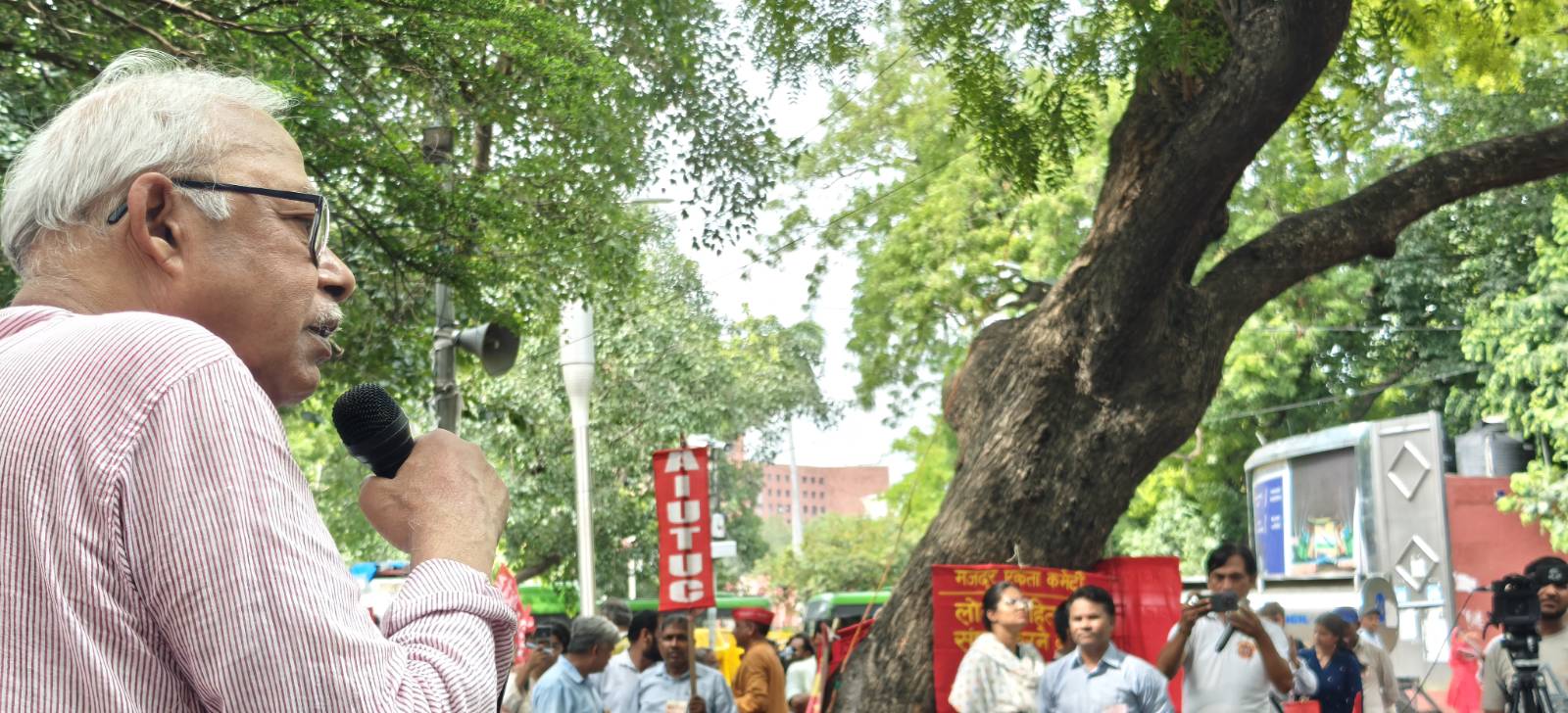
CPI(M) Politburo Member and CITU General Secretary Tapan Sen addresses a strike demonstration in Jantar Mantar, New Delhi. Photo: CPI (M)

Addressing the rally, Tapan Sen, general secretary of CITU and a member of the Communist Party of India (Marxist) polit bureau, claimed that the success of the strike demolishes the myths created by the Modi government about the so-called economic prosperity his government’s policies have created.

Millions strike in India
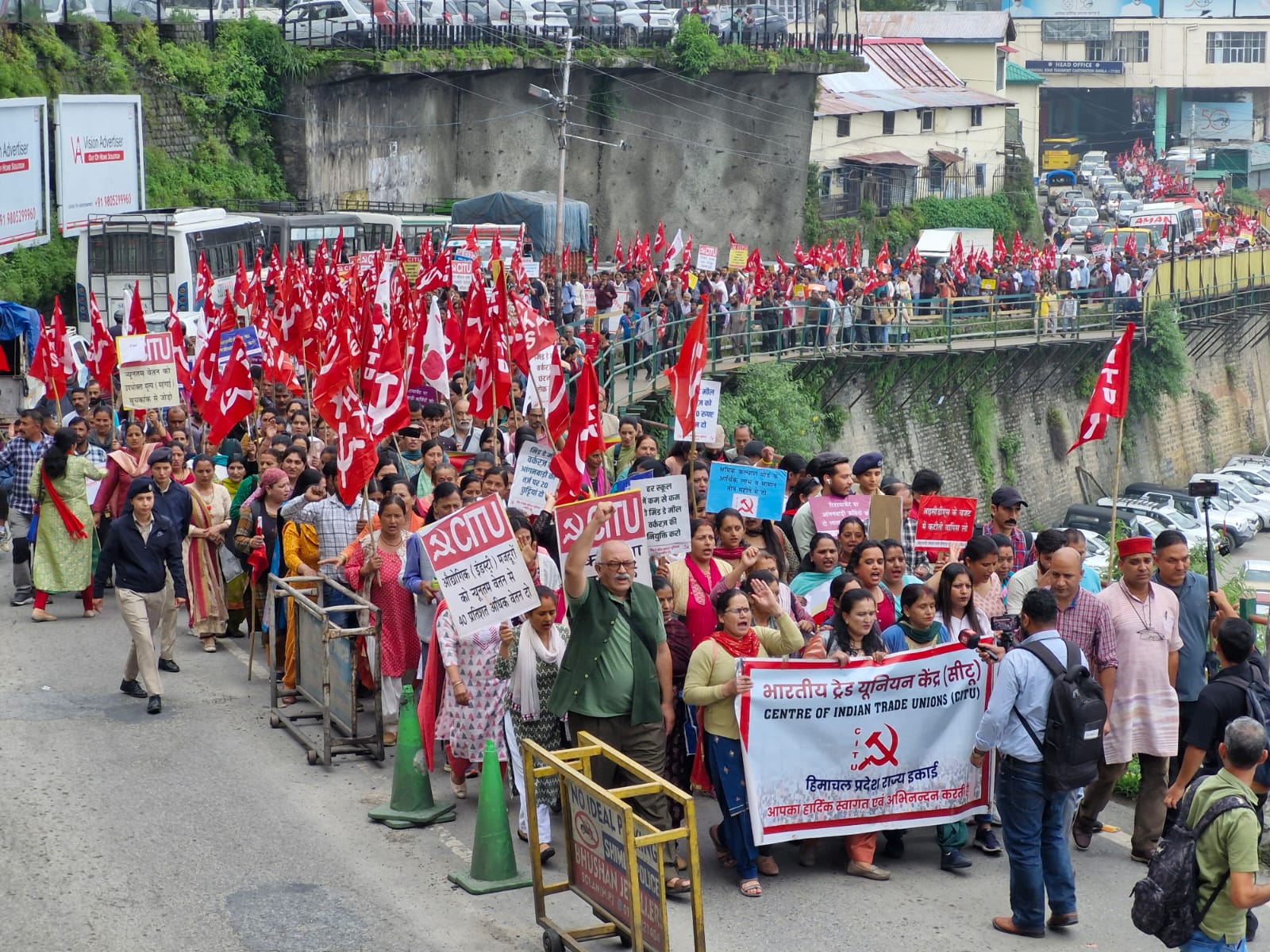
Strike demonstration in Shimla, Himachal Pradesh. Photo: CPI (M)

Most Indians today are struggling to find a decent source of livelihood and those who have one are struggling to protect it from the effects of the various wrongful and pro-corporate policies of the Bharatiya Janata Party (BJP)-led government, Sen underlined.

The lies about India being the third or fourth largest economy in the world, propagated by the present government in the country and magnified by the complicit media, have been exposed by the sheer number of people who participated in today’s strike. It establishes the fact that under Modi’s decade-long rule the condition of the working classes in India has gone from bad to worse, Sen told the protesters gathered at the rally.

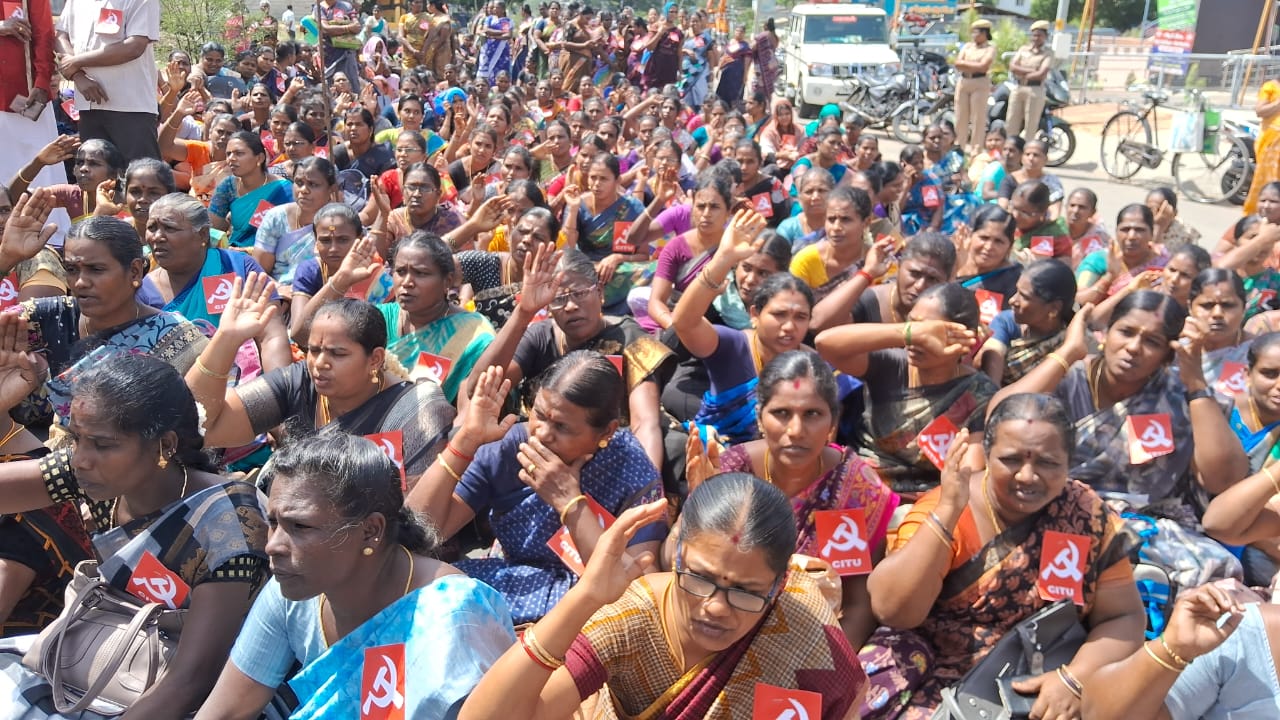
Millions strike in India workers and farmers
Photo: CPI(M)

Sen also warned the government against going ahead with the proposed trade deal with the US, claiming that would further compromise the interest of workers and farmers in India.

Amarjeet Kaur, general secretary of the AITUC, claimed that the BJP used pro-government unions to divide the working classes in the country and falsely called the strike “illegal”.

“The attempts to divide the working class, so that the interest of its corporate bosses are protected, was defeated by the successful strike” Kaur declared. She noted that this was the fourth such strike since 2020 and more such strikes will happen in the future, with more intensity, if the government fails to correct its ways and take back the four draconian labor codes, and enact laws which really benefit the working classes of this country.

Original article by Abdul Rahman republished form peoples dispatch under a Creative Commons Attribution-ShareAlike 4.0 (CC BY-SA) license.

Continue Reading250 million Indian workers and farmers on the streets in a national strike

Ethnic cleansing awaits North Darfur’s besieged, starving population in war-torn Sudan

Spread the love

Original article by Pavan Kulkarni republished from peoples dispatch under a Creative Commons Attribution-ShareAlike 4.0 (CC BY-SA) license.

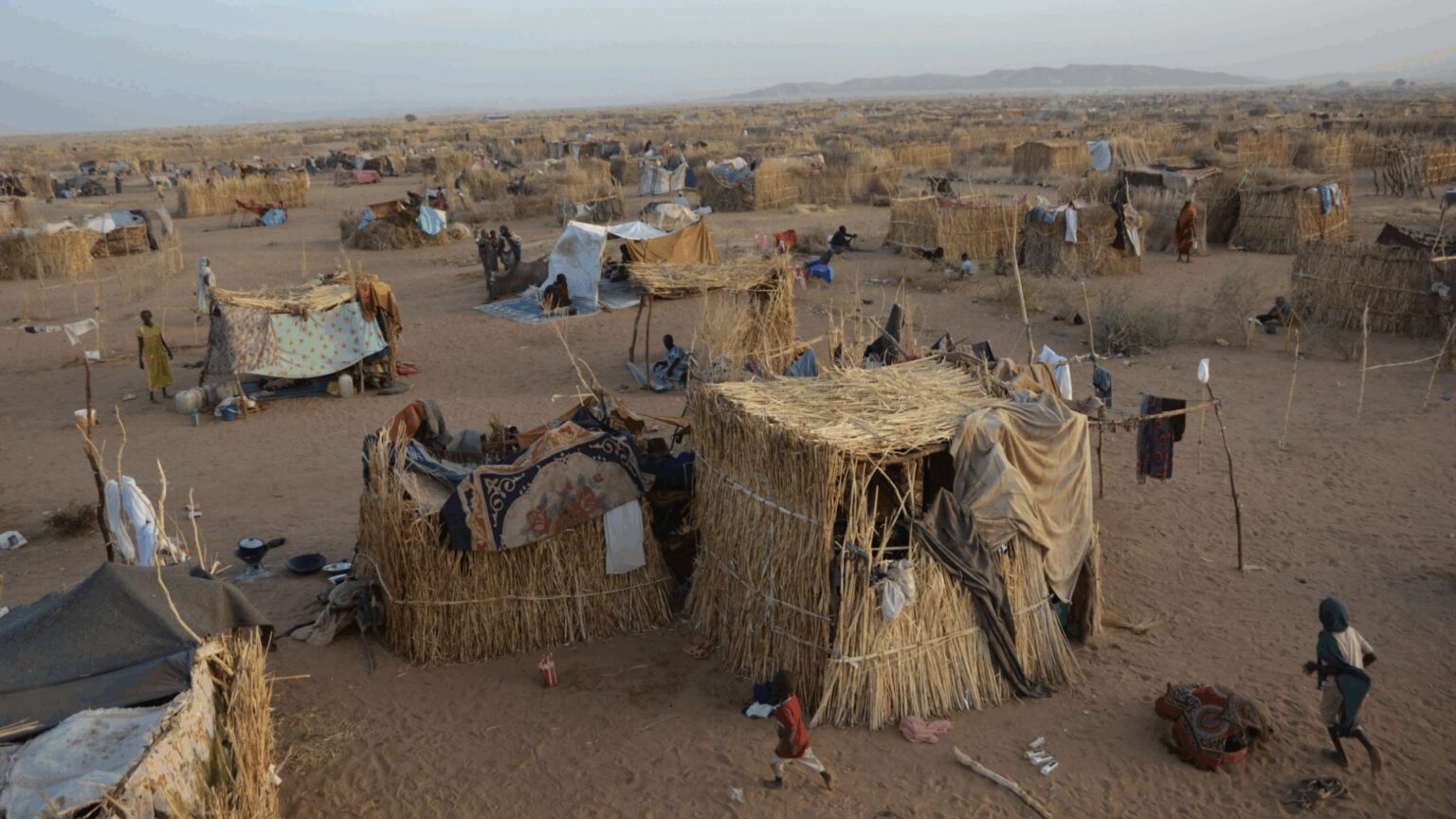
Over 400,000 people were forced to flee to El Fasher from the Zamzam refugee camp due to RSF ground operations. Photo: Doctors Without Borders

The specter of ethnic cleansing looms over hundreds of thousands trapped without food, water, or medicines in the North Darfur state’s besieged capital, El Fasher.

Nearly half a million people were forced to flee from North Darfur state’s capital, El Fasher, and the nearby Zamzam camp for displaced people in just the two months of April and May, the UN Secretary-General’s spokesperson, Stéphane Dujarric, said in a press briefing on Monday, July 7.

North Darfur is the only one of the five states where the Sudanese Armed Forces (SAF) have retained a foothold in the war-torn Sudan’s vast western region of Darfur, overrun by its rival, the paramilitary Rapid Support Force (RSF), within six months of the war’s start in April 2023. 

Moving against this last holdout, the RSF laid siege in May 2024 on El Fasher, where the SAF has a base, and the Zamzam camp on its outskirts, where some of the local self-defense units allied with the SAF are positioned.

Read more: Sudan’s paramilitary attacks largest IDP camps amid world’s biggest displacement crisis, killing over 100

“People are not only caught in indiscriminate heavy fighting between” the two warring forces, but are also being “actively targeted by the RSF and its allies, notably on the basis of their ethnicity,” Michel Olivier Lacharité, MSF head of emergencies, said on July 3. 

SAF created the RSF in Darfur

The RSF was coalesced in 2013 from the militias the SAF had spawned from Arabic-speaking nomadic communities to perpetrate mass atrocities on the regional-language-speaking groups of sedentary farmers that supported the rebel groups during the Darfur civil war in the 2000s.

The partnership between SAF and the RSF lasted a decade, during which they seized power together to form a military junta in 2019, when mass pro-democracy protests forced the ouster of Omar al-Bashir after a 30-year-long dictatorship.

The duo deployed its troops to jointly repress the militant protests that continued until April 15, 2023, when the intensifying power struggle within the junta between the two forces crossed the Rubicon, mobilizing their forces against each other and hurling the country into a civil war.

IDPs under attack

Now continuing into its third year, the civil war has claimed an estimated 150,000 lives and displaced nearly 13 million people, unleashing in this poor North African country the world’s worst displacement crisis.

Over three million of the displaced have fled to other countries as refugees. An estimated 8.6 million have remained as Internally Displaced People (IDPs). Darfur, which already had almost 3.1 million IDPs from the regional civil war in the 2000s, was among the worst-affected regions by this new war.

The RSF maneuvered quickly to take control over this region, starting with West Darfur, where it committed ethnically targeted massacres in June 2023 against the Masalit community, most of whom were displaced in the Darfur civil war. Ethnic cleansing of this community from West Darfur was nearly complete by November that year. 

Read more: Ethnic cleansing of West Darfur’s El Geneina culminates in largest massacre since onset of war in Sudan 

By then, the RSF had taken over most of the region, with North Darfur as the SAF’s only holdout. Members of the state’s Zaghawa community, which had until then remained neutral, volunteered in large numbers to form self-defense units that aligned themselves with the SAF.

“In light of the ethnically motivated mass atrocities committed on the Masalit in West Darfur… MSF fears such a scenario will be repeated in El Fasher – notably because witnesses report that RSF soldiers spoke of plans to ‘clean El Fasher’ of its non-Arab, and especially Zaghawa, community,” MSF said in a report released on July 3. 

Titled “Besieged, attacked, starved: Mass atrocities in El Fasher“, the report added: “Aside from the direct violence exerted on civilians, residents from El Fasher and surrounding areas [also] have been prevented from meeting their basic needs.”

Famine

The RSF’s siege since last May has cut off the city and its surrounding localities from supplies. Its markets have been repeatedly bombed by both sides. At the Zamzam camp located seventeen kilometers south of El Fasher, a famine was declared in August 2024. 

Among the largest IDP camps in the country, it was already sheltering about 350,000 displaced people from the Darfur civil war. With new displacements from this intra-junta civil war, IDPs nearly doubled in Zamzam. Its meagre resources in the form of aid were already stretched when its supply was cut off by the RSF’s siege in May 2024.

“When fighting erupted in Zamzam in December 2024 and then intensified at the end of January and in February 2025, the camp was hosting … up to 700,000,” MSF’s report added. 

Most of them had to flee again, for the second, even third time, after the RSF’s large-scale ground offensive this April, displacing over 400,000 in three weeks, according to the International Organization for Migration (IOM). 

“A large proportion of the population fled to El Fasher, where they remained trapped, out of reach of humanitarian aid and exposed to attacks and further mass violence,” the report warns.  

No escape for the Zaghawa community

Over 68,000 others have fled across the western border to Chad, according to the UN Refugee Agency (UNHCR). No one identified as Zaghawa was let through the RSF checkpoints, multiple survivors told the MSF. “They would only let mothers with small children under the age of five through,” said one of the refugees interviewed in Chad. 

“Other children and adult men didn’t go through. Males over fifteen can hardly cross the border [into Chad]. They take them, they push them aside, and then we only hear a noise, gunshots … Fifty families came along with me. Not even one boy of 15 years old or above.. [is] among us” in Chad. 

“The number of people killed and injured” in the RSF’s offensive on Zamzam is “unknown”, the report said, adding “with no functional hospital within the camp, most of the wounded had no access to life-saving medical assistance.” 

“Access to healthcare has been rendered near impossible, as most healthcare infrastructure has been partially or completely damaged.” MSF’s own medical facilities have been attacked over a dozen times since last May.

Original article by Pavan Kulkarni republished from peoples dispatch under a Creative Commons Attribution-ShareAlike 4.0 (CC BY-SA) license.

Continue ReadingEthnic cleansing awaits North Darfur’s besieged, starving population in war-torn Sudan

Repression of protests continues in Panama

Spread the love

Original article by Pablo Meriguet republished from peoples dispatch under a Creative Commons Attribution-ShareAlike 4.0 (CC BY-SA) license.

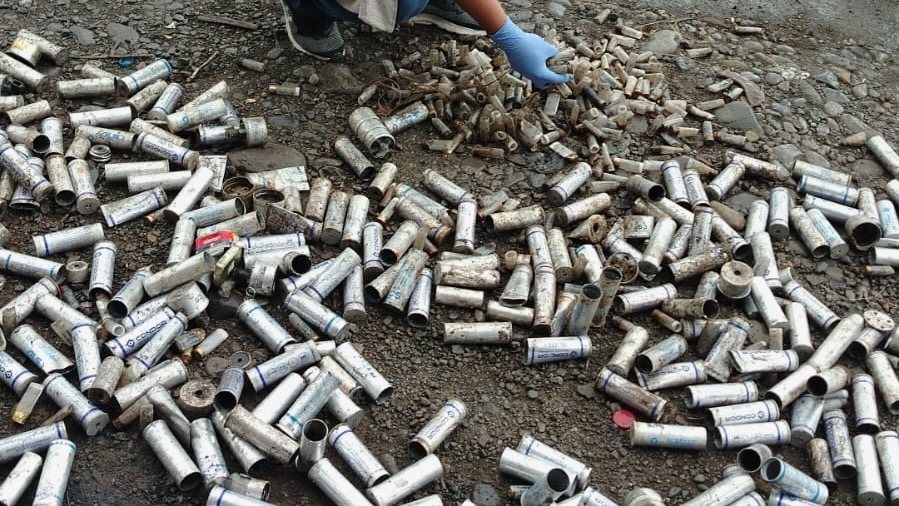
Ammunition used against protestors, which led to the death of a young girl, Michelle Becker, from the large amount of tear gas that filled her home. Photo: Claridad Panamá

The demonstrations, which have lasted more than 70 days, have been firmly repressed by the Mulino government, which has affirmed that it will not repeal the social security law that has caused so much controversy.

On July 5, nearly 800 people from 17 countries signed a letter addressed to the president of Panama, José Raúl Mulino, calling for international observation due to the increasing repression of protests in Panama. The document, signed by academics, artists, activists, workers, and trade unionists, also points out that the Central American country is witnessing growing criminalization of political dissent, which, according to the document, is reminiscent of the darkest years in its national history. Furthermore, the letter adds that the government is demonstrating an “authoritarian drift”.

The letter states: “President Mulino leads a legally legitimate government, but with minimal support. And he has responded to a wave of legitimate and democratic protests most violently and systematically ever recorded in the country’s history since 1903.”

For more than 70 days, thousands of Panamanians have taken to the streets, closed roads, and staged strikes against the neoliberal policies of the Mulino government. The demonstrators are demanding the repeal of:

  1. A law reforming Social Security – reducing pensions and opening the door for the privatization of the system. 
  2. Growing US interference – according to the demonstrators, the US intends to install several military bases in Panama.
  3. The reopening of a copper mine – the largest and most controversial in the country, already closed by the Panamanian justice system.

On June 20, the government suspended constitutional rights for 10 days in the banana-producing province of Bocas del Toro, the most active in the protests. According to the government, the measure was taken to safeguard the security of the area, although several demonstrators called that an excuse to persecute and imprison the leaders of the protests. More than 200 people have been arrested, including local community leaders.

In this regard, the letter states: “The step taken by the Executive to suspend constitutional guarantees in the province of Bocas del Toro makes it, de facto, an authoritarian government willing to suspend the Constitution when it is unable to negotiate, dialogue or listen to its people… The abuse of power of the State through the security forces and the arguments used to justify the violation of human rights, repression, and the prosecution of leaders are not acceptable in any way.”

Therefore, the letter denounces that the country is “going backwards in terms of human rights” and requests the immediate intervention of international human rights agencies to address the Panamanian situation and thus guarantee the fundamental freedoms of demonstrators and citizens alike.

Read more: Labor wins and increased repression: 50 days of Panama’s national strike

A few days ago, Roger Montezuma joined Michelle Becker and Arcenio Abrego on the growing list of those who have been killed during anti-government demonstrations. Montezuma, according to some accounts, was killed in Bocas del Todo in the context of “Operation Omega”, a campaign by the national police that protestors describe as “a bloody repression”.

For this and other cases, the National Human Rights Commission (CNDH) and the Indigenous Peasant Movement of the Ngäbe Buglé region requested that the legislature establish a commission specialized in studying cases of human rights violations to monitor the protests. The CNDH presented more than 100 alleged cases of human rights violations, including alleged arbitrary detentions, humiliating treatment, deaths, etc. The legislature has not yet offered a response to the request.

Thus, the Panamanian political dispute has led to a massive confrontation between protesters and the forces of law and order, which is still not over. 

However, as the days go by, more and more denunciations are surfacing in the media, increasing the discomfort for moderate Panamanians (former allies of Mulino), and raising concerns among international actors about partnering with a government that is widely seen as repressive.

Original article by Pablo Meriguet republished from peoples dispatch under a Creative Commons Attribution-ShareAlike 4.0 (CC BY-SA) license.

Continue ReadingRepression of protests continues in Panama

Trump announces 50% tariff on Brazilian goods in letter attacking the Supreme Court and defending Bolsonaro

Spread the love

Original article by Brasil de Fato republished from peoples dispatch under a Creative Commons Attribution-ShareAlike 4.0 (CC BY-SA) license.

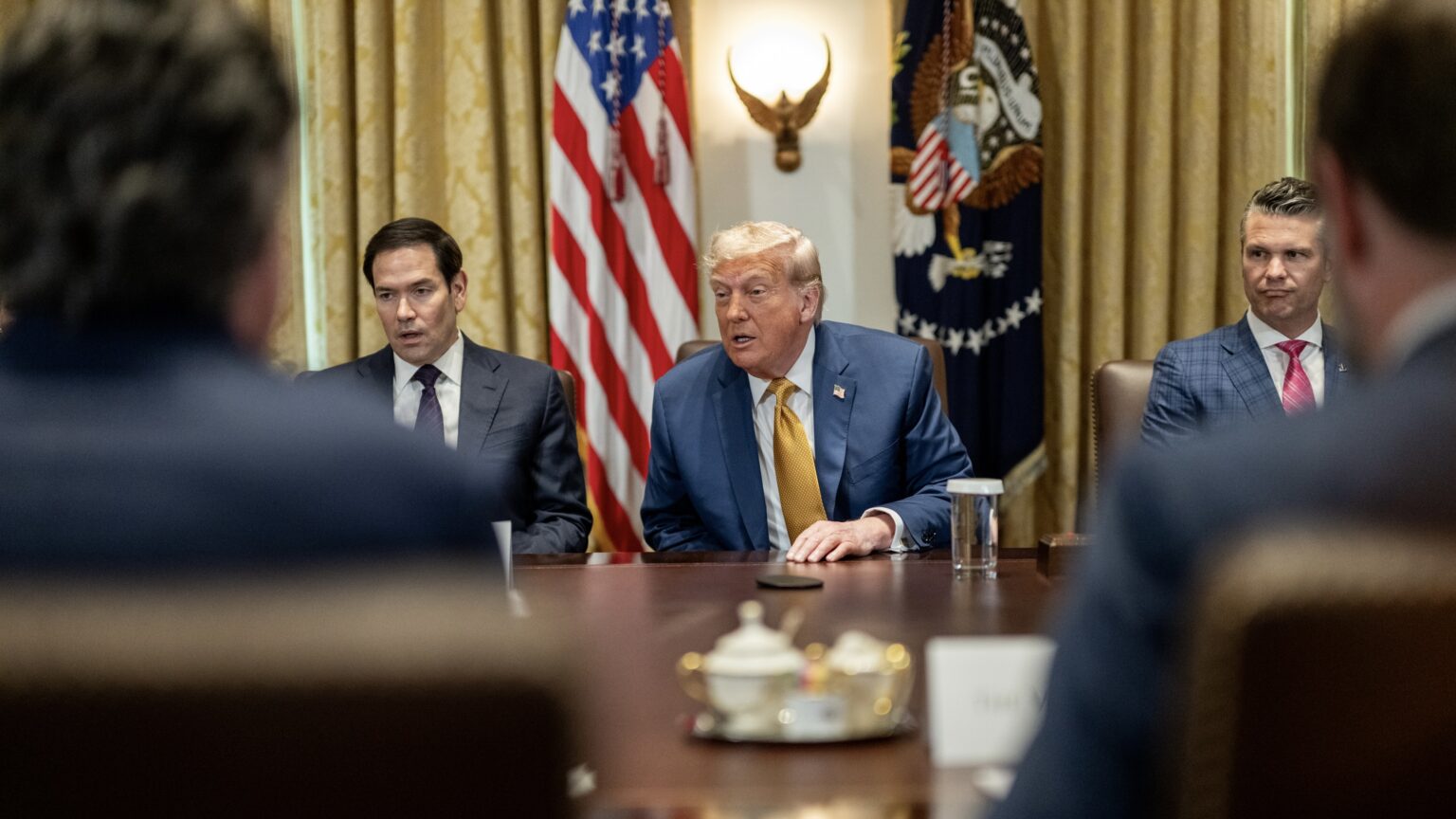
US Secretary of State Marco Rubio, US President Donald Trump, and US Secretary of Defense Pete Hegseth in a Cabinet Meeting. Photo: White House

The billionaire president claimed that trade relations with Brazil are unfair to the US. Lula has called a meeting to discuss a response.

US President Donald Trump has announced that products imported from Brazil will be subject to 50% tariffs starting in August. The application of the tariffs was announced in a letter published on Wednesday, July 9, on social media.

Addressed to the President of the Republic, Luiz Inácio Lula da Silva, the message begins with a direct defense of Jair Bolsonaro and criticism of “the way Brazil has been treating the former president”, which he classified as an “international disgrace”.

Referring to the case against Bolsonaro in the Supreme Court (STF), Trump emphasizes: “This trial should not be happening. It is a witch hunt that must end IMMEDIATELY!”

It is worth noting that the US president has no authority over the decisions of the Brazilian judiciary.

In his letter to Lula, he states that the decision on tariffs is based on attacks on free elections and freedom of expression in Brazil.

“(As lately illustrated by the Brazilian Supreme Court, which has issued hundreds of SECRET and UNLAWFUL Censorship Orders to US Social Media platforms, threatening them with Millions of Dollars in Fines and Eviction from the Brazilian Social Media market),” Trump declares.

After the political justification, he adds that trade relations with Brazil are unfair to the United States. However, the trade balance between the two nations has been in surplus for the US for more than ten years.

The percentage announced by Trump for Brazilian products is the highest among those most recently defined by the US government. In the letter, the US president argues that the country should distance itself from its trade relationship with Brazil.

He goes so far as to say that the 50% rate “is far too low” to bring about a level playing field between the two nations. According to Trump, the US Trade Representative’s Office (USTR) will launch an investigation into Brazil under the US Trade Act.

The intention of this type of approach is to determine whether there has been any violation of trade agreements. If irregularities are found, the US may take action through the World Trade Organization (WTO).

In a threatening tone, Trump states that if Brazil decides to take similar measures in response to the new tariff, the US will raise the rate by another 50%. He ends the letter by saying that the decision may be modified upward or downward depending on Brazil’s relationship with the US.

“If you wish to open your heretofore closed Trading Markets to the United States, and eliminate your Tariff, and Non-Tariff, Policies and Trade Barriers, we will, perhaps, consider an adjustment to this letter,” he writes.

Reaction

After the letter was released, President Lula called an emergency meeting to discuss Brazil’s response to Trump. According to information released in the press, Vice President Geraldo Alckmin, also minister of Development, Industry, Trade, and Services, Fernando Haddad (Finance), Mauro Vieira (International Relations), and Rui Costa (Chief of Staff) are participating in the meeting.

On social media, Workers’ Party senator and leader of the Senate, Jaques Wagner called for respect for Brazil and criticized the measure, which he attributed to a “request from the Bolsonaro family”.

“At the request of the Bolsonaro family, Donald Trump has announced a 50% tax on all Brazilian products, in an authoritarian and unilateral manner. The US president is confusing who he is addressing. Brazil will not be anyone’s backyard. We are the ones who decide our own lives. Let this be clear: Brazil belongs to Brazilians, not to lackeys!” he posted.

This was first published in Portuguese at Brasil de Fato.

Original article by Brasil de Fato republished from peoples dispatch under a Creative Commons Attribution-ShareAlike 4.0 (CC BY-SA) license.

Continue ReadingTrump announces 50% tariff on Brazilian goods in letter attacking the Supreme Court and defending Bolsonaro