Chicago Judge Demands Answers From Border Patrol Chief Over Tear Gas at Kids’ Halloween Parade

Spread the love

Original article by Brad Reed republished from Common Dreams under a Creative Commons (CC BY-NC-ND 3.0).
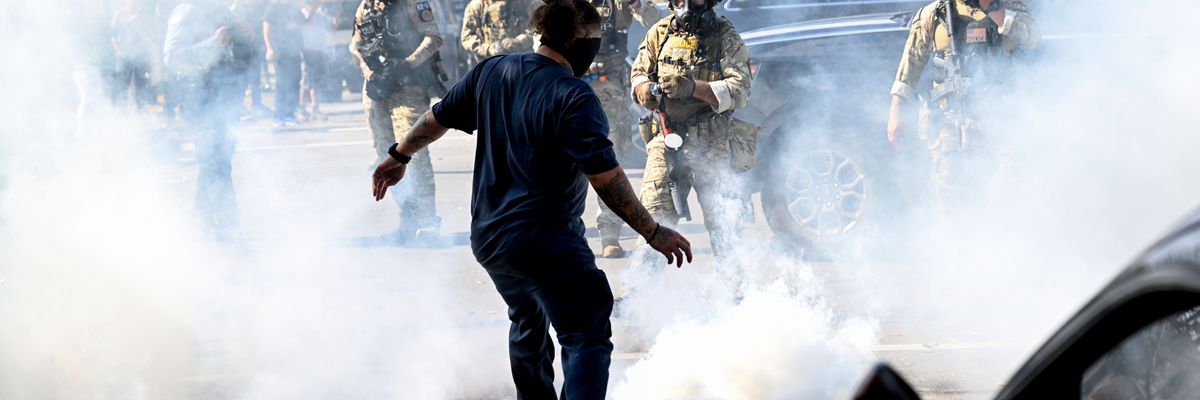
Residents and protesters clash with federal agents in the East Side neighborhood after the officers deployed tear gas on October 14, 2025 in Chicago, Illinois. (Photo by Joshua Lott/The Washington Post via Getty Images)

“Their sense of safety was shattered,” the judge said of local children whose Halloween parade was disrupted by federal agents deploying tear gas in their vicinity.

Chicago judge rebuked US Border Patrol Commander-at-Large Gregory Bovino on Tuesday after several of his agents over the weekend deployed tear gas in a neighborhood where local children were preparing for a Halloween parade—in violation of a previous court order barring the use of the chemical unless federal officers are in immediate danger.

During a court appearance, Bovine was dressed down by US District Court Judge Sara Ellis, who said Border Patrol agents had violated her earlier restraining order that barred US Department of Homeland Security officials from using riot control weapons “on members of the press, protestors, or religious practitioners who are not posing an immediate threat to the safety of a law enforcement officer or others.”

As reported by Heather Cherone, a politics reporter at local Chicago news station WTTW, Ellis grilled Bovine about multiple uses of force by federal immigration agents in recent weeks.

First, Ellis asked Bovine to comment on allegations filed in her court last week about federal immigration agents pointing a gun at a man who was peacefully protesting against their actions while standing on the side of a public street.

Bovine replied that he did not know the specific details of that incident, which Ellis said violated her earlier restraining order “on its face.”

Next, Ellis described video footage taken last weekend in the neighborhood of Old Irving Park showing federal immigration agents placing a US citizen in a chokehold after he had approached agents and asked them what they were doing. In this case, Bovino acknowledged that this action as described would not be an appropriate use of force.

Finally, Ellis asked Bovino about the tear gas deployed in Old Irving Park as families were preparing for an annual children’s Halloween parade. The Border Patrol agents’ use of the chemical appeared impossible to justify, said Elliis, given all known facts.

“These kids, you can imagine, their sense of safety was shattered,” Ellis said, referring to children in the neighborhood. “It is going to take a long time to come back, if ever.”

According to Chicago Tribune reporter Jason Meisner, Ellis also told Bovino that kids should feel they’re able to go to local Halloween events without having to “worry about getting tear-gassed.”

“That’s not how any of us want to live,” Ellis emphasized. “I know you wouldn’t want to live that way.”

The federal immigration operation in Old Irving Park on Saturday targeted a man named Luis Villegas, an undocumented immigrant who was working in the area and who, according to his brother, was brought to the US when he was four years old.

Agents detained two other people in the neighborhood in addition to Villegas, and deployed tear gas after several neighbors came out of their homes to yell at the officers, film them, and demand that they leave the neighborhood. A former Cook County prosecutor who lives in Old Irving Park and witnessed Villegas’ arrest told reporters that the agents were never under any threat.

Ellis ordered Bovino to appear in her courtroom every single day going forward to recap his agents’ actions in the district, according to Cherone.

She also demanded that Bovino ensure that every one of his officers is equipped with a body camera, and to submit all reports on use of force incidents and corresponding body camera footage by Friday.

A hearing on whether to make permanent Ellis’ restraining order which strictly limits the use of riot control munitions has been set for November 5, according to Cherone.

Original article by Brad Reed republished from Common Dreams under a Creative Commons (CC BY-NC-ND 3.0).

Donald Fuhrump says that Amerikkka doesn't bother with crimes or charges anymore, not being 100% Amerikkkan and opposing his real estate intentions is enough.
Donald Fuhrump says that Amerikkka doesn’t bother with crimes or charges anymore, not being 100% Amerikkkan and opposing his real estate intentions is enough.
Orcas discuss how Trump was re-elected and him being an obviously insane, xenophobic Fascist.
Continue ReadingChicago Judge Demands Answers From Border Patrol Chief Over Tear Gas at Kids’ Halloween Parade

25 State AGs Sue Trump Over Refusal to Fund Food Assistance for Poor

Spread the love

Original article by Julia Conley republished from Common Dreams under a Creative Commons (CC BY-NC-ND 3.0).

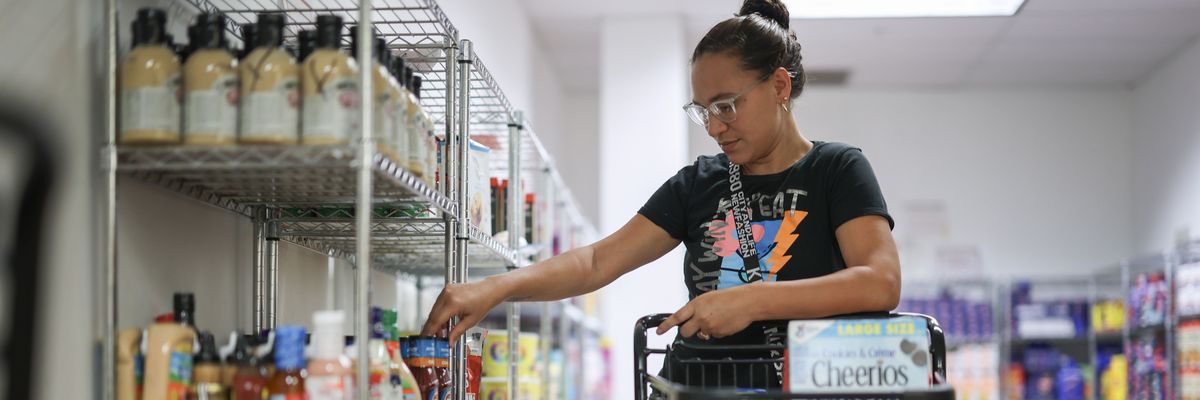
Ester Pena shops at the Feeding South Florida food pantry on October 27, 2025 in Pembroke Park, Florida. (Photo by Joe Raedle/Getty Images)

“I will not allow Trump to use hungry children as bargaining chips,” said one attorney general.

More than two dozen Democratic state attorneys general on Tuesday sued the Trump administration for withholding emergency food assistance that could help prevent 42 million people from going hungry next month, arguing that the US Department of Agriculture is legally obligated to ensure federal nutrition aid gets to people who rely on it.

With the US government shut down since October 1, the USDA said weeks ago that it could reprogram an emergency reserve held by the Supplemental Nutrition Assistance Program (SNAP) to ensure people don’t lose their benefits on November 1. But last Friday a memo from the department said the emergency funds were to be used during disasters such as hurricanes and floods, and were “not legally available” for families set to lose their benefits due to the shutdown.

Officials from New YorkNevadaMinnesota, and other Democratic-led states are asking the US District Court for the District of Massachusetts to rule by October 31, on a motion to force the Trump administration to use the contingency fund to send at least partial payments to SNAP beneficiaries.

About $5 billion-$6 billion is estimated to be in the fund; before the shutdown, about $8 billion in benefits went out to families per month.

In the lawsuit, the attorneys general also argued that the USDA could use Section 32 funds, as it did to provide funding for the Women, Infants, and Children program, to continue funding SNAP in November.

The shutdown began when Democrats in Congress refused to vote with the Republican Party on a continuing resolution that would have allowed Affordable Care Act subsidies expire at the end of the year, significantly raising health insurance premiums for millions of people. Democrats also want to undo some recent GOP cuts to Medicaid.

The Trump administration has continued to place blame for the shutdown the Democrats, whom President Donald Trump refused to negotiate with over healthcare before government funding was cut off at the end of September.

The USDA website on Tuesday amplified misinformation Republicans have spread, accusing Democrats of “hold[ing] out healthcare for illegal aliens and gender mutilation procedures” and claiming that “the well has run dry” for SNAP despite the emergency fund.

North Carolina Attorney General Jeff Jackson accused the USDA of “playing an illegal game of shutdown politics” that could result in suffering for nearly 600,000 children in his state.

“They have emergency money to help feed children during this shutdown, and they’re refusing to spend it,” said Jackson. “I warned them last week that I would take them to court if they tried to hurt our kids, and today that’s what we’re doing.”

Also on Tuesday, US House Speaker Mike Johnson (R-La.) said the Republican Party will not bring a standalone bill to fund expiring SNAP benefits to the floor for a vote, saying, “The pain register is about to hit 10,” and again blaming Democrats for the impending food assistance cliff.

Economist Paul Krugman noted that “the Republican majority in the Senate could maintain aid by waiving the filibuster on this issue.”

“They have done this on other issues—for example, to roll back California’s electric vehicle standard,” he wrote. “But for today’s Republican Party, blocking green energy is more important than keeping 40 million Americans from going hungry.”

Nevada Attorney General Aaron Ford accused the Trump administration of making a “deliberate, cruel, and extraordinarily harmful decision” to allow tens of thousands of people to go hungry.

“Contingency funds exist for this exact scenario, yet the USDA has abdicated its responsibility to Nevadans and refused to fund SNAP benefits,” said Ford. “I understand the stress of not knowing where you’re next meal is coming from, because I’ve lived it. I don’t wish that stress on any Nevadan, and I’ll fight to be sure nobody in our state goes hungry.”

Original article by Julia Conley republished from Common Dreams under a Creative Commons (CC BY-NC-ND 3.0).

Donald Fuhrump says that Amerikkka doesn't bother with crimes or charges anymore, not being 100% Amerikkkan and opposing his real estate intentions is enough.
Donald Fuhrump says that Amerikkka doesn’t bother with crimes or charges anymore, not being 100% Amerikkkan and opposing his real estate intentions is enough.
Orcas discuss how Trump was re-elected and him being an obviously insane, xenophobic Fascist.

Continue Reading25 State AGs Sue Trump Over Refusal to Fund Food Assistance for Poor

The left wins the presidential election in Ireland by a landslide

Spread the love

Original article by Vijay Prashad republished from peoples dispatch under a Creative Commons Attribution-ShareAlike 4.0 (CC BY-SA) license.

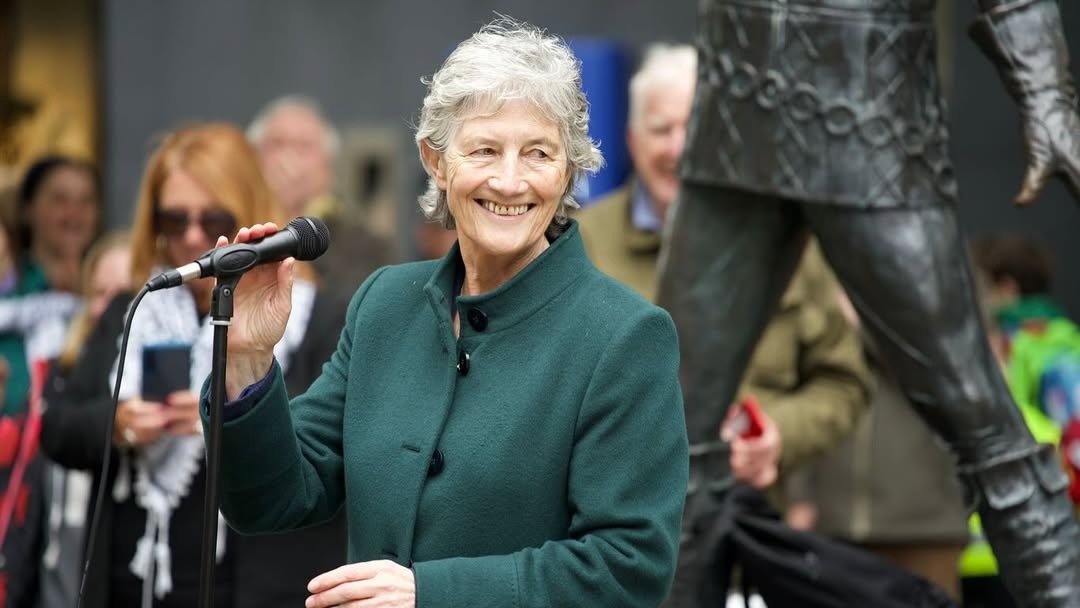
Recently elected Irish President Catherine Connolly. Photo: X

Both Catherine Connolly and Michael D are unabashedly left-wing, absorbed by the struggle for people to live with dignity in Ireland itself and gripped by severe global challenges, particularly those posed by US imperialism.

Catherine Connolly (born 1957) only became involved in active politics in 1999. Michael D. Higgins, the outgoing president of Ireland (2011-2025), encouraged Connolly to join the Labour Party and stand for election. Both Connolly and Higgins (known in Ireland as Michael D) come from Galway, a city on the west coast of Ireland. Connolly was born there, the ninth of fourteen children — seven girls and seven boys — in a working-class family. Her mother died when Catherine was only nine, and her father, a home builder, relied on his older children to care for the younger ones. In this household, Catherine Connolly developed a keen sense of service and discipline, which included involvement in local Catholic charities such as the Legion of Mary and the Order of Malta. This was, as she describes it, Connolly’s road to “her socialism”.

As a lawyer in Galway with a young family (two boys), Connolly ran for and won a seat on the Galway City Council in 1999, later becoming mayor of Galway from 2004 to 2005. Michael D had been mayor from 1990 to 1991. Just as she followed him to City Hall, Connolly has now followed Michael D to the presidency of Ireland.

Ireland is a country divided by British colonialism: most of the population lives in the Republic of Ireland (population 5.2 million), while a part of the island’s population lives in the northern counties still controlled by the United Kingdom (population 1.5 million). There are between 50 million and 80 million people around the world, mostly in the Americas, who claim Irish descent (the most famous person, now featured on an Irish stamp, was Che Guevara). Half the population in the six northern counties have Irish citizenship (while there are nearly three million diaspora Irish with citizenship), making them eligible to vote for the president.

While the president strictly speaking represents the Republic — and even then, in a largely ceremonial role — the post has been shaped by its previous nine holders as a pulpit from which to speak for all of Ireland. Micheal D, a poet as well as a politician, has transformed the post, shaping it into a moral lectern from which to advocate for Ireland’s role in the world based on larger values. This is a post that Catherine Connolly will undoubtedly enjoy.

Both Catherine Connolly and Michael D are unabashedly left-wing, absorbed by the struggle for people to live with dignity in Ireland itself and gripped by severe global challenges, particularly those posed by US imperialism. Connolly said she first entered politics twenty-six years ago because of the housing crisis, the “defining social crisis of our time”. This remains the most important problem for young people in Ireland, many of whom find it impossible to rent decent accommodation near their places of work.

In the 1990s, Ireland’s economy boomed through the liberalization of finance, earning the country the nickname “Celtic Tiger” (a phrase first used by a Morgan Stanley analyst). A low corporate tax rate and membership in the European Union allowed the country to attract tech money and real estate investment. This drove up housing prices, which have not collapsed despite the bust of the Celtic Tiger after the 2008 credit crisis (Ireland suffered a similar fate as Iceland, but with less prison time for its own banking elite). It is estimated that the country suffers a housing shortage of a quarter of a million units, that a new teacher in Dublin would have to use their entire salary to pay rent for a modest apartment, and that while wages rose at 27% between 2012 and 2022, property prices increased by 75%. Connolly spent most of her campaign focused on the direct problems faced by the Irish people, although the presidency can only lift issues into the public debate and advise the elected government.

When I visited Michael D in the presidential residence in 2014, he was gripped by the waste of human resources on war and war-making to the exclusion of solving problems of human life. He was interested in why so much of social wealth was being spent on warfare, when it was clear that war-making (such as with the US War on Terror) merely created more problems than it solved. We discussed the issue of Irish neutrality and how Ireland had slipped from that core principle by allowing the US permission to land warplanes and CIA planes at Shannon airport, the closest airport to Galway. Connolly will follow Michael D into the presidential office with this same concern. She has made vital statements not only against US war-making, but against the Israeli genocide of the Palestinians. In June, Connolly called Israel a “terrorist state”. It is likely that these sorts of statements will continue to be made from Dublin.

Since Éamon de Valera won the prime ministership in 1932 as the leader of Fianna Fáil (the Republican Party), the country has been led back and forth by Fianna Fáil and Fine Gael (the Irish Party). Both are now parties of the right (with close links to the political elite in the United States) and have, since 2020, been in a grand alliance for the prime ministership. Connolly ran against Fine Gael’s Heather Humphreys, who put up a very poor show.

Though running as “independent”, Connolly was backed by the broad left: 100% Redress, the Communist Party of Ireland, the Green Party, the Labour Party, People Before Profit, Sinn Féin, the Social Democratic Party, and the Workers Party, as well as a raft of organizations and movements. The backing of Sinn Féin, the second largest party in parliament, was crucial; the party brings to bear the weight of the republican tradition, which is focused on the unification of Ireland, and the weight of the party’s working-class roots in the cities where the housing question is paramount.

While Connolly has said that she will represent the entire country, she will be largely the voice of the working-class and the oppressed — not the Irish landlords and bankers. Nor will she be kind to US imperialism and its allies.

Vijay Prashad is an Indian historian, editor, and journalist. He is a writing fellow and chief correspondent at Globetrotter. He is an editor of LeftWord Books and the director of Tricontinental: Institute for Social Research. He has written more than 20 books, including The Darker Nations and The Poorer Nations. His latest books are On Cuba: Reflections on 70 Years of Revolution and Struggle (with Noam Chomsky), Struggle Makes Us Human: Learning from Movements for Socialism, and (also with Noam Chomsky) The Withdrawal: Iraq, Libya, Afghanistan, and the Fragility of US Power. Chelwa and Prashad will publish How the International Monetary Fund is Suffocating Africa later this year with Inkani Books.

This article was written by Globetrotter.

Though running as “independent”, Connolly was backed by the broad left: 100% Redress, the Communist Party of Ireland, the Green Party, the Labour Party, People Before Profit, Sinn Féin, the Social Democratic Party, and the Workers Party, as well as a raft of organizations and movements.

Continue ReadingThe left wins the presidential election in Ireland by a landslide

Climate change is becoming an insurance crisis

Spread the love
oleschwander/Shutterstock

Meilan Yan, Loughborough University and Qiuhua Liang, Loughborough University

Imagine waking up to find your living room underwater for the second time in five years. You try to claim insurance, only to be told your property is now uninsurable. Premiums have tripled. Your mortgage lender is concerned. And your biggest asset, your home, is rapidly losing value.

This isn’t just a personal disaster. It’s a warning sign of a much broader crisis.

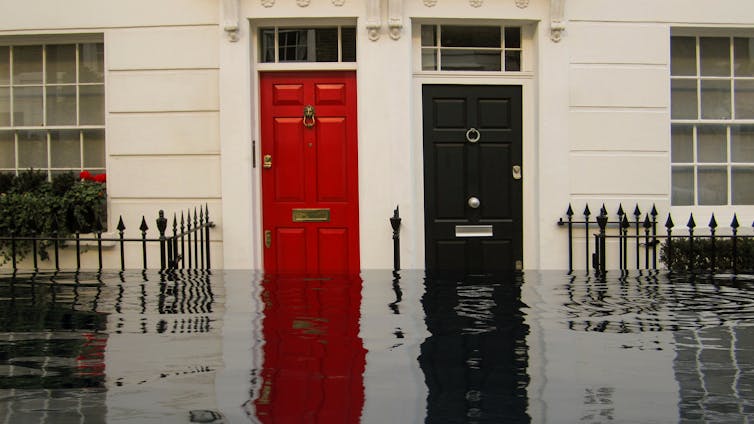
The risks associated with climate change are breaking the insurance industry. In the past decade alone, flood frequency has increased fourfold in the tropics and 2.5 times in mid-latitude regions). In the UK, at least one in six people already live with flood risk, heavy-rainfall extremes are increasing, and expected annual damages could rise by 27% by the 2050s.

Insurance claims from extreme weather are surging. The Association of British Insurers (the UK insurance and long-term savings trade body) reports a record £585 million in home weather-damage payouts for 2024.

Climate change is driving more frequent and severe events, pushing traditional insurance models to their limits. Insurers are left with little choice but to raise premiums sharply or withdraw coverage entirely. When insurance becomes unaffordable or unavailable, households are exposed, property values fall, mortgages become harder to secure, and the risk of a wider financial crisis grows.


Ever wondered how to spend or invest your money in ways that actually benefit people and planet? Or are you curious about the connection between insurance and the climate crisis?

Green Your Money is a new series from the business and environment teams at The Conversation exploring how to make money really matter. Practical and accessible insights from financial experts in the know.


Our research into the insurance industry shows that UK resilience is falling behind. Policymakers in the UK tried to avert an insurance crisis by launching Flood Re in 2016, a joint scheme between government and insurers designed to keep insurance affordable for households in high-risk areas. It was meant as a temporary bridge, due to close in 2039 once stronger flood defences and better land-use planning are in place.

But progress has been painfully slow. In January 2024, the House of Commons public accounts committee reported that the government’s £5.2 billion flood defence programme is 40% behind schedule and expected to protect just 200,000 properties by 2027 — far short of its original 336,000 target.

By 2025, Flood Re has been under mounting strain. Reinsurance costs had have risen by £100 million in just three years, and policy uptakes have jumped by 20% in a single year – both signs that private insurers were retreating from high-risk markets.

In July 2025, Flood Re’s CEO, Perry Thomas, warned that the UK’s overall flood resilience have worsened since the scheme’s launch, as mortgage lenders, housebuilders, and successive governments have “failed to pull their weight”.

tree fallen onto building on stree
Storm damage is more likely as climate change risk increases. pcruciatti/Shutterstock

When insurance becomes unaffordable or unavailable, households are left exposed and property values decline, making mortgages harder to obtain. This erosion of coverage threatens the wider financial system: banks rely on insured property as collateral, but without cover, that collateral rapidly loses value.

If the government fails to meet its climate adaptation targets, as many as 3 million UK homes could become effectively worthless within 30 years.

For the banking sector, this creates the risk of homes becoming stranded assets — uninsurable, unmortgageable and falling in value — leading to rising defaults and mounting losses. Unless lenders adopt climate-adjusted risk models that integrate physical hazards such as flooding, storms and heatwaves, they risk underestimating the true exposure of their mortgage portfolios.

If these climate-risk-exposed mortgages are mispriced and then bundled into mortgage-backed securities and sold to investors, the resulting shock could cascade through credit markets – like the 2008 subprime mortgage crisis, when large volumes of high-risk home loans to borrowers with poor or limited credit histories were repackaged and sold as safe investments. The difference is that this time the crash would be driven by physical climate damage rather than purely financial mismanagement.

A one-way street

Traditional financial crises follow cycles of growth, downturn and recovery, but climate risk moves in only one direction. Rising global temperatures are driving more frequent and severe floods and storms. Without timely adaptation, the damage compounds, eroding property values, undermining insurance and threatening financial stability.

Historical insurance models treated extreme weather as rare “tail risks,” but these events are now more frequent, severe, and interconnected. The tail is becoming “fat,” and shocks ripple across sectors and regions. In short, risk is evolving and insurance frameworks must evolve with it.

Flooding is no longer just an environmental issue. It is a systemic financial threat. Insurers, regulators and lenders must adopt forward-looking models that translate physical climate risks into financial metrics. These models influence market behaviour by shaping how capital is allocated, assets are valued, and risks are priced.

This, in turn, guides investment, planning and adaptation — the process of adjusting systems, infrastructure and practices to withstand and recover from climate impacts.

Effective adaptation measures, such as upgraded flood defences, reduce the future risk of climate-related damage. It’s a feedback loop: better modelling enables smarter adaptation, which in turn strengthens financial stability.


Don’t have time to read about climate change as much as you’d like?
Get a weekly roundup in your inbox instead. Every Wednesday, The Conversation’s environment editor writes Imagine, a short email that goes a little deeper into just one climate issue. Join the 45,000+ readers who’ve subscribed so far.


Meilan Yan, Senior Lecturer in Financial Economics, Loughborough University and Qiuhua Liang, Professor of Water Engineering, Loughborough University

This article is republished from The Conversation under a Creative Commons license. Read the original article.

Donald Trump urges you to be a Climate Science denier like him. He says that he makes millions and millions for destroying the planet, Burn, Baby, Burn and Flood, Baby, Flood.
Nigel Farage urges you to ignore facts and reality and be a climate science denier like him and his Deputy Richard Tice. He says that Reform UK has received £Millions and £Millions from the fossil fuel industry to promote climate denial and destroy the planet.
Continue ReadingClimate change is becoming an insurance crisis