Why Katy Perry’s celebrity spaceflight blazed a trail for climate breakdown

Spread the love
Katy Perry after emerging from the Blue Origin space capsule. EPA-EFE/Blue Origin

Steve Westlake, University of Bath

What’s not to like about an all-female celebrity crew riding a rocket into space? Quite a lot, as it turns out.

Katy Perry and her companions were initially portrayed in the media as breaking down gender barriers. On their return to Earth, the team enthused about protecting the planet and blazing a trail for others. Perry even sang What a Wonderful World during the flight, and kissed the ground on exiting the spacecraft.

But the backlash was swift. Fellow celebrities piled in to highlight the “hypocrisy” of such an energy-intensive endeavour from a former Unicef climate champion. Evidence was quickly presented to dispute the pollution-free claims of the Blue Origin rocket, which is fuelled by oxygen and hydrogen. (In fact, the water vapour and nitrogen oxide emissions it creates add to global heating, on top of the emissions from the programme as a whole.)

But it’s the negative social effects of this kind of display from celebrities (of any gender) that our research sheds light on. I’m part of a team of social scientists researching the powerful effects of politicians, business leaders and celebrities who lead by example on climate change – or don’t.

Social kickback

Space tourism, and other energy-intensive activities by people in the public eye, such as using helicopters and private jets, have a much wider knock-on effect than the direct damage to the climate caused by the activity itself.

We carried out focus groups with members of the public to understand their reactions to the high-carbon behaviour of leaders in politics, culture and business. We also conducted experiments and surveys to test the effects of leaders “walking the talk” on climate change. We found that observing unnecessary high-carbon behaviour demotivates people and reduces the sense of collective effort that is essential for a successful societal response to climate change.

Solving climate change and other environmental crises requires fundamental changes to economies, societies and lifestyles according to climate science. Using much less energy, not just different kinds of energy, can play a big part in halting the damage. And it is the wealthiest people in the richest countries who use the most energy and set the standards and aspirations for the rest of society. That’s why the Blue Origin dream (of space exploration for the unfathomably wealthy) is a nightmare for the climate because it perpetuates an unsustainable culture.

Our findings reveal that when people see public figures behaving like this, they are less willing to make changes to their own lives. “Why should I do my bit for the climate when these celebrities are doing the opposite?” is the question people repeatedly asked in our research.

Many of the changes to behaviour necessary to tackle climate change will require people to accept trade-offs and embrace alternative ways of living. This includes using heat pumps instead of gas boilers, trading in large, fossil-fuelled vehicles (or even avoiding cars altogether) and forgoing flights – because there is no way to decarbonise long-distance flights in time.

When celebrities (or politicians and business leaders, for that matter) ignore the environmental damage of their choices, it sends a powerful signal that they are not really serious about addressing climate change.

Not only does this undermine people’s motivation to make changes, it reduces the credibility of leaders. That in turn makes coordinated climate action less likely, because shifting to a low-carbon society will require public trust in leadership and a sense of collective effort.

Individual choices matter

The widespread aversion to Perry’s space flight contradicts the popular argument that tackling the climate crisis “is not about individual behaviour”.

On the contrary, the response shows that these actions from celebrities and other leaders have much greater symbolic meaning than is captured by the idea of an “individual choice”. People are highly attuned to the behaviour of others because it signals and reinforces the values, morals and norms of our society. As such, few if any choices are truly “individual”.

This message of collective responsibility is one our current economic and political system works hard to suppress by championing unlimited freedom to consume, while ignoring the loss of freedom that such behaviour causes: freedom to live in a stable climate, freedom from pollution, freedom from extreme weather, freedom for future generations.

In fact, research reveals that most people understand the interconnectedness of society and the need for a coordinated response to the climate crisis. Climate assemblies, which convene ordinary citizens to discuss and deliberate a course of climate action, have revealed a willingness to curtail some activities in a fair way.

When it comes to preserving a liveable planet and a stable climate, most people know that space tourism and ultra-high-carbon living are off the agenda. Celebrities have a positive role to play in leading by example. It’s not rocket science.


Don’t have time to read about climate change as much as you’d like?
Get a weekly roundup in your inbox instead. Every Wednesday, The Conversation’s environment editor writes Imagine, a short email that goes a little deeper into just one climate issue. Join the 45,000+ readers who’ve subscribed so far.


Steve Westlake, Lecturer, Environmental Psychology, University of Bath

This article is republished from The Conversation under a Creative Commons license. Read the original article.
Continue ReadingWhy Katy Perry’s celebrity spaceflight blazed a trail for climate breakdown

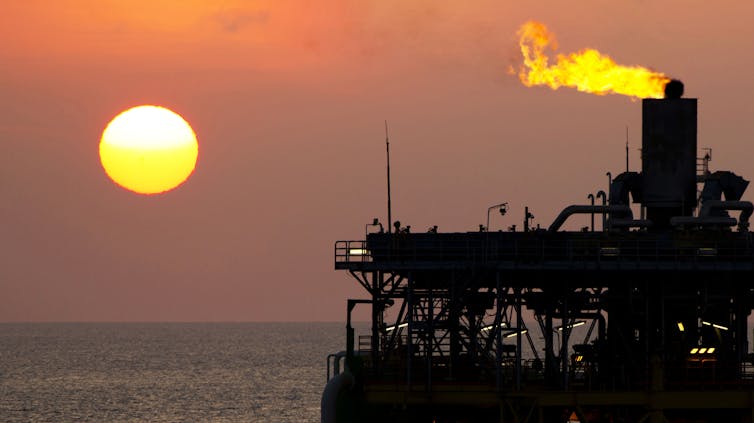
‘Energy security’ is being used to justify more fossil fuels – but this will only make us less secure

Spread the love

corlaffra / shutterstock

Freddie Daley, University of Sussex and Peter Newell, University of Sussex

The UK government is about to host a summit with the International Energy Agency (IEA) on the future of energy security. It does so as the world grapples with war, geopolitical realignments and trade barriers, against a backdrop of accelerating climate upheavals. One of the expected outcomes of this summit is a new, agreed definition of what constitutes energy security in the 21st century.

Common understandings of energy security have focused on making supplies reliable and affordable, with less attention paid to ensuring sources of energy are sustainable and less volatile over the medium- and long-term. This neglect compromises our collective security.

The IEA’s 31 member countries and 13 associates include most of the world’s most powerful states. Its influence means that this new definition of energy security will be used to inform government policies and investment decisions around the world. Given the cost of energy infrastructure, and the lengthy time it takes to build these projects, this definition is set to shape our future, economically and climatically.

But there is a very real risk that this definition will open the door to further investments into fossil fuel production under the guise of energy security.

Annotated world map
International Energy Agency (IEA) member and ‘association member’ countries. IEA, CC BY-SA

After Russia invaded Ukraine, governments rushed to cut their reliance on Russian fossil fuels. This caused major disruptions as prices spiked and millions were pushed into energy poverty.

Europe alone spent an extra €517–€831 billion (£444–£713 billion) on energy in 2021 and 2022, even though some imports from Russia continued through so-called “shadow fleets”. Some argued that high fossil fuel prices only embolden leaders like Putin and help fund their conflicts.

Governments responded with “energy nativism”, as they sought to secure as much energy as possible for their citizens at whatever cost. This typically meant boosting renewables and bulk buying oil and gas. In the UK’s case, it also meant the previous government issuing hundreds of new licenses to drill for oil and gas to “increase energy security” – licenses the current government says it will honour).

Shipments of liquified natural gas (LNG) were also redirected from poorer countries like Pakistan and Bangladesh towards the highest bidders in Europe and Asia. This raises the question of who exactly is becoming more energy secure and at what cost.

Meanwhile, large fossil fuel exporters like Qatar, the US and Australia ramped up production. A US official even referred to its gas exports as “molecules of freedom”. Australia has exported so much natural gas it may have to buy its own gas back from Japan at market price.

The sheer volume of investment in new oil and gas infrastructure like offshore rigs or LNG terminals, combined with long build times, has locked in higher fossil fuel production and pushed emissions to record levels. This poses significant risks for both exporters and importers, especially as future demand is uncertain and energy markets remain volatile.

Fossil fuels remain dominant

More fundamentally, continued reliance on fossil fuels is making humanity less secure. The vast majority of emissions still come from burning coal, oil or gas. Preventing climate catastrophe therefore requires us to phase out fossil fuels as fast as possible – with wealthy nations leading the charge. In their place, we’ll have to generate energy from renewable sources that do not replicate the volatility of globally traded fossil fuels.

Yet despite some progressive policies, fossil fuels remain dominant across the global economy. Investment in oil and gas today is almost double the level it must fall below if the world is to reach net zero by 2050, according to the IEA’s own modelling.

The pursuit of energy security has boosted renewables, but adding additional clean energy isn’t enough – it must ultimately displace fossil fuels entirely. This will require a whole-economy shift. That means cutting production of fossil fuels while also reducing demand, stabilising prices and building out clean energy fast enough to support the electrification of transport, industry and heating.

But supply chains for batteries, solar panels and other key technologies are vulnerable. Delays and shortages could mean electricity prices spike, sparking social unrest. This is yet another risk of getting energy security wrong: if inflationary pressures drive the immiseration of the general public, governments and their energy plans will be short lived.

The definition of energy security that comes out of the IEA summit should reflect the fact we’re now in a world of constant crises. True energy security means charting a path towards a world that is more socially, economically and environmentally secure. This means developing a well-managed global plan to phase out fossil fuels.

Freddie Daley, Research Associate, Centre for Global Political Economy, University of Sussex and Peter Newell, Professor of International Relations, University of Sussex

This article is republished from The Conversation under a Creative Commons license. Read the original article.

Continue Reading‘Energy security’ is being used to justify more fossil fuels – but this will only make us less secure

NHS outsourcing fuels inequality and longer waits, study shows

Spread the love

https://morningstaronline.co.uk/article/nhs-outsourcing-fuels-inequality-and-longer-waits-study-shows

 A general view of medical equipment on a NHS hospital ward at Ealing Hospital in London

NHS outsourcing is fuelling inequality and lengthening waiting times, with wealthier patients receiving faster treatment than poorer ones, a study revealed today. 

Researchers found that expanding private providers into NHS-funded care has reduced surgical admissions at NHS hospitals and driven up waiting times across the board. 

Private hospitals are disproportionately located in wealthier areas and poorer patients, who are often sicker, are less likely to be admitted.With NHS capacity under pressure, the study warned that those on lower incomes are now waiting longer for care, receiving less support at home and facing greater barriers in travelling to private hospitals. On average, patients treated by private providers via the NHS waited only half as long as those treated in NHS hospitals.The poorest 20 per cent of patients are significantly less likely to be treated in the private sector and face longer waiting times than the wealthiest 20 per cent.Between 2003 and 2008, when private involvement in NHS treatment was minimal, surgical admissions rose and waiting times more than halved. But from 2008 onwards, as private sector provision expanded, NHS capacity fell and waiting times increased.Study co-author Professor Allyson Pollock of Newcastle University said: “The private sector is now substituting for, not adding to, NHS capacity. 

Article continues at https://morningstaronline.co.uk/article/nhs-outsourcing-fuels-inequality-and-longer-waits-study-shows

Continue ReadingNHS outsourcing fuels inequality and longer waits, study shows

British military chief walks away from Gaza spy flight questions

Spread the love

https://www.declassifieduk.org/british-military-chief-walks-away-from-gaza-spy-flight-questions/

Admiral Sir Tony Radakin questioned by Declassified’s editor, Phil Miller. (Photo: Alex Morris / Declassified UK)

‘I don’t really have time for this conversation’, Admiral Radakin tells Declassified when asked about his role in Israel’s genocide.

The chief of the defence staff – Britain’s most senior military officer – refused to answer questions yesterday about Royal Air Force (RAF) surveillance flights over Gaza and intelligence sharing with Israel.

Admiral Sir Tony Radakin declined to comment on whether the operations made him a participant in Israel’s campaign in Gaza, which is the subject of a genocide investigation by the UN’s top court.

Radakin was questioned about the operations by Declassified for more than two minutes as he walked along London’s Victoria Embankment from the Ministry of Defence to parliamentary offices at Portcullis House.

“I’m going to a public accounts committee hearing and I don’t really have time for this conversation”, the Admiral said, before refusing to engage further.

When asked about British intelligence sharing with Israel, Gazan lawyer Raji Sourani, director of the Palestinian Center for Human Rights, told Declassified that the UK government “are not complicit only but they are partners in the genocide”.

https://www.declassifieduk.org/british-military-chief-walks-away-from-gaza-spy-flight-questions/

UK Labour Party government Keir Starmer, Angela Rayner and Rachel Reeves explain that they are participants and complicit in Israel's Gaza genocide providing Israel with army and air force support. They explain that they don't do gas chambers but do do forced marches, starvation, destroy hospitals, mass-murders of journalists and healthcare workers.
UK Labour Party government Keir Starmer, Angela Rayner and Rachel Reeves explain that they are participants and complicit in Israel’s Gaza genocide providing Israel with army and air force support.
Experiencing issues with this image not appearing. I suspect because it's so critical of Zionist Keir Starmer's support of and complicity in Israel's genocides.
Genocide denier and Current UK Prime Minister Keir Starmer is quoted that he supports Zionism without qualification. He also confirms that UK air force support has been essential in Israel’s mass-murdering genocide. Includes URLs https://www.declassifieduk.org/keir-starmers-100-spy-flights-over-gaza-in-support-of-israel/ and https://youtu.be/O74hZCKKdpA
UK Foreign Minister David Lammy confirms that UK government and military are active participants in Israel’s genocides and that the F-35 parts that they suspended from supplying to Israel are instead simply diverted via the United States. He says see https://youtu.be/QILgUHrdWRE
Continue ReadingBritish military chief walks away from Gaza spy flight questions