State of the climate: 2025 close behind 2024 as the hottest start to a year

Spread the love

Original article by Zeke Hausfather republished from Carbon Brief under a CC license

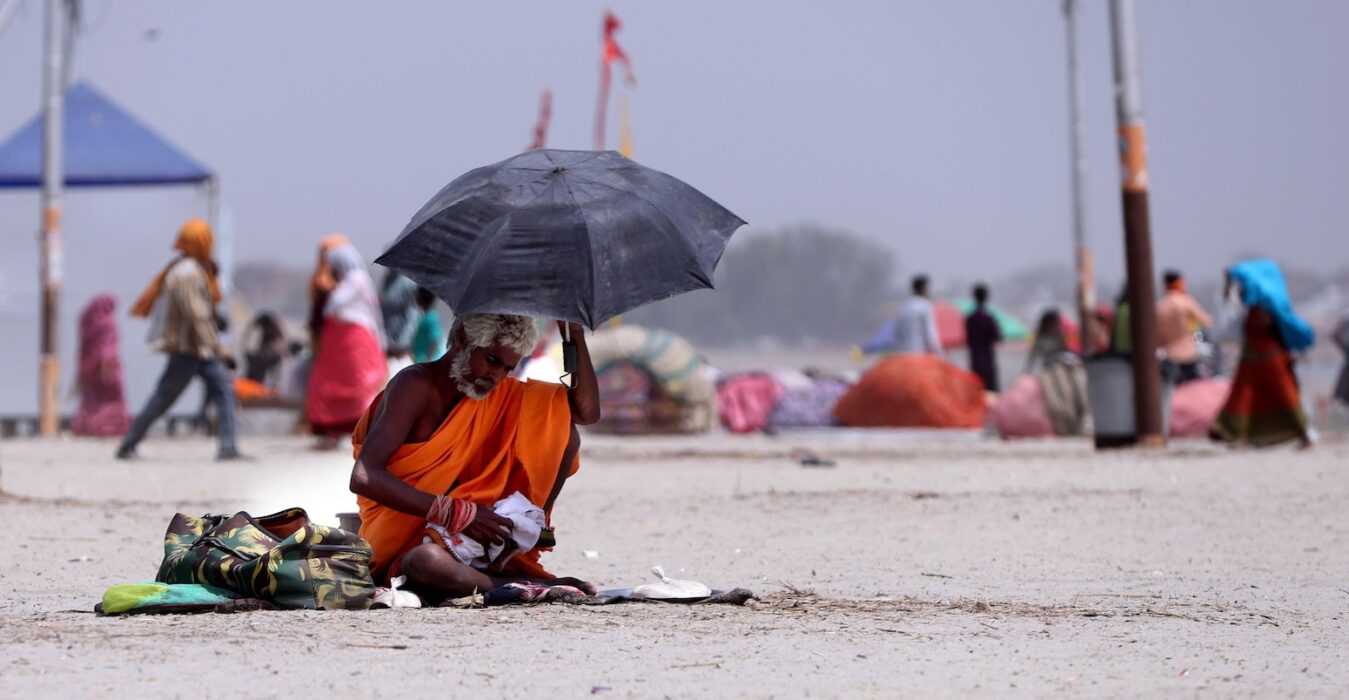
People brave heat wave conditions during a hot summer day in Uttar Pradesh, India. Credit: Anil Shakya / Alamy Stock Photo

Global temperatures in the first quarter of 2025 were the second warmest on record, extending a remarkable run of exceptional warmth that began in July 2023. 

This is despite weak La Niña conditions during the first two months of the year – which typically result in cooler temperatures.

With temperature data for the first three months of the year now available, Carbon Brief finds that 2025 is very likely to be one of the three warmest years on record.

However, it currently remains unlikely that temperatures in 2025 will set a new annual record. 

In addition to near-record warmth, the start of 2025 has seen record-low sea ice cover in the Arctic between January and March – and the second-lowest minimum sea ice extent on record for Antarctica. 

Second-warmest start to the year

In this quarterly state of the climate assessment, Carbon Brief analyses records from five different research groups that report global surface temperature records: NASANOAAMet Office Hadley Centre/UEABerkeley Earth and Copernicus/ECMWF

The figure below shows the annual temperatures from each of these groups since 1970, along with the average over the first three months of 2025. 

(It is worth noting that the first three months may not be representative of the year as a whole, as greater historical warming rates mean that temperatures relative to pre-industrial levels tend to be larger in the northern hemispheric winter months of December, January and February.)https://interactive.carbonbrief.org/state-of-the-climate/2025-04/records-with-2024-to-date.htmlAnnual global average surface temperatures from NASA GISTEMPNOAA GlobalTempHadley/UEA HadCRUT5Berkeley Earth and Copernicus/ECMWF (lines), along with 2025 temperatures so far (January-March, coloured dots). Anomalies plotted with respect to the 1981-2010 period, and shown relative to pre-industrial based on the average pre-industrial temperatures in the Hadley/UEA, NOAA and Berkeley datasets that extend back to 1850. Chart by Carbon Brief.

Starting with this state of the climate update, Carbon Brief will be showing a World Meteorological Organization (WMO) aggregate of the five surface temperature records, rather than highlighting any particular one, reflecting a single best-estimate across the different groups.

The WMO aggregate is calculated by averaging the different records using a common 1981-2010 baseline period, before adding in the average warming since the pre-industrial period (1850-1900) across the datasets  – NOAA, Hadley, and Berkeley – that extend back to 1850. 

The figure below shows how global temperature so far in 2025 (black line) compares to each month in different years since 1940 (with lines coloured by the decade in which they occurred) in the WMO aggregate of surface temperature dataset.https://interactive.carbonbrief.org/state-of-the-climate/2025-04/monthly-global-temp-anomalies.htmlTemperatures for each month from 1940 to 2025 from the WMO aggregate of temperature records. Anomalies plotted with respect to a 1850-1900 baseline. Chart by Carbon Brief.

The first three months of 2025 have been unusually warm, coming in in the top-three warmest on record across all the different scientific groups that report on global surface temperatures. This is despite the presence of moderate La Niña conditions in the tropical Pacific, which typically suppress global temperatures.

January 2025 was the warmest January on record in the WMO aggregate, February was the third warmest and March was tied with 2016 as the second warmest.

When combined, the first three months of the year in 2025 were the second-warmest Q1 period in the historical record, just 0.035C below the record set in 2024 after the peak of a strong El Niño event, as shown in the figure below.https://interactive.carbonbrief.org/state-of-the-climate/2025-04/Q1-temp-plot.htmlQ1 temperature anomalies from 1850 through 2025 from the WMO aggregate of temperature records. Anomalies plotted with respect to a 1850-1900 baseline. Chart by Carbon Brief.

The persistence of warmth after the end of the 2023-24 El Niño event – and through a weak La Niña – has been highly unusual by historical standards. In most prior cases, global temperatures returned closer to the long-term temperature trend following the return to neutral El Niño Southern Oscillation (ENSO) conditions in the tropical Pacific.

Weak La Niña conditions have faded over the past month, with ENSO-neutral conditions returning and expected to persist for most models through the remainder of the year. However, predictions of ENSO status are particularly uncertain at this time of year due to a phenomenon known as the “spring predictability barrier”.

The figure below shows a range of different forecast models for the ENSO for the rest of this year, produced by different scientific groups. The values shown are sea surface temperature variations in the tropical Pacific – known as the El Niño 3.4 region – for overlapping three-month periods.
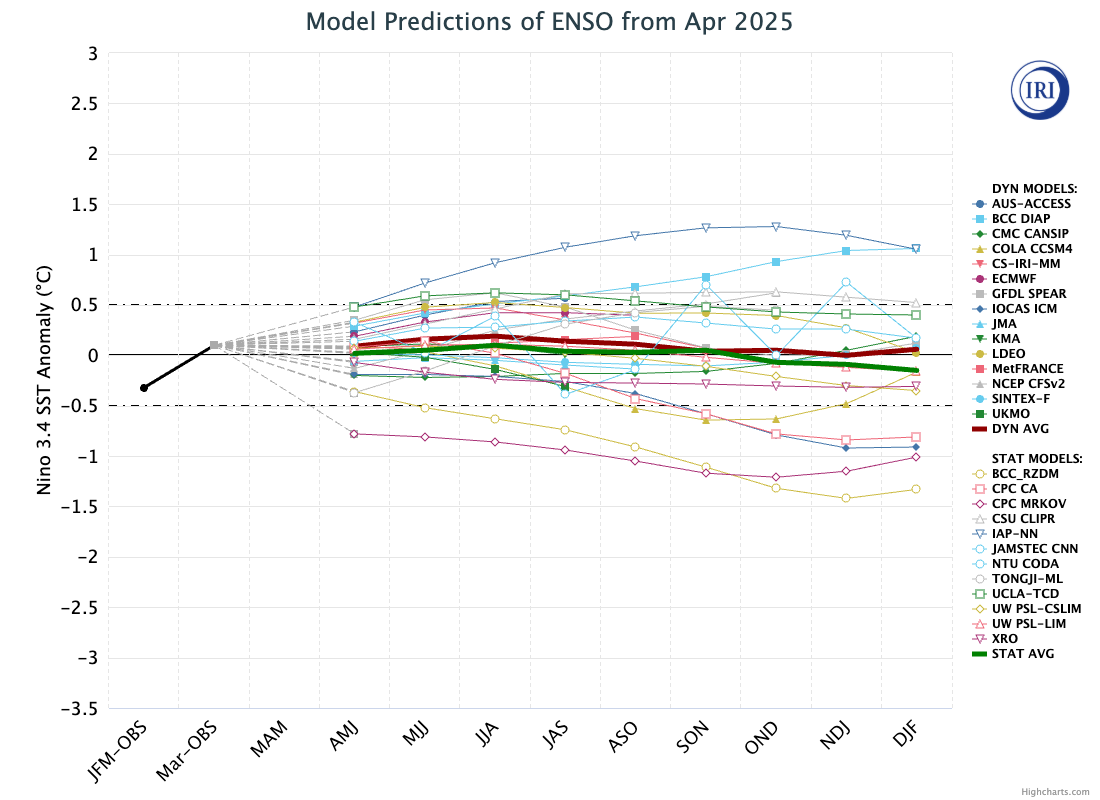
ENSO forecast models for overlapping three-month periods in the Niño3.4 region (January, February, March – JFM – and so on) for the remainder of 2025.

ENSO forecast models for overlapping three-month periods in the Niño3.4 region (January, February, March – JFM – and so on) for the remainder of 2025. Credit: Image provided by the International Research Institute for Climate and Society at Columbia Climate School.

On track to be a top-three warmest year

By looking at the relationship between the first three months and the annual temperatures for every year since 1970 – as well as ENSO conditions for the first three months of the year and the projected development of El Niño conditions for the remaining nine months – Carbon Brief has created a projection of what the final global average temperature for 2025 will likely be. 

The analysis includes the estimated uncertainty in 2025 outcomes, given that temperatures from only the first quarter of the year are available so far. 

The chart below shows the expected range of 2025 temperatures using the WMO aggregate – including a best-estimate (red) and year-to-date value (yellow). Temperatures are shown with respect to the pre-industrial baseline period (1850-1900).https://interactive.carbonbrief.org/state-of-the-climate/2025-04/Q1-2025-estimate.htmlAnnual global average surface temperature anomalies from the WMO aggregate plotted with respect to a 1850-1900 baseline. To-date 2025 values include January-March. The estimated 2025 annual value is based on the relationship between the January-March temperatures and annual temperatures between 1970 and 2024. Chart by Carbon Brief.

Carbon Brief’s projection suggests that 2025 is virtually certain to be one of the top-three warmest years, with a best-estimate approximately equal to global temperatures in 2023. 

However, this model assumes that 2025 follows the type of climate patterns seen in the past – patterns that were notably broken in 2023 – and to a lesser extent in 2024. Other recent estimates – such as one published by Berkeley Earth – give a higher probability of around 34% that  2025 will set a new temperature record.

The figure below shows Carbon Brief’s estimate of 2025 temperatures using the WMO aggregate, both at the beginning of the year and once each month’s data has come in. The estimate jumped notably after t2025 saw the  warmest January on record, but has been relatively stable over the past three months.
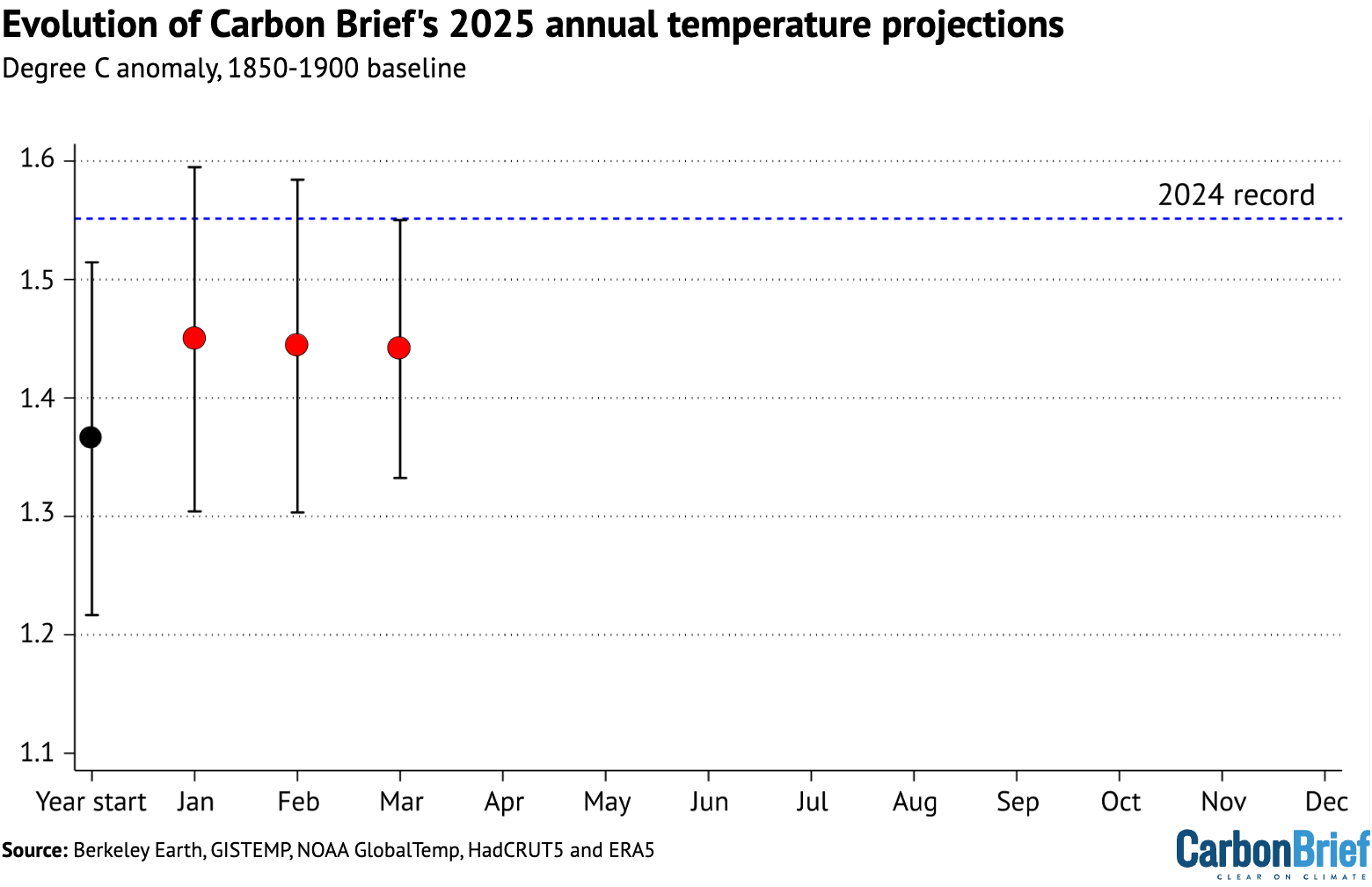
Carbon Brief’s projection of global temperatures based on the WMO aggregate at the start of the year, and after January, February, and March global surface temperature data became available.
Carbon Brief’s projection of global temperatures based on the WMO aggregate at the start of the year, and after January, February, and March global surface temperature data became available. Chart by Carbon Brief.

Record-low Antarctic and Arctic sea ice

Both Arctic and Antarctic sea ice extent spent much of early 2025 at record, or near-record, lows. 

The figure below shows both Arctic and Antarctic sea ice extent in 2025 (solid red and blue lines), the historical range in the record between 1979 and 2010 (shaded areas) and the record lows (dotted black line). 

(Unlike global temperature records, which only report monthly averages, sea ice data is collected and updated on a daily basis, allowing sea ice extent to be viewed up to the present.)https://interactive.carbonbrief.org/state-of-the-climate/2025-04/sea-ice-graph.htmlArctic and Antarctic daily sea ice extent from the US National Snow and Ice Data Center (NSIDC). The bold lines show daily 2025 values, the shaded area indicates the two standard deviation range in historical values between 1979 and 2010. The dotted black lines show the record lows for each pole. Chart by Carbon Brief.

Arctic sea ice saw a new record low nearly each day between January and March, recording a record-low winter peak extent in late March. Ice extent subsequently moved out of record-low territory in April. 

It is worth noting that, as northern hemisphere winter conditions remain cold enough to refreeze sea ice, there tends to be less variability in extent year-to-year in the winter than in the summer, as the chart below illustrates.
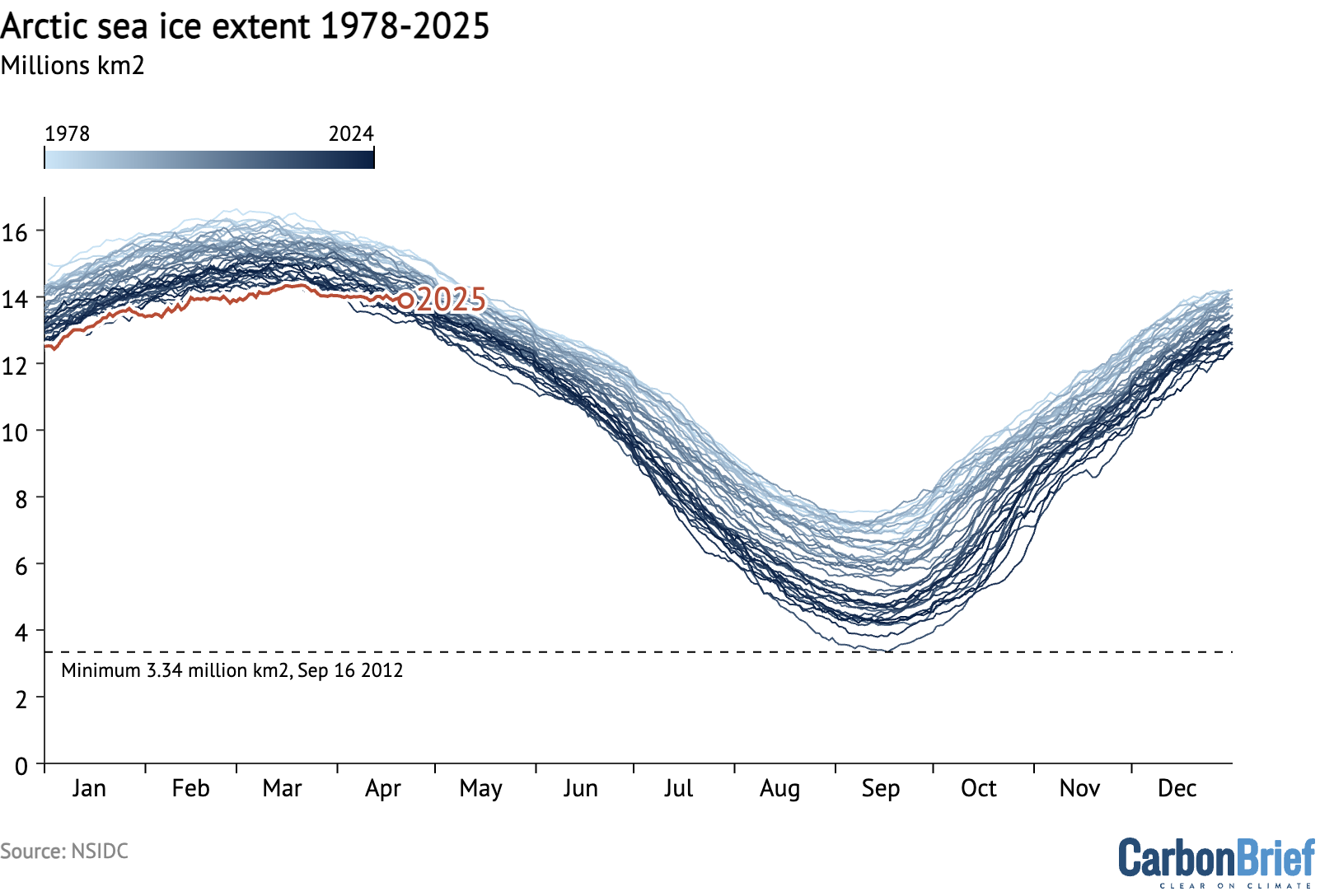
Weekly Arctic sea ice extent from the US National Snow and Ice Data Center.
Weekly Arctic sea ice extent from the US National Snow and Ice Data Center. Chart by Carbon Brief.

Antarctic sea ice started the year within the historical range (1979-2010), before plunging to tie for the second-lowest minimum on record in late February. It has since recovered in April, and is currently on the low end of the historical range.
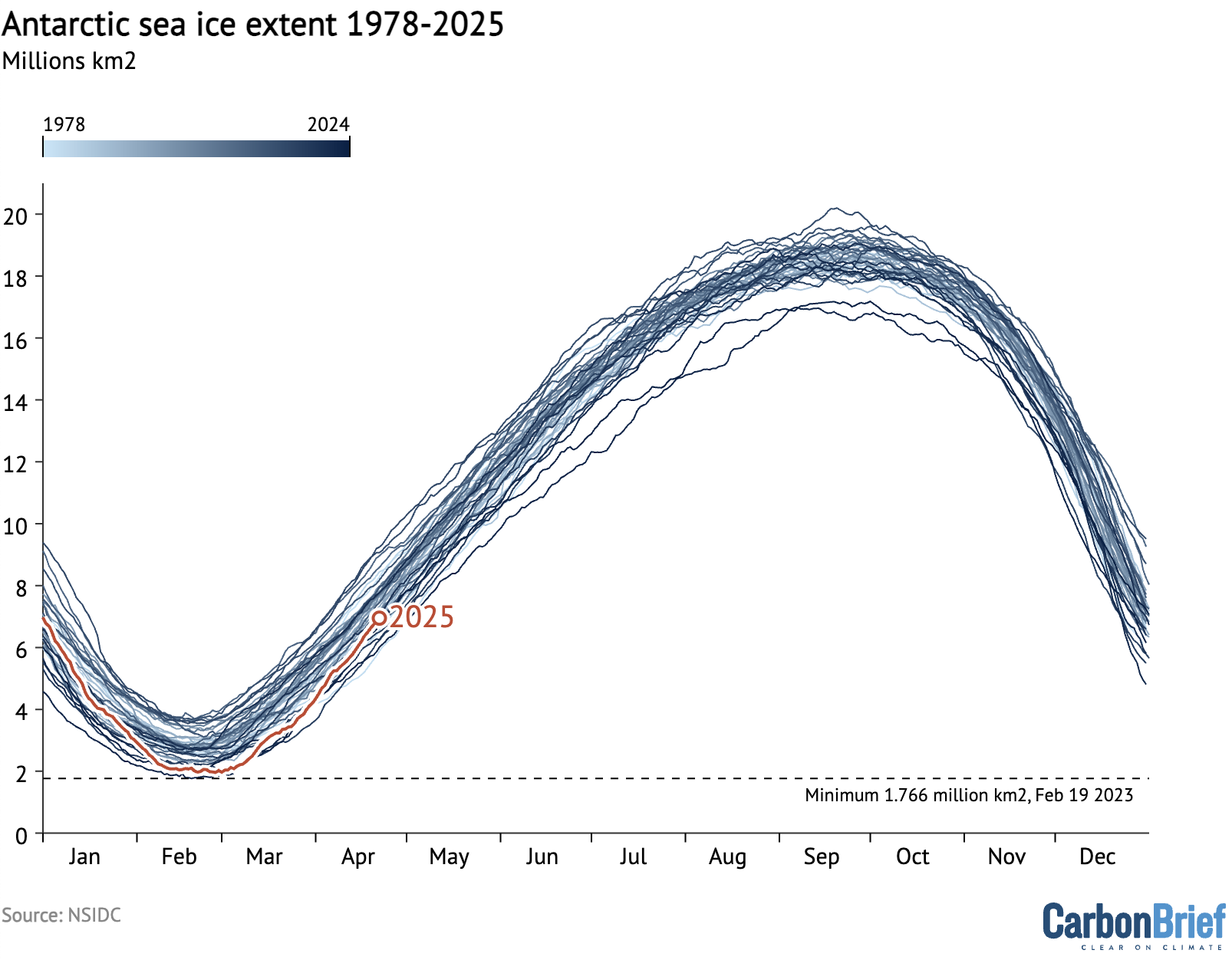
Weekly Antarctic sea ice extent from the US National Snow and Ice Data Center.
Weekly Antarctic sea ice extent from the US National Snow and Ice Data Center. Chart by Carbon Brief.


Original article by Zeke Hausfather republished from Carbon Brief under a CC license

dizzy: Trump is attempting to censor research and information like this.

Neo-Fascist Climate Science Denier Donald Trump says Burn, Baby, Burn.
Elon Musk urges you to be a Fascist like him, says that you can ignore facts and reality then.
Orcas discuss Donald Trump and the killer apes' concept of democracy. Front Orca warns that Trump is crashing his country's economy and that everything he does he does for the fantastically wealthy.
Orcas discuss Donald Trump and the killer apes’ concept of democracy. Front Orca warns that Trump is crashing his country’s economy and that everything he does he does for the fantastically wealthy.
Continue ReadingState of the climate: 2025 close behind 2024 as the hottest start to a year

As Israel Openly Declares Starvation as a Weapon, Media Still Hesitate to Blame It for Famine

Spread the love

Original article by Belén Fernández republished from FAIR under a Creative Commons Attribution-NonCommercial-NoDerivs 3.0 Unported License.

Israeli National Security Minister Itamar Ben-Gvir tweeted that Republican officials at Mar-a-Lago “expressed support for my very clear position on how to act in Gaza and that the food and aid depots should be bombed in order to create military and political pressure to bring our hostages home safely.”

Israeli Prime Minister Benjamin Netanyahu announced on March 2 that “Israel has decided to stop letting goods and supplies into Gaza,” where the ongoing Israeli genocide, with the loyal backing of the United States, has officially killed more than 51,000 Palestinians since October 2023. The announcement regarding the total halt of humanitarian aid amounted to yet another explicit declaration of the starvation policy that Israel is pursuing in the Gaza Strip, a territory that—thanks in large part to 17 consecutive years of Israeli blockade—has long been largely dependent on such aid for survival.

Of course, this was not the first time that senior Israeli officials had advertised their reliance on the war crime of forced starvation in the current genocidal assault on Gaza. On October 9, 2023, two days after the most recent launch of hostilities, then–Defense Minister Yoav Gallant ordered a “complete siege” of the Gaza Strip: “There will be no electricity, no food, no fuel, everything is closed.” Two days after that, Foreign Minister Israel Katz boasted of cutting off “water, electricity and fuel” to the territory.

And just this month, Israeli National Security Minister Itamar Ben-Gvir proclaimed that there was “no reason for a gram of food or aid to enter Gaza.” Following an April 22 dinner held in his honor in Florida at US President Donald Trump’s Mar-a-Lago resort, Ben-Gvir reported that US Republicans had

expressed support for my very clear position on how to act in Gaza and that the food and aid depots should be bombed in order to create military and political pressure to bring our hostages home safely.

Never mind that the hostages would have been brought home safely as scheduled had Israel chosen to comply with the terms of the ceasefire agreement with Hamas that was implemented in January, rather than definitively annihilating the agreement on March 18. It is no doubt illustrative of Israel’s modus operandi that the March 2 decision to block the entry of all food and other items necessary for human existence took place in the middle of an ostensible ceasefire.

‘Starved, bombed, strangled’

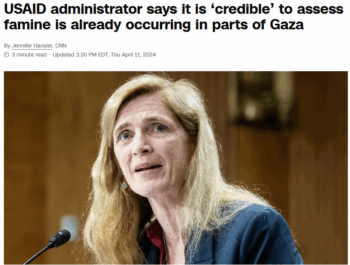
A year ago, USAID administrator Samantha Power (CNN4/11/24) said it was “likely that parts of Gaza, and particularly northern Gaza, are already experiencing famine.” 

While Ben-Gvir’s most recent comments have thus far eluded commentary in the US corporate media, the roundabout media approach to the whole starvation theme has been illuminating in its own right. It has not, obviously, been possible to avoid reporting on the subject altogether, as the United Nations and other organizations have pretty much been warning from the get-go of Israel’s actions causing widespread famine in Gaza.

In December 2023, for example, just two months after the onset of Israel’s blood-drenched campaign, the Integrated Food Security Phase Classification initiative, or IPC scale, determined that “over 90% of the population in the Gaza Strip (about 2.08 million people) was estimated to face high levels of acute food insecurity, classified in IPC Phase 3 or above (Crisis or worse).” The assessment went on: “Among these, over 40% of the population (939,000 people) were in Emergency (IPC Phase 4) and over 15% (378,000 people) were in Catastrophe (IPC Phase 5).”

A full year ago, in April 2024, even Samantha Power—then the administrator of the US Agency for International Development—conceded that it was “credible” that famine was already well underway in parts of the Gaza Strip. And the UN Office for the Coordination of Humanitarian Affairs now warns that Gaza is “likely facing the worst humanitarian crisis in the 18 months since the escalation of hostilities in October 2023”—its population being “starved, bombed, strangled” and subjected to “deprivation by design.”

Disappearance of agency

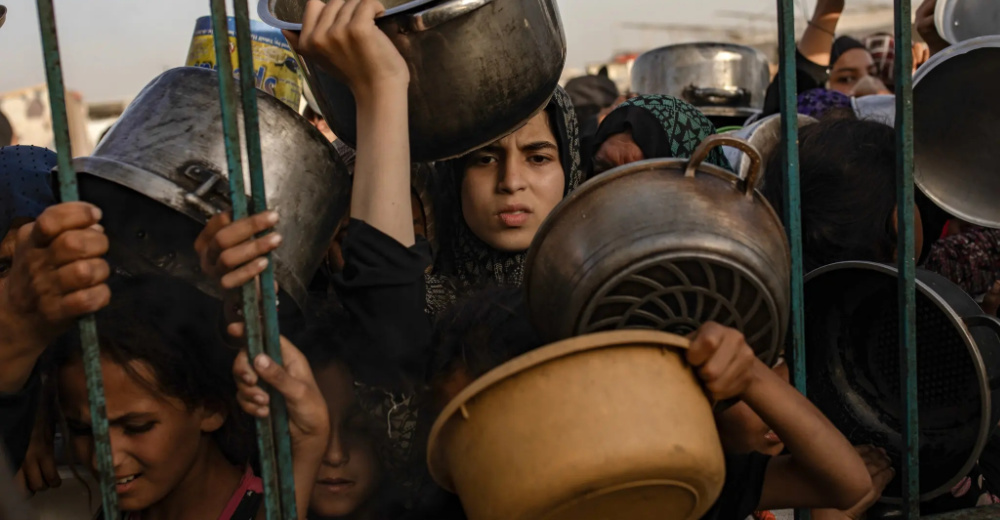
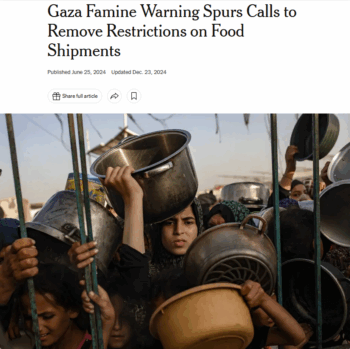
Typically, even when outlets report sympathetically on hunger in Gaza, they fail to state clearly that it is the deliberate result of Israeli policy, as in this New York Times headline (6/25/24).

None of these details have escaped the pages and websites of corporate media outlets, although the media’s frequent reliance on ambiguous wordiness tends to distract readers from what is actually going on—and who is responsible for it. Take, for instance,  the New York Times headline “Gaza Famine Warning Spurs Calls to Remove Restrictions on Food Shipments” (6/25/24), or the CBS video “Hunger Spreads Virtually Everywhere in Gaza Amid Israel/Hamas War” (12/5/24). Even news outlets that intermittently undertake to spotlight the human plight of, inter alia, individual parents in Gaza losing their children to starvation remain susceptible to long-winded efforts to disperse blame. (As of April of last year, Save the Children confirmed that 27 children in northern Gaza had already died of starvation and disease.)

In an era in which news consumption often consists of skimming headlines, the phrasing of article titles is of utmost import. And yet many headlines manage to entirely excise the role of Israel in Gaza’s “hunger crisis”—as in CNN’s report (2/24): “‘We Are Dying Slowly:’ Palestinians Are Eating Grass and Drinking Polluted Water as Famine Looms Across Gaza.” Or take the Reuters headline (3/24/24): “Gaza’s Catastrophic Food Shortage Means Mass Death Is Imminent, Monitor Says.” Or this one from ABC News (11/15/24): “Famine ‘Occurring or Imminent’ in Parts of Northern Gaza, Experts Warn UN Security Council.”

It’s not that these headlines are devoid of sympathy for Palestinian suffering. The issue, rather, is the dilution—and even disappearance—of agency, such that the “catastrophic food shortage” is rendered as transpiring in a sort of vacuum and thereby letting the criminals perpetrating it off the hook. Imagine if a Hamas rocket from Gaza killed an infant in Israel and the media reported the event as follows: “Israeli Baby Perishes as Rocket Completes Airborne Trajectory.”

‘No shortage of aid’

NBC‘s headline (4/17/24) gives Israel’s denial of a problem equal weight with aid workers’ description of Gazans’ desperate situation.

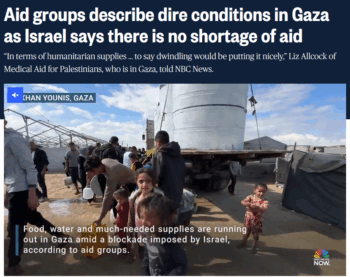
Then there is the matter of the media’s incurable habit of ceding Israeli officials a platform to spout demonstrable lies, as in the April 17 NBC News headline “Aid Groups Describe Dire Conditions in Gaza as Israel Says There Is No Shortage of Aid.” The fact that Israel is permitted to make such claims is particularly perplexing, given Israeli officials’ own announcements that no aid whatsoever may enter the territory, while the “dire conditions” are made abundantly clear in the text of the article itself: “The Global Nutrition Cluster, a coalition of humanitarian groups, has warned that in March alone, 3,696 children were newly admitted for care for acute malnutrition” in Gaza.

Among numerous other damning statistics conveyed in the dispatch, we learn that all Gaza bakeries supported by the UN World Food Programme closed down on March 31, “after wheat flour ran out.” Meanwhile, the WFP calculated that Israel’s closure of border crossings into Gaza caused prices of basic goods “to soar between 150% and 700% compared with prewar levels, and by 29% to as much as 1,400% above prices during the ceasefire.”

Against such a backdrop, it’s fairly ludicrous to allow Israeli officials to “maintain there is ‘no shortage’ of aid in Gaza and accuse Hamas of withholding supplies.” If the press provides Israel with space to spout whatever nonsense it wants—reality be damned—where is the line ultimately drawn? If Israel decides Hamas is using wheat flour to build rockets, will that also be reported with a straight face?

Lest anyone think that thwarting the entry of food into the Gaza Strip is a new thing, recall that Israel’s blockade of Gaza long predated the present war—although the details of said blockade are generally glossed over in the media in favor of the myth that Israel unilaterally “withdrew” from the territory in 2005. In 2010, the BBC (6/21/10) listed some basic foodstuffs—pardon, potential “dual-use items”—that Israel had at different times in recent history blocked from entering Gaza, including pasta, coffee, tea, nuts and chocolate. In 2006, just a year after the so-called “withdrawal,” Israeli government adviser Dov Weissglas outlined the logic behind Israel’s restriction of food imports into Gaza: “The idea is to put the Palestinians on a diet, but not to make them die of hunger.”

Fast forward almost two decades, and it’s safe to say that the “idea” has evolved; this is a genocide, after all—even if the corporate media refuse to say the word—and starvation is part and parcel of that. But on account of Israel’s extra-special relationship with the United States, US media have institutionalized the practice of beating around the bush when it comes to documenting Israeli crimes. This is how we end up with the aforementioned long-winded headlines instead of, say, the far more straightforward “Israel is starving Gaza,” a Google search of which terms produces not a single corporate media dispatch, but does lead to a January 2024 report by that very name, courtesy of none other than the Israeli human rights organization B’Tselem.

‘Starving as negotiation tactic’

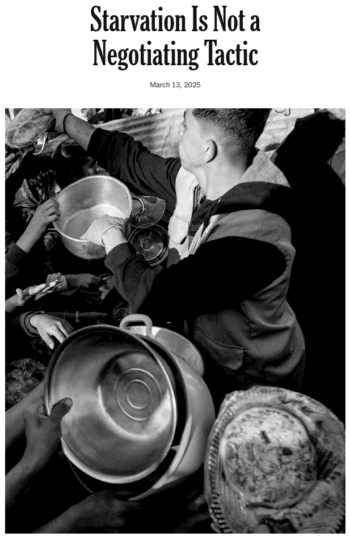
Megan Stack (New York Times3/13/25): “Lately it feels as if the human beings in Gaza are increasingly lost from our understanding.”

That said, there have been a few surprises. The New York Times (3/13/25), for example, took a short break from its longstanding tradition of unabashed apologetics for Israeli atrocities in allowing the following sentence to appear in a March opinion article by Megan Stack: “Israeli officials are essentially starving Gaza as a negotiation tactic.” In the very least, this was a vast improvement, in terms of syntactic clarity and assignation of blame, over previous descriptions of Israeli behavior immortalized on the pages of the US newspaper of record—like that time the Israeli military slaughtered four kids playing by the sea in Gaza, and the Times editors (7/16/14) went with the headline “Boys Drawn to Gaza Beach, and Into Center of Mideast Strife.”

In the end, Israel’s starvation of the Gaza Strip is multifaceted. It’s not just about physically blocking the entry of food into the besieged enclave. It’s also about Israel’s near-total decimation of Gaza’s healthcare system: the bombardment of hospitals, the targeting of ambulances, the massacres of medical personnel (FAIR.org4/11/25). It’s about Israeli military attacks on humanitarian aid convoys and workers, including the April 2024 massacre of seven international employees of the food organization World Central Kitchen.

It’s about Israel razing agricultural areas, wiping out food production, devastating the fishing industry and depleting livestock. It’s about Israel bombing water infrastructure in Gaza. And it’s about Israeli troops slaughtering at least 112 desperate Palestinians queuing for flour on February 29, 2024 (FAIR.org3/22/24)—which was at least a quicker way of killing starving people than waiting for them to starve.

In his 2017 London Review of Books essay (6/15/17) on the use of famine as a weapon of war, Alex de Waal referenced the “physical debilitation of groups as a technique of genocide,” noting that “forced starvation was one of the instruments of the Holocaust.” It’s worth reflecting on the essay’s opening paragraph:

In its primary use, the verb “to starve” is transitive: It’s something people do to one another, like torture or murder. Mass starvation as a consequence of the weather has very nearly disappeared: Today’s famines are all caused by political decisions, yet journalists still use the phrase “man-made famine” as if such events were unusual.

As for the current case of the Gaza Strip, US establishment journalists appear to be doing their best to avoid the transitive nature of the verb in question—or any subject-verb-object construction that might too overtly expose Israeli savagery. And by treating famine in Gaza as a subject unto itself, rather than a “technique of genocide,” to borrow de Waal’s words, the media assist in obscuring the bigger picture about this very man-made famine—which is that Israel is not just starving Gaza. Israel is exterminating Gaza.

FAIR’s work is sustained by our generous contributors, who allow us to remain independent. Donate today to be a part of this important mission.

Original article by Belén Fernández republished from FAIR under a Creative Commons Attribution-NonCommercial-NoDerivs 3.0 Unported License.

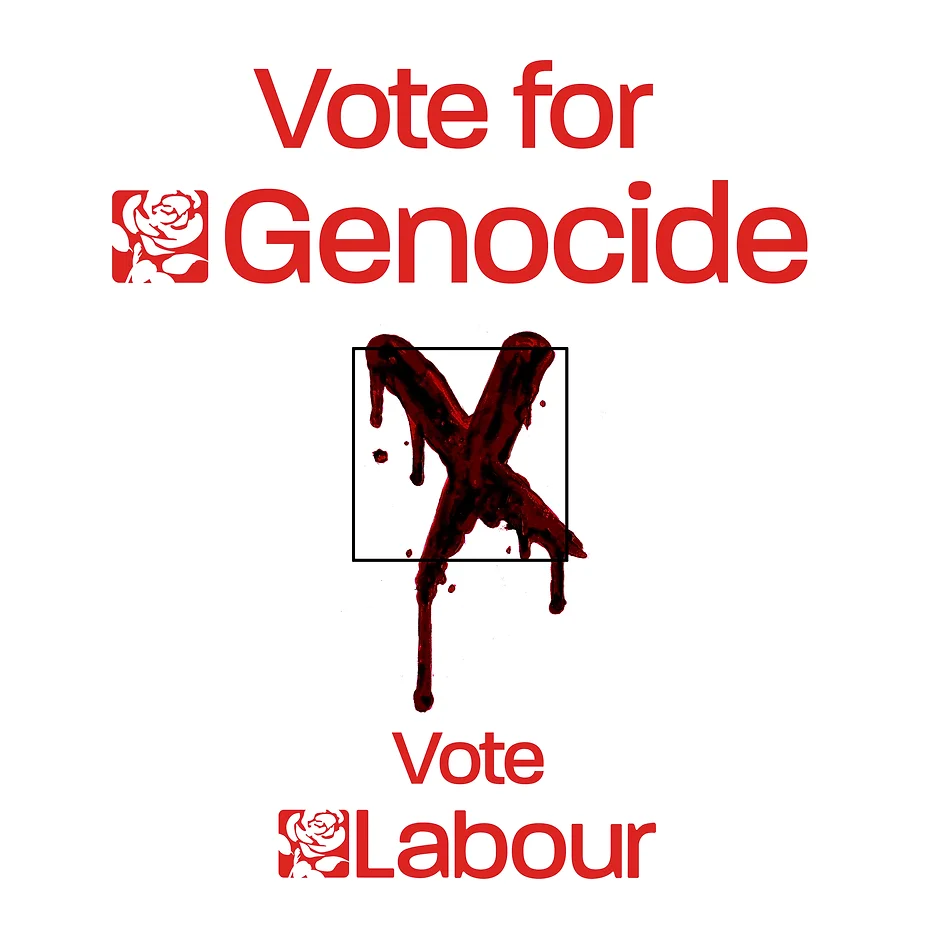
Vote For Genocide Vote Labour.
Experiencing issues with this image not appearing. I suspect because it's so critical of Zionist Keir Starmer's support of and complicity in Israel's genocides.
Genocide denier and Current UK Prime Minister Keir Starmer is quoted that he supports Zionism without qualification. He also confirms that UK air force support has been essential in Israel’s mass-murdering genocide. Includes URLs https://www.declassifieduk.org/keir-starmers-100-spy-flights-over-gaza-in-support-of-israel/ and https://youtu.be/O74hZCKKdpA
UK Foreign Minister David Lammy confirms that UK government and military are active participants in Israel’s genocides and that the F-35 parts that they suspended from supplying to Israel are instead simply diverted via the United States. He says see https://youtu.be/QILgUHrdWRE
Continue ReadingAs Israel Openly Declares Starvation as a Weapon, Media Still Hesitate to Blame It for Famine

Poor regulator driving soaring water bills, watchdog finds

Spread the love

https://morningstaronline.co.uk/article/poor-regulator-driving-soaring-water-bills-watchdog-finds

‘A wholesale betrayal of the people and our environment’

 Campaigners say privatised water has failed the public and the environment

REGULATORS have fuelled soaring water bills by not encouraging private companies to spend “what they need to deliver the performance expected,” a damning public spending watchdog report concluded today.

The National Audit Office (NAO) highlighted “inconsistent responsibilities” and gaps in oversight within the Department for Environment, Food and Rural Affairs (Defra) and the sector’s regulators.

The watchdog examined the effectiveness of sector regulators — Ofwat, the Environment Agency, and the Drinking Water Inspectorate — as well as Defra, which sets policies for the sector in England.

It found that complex and lengthy regulatory frameworks have contributed to “worsening investor perception of the sector” which will need to attract “investment and spend at a rate not seen before” to meet its “significant environmental and supply challenges.”

NAO head Gareth Davies said: “Given the unprecedented situation facing the sector, Defra and the regulators need to act urgently to address industry performance and resilience to ensure the sector can meet government targets and achieve value for money over the long term for bill payers.”

Article continues at https://morningstaronline.co.uk/article/poor-regulator-driving-soaring-water-bills-watchdog-finds

Continue ReadingPoor regulator driving soaring water bills, watchdog finds

Oil group Equinor must explain climate discrepancy, minority owners say

Spread the love
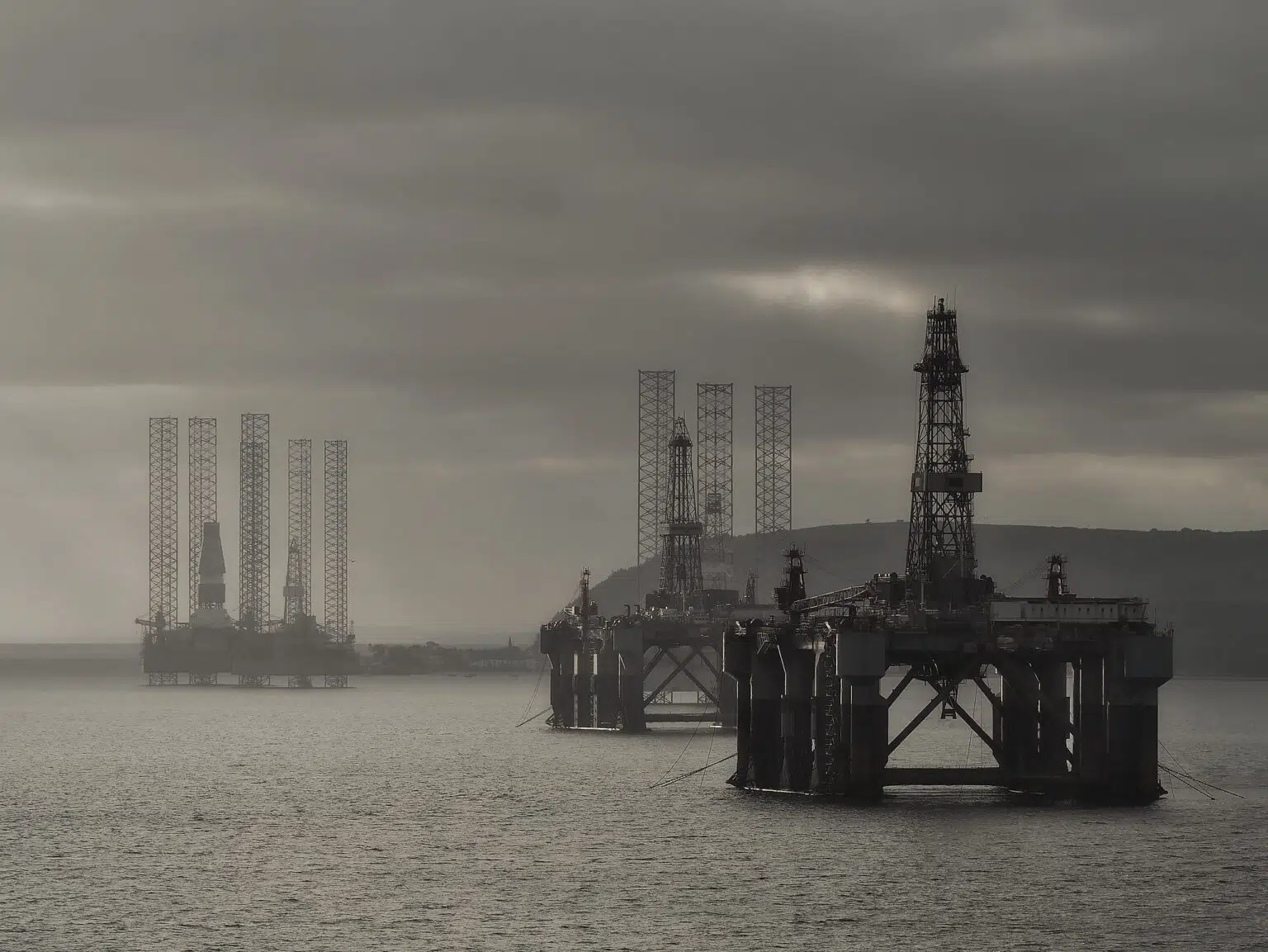
North Sea oil rigs in Cromarty Firth, Scotland. Credit: joiseyshowaa (CC BY-SA 2.0)

https://www.reuters.com/sustainability/cop/oil-group-equinor-must-explain-climate-discrepancy-minority-owners-say-2025-04-22/#:~:text=OSLO%2C%20April%2022%20(Reuters),minority%20shareholders%20said%20on%20Tuesday.

OSLO, April 22 (Reuters) – The board of Norway’s Equinor (EQNR.OL), opens new tab must explain how the company’s plan to raise oil and gas production aligns with its stated commitment to the Paris agreement on curbing climate change, a group of minority shareholders said on Tuesday.

Equinor, which is 67% government owned, this year joined the likes of Shell (SHEL.L), opens new tab and BP (BP.L), opens new tab in promising higher petroleum output while scaling back investment in renewables.

In a resolution to be voted on at Equinor’s May 14 annual general meeting, the minority owners said there were “material inconsistencies” between the company’s climate strategy and the policy expectations expressed by its majority shareholder.

Those expectations, laid out by Noway’s government two years ago, included Equinor setting targets and implementing measures to reduce greenhouse gas emissions “in both the short and long term” in line with the 2015 Paris climate accord.

Article continues at https://www.reuters.com/sustainability/cop/oil-group-equinor-must-explain-climate-discrepancy-minority-owners-say-2025-04-22/#:~:text=OSLO%2C%20April%2022%20(Reuters),minority%20shareholders%20said%20on%20Tuesday.

Continue ReadingOil group Equinor must explain climate discrepancy, minority owners say

Italy marks 80 years since liberation with calls against genocide and militarism

Spread the love

Original article by Ana Vračar republished from peoples dispatch under a Creative Commons Attribution-ShareAlike 4.0 (CC BY-SA) license.

Source: Potere al Popolo Bologna e provincia/Facebook

On the 80th anniversary of liberation from Nazi-fascism, left forces in Italy mobilize against genocide, armament, and the Meloni government

In the coming weeks, many European countries will mark the 80th anniversary of liberation from Nazi-fascist occupation. Italy is among the first, with dozens of events organized for April 25 – Liberation Day – despite ongoing attempts by the Meloni government and right-wing forces to rewrite or erase the memory of the Resistance. For most grassroots groups, this year’s events aim to locate the values that inspired partisan fighters in the 1940s into today’s context, marked by an aggressive rearmament agenda, support for Israel’s genocide in Gaza, and domestic repression of civil rights.

“Eighty years ago, our grandparents freed us from the grip of fascism. But remembering the past is not enough, especially not in the stale, institutional way the Democratic Party and center-left do,” Giuliano Granato of Potere al Popolo said during the demonstration in Naples. Along similar lines, the Unione Sindacale di Base (USB) stated that April 25 should not be reduced to a mere ritual or commemoration. “It should actualize the values and ideals of the partisan Resistance, which freed, perhaps not once and for all, this country from the barbarity of war and Nazi-fascism and provided an inescapable push toward better democratic, working, and living conditions for the people of this country,” the trade union declared in its call to action.

Against Israeli genocide

These values, according to USB, Potere al Popolo, and other left groups, must necessarily include opposition to genocide. In many cities, protesters have insisted that Italy’s ongoing ties with the Israeli occupation are unacceptable. These ties, they argue, are evidence that the political establishment has failed to grasp the true meaning and importance of the Resistance. Ahead of Liberation Day, the Genoa chapter of Potere al Popolo organized an action addressing President Sergio Mattarella, criticizing him for formally honoring the Resistance while remaining silent on the genocidal war against Palestinians and on the breakdown of democratic rights under the current government.

Potere al Popolo Genoa with banner reading: “Mattarella, antifascists don’t finance wars and genocide.” Source: Potere al Popolo Genoa/Facebook

“To do so [speak of the Resistance] after cozying up to the president of the criminal state of Israel, effectively supporting the ongoing genocide of the Palestinians, is an insult to those who, since the days of the partisan struggle, have fought against all genocide,” Potere al Popolo Genoa stated. “To honor the Resistance while equating the Soviet communists who liberated much of Europe from Nazism with the Third Reich is an insult to history and memory.”

Against armament

Equally prominent as the call to stop the genocide and sever ties with Israel is the demand to reject Europe’s new armament agenda, which will come at the cost of public services, education, healthcare, and climate justice. Giorgia Meloni’s administration and mainstream opposition parties alike have supported this agenda in different ways, endorsing increased spending on so-called defense and entertaining proposals for a joint European army. These priorities stand in stark contrast with the interests of Italy’s working class and the vision of a more just society that accompanied the antifascist Resistance.

Read more: Movement against increased military spending grows in Italy

“The rearmament plan launched by the EU represents the latest folly of a continental political class disinterested in building a present and future of peace and prosperity for the peoples of Europe,” warned USB. Similarly, Potere al Popolo called on people to rally around an alternative set of priorities: “We don’t need more money to enrich the arms industry. We need money for wages, for health care and services, for envisioning an ecological revolution and addressing the real challenge of our time, which is the climate crisis.”

Against new iterations of fascism

Meanwhile, Giorgia Meloni and her ministers are pursuing a different kind of battle, one aimed at minimizing the role of the antifascist struggle, led largely by communists, in shaping modern Italy. While the mainstream opposition tends to fixate on this behavior by the right wing, Granato warns that doing so risks missing important pieces of the puzzle.

“For us, Giorgia Meloni is simply following the path she’s always been on, one clearly tied to the rise of neo-fascism. After the defeat of Nazism, the slogan of the Italian Social Movement [neo-fascist party] was ‘neither renounce nor restore’ – and that’s exactly what Meloni is doing today. She doesn’t outright deny their fascist roots, but she also doesn’t walk around openly glorifying Benito Mussolini,” Granato told Peoples Dispatch.

The most recent attempt of the right to undermine the legacy of the Resistance came in the wake of the death of Pope Francis, when the government declared a record five days of mourning and called for “sobriety” at all public events. Many understood this to be an attempt to minimize April 25 events. Liberal and right-wing local administrations seized the opportunity to scale down and cancel rallies, while far-right media ran headlines such as April 25: Day of mourning. “Sure, they can claim they were referring to the death of the pope, but the truth is, they’ve been waiting 80 years for an excuse to print something like that, because for them, April 25 has always been a defeat,” says Granato.

Progressive forces, however, resisted, criticizing the government for using the death of a pope who – unlike the administration, called for peace and solidarity – to advance its agenda. They also refused to limit the day’s activities to commemorations, echoing the partisans’ revolutionary vision of a radically different society. “We don’t stop at the official ceremonies, not just because they’re cold and formulaic, but because we believe the fight for liberation and resistance isn’t over,” Granato explains. “Just like many partisans understood back then that toppling fascism wasn’t enough, we believe that defeating the Meloni government wouldn’t be enough either.”

A group of protesters after the central demonstration in Naples, April 25, 2025. Source: Ex-OPG Je so’ pazzo/Facebook

Instead, Granato calls on the people to work together to free themselves from contemporary forms of danger and oppression: first and foremost genocide and militarization. “We worked to make today a day of liberation from militarism and genocide and to link it to the mobilization we are building, including a national assembly in Rome on May 24, and a mass demonstration on June 21, just days before the NATO summit in The Hague,” he adds.

“We believe militarism has always been a tool of fascism. The militarization of Europe today goes hand-in-hand with growing authoritarianism at home and worsens conditions for the working class across the continent.”

Original article by Ana Vračar republished from peoples dispatch under a Creative Commons Attribution-ShareAlike 4.0 (CC BY-SA) license.

Continue ReadingItaly marks 80 years since liberation with calls against genocide and militarism