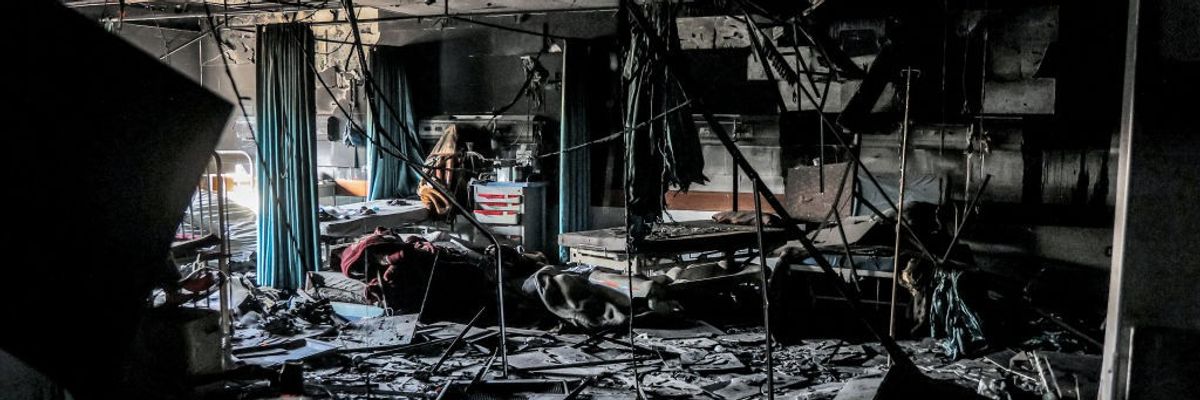
The intensive care unit of the Kamal Adwan Hospital in Beit Lahia in the northern Gaza Strip is shown on January 20, 2025, the day after a cease-fire deal took effect. (Photo: Omar Al-Qattaa/AFP via Getty Images)
The Palestinian group Al-Haq outlined the “targeting of hospitals and health centers, the denial of adequate medical provisions into and around the Gaza Strip, and the abduction, torture, and killing of medical personnel.”
Less than a week into a fragile cease-fire between Hamas and Israel in the Gaza Strip, the Palestinian human rights group Al-Haq on Thursday released a report detailing how “Israel has systematically targeted and attacked the healthcare system to the point of its collapse in a campaign of genocide.”
“The Israeli occupying forces’ (IOF) targeting of hospitals and health centers, the denial of adequate medical provisions into and around the Gaza Strip, and the abduction, torture, and killing of medical personnel is evidence of Israel’s genocidal intent to: (i) inflict conditions of life calculated to bring about the physical destruction of the Palestinian people in the Gaza Strip, and (ii) impose measures intended to prevent Palestinian births in the Gaza Strip,” states the 116-page report.
“The concerted policy to destroy the healthcare system in Gaza is directly and causally linked to statements made by Israeli officials,” the document continues, offering various examples and highlighting how it wasn’t just hospitals—Israel also attacked “civilian residences, schools, shelters, mosques, churches, and other protected areas under international humanitarian law.”
The report argues that “Israel’s systematic campaign against Gaza’s healthcare infrastructure as a whole is exemplified by the targeted destruction of al-Shifa Hospital,” which is the largest hospital in the occupied Palestinian territory and “older than Israel.” The document also addresses Israel’s attacks on Adwan, al-Amal, al-Aqsa, al-Awda, Indonesian, Kamal, and Nasser hospitals.
These attacks along with the unrelenting Israeli bombardment of Gaza severely strained the healthcare system to the point that patients were ‘“waiting to die”…dying slow, agonising deaths from their injuries or..resultant infections’ (South Africa v. Israel, para 51). /4
Along with offering a summary of facts and legal analysis of “Israel’s systematic attacks on Gaza’s healthcare system as acts of genocide,” war crimes, and violations of international humanitarian law, the publication features recommendations for other countries and blocs, international tribunals, U.N. experts, companies, and healthcare professionals.
Al-Haq called on the international community to “name and condemn Israel’s ongoing genocide,” impose an arms embargo, support the United Nations Relief and Works Agency for Palestine Refugees in the Near East, and demand the release of Palestinian political prisoners and those who have been arbitrarily detained by Israel, including healthcare workers.
The report was published as the death toll in Gaza continues to grow, as displaced residents of the Palestinian enclave return to the remnants of their homes and communities decimated by more than 15 months of Israeli bombings and raids.
The Gaza Ministry of Health said Thursday that the official death toll rose to 47,283, after 120 bodies “were recovered from under the rubble” in the past 24 hours, and 111,472 people have been injured. Global experts warn the true death toll is likely far higher.
Israel faces a genocide case led by South Africa at the International Court of Justice (ICJ) over its military assault and restrictions on the flow of humanitarian aid into Gaza. The International Criminal Court (ICC) has also issued arrest warrants for Israeli Prime Minister Benjamin Netanyahu, former Israeli Defense Minister Yoav Gallant, and Hamas leader Mohammed Diab Ibrahim Al-Masri.
Al-Haq’s report notes both the ICC warrants and the ICJ case, urging other governments to formally support the latter effort.
Throughout the 15-month assault on Gaza, Israeli settlers and troops also targeted Palestinians in the illegally occupied West Bank—where Al-Haq is based. However, since the cease-fire took effect Sunday, attacks in the West Bank have sparked fresh alarm.
In addition to pushing for the investigation of Israel’s assault on Gaza, the new report urges a U.N. commission to probe “genocidal acts in the West Bank, including East Jerusalem, including but not limited to killings of Palestinians, causing serious bodily or mental harm to Palestinians, and deliberately inflicting conditions of life calculated to bring about the physical destruction of the Palestinian people.”
UK Foreign Minister David Lammy confirms that UK government and military are active participants in Israel’s genocides and that the F-35 parts that they suspended from supplying to Israel are instead simply diverted via the United States. He says see https://youtu.be/QILgUHrdWREGenocide denier and Current UK Prime Minister Keir Starmer is quoted that he supports Zionism without qualification. He also confirms that UK air force support has been essential in Israel’s mass-murdering genocide. Includes URLs https://www.declassifieduk.org/keir-starmers-100-spy-flights-over-gaza-in-support-of-israel/ and https://youtu.be/O74hZCKKdpA
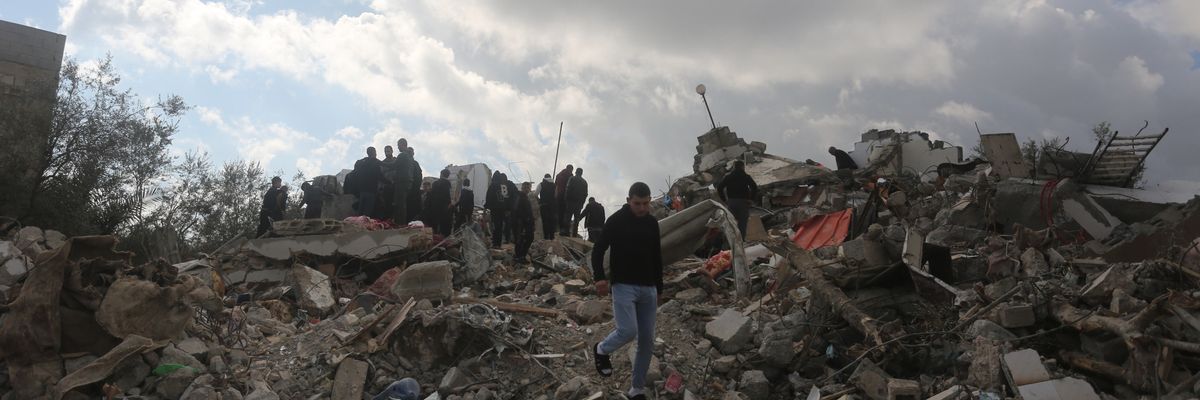
Palestinians inspect the rubble of a house after an Israeli airstrike in the village of Burqin in the West Bank on January 23, 2025. (Photo: Nasser Ishtayeh/SOPA Images/LightRocket via Getty Images)
“This echoes the tactics Israeli forces have employed in Gaza.”
Israeli Defense Minister Israel Katz said Wednesday that Israel’s military is applying “lessons” learned during its bombardment of Gaza to recent attacks on the West Bank—and a leading human rights group warned that as in Gaza, the Israel Defense Forces’ actions are resulting in “significant humanitarian consequences.”
Operations like “Iron Wall” in the West Bank refugee camp of Jenin and a “surge in settler attacks” that have been backed by the IDF “have heightened insecurity, displacement, and severe restrictions on Palestinian freedom of movement,” said the Norwegian Refugee Council (NRC) on Thursday.
Iron Wall began Tuesday, with the IDF launching airstrikes and ground attacks in the West Bank two days after a cease-fire took effect in Gaza.
At least 12 Palestinians have been killed in the Iron Wall attacks and 40 people have been injured, including medical workers, according to the Palestinian Ministry of Health.
After months of warnings from rights organizations that the IDF cut off access to essential services for Gaza residents with a near-total humanitarian aid blockade and the relentless bombardment of the enclave, the NRC said that Israeli forced have “increased checkpoints, roadblocks, and other physical barriers throughout the West Bank.”
“These measures further fragment Palestinian communities, restrict access to essential services, and prevent humanitarian agencies, like NRC, from reaching the communities we serve,” said the group.
The latest violence in the West Bank is part of a broader trend, with Israel having begun launching airstrikes in the territory after October 7, 2023, for the first time since the Second Intifada in 2000-05.
The IDF launched Iron Wall in Jenin two weeks after a shooting attack that Israel blamed on gunmen in the refugee camp, which has long been a hub for Palestinian resistance groups and is also home to more than 24,000 Palestinians who are registered in the camp.
Katz said in a statement Wednesday that with the Jenin raid, the IDF is applying “the first lesson from the method of repeated raids in Gaza.”
“We will not allow the arms of the Iranian regime and radical Sunni Islam to endanger the lives of [Israeli] settlers [in the West Bank] and establish a terrorist front east of the state of Israel,” he said.
In addition to the attacks in Jenin, masked Israeli settlers have been filmed setting fire to homes and vehicles in towns across the Israeli-occupied territory in what the Israel-based human rights group B’Tselem called an effort to “impose a ‘price tag’ for the release of Palestinians” as part of the cease-fire agreement in Gaza.
Residents told Al Jazeera that “constant gunfire and explosions” have been heard in Jenin since Iron Wall began, and the United Nations Relief and Works Agency for Palestine Refugees in the Near East (UNRWA) reported that the IDF has left the camp “nearly uninhabitable.”
An estimated 2,000 families have been displaced from the Jenin area since December, according to the agency.
“We are seeing disturbing patterns of unlawful use of force in the West Bank that is unnecessary, indiscriminate, and disproportionate. This echoes the tactics Israeli forces have employed in Gaza,” said Angelita Caredda, NRC’s Middle East and North Africa regional director. “Under international law, Israel must bring its occupation of Palestinian territory to an end as rapidly as possible. Until then, it must fully comply with its obligations as an occupying power, including the protection of civilians.”
In addition to airstrikes and ground attacks, the governor of Jenin, Kamal Abu al-Rub, told Agence France-Presse that Israeli military bulldozers have destroyed all roads leading to the camp and to the nearby hospital. Twenty Palestinians from villlages in the Jenin area have been detained since Iron Wall began on Tuesday, according to the governor.
“What we are seeing in Jenin camp is horrific, said one paramedic trained by Doctors Without Borders. “People are targeted while being evacuated, and the wounded cannot be reached by ambulance.”
In 2024, Israeli demolitions in the West Bank reached a record high, said the NRC, with 1,768 structures destroyed. IDF soldiers and settlers killed at least 499 Palestinians in the territory last year.
U.S. President Donald Trump has selected at least two nominees for high-level diplomatic positions—Rep. Elise Stefanik (R-N.Y.) for U.N. ambassador and former Arkansas Gov. Mike Huckabee for ambassador to Israel—who have expressed support for right-wing Israeli officials’ claim that Israel has a “Biblical right” to the West Bank.
Amid the settler violence and Jenin raid, Caredda called on the international community to “take decisive action to stop these violations and end the occupation.”
“Impunity for serious violations of international law has allowed Israel to unlawfully escalate violence in the occupied West Bank,” said Caredda.
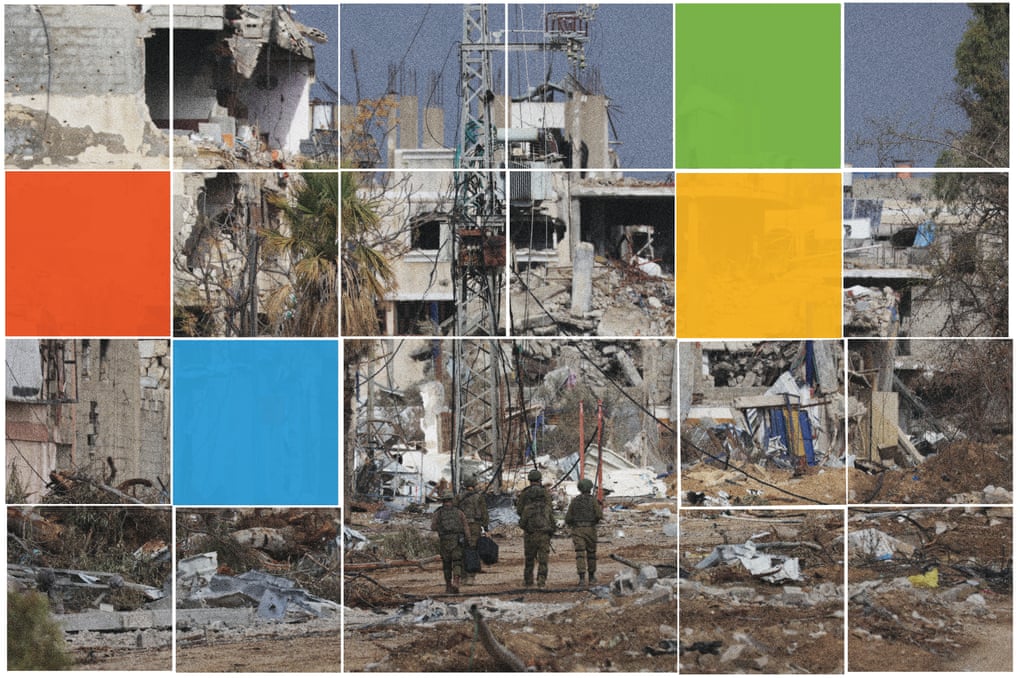
The Israeli military’s reliance on Microsoft’s cloud technology and artificial intelligence systems surged during the most intensive phase of its bombardment of Gaza, leaked documents reveal.
The files offer an inside view of how Microsoft deepened its relationship with Israel’s defence establishment after 7 October 2023, supplying the military with greater computing and storage services and striking at least $10m in deals to provide thousands of hours of technical support.
Microsoft’s deep ties with Israel’s military are revealed in an investigation by the Guardian with the Israeli-Palestinian publication +972 Magazine and a Hebrew-language outlet, Local Call. It is based in part on documents obtained by Drop Site News, which has published its own story.
The investigation, which also draws on interviews with sources from across Israel’s defence and intelligence establishment, sheds new light on how the Israel Defense Forces (IDF) turned to major US tech companies to meet the technological demands of war.
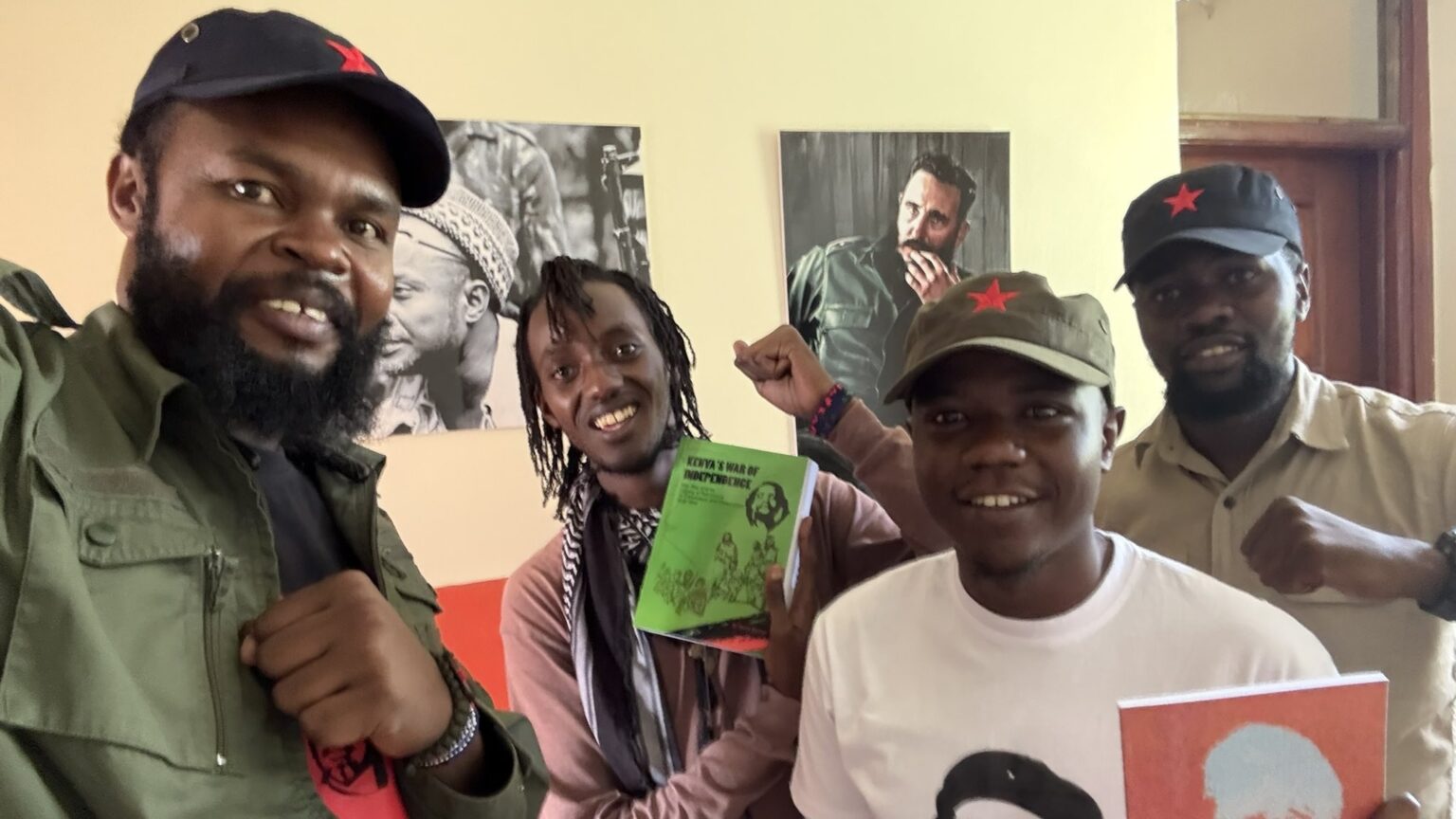
Booker Ngesa Omole with members of CPM-K. Photo: Booker Ngesa Omole
An armed attack on Kenyan communist leader Booker Ngesa Omole has sparked global outrage, with revolutionary groups expressing solidarity.
On Saturday, January 11, 2025, at approximately 3:00 am, an armed attack targeted the residence of Booker Ngesa Omole, General Secretary of the Communist Party Marxist-Kenya (CPMK). According to a statement released by the Party, the assailants—armed with firearms and equipped with night vision goggles—forced their way into the residence. A violent confrontation ensued as Booker defended himself, ultimately forcing the attackers to flee.
While the Kenyan police were quick to label the incident as an attempted burglary, the CPMK described it as a calculated assassination attempt. Booker, an organizer and fearless critic of the government, has been a vocal opponent of oppressive state policies. This shocking attack is seen as a direct assault on his activism, ideas and a broader effort to silence dissent.
“This was not a random act of crime but a direct assault on our General Secretary, who has consistently stood up for justice, democracy, and socialism in Kenya,” the Party declared. “This act of terror is an attack on the revolutionary cause and all Kenyans who are fighting for a better future.”
The Communist Party Marxist Kenya has demanded a full and transparent investigation, calling for the perpetrators to be brought to justice and that urgent measures be taken to protect its leadership and members.
“We will not be silenced,” the Party’s statement declared. “The enemies of the people may attempt to intimidate us, but we remain steadfast in our commitment to the struggle for liberation. No amount of violence will deter us from our revolutionary path.”
A rising tide of repression
The attack on Booker comes amid growing concerns over Kenya’s shrinking democratic space. Since the 2024 youth-led uprising against the controversial finance bill, government critics and activists have faced an alarming rise in abductions and violent attacks. According to the Kenya National Commission on Human Rights (KNCHR), dozens of individuals have been abducted or forcibly disappeared since mid-2024, deepening concerns of state repression.
International solidarity and condemnation
Revolutionary organizations across the continent have rallied in support of Booker and the CPMK, drawing parallels between the Kenyan experience and the broader struggle against neo-colonial exploitation, austerity, and imperialism.
Communist Party of Benin: assassination attempt as a declaration of war
The Communist Party of Benin unequivocally denounced the assassination attempt and the broader campaign of repression against the CPMK. They described the attack as a declaration of war by counter-revolutionary forces linked to the regime. They called for united action among revolutionary organizations worldwide. The Party also expressed confidence that the repression would fail, and the Kenyan people’s democratic national revolution would prevail.
Abahlali baseMjondolo: “an injury to one is an injury to all”
Abahlali baseMjondolo, South Africa’s largest grassroots movement, linked the attack to the broader context of neo-colonial austerity and oppression. Recalling the mass protests against the Ruto government’s Finance Bill and the brutal crackdown that followed, they emphasized the global nature of the fight against imperialist-backed regimes. “An injury to one is always an injury to all,” the movement stated, condemning the attempt on Booker’s life.
Socialist Movement of Ghana: a struggle against neoliberalism
The Socialist Movement of Ghana (SMG) expressed alarm at the assassination attempt and the subsequent arrests of CPMK leaders. They condemned the Kenyan government’s use of brutal force to suppress protests against IMF-driven neoliberal policies, linking the violence to broader struggles against neo-colonial exploitation. The SMG called for accountability for the regime and expressed unwavering solidarity with the CPMK and the Kenyan working people.
Booker responds: “we will prevail”
In a personal statement, Booker expressed his gratitude for the solidarity. “Your messages of support have reminded me, and all of us, that the fight for a just society resonates far beyond our borders,” he said. No force can silence the collective will of the people.”
Booker also revealed that officers from the Serious Crimes Unit had visited his residence and begun an investigation. He emphasized the importance of a transparent and professional inquiry, stating:
“This is a critical opportunity for the state to absolve itself of any suspicion of involvement by ensuring that those behind this heinous act are brought to justice swiftly and decisively. The Kenyan people deserve nothing less, as it is our taxes that entrust the state with the responsibility of protecting the lives of all citizens without exception.”
Addressing his comrades in the CPMK and other progressive forces, Booker called for unity and vigilance in the face of adversity:
“Attempts to disrupt our struggle for a liberated and equitable society only prove the fear our enemies feel in the face of our growing strength,” he declared.
“Let this moment deepen our resolve and ignite revolutionary optimism within our ranks. The path to justice and socialism is never without struggle, but history shows us that the people, united in their determination, will always prevail.”
Rescue operation underway in Shaft 11. (Photo: GIWUSA)
The bodies of 78 dead miners have been retrieved from a shaft in Buffelsfontein mine’s Shaft 11 after being trapped underground since last August by the South African police who cut-off food and water supply in its attempt to crackdown on unlicensed mining.
The bodies of 78 artisanal miners, starved and dehydrated by the South African Police which had trapped them underground since last August in a crackdown on illegal mining, were retrieved from the Buffelsfontein gold mine’s Shaft 11 last week.
Dozens more bodies and body parts allegedly remain in the Shaft 10 of this abandoned mine in the town of Stilfontein, 150 km southwest of Johannesburg. Without retrieving the dead bodies or searching for survivors in this shaft, the police have announced the end of the rescue operation, which they had prevented for months until a court ordered it on January 10.
Beginning on January 13, the rescue operation was concluded on January 16, hauling out 246 emaciated survivors from Shaft 11. Even as they struggled to walk, with little muscle left on their bony frames, most of them were arrested by the police for illegal mining.
“There has been an explosion of unlicensed, artisanal mining in recent years,” explained Mametlwe Sebei, president of the General Industries Workers Union of South Africa (GIWUSA), to Peoples Dispatch. With the deepening of neoliberal de-industrialization, companies have abandoned an estimated 6,000 mines over the last two decades, without properly sealing the entrances.
Left in the lurch, large sections of the mining community, unable to find other jobs amid the worsening unemployment crisis, have been eking out a living from these abandoned mines. Descending on ropes without adequate safety gear into the dark bowels of some of the deepest mines in the world, they dig for leftover deposits of gold.
To address this problem, “we have to develop a regulatory regime that allows licensing of artisanal miners and provides them with proper equipment to ensure they work safely, efficiently and productively,” maintains Sebei.
“According to the government over 2,000 of these abandoned mines still have substantial deposits of minerals. If capitalized, it can become a source of employment for hundreds of thousands of miners and unemployed people across the country,” he added. Instead, the government has criminalized the artisanal miners, who are among the poorest of the poor working class — mostly migrants from neighboring countries.
Crackdown on the mine in Buffelsfontein
A nation-wide crackdown on such miners was launched in December 2023 under the name Operation Vala Umgodi (Plug the Hole). In August, the police came for the miners in Buffelsfontein, abandoned by a mining company in 2014. Chasing away the workers on the surface who were operating the pulley to lower down food, water and the miners themselves into shaft 11, the police removed the ropes, trapping the miners 2 km underground with no supplies.
“There are makeshift shops underground, where miners can buy food and water for gold,” Sebei said. But without fresh supplies from the surface, underground stocks quickly ran out. It was November by the time the first tranche of food and water was permitted by the police after protests by the community, said Sebei, who was involved in the months-long legal battle to secure their rescue.
“But they dismantled the pulley again.” Even after a court order in December instructing the police to permit community members to supply the miners underground, “police repeatedly interfered with the pulley system and blocked the supplies,” he added.
“They were demanding that the miners should come out and surrender. But there is no lift, no staircase, there was no way the miners could come out of Shaft 11” without the pulley and ropes, he explained.
Severed body parts in Shaft 10
Desperate, many of the stranded miners made a treacherous journey to Shaft 10 which has a pole they were hoping to climb back up. Crawling for 3 to 4 days in narrow, dark, flooded tunnels, often “with no sense of direction when their lights ran out of battery”, the miners who had not perished enroute reached Shaft 10, Sebei said.
“Climbing from its bottom to the surface took another three days on average,” he added. Weakened by hunger and dehydration, many of them, unable to continue holding on to the handlebars of the pole, fell back to the bottom of the 2.5 km-deep shaft. The impact of their falling bodies against the handlebars they had already climbed below “cut them to pieces”.
Those who successfully endured this climb were arrested. Since November, over 1,500 miners had surfaced before the rescue commenced on January 15, according to the police. They had either managed to climb out of Shaft 10 or journeyed on to shafts of neighboring mines, Sebei said.
The police used the first few miners they arrested “in dubious press conferences to claim that they have options to take other exits, but choose to remain underground” to evade arrest.
“But when I spoke to those miners, they refuted everything they told the media. They had been pressured by the police. They told me all the miners were desperate to come back up. That was evident because every time we sent a rope down with supplies, a miner came back up with it. Not once did the rope come back up empty. Every time the police disrupted the pulley, miners died underground,” he told Peoples Dispatch. But too weak to crawl to other shafts, many stayed behind, dying a slow death from starvation and dehydration while awaiting rescue.
“We are going to smoke them out”
“We are not sending help to criminals. We are going to smoke them out,” cabinet minister Khumbudzo Ntshavheni said in November. Instead of dismantling the pulley, if the police had offered to lift the miners out of Shaft 11 after cutting off supplies, everyone could have been arrested without loss of lives or incurring the expenditure for the rescue operation, Sebei argued. But insisting that the miners had other exits they could take, the police blocked supplies and stalled rescue for months.
Finally, on January 10, in a case brought by Zinzi Tom for the rescue of her 26-year-old brother Ayanda, the Pretoria High Court ordered a rescue operation. A crane was brought in to lower down a cage into Shaft 11. But the state refused to provide search-and-rescue professionals to go underground. The company it had hired for the rescue operation threatened to leave unless two people from the local mining community volunteered, Sebei said.
The deathly stench
In an act of repentance for his past, 36-year-old Mzwandile Mkwayi, who was released from prison in 2021 after serving a seven-year term for robbery, volunteered for the mission, along with Mandla Charles. Pooling in money, community members organized rituals and ceremonies to protect the duo from evil spirits, before they were lowered in the cage into the deathly stench at the bottom of Shaft 11 where dozens of the bodies were decomposing. After hauling 78 dead bodies and helping up another 246 survivors, they were welcomed by their community as heroes.
But their heroism has left them scarred. Mkwayi is unable to eat the meat. Survivors had reportedly told him that apart from cockroaches, many of them had sustained by consuming human flesh of their fellow dead miners.
Rescue volunteers intimidated
Mkwayi has not been provided with counseling. Instead, the police arrested him after he spoke to the media, claiming that he had missed community service, in violation of his parole terms, said Sebei. After 48 hours in jail, he was released with a prohibition against speaking to the media. “This is a clear attempt to intimidate and silence him, preventing him from revealing the testimony of atrocities at Shaft 10,” GIWUSA said in a statement.
“Mkwayi is one of the only two witnesses to the scene of more extremely horrific and massive deaths at Shaft 10,” GIWUSA said. Severed limbs and other body parts of the miners, who fell to their deaths midway through their climb, still hang from the handlebars of this pole their bodies crashed against during the fall, added Sebei. Headless torsos lie in the bottom of Shaft 10, “which the police insisted was a viable exit.”
The other volunteer, Charles, has not been unreachable over the phone after the first few interviews he gave to the press. Having argued in court that the Shaft 10, which is scattered with body parts, was a viable exit for the miners, the police want to suppress the truth about the “horrors of Shaft 10”, Sebei maintains.
Plumes of smoke rising from the area after an explosion heard by the local residents prompted rumors that the police had bombed this shaft in an attempt to destroy evidence amid calls for an inquiry. While refuting this claim, the police are not allowing anyone at the site to verify, said Sebei.
Several miners, including Ayanda Tom, whose sister Zinzi brought the case in which the court ordered the rescue, remain missing. “The survivors last saw him two weeks ago,” Sebei said. Convinced that no rescue was arriving after months at the bottom of Shaft 11, he set off crawling in search of alternative exits.
“We believe” that many miners including Ayanda “have been in Shaft 10, possibly dead, injured or too weak to get to Shaft 11 to be rescued,” GIWUSA said in its statement.
Demanding a professional rescue team be sent down this shaft with sniffer dogs to retrieve the dead bodies and search for any survivors, it added: “We cannot accept a situation where hundreds of community members know all the names… of miners who went down into the shaft and who were not rescued, and now they are just expected to accept that those miners are trapped down there forever. If they are alive, they will die gruesome deaths and if they are dead, their bodies will never be found.”
Lives of survivors in danger
Lives of the survivors who were rescued also hang in the balance. They are in danger of life-threatening malnutrition, typhus and heavy metal toxicity which “may cause multiple organ damage”, warned Healthcare Workers 4 Palestine – South Africa (HCW4P-SA).
“Due to a combination of factors such as immune-compromise due to malnutrition and prolonged time in damp, enclosed spaces, the risk of contracting TB is high and poses a significant health risk if left undiagnosed. Without proper screening and treatment, there is also a significant risk of spread” of the disease.
Pointing out that the preliminary assessment by on-site paramedics is not adequate to screen for these risks, HCW4P-SA has called for “urgent in-hospital assessment”. However, the police have hospitalized only 32 of the 246 survivors to hospital as of Tuesday, January 21, holding the rest in custody.
“All the miners currently hospitalized and some at the detention facility are exhibiting refeeding syndrome, a potentially lethal condition that occurs when malnourished individuals suddenly consume food or fluids, leading to severe electrolyte imbalances. These imbalances then trigger heart and kidney failure, and eventual demise, if not properly managed in a hospital setting,” the Mining Affected Communities United in Action (MACUA) said in a statement on January 20.
Doctors treating the hospitalized miners, shackled to their beds despite being barely able to walk, have “informed us that they have never seen this kind of starvation before… They have advised that it would be difficult to assess the health of those” held in police custody “without performing tests on them” in a hospital, the statement added.
With legal representation from Lawyers for Human Rights, MACUA has raised concerns with the attorneys of the state and the Health Minister, that “without an individual and comprehensive medical assessment of each detainee rescued from shaft 11, including laboratory analyses and radiological imaging, there is an imminent risk of severe health consequences, and even possible death.”