The pesticide Cruiser SB has the potential to kill off populations of bees. Photograph: Creative Touch Imaging Ltd/NurPhoto/Rex/Shutterstock
Emergency use of Cruiser SB, a neonicotinoid pesticide highly toxic to bees, to be outlawed in UK in line with EU
Bee-killing pesticides have been banned for emergency use in the UK for the first time in five years after the government rejected an application from the National Farmers’ Union and British Sugar.
The neonicotinoid pesticide Cruiser SB, which is used on sugar beet, is highly toxic to bees and has the potential to kill off populations of the insect. It is banned in the EU but the UK has provisionally agreed to its emergency use every year since leaving the bloc. It combats a plant disease known as virus yellows by killing the aphid that spreads it.
Prof Dave Goulson, a bee expert at the University of Sussex, has warned that one teaspoon of the chemical is enough to kill 1.25bn honeybees. Even at non-fatal doses it can cause cognitive problems that make it hard for bees to forage for nectar and the chemicals can stay in the soil for years.
The previous Conservative government repeatedly agreed to its use against the advice of the Health and Safety Executive (HSE) and the Expert Committee on Pesticides.
This year, ministers say they are refusing the application based on “robust assessments of environmental, health and economic risks and benefits, and advice from Defra’s chief scientific adviser, its economists, the Health and Safety Executive and the UK Expert Committee on Pesticides”.
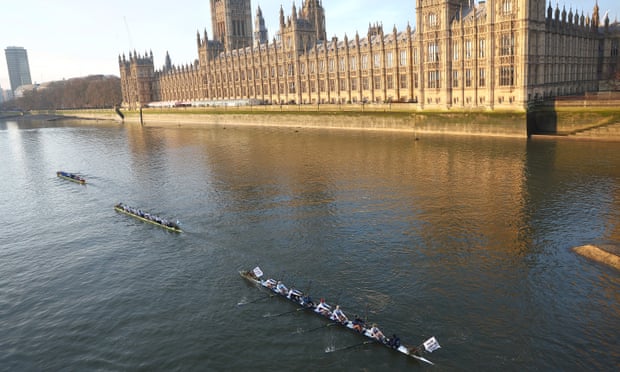
Climate campaigners, MPs, and ex-Olympians held a boat race along the Thames earlier this month to promote the bill. Photograph: Peter Nicholls/Getty Images
Guardian Exclusive: Supporters of bill say Labour has already insisted on removal of clauses requiring UK to meet targets agreed at Cop and other summits
A landmark bill that would make the UK’s climate and environment targets legally binding seems doomed after government whips ordered Labour MPs to oppose it following a breakdown in negotiations.
Supporters of the climate and nature bill, introduced by the Liberal Democrat MP Roz Savage, say Labour insisted on the removal of clauses that would require the UK to meet the targets it agreed to at Cop and other international summits.
Although it is a private member’s bill, more than 80 Labour MPs, including several ministers, had publicly signed up to support it.
Some Labour MPs have been ordered to attend the bill’s second reading on Friday morning and to prepare speeches, to deliberately make it run out of time and avoid a vote. Another possibility would be a three-line whip to vote against the bill, leaving any rebels at risk of disciplinary action, including losing the party whip.
Unpaid or under-paid internships persist in spite of law changes since 2018, making up 61% of those on offer. Photograph: OJO Images/Rex Features
UK charity calls for positions of four weeks or longer to be banned to help close social mobility gap
Young people from working-class or disadvantaged backgrounds are being “locked out” of careers by unpaid or low-paid internships that benefit middle-class graduates, according to a social mobility charity.
Research by the Sutton Trust found that middle-class graduates made more use of internships as stepping stones into sectors such as finance or IT, even in cases where the internships paid nothing or below the minimum wage as required by legislation.
Nick Harrison, the chief executive of the Sutton Trust, said: “Internships are an increasingly critical route into the best jobs, and it’s shocking that in this day and age, many employers still pay interns below the minimum wage, or worse, nothing at all. They should be ashamed.
“The government has pledged to ban unpaid internships, which is absolutely the right thing to do. Clearly not all young people can get support from the ‘bank of Mum and Dad’, so banning this outdated practice will help to level the playing field for these valuable opportunities. It’s a no-brainer and should be implemented without delay.”
A survey of 1,200 recent graduates commissioned by the trust revealed that 55% of middle-class young people had undertaken internships, compared with just 36% from working-class families – and that the gap between the two groups had widened “substantially” since its previous survey in 2018, from 12 to 19 percentage points.
Unpaid or underpaid internships had persisted in spite of law changes since 2018, making up 61% of those on offer and forcing interns to “subsidise themselves during their placements, which locks many of those who can’t afford it out of these vital opportunities”, the trust said.
A Downing Street spokesperson said the government’s position “will be set out at second reading”.
Nature and climate charities have urged ministers to adopt Savage’s bill, saying it would introduce vital concrete steps to tackle nature depletion and the climate crisis.
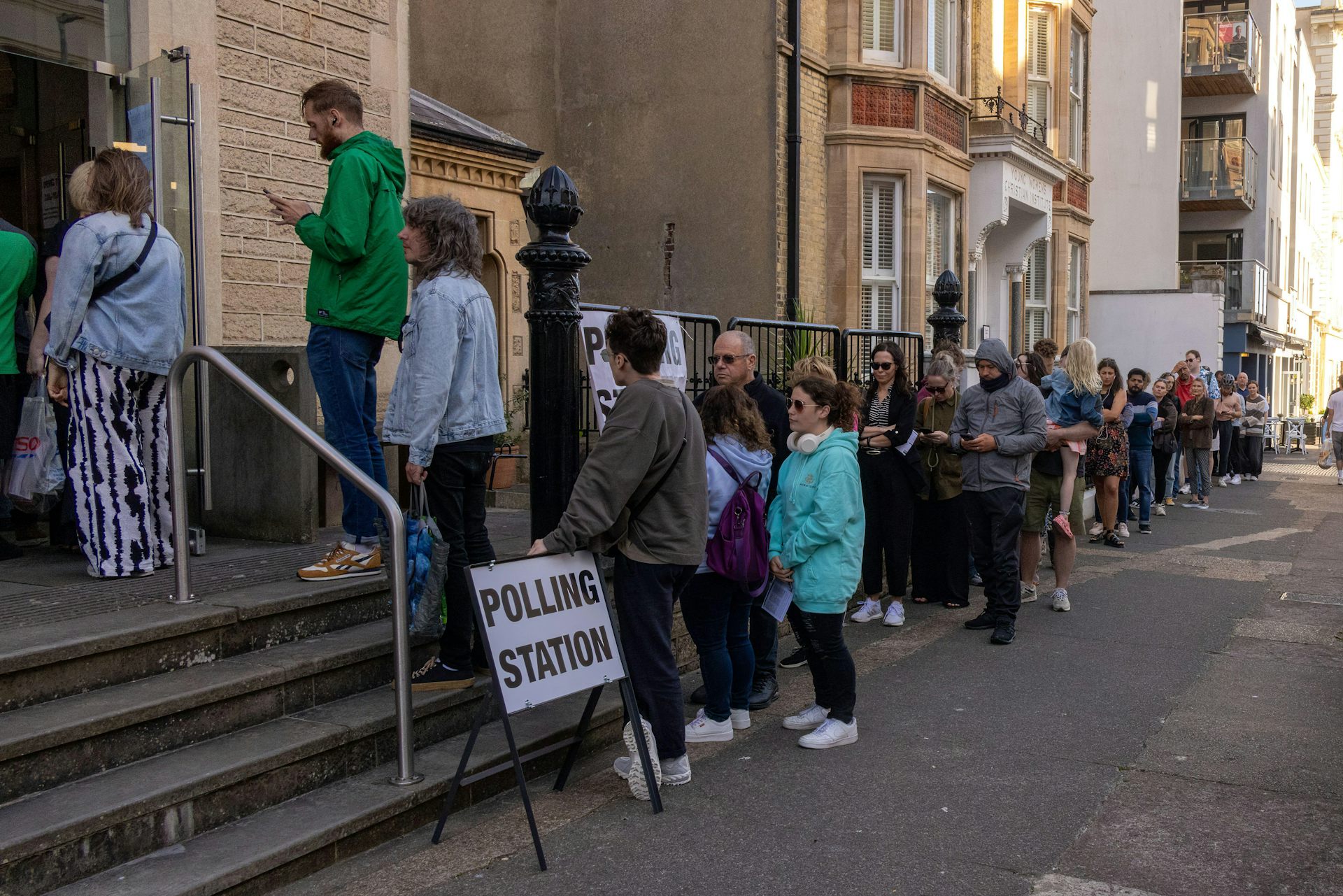
The 2024 general election was the first in the UK’s history to be run under a system of voter ID. When heading to the polling station, people could only vote if they proved their identity first. This was the result of a law brought in in 2023 and that had already applied to local elections in England that year.
Using data from the British Election Study, we tracked people eligible to vote between 2023 and 2024 and found that 5% of people eligible to vote – nearly 2 million people – didn’t own any recognised voter identification. This lack of ID was concentrated among poorer and less educated voters.
Of course, lacking photographic ID is not necessarily a permanent state. Some people will have been in the process of renewing passports and driving licences during this period. All of these people would also have been eligible for a voter authority certificate, a form of identification brought in with the new law – although we found take up of these was low.
We found that around 0.5% of all voters reported being turned away at polling stations as a result of lacking ID in the local elections of 2023. We also found that four times as many people (around 2%) reported not voting because they knew they didn’t have the right ID.
The equivalent figures were slightly lower at the general election of 2024, but a meaningful contingent still did not participate. Around 1.3% of electors – or over half a million people – were turned away or didn’t show up at all because of voter identification requirements.
While administrative records can provide accurate numbers about how many people were turned away at the polling station, they tell us little about people who were discouraged from even trying to vote because they didn’t have the right ID. So it is clear from our analysis that the impact of voter ID on turnout is likely larger than previous estimates based on polling station returns.
The general election was the first time ID was mandatory across the country. Alamy
Who benefits?
We also found that the Conservatives were more likely to benefit from the voter ID law than other parties.
This is not surprising when we consider demographic factors. As our research shows, Conservative voters are more likely to own ID, because they are more likely to be older and more affluent. Despite changes in social patterns of party support since the 2016 Brexit referendum, this pattern still holds true.
The types of identification which are allowed under the new law – and especially the decision to allow older people but not younger people to use travel passes – exacerbates these differences.
Who didn’t have ID?
Percentage of party supporters (general election vote intention) without photo ID, May 2023 (lighter column) and 2024 (darker column) British Election Study, CC BY-ND
The chart above shows the percentage lacking photo ID by general election vote intention, as measured in May 2023 (lighter bars) and May 2024 (shaded bars), shortly before the general election was called.
In 2024, only 2.4% of Conservative supporters were likely to not have photo ID, while 3.8% of Labour supporters and 4.1% of Reform supporters were lacking.
One notable difference is an increase in Liberal Democrats and non-voters with no photo identification in 2024, although this is almost entirely due to a change in the number of people supporting the Liberal Democrats or deciding not to vote rather than changes in people’s actual ownership of ID.
Liberal Democrat voters had the lowest proportion of supporters without voter ID in 2023 (1.3%), but in 2024, the Liberal Democrat rate exceeded that of the Conservatives (2.9%).
There are still opportunities to mitigate the risks posed by voter ID. Ahead of the next election the new government should extend the forms of identification allowed (especially for those younger than state pension age).
Improving public awareness around the law and the availability of voter authority certificates is another important step. There are also suggestions that a system of allowing people to vouch for others who don’t have voter ID would be an option.
In an electorate of 49 million, if almost two million aren’t able to vote because they don’t have the right ID, there is a problem. Those interested in building trust in our democracy should consider not only minimising electoral fraud but reducing this number by as much as possible.
The UK government is set to back plans for a third runway at Heathrow, the country’s busiest airport, and to expand two other airports near London: Gatwick and Luton. The move is designed to support the government’s “mission” to grow the economy.
Air transport is notoriously hard to decarbonise. Unlike the energy system, or even road transport, there is no renewable alternative to switch to immediately. If electric or hydrogen planes become reality, it won’t be for many years yet. Therefore it’s not clear this airport expansion can fit within the UK’s legal and arguably moral requirement to cut emissions and remain within its carbon budget.
It certainly goes against what the government’s official advisory body the Committee on Climate Change (CCC) recommends. The CCC’s 2023 report to parliament stated that: “No airport expansions should proceed until a UK-wide capacity management framework is in place to annually assess and, if required, control sector GHG [greenhouse gas] emissions and non-CO₂ effects.”
Those non-CO₂ effects of aviation include water vapour, soot and other gases like nitrous oxides and sulfur dioxide, all released directly into the high atmosphere where they help form heat-trapping clouds. Estimates suggest they could triple the greenhouse impact of aviation.
In 2019, the last year of available data pre-COVID, domestic and international aviation accounted for around 8% of the UK’s total emissions. The non-CO₂ effects makes aviation a larger contributor to climate change than that number suggests.
The sector itself struggles to build a coherent decarbonisation roadmap based solely on “supply-side” improvements to things like fuel efficiency or, in a recent example from EasyJet, thinner paint. The demand side – taking fewer flights, frequent flyer levies, or restrictions on domestic flights as have been introduced in France – is rarely mentioned.
Unfortunately aviation is a prime example of the Jevons effect where any improvement in efficiency has been wiped out by increased demand. With a growing global middle class pursuing a higher consumption lifestyle, aviation emissions continue to grow even while other sectors have shows some efforts to reduce their own.
A third runway at Heathrow was first proposed back in the 2000s. This photo is from a 2016 protest. Dinendra Haria / shutterstock
The UK has mandated that synthetic aviation fuel (SAF), a more sustainable alternative to regular jet fuel, must make up 10% of aviation fuel by 2030. But only 1.2% of aviation fuel is currently SAF and the industry has not published any plans to show it can scale up in time. Indeed, the sector’s own plans for growth will outstrip efforts to decarbonise through synthetic fuel, delivering a neutral effect at best.
The consumer-facing airport sector has also been accused of greenwash. For instance, Luton Airport recently published adverts making the claim that its own expansion would be stopped if it did not meet stringent environmental targets. However, the Advertising Standards Authority found that consumers would naturally believe that would include air traffic and not just terminal operations (a terminal’s heating or lighting is, of course, largely irrelevant when its core business is as emissions-intensive as flying).
The difficulty of decarbonising aviation while the sector still grows is exemplified by the government’s recently launched consultation on adopting the Corsia carbon offsetting scheme for international flights and how it might work with existing cap and trade schemes. All of which encourage or excuse excess emissions through a charging mechanism.
Growing pains
“Kickstarting economy growth” and “Make Britain a clean energy superpower” are two of the UK government’s six “missions”. However, by expanding airports in support of the former, it risks failing the latter.
A new report by thinktank the New Economics Foundation shows that airport expansion could balance out all of the emissions saved by the government’s clean power plans by 2050.
There is evidence that airport expansion can bring some of the economic benefit that government needs. However, another New Economics Foundation report has found that air travel is no longer a catalyst for productivity growth. So the economic benefits of a new runway are really confined to the airport operation itself – projects for engineers and builders, service jobs for people living near Heathrow, and so on.
Aviation is the privilege of the richer part of society, both globally and within the UK. Figures from Our World in Data shows the richest 50% of the global population produces 90% of the aviation emissions.
While many more UK residents have experienced flying than in the past, most flights are still taken by a small, wealthy subset of the population, which will typically capture the largest share of any new capacity. Each year, around half of British residents do not fly at all.
The focus on London airports for the largest scale expansions will shift the balance of the economy further towards south-east England, and increase inequality within the UK economy. And while these plans might bring some of the GDP gains the government is desperate to deliver, all the evidence shows they will be at the expense of its environmental targets.