This work by Middle East Monitor is licensed under a Creative Commons Attribution-NonCommercial-ShareAlike 4.0 International License.
Israeli army soldiers detain a Palestinian boy after he threw rocks ahead of a visit by Ultra-Orthodox Jews to the shrine of Atnaeil Ben Kinaz in the city of Hebron in the Israeli-occupied West Bank on April 16, 2025. [Photo by HAZEM BADER/AFP via Getty Images]
A 14-year-old Palestinian boy with a full 100 per cent diagnosis of autism has allegedly suffered horrific physical, sexual, and psychological abuse since his arrest and subsequent detention in an Israeli facility.
The case exposes the alleged brutality of Israeli authorities and a complete disregard for the rights of children and people with disabilities.
According to a report published by the Hebrew newspaper Haaretz, the boy, a resident of Jaffa, was arrested on 31 October. Israeli military forces reportedly raided his relatives’ home in the West Bank at dawn, causing widespread distress and chaos.
His mother recounted the arrest: “Dozens of soldiers came in at 4:30 am and pointed their rifles and lights at the children in their room. My son was shaking with such fear he couldn’t stand up.”
Despite his medical diagnosis as fully disabled due to autism, and the family’s insistence that he “wasn’t involved in anything,” Israeli police accuse him of serious security offences, including “contact with Hamas and ISIS,” “photographing sites in Israel,” and “trying to prepare explosives.”
Human rights advocates have described these accusations as exaggerated and disproportionate, given his severe medical and psychological condition.
Haaretz reveals the most shocking element of the case: the boy repeatedly warned authorities that he was being “forced to do things” by older cellmates.
However, a juvenile court judge, reportedly failed to order his transfer another cell or provide him with protection.
Only after a “clear sexual assault” was reported did a police investigation into the alleged assailants begin. The child was then moved to solitary confinement—a measure that occurred only after the catastrophe, and not as a preventative measure.
This case not only exposes alleged cruelty in Israel’s treatment of Palestinian children but also demonstrates how the Israeli security and justice system subjects a disabled child to heavy security charges without considering his basic human rights as a minor and a person with a disability. This is considered a clear breach of international law, particularly the Convention on the Rights of the Child.
Orcas discuss Genocide-supporting and complicit Zionists. Donald Trump, Keith Starmer, David Lammy, Rachel Reeves, Angela Rayner and Wes Streeting are acknowledged as evil genocide-complicit and supporting cnuts.Keir Starmer objects to criticism of the IDF. He asks how could anyone object to them starving people to death, forced marches like the Nazis did, bombing Gaza’s hospitals and universities, mass-murdering journalists, healthworkers and starving people queuing for food, killing and raping prisoners and murdering children. He calls for people to stop obstructing his genocide for Israel.Genocide denier and Current UK Prime Minister Keir Starmer is quoted that he supports Zionism without qualification. He also confirms that UK air force support has been essential in Israel’s mass-murdering genocide. Includes URLs https://www.declassifieduk.org/keir-starmers-100-spy-flights-over-gaza-in-support-of-israel/ and https://youtu.be/O74hZCKKdpA
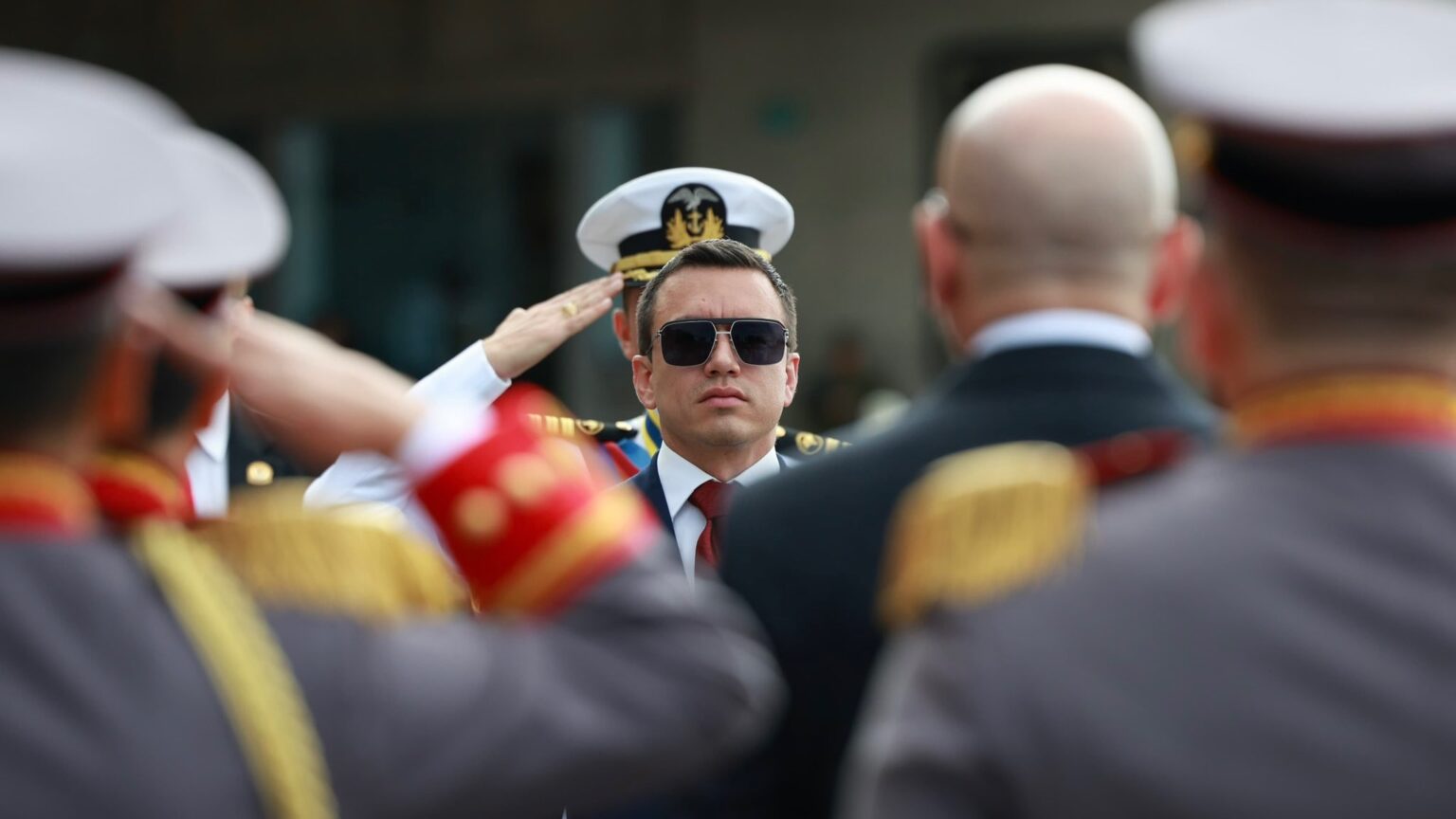
Ecuadorians will vote on whether to convene a constituent assembly, accept foreign military bases, stop funding political parties, and reduce the number of legislators. The process has been promoted by President Noboa and seeks to bring the country closer to a neoliberal model.
This Sunday, November 16, Ecuadorians will go to the polls to vote on the so-called “2025 Popular Consultation”. The referendum was called by right-wing President Daniel Noboa, who seeks to change the country’s legal framework to, analysts claim, advance his neoliberal political project.
The government’s need for a new constitution
Without a doubt, the most important question in the referendum concerns the possibility of establishing a Constituent Assembly to draft a new constitution. Ecuador is currently governed by the 2008 Constitution, written during the administration of Rafael Correa, which, while responding to various needs of the former president’s social democratic project at the time, also includes a series of demands that various social movements and left-wing political parties had fought for over decades of struggle.
Among the rights included in the current constitution are the:
prohibition of labor flexibility
prohibition of the establishment of foreign military bases
progressive strengthening of public health and education
granting of rights to nature (a legal novelty in the world)
and many others
In short, it is a constitution that guarantees rights, something that contradicts a series of basic principles of neoliberalism, which has greatly annoyed certain economic elites in the country who are now promoting its radical transformation. To do so, Noboa and his allies have decided to rely on a discourse that mixes uncertainty with political attack.
In a recent interview, when asked what type of constitution he would promote if a constitutional process were to be convened, President Noboa said that he would reveal that information the day after winning the referendum. This has generated a series of criticisms of the executive branch’s secrecy, as this secrecy could be hiding a series of rights eliminations and anti-popular measures that the executive branch is planning.
This seems to be the case if we take into account the statements made by some government spokespeople who have talked about introducing hourly work, eliminating free public education at universities, and eliminating the rights of nature. In short, the drafting of a neoliberal constitution.
Using Correísmo as a scapegoat: Noboa’s repeated strategy
Finally, the executive branch has once again resorted to a strategy that has brought it success in the past: labeling the current constitution as “Correísta” (i.e., belonging to former President Correa’s political party). Although Correísmo is one of the main political forces in the country, its opposition has also generated a kind of unity among various sectors of society that find in their rejection of Correísmo a banner of unity.
For example, in recent days, as the government’s campaign has accelerated on all fronts, photographs were published of former Correísta Vice President Jorge Glas, who was transferred to a maximum-security prison recently inaugurated by the government, where the country’s most dangerous prisoners will be held, according to Noboa.
Glas was convicted for allegedly participating in a corruption scheme, although these convictions have been criticized by former President Correa (who also has several court convictions against him, although he lives abroad) as acts of political persecution.
“Jorge Glas among the most ‘dangerous’ prisoners? Shameless! Everything about you is showmanship, malice, and falsehood … [Noboa] I must admit that you are achieving your goal: to accustom people to showmanship, cruelty, lies, ineptitude, and dishonesty,” Correa posted on X, in response to the news of Glas’s transfer.
Allowing the installation of foreign military bases
Another of the most controversial questions is whether the constitution will be reformed to allow the installation of foreign military bases. The current constitution expressly prohibits this. From the outset, Noboa has sought to remove this sovereign restriction, especially after his clear alignment with Washington’s foreign policy and his declared alliance with Israel.
A few days ago, US Secretary of Homeland Security Kristi Noem visited Ecuador, specifically Manta, where a US military base operated at the beginning of the 21st century until the arrival of the Correa government, which did not renew the agreement. Many have seen this visit as a clear statement of intent regarding the location and purpose of the possible military base.
According to Noboa, the arrival of foreign soldiers would help to halt the most serious crisis of violence in Ecuador’s history, which is part of a territorial dispute between drug trafficking groups and which, in 2025 alone, has left more than 7,000 dead, despite the government’s claims that its “Plan Fénix” (security plan) is yielding positive results.
However, several security experts have questioned whether the real intention behind the installation of military bases has anything to do with the government’s urgency to stop structural violence in the country. Rather, they claim that it is part of a broader geopolitical project by the United States to secure strategic military positions in the face of rivalry with China in the South Pacific Ocean.
Reduction of legislators and defunding of political parties
The last two questions seek to reform the constitution to reduce the number of assembly members from 151 to 73. According to the government, the large number of national assembly members represents an unnecessary expense for the state coffers, and it argues that a reduction would generally improve the level of public debate among legislators.
However, several voices have spoken out against this proposal because, they claim, it seeks to reduce the representation of political groups in the legislature, promoting a kind of two-party system between ADN (the ruling party) and the Citizen Revolution (Correísmo). In addition, the reduction in the number of assembly members directly impacts provinces with smaller populations, where several assembly members are currently elected, but under Noboa’s reform, they would only have one or two representatives. According to the promoters of the NO vote, this would lead to a reduction in political representation and a deterioration of democracy.
Noboa also proposes that the state stop contributing a certain amount of money to political parties. Currently, the constitution guarantees that political parties that receive a minimum percentage of the popular vote are entitled to public funds to develop, conduct election campaigns, etc. The executive branch argues that this is wasted money.
On the contrary, several voices see the decision as a way to exile political parties that do not have powerful financiers or do not belong to the large economic groups in the democratic game, as is the case with Noboa, son of the richest man in Ecuador and member of one of the country’s oligarchic families. Or, seen from the other side, that political parties allied with or belonging to the wealthiest have an unfair advantage over parties that do not have enormous resources.
This is the opinion of former presidential candidate Andrés Arauz, who said: “[The purpose behind the question] is to make politics unequal. Thus, the ability to get your message across as a candidate depends on whether you are a millionaire, whether you can afford to buy advertising space on television or radio. It does not depend on whether you are poor and have good ideas, in which case your message can still be heard. This is the oligarchization of political debate:”
Two visions for the country: only one is possible
Sunday will be one of the most important elections in the country’s recent history. At stake is something deeper than a presidency or a mayoralty: it is the political definition of the country’s model.
On the one hand, there is the recent past, which, after a complex process of political convergence, managed to produce one of the most progressive constitutions guaranteeing rights in the nearly 200 years of republican history.
On the other hand, the future of a country almost completely aligned with neoliberal doctrine and Washington’s geopolitical project (which are linked) is being projected. Ecuador, unlike its neighbors, has been a curious country that has resisted political projects that seek to neoliberalize its economy, as happened during the governments of the 1990s and early 2000s, when social mobilizations even overthrew presidents who were close to this economic policy.
Likewise, the last three administrations (Lenín Moreno, Guillermo Lasso, and Daniel Noboa) have had a clear neoliberal agenda that has not been able to be fully implemented, partly due to popular mobilizations and citizen response, but also due to a constitution that protects certain rights that would need to be eliminated to pave the way for ultra-liberalism.
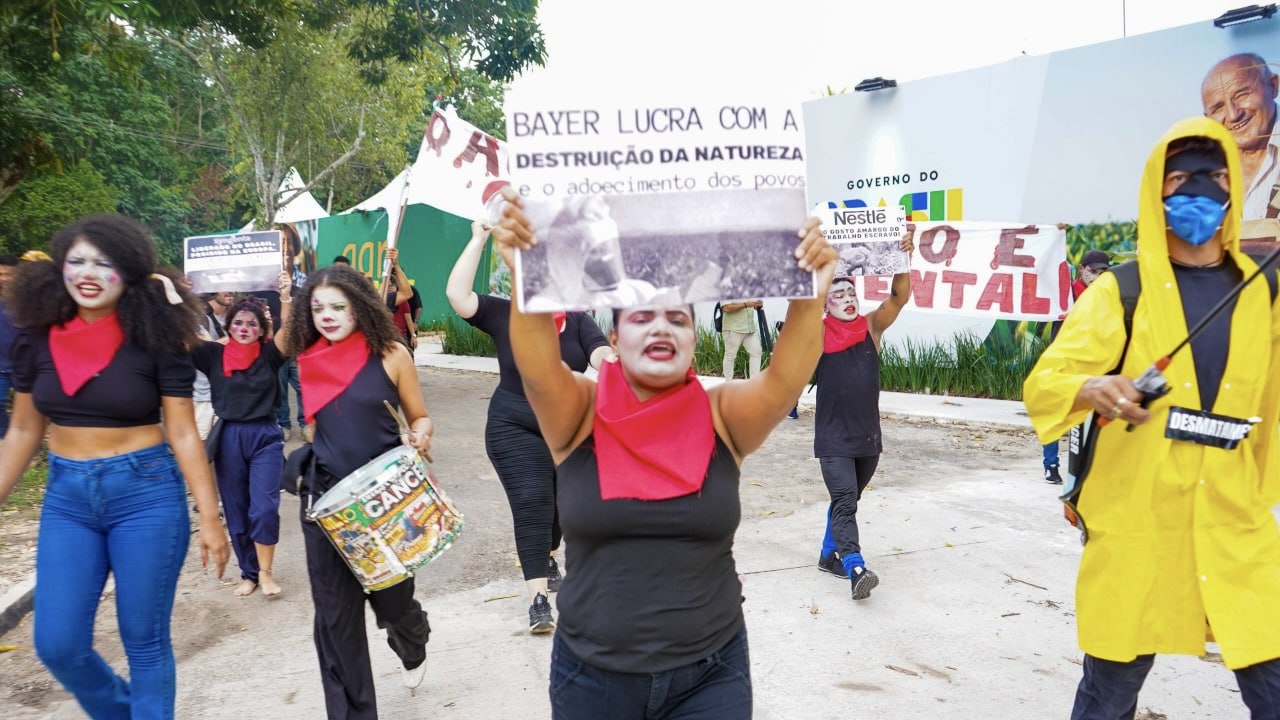
MST activists held a protest on November 11 in the Agrizone at COP 30, an area dedicated to discussions related to agribusiness. The action aimed to denounce agribusiness as the main driver of the environmental crisis in Brazil. Photo: @alain.grao / COP30 Collaborative Coverage
Embrapa’s event at the Climate Conference is sponsored by giants such as Bayer, Nestlé, and Syngenta, accused of practices that exacerbate socio-environmental damage
The United Nations Climate Conference COP30, is currently underway in Belém, Brazil and will conclude on November 21. It has become increasingly clear that, just as the Landless Rural Workers’ Movement (MST) and several other organizations, movements, collectives, and groups warned, agribusiness is at the forefront of the supposed search for solutions to the environmental crisis. This, in itself, sheds light on the fact that the Conference has become a large business expo, in which the assets will be our territories, communities, and nature.
According to Embrapa itself (the Brazilian Agricultural Research Corporation, a state entity), Agrizone is “a large showcase of technologies, science, and international cooperation focused on sustainable agriculture and the fight against hunger in a context of climate change.” However, in practice, the space will serve as a stage for agribusiness to do business, promote its image, and increase its profits – at the expense of the destruction of nature, the concentration of land, and the expulsion of peasant communities and traditional peoples. Under the discourse of “sustainability,” what we will see is the old logic of exploitation disguised as green.
Starting with its sponsors. It is unthinkable that a space that claims to combat hunger and the environmental crisis would have Bayer, Nestlé, and OCP among its financiers. These are three companies that directly contribute to the deepening of the environmental crisis. In 2024, Bayer had to pay more than USD 2 billion in compensation to a man in the US who was proven to have contracted cancer because of one of its main products: the pesticide Roundup. The product is no longer sold in that country, but in Brazil it circulates freely. It is estimated that the company faces 170,000 similar lawsuits.
One of the panels that Nestlé will lead at Agrizone is called “Remodeling food in Brazil.” This is a very suggestive title, given that the company is already engaged in this “remodeling” – at the expense of the health of the Brazilian people. According to the company’s own criteria, 54% of its sales are products with very low health ratings. In this context, it has already been proven that the Swiss company adds more sugar to its products destined for Africa and Latin America.
Office Chérifien des Phosphates (OCP) is a Moroccan state-owned company focused on the extraction of phosphate, which is mainly used in the production of pesticides. The company holds 70% of global phosphorus reserves. However, most of its production comes from the Bou Craa mine in Western Sahara, a country under colonial occupation by the Moroccan kingdom. In other words, OCP literally maintains its production at the expense of looting and stealing minerals that belong to the people of the Sahara.
Agrizone panels will be dominated by giants that plunder nature
The giants of agribusiness, the ultra-processed food industry, and mining, in addition to sponsoring Agrizone, will also dominate the debate panels at the event.
Syngenta, together with Itaú Bank, will coordinate the panel “Cooperation for long-term financing in the restoration of degraded areas.”
The question to be asked is whether the transnational corporation is willing to restore areas that it itself degrades? After all, the company is responsible for a quarter of the market for profenofos, an insecticide used mainly on corn, soybean, cotton, and other crops. It turns out that this pesticide “is extremely harmful to aquatic organisms, birds, and bees. It is a powerful neurotoxin (similar to sarin gas) that can affect brain development in humans, especially in children,“ said Laurent Gaberell, head of agriculture and biodiversity at the NGO Public Eye, which published a report on the subject. In Brazil, Syngenta’s largest market, ”profenofos residues are found in the drinking water of millions of people,” the report points out.
It is also worth remembering that Syngenta was responsible for the murder of Keno, an MST activist, in 2015, in Paraná. The murder took place in a field of illegal Syngenta transgenic experiments in the city of Santa Tereza do Oeste, western Paraná, near the Iguaçu National Park. The area was occupied by about 150 members of Via Campesina. The activists were shot at by about 40 agents from NF Segurança, a private company hired by Syngenta. In addition to Keno’s murder, Isabel Nascimento was also shot and lost sight in her right eye.
In addition to Syngenta, Natura will also be at Agrizone. The cosmetics company will lead the panel “from circular carbon to sustainable cooperation.” Natura was fined by Ibama in 2010 for biopiracy. The fine, in the amount of 21 million reais, was imposed “for allegedly irregular access to biodiversity.” In addition, the company was the subject of a complaint to the Parliamentary Inquiry Commission in the Federal Senate in 2023 for exploiting traditional communities in Pará. According to testimony from Indigenous leaders at the time, cooperatives linked to Natura paid three reais per day for harvesting andiroba and copaiba seeds, which are typical of the Amazon. However, the cooperatives sold a liter of seeds for 1,000 reais, and the company further increased this profit margin.
Ultra-processed food giant PepsiCo will be the protagonist in the panel “Every drop counts: growing potatoes in a changing climate.” Residues of the pesticide glyphosate have been identified in several of the company’s products, including Doritos chips. Potential health damage can begin at very low levels, from 0.1 parts per billion (ppb) of glyphosate. But in the company’s products, levels between 289.47 ppb and 1,125.3 ppb were found. The consequences of glyphosate on the body include gastrointestinal disorders, obesity, diabetes, heart disease, depression, autism, infertility, cancer, Alzheimer’s disease, Parkinson’s disease, and gluten intolerance.
Agribusiness controls Agrizone
Although Agrizone was officially conceived by Embrapa, control of the space is, in fact, in the hands of agribusiness. It is no surprise that important players in the sector here in Brazil, such as the Brazilian Agribusiness Association (ABAG), the Brazilian Rural Society (SRB), and Amaggi will be in the spotlight.
There is no way to build concrete solutions to the environmental crisis when the main causes of this scenario are sitting at the table, coordinating the “board room.” In Brazil, agribusiness (and the entire industrial complex surrounding it) is the main cause of this crisis. It is responsible for 74% of greenhouse gas emissions in the country.
All the supposed sustainable discourse maintained by those entities and companies in this sector – which will dominate the Agrizone panels – will actually serve two functions. First, to camouflage the real way agribusiness operates, which is based on the appropriation and destruction of nature’s common goods, in addition to the exploitation of traditional peoples. Second, in the face of the environmental crisis that they themselves have caused, to implement false solutions based on the financialization of nature – as is the case with the carbon market.
For an Embrapa that serves the people, not corporations
Embrapa is a strategic public company for the country. It suffered a profound attack during the Bolsonaro administration. However, it was not agribusiness, which was hand in hand with Bolsonaro, that defended it, but the Brazilian people and their public servants.
Therefore, it is essential that it be effectively focused on the interests of the Brazilian people and not under the control of transnational giants linked to agribusiness. The challenges related to food sovereignty and combating the environmental crisis will not come from those who profit from hunger and diseases caused by ultra-processed foods and pesticides. They will come from those who have been resisting the advance of capital for centuries and cultivating emancipated forms of relationship with nature.
This article was first published on the MST website.
Donald Trump urges you to be a Climate Science denier like him. He says that he makes millions and millions for destroying the planet, Burn, Baby, Burn and Flood, Baby, Flood.Nigel Farage urges you to ignore facts and reality and be a climate science denier like him and his Deputy Richard Tice. He says that Reform UK has received £Millions and £Millions from the fossil fuel industry to promote climate denial and destroy the planet.
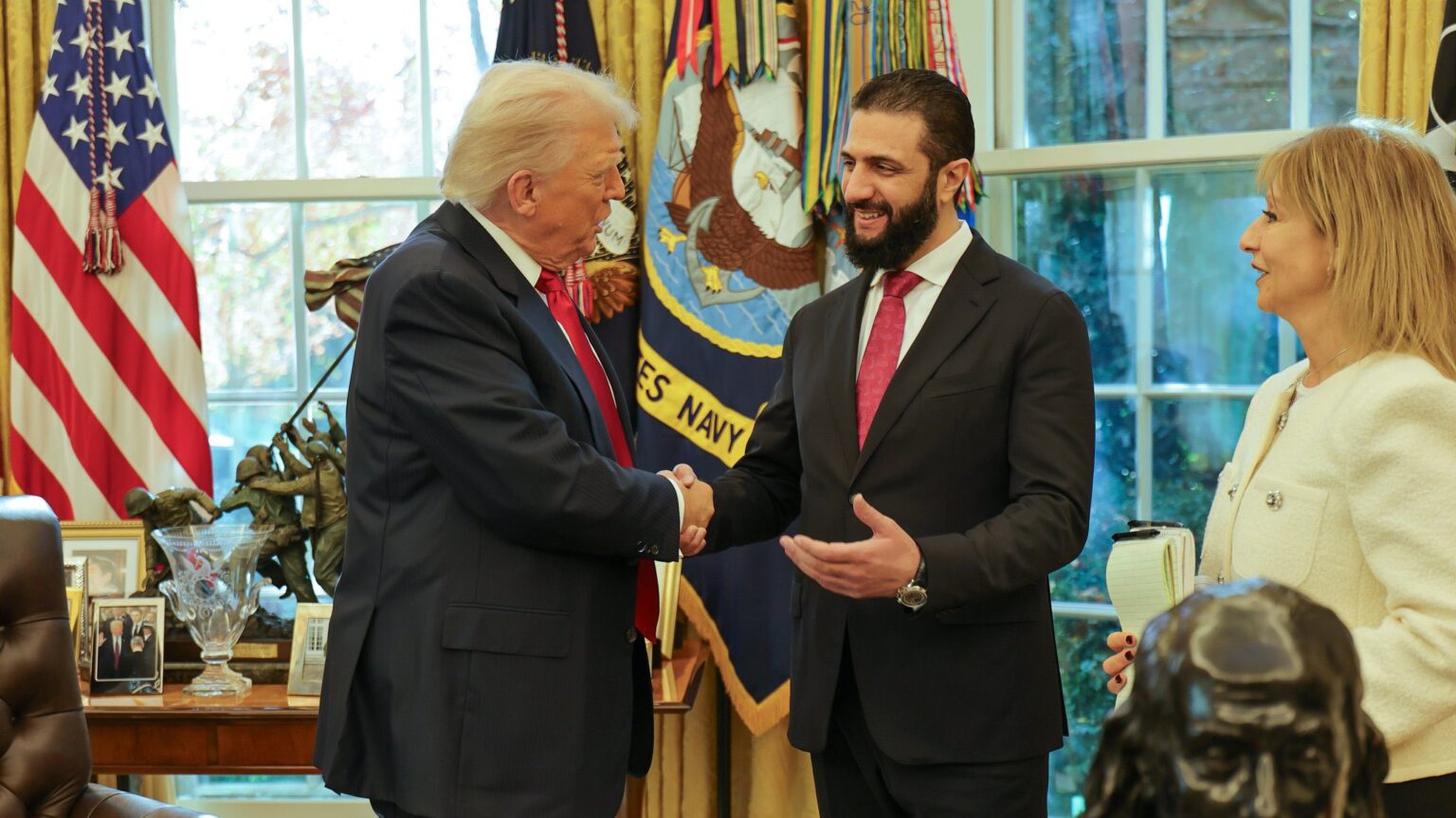
Syrian interim President Ahmad al-Sharaa meets US President Donald Trump at the White House Nov. 10. Photo: Syrian presidency
The visit of Syria’s interim president to Washington has once again showcased the ambivalence of US counter-terrorism policy, which changes according to temporal interests.
Syrian interim President Ahmad al-Sharaa arrived in Washington on Monday, November 10, to discuss various issues of mutual interest with US President Donald Trump.
The occurrence, which marks Al-Sharaa’s first visit to the United States has stirred controversy, and invited the mockery of critics, as it came a mere two days after Al-Sharaa was removed from the US Specially Designated Global Terrorist (SDGT) sanctions list.
This in turn has exposed the ambivalence of US counter-terrorism policy, which apparently designates or revokes persons and organizations from terrorism lists based on US interests at any given moment.
One day before being revoked from the SDGT sanctions list, the United Nations Security Council had also adopted a US resolution to remove Al-Sharaa and his Interior Minister, Anas Khattab, from sanctions targeting members and supporters of terrorist groups, including ISIS and Al-Qaeda.
Furthermore, Al-Sharaa’s visit followed the onset of a large-scale military campaign by Syria’s government forces on Saturday, November 8, against “terrorist cells” affiliated with ISIS in different governorates, according to the Syrian Ministry of Interior.
In what was interpreted as paving the way for Al-Sharaa to remain in office after Syria’s transitional period ends, Trump praised the former Al-Qaeda militant, saying:
“He’s a very strong leader, he comes from a very tough place. He’s a tough guy. I like him. I get along with the president, the new president of Syria, and we’ll do everything we can to make Syria successful because that’s part of the Middle East.”
Al-Sharaa says the visit marks new beginning for strategic relations with the US
For his part, Al-Sharaa considered his visit a new beginning for strategic relations between his country and the United States. During an interview with Fox News following his meeting with Trump on Monday, Syria’s new ruler said:
“For the past sixty years, Syria has been isolated from the rest of the world, and the relations were cut off between the United States and Syria. This is the first time a Syrian president has visited the White House since the establishment of Syria in the 40s of the last century.”
“After the fall of the former regime, Syria has entered into a new era and this will build on a new strategy specially with the United States,” Al-Sharaa added.
Syria joins US-led international coalition against ISIS
When he was asked whether he committed to having his country join the US-led international coalition to fight ISIS in the West Asia region, Al-Sharaa answered:
“We have fought many battles against ISIS over the past ten years and endured great suffering, losing a significant number of men. While there are reasons for the US military presence in Syria, this presence must now be coordinated with the Syrian government. We need to discuss these issues and reach an agreement regarding ISIS.”
On Tuesday, November 11, Syria’s information minister, Hamza al-Mustafa, and a US official announced that Syria signed a “political declaration” with the coalition, confirming that it will have a role in “combating terrorism and supporting regional stability”.
However, Al-Mustafa clarified that “the agreement is political and until now contains no military components.”
Al-Sharaa offers extraction of Syria’s gas to become US ally
Al-Sharaa also told Fox News that he discussed with Trump future investment opportunities in Syria, particularly the extraction of gas by the United States.
“We talked about the investment opportunities in the future in Syria, so that Syria is no longer looked at as a security threat. It is now looked at as a geopolitical ally. And it’s a place where the United States can have great investments, especially extracting gas,” he noted.
Regarding Syria’s future relation with Israel, Al-Sharaa ruled out the possibility of joining the “Abraham Accords”, but he expressed his hope that the Trump administration will help his country to reach a security agreement with Israel to end its occupation of the Golan Heights.
“I believe that the situation in Syria is different from the situation of the countries that signed on to the Abraham Accords. Syria has borders with Israel, and Israel has occupied the Golan Heights since 1967. We are not going to enter into negotiations directly right now. Maybe the United States administration with President Trump will help us reach this kind of negotiation.”
Nevertheless, Al-Sharaa provided contradictory statements regarding the involvement of his government in negotiations with Israel during an interview with The Washington Post on the same day of being interviewed by Fox News.
The American newspaper cited Syria’s transitional leader saying:
“We are engaged in direct negotiations with Israel, and we have gone a good distance on the way to reach an agreement. But to reach a final agreement, Israel should withdraw to their pre-Dec. 8 borders.”
US declares partial suspension of sanctions on Syria following Al-Sharaa-Trump meeting
As both nations are looking forward to bolstering mutual security and economic interests, Al-Sharaa told The Washington Post that lifting the sanctions is essential for maintaining stability, which is, in turn, linked to economic development.
It is worth noting that shortly after the meeting, the United States Treasury Department announced that the Trump administration suspended key provisions of the Caesar Act sanctions on Syria for 180 days.
A woman is detained by police officers as supporters of Palestine Action take part in a mass action in Parliament Square, Westminster, central London, August 9, 2025
FOUR UN special rapporteurs and an independent expert have sent a letter to the British government warning that the ban on Palestine Action is “not justified” and violates human rights.
The letter was originally sent on September 12, but its publication has been delayed for two months — the usual period given to allow the government time to respond.
Palestine Action, a direct action group which targeted Israeli arms firms, has been banned and designated a terrorist organisation since July 5.
The letter condemns the proscription as giving rise to “disproportionate restrictions” on the right to freedom of expression and peaceful assembly, and warns that “mere property damage is not sufficient to constitute terrorism according to international standards.”
The UN special rapporteurs highlight that designating groups as terrorist when they are not genuinely so is more common in states that are “authoritarian and lack legal and political cultures of respect for human rights.”
They also raised concerns over mass arrests under the Terrorism Act for supporting Palestine Action.
Palestine Action joke that appeared in the UK satirical magazine ‘Private Eye’.Keir Starmer objects to criticism of the IDF. He asks how could anyone object to them starving people to death, forced marches like the Nazis did, bombing Gaza’s hospitals and universities, mass-murdering journalists, healthworkers and starving people queuing for food, killing and raping prisoners and murdering children. He calls for people to stop obstructing his genocide for Israel.Orcas discuss Genocide-supporting and complicit Zionists. Donald Trump, Keith Starmer, David Lammy, Rachel Reeves, Angela Rayner and Wes Streeting are acknowledged as evil genocide-complicit and supporting cnuts.





 A woman is detained by police officers as supporters of Palestine Action take part in a mass action in Parliament Square, Westminster, central London, August 9, 2025