Limiting warming to 2C is ‘crucial’ to protect pristine Antarctic Peninsula
Original article by Giuliana Viglione republished from Carbon Brief under a CC license.
Keeping global warming to less than 2C above pre-industrial temperatures is “crucial” for limiting damage to the Antarctic Peninsula’s unique ecosystems, according to a new study.
The paper, published in Frontiers in Environmental Science, reviews the latest literature on the impacts of warming on Antarctica’s most biodiverse region.
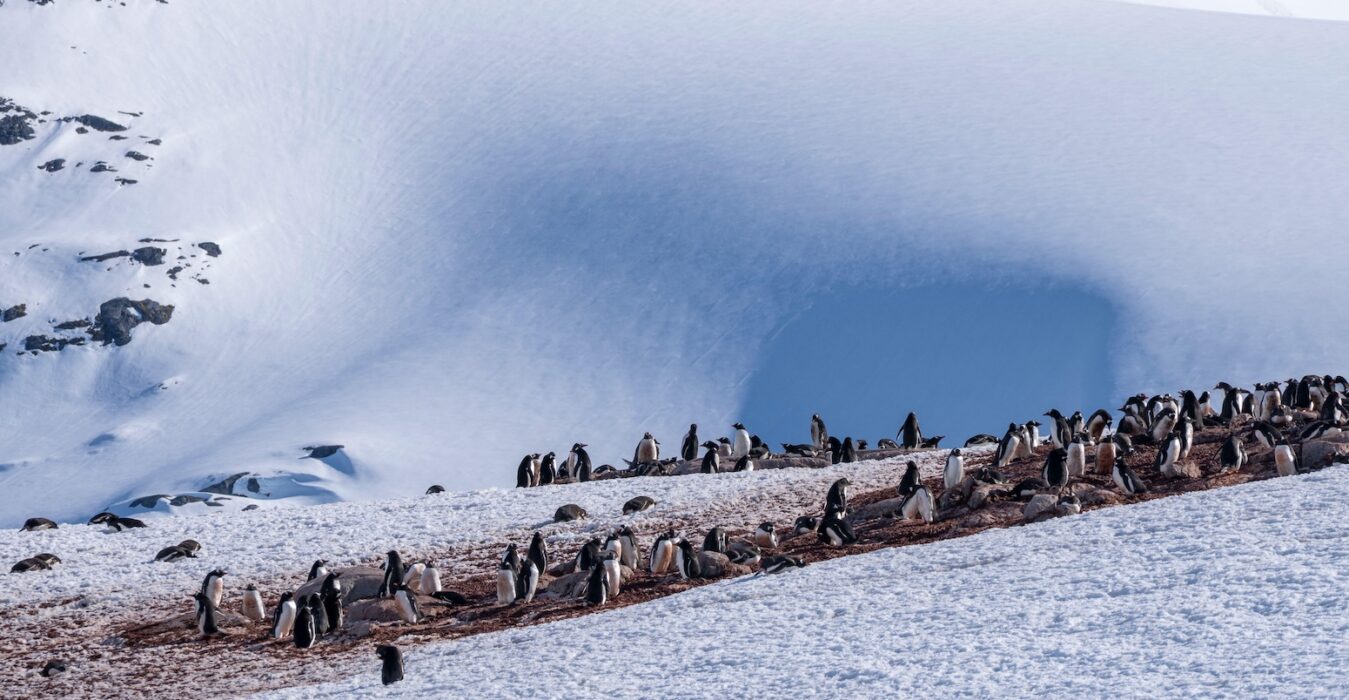
The Antarctic Peninsula is home to many types of penguins, whales and seals, as well as the continent’s only two flowering plant species.
The study also analyses previously published data and model output to create a fuller picture of the potential futures facing the peninsula under different levels of global warming.
Under a low-emissions scenario that keeps global temperature rise to less than 2C, the Antarctic Peninsula will still face 2.28C of warming by the end of the century, the study says, while higher-emissions futures could push the region’s warming above 5C.
Limiting warming to 2C would avoid the more dramatic impacts associated with higher emissions, such as ice-shelf collapse, increasingly frequent extreme weather events and extinction of some of the peninsula’s native species, according to the paper.
However, warming of 4C would result in “dramatic and irreversible” damages, it adds.
Importantly, the paper shows that the outlook for the peninsula is “dependent on the choices we make now and in the near future”, a researcher not involved in the study tells Carbon Brief.
‘Alternative futures’
The Antarctic Peninsula juts northwards from West Antarctica, stretching towards the tip of South America.
The region is made up of the main peninsula, which spans around 232,000 square kilometres (km2) and a series of islands and archipelagos that cover another 80,000km2. The mainland peninsula is nearly entirely covered in ice, while its islands – many of which are further north – are around 92% covered.
Taken as a whole, the Antarctic Peninsula is the most biodiverse region of the icy continent, and a “beautiful, pristine environment”, says Prof Bethan Davies, a glaciologist at Newcastle University, who led the new work.
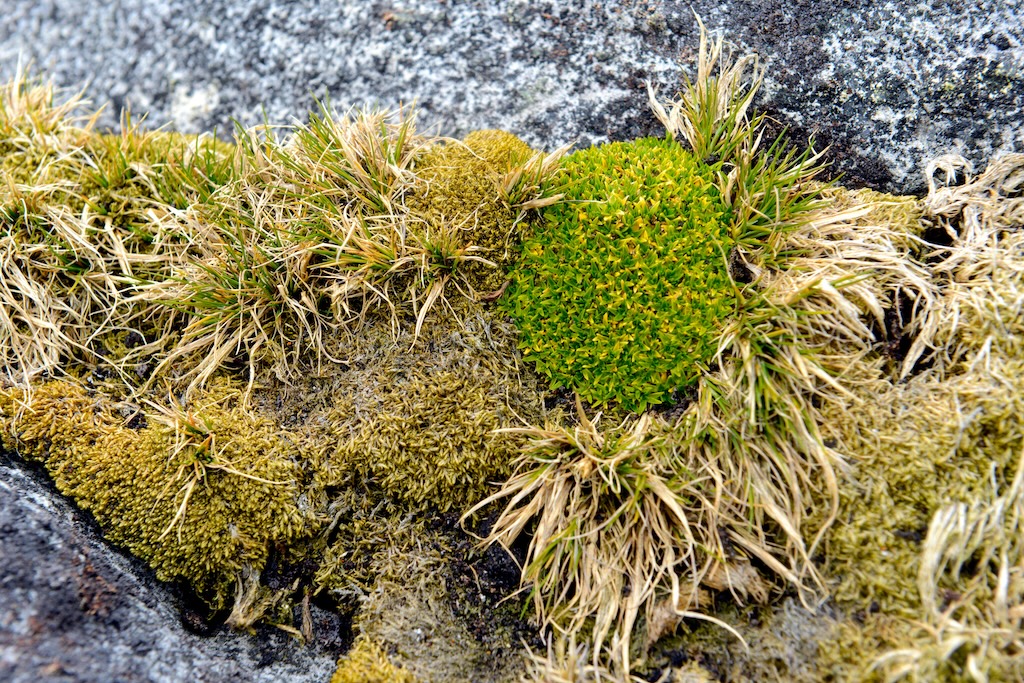
It hosts many species of penguins and whales, as well as apex predators, such as orcas and leopard seals. Each spring, more than 100m birds nest there to rear their young. It is also home to hundreds of species of moss and lichens, along with the only two flowering plant species on the continent.
The peninsula is also the part of Antarctica that is undergoing the most significant changes due to climate change, according to the Intergovernmental Panel on Climate Change’s (IPCC’s) sixth assessment report.
In 2019, a group of researchers published a study on the fate of the Antarctic Peninsula at 1.5C of global warming above pre-industrial temperatures. However, it has since “become apparent” that keeping warming below this limit is no longer in reach, Davies says.
The team selected three warming scenarios for their study:
- a low-emissions scenario, SSP1-2.6
- a high-emissions scenario characterised by growing nationalism, SSP3-7.0
- a very-high-emissions scenario, SSP5-8.5
SSP1-2.6 represents the “new goal” of keeping warming less than 2C, Davies says.
SSP3-7.0 and SSP5-8.5 represent “alternative futures” – with the former being one that “felt quite relevant” to the current state of the world and the latter being “useful to consider as a high end”, she adds.
For each potential future, the researchers conducted a literature review to assess the changes to different parts of the peninsula’s physical and biological systems. To fill gaps in the published literature, the team also reanalysed existing datasets and results from the Coupled Model Intercomparison Project 6 (CMIP6) group of models developed for the IPCC’s latest assessment cycle.
Dr Sammie Buzzard, a glaciologist at the Centre for Polar Observation and Modelling, tells Carbon Brief:
“By choosing three different emissions scenarios, they’ve shown just how much variability there is in the possible future of the Antarctica Peninsula that is dependent on the choices we make now and in the near future.”
Buzzard, who was not involved in the new study, adds that it “highlights the consequences of this [change] for the glaciers, sea ice and unique wildlife habitats in this region”.
Physical changes
The Antarctic Peninsula is already experiencing climate change, with one record showing sustained warming over nearly a century. The peninsula is also warming more rapidly than the global average.
For the new study, Davies and her team assess the changes in temperature for the decade 2090-99 across 19 CMIP6 models.
They find that under the low-emissions scenario, the Antarctic Peninsula is projected to warm by 2.28C compared to pre-industrial temperatures, or about 0.55C above its current level of warming. Under the high- and very-high-emissions scenarios, the peninsula will reach temperatures of 5.22C and 6.10C above pre-industrial levels, respectively.
They also analyse output from 12 sea ice models.
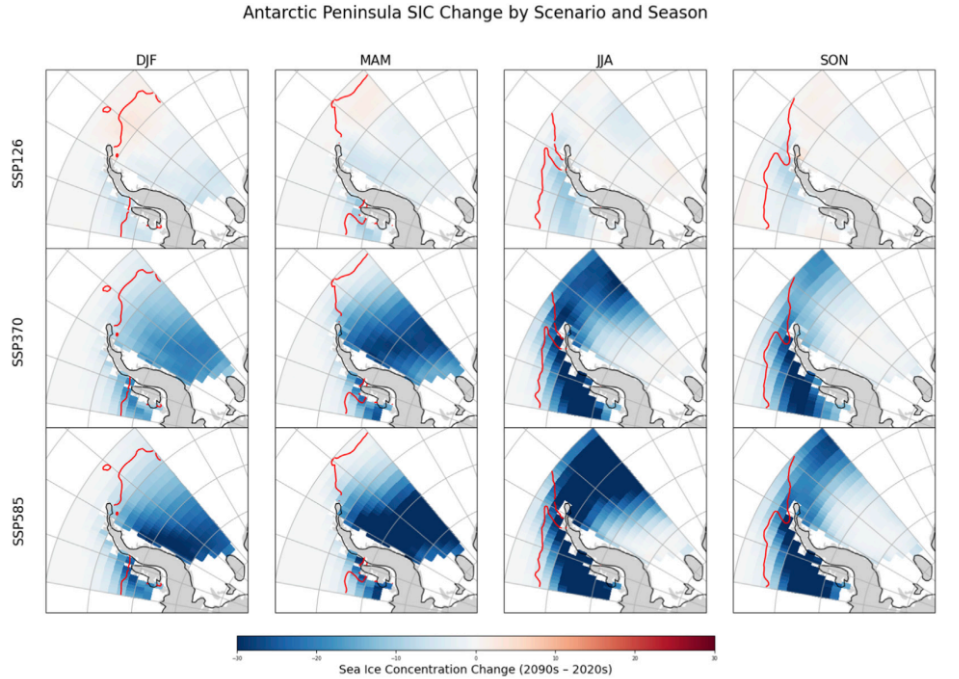
In each scenario, they find that the western side of the Antarctic Peninsula experiences the largest declines in sea ice concentration during the winter months of June, July and August. For the southern hemisphere’s summertime, it is the eastern side of the peninsula that shows the largest decreases.
The maps below show the projected change in sea-ice concentration around the Antarctic Peninsula for each season (left to right) under low (top), high (middle) and very high (bottom) emissions. Decreasing concentrations are shown in blue and increasing concentrations are shown in red.
The paper gives a “great overview of the current literature on the Antarctic Peninsula, examining multiple aspects of the region holistically”, Dr Tri Datta, a climate scientist at the Delft University of Technology, tells Carbon Brief.
However, Datta – who was not involved in the study – notes that the coarse resolution of CMIP6 models means that the “most vulnerable regions are too poorly represented to capture important feedbacks”, such as the forming of meltwater ponds on the tops of glaciers, which warm much more than the icy surface around them.
Ecosystem impacts
The study also looks at potential futures for the Antarctic Peninsula’s marine and terrestrial ecosystems – albeit, much more briefly than it examines the physical changes.
This is because modelling ecosystem change is very difficult, Davies explains:
“If you’re going to model an ecosystem, you have to model the climate and the ocean and the ice and how that changes. Exactly how that ecosystem responds to those changes is still beyond most of our Earth system models.”
Still, by looking at trends in the Antarctic over the past several decades, as well as changes that have occurred in other high-latitude regions, the researchers piece together some of the potential impacts of warming.
They conclude that under SSP1, the changes experienced by ecosystems are “uncertain”, but will “likely” be similar to present day – with some terrestrial species, such as its flowering plants, even benefitting from increased habitat area and water availability.
However, under higher-emissions scenarios, species will become “increasingly likely” to experience warmer temperatures than they are suited for.
Other changes that may occur in the very-high-emissions scenario are closely linked to the projected reductions in sea ice. These include the increased spread of invasive alien species, reduced ranges for krill and the displacement of animals unable to tolerate the warmer temperatures by those more able to adapt.
Prof Scott Doney, an oceanographer and biogeochemist at the University of Virginia, notes that some of these changes are already happening. Doney, who was not involved in the study, is part of an ongoing research programme on the Antarctic Peninsula known as the Palmer Long-Term Ecological Research project.
He tells Carbon Brief that Adélie penguins, which are a polar species, have “seen a massive drop in their breeding population” at their research sites. Meanwhile, gentoo penguins – whose range extends into the subpolar regions – “have been quite opportunistic” in colonising those breeding sites.
‘Changes here first’
Antarctica is home to 50 year-round research stations and dozens of summer-only ones, operated by more than 30 countries.
Around a dozen year-round stations are found on the peninsula and its islands, including the oldest permanent settlement in Antarctica – Argentina’s Base Orcadas, established in 1903 by the Scottish national Antarctic expedition.
The continent is home to commercially important fisheries – particularly krill, which also play a critical role in the Antarctic marine food chain.
Increasingly, the Antarctic Peninsula is also a tourist destination.
Climate change poses a threat to all of these activities, Davies says.
For example, much of the research infrastructure on the Antarctic Peninsula was “built to assume dry, snowy conditions”, she says. Rain can “cause quite a lot of difficulty”, she adds.
(In an article published last year, Carbon Brief looked at the causes of rain in sub-zero temperatures in West Antarctica.)
Decreased sea ice cover can impact krill populations. It can also lead to increased ship traffic, as more of the continent becomes accessible throughout more of the year.
Furthermore, Davies says, the changes occurring on the peninsula will reverberate across Antarctica and around the world. She tells Carbon Brief:
“We’ll see changes here first and those changes will continue to be felt in West Antarctica and continent-wide…What happens in Antarctica doesn’t stay in Antarctica.”
Davies, B. J. et al. (2026). The Antarctic Peninsula under present day climate and future low, medium-high and very high emissions scenarios, Frontiers in Environmental Science, doi:10.3389/fenvs.2025.1730203.
Original article by Giuliana Viglione republished from Carbon Brief under a CC license.


dizzy: The article discusses of global rises of 4C while humans won’t exist to witness that. It’s also unrealistic to expect limiting warming to 2C, that is so unlikely.