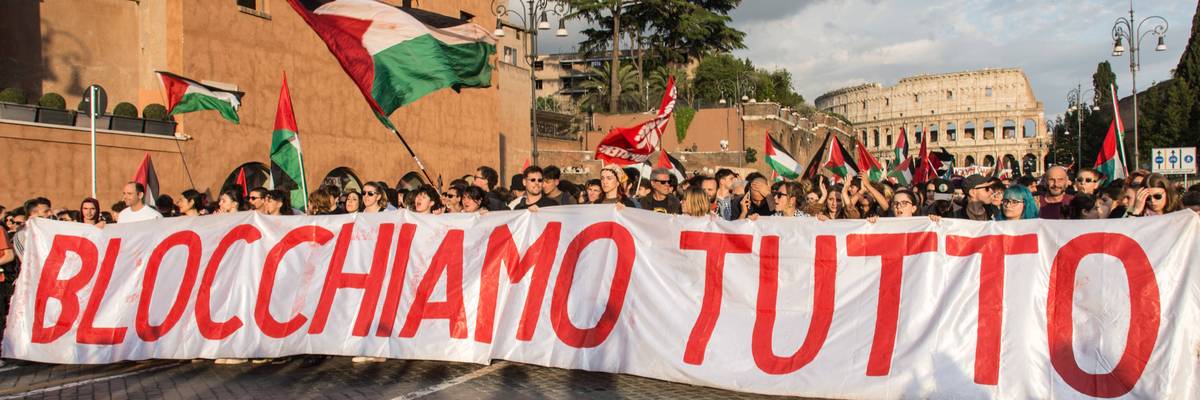
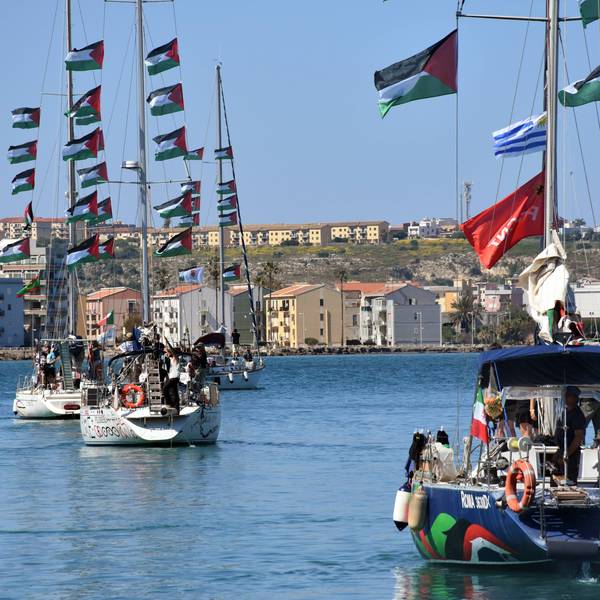
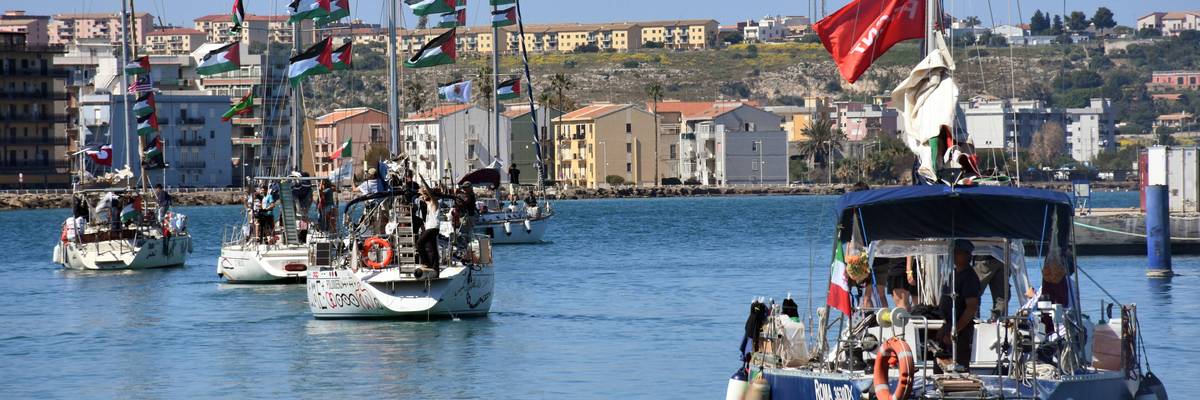
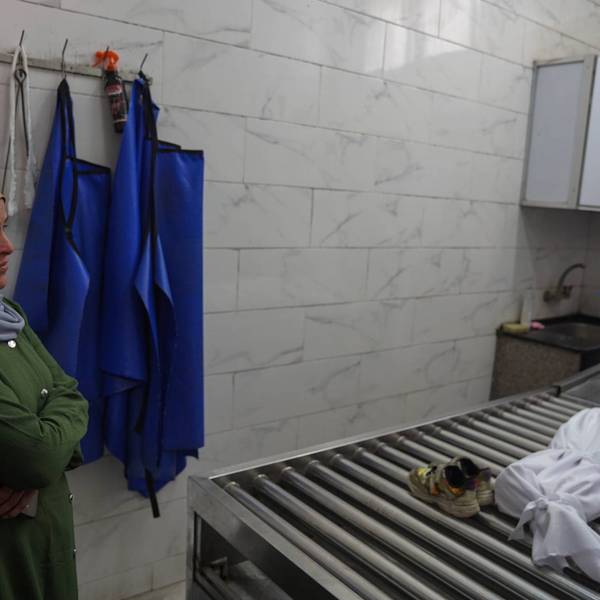
The Daily Mail promotes an Israel lobby campaign goal last month. (Photo: Steve Travelguide / Alamy)
Because they’re part of it.
Britain’s national media fails to recognise the influence – and even the existence – of an Israel lobby, our new media analysis shows.
Declassified researched two years of reporting by seven British media outlets and found only 16 mentions of the phrase Israel lobby without speech marks.
Nearly all those mentions are in comment articles rather than news pieces and none we found expound on what influence such an Israel lobby might have.
The phrase “Israel lobby” – used with speech marks – is slightly more common in these outlets, with 26 mentions in two years, and tends to be used to quote others in a disparaging way or to suggest such a lobby does not exist.
For example, one Guardian article refers to “the trope of the ‘Israel lobby’”. The Daily Mail reported in May 2024 of hecklers at a speech by then foreign secretary secretary David Lammy “accusing the MP of having taken ‘shady money’ from the ‘pro-Israel lobby’ on the grounds that he once lawfully accepted £30,000 from a Zionist lobbyist named Trevor Chinn.”
In fact, British businessman Trevor Chinn has funded Keir Starmer and several senior Labour ministers and was awarded the Israeli medal of honour for his “dedication” to and “love” for Israel.
Of the seven media outlets analysed – BBC articles, Express, Guardian, Independent, Mail, Telegraph and Times – the BBC and the Express are the most extreme, and no mentions of the phrase Israel lobby, used without speech marks, could be found at all in their publications.
The BBC is failing to mention the Israel lobby while having regular meetings with it. As Declassified recently revealed, the BBC held nine meetings with Jewish groups strongly sympathetic to Israel in the first year of the Gaza genocide.
The Guardian was found to have made only five mentions of an Israel lobby without speech marks, three of which are in comment pieces by columnist Owen Jones.
By contrast, independent Scottish newspaper The National, which has consistently criticised UK policy towards Israel, has mentioned the Israel lobby 23 times in the two year sample period, never in speech marks.
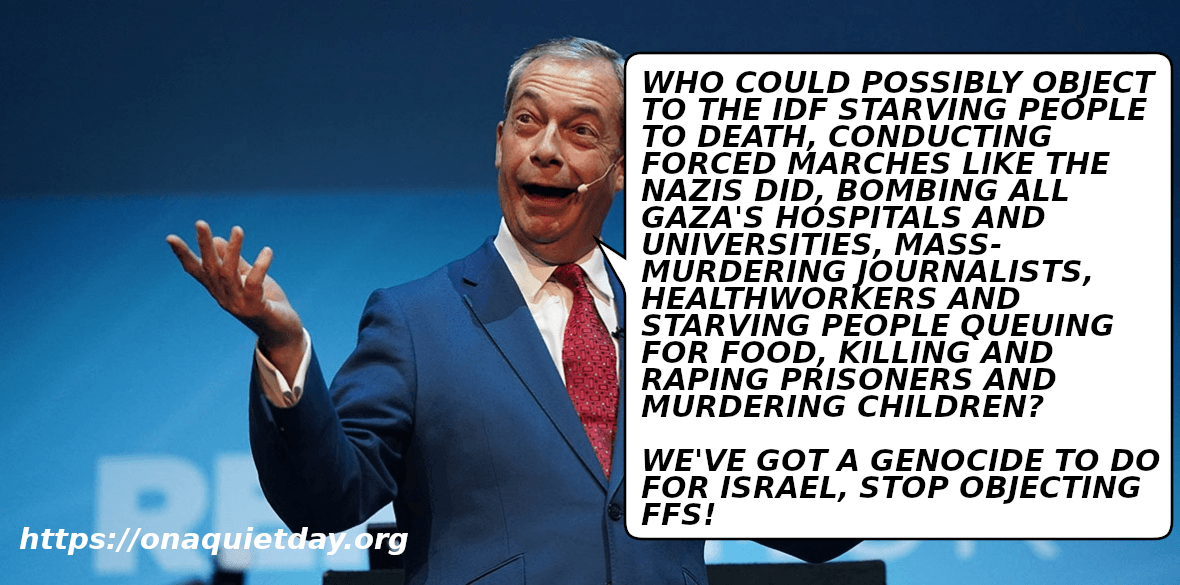
Keir Starmer explains that UK is actively supporting Israel’s genocidal expansion and repeats his previous quotation that he supports Zionism “without qualification”. Keir Starmer said “I said it loud and clear – and meant it – that I support Zionism without qualification.” here: https://www.jewishnews.co.uk/keir-starmer-interview-i-will-work-to-eradicate-antisemitism-from-day-one/Keir Starmer objects to criticism of the IDF. He asks how could anyone object to them starving people to death, forced marches like the Nazis did, bombing Gaza’s hospitals and universities, mass-murdering journalists, healthworkers and starving people queuing for food, killing and raping prisoners and murdering children. He calls for people to stop obstructing his genocide for Israel.Nigel Farage objects to criticism of the IDF. He asks how could anyone object to them starving people to death, forced marches like the Nazis did, bombing Gaza’s hospitals and universities, mass-murdering journalists, healthworkers and starving people queuing for food, killing and raping prisoners and murdering children. He calls for people to stop obstructing his genocide for Israel.
Public sector pensions have ploughed billions into opaque investment funds which are financing ruinous gas projects on the US Gulf Coast
In brief
UK public sector pension schemes are bankrolling rapid expansion of liquefied natural gas production in the US South, posing a major climate threat
US gas projects are reaping rewards from price shocks caused by Trump’s war in Iran
Gas terminals are frequently built in poor neighbourhoods, causing health problems in nearby communities
Trump’s war in Iran has boosted the fortunes of US gas companies – and UK savers are unwittingly bankrolling their expansion.
Sixty local government pension funds have invested a total of £8bn into funds paying for the rapid construction of gas infrastructure on the Gulf Coast of the US. Residents say these terminals are already causing health problems in their communities. Experts say they represent one of the biggest threats to the future of the planet.
Over 7 million school staff, civil servants and other public sector workers either save with, or receive their pension from, local government pension schemes. Our revelations have sparked concerns among local councillors, who have urged fund managers to divest from fossil fuels.
While the companies behind these projects are enjoying a boost from the war in Iran, they could tumble in value as the world switches to renewable forms of energy. Councillor Andrew Scopes, who sits on an advisory panel for West Yorkshire Pension Fund, said: “We will still be paying benefits out in 60 years’ time. We need to be looking beyond the possible short-term gains, at the long-term risk.”
Members of the scheme were dismayed to find what they were bankrolling. “The UK could be funding a safer, healthier future for all via renewable energy generated in the UK that is cheap, safe, clean and owned by us,” said Jane Thewlis, a retired social worker.
The news comes as the government is making changes to the law governing pension schemes. During a debate in the House of Lords, peers from several parties raised the issue of pension fund investments in climate-wrecking companies.
Baroness Hayman, a crossbench peer, told us: “Many UK pension funds are already reducing their exposure to fossil fuels, recognising the risks these investments pose. But with £3 trillion held in UK pensions, and the climate and nature challenge growing, there is a clear opportunity to better protect savers from rising financial and environmental risks.”
A gas explosion
The giant white orbs containing liquefied natural gas (LNG) look almost alien. Scores of these terminals are popping up along the 1,200km Louisiana and Texas coastline, a building frenzy turbo-charged by Trump’s second term. If all the planned terminals are built, the LNG produced in the US would generate the same amount of greenhouse gases each year as every EU country combined, says Jeremy Symons, a former official at the US environmental regulator.
UK pension funds have supported this expansion for years. In 2019, a little-known infrastructure fund called Stonepeak put up $1.3bn to complete the construction of the Calcasieu Pass gas terminal in the south-west corner of Louisiana. Twenty miles inland, building has started on another terminal also funded by Stonepeak.
Calcasieu Pass LNG terminalVenture Global
UK savers in 12 local government pension schemes, including West Yorkshire, South Yorkshire and Worcestershire, have invested over £360m in Stonepeak funds that financed these plants, according to figures from council records and data provider Pitchbook.
Since starting operations, Calcasieu Pass has reported hundreds of emissions violations and paid authorities a $245,000 settlement. That’s unlikely to make much difference to its owner, Venture Global, a major Trump donor. Its shares rocketed by more than 80% after the US and Israel started bombing targets in Iran.
Roishetta Ozane, a resident turned activist, lives near both terminals. She told us that pollution from the nearby gas, petrochemicals and oil infrastructure has caused asthma and an increase of cancer in the area – an account borne out by academic research.
“We’re seeing more women develop health issues that are living near these facilities, having pre-term babies or having miscarriages,” she said. “We’re seeing our air quality deteriorate. We have a drinking water crisis.” She said residents had to deal with noise pollution from construction and the flaring of excess gas from the terminals.
Roishetta Ozane (second left)
Two of her children have asthma. She told us the doctor said pollution may have exacerbated the seizures suffered by her son, who died last year. “When my son passed away, I was like, what are we doing this for?” she said. “We’re fighting for our children, for our future, for our community, but yet they’re dying.”
Further down the coast, a huge fireball at Freeport LNG in June 2022 made the risks of these installations vividly clear. IFM Global Infrastructure Fund – which counts among its investors more than 20 UK pension funds, including Avon, East Sussex and Aberdeen – paid $1.3bn to help build Freeport LNG in 2013. It continues to hold a stake in the project.
Travelling south, the construction boom continues. Right next to the Mexican border, Rio Grande LNG is building a sprawling complex that the NGO Sierra Club estimates will match the emissions of 50 coal-fired power plants every year. Campaigners say the project is already contributing to habitat loss in an area critical for endangered animals such as ocelots, falcons and sea turtles.
French bank Société Générale backed out of funding the controversial project. But it was able to proceed thanks to a $5bn commitment from BlackRock’s Global Infrastructure Partners Fund V – which is supported by nearly £200m of UK savers’ pensions, from Waltham Forest to Greater Manchester.
In total, we found eight US-based LNG terminals backed by UK pension money. Taken together, those terminals would give rise to more CO₂ every year than the entire UK several times over, according to Sierra Club data.
A spokesperson for IFM Investors told us that the fund publicly discloses its infrastructure equity assets. They added: “Natural gas is increasingly utilised as a transition fuel for decarbonisation globally … These assets benefit from investment from long-term, trusted capital partners like pension funds, who can reinvest in them and pave the way for carbon emissions reduction.”
LNG is often promoted as a cleaner alternative to traditional fossil fuels. However, a peer-reviewed study found it is 33% worse in terms of planet-heating emissions over a 20-year period compared with coal.
Worcestershire Pension Fund said it invests through structures that mean “exposure to any single asset is indirect, limited, and a very small component of a broader portfolio.” It said the Stonepeak fund in question “publishes detailed annual reports and complies fully with statutory disclosure requirements”.
A greener pension
When it comes to curbing carbon emissions, council pension funds and campaigners have tended to focus on selling their shares in companies like BP and Shell. But a growing portion of pension funds are invested in so-called “private markets”. Typically this involves putting money into a number of big funds, which in turn invest in everything from private equity to property to company loans.
Private markets can offer healthy returns. They’re also something of a black hole for information, which makes following the money much more difficult. And they’re often excluded from the scope of council climate commitments.
The upshot is that even pension schemes that have promised not to invest in fossil fuels have ploughed money into funds that are paying for major gas projects.
Take Waltham Forest Pension Fund, which in 2016 became the first local authority to make such a commitment. Simon Miller, a former councillor who chaired the pension fund committee, said the council already had a number of green goals to improve the lives of residents. “[But] we had a pension fund that was merrily invested in fossil fuels that was absolutely out of lockstep with the political direction and philosophy of the borough.”
The council’s pension fund proceeded to sell its investments in fossil fuel companies over the following five years.
According to its latest report, however, Waltham Forest is still invested in funds managed by Global Infrastructure Partners that have financed Rio Grande LNG and Allete, which owns an 18,000-acre coal mine in North Dakota.
Lewisham Pension Fund has also brought down the emissions associated with its investments after committing to sell its holdings in fossil fuel companies. But it remains invested in a huge infrastructure fund operated by JP Morgan Asset Management. While this fund has substantial investments in renewable energy, it continues to hold a 50% stake in Third Coast, which spilled over 1 million gallons of oil into the Gulf of Mexico in 2023.
In February 2024, West Yorkshire Pension Fund said it would no longer lend to the oil, gas and coal sector. According to the new standards set by the authority, councillor Andrew Scopes said, the decision to invest in a Stonepeak fund that bankrolled an LNG plant on Ozane’s doorstep would be “very difficult to justify”.
Jane Thewlis, a campaigner and member of the scheme, said: “We are particularly concerned if [West Yorkshire Pension Fund] is funding LNG infrastructure in the US, which is not compatible with a livable climate. We expect our elected representatives to use our money to fund a safe future – not to hasten the end of humanity.”
West Yorkshire Pension Fund said its environmental, social and governance policy “takes account of the current status and role of gas and oil within the energy transition, particularly with regard to reliability, affordability and coal displacement”. It said LNG is seen as “a bridge between today’s fossil‑fuel‑dominated energy system and a future low or zero‑carbon one”.
JP Morgan, Stonepeak and Waltham Forest council declined to comment on the record. Lewisham council said it cannot comment in a pre-election period. Third Coast, the LNG port operators, Global Infrastructure Partners and other local councils did not respond to requests for comment.
What next?
We are providing our research to campaigners and pension fund advisory panels so they can challenge decision makers on investments in infrastructure funds
New rules mean that council pension funds will be combined into pension fund pools, limiting councillors’ power over investment decisions. We will investigate what that means for funds that have committed to invest responsibly
Parliament is discussing the first of a number of pension reforms, where campaigners are pushing for greater recognition of climate risk
Neo-Fascist Climate Science Denier Donald Trump says Burn, Baby, Burn.Elon Musk urges you to be a Fascist like him, says that you can ignore facts and reality then.
Keir Starmer speaks during a press conference – WPA Pool/Getty Images
Plus, the firm’s former boss Varun Chandra is entitled to six-figure payout, despite working for Starmer
A secretive corporate intelligence firm with close ties to the government saw its UK revenues surge by 30% in the first financial year after its managing partner left to become Keir Starmer’s most senior business adviser, openDemocracy can reveal.
Varun Chandra left Hakluyt & Company, a Mayfair-based firm that provides strategic advice to some of the world’s largest corporations on navigating governments and geopolitical risk, to join Starmer’s government in July 2024.
In January the following year, Hakluyt lost another senior staff member to the government: embattled former civil servant Olly Robbins quit as the firm’s lead on Europe, the Middle East and Africa to join the Foreign, Commonwealth and Development Office.
Despite these top personnel losses, Hakluyt’s UK business grew by 30% in the year to July 2025, according to our analysis of its financial records. This is its second-highest rate of annual growth in the UK in the six years since it started publishing regional breakdowns of its turnover.
The financial records also reveal that Chandra’s multimillion-pound stake in Hakluyt entitled him to a payout of around £112,000 last year, while he was serving at the heart of Downing Street. In 2024, it was reported that Chandra would get rid of his shareholdings in the company in order to join the government.
openDemocracy understands that Chandra’s shareholding is now around half its original size, in line with an agreement that will see the firm gradually buy back his shares at their July 2024 value.
While his stake is still being reduced, Chandra is eligible for annual payouts. Both Number 10 and Hakluyt both declined to comment on whether he accepted the money.
Our findings led Green Party leader Zack Polanski to call for an investigation into Labour’s relationship with Hakluyt & Company.
“This is yet another revelation raising serious questions about Labour’s cosy relationship with big business,” Polanski said. “Bringing a senior figure from an elite corporate intelligence firm into the heart of government is deeply concerning.
“When companies built on privileged access to political and regulatory insight appear to benefit from close ties to those in office, it undermines public trust.
“The public deserve proper answers. Labour’s relationship with Hakluyt, before and after the election, should be investigated. The revolving door between big business and Westminster is still spinning – and it’s a system a Green government would work to dismantle.”
Growing links to government
Hakluyt & Company is an elite corporate intelligence and strategic advisory firm founded by outgoing MI6 operatives in the mid-1990s, which serves some of the biggest companies in the world across most sectors, and works with major private equity firms and sovereign wealth funds.
The firm has developed an unrivalled network of thousands of contacts, having hired from the top ranks of government, intelligence services, banking and industry over the past three decades. It uses this vast network to produce reports for its clients, often on highly sensitive issues involving political and regulatory matters.
But rarely has the company had such a close connection to a sitting government as it enjoys under Starmer’s Labour.
Hakluyt reportedly worked unpaid with the party when it was in opposition before the 2024 election, helping its leadership to connect with the corporate elite, particularly in finance and tech.
A Harvard Business School case study written about Hakluyt, based on extensive internal access through 2023 – and whose author took up a paid role with the firm after its publication – noted Chandra’s close relationship to Labour’s leadership, and that colleagues widely expected him to pursue a career in government.
After Labour’s win, Chandra, the company’s managing director, was appointed Starmer’s top business adviser, and his influence has only grown since. He was recently appointed US trade envoy and has been involved with US trade talks, despite having worked for several years in Hakluyt’s US offices, where his clients likely included American big tech and finance firms.
Last year, Oliver Robbins also left Hakluyt to rejoin the civil service after a six-year hiatus, taking up the most senior civil service position in the Foreign Office in January 2025. Months earlier, it had been reported that Robbins had also applied to become cabinet secretary, the most senior civil service role in government.
Before joining Hakluyt in 2023, Robbins had worked at Goldman Sachs and, before that, was the government’s deputy national security adviser and Europe adviser. He maintained contact with senior government officials while at Hakluyt, meeting with the top civil servant at the Department of Business and Trade, Gareth Davies, on several occasions, as well as current cabinet secretary Antonia Romeo and officials from the Ministry of Housing, Communities and Local Government, according to government transparency releases.
As Hakluyt’s connections to the government have grown, so has its business in the UK.
Accounts published this month show the firm turned over almost £150m last financial year, of which more than £60m was attributed to its UK operation. This was up from just over £130m turnover in 2024, with around £46m of that from the UK.
The company’s overall profits also increased, from £20m to £24m, though the firm does not publish a regionalised breakdown of its profits.
The last financial year is the only year in the past six where Hakluyt’s growth in the UK and Europe has significantly outpaced that in the US, and the only year in which it has significantly grown as a share of overall revenue.
Asked whether the firm has sought or received information from either Chandra or Robbins since they left the business, Hakluyt declined to comment. Downing Street sources pushed back against any suggestion that Chandra had shared information with the firm since leaving. openDemocracy reached out to Robbins for comment but had not heard back at the time of publishing.
A Downing Street spokesperson said: “The Cabinet Office has a thorough process on declarations of interest for special advisers to ensure any conflicts of interest are properly managed and mitigated, including through recusals where appropriate.
“While we do not usually comment on individuals, Varun Chandra resigned from his position at Hakluyt and has made all relevant declarations as part of this process.”
‘Weak lobbying rules’
As Hakluyt is not a consultant lobbyist, it is not required to publish a list of clients, despite maintaining regular contact with top-ranking officials across government and previously meeting with ministers, including with its clients.
The now-defunct ‘revolving door’ watchdog Acoba commented that this makes it impossible to assess potential conflicts of interest when people move between government and the company.
Though it is not strictly a lobbying firm, like many firms operating in the wider consulting and advisory industry, some of Hakluyt’s work brings it into contact with the government in a way that resembles lobbying.
Hakluyt was investigated by the lobbying watchdog last year over meetings hosted by Chandra with Conservative ministers dating back to 2022. The watchdog found its activities did not meet the statutory definition of consultant lobbying – a narrow definition with a number of exemptions, including for companies that carry out lobbying which is “incidental” to their primary business.
Kamila Kingstone, programme lead at Spotlight on Corruption, is one of many campaigners who has called for far-reaching lobbying reform, including an overhaul of the current consultant lobbying definition.
“Despite representing clients’ interests, the fact that Haklyut can meet senior officials without having to register as a consultant lobbyist shows yet again the weakness of the lobbying rules,” she told openDemocracy.
“There are serious risks that Haklyut could be financially benefiting from the revolving door between itself and the government. And there are serious questions to answer about how Varun Chandra’s conflicts of interest are being managed and mitigated.”
Kingstone also highlighted the government transparency rules, which mean special advisers, even those with significant influence like Chandra, do not have to declare their meetings with external companies.
“This story highlights the most glaring loophole, that meetings with special advisers do not need to appear in transparency releases or the lobbying register so the public do not know who is meeting some of the most influential people in government,” she added.
“With the Ethics and Integrity Commission conducting a review of lobbying rules, the government needs to get a grip on the dire state lobbying transparency in the UK before the next scandal breaks.”
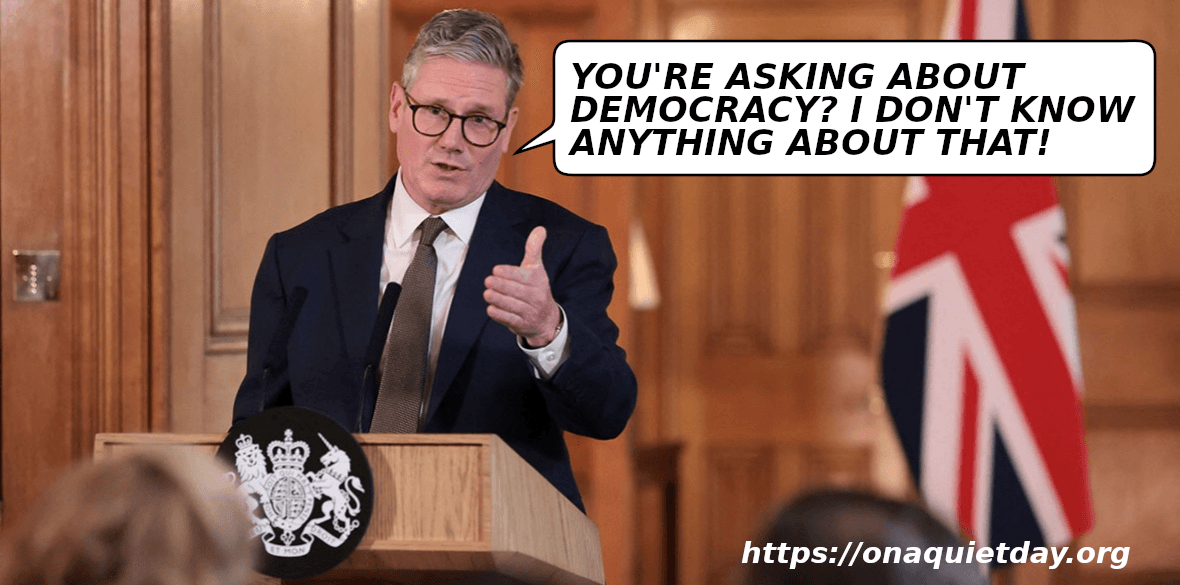
Keir Starmer, Angela Rayner and Rachel Reeves wear the uniform of the rich and powerful. They have all had clothes bought for them by multi-millionaire Labour donor Lord Alli. CORRECTION: It appears that Rachel Reeves clothing was provided by Juliet Rosenfeld.Keir Starmer confirms that he doesn’t know anything about democracy.Keir Starmer explains that he feels no shame or guilt benefitting personally from gifts from the rich and powerful while insisting on policies of severe austerity causing suffering and death.
Reform has run councils for a year. As local elections near, we ask: how has the party performed in power?
Broken promises, broken roads, and broken council leadership teams – that’s the outcome of Reform UK’s first year in power, an investigation by openDemocracy reveals.
Twelve months ago, Nigel Farage’s latest party took control of 10 English councils, meaning they now hold a total of 985 seats across Britain. Now, as Reform seeks to increase its foothold at elections in other English local authorities and pick up seats in the Scottish and Welsh Parliaments next week, we have examined its track record in office, finding that it failed to deliver on its pledges across the board.
Reform is still a young party, founded in 2022. To win so many seats after just three years – and on a promise to do things ‘differently’ – demands scrutiny, particularly when early polls suggest they could win government at the next general election.
While Reform was never going to be able to meaningfully deliver on many of its 2025 campaign points, which focused on policy areas not devolved to local government – such as illegal immigration, net-zero “madness” and law and order – we have been able to shed some light on its local priorities by reviewing election leaflets that it distributed in different areas of the country.
These materials reveal that Reform intended to slash council tax, fix potholes, and cut council waste by emulating Elon Musk’s ‘DOGE’ drive in Donald Trump’s White House. Yet even in these areas, our analysis shows it frequently fell short on its promises.
Instead, Reform raised taxes in every council where it holds or shares power. Potholes continue to cause accidents and damage, and councillors’ struggles over where to make promised savings have put much-loved local services at risk of closure.
For some Reform councillors, the broken promises were too much. The party has lost more than 70 of its elected local politicians in the space of a year, according to research by Liberal Democrat peer Mark Pack, although some were forced to resign or sacked.
One former Reform councillor, David Taylor, resigned from the party during a live BBC interview in February over the 9% council tax rise in Worcestershire, where Reform is the largest party but lacks overall control.
Taylor, who now represents the ward of Redditch East as an independent councillor, told openDemocracy of his discomfort at being expected to pass both the tax increase and bonuses of up to 10% for the council’s senior staff, who reportedly have six-figure salaries.
“I run a small recruitment company, and the party wanted me to sit on the council’s employment panel,” he said. “The discussion was on bonus payments. This was to pay a retention bonus to all staff, but realistically in that panel you are only dealing with senior staff. I was not going to vote for that, not when there is so much debt, redundancies and people being put on shorter hours – and then put up council tax.”
The policy shift felt at odds with the reasons why Taylor ran for office in the first place.
“I live in my community, all my family live in my constituency, all my friends live in my constituency. I talk directly with people who are impacted every day and who know the things we want to change,” he explained. “As a councillor, I could focus on helping people who matter most to me. We campaigned on lowering taxes and saving money, and none of it happened.”
‘If anything, it’s worse’
As last year’s local elections neared, Farage seized on one particular issue that he said was “getting worse all over the country”. He rode into a Reform rally on a JCB Pothole Pro and posted videos of himself playing ‘pothole golf’ and planting flowers in holes in the road.
Since then, though, Reform has struggled to keep its promise to drivers, according to Freedom of Information data obtained by openDemocracy.
We asked the ten Reform-led councils how many complaints they received about potholes in the years before and after the party took power. Only five councils responded; complaints had increased in four.
Staffordshire, where Farage filmed himself planting flowers in potholes, was among four councils to fail to respond to our FOI request within the 20-day legal time limit, while a fifth rejected our request.
In West Northamptonshire, residents made an average of 1,193 complaints about potholes each month after Reform took power – a sharp increase since the council was controlled by the Conservatives, when it received an average of 860 pothole-related complaints each month, according to data obtained by openDemocracy.
The data also shows that many of the complaints made since Reform took office concerned potholes that the council claimed to have already fixed, and that council staff marked 381 as “unable to fix”..
In March of this year, one aggrieved local complained: “Pot hole has been reported, a bodge job infill was done, this was not done to any standard, when your workmen arrived today they were very rude to my husband when he asked if he could help. THIS POT HOLE IS STILL THERE.”
“I had an email though today, marking this pothole as fixed at 15:12,” wrote another resident. “I can confirm that I drove past this pothole at 15:49 and it definitely has not been repaired, and if anything has got significantly worse!”
This sentiment was echoed by Sally Keeble, the leader of the Labour group at West Northamptonshire council. “They are not repairing potholes,” she told openDemocracy. “If anything, it has got worse.”
Doncaster City Council received an average of 165 pothole complaints a month before Reform took power, rising to 147 complaints a month after. It did, however, also fix more potholes under Reform. Other councils recorded smaller numbers of complaints.
While complaints persist, one company benefiting from the pothole crisis is JCB, which donated £200,000 to Reform in 2025 and whose owner, Conservative donor Lord Bamford, paid £8,400 for Farage and an aide to visit the firm’s factory via helicopter in October 2024.
The Reform-run council in Lincolnshire has invited the heavy machinery outfit back to re-trial its Pothole Pro despite it previously being rejected by the council after a nine-week trial in 2021, when engineers concluded “better tools” were available. The same model is now also being trialled by the Reform councils in Derbyshire and Staffordshire.
Culture wars
Reform also promised to cut council waste by slashing spending on projects linked to “diversity, inclusion and equality” and “net-zero”. Once in power, however, the party found little to cut.
Four of the 10 councils had no equality officers even before Reform took control, according to their Freedom of Information responses to openDemocracy. The three that did have a small number of equality staff still employed them one year later (three councils did not respond to our request). DEI training programmes were also still being run at the same levels.
“Everyone thought we’d come in and there were going to be these huge costs we could cut away, but there just aren’t,” one anonymous Reform cabinet member at Kent County Council told the Financial Times in October last year. Months later, a cabinet member at the council, Matthew Fraser Moat, told the same paper that Reform had “not actually made any cuts”. He later resigned from cabinet over the comment, which he said had been “twisted to fit what I believe to be an anti-KCC narrative”.
Durham council chose to attack “DEI” by withdrawing the £2,500 funding set aside for the annual local Pride march, a celebration of LGBTQ+ rights, which is due to take place on 30 May this year. It justified its decision in an email to organisers, and seen by openDemocracy, by saying that “the focus of the modern Pride movement has shifted in a way that many find divisive”.
The council said it was taking “a principled stand that the council should not be in the position of subsidising events that have become primarily associated with the promotion of a specific and contested political ideology.”
This week, it was reported in local media that Reform’s leader of the council, Andrew Husband, had been accused of homophobia after using an offensive slur on a social media post that openDemocracy has reviewed but is choosing not to repeat for legal reasons. We put this allegation to Husband, who called it “desperate deflection from the Labour Party which doesn’t deserve a response”.
Despite the cut, Pride is going ahead, with organiser Mel Metcalf saying: “We are fighting hate with love. We have a lot of support. A lot of unions are coming together to support us.” Still, Reform’s attitude to LGBTQ+ rights has had an effect, he said.
“Some of our volunteers no longer feel confident wearing their rainbow T-shirts or lanyards in public for fear of being challenged. That’s the difference. There is a hesitation now in Durham, about not being as out or open as previous,” he said. “It is sad that people are feeling that way.”
But, Metcalf insists, “what will get us through is love, not hate.”
Reform councils have become embroiled in culture wars on issues surrounding flags, misogyny and racism.
“The equalities stuff is appalling,” said Sally Keeble in West Northants. “Reform’s Peter York was in trouble for saying women should never have left the kitchen. Female councillors have resigned and when I challenged the leader of the council Mark Arnull about what he was doing to get more women into the cabinet, he accused me of promoting toxic identity politics. I thought it was an appalling response when you have to provide services to all communities.”
Further north, in Derbyshire, councillor Stephen Reed apologised at the end of last year after using a council meeting to declare that if having a “view that says our citizens should come first rather than people jumping on boats and getting into the country illegally is racist, then guess what? I’m a racist and I’m proud of it!”
The climate crisis is another front in Reform’s culture war.
Derbyshire council scrapped its climate change committee, with Labour group leader Anne Clarke telling openDemocracy: “They don’t believe in climate change. The committee ran for four years and was looking at the reductions on carbon in the council portfolio. Work was progressing’.” She added that the savings Reform made by scrapping the committee “are small”, describing the decision to do so as “disappointing”.
Reform councillor Carol Wood, Derbyshire County Council’s cabinet member for net zero and environment, said: “Making sure this council is as efficient as it can be and that every pound of council tax-payers’ money is accounted for and spent wisely is our top priority.” Focus on environmental issues, she said, has moved under the “existing ‘Place’ scrutiny committee to streamline operations.”
Kent council has similarly abandoned its Net Zero 2030 Plan in favour of an Energy Efficiency Plan, branding the original as “unattainable” and a source of “financial and operational risk.”
In Lincolnshire, rejecting what Conservative MP-turned-Reform mayor Andrea Jenkyns called “the net-zero bandwagon” has opened the doors to US fracking interests. According to reports in The Guardian, Jenkyns has courted Egdon Resources and its parent company, US fracker Heyco Energy, in the hope of bringing fracking to the region. The controversial energy method was effectively banned in England in 2019 due to earthquake concerns.
Losing out
Despite promises to put Britain’s people first, our investigation learnt that Reform is failing local residents, including by threatening to close much-needed local services such as Glossop tip.
“The local tip is something that everyone uses; it impacts on everyone,” Derbyshire’s Anne Clarke told openDemocracy. “It has really sparked local concerns and the savings made will be small. It’s in a Reform councillor’s patch and even he is campaigning to keep it open!”
Clarke is concerned that a longer drive to a local tip will lead to more fly-tipping, which affects quality of life and tourism. “We are reliant on our visitor economy, so even a small increase in fly tipping could affect our local businesses.”
Also facing permanent closure is the Grange care home, a centre that is close to the heart of Labour district councillor for North East Derbyshire and parish councillor for Eckington, Kathy Clegg. Her grandmother, also a councillor, helped to open the home.
“It’s a special place,” she said. “Everyone would consider this as the place to go to for care. It’s local, we all know each other. It’s hugely sad to see it closed. Residents had to move out and were effectively homeless. There’s an issue of relocation stress syndrome. People die due to the stress when moved out of care homes.” Some of the residents have lived there for more than two decades.
The Grange is one of eight care homes facing closure following a decision by the previous Conservative administration. Local businessman Matt Davison has since offered to buy the Grange, to rescue it for the community and residents, but said he was rebuffed by the Reform council, which planned to sell all eight homes to one buyer. When that sale fell through, Davison again made an offer, telling local media that he was ignored and Reform wants to “close the home.”
This is in contrast to a second care home, with the council currently in negotiations with a private buyer.
Derbyshire council’s cabinet member for adult care, Joss Barnes, told openDemocracy that “all offers to buy [the care homes] were carefully considered – whether singly, in groups, or as a whole package. Unfortunately, despite intensive negotiations with a provider to take over the running of the homes, the sale fell through and we are now in the process of ensuring residents find new, suitable homes to live in.”
“I think people feel let down, people feel terrified,” said Kathy Clegg. “Some of the Grange carers went to visit a former resident in his new care home. He was inconsolable. I am choking up thinking about it, because he was saying ‘I want to go home, I want to go home.’ Our local Reform councillor is silent. He’s done nothing at all.”
“Derbyshire County Council led by Reform has failed in every promise they made before the election,” she added.
A year of broken promises, attacks on equalities, and unfair spending decisions is a warning for the UK as a whole, said Sally Keeble. “What we are seeing is the reality of how Reform behaves, and what they would do if they got into power.”
openDemocracy approached Kent, Durham, West Northants councils and JCB for comment, as well as Peter York and Mark Arnull. We did not receive a response before publication.
Elon Musk urges you to be a Fascist like him, says that you can ignore facts and reality then.Nigel Farage explains the politics of Reform UK: Racism, Fake anti-establishmentism, Deregulation, Corporatism, Climate Change Denial, Mysogyny and Transphobia.Nigel Farage reminds you that he’s the man that brought you Brexit and asks what could possibly go wrong.