Britain’s unearned wealth has ballooned – a modest capital tax could help avoid austerity and boost the economy

Spread the love
Canary Wharf in London. I Wei Huang/Shutterstock

Stewart Lansley, University of Bristol

Inheriting the worst set of public finances for decades, Labour was always going to face an uphill struggle trying to fund improvements to the UK’s public services.

Inflated debt and recent hikes in the cost of borrowing mean the government is faced with stark choices. For it will be difficult to meet the chancellor’s own tight fiscal rules without further tax rises or cuts in public spending.

But as the former chief economist at the Bank of England, Andy Haldane, has warned, further spending cuts would be “deeply counterproductive”.

One solution for avoiding ongoing austerity lies in raising a higher proportion of taxes from assets. For despite the UK enjoying a long personal wealth boom, little of this boom is the result of new wealth creation or higher productivity.

Much of it is unearned. Some is the product of corporate wealth extraction, where dividend payments and personal fortunes have have been prioritised over the long-term health of a company. Some privatised water firms, for example, have been turned into cash cows for their owners.

Another large part of British unearned wealth is the product of state-induced asset inflation. Since 1999, house prices in England have risen almost three times faster than incomes.

This kind of asset inflation is a classic example of “passive accumulation”. Or, as the 19th-century philosopher John Stuart Mill described it, getting rich in your sleep.

As a result, household wealth currently stands at over six times the UK’s GDP. It was three times in the 1970s.

Yet while Britain is asset rich, its tax system is heavily based on earnings from work. Taxes on income from dividends, capital gains and inheritance make a tiny contribution to the public purse.

This is a fundamental flaw of the tax system which does little to dent the growing concentration of wealth owned by the few. Through political inertia, the tax system has failed to catch up with the growing importance of wealth over income.

Inherit the earth?

The fallout from the low taxation on wealth is well illustrated by the role of inheritance.

Levels of wealth passed on after death in the UK have been rising sharply. Over the next three decades, some millennials are expected to inherit a staggering £5.5 trillion, dwarfing all previous transfers of wealth between generations.

The lion’s share of this transfer will go to the most affluent. The lifetime wealth of those with parents in the richest fifth will see their wealth grow by 29% – compared with 5% for those born to the poorest fifth.

This will only intensify the reproduction of the wealth divide of the past.

Extending the tax base is not just about fairness or revenue raising. Asset holdings are often little more than unused resources, while big inter-generational wealth transfers can play a counterproductive role in the economy.

Over a third of the UK’s wealth is stored in property (with the rest in pensions, savings and possessions). This is mostly only realised when passed on through inheritance , where its benefits accrue to the already privileged. Little of this process contributes to more productive activity, with one of its most malign effects being to fuel higher house prices, because the money is largely reinvested in property.

The unfairness of inherited wealth has long been recognised. The patron saint of economics, Adam Smith called it “manifestly absurd”.

Tractors in London street.
Farmers have protested against Labour’s plans for inheritance tax. Mark Anthony Ray/Shutterstock

A modest and phased rise in capital taxation would help to reduce the passive role played by wealth holdings. Even small changes would release funds which could be used to improve social infrastructure from schools to hospitals.

One approach would be to build on the existing tax system through higher rates and fewer reliefs and loopholes. The second would be to introduce new taxes.

In her first budget, Rachel Reeves took steps to raise revenue through the first option, from both inheritance and capital gains tax. But these were too modest to alter the overwhelming dominance of tax on earnings.

A more fundamental shift would be to reform the existing system of council tax with a larger number of tax bands at the top. Still based on 1991 property values, this is perhaps the least defensible tax in Britain. The most effective alternative would be to replace council tax and stamp duty with a single proportionate “property tax”.

Another option would be for a modest annual 1% tax on wealth over £2 million, which has the potential to raise around £16 billion a year, or double that on wealth over £1 million.

Such a measure could be sold politically as a “solidarity tax” to help pay for the things the UK needs. And while governments have been wary of the political reaction to higher taxes on wealth, the tide is turning.

Those supporting higher taxes on wealth include the Conservative-aligned think tank Bright Blue and an influential campaign group called the Patriotic Millionaires. There is also growing public support.

Continued public spending austerity would drive more years of stagnation. It would also be politically suicidal for this government, as it was for Labour in 1931 and in the 1970s. But harnessing a little more of the country’s immense private wealth would make the tax system more equitable and by providing the resources to boost social investment, ease the path to economic recovery.

Stewart Lansley, Visiting Fellow, School of Policy Studies, University of Bristol

This article is republished from The Conversation under a Creative Commons license. Read the original article.

Continue ReadingBritain’s unearned wealth has ballooned – a modest capital tax could help avoid austerity and boost the economy

Bankers roll in cash as pensioners freeze and children forced to go hungry

Spread the love

https://morningstaronline.co.uk/article/bankers-roll-in-cash-as-pensioners-freeze-and-children-forced-to-go-hungry

People walking near the Bank of England

RACHEL REEVES’S decision to protect fat cat bankers has lost the public £15 billion — money that could have saved freezing pensioners and hundreds of thousands of children from going hungry, a damning new report found today.

Campaigners for a windfall tax on banking profits slammed the Chancellor after it emerged that Britain’s four biggest banks made a record £45.9bn in profits for 2024.

Positive Money found that the policy, called for by unions and left MPs, would have brought in an additional £14.7bn for the Exchequer this year after Lloyds Bank became the last of the so-called Big Four to announce its £6bn pre-tax profits for last year.

The group calculated that increasing the existing surcharge on bank profits from 3 to 35 per cent, in line with the government’s windfall tax on energy companies, could have raised this sum from Lloyds, HSBC, Barclays and NatWest alone.

This would be enough to cover the cost of scrapping the two-child benefit cap — fives times over.

Article continues at https://morningstaronline.co.uk/article/bankers-roll-in-cash-as-pensioners-freeze-and-children-forced-to-go-hungry

Keir Starmer, Angela Rayner and Rachel Reeves wear the uniform of the rich and powerful. They have all had clothes bought for them by multi-millionaire Labour donor Lord Alli. CORRECTION: It appears that Rachel Reeves clothing was provided by Juliet Rosenfeld.
Keir Starmer says pensioners can freeze to death and poor children can starve and be condemned to failure and misery all their lives.

Editorial:The stark division in modern capitalist Britain – people or profits

Continue ReadingBankers roll in cash as pensioners freeze and children forced to go hungry

Poorest UK households pay rising share of income on council tax, study finds

Spread the love

https://www.theguardian.com/business/2025/feb/17/uk-poorest-households-income-share-council-tax-resolution-foundation

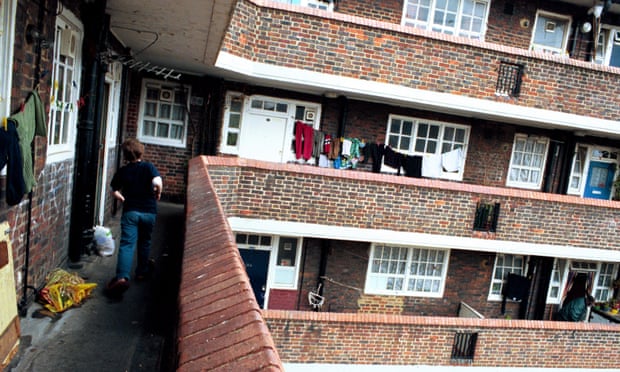
The poorest fifth of households paid 4.8% of their income on council tax or domestic rates in 2020-21, up from 2.9% in 2002-03. Photograph: Martin Godwin/The Guardian

Resolution Foundation report says failure to reform has ‘slowly recreated the issues that undid the poll tax’

Britain’s poorest households are paying an increasing share of their income on council tax, according to new analysis that likened it to the poll tax that contributed to the downfall of Margaret Thatcher.

The poorest fifth of households paid 4.8% of their income on council tax in England, Wales and Scotland and on domestic rates in Northern Ireland in the 2020-21 financial year, up from 2.9% in 2002-3, according to research by the Resolution Foundation.

Council taxes are one of the few levies on wealth in the UK, with different systems applied in each of the four countries.

However, they are seen by economists as deeply flawed, not least because the tax in England and Scotland is levied based on the value of properties in 1991, despite huge changes in the spread of wealth over the past three decades. Wales has updated its system to use 2003 valuations, while Scotland raised the rates on higher-banded properties in 2017. Northern Ireland still has a system of domestic rates, which predates council tax.

Highlighting the “regressive” nature of the tax, meaning poorer households pay more of their income towards it than richer ones, the Resolution Foundation said the failure to reform council tax had made it progressively worse.

Article continues at https://www.theguardian.com/business/2025/feb/17/uk-poorest-households-income-share-council-tax-resolution-foundation

Continue ReadingPoorest UK households pay rising share of income on council tax, study finds

Labour doubles down on slashing billions from DWP’s disability benefits bill

Spread the love

https://www.bigissue.com/news/social-justice/dwp-disability-benefits-bill-high-court-ruling/

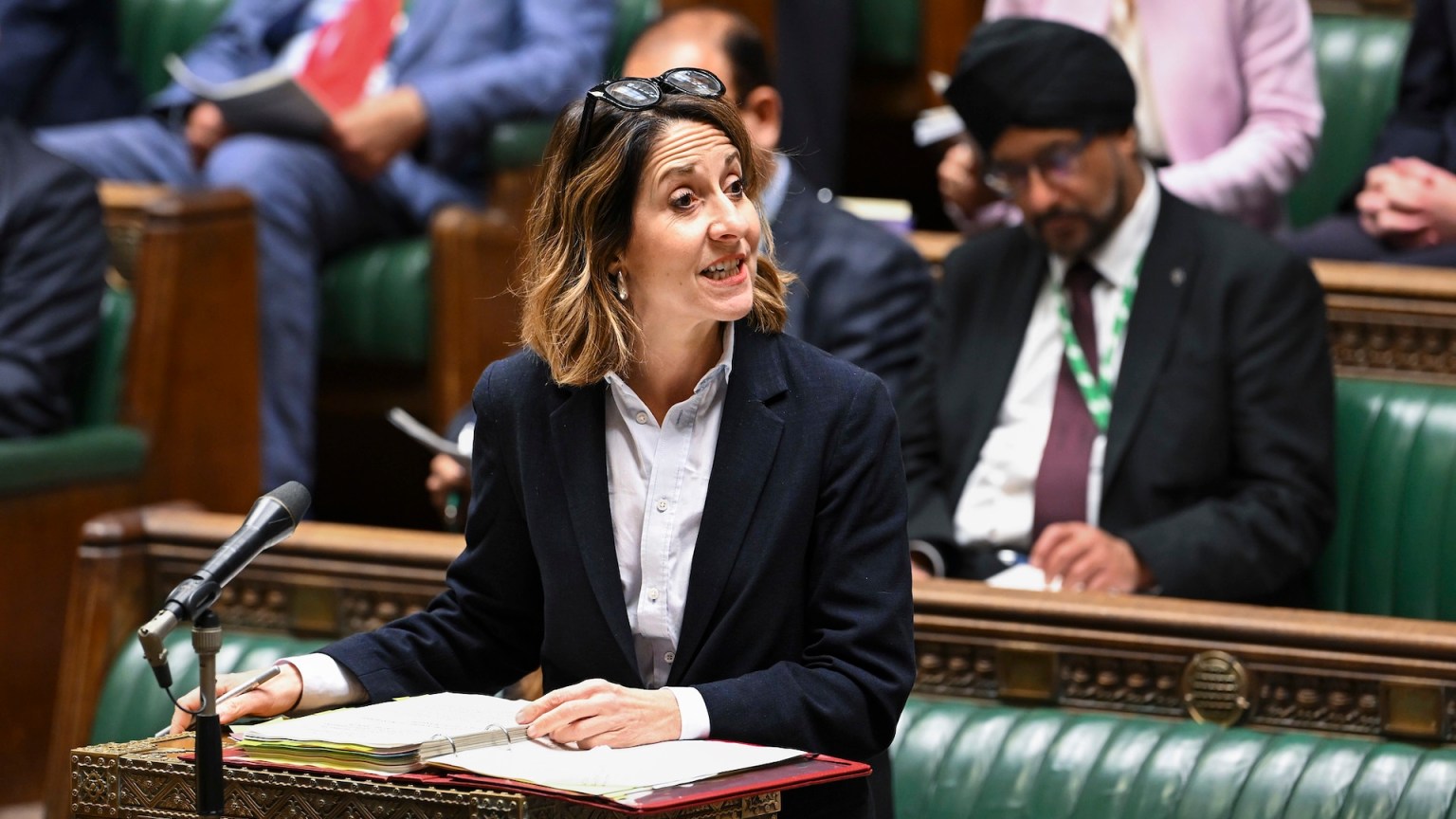
Work and pensions secretary Liz Kendall speaking in parliament. Image: House of Commons/ Flickr

The Labour government has indicated that it will stick with Tory plans to cut disability benefits after a High Court judge ruled the previous government’s consultation into the plans was unlawful.

The proposals would cut around £400 a month from the disability benefits of hundreds of thousands of new applicants by 2029, compared to what they would receive under the current system.

Earlier today (16 January) Mr Justice Calver ruled in favour of disability activist Ellen Clifford, who had brought a judicial review of the public consultation that was held by the Department for Work and Pensions (DWP) in autumn 2023. 

The proposals would change the way the work capability assessment (WCA) functions, by reducing the weight attached to difficulties with mobility and getting around in considering applicants’ level of disability

Responding to today’s verdict, a government spokesperson said: “The judge has found the previous government failed to adequately explain their proposals. As part of wider reforms that help people into work and ensure fiscal sustainability, the government will re-consult on the WCA descriptor changes, addressing the shortcomings in the previous consultation, in light of the judgment.

“The government intends to deliver the full level of savings in the public finances forecasts.”

It is not clear if Labour will consult on all the proposals in the original consultation, some of which were subsequently dropped, or whether it will only consult on the proposals that the last government chose to take forward.

The High Court ruling doesn’t force the government to ditch the proposals, although it would make it very difficult to proceed with them without holding a new consultation first. 

Article continues at https://www.bigissue.com/news/social-justice/dwp-disability-benefits-bill-high-court-ruling/

Continue ReadingLabour doubles down on slashing billions from DWP’s disability benefits bill

Ministers warned to stop the rush to ‘political suicide’

Spread the love

https://morningstaronline.co.uk/article/ministers-warned-to-stop-the-rush-to-political-suicide

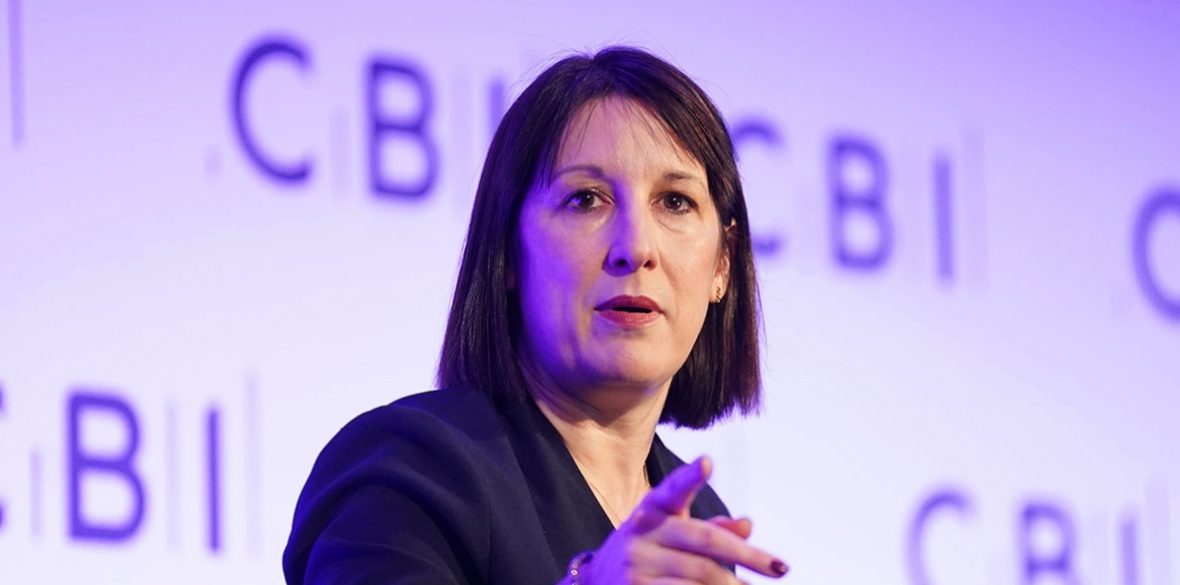
Chancellor of the Exchequer Rachel Reeves at the Confederation of British Industry (CBI) conference at the QEII Centre, London, November 25, 2024

Leading left MP and former shadow chancellor John McDonnell issued the warning to Rachel Reeves as the Chancellor returned from her China trip to confront the bond market crisis.

Mr McDonnell, presently suspended from the Labour whip for opposing the cruel two-child benefit cap, told BBC radio: “There is obviously a problem.

“There’s turbulence in the international markets, and we’ve just got to see those through.

“You don’t turn to cuts, certainly, because not only will that be politically suicidal, that would undermine the political support upon which Labour got elected.

“In addition to that, you would be taking demand out of the economy, and you would be looking at turning a crisis into a recession.

“So I think you just have to see through the turbulence in the markets.”

Mr McDonnell also reminded the government that voters matter more than markets.

https://morningstaronline.co.uk/article/ministers-warned-to-stop-the-rush-to-political-suicide

Continue ReadingMinisters warned to stop the rush to ‘political suicide’