Guardian Exclusive: Rise in share of UK oil and gas that is exported challenges PM’s claim that fossil fuel extraction brings energy security
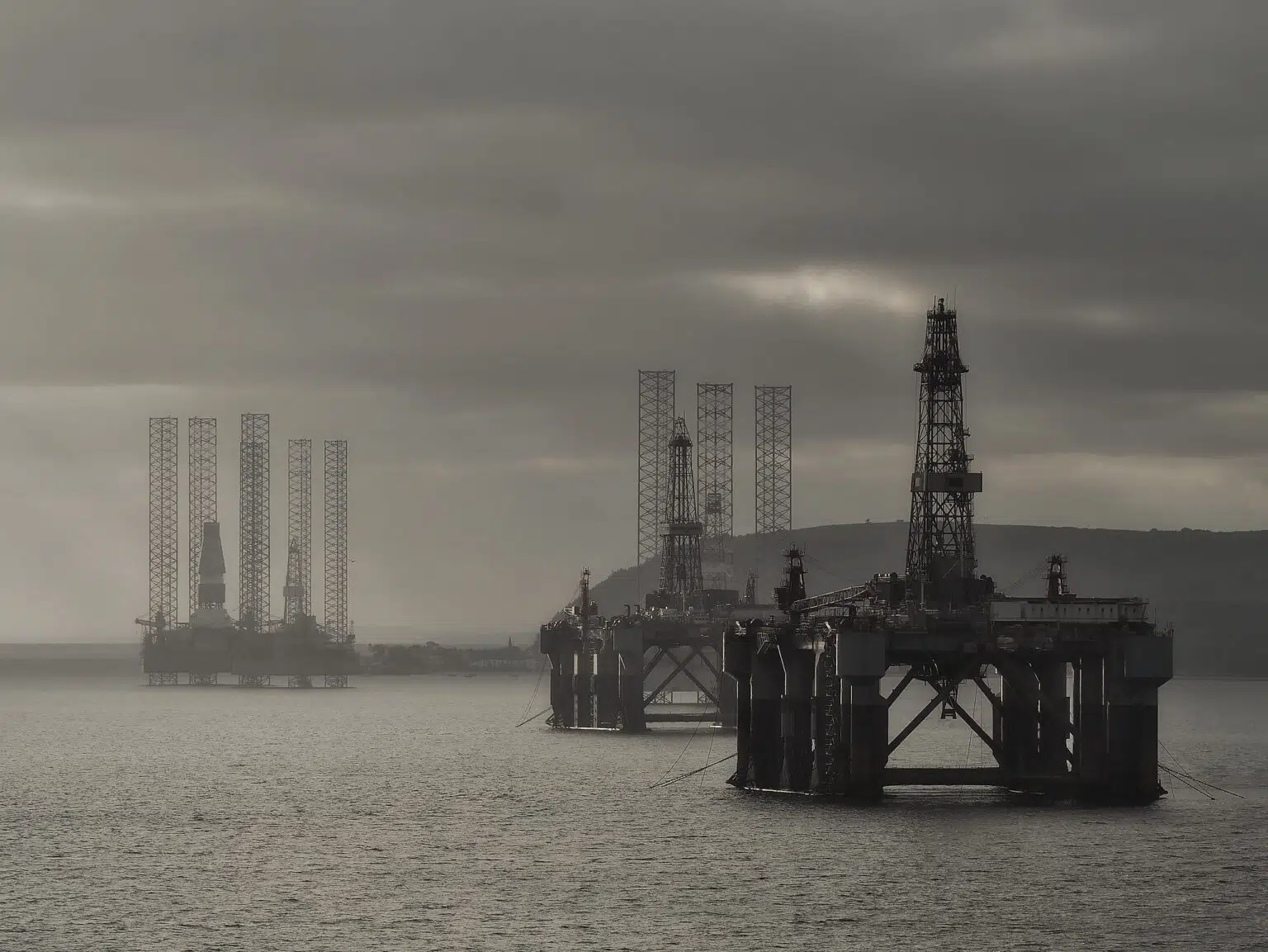
The share of UK’s oil and gas that is exported has increased from 60% to 80% over the last two decades, according to findings that will intensify pressure over the government’s claims that “maxing out” the North Sea will increase the UK’s energy security.
On Monday, the government will attempt to pass the oil and gas bill, which they say will boost energy security by creating a rolling annual licensing regime for new fossil fuel contracts. But critics argue that the fossil fuels extracted will be sold on the global market, and the vast majority will be exported.
…
Now analysis of government data by Global Witness has shown that in the 20 years between 2004 and 2023 the UK awarded 1,680 licences to companies to extract oil and gas in the North Sea. The analysis found that the share of UK oil and gas that was exported between 2004 and 2022 rose from 60% to more than 80%. During the same period domestic oil production fell by 60%.
…
Jonathan Noronha-Gant, a senior campaigner at Global Witness, said the new law would only prolong the UK’s energy problems. “People want long-term solutions to bring down their bills and fight the emissions damaging the climate,” he said. “New oilfields in the North Sea will line the pockets of rich fossil fuel execs; they won’t help the millions of Brits struggling to pay their bills.”
Skidmore said that the reason he had resigned over the bill was because “there is no future energy security in fossil fuels that are extracted by foreign companies, will only be sold on international markets and will have no impact on UK energy security”.
‘What will it take for him to back a permanent, bilateral ceasefire?’
Rishi Sunak faced MPs in parliament today at the latest Prime Minister’s Questions (PMQs). He fielded questions from the Labour leader Keir Starmer on the Rwanda scheme and the SNP’s Westminster leader Stephen Flynn on the cost of living crisis.
But one of the most dramatic moments in the exchanges came as a result of a question from Green Party MP Caroline Lucas. She asked Sunak “what will it take for him to back a permanent, bilateral ceasefire?”
Speaking in the House of Commons, Lucas said: “Until the UK government calls for an immediate ceasefire, it is complicit in Gaza. Not my words, but those of the head of Oxfam, who like every single agency trying to operate on the ground is clear: that aid can’t be effectively delivered while fighting continues. More UK aid is, of course, welcome, but even when it does get through, it can result in what one Palestinian aid worker calls ‘bombing us on full stomachs’.
“24,000 people have already been killed. So can he tell us what will it take for him to back a permanent, bilateral ceasefire?”
Home office guidance would allow anti-abortion campaigners to engage in discussion with patients and conduct ‘silent prayer’ within buffer zones
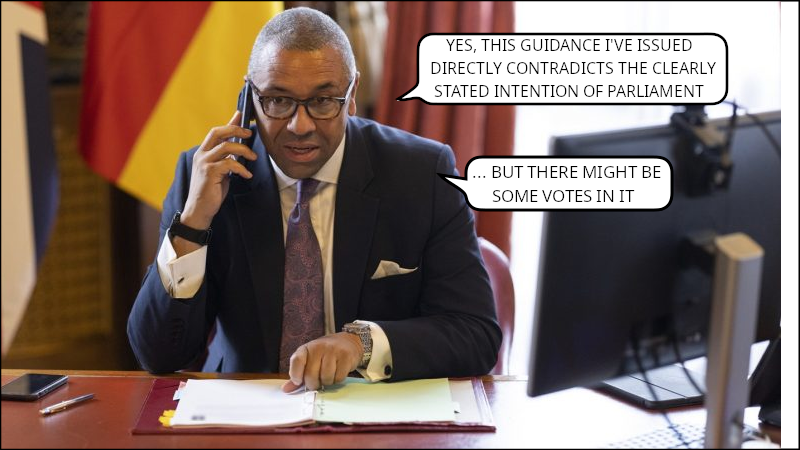
The home secretary James Cleverly has watered down the new rules banning protests outside abortion centres. A new law, designed to create ‘buffer zones’ around health facilities where abortions are carried out was backed by MPs last year. The ‘buffer zones’ were intended to prevent anti-abortion campaigners from holding protests or handing out leaflets within 150 metres of abortion clinics.
However, draft Home Office guidance appears to water these rules down substantially, as first reported by the i. Under the guidance, anti-abortion campaigners would be permitted to approach people attending clinics, conduct ‘silent prayer’ and to and engage in discussion with patients, all inside the 150 metre buffer zones.
The guidance says that within buffer zones, people will still be prevented from ‘influencing’ people within the buffer zones, but goes on to say that “The Government would expect ‘influence’ to require more than mere mention of abortion or the provision of information. As such, informing, discussing or offering help does not necessarily amount to ‘influence’.” It adds that ‘silent prayer’ “should not, on its own, be considered to be an offence under any circumstances”.
The Home Office guidance goes on to say: “It would not normally be in the public interest for police to take action unless they reasonably believe that the acts/behaviour in question would have a direct link to any person’s decision to access abortion services, or would obstruct or impede such access. Nor would it generally be in the public interest for officers to pursue criminal proceedings where there is no evidence that anyone was in fact influenced, obstructed, harassed, alarmed or distressed.”
As the i highlights, provisions to allow for ‘silent prayer’ within buffer zones are at odds with what MPs voted for with regards to the new laws. MPs voted down amendments from the House of Lords which sought to allow ‘silent prayer’.
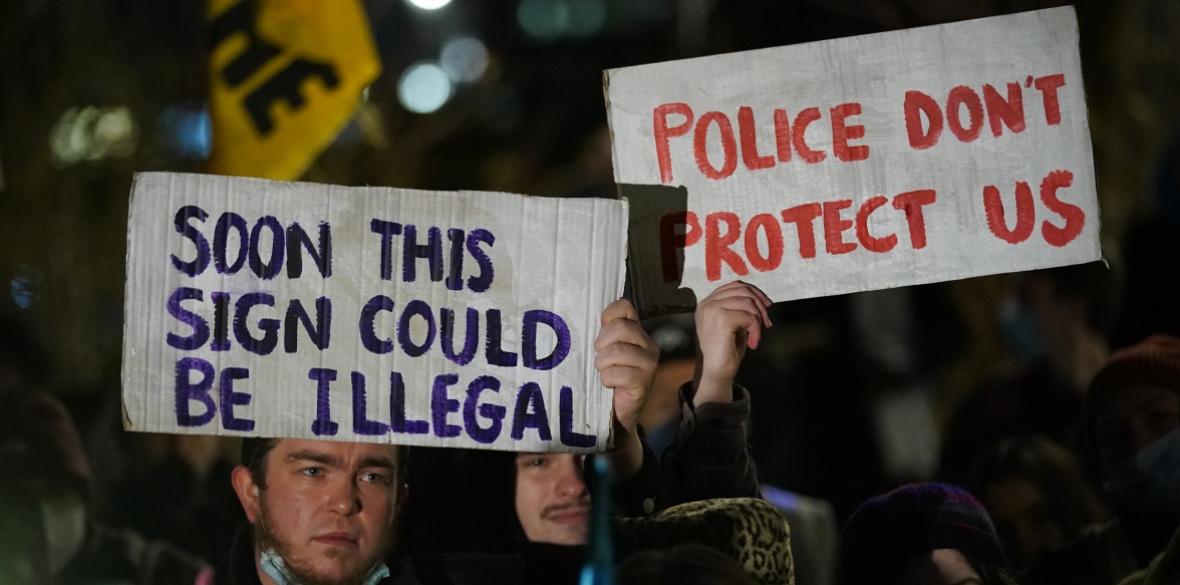
Demonstrators take part in a ‘Kill The Bill’ protest against The Police, Crime, Sentencing and Courts Bill, on College Green, Westminster, January 17, 2022
RIGHTS advocates have launched a campaign to overturn Tory legislation attacking the right to protest.
Liberty, formerly the National Council for Civil Liberties has condemned the government’s Police, Crime, Sentencing & Courts Act 2022 and the Public Order Act 2023 as part of a clear pattern in which the right to strike and the right to vote had also been attacked.
It has launched an online petition and is gathering signatures for a letter to Home Secretary James Cleverly calling on him to scrap the legislation.
Liberty director Akiko Hart said: “No matter where we live, our backgrounds, or who we vote for, we all want people in power to listen to our concerns and work to build a brighter future for us and our loved ones.
“But this government is clamping down on the ways we speak up on important issues. Most recently it has given the police dangerously broad powers to crack down on protests and arrest demonstrators.”
Ms Hart said Britain’s leaders are “criminalising protesters to hide from their own failings.”
“This is part of a clear pattern of shutting down the ways we can all hold them accountable for their actions,” she said.
“They have also created laws that stop workers from striking and block countless people from voting.”
The IDF carries out raids to destroy tunnels in Central Gaza, killing dozens. Hamas fires rockets back into Israel. A ground invasion follows aerial bombardments, civilian targets are struck, the number killed climbs into the thousands. This is not a description of the Israel-Hamas war we’re witnessing now, in 2024 – but a near-identical one almost 15 years ago.
In December 2008, the Gaza War (also known as Operation Cast Lead) erupted. On 9 January 2009, the UN Security Council debated a resolution which called for “an immediate, durable and fully respected ceasefire”. The UK voted for it, successfully shifting the US position from opposition to abstention, and the vote was reinforced at the UN General Assembly on January 16. Two days later, Israel declared a unilateral ceasefire, and the war was over. Bold and creative diplomacy by the UK, which whilst they didn’t follow up in a similar vein, nonetheless made a significant difference on the international stage.
Fast forward to today, 100 days since the October 7 Hamas terror atrocities in Israel, and that diplomacy is sorely lacking. In early December, the UK Government committed a grave error by abstaining on a ceasefire motion at the UN Security Council – the lesson of history wasted. It then abstained again a week later in a UN General Assembly vote – making the UK just one of 33 countries to oppose or abstain on the ceasefire motion, while 153 countries voted in favour.
These past 15 years have witnessed five wars – consigning the people of Gaza to ever deteriorating living conditions with barely enough supplies and aid allowed in; the stalemate continues, undermining still further the security of Israel. But with violence spreading through the region into Lebanon, for example, and now the UK and US escalating tensions with their bombing of Yemen, we must make it inconceivable to slip back permanently into endless cycles of violence.
Listening to experts on all sides, there seem to be four key principles that might just start a conversation about how to build the kind of peace which only a fair and lasting political resolution to this crisis can deliver for the people of the region.
Securing a bilateral ceasefire is clearly a critical first principle – ending the current bloodshed and freeing the remaining Israeli hostages is a pre-requisite for peace. As the UN repeatedly states, the bombs and missiles being dropped aren’t just killing people in their tens of thousands; they are also destroying roads, warehouses, hospitals, schools and other so-called safe places.
No wonder so many aid agencies on the ground have gone beyond calling for humanitarian corridors, pauses or safe zones. The size and population density of Gaza mean there is nowhere safe for civilians, and no safe means for aid workers to reach people who urgently need help. The only way to ensure men women and children can escape the bombs is to stop them from being dropped.
The humanitarian case for a ceasefire is overwhelming, but there is a judicial one too – which brings me to the second principle of accountability. Both the Israeli Government and Hamas have responsibilities under international law – above all to minimise civilian casualties, but also only a ceasefire will enable the ICC to conduct investigations into potential war crimes and other human rights violations by both parties, and to establish an Independent Commission of Inquiry.
The UK Government says the right things about adherence to international law, yet very little has changed, and accountability has not been delivered.
Fundamental to this principle is that international law forms the foundations on which all policies must rest both about the conduct of the hostilities and the necessary foundations of a lasting settlement. All parties to this conflict must fulfil the requirements of international law and face the full force of censure and other sanctions if they refuse to do so. The UK’s actions are badly out of step with its legal and moral obligations – it must consistently uphold the international rule of law and make sure Benjamin Netanyahu’s government faces the full consequences of violating international law. Nor should it be involved in any further military action in the region, when this can and will be interpreted as condoning and siding with Israel’s attacks on Gaza.
Thirdly, there has to be dialogue. I understand the rationale behind states refusing to negotiate with terrorist groups. But ensuring lines of communication with Hamas are kept open – along with every back and front channel accessible via the other players in this region, such as Qatar – is the only way to bring the remaining Israeli hostages home to their families and enduring peace.
Clearly the US has the greatest influence over Israel, but the UK can play a critical role too, as the 2009 UN vote demonstrated – our links with Qatar and Egypt should be used to pull every lever possible in support of a consensus on Israel’s right to exist and a Palestinian state. Conversations must happen for peace to be on the table.
It takes courage to start a dialogue – especially when even a shared goal feels unattainable, let alone a peaceful outcome, and murderous regimes like Iran are also involved. But from Northern Ireland and Colombia, talking has secured positive and lasting outcomes. No dialogue is the death of peace. We must believe in it and shake hands for it, as Nurit Cooper, one of the Israeli hostages, so memorably did on her release.
Finally, we must directly confront the complexities that have made peace so elusive to date. My inbox is bursting with different versions of what has brought us to this point – the facts and the feelings. Nuance and debate have been lacking in an era of judgment and condemnation. Those marching for peace are decried as hateful, places of worship are attacked, and our streets have become places where too many people feel afraid.
Laying the groundwork for peace requires acknowledging how people truly feel. A truth and reconciliation process might be one model. Every Palestinian and Israeli has their own story, their own hurt and their own hopes. Here in the UK, this conflict awakens strong feelings too – so we must weigh the impact of our words, as well as the arms we are still supplying to the region, the bombs we are now ourselves dropping on war ravaged Yemen. The UK must stop repeating the same mistakes and instead bring the alternatives to life.
Decades of suffering and Western backed military intervention have acted as potential recruiting sergeant for the likes of Hamas and the Houthis.
Hunger, isolation and hopelessness are among the conditions in which conflicts thrive. So achieving peace demands that the world address these challenges – and only in the context of a settlement that embodies justice, above all the end to occupation.
An ideology cannot be destroyed by guns and bombs. It can only be destroyed by giving people food and medicine, alongside justice and a more hopeful future in which they are treated with dignity – guaranteeing them freedom and a voice.
The eyes of the world may well be on this narrow strip of land right now, but they’ve been largely absent as Gazans have been forced to live in an open prison, systematically stripped of their dignity and freedom, by both the Israeli authorities and by Hamas. We mustn’t let our gaze turn away again.
It’s often said that waging peace is far more difficult than waging war. But we have no choice if we’re to build a safer and more secure world for every child, no matter which side of a border they are born.
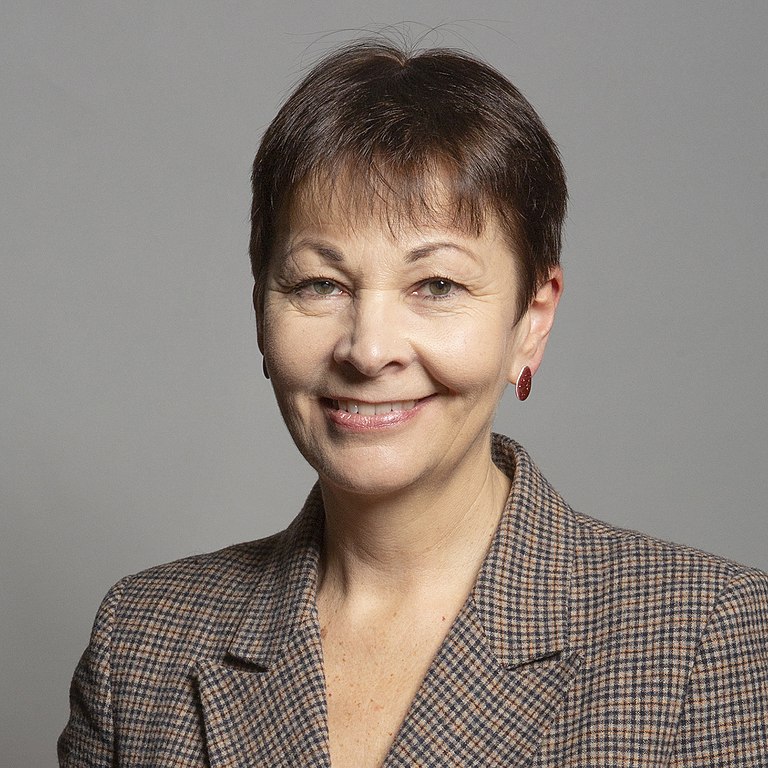
Caroline Lucas Green Party MP for Brighton Pavilion. Official image by David Woolfall Creative Commons Attribution 3.0 Unported license.
Caroline Lucas is the Green Party MP for Brighton Pavilion
I’ve quoted all Caroline Lucas’s article, hope that nobody objects. Authors: It’s likely that you are able to use a Creative Commons licence despite being published by others.