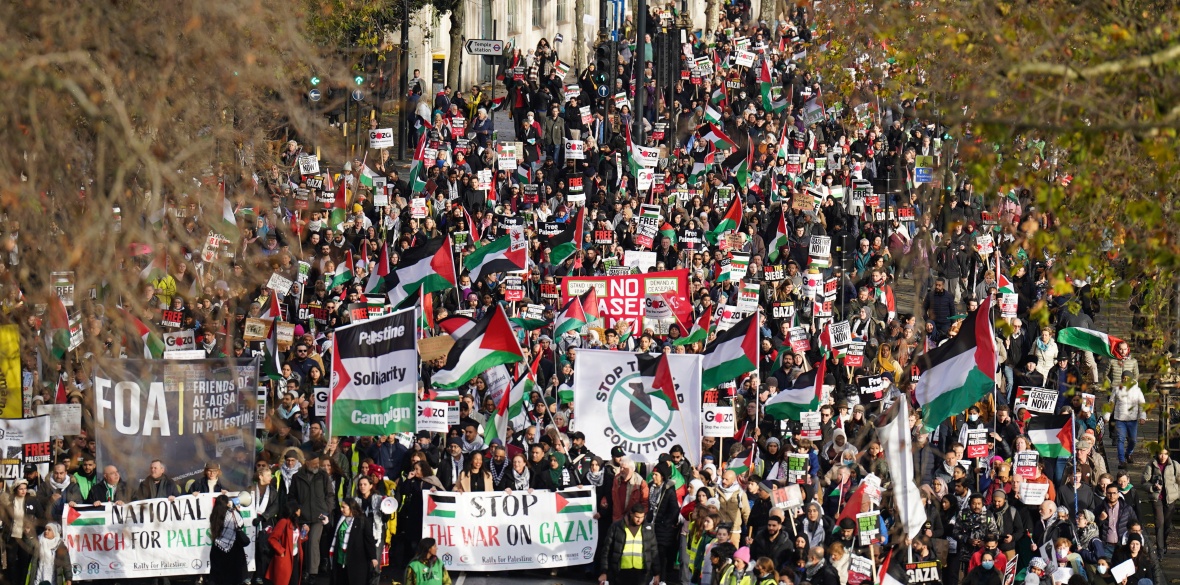
Protesters on the Embankment during a pro-Palestine march , organised by the Palestine Solidarity Campaign, in central London, to call for a ceasefire in the conflict between Israel and Hamas, December 9, 2023
JEREMY CORBYN demanded the government back justice for the Palestinian people today as MPs debated the Gaza crisis.
Urging the government to support a ceasefire in the impending UN security council vote, Mr Corbyn said an end to hostilities was vital to “stop escalation in the Red Sea and the Mediterranean.”
He said without an end to Israel’s occupation of the West Bank, justice for Palestinian refugees and a halt to the siege of Gaza “we will be back here again” in the years ahead.
Labour MP Zarah Sultana joined other MPs in demanding that the government “listen to growing calls for a global ceasefire” after describing harrowing conditions in Gaza hospitals, where vinegar and washing-up liquid are being used to disinfect wounds.
The mood over Gaza seemed to be shifting across the Commons, with veteran Tory back-bench MP Edward Leigh saying that Conservatives were growing more concerned about Israel’s “indiscriminate bombing” and that it was “not in our interest” to be associated with the onslaught.
In the hearing, two judges will review an earlier decision to reject Assange’s appeal against his extradition to the US
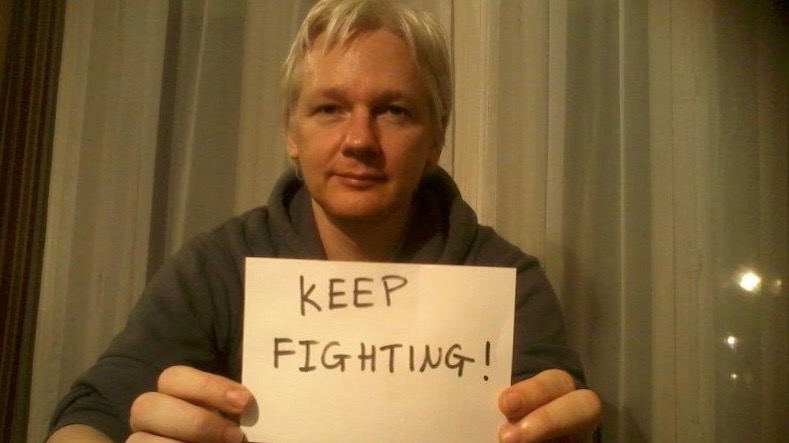
The High Court of Justice in London has decided to hear what could be Julian Assange’s final appeal against his extradition to the United States. A statement released by Wikileaks on Tuesday, December 19, announced that the High Court has confirmed a two-day hearing on February 20-21, 2024.
The two-day hearing will be held before a bench of two judges and review the decision by Justice Jonathan Swift of the High Court to reject Assange’s plea against his extradition. In this last ditch attempt by Assange’s defense, the two judges will decide whether the Wikileaks founder will have any further chance to appeal his case in a British court or prepare for the looming extradition.
The 3-page long decision by Justice Swift handed down on June 6 this year, rejected all eight grounds of appeal raised by Assange’s defense team. The appeal, if approved by the High Court, will challenge the extradition sanctioned by the UK Home Office in June 17, 2022
Immediately after the court announced the dates, supporters and press freedom advocates called for a protest demonstration to be held outside the courthouse in London and in cities around the world, on the first day of the hearing.
John Rees of the Free Assange Campaign said in the Wikileaks statement that if the US is allowed to “get away with [their attempts to prosecute Assange], they will have succeeded in redefining journalism as spying.”
Stating that the extradition and a federal trial will have an impact on all journalists and broadcasters, Rees said that “every journalist will be intimidated. Every newspaper and journalist will look at material critical of the government and feel significant pressure not to publish for fear of prosecution and imprisonment.”
“This is the most important press freedom case of the 21st century and we need to ensure we don’t lose any hard-won freedoms.”
If extradited, Assange will stand trial before a federal grand jury in the US on 18 charges that carry a combined prison sentence of 175 years. Of the 18 charges leveled against him, 17 are under the infamous US Espionage Act.
Stella Assange, advocate and Julian’s wife, raised concerns of his safety and the nature of the looming trial in the event the US does succeed in his extradition. She, along with other members of Assange’s family and his colleagues, have been campaigning for his release ever since he was arrested in April 2019.
“With the myriad of evidence that has come to light since the original hearing in 2019, such as the violation of legal privilege and reports that senior US officials are involved in formulating assassination plots against my husband, there is no denying that a fair trial, let alone Julian’s safety on US soil, is an impossibility were he to be extradited,” she said. “The persecution of this innocent journalist and publisher must end.”
Kristinn Hrafnsson, editor-in-chief of Wikileaks, also echoed these concerns. “There is no press without the protection to operate freely,” Hrafnsson said. “Julian’s case is a landmark moment; the UK needs to decide if it wishes to be a haven for free press or if it wishes to be complicit in the degradation of a core value of our democracy.”
The US indictment against Assange, initiated under the Donald Trump administration and continued under President Joe Biden, is the first time ever a publisher has been charged under the Espionage Act.
In the meantime, Assange has remained imprisoned without charges since April 2019, in a high-security prison in Belmarsh on the outskirts of London, at the behest of the extradition request by the US.
His extradition was initially rejected by a district judge in London in January 2021 on grounds of Assange’s mental health and the risk of suicide and other bodily harm if he was extradited.
This decision was overturned by the High Court in London in December that year based on diplomatic assurances given by the US after the district court’s decision. In June 2022, the UK Home Office sanctioned the extradition based on the High Court’s decision.
US lawmakers call for Assange’s release
Even as the UK prepares for the court hearing in February, calls for Assange’s release have reached the US Congress.
A bipartisan resolution was introduced on December 16, in the US House of Representatives by Republican representative Paul Gosar, and co-sponsored by eight congress members seeking to drop all charges against Assange.
The draft resolution seeks to drop all charges against Assange and reinforce the fact that his journalistic activities, including the publication of classified government documents and diplomatic cables to expose US war crimes and other wrongdoings, were protected under the First Amendment rights of the US Constitution.
The resolution, co-sponsored by the likes of James McGovern, Thomas Massie, Marjorie Taylor Greene, and Ilhan Omar, also highlighted that the successful prosecution of Assange “would set a precedent allowing the United States to prosecute and imprison journalists for First Amendment protected activities, including the obtainment and publication of information, something that occurs on a regular basis.”
Similarly on November 14, another bipartisan group of members of Congress, led by McGovern and Massie, sent a letter to president Biden calling for the charges to be dropped. Aside from co-sponsors of the House draft resolution mentioned above, the signatories to the letter include the likes of Alexandria Ocasio-Cortez, Rashida Tlaib, Ayanna Presley, and Rand Paul.
How much did the Government’s failed legal challenge over a Covid Inquiry request come to
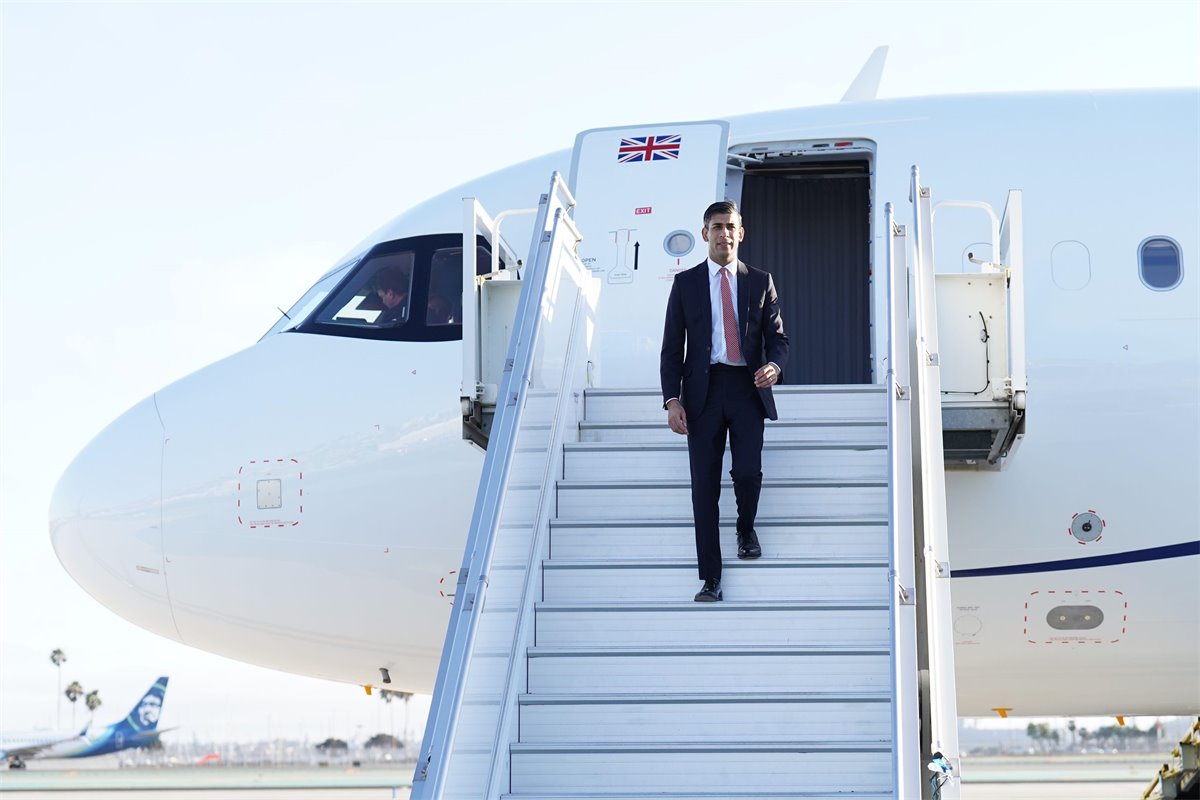
The cost of an unsuccessful legal challenge, launched by Rishi Sunak’s Government to stop ministers from having to hand over all WhatsApp messages to the Covid Inquiry, has come to hundreds of thousands of pounds it has been revealed.
Nearly £200,000 was wasted on legal advice to the Government over its failed legal battle at the High Court, a lengthy Freedom of Information Act battle launched by Liberal Democrat spokesperson Ian Rex-Hawkes has exposed.
The Cabinet Office had disputed the inquiry’s demand to provide two years of WhatsApp messages, initiating a legal challenge under the grounds that some messages were personal and “unambiguously irrelevant”.
But its challenge was rejected and the government was forced to concede to the Covid Inquiry requests.
In its response to the FOI request, the Cabinet Office noted that “of November 2023 the total legal costs for the Judicial Review on the production of Government and Ministerial WhatsApp messages to the Inquiry were £192,739.”
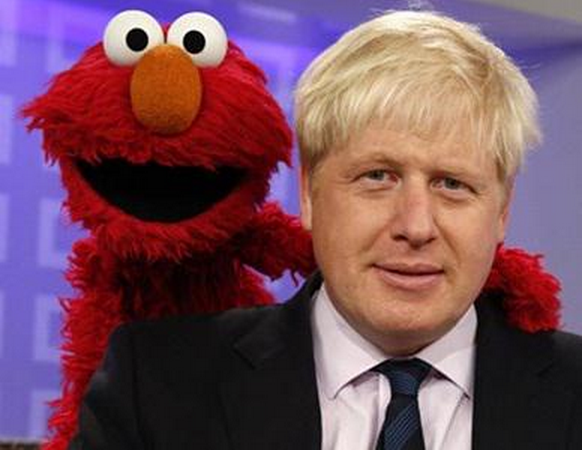
However, despite the money spent and legal battle, both Rishi Sunak and Boris Johnson have claimed to have lost large chunks of WhatsApp messages during the pandemic period anyway.
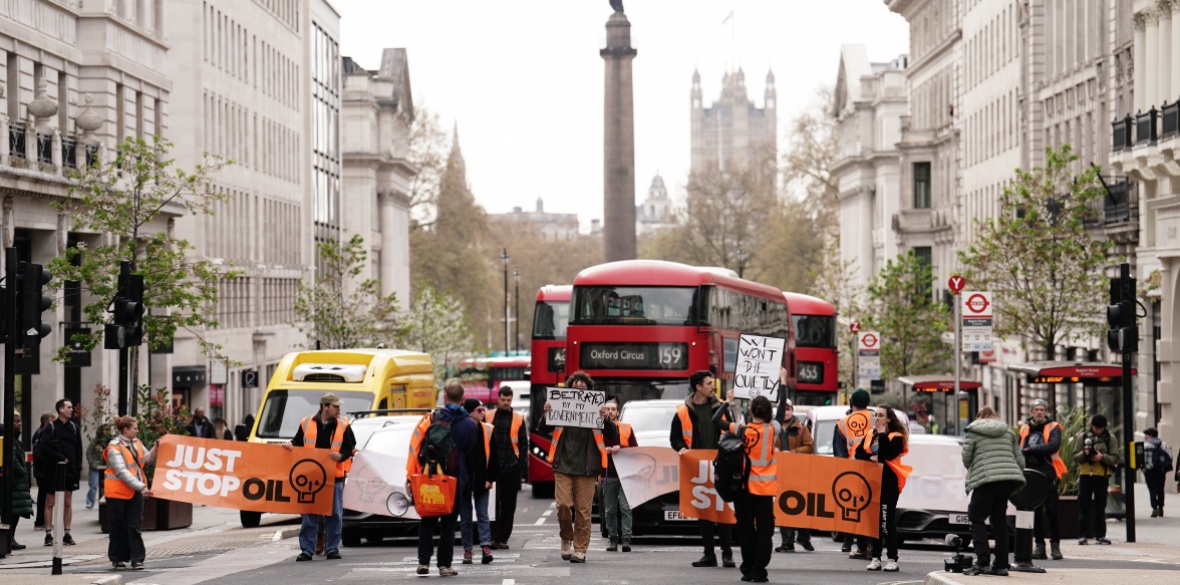
Just Stop Oil protesters as they take part in a slow march protest through London as part of the group’s campaign to convince the government to end all new oil and gas projects in the UK, April 24, 2023
THE government’s draconian anti-protest laws have been used to give a shocking six-month prison sentence to a climate activist for taking part in a peaceful slow march.
Just Stop Oil supporter Stephen Gingell, 57, was sentenced at Manchester magistrates’ court on Thursday.
The father-of-three was arrested on November 13 after taking part in a slow march in north London for about half an hour.
Mr Gingell pleaded guilty to breaching section seven of the Public Order Act, which bans any act “which interferes with the use or operation of any key national infrastructure in England and Wales.”
Passed in May, the widely condemned legislation allows police to ban peaceful protests merely on the grounds that they might become disruptive.
“It seems this government has now made walking down the road, walking on the public highway, an illegal act that is worthy of imprisonment,” a Just Stop Oil spokesperson said.
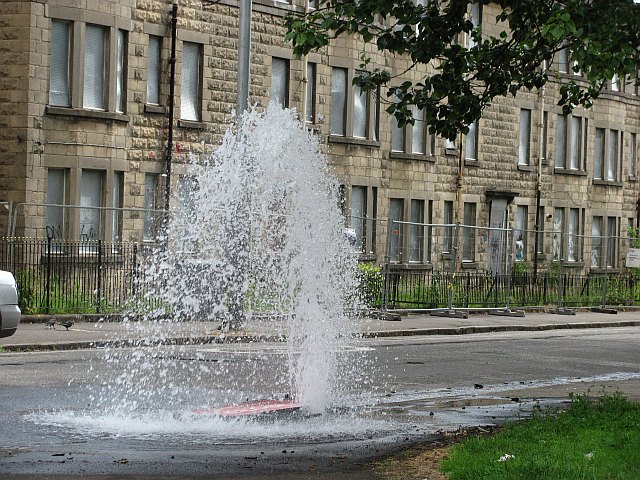
An investigation by the Guardian published today has revealed that staggering proportions of the public’s water bills are used to service private water firms’ debt. According to the paper’s analysis of financial data over a quarter of some water companies’ revenue goes on servicing debt.
The UK’s largest water firm, Thames Water, uses an astonishing 28 per cent of its revenue to service debt. Southern Water and South East Water both also use more than a quarter of their revenue for the same purpose.
Almost the entirety of water company revenue is made up of customer bills. As of March, the private water firms in England had racked up combined debts of more than £60 billion. Meanwhile, since privatisation of water in England in 1989, private water companies have paid out over £70 billion in dividends to shareholders.
The Guardian notes that Scottish Water, which remains publicly owned, spent just 10 per cent of its revenues financing its debt, less than all of the private water firms in England.
The revelations have led to a furious public backlash and renewed calls for England’s water to be taken back into public ownership.
Labour peer and Left Foot Forward columnist Prem Sikkabranded the situation as ‘daylight robbery’, saying that money had been ‘borrowed to pay dividends, and that ‘companies want more from captive customers’.