Category: conservatives

  • England’s family hubs plan aims to build on Sure Start’s success – but may struggle to overcome today’s child poverty levels

    Spread the love
    Rawpixel.com/Shutterstock

    Sally Pearse, Sheffield Hallam University

    The government has announced its strategy for “giving every child the best start in life”, laying out proposals covering early years care, education and support in England.

    The strategy builds on the current local family hub model of services, which offer a range of support aimed at babies and young children. Best Start family hubs will further bring together early years and family services in a similar way to the previous Sure Start programme. The government’s commitment includes £1.5 billion in investment to implement these reforms.

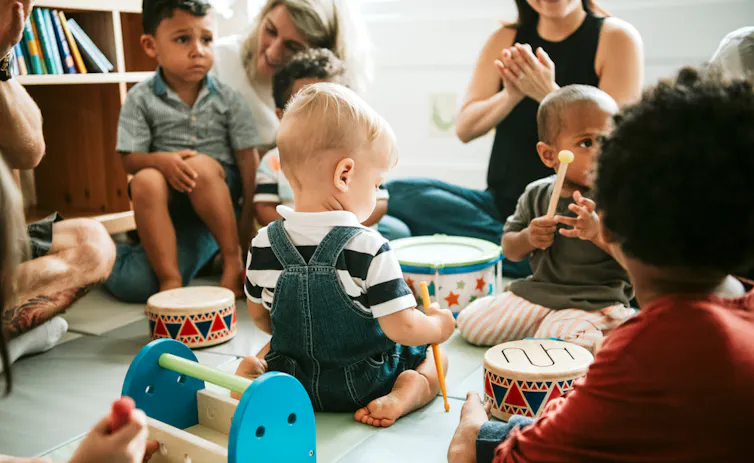
    The Best Start Hubs will be a one-stop shop to support families with their child’s early development, from breastfeeding advice to speech and language support and stay and play sessions. The hubs will also support families with wider challenges such as housing and benefits, and provide courses for parents.

    The attempt to bring services together to deliver local, holistic support to families is understandable given the impact of the original Sure Start initiative, introduced by Tony Blair’s Labour government.


    Get your news from actual experts, straight to your inbox. Sign up to our daily newsletter to receive all The Conversation UK’s latest coverage of news and research, from politics and business to the arts and sciences.


    The Sure Start Local Programmes that were established from 1999 onwards had a significant positive effect on those families who had access to them. From 2010, though, when the Conservative-Liberal Democrat coalition came into power, funding was cut and many Sure Start centres closed.

    In May 2025 the Institute for Fiscal Studies published a summary report on the short- and medium-term effects of Sure Start on children’s lives.

    They found that the impact of the Sure Start services for under-fives was remarkably long-lasting, with improvements during their teenage years in educational attainment and behaviour in school, and reductions in hospital admissions. The Institute for Fiscal Studies estimates that these long-term benefits significantly outweigh the cost of the Sure Start programme.

    Like Sure Start, the Best Start strategy has the potential to be transformational for young children and their families.

    However, the current range of challenges faced by families and the depth of child poverty in the country will make bringing about this transformation challenging. A 2023 report from charity the Joseph Rowntree Foundation estimates that there are one million children growing up destitute in the UK, without the means to stay warm, dry, clean and fed.

    The challenge of poverty

    The day after the Best Start strategy was launched, the children’s commissioner for England published a research report on children’s experience of growing up in a low-income family. Based on interviews with 128 children, the report outlines the “almost-Dickensian” levels of poverty experienced by children whose basic needs are not being met. Children described poor housing conditions, mouldy food and lack of hot water.

    The significant impact that poverty has on children’s educational attainment, health and future lives will be difficult for the benefits that the Best Start programme may provide to negate.

    I have witnessed these financial challenges and the wider range of issues families are dealing with on a daily basis in my own role as the director of the Early Years Community Research Centre at Sheffield Hallam University, and through my wider research with families.

    In March 2024 I was part of a team of researchers who were commissioned by the Ministry for Housing, Community and Local Government to explore how multiple insecurities, such as financial difficulties, health problems, precarious work, poor housing and lack of support networks affected people’s lives.

    Parents described the difficulties of making ends meet. They talked about having to deal with many different national and local agencies, the stress this created within their family and the toll on their health and wellbeing.

    Even working full-time did not necessarily make families more secure. In one family, the working pattern the parents had to adopt to make ends meet meant that they only had one day a fortnight to be together.

    We have to do stupid hours. I mean my partner, she works nights. I work mainly days … we’re kind of like passing ships in the night.

    The places these families turned to were local community centres run by a range of organisations. The common themes about why they accessed these centres were the warm, welcoming, non-judgemental approach taken by staff, trusting relationships with staff and the range of services and support that were offered.

    This bodes well for the Best Start strategy – if it is able to deliver the full range of services the government has outlined in a local trusted space. However, this will be a significant challenge in communities that have lacked support over recent years, are suffering the hardships of poverty and that may have lost trust in government services.

    Sally Pearse, Strategic Lead for Early Years and Director of the Early Years Community Research Centre, Sheffield Hallam University

    This article is republished from The Conversation under a Creative Commons license. Read the original article.

    Keir Starmer says that the Labour Party under his leadership all feel a small part of Scunthorpe.
    Keir Starmer says that the Labour Party under his leadership all feel a small part of Scunthorpe.
    Keir Starmer confirms that he's proud to be a red Tory continuing austerity and targeting poor and disabled scum.
    Keir Starmer confirms that he’s proud to be a red Tory continuing austerity and targeting poor and disabled scum.
    Keir Starmer explains that he feels no shame or guilt benefitting personally from gifts from the rich and powerful while insisting on policies of severe austerity causing suffering and death.
    Keir Starmer explains that he feels no shame or guilt benefitting personally from gifts from the rich and powerful while insisting on policies of severe austerity causing suffering and death.
  • Over 1.6 million children live in families made poorer by the two-child limit on benefits – new data

    Spread the love

    Ruth Patrick, University of Glasgow and Kitty Stewart, London School of Economics and Political Science

    New government statistics released today show the reach of the two-child limit. There are 1,665,540 children in England, Scotland and Wales living in households affected by the two-child limit, an increase of over 35,000 from the same time in 2024.

    The two-child limit restricts means-tested child benefits to the first two children in a household, subject to some exceptions.

    Its sister policy, the benefit cap, affects over 115,000 households, including 300,000 children. It routinely pushes families into deep poverty, far below the standard poverty line of 60% of median income.

    The benefit cap places a limit on the total amount a household can receive if no-one in the household earns a minimum amount, again subject to some exceptions linked to receipt of disability benefits.


    Get your news from actual experts, straight to your inbox. Sign up to our daily newsletter to receive all The Conversation UK’s latest coverage of news and research, from politics and business to the arts and sciences.


    Over the past five years, we have been part of a team of academic researchers investigating the impact of both policies on families with three or more children. We’ve found that these policies drive up poverty, creating deprivation and hardship. This in turn causes sustained and severe harm to children and their families.

    The two-child limit and benefit cap leave many families living with extreme financial insecurity. They harm parental mental health, as mothers and fathers struggle to try and make an inadequate income stretch to meet the needs of their children.

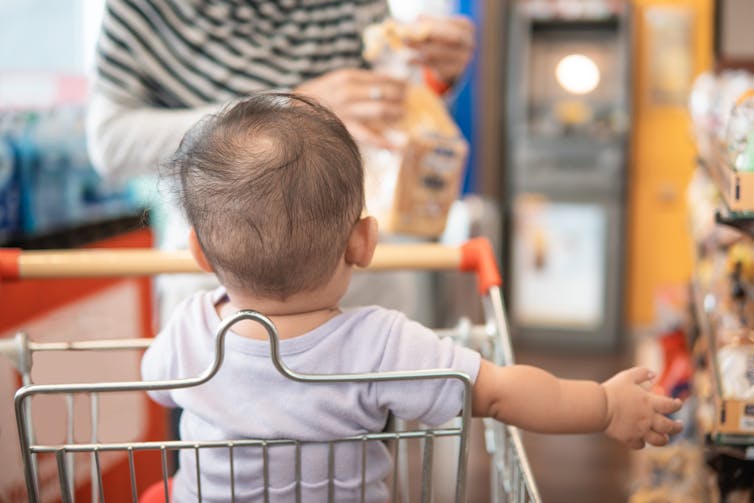
    Parent with baby in supermarket
    Parents are struggling to make their income go far enough. Odua Images/Shutterstock

    In addition, these policies do not fall evenly across the population when looking at ethnicity. Overall, 70% of the families affected by the two-child limit are white, as are 66% affected by the benefit cap. But our new analysis shows that children from an ethnic minority are up to three times as likely as white children to be affected by the two-child limit. They are also up to four times as likely to be affected by the benefit cap.

    Alongside administrative statistics, we have analysed household survey data, published today as a policy brief. We find that one in five children from Pakistani families and one in four children from Bangladeshi families are now affected by the two-child limit.

    Rising poverty

    Our analysis also indicates that these policies are contributing to very high and rising levels of poverty. We estimate that 66% of Bangladeshi children, 60% of Pakistani children, and nearly half (48%) of black children live in poverty. This compares to one in four (24%) white children living below the poverty line – still far too many.

    This new analysis provides us with better understanding of where the damage done by both policies is falling. It’s an important reminder of how the two-child limit and benefit cap directly conflict with ambitions not only to act on child poverty, but also to reduce systematic inequalities linked to ethnicity.

    Scrapping the two-child limit would give larger families access to benefits they currently miss out on – but it would not have any effect on smaller families living in poverty, so isn’t the only policy solution needed.

    Nonetheless, analysis by the Resolution Foundation has shown that getting rid of the two-child limit – which would cost £1.4 billion – is by far the most cost-effective way to reduce the number of children living in poverty. Spending £1.4 billion in other ways – for example by increasing benefits for all families – would make less difference to child poverty than if the two-child limit were ended.

    It’s also important to keep in mind the impact on the depth of poverty. Larger families tend to be living further below the poverty line. Scrapping the two-child limit will make a big difference in many households, even if they are not lifted out of poverty as a result.

    Labour came into government on a manifesto of “change”, and Keir Starmer has promised to be “laser-focused” in his commitment to drive down poverty.

    Labour have already said that they want to get rid of the two-child limit, arguing that they just need to find the money to do so. The government has established a child poverty taskforce, due to report in the autumn, and made a first concrete policy commitment with the extension of free school meals provision for families in England. But there is no alternative to serious action on social security benefits if significant progress is to be made.

    Ruth Patrick, Professor in Social Policy, University of Glasgow and Kitty Stewart, Professor, Department of Social Policy, London School of Economics and Political Science

    This article is republished from The Conversation under a Creative Commons license. Read the original article.

    Keir Starmer says that the Labour Party under his leadership all feel a small part of Scunthorpe.
    Keir Starmer says that the Labour Party under his leadership all feel a small part of Scunthorpe.
    Keir Starmer explains that he feels no shame or guilt benefitting personally from gifts from the rich and powerful while insisting on policies of severe austerity causing suffering and death.
    Keir Starmer explains that he feels no shame or guilt benefitting personally from gifts from the rich and powerful while insisting on policies of severe austerity causing suffering and death.
  • No more jam tomorrow – it’s time for Labour to deliver

    Spread the love

    https://morningstaronline.co.uk/article/no-more-jam-tomorrow-its-time-labour-deliver

     Health Secretary Wes Streeting, Chancellor of the Exchequer Rachel Reeves and Prime Minister Sir Keir Starmer at the launch of the government’s 10-year health plan, July 3, 2025

    The electorate see no evidence of the government’s promises of change, and the good jobs and decent pay that people are crying out for. Bold action is needed right now, warns SHARON GRAHAM

    IT IS true that Labour have taken over an economy ravaged by 14 years of Tory austerity. But that should mean a profound opportunity to deliver change. Britain is broken, yes. But they cannot keep making everyday people pay.

    Today MPs will be voting on the government’s despicable plan to cut disability benefits. Just as with every other wrong decision, such as scrapping the winter fuel allowance, rowing back on investment in British industry or failing to ensure proper local authority funding, the excuse will be the same — “we have no choice.” And again it will be absolute rubbish. Of course they have choices.

    We are the sixth-richest economy in the world. But the way that wealth is divided is increasingly unequal. The richest 50 families are worth about £500 billion, the same as half the entire UK population. In 1990 there were just 15 billionaires in the UK, but since then their number has jumped to 156.

    So, there is a choice. If we taxed the richest 1 per cent just 1 per cent, that would generate about £25 billion. That is a choice. We need a wealth tax now.

    …

    Continues at https://morningstaronline.co.uk/article/no-more-jam-tomorrow-its-time-labour-deliver

    Yougov: Would you support or oppose introducing a wealth tax of 2% on wealth above £10 million?
    Yougov: Would you support or oppose introducing a wealth tax of 2% on wealth above £10 million?
    Keir Starmer says that the Labour Party under his leadership all feel a small part of Scunthorpe.
    Keir Starmer says that the Labour Party under his leadership all feel a small part of Scunthorpe.

  • Benefit cuts will hit severely disabled people despite ministers’ claims, say charities

    Spread the love

    https://www.theguardian.com/society/2025/jul/08/universal-credit-cuts-will-hit-people-with-fluctuating-disabilities-charities-say

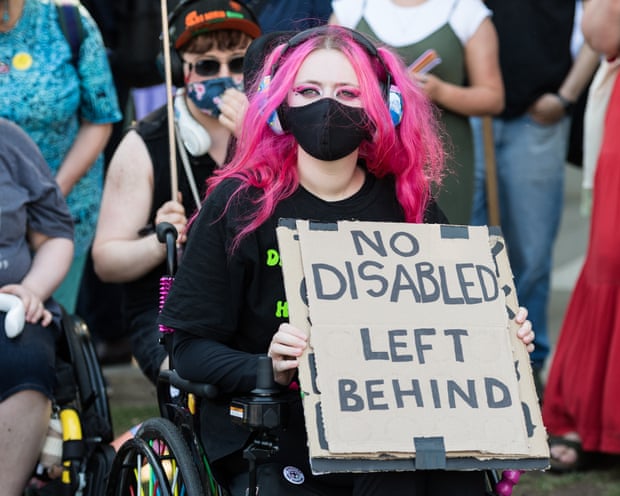
    A protest in London last month against changes to benefits. The government says the severe conditions criteria will provide ‘peace of mind’. Photograph: Wiktor Szymanowicz/Future Publishing/Getty Images

    Exclusive: Charities say planned universal credit changes fail to account for progressive or fluctuating conditions

    “Huge swathes” of severely disabled people will be hit by the planned universal credit cuts, contrary to government claims that they will be protected, charities say.

    Organisations including Scope, Z2K and the MS Society say the legislation, which is due to be voted on again by MPs on Wednesday, fails to account for disabilities if they are progressive or fluctuating.

    The clause in the bill said to shield the most severely disabled and ill people from reassessment and the new lower benefit rate – known as the severe conditions criteria (SCC) – will only do so if a claimant meets a number of strict requirements, including that a health condition must be constant.

    It means people with severe illnesses that vary with symptoms day to day, such as Parkinson’s, bipolar and multiple sclerosis, could be put on to the reduced universal credit rate despite being too ill to seek employment.

    “Contrary to government claims, we have real fears that many disabled people with lifelong conditions that severely impact their daily lives will not in fact be protected from the cuts,” said Ayla Ozmen, the director of policy and campaigns at the anti-poverty charity Z2K.

    “The protections have a very narrow definition – as drafted, they will only apply where someone is seriously affected by their condition at all times. Based on our experience, this will likely exclude huge swathes of disabled people, including those who have fluctuating conditions but who everyone would agree have high support needs. We’re calling on the government to drop these damaging cuts and go back to the drawing board.”

    …

    Article continues at https://www.theguardian.com/society/2025/jul/08/universal-credit-cuts-will-hit-people-with-fluctuating-disabilities-charities-say

    Keir Starmer says that the Labour Party under his leadership all feel a small part of Scunthorpe.
    Keir Starmer says that the Labour Party under his leadership all feel a small part of Scunthorpe.
    Keir Starmer confirms that he's proud to be a red Tory continuing austerity and targeting poor and disabled scum.
    Keir Starmer confirms that he’s proud to be a red Tory continuing austerity and targeting poor and disabled scum.
  • Nearly two-thirds of voters think Starmer doesn’t respect them – new poll

    Spread the love
    Simon Dawson/Number 10/Flickr, CC BY-NC-ND

    Marc Stears, UCL

    Exhausted from a long campaign but buoyed by an extraordinary victory, Keir Starmer stood on the steps of Downing Street just over one year ago to deliver his victory speech. “Your government,” the new prime minister said, “should treat every single person in this country with respect.”

    This message of respect resonated strongly in the year leading up to the campaign, coming as close as anything to providing a central argument to Labour’s case for government. And, according to polling and focus groups that my team at UCL Policy Lab designed along with polling company More in Common, it seemed to work.

    As our research at the time showed, voters felt that “respecting ordinary people” was the most important attribute that any politician could have, more important than having ideas for the future, managing effectively or having real experience. And they thought Starmer was the leader who displayed that respect most.

    A year later, the picture looks quite different. In new polling, we asked a representative sample of over 7,000 people to evaluate the government one year on. On respect, the judgement has not been good.


    Want more politics coverage from academic experts? Every week, we bring you informed analysis of developments in government and fact check the claims being made.

    Sign up for our weekly politics newsletter, delivered every Friday.


    During the general election campaign, 41% of the electorate said that they believed that Starmer “respected people like them”. One year on, that stands at only 24%. At the same time, the number who say that he does not respect them has risen from 32% to 63%. Starmer is now outstripped on that question by Nigel Farage – 33% say the Reform UK leader respects people like them.

    Losing support

    This view has had crucial political consequences. Of those who voted for Labour in the general election, only 60% of our respondents say they would vote for the party in an election held tomorrow.

    And that is not because some other political party is suddenly swooping in for their supporters. Labour’s voters are defecting in a host of different directions: 11% say they would vote Reform; 8% would vote Liberal Democrat; 4% would vote Green and 4% would vote Conservative. A further one in ten say they simply don’t know how they would vote.

    Labour’s losses have been most dramatic among their first-time voters. Of those who voted for Labour in 2024 but not in any other general election since 2010, barely a third still support the party, while a fifth would vote for Reform UK.

    These political failures, our report contends, are directly related to the declining sense of respect. The top reason voters gave for turning away from Labour are the broken promises and U-turns made by Labour in government, followed by the party’s failure to reduce the cost of living and changes to the winter fuel payment.

    The idea of “respect” being key to the public’s sense of whether a government is on their side or not has been growing for many years now, both in academia and in politics itself. Since at least the 2007/8 financial crisis there has been a sense that large swathes of the public feel neglected, overlooked and even disdained by those who govern them.

    When people talk about wanting to see “change” in Britain, this is often what they mean. It was a theme I touched on recently in two books, Out of the Ordinary and, with my co-author Tom Baldwin, England.

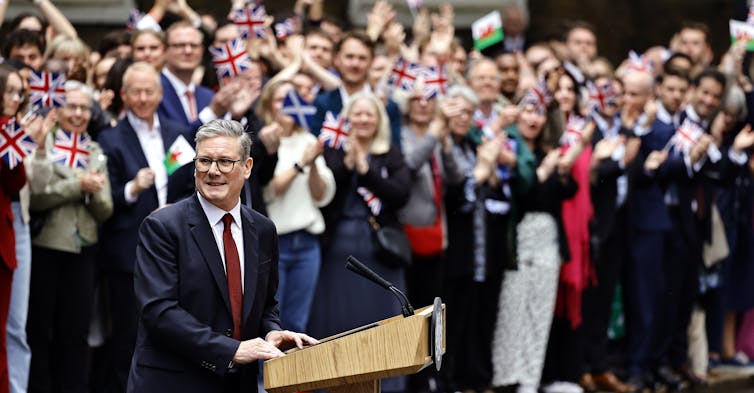
    A smiling Keir Starmer delivers his victory speech, with a crowd of supporters behind him
    Just over a year ago, a happier Starmer delivers his victory speech. Shutterstock

    But respect is not just an abstract idea. People appear to judge whether they are respected by those who govern them or not primarily on the basis of whether the government stands up for them against powerful vested interests.

    Our earlier research demonstrated that there is a widespread sense among the British public that certain groups have had it too easy for too long. This is either because they have been able to intimidate the government, or because government ministers and advisers have themselves been recruited from among these groups.

    In our new report, therefore, we see that the new government’s most popular act was their willingness to raise the minimum wage by £1,400 in April, against the objections of some in business who suggested that such a move was too burdensome on them.

    Changes to the winter fuel allowance and proposed changes to the disability benefits system, on the other hand, registered poorly. They suggest that the interests of ordinary and vulnerable people count for too little in decision-making.

    These judgements currently shape the mood of the country and probably top the list of issues that the government now needs to address. There is still time for the government to rebuild its appeal, of course. Indeed, our respondents who said they would vote for Labour said they would do so because the party needs more time to fix the problems they inherited.

    But as it seeks to do so, voters will want to know who this government stands for. Whose interests does it put first? What kind of people does it respect?

    Much of the electorate thought they knew the answer to these questions one year ago. Now they’re not so sure.

    Marc Stears, Director of UCL Policy Lab and Professor of Political Science, UCL

    This article is republished from The Conversation under a Creative Commons license. Read the original article.

    Keir Starmer says that the Labour Party under his leadership all feel a small part of Scunthorpe.
    Keir Starmer says that the Labour Party under his leadership all feel a small part of Scunthorpe.
    Keir Starmer objects to criticism of the IDF. He asks how could anyone obect to them starving people to death, forced marches like the Nazis did, bombing Gaza's hospitals and universities,mass-murdering journalists, healthworkers and starving people queuing for food, killing and raping prisoners and murdering children. He calls for people to stop obstructing his genocide for Israel.
    Keir Starmer objects to criticism of the IDF. He asks how could anyone obect to them starving people to death, forced marches like the Nazis did, bombing Gaza’s hospitals and universities,mass-murdering journalists, healthworkers and starving people queuing for food, killing and raping prisoners and murdering children. He calls for people to stop obstructing his genocide for Israel.
    Keir Starmer chases Nigel Farage's racist bigot vote.
    Keir Starmer chases Nigel Farage’s racist bigot vote.