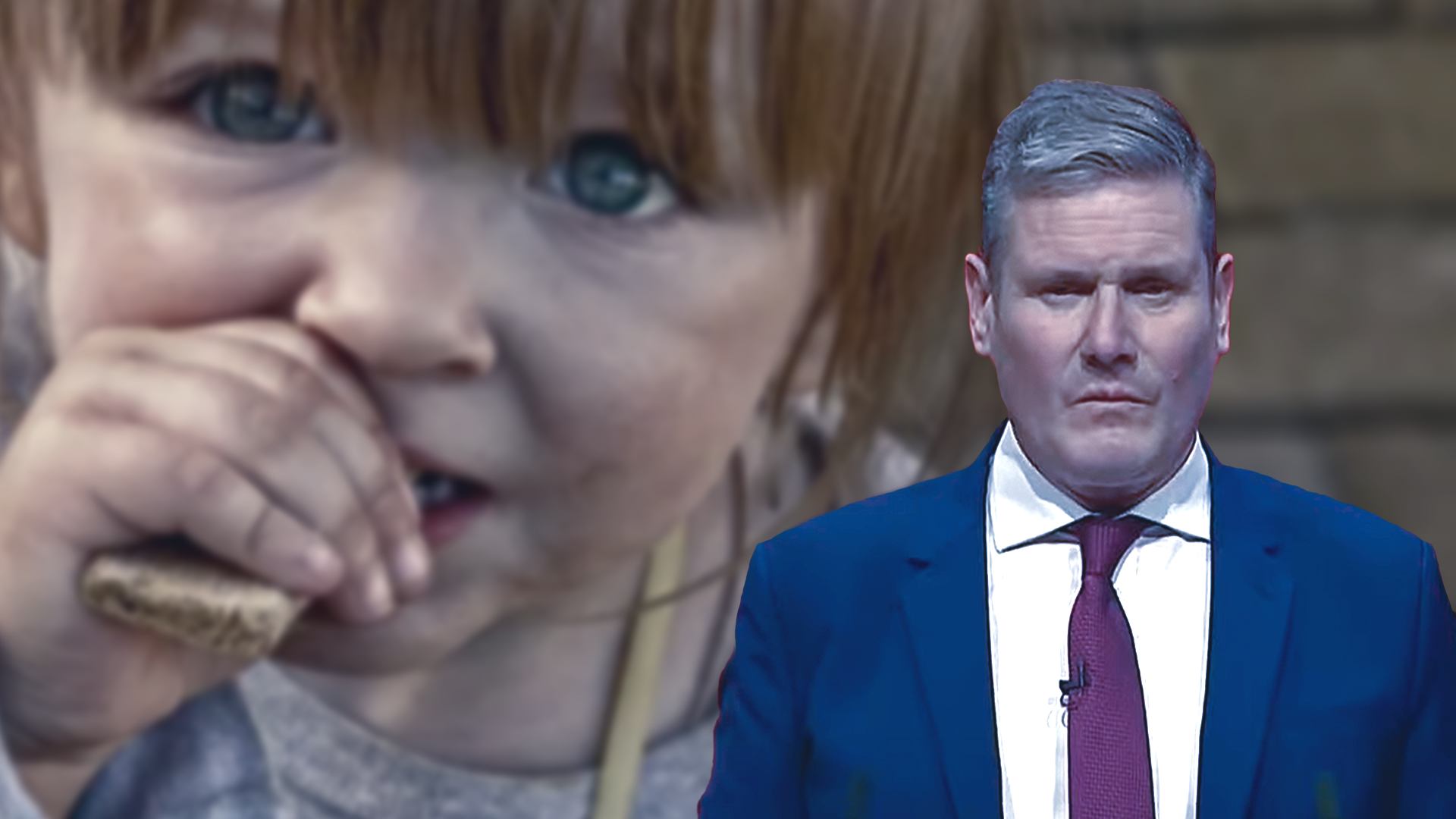
THE number of children living in poverty in Britain has reached a record high of almost 4.5 million, official figures revealed today.
Data from the Department for Work and Pensions (DWP) showed 4.45 million children in households with relative low income after housing costs in the year to March 2024, up from 4.33m the previous year — the highest since records began in 2002-03.
A household is considered in relative poverty if its income falls below 60 per cent of the median after housing costs.
The official figure comes a day after government estimates showed that its welfare cuts will push 50,000 more children below the poverty line by 2030.
And a Resolution Foundation analysis said a weak economic outlook and benefit cuts will disproportionately impact lower-income families, reducing the average income for the poorest half by £500 on average over the next five years.
The think tank also said that Chancellor Rachel Reeves’s welfare cuts amount to £8.1 billion — far exceeding the £4.8bn stated by the government.
Keir Starmer says that his Labour Party is intensely relaxed about assaulting the very poorest and most vulnerable.Keir Starmer explains that he feels no shame or guilt benefitting personally from gifts from the rich and powerful while insisting on policies of severe austerity causing suffering and death.
Spread the love
Keir Starmer says that his Labour Party is intensely relaxed about assaulting the very poorest and most vulnerable.
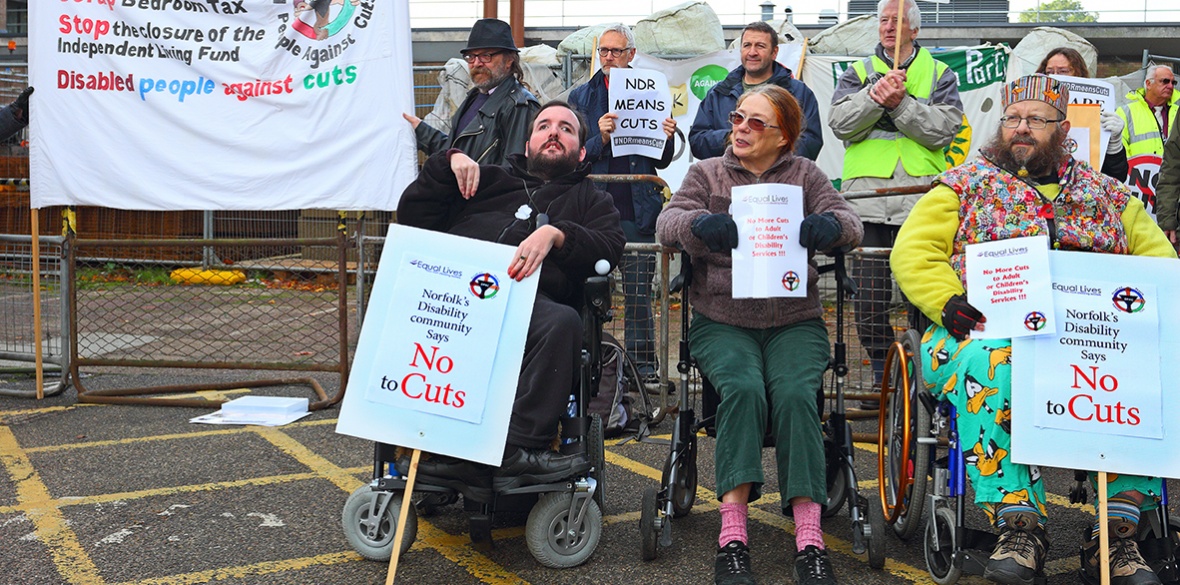
TORY 2015/LABOUR 2025 SPOT THE DIFFERENCE: (Above) Workers and disabled people protesting outside Norfolk County Hall against Norfolk County Council cuts to services on October 2015Photo: Roger Blackwell/flickr/CC
DR DYLAN MURPHY asks why Labour is continuing the Tory war on the disabled, when viable alternatives have been spelt out in detail
IN LATE February of 2025 the UN Committee on Economic, Social and Cultural Rights issued a damning report into the failures of Labour to address income inequality and the deepening levels of poverty in the UK.
The UN committee criticised Labour for failing to address “income inequality or reducing poverty,” which hamper “the progressive realisation of economic, social and cultural rights.’’
Ironically enough, the UN called on Labour to increase spending on housing, health, education and social security in order to reverse the huge damage caused by blue Tory austerity from 2010 to 2024. Since this call the red Tories in power have announced their intention to make massive cuts to public spending across all government departments except defence and maybe health.
On the issue of social security, over which Labour is determined to make killer cuts, the UN expressed serious concern about the impact of blue Tory austerity which had “resulted in severe economic hardship, increased reliance on food banks, homelessness, negative impacts on mental health and the stigmatisation of benefit claimants.”
Of course, food bank usage under Labour continues to grow as does the stigmatisation of benefit claimants which Starmer and company have engaged in with relish over the last few months.
Starmer, Reeves and Kendall seem to take a sadistic glee in attacking the disabled through the platforms of the Tory media using ultra right-wing rags such as The Telegraph and Sun to stigmatise the sick and disabled.
The biggest irony in this recent UN report is its call for Labour to actually increase the value of disability benefits such as PIP so that the UK can meet “the recommendations made by the special rapporteur on extreme poverty and human rights.”
Keir Starmer says pensioners can freeze to death and poor children can starve and be condemned to failure and misery all their lives.Keir Starmer explains the moral case for cutting disability benefits. He says work will set you free.
Chancellor Reeves’ planned public spending cuts will ‘open the door’ for Reform UK, McDonnell warns as campaigners get set to rally outside the Treasury
TAX the super-rich instead of slashing services, Chancellor Rachel Reeves was told today, on the eve of her Commons statement, expected to announce more public spending cuts.
Campaigners from a range of charities and voluntary organisations are set to rally outside the Treasury this evening to demand a wealth tax instead of “austerity with a red rosette” in the words of a leading trade unionist.
And former shadow chancellor John McDonnell, presently suspended from the Labour whip, has warned that Ms Reeves was in danger of making Labour “just another austerity party” if she missed a last chance to change course.
The wealth tax option is growing in political popularity following recent announcements of a £5 billion cut in disability benefits and huge cuts to overseas aid to fund new arms spending.
It is backed by the TUC and a broad range of Labour MPs.
Just a 2.5 per cent tax on assets over £10 million could raise £36bn annually, according to Greenpeace’s research.
Keir Starmer, Angela Rayner and Rachel Reeves wear the uniform of the rich and powerful. They have all had clothes bought for them by multi-millionaire Labour donor Lord Alli. CORRECTION: It appears that Rachel Reeves clothing was provided by Juliet Rosenfeld.Keir Starmer confirms that he’s proud to be a red Tory continuing austerity and targeting poor and disabled scum.
If someone read out the following list of policies, which party would you think was in power? Depriving 2 million pensioners of the winter fuel allowance. Refusing to scrap the two-child benefit cap to lift nearly half a million children out of poverty. Raising tuition fees for students by more than the rate of inflation. Cutting overseas aid to the poorest people across the globe by half. Cutting £5bn from benefits for disabled people. Introducing a new round of cuts to government department spending and laying off 50,000 public sector workers.
I very much doubt even 12 months ago you would have thought that this would be the Labour party in government.
It is expected that in the spring statement, the chancellor, Rachel Reeves, will seek to justify this effective return to austerity by the necessity to maintain “iron” economic discipline through a rigid adherence to her fiscal rules. The chancellor’s argument will be that the world has changed, which is true, but this prompts the question: why, then, doesn’t the government’s strategy change to meet the situation it now finds itself in? Even Germany’s iron laws welded into its constitution are being adapted to the new economic realities.
Media briefings suggest that in her spring statement speech on Wednesday Reeves wants to be upbeat about Labour’s achievements so far. She is likely to cite the welcome rise in the minimum wage, but may fail to acknowledge that even working full-time on the minimum wage means a person is nearly £10,000 below the annual income, after tax, calculated by the Joseph Rowntree Foundation as necessary to secure an acceptable standard of living.
In recent interviews Reeves has already claimed this year’s above-inflation rise in wages as a government success, but has failed to mention that even with this long awaited rise, wages remain so low that 37% of people having to claim universal credit are actually in work.At least she will have some big numbers to cite on investment in the NHS and infrastructure. The problem is that much of the new NHS money could be drained away by the strains placed on it as disabled people find they are unable to cope without the support that has been taken away from them. This will include elderly people without adequate physical care and younger people without mental health support.
The problem with the increase in infrastructure investment is also that the memory of the cut in Ed Miliband’s green investment budget lingers in the mind and, as Reeves has repeatedly been warned, infrastructure investment takes a long time to feed into growth on any scale in the economy, and any benefit is likely to land after the next election.
The danger now is that the government’s standing could be irretrievably damaged as the Labour party is branded just another austerity party. This will provide the key that opens the door to the populist Reform UK. Nigel Farage’s party doesn’t need to present a rational, implementable alternative economic policy programme. It will simply go full Trump to distinguish itself from both Conservatives and Labour by portraying itself as anti-establishment, the defender and voice of the working class – while targeting immigrants, wokeism and even some corporations.
The polls and council byelection results are showing that there is a crisis of confidence in the government, reflecting the reactions and worries about recent policies among our supporters and even party members. But it is not too late to turn things around. In the very short term, a relaxing of the fiscal rules would enable the chancellor to raise sufficient taxes from those with the broadest shoulders to prevent a return to ongoing austerity.
It is not rocket science to implement a programme of marginal tax rises that would end cuts and fund the progressive policies any Labour government would aim to pursue. The list is obvious: equalising capital gains tax with income tax rates; a realistic rise in corporation tax; a financial transaction tax; the introduction of a small wealth tax on multimillionaires, called for by the Patriotic Millionaires group.
There are also many non tax measures to help people who are still struggling with the cost of living, such as fair rent controls, service charge caps, stricter controls on energy and water price rises, and reviews of food price rises to prevent price gouging. However, the spring statement and the subsequent public spending review in June should define what the long-term strategy of the government is rather than responding to the short-term political and economic mess it has created for itself. For this I urge the chancellor to look beyond just stabilising our economy and managing the existing system slightly more efficiently than the Conservative chancellors before her.
People want long-term change that provides everyone with a decent quality of life and addresses the grotesque levels of inequality in our society and the environmental crisis. Over the past 25 years, I have followed the work of Richard Wilkinson and subsequently his colleague Kate Pickett at the Equality Trust. Their detailed research has forensically revealed the impact of inequality on our society and economy. To quote the trust’s report timed to coincide with the election of the new government last year: “Biased public policies and flawed economic systems are serving a few wealthy people at the expense of the wellbeing of people and planet.”
The report went on to outline how the duty that was enacted in the Equality Act 2010 to reduce inequalities resulting from socioeconomic disadvantage could be implemented by redistribution power and wealth in our society. This includes new policy-making mechanisms that empower communities to identify and design the services to address their needs, wealth taxes to fund these, universal social security programmes and community wealth-building.
I thought and hoped, maybe naively, that this was the sort of programme that the incoming Labour government would implement. The track record of the government so far is, sadly, remarkably distant from this progressive approach. The spring statement could be the opportunity to change that narrative, not just by bridging the short funding gap with redistribution but more importantly to narrate and launch the longer term progressive path we need to achieve true Labour goals.
My remaining hope is that the chancellor will seize that opportunity, for I fear that if she doesn’t it will be impossible to recover the ground we have lost.
I am quoting the full article assuming that John McDonnell owns the copyright and intends that it is widely published. I will alter this post if asked to by the Guardian.
Orcas discuss how Trump was re-elected and him being an insane, xenophobic Fascist.