Demonstrators during a ‘Kill The Bill’ protest against The Police, Crime, Sentencing and Courts Bill in London, January 15, 2022
LABOUR was urged today to scrap Tory anti-protest laws and reject harmful rhetoric used to stigmatise peaceful demonstrations.
Peace, pro-Palestine, environmental and civil liberties groups called on ministers to champion the rights to free speech by repealing the draconian legislation aimed at silencing dissent.
Amnesty International led the calls as it published a new report warning of an increasingly wide range of means to quash peaceful demonstrations and silence free speech across Europe.
It called on Home Secretary Yvette Cooper to urgently scrap the public order elements of the Police, Crime, Sentencing and Courts Act as well as the entirety of the Public Order Act and the Serious Disruption Regulations.
Kerry Moscogiuri, of Amnesty International UK, said: “The new government must seize this moment to halt the alarming march towards repression in the UK by repealing the anti-protest laws pushed through by the previous government and ending the harmful rhetoric being used to stigmatise those who peacefully protest.
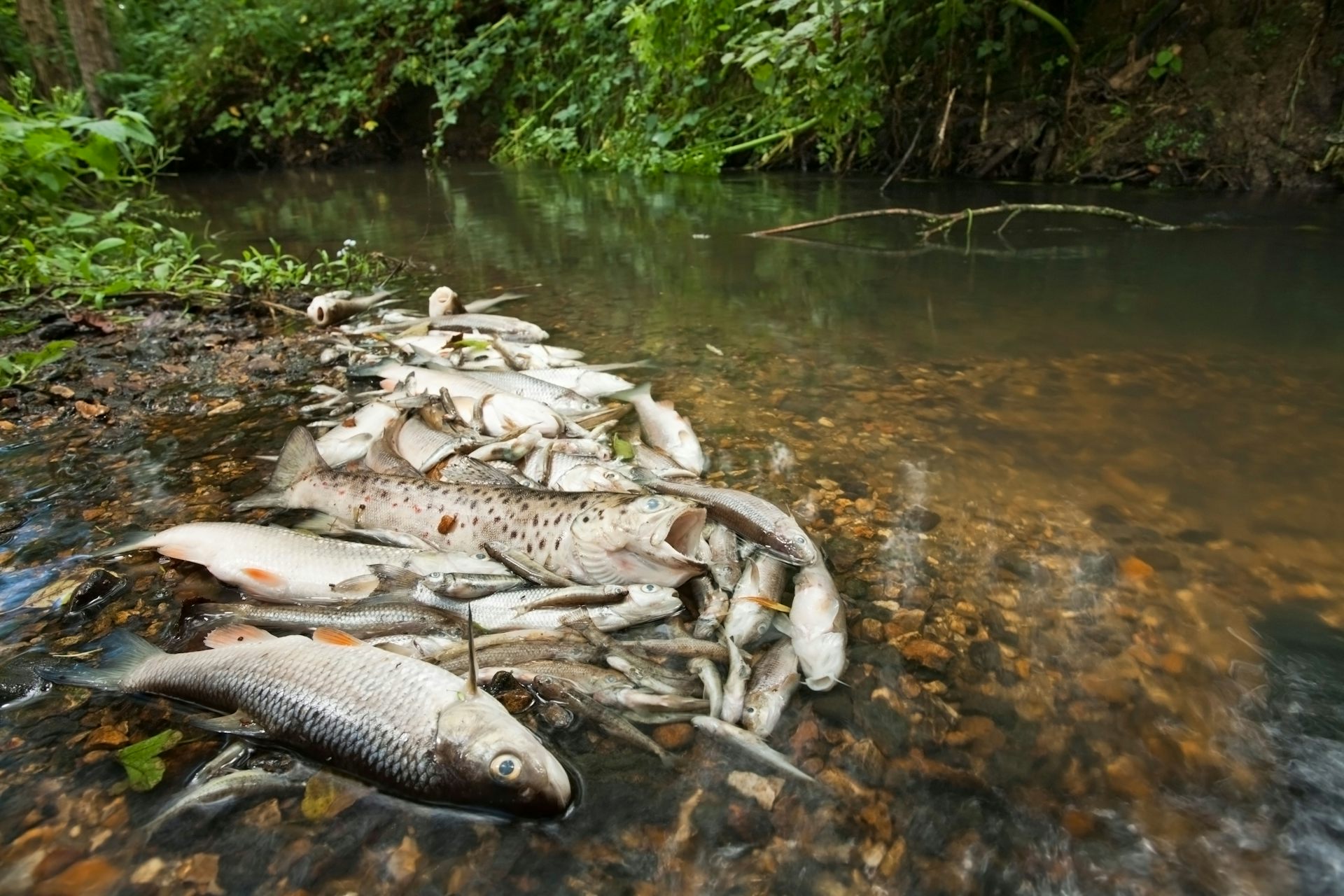
Privatised water companies discharged raw sewage into rivers and the sea around England and Wales for 3.6 million hours in 2023 – double the previous year’s total. For a sense of how bad the problem is today, check this map of the south-east of the UK which shows how much sewage water companies are dumping right now and for how long.
As a water researcher, I am happy to see water quality high on the political agenda but aggrieved that it is because of the sewage scandal that has engulfed the UK, and especially England and Wales, in the past couple of years.
Companies have discharged more raw sewage than they are legally allowed to and the Environment Agency, as responsible regulator in England, has been unable to monitor and control offenders as its environmental protection budget was halved between 2010 and 2020. Water firms have neglected to invest in new and enlarged wastewater treatment works for decades and so the ageing system is struggling to meet demand.
An angry public demands cleaner water and changes to how water companies are regulated and run. All major political parties have at least something to say about it in their pitch to voters ahead of July 4 general election.
No clear blue water between Tories and Labour
The Conservative party doesn’t mention the word “sewage” in its manifesto. The party instead highlights what it sees as the government’s achievements in reducing leaks from water pipes, preventing supply interruptions and raising the proportion of designated bathing water sites classified as “good” or “excellent” from 76% in 2010 to 90% in 2023.
These “achievements” are misleading, however. Most of the 451 designated bathing water sites are around the coast, not rivers. Bathing sites only occupy a small stretch of a river (of which many are rated poorly) and most sewage dumpings take place elsewhere along the river, which is not accounted for in the statistics the Tories present.
The party would ban executive bonuses if companies commit a serious criminal breach (dumping sewage, for example) and use fines to invest in river restoration. The Tories evidently expect pollution to keep increasing. Forget working on the cause of the problem and preventing “serious criminal breaches” from happening in the first place.
The Labour party has said it will force water companies to “clean up our rivers” by putting them under “special measures” but does not explain what this means. Like the Conservatives, Labour wants to impose fines on water companies, block the bonuses of executives and improve independent monitoring. Again, Labour offers no further detail on what that would entail.
This is in stark contrast to election campaigns fought under Jeremy Corbyn, when Labour argued for renationalising the water industry.
Both Labour and the Tories propose fines which have proven to be no deterrent. The Environment Agency fined Southern Water – the company that provides water and wastewater services to more than four million people across Hampshire, Sussex and Kent – a record £90 million in 2021, yet illegal sewage discharges by water companies have only increased since then.
Ultimately, fines are a capitulation before the real problem of preventing illegal sewage discharges.
Lib Dems a bit bolder
Banning water companies from dumping raw sewage into rivers and giving them a duty to protect the environment is the goal of the Liberal Democrats.
The Lib Dems want to transform water companies into public benefit companies (but there’s no explanation of how these would differ from their present privatised form) and would ban bonuses for water company executives until rivers are clean (but there’s no definition of “clean”).
Ofwat, the economic regulator for the water industry, would be replaced with a new regulator with powers to prevent sewage dumping. The party also wants a sewage tax on water company profits to enforce existing regulations more effectively, set legally binding targets on the reduction of sewage dumping, create wetlands to stymie flooding and strengthen local authorities monitoring water quality – it’s unclear how this would meld with a “tough new regulator”, though.
Greens are pro-nationalisation
The Green party wants to bring water services back into public ownership along with Britain’s big five energy companies.
The Greens are the only ones putting numbers to the problem. The party estimates renationalisation would cost £5 billion and investment into water and sewage infrastructure a further £12 billion.
The experiment of privatisation has failed, they argue, and water should be treated as a public good.
Reform’s 50% offer
Reform UK does not mention the sewage scandal directly, but its manifesto proposes bringing 50% of each utility back into public hands. According to the party, this would save £5 billion across all utilities over five years.
Welsh water for Wales
Plaid Cymru wants more public control of Welsh resources, including water.
Lots of water stored in Welsh reservoirs goes to England, especially Birmingham and Liverpool. Plaid Cymru would align legislative competence over water with the geographical boundaries of Wales. In other words, Wales wants to fully take care of its water and improve its quality.
The SNP does not mention freshwater in its manifesto. Sewage dumping appears to be less common in Scotland, where the water industry is publicly owned. However, reports suggest official estimates are too low.
Northern Ireland’s Sinn Féin does not discuss water in its manifesto. The DUP acknowledges pollution in the UK’s largest inland lake, Lough Neagh, and asks for a concerted effort to preserve its water quality.
Watered down
The smaller parties have my sympathies for bringing forward bolder plans for water management in the UK. Unfortunately, both the Conservatives and Labour are very uninspiring in their hesitance to prevent pollution.
If better regulation, monitoring and enforcement is the most a new UK government will do then this will require a bigger budget for the Environment Agency, at least. Measuring the volume and composition of sewage outflows, not just the duration of pollution events, would also provide more accurate information.
Ofwat, the economic regulator for the water industry, needs reform too. The UK water industry is slow to innovate and misses opportunities to do so. As I have written before, the UK water industry is a small sector with a revolving door that leads former regulators to join the regulated, and vice versa. This creates obvious conflicts of interest and stymies change.
The experience of England and Wales implies that privatised water utilities are a bad idea. Margaret Thatcher believed this model would find admirers globally, but since the late 1980s, no other country has followed suit. In fact, the opposite has tended to happen: after a failed privatisation, Paris returned its water supply services to public hands.
Privatisation has excluded the public from discussing water management in the past 35 years. It is time to reconnect people with the very resource we all need to survive. Capping a CEO’s bonus does not go far enough.
Image of InBedWithBigOil by Not Here To Be Liked + Hex Prints from Just Stop Oil’s You May Find Yourself… art auction. Featuring Rishi Sunak, Fossil Fuels and Rupert Murdoch.
THE Tory government met representatives from the oil and gas sector an average of 1.4 times per working day in 2023, an investigation by Global Witness revealed today.
At least 65 fossil fuel organisations and industry bodies were identified as meeting with ministers over the year, according to the group.
Global Witness analysed data by Transparency International UK, looking at any organisation that “could be reasonably assumed to have the goal of influencing policy or legislation in the interests of a fossil fuel company and its shareholders.”
According to its findings, ministers met representatives from the oil and gas sector at least 343 times last year, up from 330 meetings held in 2022.
More widely, the group found that meetings between oil and gas lobbyists and the government have been steadily increasing over the past 11 years.
November 2023 saw record-high levels of meetings when the government met oil and gas lobbyists at least 63 times, equivalent to almost three meetings every working day, the campaigners said.
The Offshore Petroleum Licensing Bill, which would mandate annual licensing of new oil and gas fields in the North Sea, was introduced the same month, they noted.
The end of November also marked the start of the UN climate change conference Cop28 in Dubai.
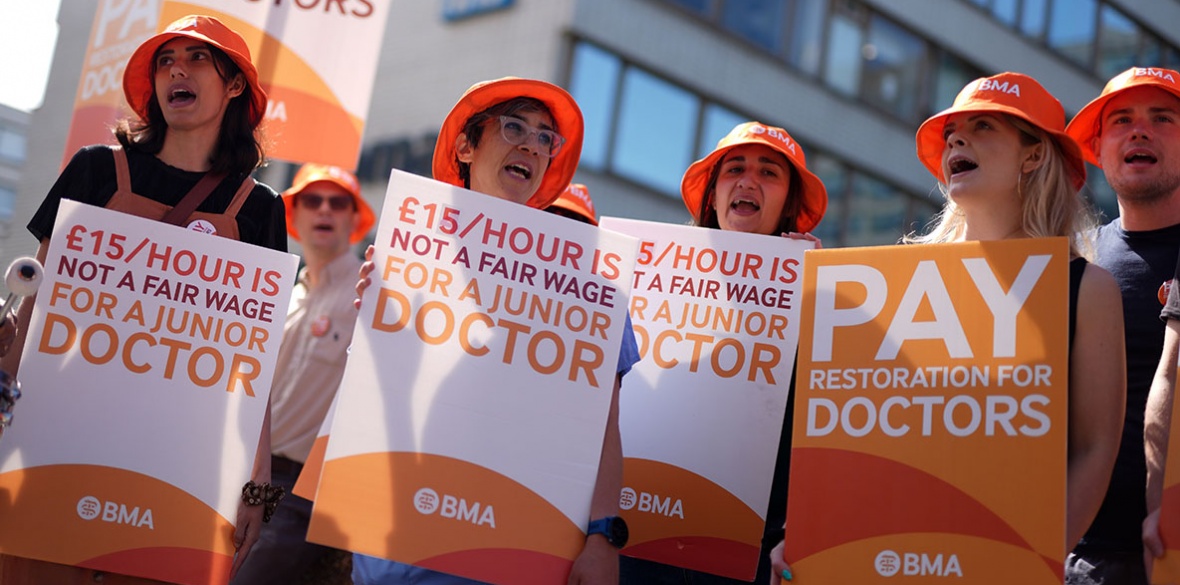
Junior doctors on the picket line outside St Thomas’ Hospital, London, during their continuing dispute over pay, June 27, 2024
SIR KEIR STARMER was warned today against repeating Rishi Sunak’s mistakes as 25,000 junior doctors began a five-day pay walkout across England, threatening further strike action this summer.
The British Medical Association (BMA) members hit out at the Labour leader’s “lies” over NHS funding as they staged their 11th walkout since March last year, including at the Friarage Hospital close to the Prime Minister’s constituency in North Yorkshire.
Shadow health secretary Wes Streeting has said he would not grant the BMA’s demands for real-terms pay restoration in one go as it would mean any “trade union worth their salt” would ask for the same the following year.
But with the dispute now in its 20th month, BMA junior doctors committee co-chairman Rob Laurenson said: “Keir Starmer would do well not to repeat the mistakes of Rishi Sunak, and to empower his health secretary to negotiate in good faith.”
He welcomed Mr Streeting describing pay negotiations as a “journey, not an event,” saying the union was happy to negotiate a multi-year deal.
But he added: “The truth of the matter is a doctor starts with £15 an hour and we are asking for doctors to be paid about £21 an hour — that is affordable.
“The government has spent £3 billion on strikes and pay restoration costs £1.3 billion — again if an incoming government under Keir Starmer wants to continue lying then it looks like strikes will have to continue as well.”
His committee co-chairman Dr Vivek Trivedi warned that as the current strike mandate ends on September 19, “if talks do not move in a timely manner, then of course our members would expect us to call for strike action.”
A screenshot of a Conservative advert on Meta during the 2024 general election campaign. Credit: Conservatives / Meta
The party has pumped out hundreds of adverts falsely stating that Labour would introduce a “national ULEZ”, and pay per mile charges.
The Conservative Party has reached millions of people with digital adverts that falsely claim Labour would impose new taxes on drivers.
In recent days the Tories have launched hundreds of new online adverts falsely claiming that Labour would introduce a nationwide ultra-low emission zone (ULEZ) that would charge people for using highly-polluting vehicles.
Labour’s London Mayor Sadiq Khan introduced and recently extended the capital’s ULEZ, which only applies to around 10 percent of vehicles, but the party has no plans to roll out the scheme to the rest of the country.
New analysis by advertising experts ACT Climate Labs, shared with DeSmog, finds the Tories have spent tens of thousands of pounds since the start of the general election campaign on digital adverts, which have appeared on the likes of Google, Facebook and Instagram, attacking climate and anti-pollution policies.
“Unfortunately, the Conservative leadership has increasingly used environmental and climate policies as collateral damage lately, in an attempt to secure more support for the party,” Sean Buchan, intelligence lead at ACT Climate Labs, told DeSmog.
“Clearly, it is not working – in fact, poll after poll shows us that Conservative voters, along with the vast majority of Brits, want climate action.
“However, the ripple effects of these adverts may last well beyond 4 July. The climate movement needs to ensure the public is seeing pro-climate messaging that truly speaks to them, through creative and local campaigns, and where possible with multi-channel advertising of its own.”
One Tory advert on Meta (Facebook and Instagram) read: “This is not a test. Keir Starmer will force pay per mile driving, costing you £THOUSANDS [sic] a year.”
This false claim – Labour doesn’t intend to introduce pay per mile charges – was seen between 150,000 and 175,000 times, costing between £1,000 and £1,500.
During the London mayoral election in May, the Conservatives claimed that Labour would introduce pay per mile road charges in the city, despite Khan having publicly ruled out the policy. A Tory leaflet featuring the claim was reported by Labour to the Crown Prosecution Service, with the party saying it may have broken election law.
While serving as chancellor, now Prime Minister Rishi Sunak reportedly said he was “very interested” in introducing a national pay per mile scheme.
“Voters are badly served by any party which repeatedly spreads misinformation or disinformation online,” said former Liberal Democrat MP Tom Brake, director of the campaign group Unlock Democracy. “If parties cannot commit to accurate advertising on a voluntary basis, bringing political ads under advertising rules may provide the only solution.”
ULEZ Blitz
Another Meta advert from the Conservatives, costing between £400 and £499 and gaining upwards of 50,000 impressions, claimed “Keir Starmer will force a local ULEZ near you”.
The party is now pumping out hundreds of similar adverts spreading this claim, each tailored to a local constituency, estimated to be costing up to £65,000. “With his supermajority, Keir Starmer could steamroll through plans to introduce a ULEZ near you,” the adverts state.
The Tory campaign has been warning voters against handing Labour a large majority, despite the size of a government’s majority making little difference to its ability to pass legislation.
“The Tory strategy of the last few weeks has been to focus on their core supporters, as well as those who might vote Reform, so these ads are another thing designed for them,” Sam Jeffers, executive director of the advertising monitoring platform Who Targets Me, told DeSmog.
The Tories have also paid for a Google advert attacking Labour’s decarbonisation plans, which has been viewed more than five million time, costing between £25,000 and £30,000. The advert features an “explainer” video on how much a Labour government would allegedly cost households, with decarbonising the electricity grid the first cost named.
Labour plans to decarbonise the electricity grid by 2030, while the Conservatives have pledged that 95 percent of the UK’s electricity will be generated by low-carbon sources by 2030, achieving full decarbonisation by 2035.
Political parties have spent huge sums on digital adverts during the campaign so far. As of 25 June, the Tories and Labour combined had spent over £3 million on Meta adverts that had gained an estimated 400 million impressions.
“Advertising blasts like this – especially when micro-targeted – can have a significant influence on people’s thoughts and behaviours,” said Buchan.
“In an increasingly fragmented media environment, digital advertising can be a fantastic way to target hard-to-reach people with your message. In an election where honesty is at a premium, it’s very concerning to see so much money – up to £70,000 on the adverts we’ve counted – spent on such spurious claims.”