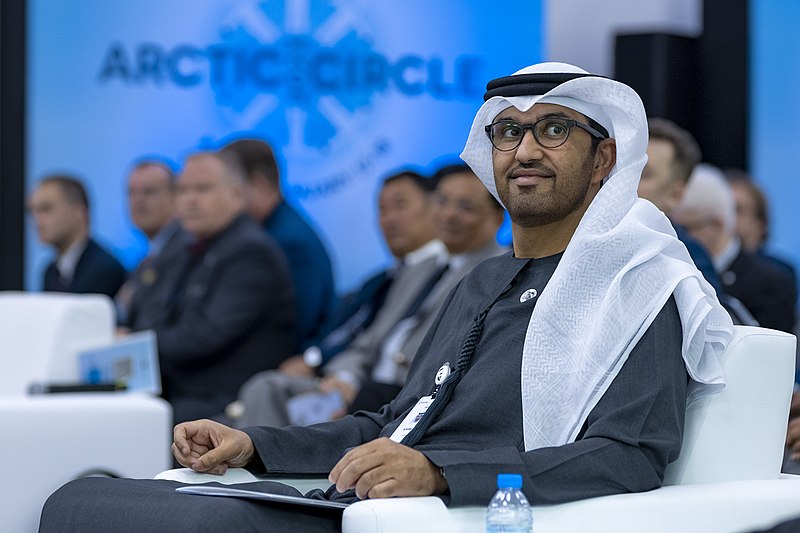
In response to COP28 President Al Jaber’s science-denying comments at the She Changes Climate Event, as reported by The Guardian, Romain Ioualalen, Oil Change International’s Global Policy lead, said:
“COP28 President Al Jaber’s science-denying statements are alarming and raise deep concerns about the Presidency’s capacity to lead the UN climate talks, at a time when leadership and a clear vision are most needed. Of course, denying science has been part of the fossil fuel industry’s playbook for decades. But science is not up for debate: we must phase out fossil fuels to have a livable planet.
“The science is clear. Not only do fossil fuels need to be phased out, but the phaseout needs to start now. The latest reports from the IEA and the IPCC show that maintaining a 50% chance of limiting global warming to 1.5°C requires an immediate end to investments in new oil, gas, and coal production and hazardous liquid fossil gas infrastructure.
“Instead of casting doubt on climate science, we expect the COP28 president to facilitate an outcome on a full, fast, fair, and funded phaseout of fossil fuels at COP28. Over 100 countries have now called for a phase out of fossil fuels and science is clear that limiting warming to 1.5°C without relying massively on dangerous technological distractions such as CCS requires eliminating fossil fuels from the global economy.”
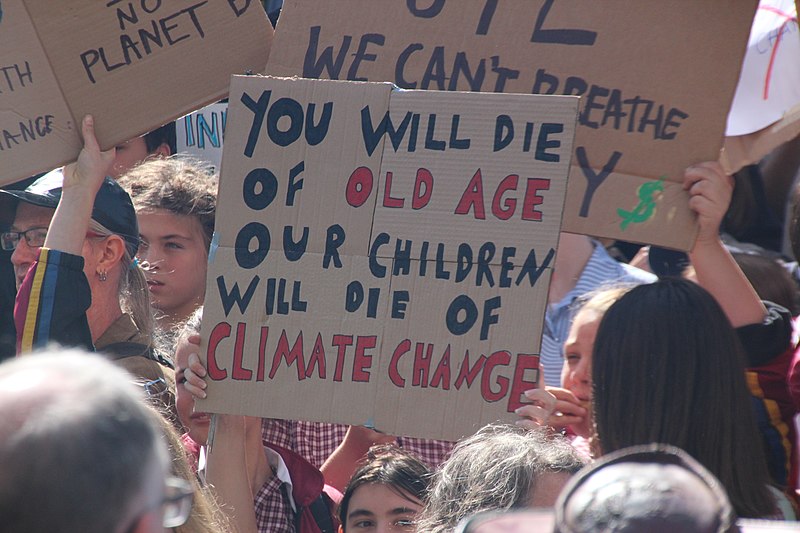
Craig Bennett says the way recent and current older generations have allowed environmental degradation will be viewed harshly by people in the future who will have to live with consequences that, in many cases, will be increasingly devastating. Image: A1Cafel Creative Commons Attribution-Share Alike 2.0 Generic via wikimedia.
Guardian Exclusive: UAE’s Sultan Al Jaber says phase-out of coal, oil and gas would take world ‘back into caves’
The president of Cop28, Sultan Al Jaber, has claimed there is “no science” indicating that a phase-out of fossil fuels is needed to restrict global heating to 1.5C, the Guardian and the Centre for Climate Reporting can reveal.
Al Jaber also said a phase-out of fossil fuels would not allow sustainable development “unless you want to take the world back into caves”.
The comments were “incredibly concerning” and “verging on climate denial”, scientists said, and they were at odds with the position of the UN secretary general, António Guterres.
Al Jaber made the comments in ill-tempered responses to questions from Mary Robinson, the chair of the Elders group and a former UN special envoy for climate change, during a live online event on 21 November. As well as running Cop28 in Dubai, Al Jaber is also the chief executive of the United Arab Emirates’ state oil company, Adnoc, which many observers see as a serious conflict of interest.
…
[Video at the Guardian article. It’s disappointing that his reality is so different from actuality, that he is so prejudged and narrow-minded.]
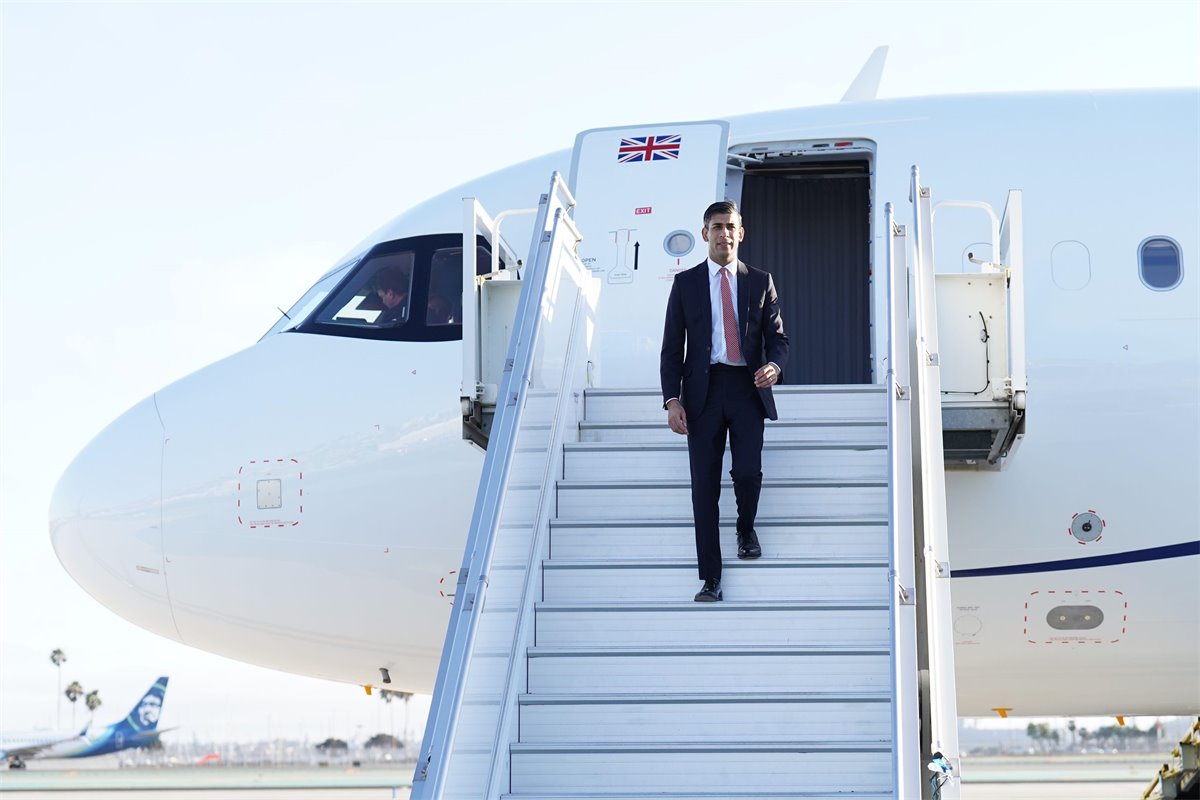
Rishi Sunak, David Cameron and King Charles are just three of the more than 70,000 delegates from nearly 200 countries at the latest UN climate summit in Dubai, COP28. But they are among hundreds who will have travelled there by private jet. In fact, the UK prime minister, foreign secretary and king even travelled in three separate planes.
At COP27 in Egypt last year, around 315 private jet journeys took place. This is an extraordinary statistic, especially as fewer world leaders attended that COP, as many were busy at a G20 summit in Bali.
That’s why we set up a team of academic experts to estimate the carbon footprint of travel to this year’s meeting, COP28 in Dubai, for different modes of transport including private jets. We ultimately want to empower attendees to make informed climate-conscious travel choices.
We also compared the carbon footprints for the past three COPs to help see where the conferences could be located in order to dissuade attendees from using private jets, unless absolutely essential for security. The use of private jets last year – and presumably this year too, though we don’t yet have full data – suggests this is becoming the new norm and has moved beyond just essential world leaders.
Carbon footprint of transport modes
Flying is already one of the most carbon-intensive forms of travel both due to emissions from burning jet fuel and because vapour trails help create high altitude clouds which trap more heat in the atmosphere. It’s also particularly hard to decarbonise – there aren’t electric planes we could simply use instead.
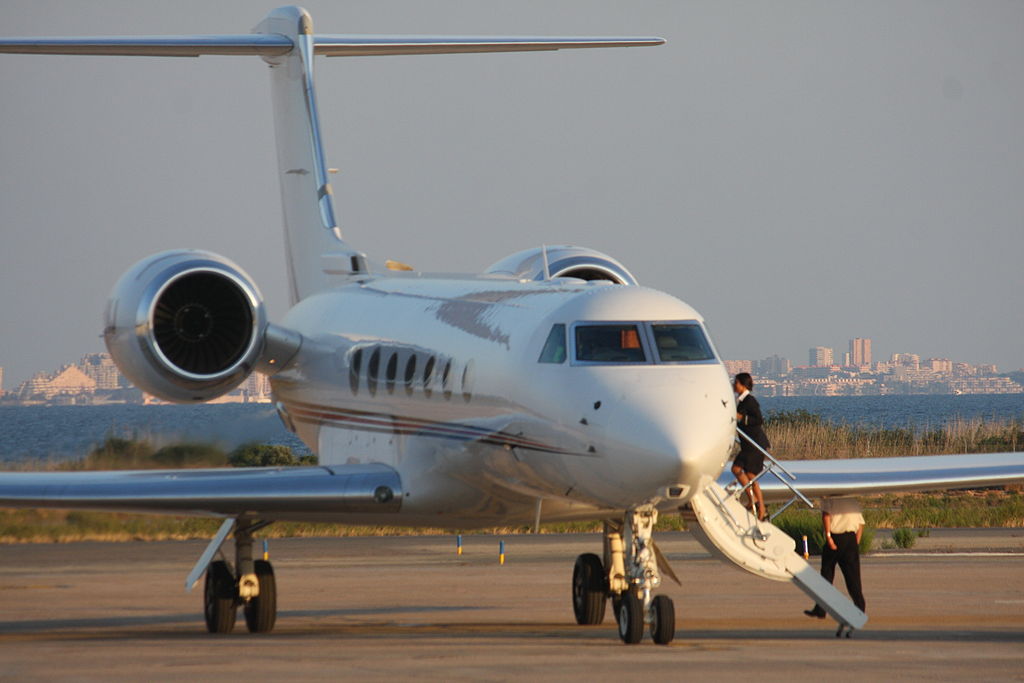
Private jet travel is the most polluting mode of all, consuming lots of fuel yet carrying few passengers. French economist Thomas Piketty argues they are an example of class inequality and must be tackled if we are to deal with climate change.
Their use by high-profile people clearly undermines the goal of a climate conference and symbolises a disconnect between environmental concerns and individual actions and a lack of commitment to sustainable practices. This in turn risks shaping and influencing public opinion. Previous research suggests members of the public take climate action less seriously if they feel that their leaders are not doing their bit.
We started by looking at the use of private jets for COP27 in Egypt (our results are available as a preprint ahead of formal peer-review). Most private flights were short-haul, often just an hour between the capital Cairo and the conference venue in Sharm El-Sheikh. Over shorter distances, planes are even less efficient as take off and landing burns more fuel compared to cruising.
So avoiding short flights and private jets is a must. With this in mind, we explored a range of travel options to get to COP28 in Dubai for participants from the UK, where we’re based.
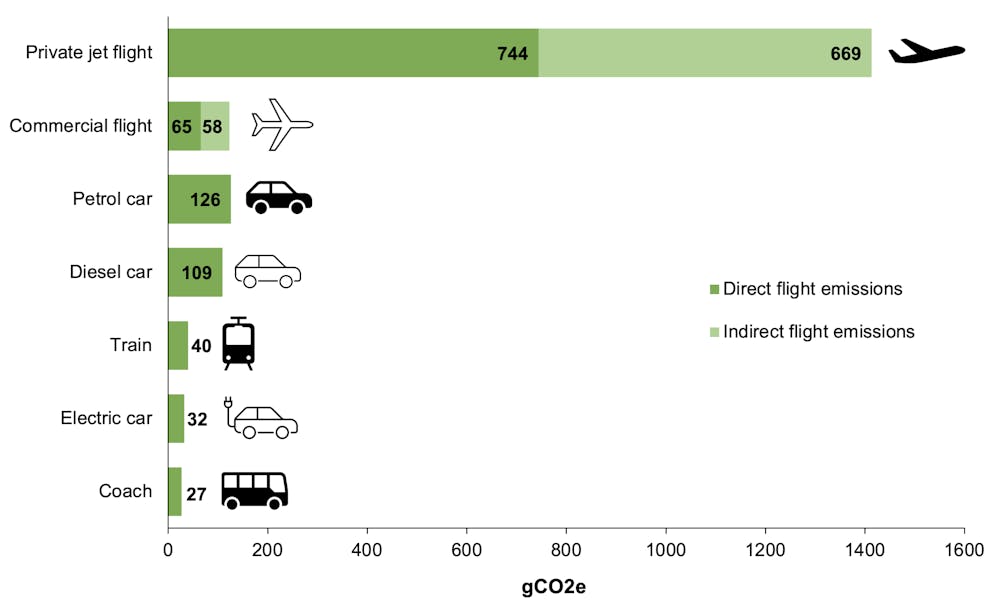
For a journey from London to Dubai, private jet travel is 11 times more polluting than a commercial aircraft, 35 times more than train and 52 times more than coach travel (even after factoring in a flight from Istanbul, since you can’t go all the way to Dubai by train or coach). For those flying from the UK, the longer flight to Dubai compared to Egypt means emissions will be higher this year.
Carbon intensity (grams of CO₂equivalent) of transport from London to COP28:
Flight emissions are based on journeys from London to Dubai. Car, train and coach emissions are based on journeys from London to Istanbul and then a flight. Private jet emissions are based on a Cessna 680 Citation Sovereign (most common in COP27 data), commercial flight emissions are based on an Airbus A380-300 and car journeys are calculated for a Vauxhall Corsa. Roberts et al (2023), CC BY-SA
Location of COP
Some of the blame for flight emissions must lie with the UN body which decides where COP meetings will be held, the UNFCCC. Dubai is surrounded by conflict zones, which block land routes from Europe, Asia and Africa and makes flying there essential.
While most delegates will want to travel sustainability, their actions will depend on the accessibility of alternative forms of travel such as safe land routes and for those coming from further away at least the option of direct flights to minimise their carbon emissions.
In this respect Dubai is a good choice as it is a major airline hub and so there are many direct flights and less need for second or internal flights.
Our analysis highlights the need to consider very carefully the carbon footprint implications of travel to COP meetings. Ultimately policymakers will need to identify host locations for climate change meetings which can help to minimise the carbon footprint of the participants.
Private jets are still not advisable, however. Their carbon footprint is substantially higher than other forms of transport, they exacerbates existing inequities at climate negotiations and send the wrong message to the world.
Carole Roberts, Researcher, Carbon Footprint of Transport, UCL; Mark Maslin, Professor of Natural Sciences, UCL, and Prof Priti Parikh, Professor of Infrastructure Engineering and International Development, UCL
Romain Ioualalen, Global Policy Manager at Oil Change International said:
“It is positive to see this COP28 presidency and the IEA reflect the growing consensus that we need urgent action to rein in fossil fuel production and use. As COP28 negotiations start, countries must agree to end fossil fuel expansion, the only way to see fossil fuels decline significantly this decade, and for a full phase out of fossil fuels production and use. Distant promises and voluntary pledges are not enough, we need to see immediate action.
“The phase out will not happen on its own, even with growth in renewable energy. Without a strong agreement at COP28 that gets reflected in national policies, fossil fuels will not decline at the speed and scale necessary to limit temperature rise to 1.5°C.
“We deeply regret the inclusion of the fossil fuel industry’s favorite distractions, CCS and hydrogen, in this document and we urge parties to oppose any attempts to legitimize these failed technologies in a COP decision”.
David Tong, Global Industry Manager at Oil Change International said:
“Fatih Birol and the IEA reconfirmed this year that to limit global warming to 1.5ºC, there is no room for any new oil and gas expansion beyond existing fields and mines. To confront the climate crisis we need a full, fast, fair, and funded phase out of oil, gas, and coal.
“Oil Change International data show no big oil and gas company comes even close to aligning its business model with the Paris Agreement. Fossil fuel producers will not phase themselves out. The Big Oil and Gas business model cannot be reformed. Its foundation is destruction – of communities, of ecosystems, and all our futures. Cutting oil and gas companies’ operational emissions will achieve a maximum of 20% reduction in their total emissions. Governments must act to phase out the destructive fossil fuel industry and unlock the transition to nature-positive, community-owned, renewable energy.”
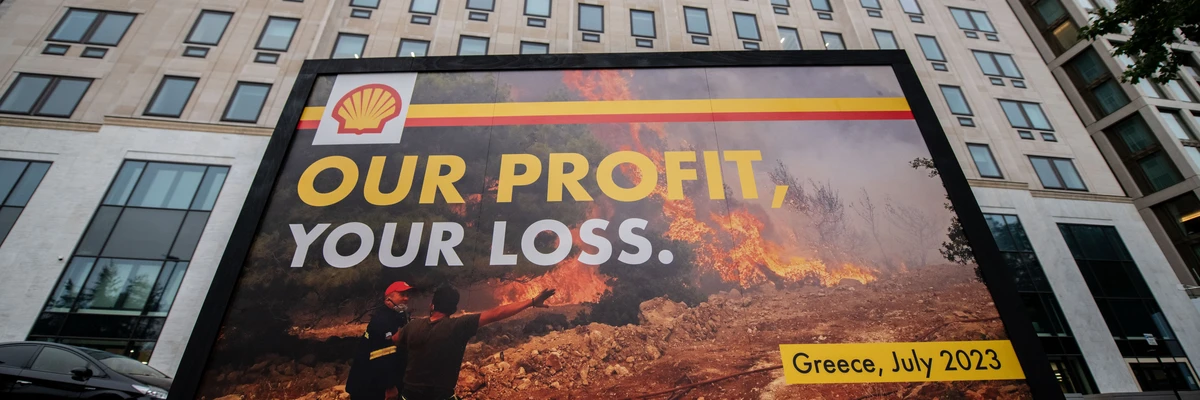
Greenpeace activists display a billboard during a protest outside Shell headquarters on July 27, 2023 in London. (Photo: Handout/Chris J. Ratcliffe for Greenpeace via Getty Images)
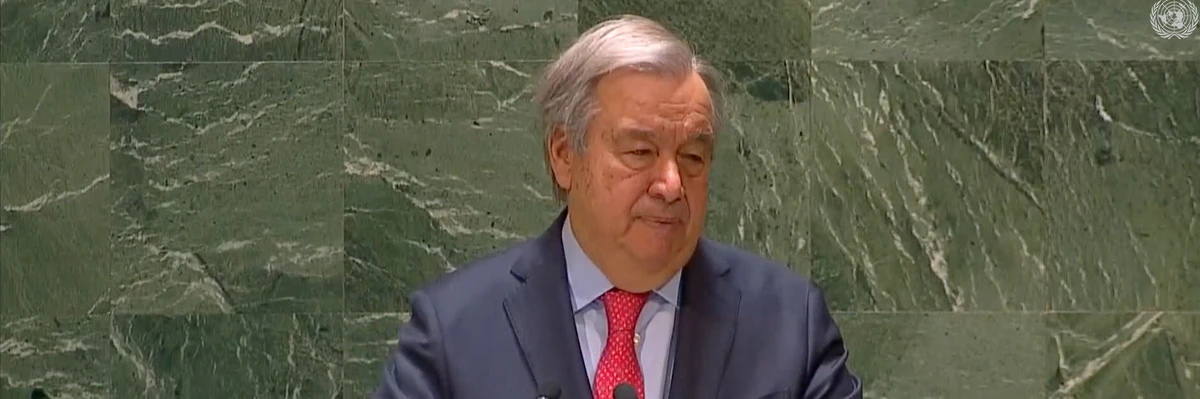
United Nations Secretary General António Guterres.
“Humanity’s fate hangs in the balance,” said U.N. Secretary-General António Guterres at second day of global climate conference.
United Nations Secretary-General António Guterres repeated the call for a global phaseout of fossil fuels during his remarks at the opening of the World Climate Action Summit as the U.N. Climate Change Conference entered its second day on Friday.
Guterres delivered a dire warning to the 260 world leaders gathered for the two-day summit taking place within the two week COP28 conference in Dubaias heurged them to ramp up their climate ambitions in the name of the future of human civilization.
“The science is clear,” Guterres said. “The 1.5°C limit is only possible if we ultimately stop burning all fossil fuels. Not reduce. Not abate. Phaseout—with a clear timeframe aligned with 1.5°C.”
“Make this COP count. Make this COP a gamechanger. Make this COP the new hope in the future of humankind.”
Guterres began his remarks on a positive note, congratulating COP28 President Sultan Ahmed Al Jaber for a day-one agreement to operationalize the long-awaited “loss and damage” fund for developing nations. However, he quickly took a somber tone as he described recent visits to Antarctica and Nepal where he had seen ice and glaciers melt.
Guterres began his remarks on a positive note, congratulating COP28 President Sultan Ahmed Al Jaber for a day-one agreement to operationalize the long-awaited “loss and damage” fund for developing nations. However, he quickly took a somber tone as he described recent visits to Antarctica and Nepal where he had seen ice and glaciers melt.
He said the ice loss was “just one symptom of the sickness bringing our climate to its knees. A sickness only you, global leaders, can cure.”
"The 1.5-degree limit is only possible if we ultimately stop burning all fossil fuels.
“Earth’s vital signs are failing: record emissions, ferocious fires, deadly droughts, and the hottest year ever,” Guterres continued. “We can guarantee it even when we’re still in November. We are miles from the goals of the Paris agreement—and minutes to midnight for the 1.5-°C.”
The cure could come, Guterres said, with a successful “global stocktake.” The global stocktake is a mechanism of the Paris agreement whereby world leaders assess their progress to date and set new goals. The first global stocktake concludes with the current conference in Dubai, and the process will repeat every five years from here on out.
Guterres made three main recommendations for the first stocktake:
“Drastically” reducing emissions: Guterres pointed out that countries’ current nationally determined contributions under the Paris agreement put the world on track for around 3°C of warming and urged them to update their pledges in line with the 1.5°C goal. He said that G20 countries, which are responsible for 80% of emissions, should take the lead on this, and that richer nations should aim to reach net-zero by 2040 while less wealthy ones shoot for 2050.
Speeding a “just transition”: In addition to phasing out fossil fuels, Guterres said countries should agree to triple renewable energy, double energy efficiency, and ensure everyone has access to renewable energy by 2030.
Ensuring “long overdue” climate justice: Guterres called for a “surge in finance” to help poorer, climate vulnerable nations adapt to climate impacts they did little to cause and compensate for loss and damage. He also said that leaders should recommend reforms of the multilateral development banking system so that developing nations could access funds without increasing their debt burden. Finally, he said that wealthier nations must fulfill their promises to provide $40 billion a year in adaptation finance by 2025 and $100 billion a year in climate finance by 2020.
In his remarks on fossil fuels and clean energy, Guterres also addressed fossil fuel executives directly.
“Your old road is rapidly changing,” he said, quoting Bob Dylan’s “The Times They Are a-Changin.’”
Guterres cited International Energy Agency (IEA) figures finding that oil and gas companies provide only 1% of all clean energy investments.
“Do not double-down on an obsolete business model,” Guterres said, addressing fossil fuel CEOs and the hundreds of industry lobbysists in attendance at the conference. “Lead the transition to renewables using the resources you have available. Make no mistake—the road to climate sustainability is also the only viable pathway to economic sustainability of your companies in the future.”
Guterres ended his speech with a call to leadership.
“Humanity’s fate hangs in the balance,” he said. “Make this COP count. Make this COP a gamechanger. Make this COP the new hope in the future of humankind.”
Come gather ’round people Wherever you roam And admit that the waters Around you have grown And accept it that soon You’ll be drenched to the bone If your time to you is worth savin’ And you better start swimmin’ Or you’ll sink like a stone For the times they are a-changin’
Come writers and critics Who prophesize with your pen And keep your eyes wide The chance won’t come again And don’t speak too soon For the wheel’s still in spin And there’s no tellin’ who That it’s namin’ For the loser now Will be later to win For the times they are a-changin’
Come senators, congressmen Please heed the call Don’t stand in the doorway Don’t block up the hall For he that gets hurt Will be he who has stalled The battle outside ragin’ Will soon shake your windows And rattle your walls For the times they are a-changin’
Come mothers and fathers Throughout the land And don’t criticize What you can’t understand Your sons and your daughters Are beyond your command Your old road is rapidly agin’ Please get out of the new one If you can’t lend your hand For the times they are a-changin’
The line it is drawn The curse it is cast The slow one now Will later be fast As the present now Will later be past The order is rapidly fadin’ And the first one now Will later be last For the times they are a-changin’