COP28 Loss and Damage Fund Called ‘Drop in the Ocean’

Spread the love

Original article by JULIA CONLEY republished from Common Dreams under Creative Commons (CC BY-NC-ND 3.0). 

Pakistani flood victims wade through floodwaters after monsoon rains in Matiari, Sindh province, Pakistan on August 29, 2022.  (Photo: Shakeel Ahmad/Anadolu Agency via Getty Images)

The United States’ contribution of $17.5 million, in particular, was denounced as “embarrassing” for the wealthiest country in the world.

International campaigners who for years have demanded a global “loss and damage” fund to help developing countries confront the climate emergency were encouraged on Thursday as the 28th United Nations Climate Change Conference began with an agreement to make the fund operational—but said the details of the deal made clear that wealthy countries are still largely abandoning communities that have contributed the least fossil fuel emissions, only to suffer the worst climate injustices.

A recent study from the University of Delaware showed that “the unweighted percentage of global GDP lost” due to climate impacts such as long-lasting drought, catastrophic flooding, and wildfires is estimated at 1.8%, or about $1.5 trillion, and low- and middle-income countries “have experienced $2.1 trillion in produced capital losses due to climate change.”

To meet the need, developing countries have said they already require about $400 billion annually in a loss and damage fund that could help governments rebuild communities, restore crucial wildlife habitats, or relocate people who have been displaced by the climate emergency—so advocates on Thursday were left wondering why the fund agreed upon at COP28 was expected to provide only about $100 billion per year by 2030.

The shortfall threatened to ensure the loss and damage fund will remain “an empty promise,” said Fanny Petitbon, head of advocacy for Care France.

“We hope the agreement will result in rapid delivery of support for communities on the frontlines of the climate crisis,” said Petitbon. “However, it has many shortcomings. It enables historical emitters to evade their responsibility. It also fails to establish the scale of finance needed and ensure that the fund is anchored in human rights principles.”

“We urgently call on all governments who are most responsible for the climate emergency and have the capacity to contribute to announce significant pledges in the form of grants,” she added. “Historical emitters must lead the way.”

The United States, the largest historical contributor of the planet-heating emissions that scientists agree are fueling the climate crisis, has objected to tying loss and damage funding to each wealthy nation’s emissions—perhaps partially explaining why the Biden administration pledged only $17.5 million to the fund.

Such contributions are “a drop in the ocean compared to the scale of the need they are to address,” said Mohamed Adow, director of Power Shift Africa.

“In particular, the amount announced by the U.S. is embarrassing for President [Joe] Biden and [Special Presidential Climate Envoy] John Kerry,” said Adow. “It just shows how this must be just the start.”

Campaigners also objected to the agreement’s stipulation that the World Bank will host the fund for the first four years—a demand that had been made by the U.S. and other wealthy countries—with voluntary payments from powerful governments that will be “invited,” not required, to contribute.

“Although rules have been agreed regarding how the fund will operate there are no hard deadlines, no targets, and countries are not obligated to pay into it, despite the whole point being for rich, high-polluting nations to support vulnerable communities who have suffered from climate impacts,” said Adow.

“The most pressing issue now is to get money flowing into the fund and to the people that need it,” he added. “The pledged funds must not just be repackaged commitments. We need new money, in the form of grants, not loans, otherwise it will just pile more debt onto some of the poorest countries in the world, defeating the point of a fund designed to improve lives.”

The United Arab Emirates, which is hosting COP28, pledged $100 million to the fund, a sum that was matched by Germany. The United Kingdom committed to contributing 60 million British pounds, or about $75 million, while Japan pledged $10 billion. The U.S. also said it would provide $4.5 million to the Pacific Resilience Facility, which will offer loss and damage funding to Pacific Island nations, and $2.5 million for the Santiago Network, which will provide technical support to developing countries.

Izzie McIntosh, climate campaign manager at U.K.-based Global Justice Now, called the creation of the global loss and damage fund was called a “welcome, yet long overdue, step forward for our climate,” and one that “reflects the utter devastation caused by climate change in the global south, and the need for rich countries to pay what they owe for their role in it.”

Rich countries, however, “have weakened the commitment they made to climate justice by insisting on the World Bank as interim host,” added McIntosh. “This decision risks both excluding countries due to its outdated rules and deepening the debt crisis if support is provided through loans, not grants. If loss and damage funding is to be truly impactful, it must be funded and designed adequately, or risk being all talk and no action.”

At COP27 in Egypt one year ago, noted Christian Aid global advocacy lead Mariana Paoli, policymakers did not even place the loss and damage fund on the agenda.

“It’s a testament to the determination of developing country negotiators that we now already have the fund agreed and established,” she said. “It’s now vital we see the fund filled. People who have contributed the least to the climate crisis are already suffering climate losses and damages. The longer they are forced to wait for financial support to cover these costs, the greater the injustice.”

Before COP28 wraps up on December 12, Paoli added, campaigners are hoping they will “see significant new and additional pledges of money to the loss and damage fund, and not just repackaged climate finance that has already been committed.”

A fully funded, impactful loss and damage fund must be paired with a commitment by countries to end fossil fuel expansion, added Romain Ioualalen, global policy manager at Oil Change International, with rich countries “redirecting trillions in fossil industry handouts to triple renewable energy and double energy efficiency.”

“We have had enough delays,” said Ioualalen, “and this must happen now to secure a livable future.”

Original article by JULIA CONLEY republished from Common Dreams under Creative Commons (CC BY-NC-ND 3.0). 
Continue ReadingCOP28 Loss and Damage Fund Called ‘Drop in the Ocean’

Oil Change International Reaction to the Establishment of the UN Loss and Damage Fund

Spread the love

In reaction to today’s announcement about the historic establishment of the United Nation’s loss and damage fund, David Tong, Global Industry Campaign Manager, Oil Change International, said:

“Unprecedented, countries finalized the creation of a fund to compensate countries for loss and damage caused by the climate crisis on the first day of the UN Climate Change Conference. 

“So far, governments’ contributions to the loss and damage fund are dwarfed by their approximately USD 200 billion in planned subsidies for carbon capture and storage (CCS). Subsidies for CCS are subsidies for fossil fuels, because most captured carbon is used to produce more oil and gas. Instead of paying their fair share to clean up their mess, rich polluting countries are offering a lifeline to the fossil fuel industry in the form of billions in handouts for CCS, fueling more loss and damage.

“For this COP to be a success, the negotiators must focus on securing an agreement to massively scale up renewable energy, end all new fossil fuel expansion, and commit to a fast, fair, full, and funded phase out of all fossil fuels”

Key Findings from OCI’s CCS Briefing Today:

  • Governments have spent over $20 billion – and are planning up to $200 billion more – of public money on Carbon Capture and Storage (CCS), providing a lifeline for the fossil fuel industry.
  • The majority of CCS is used to expand fossil fuel extraction. 79% of the world’s CCS operating capacity sends captured CO2 to produce more oil (via Enhanced Oil Recovery)
  • Many of the largest projects in the world operate far below their stated capacity. They are designed only to capture a fraction of the emissions of the plant they serve. 
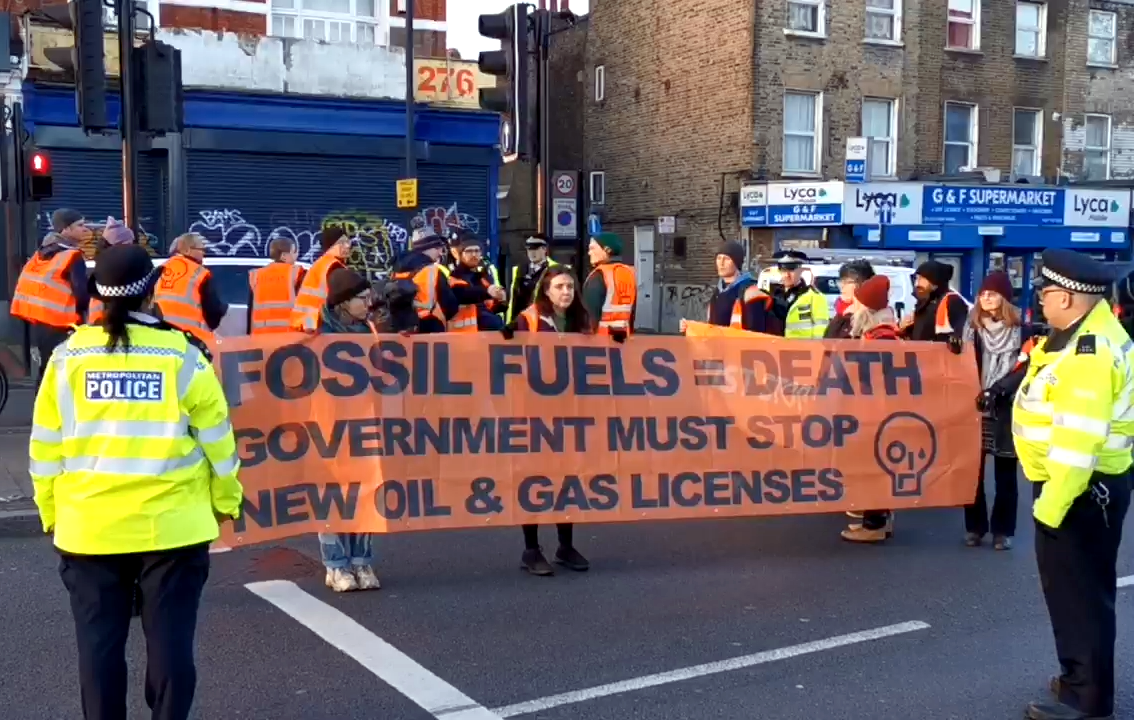
Just Stop Oil protesting in London 6 December 2022.
Continue ReadingOil Change International Reaction to the Establishment of the UN Loss and Damage Fund

Keeping 1.5 alive, phasing out fossil fuels and tackling climate inequality must be priorities for COP28 climate talks

Spread the love

As the COP28 climate talks begin today in Dubai, the Green Party has set out three key demands. They are to ‘keep 1.5 alive’; an agreement on the fair and managed phase-out of all fossil fuels; and measures to address ‘climate inequality.’ Greens are challenging the UK government to lead by example and put into practice policies that will help meet these demands. 

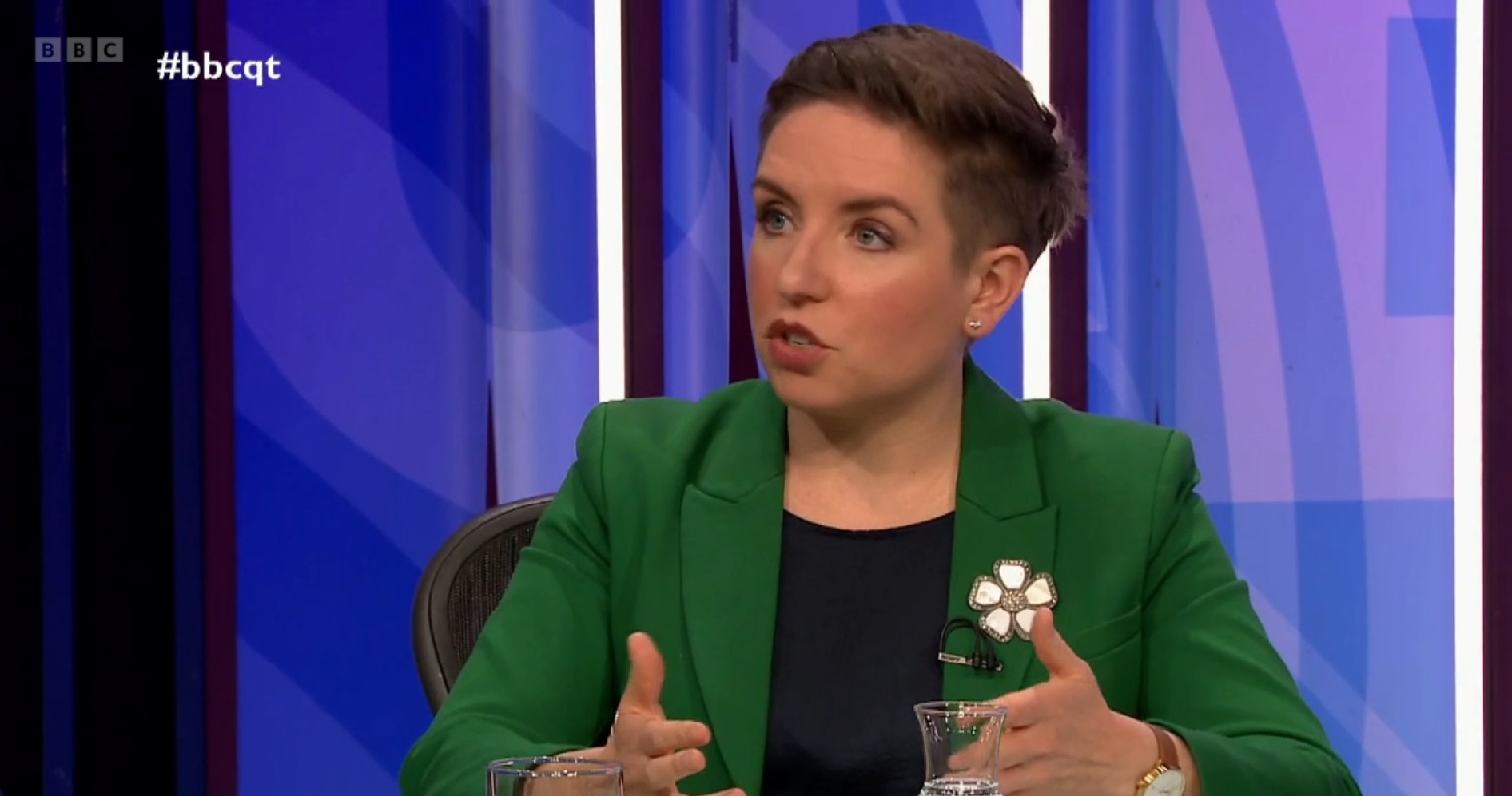
Image of the Green Party's Carla Denyer on BBC Question Time.
Image of the Green Party’s Carla Denyer on BBC Question Time.

Co-leader of the Green Party, Carla Denyer, said:  

“We need to hear a clear unambiguous commitment from the UK government to the 1.5C Paris Agreement target which was signed up to by 196 countries eight years ago at COP21. The government must agree to whatever it takes to get this target back on track. It’s going to require a hugely ambitious strategy, but the massive scaling up of climate action that is now necessary is because of dither and delay by countries like the UK in taking the bold action needed. 

“Another vital outcome of COP28 must be the fair and managed phase-out of all fossil fuels. As one of the rich countries most responsible for the climate crisis, the UK must stand on the side of future generations and those on the front line of climate breakdown and agree to urgently move away from fossil fuels. The UK government must resist pressure from the petrostates and others at COP who wish to continue with business as usual and keep the world hooked on fossil fuels. At home this means leading by example with an immediate end to all new oil and gas licences and a rapid acceleration towards renewable energy. 

“Thirdly, these climate talks must recognise that it is a super-rich elite who are super-heating the planet. The UK government must be willing to challenge the grotesque inequality driving climate breakdown and reform our tax system to make the polluter pay. This means taxing the wealth of the super-rich and introducing a carbon tax on the most polluting corporations and individuals. Such taxes, introduced globally, could generate the funds needed for a generous new Loss and Damage Fund to finance climate action in the poorest countries – those suffering the most from the impacts of climate breakdown but contributing the least to the crisis.” 

Continue ReadingKeeping 1.5 alive, phasing out fossil fuels and tackling climate inequality must be priorities for COP28 climate talks

COP28: oil pushers scrape the barrel as critical climate talks begin in Dubai

Spread the love
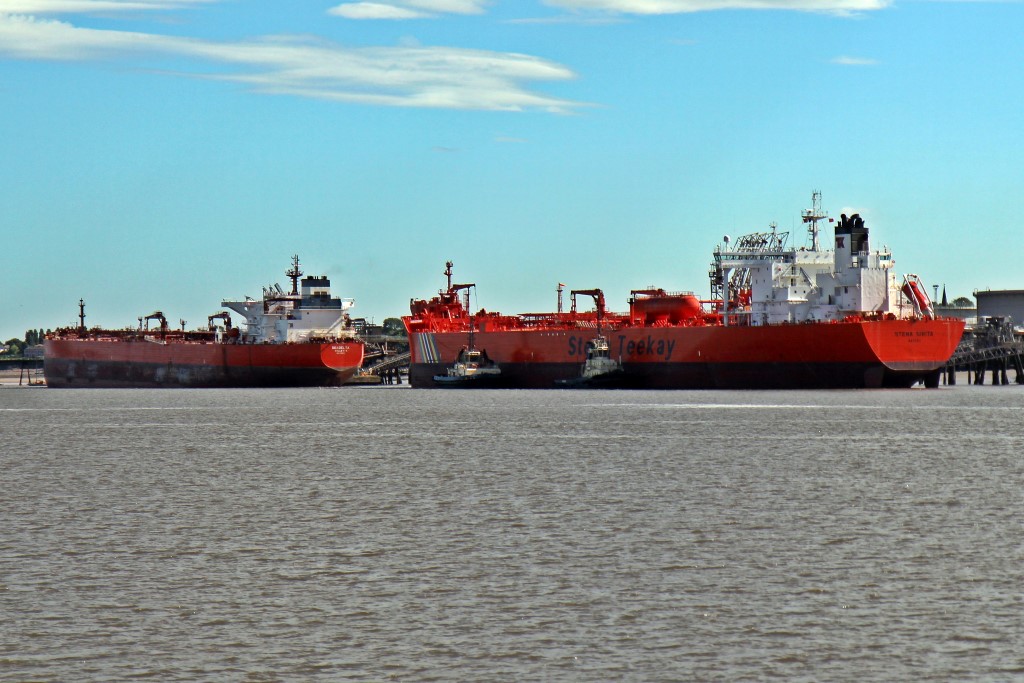
El Pollock / Oil tankers, Tranmere Oil Terminal / CC BY-SA 2.0

Jack Marley, The Conversation

Days before the latest climate summit is due to begin in Dubai, the first flight powered entirely by “sustainable aviation fuel” landed safely in New York.

The twin engines of this Boeing 787 Dreamliner ran on farm waste and used cooking oil, an alternative to the kerosene that is usually dug up, refined and burned to satisfy the wanderlust of a relatively wealthy minority of Earth’s people.

Sadly, the entire event was a stunt, say political economists Gareth Dale (Brunel University London) and Josh Moos (Leeds Beckett University). They point out that the market for cooking oil is poorly regulated, and so “sustainable fuels” can come from palm oil plantations which have devastated orangutan habitat in the tropics.

The result is “a smoke-and-mirrors exercise” designed to give the illusion of a world leaving fossil fuels behind, they say. With climate disasters mounting and greenhouse gas emissions at an all-time high, the same could be said for the UN negotiations themselves.


Imagine weekly climate newsletter

This roundup of The Conversation’s coverage of COP28 comes from our weekly climate action newsletter. Every Wednesday, The Conversation’s environment editor writes Imagine, a short email that goes a little deeper into just one climate issue. Join the 30,000+ readers who’ve subscribed.


First, let’s check in on the climate.

“Eight years ago, the world agreed to an ambitious target in the Paris Agreement: hold warming to 1.5°C to limit further dangerous levels of climate change,” says Brendan Mackey, an environmental scientist at Griffith University.

“Since then, greenhouse gas emissions have kept increasing … In 2023, the world is at 1.2°C of warming over pre-industrial levels. Heatwaves of increasing intensity and duration are arriving around the world. We now have less than 10 years before we reach 1.5°C of warming.”

COP28 in the United Arab Emirates (UAE) will proceed under the shadow of the UN’s global stocktake. This assessed whether humanity was on course to cut emissions in line with the Paris agreement’s targets by 2030.

The results are in: if all national pledges are fulfilled (not guaranteed), global warming will peak between 2.1-2.8°C this century. Blowing past 2°C, the upper temperature target of the Paris agreement, makes triggering feedback loops (like the release of potent greenhouse gas methane from Arctic permafrost) and catastrophic sea-level rise more likely.

For a chance to avoid climate breakdown and limit warming to 1.5°C, the world needs to prevent greenhouse gases equivalent to 22.9 gigatonnes of carbon dioxide (CO₂) from reaching the atmosphere over the next six years. This is roughly how much the top five polluters (China, US, India, Russia and Japan) emit in a year.

Tasked with leading negotiations to secure this outcome is Sultan Al Jaber, chief executive of Adnoc, the UAE’s state-owned oil company. Al Jaber and the UAE hosts were recently embarrassed by leaked documents showing they intended to pitch oil and gas deals to international delegates at the summit.

“The UK invited ridicule by expanding its North Sea oil fields less than two years after urging the world to raise its climate ambitions as summit host. The UAE seems destined for a similar fate – before its talks have even begun,” say Emilie Rutledge and Aiora Zabala, economists at the Open University.

On the agenda at COP28 is a proposed target for tripling renewable energy capacity and doubling the efficiency of existing sources by 2030. Delegates from countries within the High Ambition Coalition demand a written agreement to halt the burning of coal, oil and gas which accounts for roughly 90% of all CO₂ emissions.

Rutledge and Zabala argue that the UAE is an apt case study for the inertia which seems to prevent countries from meeting these aims. The Persian Gulf state subsidises rampant energy use among its public with oil and gas sales that total 80% of government revenues.

Little wonder the UAE would rather talk about the potential for technology to mop up its emissions.

“Adnoc, along with the wider oil and gas industry, has invested in carbon sequestration and making hydrogen fuel from the byproducts of oil extraction. According to the Intergovernmental Panel on Climate Change (IPCC), such measures, even if fully implemented, will only have a small impact on greenhouse gas emissions,” Rutledge and Zabala say.

Where’s the money?

Another test of the UN negotiations will concern the money needed to help developing countries phase out fossil fuels, adapt to a hostile climate and overcome the damage wrought by greenhouse gases overwhelmingly produced by developed countries.

According to the UN, 80% of climate change can be attributed to G20 countries, a group consisting of the world’s major economies.

“For decades, nations have wrestled over the fraught question of who should pay for loss and damage resulting from climate change,” says Mackey.

“Now we’re close to finalising arrangements for the new Loss and Damage Fund. This will be [a] major issue for negotiators at COP28.”

Lisa Vanhala, a professor of political science at UCL, has followed the wrangling over a fund to compensate poor nations for climate change since one was agreed in principle in 2013. Ten years later, questions remain over who will pay into it, who will be able to draw from it and who will control it.

The last of those three questions was at least partially answered in early November. The World Bank, headquartered in Washington D.C., will administer the fund for an interim period. This would give rich donor countries like the US disproportionate influence over loss and damage funding, Vanhala says, and is a far cry from the partnership model small-island developing states had urged.

The World Bank traditionally offers loans instead of grants. Developing countries have consistently argued this funding should not increase a recipient’s debt burden, Vanhala says. And a board member for another fund hosted by the World Bank has reported that the admin fees it charges are rising and absorbing a larger share of its aid.

“This could mean that, for every US$100 billion offered to countries and communities reeling from disaster, the World Bank will keep $US1.5 billion. This will be hard for an institution still funding the climate-wrecking oil and gas industry to justify,” Vanhala adds.

Aside from loss and damage, rich countries failed to keep a promise to raise US$100 billion of climate change mitigation and adaptation funding by 2020. This money would help the most vulnerable nations build sturdier storm defences and solar farms, for instance, and will be the subject of heated debate at COP28.

US and EU negotiators have argued that China, the world’s second largest economy and its current biggest emitter, should be obliged to contribute to such funding – despite sitting with other developing countries in the UN talks.

But a new analysis by Sarah Colenbrander, director at the Overseas Development Institute and guest lecturer in climate economics at the University of Oxford, tells a different story. By following the substantial climate aid China already provides via other channels, such as multilateral development banks, Colenbrander argues that the real laggard and obstacle to a financial settlement is the US.

“The fastest way to restore trust in the international climate regime would be for the US to step up with its fair share of climate finance,” she says.

“Only once the developed countries have fulfilled their longstanding promise does a conversation about new climate finance contributors become politically possible.”The Conversation

Jack Marley, Environment + Energy Editor, The Conversation

This article is republished from The Conversation under a Creative Commons license. Read the original article.

Continue ReadingCOP28: oil pushers scrape the barrel as critical climate talks begin in Dubai